


![Save "Sefer Yechezkel - Perek 41 March 30, 2025 [based on Dr. Tova Ganzel's From Destruction to Restoration]"](/static/icons/bookmark.svg)
In verse 48 (of Chapter 40) the prophet moves on to a description of the inner plan of the Temple. He first describes the porch (ulam) (40:48-49), followed by the heikhal, the Holy of Holies, the inner chamber, and the decorations on the walls (41:1-26). In the midst of this description the prophet notes the wooden altar and the table (v. 22).
(א) וַיְבִיאֵ֖נִי אֶל־הַהֵיכָ֑ל וַיָּ֣מׇד אֶת־הָאֵילִ֗ים שֵׁשׁ־אַמּ֨וֹת רֹ֧חַב מִפּ֛וֹ וְשֵׁשׁ־אַמּֽוֹת־רֹ֥חַב מִפּ֖וֹ רֹ֥חַב הָאֹֽהֶל׃ (ב) וְרֹ֣חַב הַפֶּ֘תַח֮ עֶ֣שֶׂר אַמּוֹת֒ וְכִתְפ֣וֹת הַפֶּ֔תַח חָמֵ֤שׁ אַמּוֹת֙ מִפּ֔וֹ וְחָמֵ֥שׁ אַמּ֖וֹת מִפּ֑וֹ וַיָּ֤מׇד אׇרְכּוֹ֙ אַרְבָּעִ֣ים אַמָּ֔ה וְרֹ֖חַב עֶשְׂרִ֥ים אַמָּֽה׃ (ג) וּבָ֣א לִפְנִ֔ימָה וַיָּ֥מׇד אֵֽיל־הַפֶּ֖תַח שְׁתַּ֣יִם אַמּ֑וֹת וְהַפֶּ֙תַח֙ שֵׁ֣שׁ אַמּ֔וֹת וְרֹ֥חַב הַפֶּ֖תַח שֶׁ֥בַע אַמּֽוֹת׃ (ד) וַיָּ֨מׇד אֶת־אׇרְכּ֜וֹ עֶשְׂרִ֣ים אַמָּ֗ה וְרֹ֛חַב עֶשְׂרִ֥ים אַמָּ֖ה אֶל־פְּנֵ֣י הַהֵיכָ֑ל וַיֹּ֣אמֶר אֵלַ֔י זֶ֖ה קֹ֥דֶשׁ הַקֳּדָשִֽׁים׃
(1) He then led me into the great hall. He measured the jambs, 6 cubits on either side; such was the depth of each jamb. (2) The entrance was 10 cubits wide, and the flanking walls of the entrance were each 5 cubits wide. Next he measured the depth [of the hall], 40 cubits, and the width, 20 cubits. (3) And then he entered the inner room. He measured each jamb of the entrance, 2 cubits [deep]; the entrance itself, 6 cubits across; and the width of [the flanking wall on either side of] the entrance, 7 cubits. (4) Then he measured the depth, 20 cubits; and the width at the inner end of the great hall was also 20 cubits. And he said to me, “This is the Holy of Holies.”
Reminder of historical context: Yechezkel’s vision of the Beis HaMikdash comes at a crucial historical moment. The First Beis HaMikdash had been destroyed by the Babylonians (586 BCE), and the Jewish people were in exile. His prophecy, therefore, served multiple historical functions—offering hope, setting expectations for the future, and possibly providing a blueprint for the Second Beis HaMikdash.
His vision of the Beis HaMikdash (Yechezkel 40–48) was given in the 25th year of the exile of Yehoyachin (572 BCE), long before the Second Beis HaMikdash was built. This was meant to comfort the people and remind them that their connection to Hashem was not permanently severed.
Did Yechezkel’s Vision Influence the Second Beis HaMikdash?
The Second Beis HaMikdash, built by Zerubavel and Yehoshua Kohen Gadol (completed in 516 BCE), did not fully follow Yechezkel’s design.
אָמַר רַב יְהוּדָה אָמַר רַב: בְּרַם זָכוּר אוֹתוֹ הָאִישׁ לַטּוֹב וַחֲנַנְיָה בֶּן חִזְקִיָּה שְׁמוֹ, שֶׁאִלְמָלֵא הוּא נִגְנַז סֵפֶר יְחֶזְקֵאל, שֶׁהָיוּ דְּבָרָיו סוֹתְרִין דִּבְרֵי תוֹרָה. מֶה עָשָׂה? — הֶעֱלוּ לוֹ שְׁלֹשׁ מֵאוֹת גַּרְבֵי שֶׁמֶן, וְיָשַׁב בַּעֲלִיָּיה וּדְרָשָׁן.
Rav Yehuda said that Rav said: Truly, that man is remembered for the good, and his name is Ḥananya ben Ḥizkiya, as if not for him, the book of Ezekiel would have been suppressed because its contents, in many details, contradict matters of Torah. The Sages sought to suppress the book and exclude it from the canon. What did he, Ḥananya ben Ḥizkiya, do? They brought him three hundred jugs of oil, for light and food, up to his upper story, and he sat isolated in the upper story and did not move from there until he homiletically interpreted all of those verses in the book of Ezekiel that seemed contradictory, and resolved the contradictions.
However, some elements of his description do appear in Second Beis HaMikdash architecture.
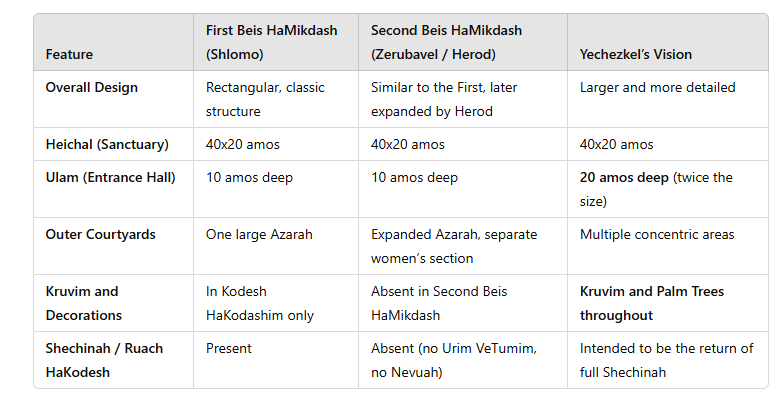
Was Yechezkel’s Temple Meant for the Second or Third Beis HaMikdash?
Rishonim debate whether Yechezkel’s Beis HaMikdash was meant to be built by the returning exiles or if it refers only to the future (commentary from last week).
(ד) בִּנְיָן שֶׁבָּנָה שְׁלֹמֹה כְּבָר מְפֹרָשׁ בִּמְלָכִים. וְכֵן בִּנְיָן הֶעָתִיד לְהִבָּנוֹת אַף עַל פִּי שֶׁהוּא כָּתוּב בִּיחֶזְקֵאל אֵינוֹ מְפֹרָשׁ וּמְבֹאָר. וְאַנְשֵׁי בַּיִת שֵׁנִי כְּשֶׁבָּנוּ בִּימֵי עֶזְרָא בָּנוּהוּ כְּבִנְיַן שְׁלֹמֹה וּמֵעֵין דְּבָרִים הַמְפֹרָשִׁים בִּיחֶזְקֵאל:
(4) The [design of the] structure built by [King] Solomon is described explicitly in [the Book of] Kings. [In contrast, the design of] the Messianic Temple, though mentioned in [the Book of] Ezekiel, is not explicit or explained. Thus, the people [in the time] of Ezra built the Second Temple according to the structure of Solomon, [including] certain aspects which are explicitly stated in Ezekiel.
(ה) וַיָּ֥מׇד קִֽיר־הַבַּ֖יִת שֵׁ֣שׁ אַמּ֑וֹת וְרֹ֣חַב הַצֵּלָע֩ אַרְבַּ֨ע אַמּ֜וֹת סָבִ֧יב ׀ סָבִ֛יב לַבַּ֖יִת סָבִֽיב׃ (ו) וְהַצְּלָעוֹת֩ צֵלָ֨ע אֶל־צֵלָ֜ע שָׁל֧וֹשׁ וּשְׁלֹשִׁ֣ים פְּעָמִ֗ים וּ֠בָא֠וֹת בַּקִּ֨יר אֲשֶׁר־לַבַּ֧יִת לַצְּלָע֛וֹת סָבִ֥יב ׀ סָבִ֖יב לִהְי֣וֹת אֲחוּזִ֑ים וְלֹֽא־יִהְי֥וּ אֲחוּזִ֖ים בְּקִ֥יר הַבָּֽיִת׃
(5) Then he measured the wall of the temple. [It was] 6 cubits [thick] on every side of the temple, and the side-chamber measured 4 cubits [across]. (6) The side chambers were arranged one above the other, in 33 sections. All around, there were projections in the temple wall to serve the side chambers as supports, so that [their] supports should not be the temple wall itself.
(4) [MIO - actually, to 41:5] I.e., on the ground level; cf. v. 7.
״וְהַצְּלָעוֹת צֵלָע אֶל צֵלָע, שָׁלוֹשׁ וּשְׁלֹשִׁים פְּעָמִים״ – מַאי ״שָׁלוֹשׁ וּשְׁלֹשִׁים פְּעָמִים״? אָמַר רַבִּי לֵוִי, אָמַר רַב פַּפֵּי מִשּׁוּם רַבִּי יְהוֹשֻׁעַ דְּסִכְנִי: אִם שָׁלֹשׁ יְרוּשָׁלַיִם הֵן, כׇּל אַחַת וְאַחַת יֵשׁ בָּהּ שְׁלֹשִׁים מְדוֹרִין לְמַעְלָה; אִם שְׁלֹשִׁים יְרוּשָׁלַיִם הֵן, כׇּל אַחַת וְאַחַת יֵשׁ בָּהּ שְׁלֹשָׁה מְדוֹרִין לְמַעְלָה.
In a similar manner, the Gemara interprets the verse: “And the side-chambers were one over another, three and thirty times” (Ezekiel 41:6). What is the meaning of: “Three and thirty times”? Rabbi Levi says that Rav Pappi says in the name of Rabbi Yehoshua of Sikhnei: If in the future Jerusalem will triple in size, so that it occupies three times its former area, then each and every dwelling will contain thirty stories upward. If the area of Jerusalem will be multiplied by thirty, each and every dwelling will contain three stories above every house.
(ז) וְֽרָחֲבָ֡ה וְֽנָסְבָה֩ לְמַ֨עְלָה לְמַ֜עְלָה לַצְּלָע֗וֹת כִּ֣י מֽוּסַב־הַ֠בַּ֠יִת לְמַ֨עְלָה לְמַ֜עְלָה סָבִ֤יב ׀ סָבִיב֙ לַבַּ֔יִת עַל־כֵּ֥ן רֹחַב־לַבַּ֖יִת לְמָ֑עְלָה וְכֵ֧ן הַתַּחְתּוֹנָ֛ה יַעֲלֶ֥ה עַל־הָעֶלְיוֹנָ֖ה לַתִּיכוֹנָֽה׃
(7) The winding passage of the side chambers widened from story to story; and since the structure was furnished all over with winding passages from story to story, the structure itself became wider from story to story. It was by this means that one ascended from the bottom story to the top one by way of the middle one.
ונסבה למעלה למעלה. ומוסבה מסיבה שקורין וי"ץ בלע"ז של בנין אבנים הוא כמין עמוד ומעלות עולות בו והעולה בהם דומה לו כהולך ומקיף סביבות עמוד אבנים ובלשון אשכנז קרוי שווינד"ל שטיין הוא שאמו' בבנין שלמה ובלולי' יעלו אל התיכונה אף הוא מתורגם ובמסיבת' כמו ונסבה למעל' למעל' וכן מסיבה עולה למעלה עד גג התא העליון כמו שהוא מפרש והולך שהמסיבה עולה מן התחתון לאמצעי ומן האמצעי לעליון:
and it wound higher and higher [Heb. וְנָסְבָה,] and it was surrounded by a spiral staircase, fiz in Old French. This is a stone structure similar to a pillar, with steps winding around it. It seems to the person who is ascending upon it that he is encircling a stone pillar. In German it is called a wendelstein. This is what is [meant when it is] stated regarding Solomon’s Temple (I Kings 6:8): “and upon winding stairs (לוּלִים) they went up into the middle [chamber].” That too is translated [into Aramaic] as וּבִמְסִיבָתָא, like וְנָסְבָה לְמַעְלָה לְמַעְלָה and it wound higher and higher. The spiral staircase continued to wind higher and higher up to the roof of the uppermost cell, as he proceeds to explain, [so] that the spiral staircase ascended from the nethermost cell to the middle one and from the middle one to the uppermost one.
(ח) וְרָאִ֧יתִי לַבַּ֛יִת גֹּ֖בַהּ סָבִ֣יב ׀ סָבִ֑יב (מיסדות) [מוּסְד֤וֹת] הַצְּלָעוֹת֙ מְל֣וֹ הַקָּנֶ֔ה שֵׁ֥שׁ אַמּ֖וֹת אַצִּֽילָה׃ (ט) רֹ֣חַב הַקִּ֧יר אֲֽשֶׁר־לַצֵּלָ֛ע אֶל־הַח֖וּץ חָמֵ֣שׁ אַמּ֑וֹת וַאֲשֶׁ֣ר מֻנָּ֔ח בֵּ֥ית צְלָע֖וֹת אֲשֶׁ֥ר לַבָּֽיִת׃ (י) וּבֵ֨ין הַלְּשָׁכ֜וֹת רֹ֣חַב עֶשְׂרִ֥ים אַמָּ֛ה סָבִ֥יב לַבַּ֖יִת סָבִ֥יב ׀ סָבִֽיב׃ (יא) וּפֶ֤תַח הַצֵּלָע֙ לַמֻּנָּ֔ח פֶּ֤תַח אֶחָד֙ דֶּ֣רֶךְ הַצָּפ֔וֹן וּפֶ֥תַח אֶחָ֖ד לַדָּר֑וֹם וְרֹ֙חַב֙ מְק֣וֹם הַמֻּנָּ֔ח חָמֵ֥שׁ אַמּ֖וֹת סָבִ֥יב ׀ סָבִֽיב׃ (יב) וְהַבִּנְיָ֡ן אֲשֶׁר֩ אֶל־פְּנֵ֨י הַגִּזְרָ֜ה פְּאַ֣ת דֶּֽרֶךְ־הַיָּ֗ם רֹ֚חַב שִׁבְעִ֣ים אַמָּ֔ה וְקִ֧יר הַבִּנְיָ֛ן חָמֵשׁ־אַמּ֥וֹת רֹ֖חַב סָבִ֣יב ׀ סָבִ֑יב וְאׇרְכּ֖וֹ תִּשְׁעִ֥ים אַמָּֽה׃ (יג) וּמָדַ֣ד אֶת־הַבַּ֔יִת אֹ֖רֶךְ מֵאָ֣ה אַמָּ֑ה וְהַגִּזְרָ֤ה וְהַבִּנְיָה֙ וְקִ֣ירוֹתֶ֔יהָ אֹ֖רֶךְ מֵאָ֥ה אַמָּֽה׃ (יד) וְרֹ֩חַב֩ פְּנֵ֨י הַבַּ֧יִת וְהַגִּזְרָ֛ה לַקָּדִ֖ים מֵאָ֥ה אַמָּֽה׃ (טו) וּמָדַ֣ד אֹֽרֶךְ־הַ֠בִּנְיָ֠ן אֶל־פְּנֵ֨י הַגִּזְרָ֜ה אֲשֶׁ֨ר עַל־אַחֲרֶ֧יהָ (ואתוקיהא) [וְאַתִּיקֶ֛יהָא] מִפּ֥וֹ וּמִפּ֖וֹ מֵאָ֣ה אַמָּ֑ה וְהַהֵיכָל֙ הַפְּנִימִ֔י וְאֻלַמֵּ֖י הֶחָצֵֽר׃ (טז) הַסִּפִּ֡ים וְהַחַלּוֹנִ֣ים הָ֠אֲטֻמ֠וֹת וְהָאַתִּיקִ֤ים ׀ סָבִיב֙ לִשְׁלׇשְׁתָּ֔ם נֶ֧גֶד הַסַּ֛ף שְׂחִ֥יף עֵ֖ץ סָבִ֣יב ׀ סָבִ֑יב וְהָאָ֙רֶץ֙ עַד־הַֽחַלּוֹנ֔וֹת וְהַחַלֹּנ֖וֹת מְכֻסּֽוֹת׃ (יז) עַל־מֵעַ֣ל הַפֶּ֡תַח וְעַד־הַבַּ֩יִת֩ הַפְּנִימִ֨י וְלַח֜וּץ וְאֶל־כׇּל־הַקִּ֨יר סָבִ֧יב ׀ סָבִ֛יב בַּפְּנִימִ֥י וּבַחִיצ֖וֹן מִדּֽוֹת׃ (יח) וְעָשׂ֥וּי כְּרוּבִ֖ים וְתִמֹרִ֑ים וְתִֽמֹרָה֙ בֵּין־כְּר֣וּב לִכְר֔וּב וּשְׁנַ֥יִם פָּנִ֖ים לַכְּרֽוּב׃ (יט) וּפְנֵ֨י אָדָ֤ם אֶל־הַתִּֽמֹרָה֙ מִפּ֔וֹ וּפְנֵי־כְפִ֥יר אֶל־הַתִּמֹרָ֖ה מִפּ֑וֹ עָשׂ֥וּי אֶל־כׇּל־הַבַּ֖יִת סָבִ֥יב ׀ סָבִֽיב׃ (כ) מֵהָאָ֙רֶץ֙ עַד־מֵעַ֣ל הַפֶּ֔תַח הַכְּרוּבִ֥ים וְהַתִּמֹרִ֖ים עֲשׂוּיִ֑ם וְקִ֖יר הַׄהֵׄיׄכָֽׄלׄ׃ (כא) הַהֵיכָ֖ל מְזוּזַ֣ת רְבֻעָ֑ה וּפְנֵ֣י הַקֹּ֔דֶשׁ הַמַּרְאֶ֖ה כַּמַּרְאֶֽה׃ (כב) הַמִּזְבֵּ֡חַ עֵ֣ץ שָׁלוֹשׁ֩ אַמּ֨וֹת גָּבֹ֜הַּ וְאׇרְכּ֣וֹ שְׁתַּֽיִם־אַמּ֗וֹת וּמִקְצֹֽעוֹתָיו֙ ל֔וֹ וְאׇרְכּ֥וֹ וְקִירֹתָ֖יו עֵ֑ץ וַיְדַבֵּ֣ר אֵלַ֔י זֶ֚ה הַשֻּׁלְחָ֔ן אֲשֶׁ֖ר לִפְנֵ֥י יְהֹוָֽה׃
(8) I observed that the temple was surrounded by a raised pavement—the foundations of the side chambers; its elevation was a rod’s length, or 6 cubits. (9) The outer wall of the side chamber was 5 cubits thick, and that which served as a walk between the Temple’s side chambers (10) and the chamber complexes was 20 cubits wide all around the temple. (11) Of entrances to the side chambers giving on the walk, there was one entrance on the north side and one entrance on the south side; and the space of the walk was 5 cubits thick all around. (12) And the structure that fronted on the vacant space at the [Temple’s] western end was 70 cubits deep; the walls of the structure were 5 cubits thick on every side; and it was 90 cubits wide. (13) He measured the [total] depth of the temple, 100 cubits; and the depth of the vacant space and of the structure, with its walls, also came to 100 cubits. (14) The front side of the temple, like the vacant space on the east, was 100 cubits wide. (15) He also measured the width of the structure facing the vacant space in the rear, inclusive of its ledges, 100 cubits. Both the great hall inside and the portico next to the court— (16) the thresholds—and the windows with frames and the ledges at the threshold, all over the three parts of each, were completely overlaid with wood. There was wainscoting from the floor to the windows, including the window [frame]s (17) and extending above the openings, both in the inner temple and outside. And all over the wall, both in the inner one and in the outer, ran a pattern. (18) It consisted of cherubs and palm trees, with a palm tree between every two cherubs. Each cherub had two faces: (19) a human face turned toward the palm tree on one side and a lion’s face turned toward the palm tree on the other side. This was repeated all over the temple; (20) the cherubs and the palm trees were carved on the wall from the floor to above the openings. As regards the great hall, (21) the great hall had four doorposts; and before the Shrine was something resembling (22) a wooden altar 3 cubits high and 2 cubits long and having inner corners; and its length and its walls were of wood. And he said to me, “This is the table that stands before GOD.”
So, Yechezkel's table was made of wood, but.....
(מח) וַיַּ֣עַשׂ שְׁלֹמֹ֔ה אֵ֚ת כׇּל־הַכֵּלִ֔ים אֲשֶׁ֖ר בֵּ֣ית יְהֹוָ֑ה אֵ֚ת מִזְבַּ֣ח הַזָּהָ֔ב וְאֶת־הַשֻּׁלְחָ֗ן אֲשֶׁ֥ר עָלָ֛יו לֶ֥חֶם הַפָּנִ֖ים זָהָֽב׃
(48) And Solomon made all the furnishings that were in the House of GOD: the altar, of gold; the table for the bread of display, of gold;
Purpose of the table....
(ל) וְנָתַתָּ֧ עַֽל־הַשֻּׁלְחָ֛ן לֶ֥חֶם פָּנִ֖ים לְפָנַ֥י תָּמִֽיד׃ {פ}
(30) And on the table you shall set the bread of display, to be before Me always.
(ג) רַבִּי שִׁמְעוֹן אוֹמֵר, שְׁלשָׁה שֶׁאָכְלוּ עַל שֻׁלְחָן אֶחָד וְלֹא אָמְרוּ עָלָיו דִּבְרֵי תוֹרָה, כְּאִלּוּ אָכְלוּ מִזִּבְחֵי מֵתִים, שֶׁנֶּאֱמַר (ישעיה כח) כִּי כָּל שֻׁלְחָנוֹת מָלְאוּ קִיא צֹאָה בְּלִי מָקוֹם. אֲבָל שְׁלשָׁה שֶׁאָכְלוּ עַל שֻׁלְחָן אֶחָד וְאָמְרוּ עָלָיו דִּבְרֵי תוֹרָה, כְּאִלּוּ אָכְלוּ מִשֻּׁלְחָנוֹ שֶׁל מָקוֹם בָּרוּךְ הוּא, שֶׁנֶּאֱמַר (יחזקאל מא) וַיְדַבֵּר אֵלַי זֶה הַשֻּׁלְחָן אֲשֶׁר לִפְנֵי ה':
(3) Rabbi Shimon said: if three have eaten at one table and have not spoken there words of Torah, [it is] as if they had eaten sacrifices [offered] to the dead, as it is said, “for all tables are full of filthy vomit, when the All-Present is absent” (Isaiah 28:8). But, if three have eaten at one table, and have spoken there words of Torah, [it is] as if they had eaten at the table of the All-Present, blessed be He, as it is said, “And He said unto me, ‘this is the table before the Lord’” (Ezekiel 41:22).
וְהַמַּאֲרִיךְ עַל שֻׁלְחָנוֹ: דִּלְמָא אָתֵי עַנְיָא וְיָהֵיב לֵיהּ. דִּכְתִיב: ״הַמִּזְבֵּחַ עֵץ שָׁלוֹשׁ אַמּוֹת גָּבֹהַּ״, וּכְתִיב: ״וַיְדַבֵּר אֵלַי זֶה הַשֻּׁלְחָן אֲשֶׁר לִפְנֵי ה׳״, פָּתַח בְּמִזְבֵּחַ וְסִיֵּים בְּשֻׁלְחָן! רַבִּי יוֹחָנָן וְרַבִּי אֶלְעָזָר דְּאָמְרִי תַּרְוַיְיהוּ: כׇּל זְמַן שֶׁבֵּית הַמִּקְדָּשׁ קַיָּים — מִזְבֵּחַ מְכַפֵּר עַל יִשְׂרָאֵל, וְעַכְשָׁיו, שֻׁלְחָנוֹ שֶׁל אָדָם מְכַפֵּר עָלָיו.
As for the virtue of prolonging one’s mealtime at the table, which Rav Yehuda mentioned, the Gemara explains: Perhaps a poor person will come during the meal and the host will be in a position to give him food immediately, without forcing the poor person to wait. The Sages elsewhere praised a person who acts appropriately at a meal, as it is written: “The altar, three cubits high and the length thereof, two cubits, was of wood, and so the corners thereof; the length thereof, and the walls thereof, were also of wood” (Ezekiel 41:22), and it is written in the continuation of that verse: “And he said unto me: This is the table that is before the Lord.” The language of this verse is difficult, as it begins with the altar and concludes with the table. Rather, Rabbi Yoḥanan and Rabbi Elazar both say: As long as the Temple stood, the altar atoned for Israel’s transgressions. Now that it is destroyed, a person’s table atones for his transgressions.
(כג) וּשְׁתַּ֧יִם דְּלָת֛וֹת לַהֵיכָ֖ל וְלַקֹּֽדֶשׁ׃ (כד) וּשְׁתַּ֥יִם דְּלָת֖וֹת לַדְּלָת֑וֹת שְׁ֚תַּיִם מוּסַבּ֣וֹת דְּלָת֔וֹת שְׁ֚תַּיִם לְדֶ֣לֶת אֶחָ֔ת וּשְׁתֵּ֥י דְלָת֖וֹת לָאַחֶֽרֶת׃ (כה) וַעֲשׂוּיָ֨ה אֲלֵיהֶ֜ן אֶל־דַּלְת֤וֹת הַהֵיכָל֙ כְּרוּבִ֣ים וְתִמֹרִ֔ים כַּאֲשֶׁ֥ר עֲשׂוּיִ֖ם לַקִּיר֑וֹת וְעָ֥ב עֵ֛ץ אֶל־פְּנֵ֥י הָאוּלָ֖ם מֵהַחֽוּץ׃ (כו) וְחַלּוֹנִ֨ים אֲטֻמ֤וֹת וְתִֽמֹרִים֙ מִפּ֣וֹ וּמִפּ֔וֹ אֶל־כִּתְפ֖וֹת הָאוּלָ֑ם וְצַלְע֥וֹת הַבַּ֖יִת וְהָעֻבִּֽים׃
(23) The great hall had a double door, and the Shrine likewise had (24) a double door, and each door had two swinging leaves: two for the one door and two such leaves for the other. (25) Cherubs and palm trees were carved on these—on the doors of the hall—just as they were carved on the walls; and there was a lattice of wood outside in front of the portico. (26) And there were windows with frames and palm trees on the flanking walls of the portico on either side [of the entrance] and [on] the Temple’s side chambers and [on] the lattices.
הָא לָאו הָכִי – הָדַר בְּעֵינֵיהּ! אָמַר רַב יוֹסֵף: מָרִישׁ – שְׁמוֹ עָלָיו, דְּתַנְיָא: ״צַלְעוֹת הַבַּיִת״ – אֵלּוּ הַמַּלְטְטִין, ״וְהָעֻבִּים״ – אֵלּוּ הַמְּרִישׁוֹת.
One can infer: But if were not for this decree, the beam would have to be returned to the owner as is, notwithstanding its change in name. Rav Yosef said: This is not a genuine change in name, as a beam retains its name even after it is inserted into a building. As it is taught in a baraita with regard to two obscure terms: The verse states: “And there were narrow windows and palm trees on the one side and on the other side, on the sides of the porch; there were also the tzalot of the house, and the ubbim” (Ezekiel 41:26). “Tzalot of the house”; these are the casings [hamaltetin]. “And the ubbim”; these are the beams [hamerishot]. This shows that a beam can retain its name even after it has been built into a house.
CPT: Yechezkel’s detailed description of the Heichal’s measurements is significant on multiple levels—halachic, historical, and mystical. The exact dimensions reflect the divine precision in the construction of a space meant for the Shechinah (Divine Presence) and suggest that the Third Beis HaMikdash will follow a predetermined blueprint from Hashem.
Divine Order and Structure
- The meticulous measurements emphasize that kedusha (holiness) is structured and not random.
- Just as the Mishkan and Shlomo HaMelech’s Beis HaMikdash were built according to divine specifications (Shemos 25:9), Yechezkel's vision follows a strict design.
- This aligns with the idea that spiritual realities manifest in structured, measured ways.
Kabbalistic and Allegorical Meaning of the Measurements
1. Numbers as Spiritual Codes:
- 40 amos (length of the Heichal) – The number 40 represents transformation (e.g., 40 days of Matan Torah, 40 years in the desert).
- 20 amos (width of the Heichal) – The number 20 is linked to elevated perception (e.g., a person becomes fully liable for heavenly punishment at 20).
- 6 amos (thickness of the walls) – The number 6 is associated with the physical world (6 days of creation, 6 directions of space).
- 12 steps leading up (Yechezkel 40:49) – A reference to the 12 Shevatim and the path to higher spiritual levels.
2. Kruvim and Temarim (Cherubim and Palm Trees) as Kabbalistic Symbols
- The Kruvim represent divine love and connection between Hashem and Am Yisrael.
- The palm trees symbolize growth, righteousness....
(יג) צַ֭דִּיק כַּתָּמָ֣ר יִפְרָ֑ח כְּאֶ֖רֶז בַּלְּבָנ֣וֹן יִשְׂגֶּֽה׃
(13) The righteous bloom like a date-palm; they thrive like a cedar in Lebanon;
3. Spatial Kedusha and Human Growth
Another source: https://outorah.org/p/3707/