



(יח) יוֹדֵ֣עַ יקוק יְמֵ֣י תְמִימִ֑ם וְ֝נַחֲלָתָ֗ם לְעוֹלָ֥ם תִּהְיֶֽה׃
(18) The LORD is concerned for the needs of the blameless; their portion lasts forever;
(א) דִּבְרֵי֙ קֹהֶ֣לֶת בֶּן־דָּוִ֔ד מֶ֖לֶךְ בִּירוּשָׁלָֽ͏ִם׃ (ב) הֲבֵ֤ל הֲבָלִים֙ אָמַ֣ר קֹהֶ֔לֶת הֲבֵ֥ל הֲבָלִ֖ים הַכֹּ֥ל הָֽבֶל׃ (ג) מַה־יִּתְר֖וֹן לָֽאָדָ֑ם בְּכׇ֨ל־עֲמָל֔וֹ שֶֽׁיַּעֲמֹ֖ל תַּ֥חַת הַשָּֽׁמֶשׁ׃ (ד) דּ֤וֹר הֹלֵךְ֙ וְד֣וֹר בָּ֔א וְהָאָ֖רֶץ לְעוֹלָ֥ם עֹמָֽדֶת׃ (ה) וְזָרַ֥ח הַשֶּׁ֖מֶשׁ וּבָ֣א הַשָּׁ֑מֶשׁ וְאֶ֨ל־מְקוֹמ֔וֹ שׁוֹאֵ֛ף זוֹרֵ֥חַֽ ה֖וּא שָֽׁם׃ (ו) הוֹלֵךְ֙ אֶל־דָּר֔וֹם וְסוֹבֵ֖ב אֶל־צָפ֑וֹן סוֹבֵ֤ב ׀ סֹבֵב֙ הוֹלֵ֣ךְ הָר֔וּחַ וְעַל־סְבִיבֹתָ֖יו שָׁ֥ב הָרֽוּחַ׃ (ז) כׇּל־הַנְּחָלִים֙ הֹלְכִ֣ים אֶל־קַיָּ֔ם וְהַיָּ֖ם אֵינֶ֣נּוּ מָלֵ֑א אֶל־מְק֗וֹם שֶׁ֤הַנְּחָלִים֙ הֹֽלְכִ֔ים שָׁ֛ם הֵ֥ם שָׁבִ֖ים לָלָֽכֶת׃
(1) The words of Koheleth son of David, king in Jerusalem. (2) Utter futility!—said Koheleth— Utter futility! All is futile! (3) What real value is there for a man In all the gains he makes beneath the sun? (4) One generation goes, another comes, But the earth remains the same forever. (5) The sun rises, and the sun sets— And glides back to where it rises. (6) Southward blowing, Turning northward, Ever turning blows the wind; On its rounds the wind returns. (7) All streams flow into the sea, Yet the sea is never full; To the place [from] which they flow The streams flow back again.
Chapter One
Kohelet as Hevel
Kohelet as Hevel
The Megillah opens with this brutal salvo; 'Utter Hevel - said Kohelet - Utter Hevel. All is Hevel.' (1:2) Twelve chapters and twenty-eight mentions of this same word later, he concludes with the slightly briefer, but no-gentler, rejoinder 'Utter Hevel - said Kohelet - All is Hevel' (12:8).
In Isaiah, Proverbs and Psalms, Hevel, means vapour, insubstantial and ephemeral – like Propsero’s actors, liable to melt into air, thin air. But we first meet the word as the name given to Cain’s ill-fated brother. Hevel, in Genesis, is usually translated / transliterated as Able. The English name seems so jarring and misplaced; named Able and achieving nothing. And so to Kohelet.
Michael Fox’s definition of Hevel, as it appears in Kohelet, took my breath away when I first read it. In this Megillah, he claims, it means ‘absurd. The absurd [being] a disjunction between two phenomena that are thought to be linked by a bond of harmony or causality, or that should be so linked.’ Gevalt.
On the one hand, Kohelet stubbornly expects good actions will be met by a good response and evil actions will bring evil, see 8:10-13. This is the great nexus of cause and effect that dominates Jewish, and indeed most other, ethical doctrines religious or otherwise. But, on the other hand, In my days of absurdity, I’ve seen it all; the righteous perishing in their righteousness, and the wicked thriving in their wickedness. (7:15)
In Deuteronomistic theology, there is a bridge between the good action and its reward and the evil action and its punishment. Evil action does not cause punishment directly, rather it is supposed to anger God who, in turn, is supposed to decree punishment. Kohelet knows this and expects this, but it just isn’t his experience, and he refuses to sacrifice his experience to a dogma unfit for purpose. Fox puts it this way, the ‘distortions warp the larger pattern rather than fading into it.’
Absurdity arises in the dislocation between expectation and experience. That explains why we laugh at sketches about dead parrots. But not here, here the stakes are too high. Kohelet’s absurdity threatens our entire existential condition. What is our purpose, what is moral and how do we find meaning in a world where everything is absurd?
If this absurdity gnaws at you too, dear reader, if you have the courage to look into this abyss with Nietzsche’s eagle-eyes and grasp the abyss with his eagle-claws, then this is the Megillah for you.
דְּאָמַר מָר: כְּשֶׁמֵּת רַבִּי עֲקִיבָא נוֹלַד רַבִּי. כְּשֶׁמֵּת רַבִּי נוֹלַד רַב יְהוּדָה. כְּשֶׁמֵּת רַב יְהוּדָה נוֹלַד רָבָא. כְּשֶׁמֵּת רָבָא נוֹלַד רַב אָשֵׁי. לְלַמֶּדְךָ שֶׁאֵין צַדִּיק נִפְטָר מִן הָעוֹלָם עַד שֶׁנִּבְרָא צַדִּיק כְּמוֹתוֹ, שֶׁנֶּאֱמַר: ״וְזָרַח הַשֶּׁמֶשׁ וּבָא הַשָּׁמֶשׁ״. עַד שֶׁלֹּא כָּבְתָה שִׁמְשׁוֹ שֶׁל עֵלִי זָרְחָה שִׁמְשׁוֹ שֶׁל שְׁמוּאֵל הָרָמָתִי, שֶׁנֶּאֱמַר: ״וְנֵר אֱלֹקִים טֶרֶם יִכְבֶּה וּשְׁמוּאֵל שׁוֹכֵב וְגוֹ׳״.
The Gemara comments: As the Master said: While Rabbi Akiva was dying, Rabbi Yehuda HaNasi was born; while Rabbi Yehuda HaNasi was dying, Rav Yehuda was born; while Rav Yehuda was dying, Rava was born; while Rava was dying, Rav Ashi was born. This teaches you that a righteous person does not leave the world before an equally righteous person is created, as it is stated: “The sun also rises and the sun also sets” (Ecclesiastes 1:5). The same applies to earlier generations: Before Eli’s sun had gone out, Samuel the Ramathite’s sun was already rising, as it is stated: “And the lamp of God was not yet gone out, and Samuel was lying in the Temple of the Lord” (I Samuel 3:3), which teaches that Samuel was already prophesying in the days of Eli.
(יח) אֵ֛לֶּה מִשְׁפְּחֹ֥ת בְּנֵֽי־גָ֖ד לִפְקֻדֵיהֶ֑ם אַרְבָּעִ֥ים אֶ֖לֶף וַחֲמֵ֥שׁ מֵאֽוֹת׃ {ס}
(18) Those are the clans of Gad’s descendants; men enrolled: 40,500.
(יח) וַיֹּ֨אמֶר יקוק אֶל־מֹשֶׁ֗ה קַח־לְךָ֙ אֶת־יְהוֹשֻׁ֣עַ בִּן־נ֔וּן אִ֖ישׁ אֲשֶׁר־ר֣וּחַ בּ֑וֹ וְסָמַכְתָּ֥ אֶת־יָדְךָ֖ עָלָֽיו׃
(18) And יקוק answered Moses, “Single out Joshua son of Nun, an inspired man, and lay your hand upon him.
(י) וְנָסַב֩ הַגְּב֨וּל מִבַּעֲלָ֥ה יָ֙מָּה֙ אֶל־הַ֣ר שֵׂעִ֔יר וְעָבַ֞ר אֶל־כֶּ֧תֶף הַר־יְעָרִ֛ים מִצָּפ֖וֹנָה הִ֣יא כְסָל֑וֹן וְיָרַ֥ד בֵּֽית־שֶׁ֖מֶשׁ וְעָבַ֥ר תִּמְנָֽה׃ (יא) וְיָצָ֨א הַגְּב֜וּל אֶל־כֶּ֣תֶף עֶקְרוֹן֮ צָפ֒וֹנָה֒ וְתָאַ֤ר הַגְּבוּל֙ שִׁכְּר֔וֹנָה וְעָבַ֥ר הַר־הַֽבַּעֲלָ֖ה וְיָצָ֣א יַבְנְאֵ֑ל וְהָי֛וּ תֹּצְא֥וֹת הַגְּב֖וּל יָֽמָּה׃ (יב) וּגְב֣וּל יָ֔ם הַיָּ֥מָּה הַגָּד֖וֹל וּגְב֑וּל זֶ֠ה גְּב֧וּל בְּנֵֽי־יְהוּדָ֛ה סָבִ֖יב לְמִשְׁפְּחֹתָֽם׃ (יג) וּלְכָלֵ֣ב בֶּן־יְפֻנֶּ֗ה נָ֤תַן חֵ֙לֶק֙ בְּת֣וֹךְ בְּנֵֽי־יְהוּדָ֔ה אֶל־פִּ֥י יקוק לִיהוֹשֻׁ֑עַ אֶת־קִרְיַ֥ת אַרְבַּ֛ע אֲבִ֥י הָעֲנָ֖ק הִ֥יא חֶבְרֽוֹן׃ (יד) וַיֹּ֤רֶשׁ מִשָּׁם֙ כָּלֵ֔ב אֶת־שְׁלוֹשָׁ֖ה בְּנֵ֣י הָעֲנָ֑ק אֶת־שֵׁשַׁ֤י וְאֶת־אֲחִימַן֙ וְאֶת־תַּלְמַ֔י יְלִידֵ֖י הָעֲנָֽק׃ (טו) וַיַּ֣עַל מִשָּׁ֔ם אֶל־יֹשְׁבֵ֖י דְּבִ֑ר וְשֵׁם־דְּבִ֥ר לְפָנִ֖ים קִרְיַת־סֵֽפֶר׃ (טז) וַיֹּ֣אמֶר כָּלֵ֔ב אֲשֶׁר־יַכֶּ֥ה אֶת־קִרְיַת־סֵ֖פֶר וּלְכָדָ֑הּ וְנָתַ֥תִּי ל֛וֹ אֶת־עַכְסָ֥ה בִתִּ֖י לְאִשָּֽׁה׃ (יז) וַֽיִּלְכְּדָ֛הּ עׇתְנִיאֵ֥ל בֶּן־קְנַ֖ז אֲחִ֣י כָלֵ֑ב וַיִּתֶּן־ל֛וֹ אֶת־עַכְסָ֥ה בִתּ֖וֹ לְאִשָּֽׁה׃
(10) From Baalah the boundary turned westward to Mount Seir, passed north of the slope of Mount Jearim—that is, Chesalon—descended to Beth-shemesh, and passed on to Timnah. (11) The boundary then proceeded to the northern flank of Ekron; the boundary curved to Shikkeron, passed on to Mount Baalah, and proceeded to Jabneel; and the boundary ran on to the Sea. (12) And the western boundary was the edge of the Mediterranean Sea. Those were the boundaries of the various clans of the Judahites on all sides. (13) In accordance with GOD’s command to Joshua, Caleb son of Jephunneh was given a portion among the Judahites, namely, Kiriath-arba—that is, Hebron. ([Arba] was the father of Anak.) (14) Caleb dislodged from there the three Anakites: Sheshai, Ahiman, and Talmai, descendants of Anak. (15) From there he marched against the inhabitants of Debir—the name of Debir was formerly Kiriath-sepher— (16) and Caleb announced, “I will give my daughter Achsah in marriage to the man who attacks and captures Kiriath-sepher.” (17) His kinsman Othniel the Kenizzite captured it; and Caleb gave him his daughter Achsah in marriage.
(ז) וַיַּעֲשׂ֨וּ בְנֵֽי־יִשְׂרָאֵ֤ל אֶת־הָרַע֙ בְּעֵינֵ֣י יקוק וַֽיִּשְׁכְּח֖וּ אֶת־יקוק אֱלֹהֵיהֶ֑ם וַיַּעַבְד֥וּ אֶת־הַבְּעָלִ֖ים וְאֶת־הָאֲשֵׁרֽוֹת׃ (ח) וַיִּחַר־אַ֤ף יקוק בְּיִשְׂרָאֵ֔ל וַֽיִּמְכְּרֵ֗ם בְּיַד֙ כּוּשַׁ֣ן רִשְׁעָתַ֔יִם מֶ֖לֶךְ אֲרַ֣ם נַהֲרָ֑יִם וַיַּעַבְד֧וּ בְנֵי־יִשְׂרָאֵ֛ל אֶת־כּוּשַׁ֥ן רִשְׁעָתַ֖יִם שְׁמֹנֶ֥ה שָׁנִֽים׃ (ט) וַיִּזְעֲק֤וּ בְנֵֽי־יִשְׂרָאֵל֙ אֶל־יקוק וַיָּ֨קֶם יקוק מוֹשִׁ֛יעַ לִבְנֵ֥י יִשְׂרָאֵ֖ל וַיֹּשִׁיעֵ֑ם אֵ֚ת עׇתְנִיאֵ֣ל בֶּן־קְנַ֔ז אֲחִ֥י כָלֵ֖ב הַקָּטֹ֥ן מִמֶּֽנּוּ׃ (י) וַתְּהִ֨י עָלָ֥יו רֽוּחַ־יקוק וַיִּשְׁפֹּ֣ט אֶת־יִשְׂרָאֵל֒ וַיֵּצֵא֙ לַמִּלְחָמָ֔ה וַיִּתֵּ֤ן יקוק בְּיָד֔וֹ אֶת־כּוּשַׁ֥ן רִשְׁעָתַ֖יִם מֶ֣לֶךְ אֲרָ֑ם וַתָּ֣עׇז יָד֔וֹ עַ֖ל כּוּשַׁ֥ן רִשְׁעָתָֽיִם׃ (יא) וַתִּשְׁקֹ֥ט הָאָ֖רֶץ אַרְבָּעִ֣ים שָׁנָ֑ה וַיָּ֖מׇת עׇתְנִיאֵ֥ל בֶּן־קְנַֽז׃ {פ}
(7) The Israelites did what was offensive to GOD; they ignored the ETERNAL their God and worshiped the Baalim and the Asheroth. (8) GOD became incensed at Israel and surrendered them to King Cushan-rishathaim of Aram-naharaim; and the Israelites were subject to Cushan-rishathaim for eight years. (9) The Israelites cried out to GOD, and GOD raised a champion for the Israelites to deliver them: Othniel the Kenizzite, a younger kinsman of Caleb. (10) The spirit of GOD descended upon him and he became Israel’s chieftain. He went out to war, and GOD delivered King Cushan-rishathaim of Aram into his hands. He prevailed over Cushan-rishathaim, (11) and the land had peace for forty years. When Othniel the Kenizzite died,
(א) וְהַנַּ֧עַר שְׁמוּאֵ֛ל מְשָׁרֵ֥ת אֶת־יקוק לִפְנֵ֣י עֵלִ֑י וּדְבַר־יקוק הָיָ֤ה יָקָר֙ בַּיָּמִ֣ים הָהֵ֔ם אֵ֥ין חָז֖וֹן נִפְרָֽץ׃ {ס}(ב) וַֽיְהִי֙ בַּיּ֣וֹם הַה֔וּא וְעֵלִ֖י שֹׁכֵ֣ב בִּמְקוֹמ֑וֹ וְעֵינָו֙ הֵחֵ֣לּוּ כֵה֔וֹת לֹ֥א יוּכַ֖ל לִרְאֽוֹת׃ (ג) וְנֵ֤ר אֱלֹקִים֙ טֶ֣רֶם יִכְבֶּ֔ה וּשְׁמוּאֵ֖ל שֹׁכֵ֑ב בְּהֵיכַ֣ל יקוק אֲשֶׁר־שָׁ֖ם אֲר֥וֹן אֱלֹקִֽים׃ {פ}
(1) Young Samuel was in the service of GOD under Eli. In those days the word of GOD was rare; prophecy was not widespread. (2) One day, Eli was asleep in his usual place; his eyes had begun to fail and he could barely see. (3) The lamp of God had not yet gone out, and Samuel was sleeping in the temple of GOD where the Ark of God was.
טֶ֫רֶם54 once (Ru 3:14 Kt) טְרוֹם, adv. of time, not yet, ere, before that (deriv. unknown: not found in cogn. languages)—construed mostly with the impf. (with the pf. only Gn 24:15 (v 45 impf.), 1 S 3:7a (v b impf.), and בְּטֶרֶםψ 90:2Pr 8:25):—
1. †טֶרֶם in an independent sentence, not yet, Gn 2:5 and all the plants of the field טרם יהיה בארץ were not yet in the earth, etc., 19:4טרם ישׁכבוnot yet had they lain down, when etc., 24:15, 45Nu 11:33Jos 2:81 S 3:3, 7(×2); of present time, Ex 9:30; 10:7הֲטֶרֶם תֵּדַע dost thou not yet know, etc.?; in a subord. clause, ere, before that, Ex 12:34 they took their dough טרם יחמץbefore it was leavened, Jos 3:1ψ 119:67; of future time Is 65:24. More frequently
2.בְּטֶרֶם39, with the same force: of past time, Gn 27:33 I ate of all בטרם תבאbefore thou camest, 37:18; 41:50Ju 14:181 S 2:15Je 1:5; 47:1Ez 16:57; ψ 90:2Pr 8:25 (both with pf.); more often of pres. or fut., as Gn 27:4בטרם אמותbefore I die (so 45:28, cf. ψ 39:14Jb 10:21), Lv 14:36Dt 31:211 S 9:132 K 2:9Is 7:16; 42:9; 48:5Je 13:16; the impf. with a freq. force, Ex 1:19before the midwife cometh, they are wont to bear, Ru 3:14Pr 18:13. Pleon. בְּטֶרֶם לֹאZp 2:2(×2). Construed with a subst. in the gen., †Is 17:14בְּטֶרֶם בֹּקֶר = ere morning, 28:4בְּטֶרֶם קַיִץ; with an inf. †Zp 2:2a (but read here with 𝔊 We בְּטֶרֶם לֹא תִהְיוּן כְּמוֹץ עֹבֵר, without יוֹם, ‘before ye become as chaff passing away’).
3. †מִטֶּרֶםHg 2:15 (sq. inf.) מִטֶּרֶם שׂוּם אֶבֶןfrom before the laying of one stone upon another, etc.
1. †טֶרֶם in an independent sentence, not yet, Gn 2:5 and all the plants of the field טרם יהיה בארץ were not yet in the earth, etc., 19:4טרם ישׁכבוnot yet had they lain down, when etc., 24:15, 45Nu 11:33Jos 2:81 S 3:3, 7(×2); of present time, Ex 9:30; 10:7הֲטֶרֶם תֵּדַע dost thou not yet know, etc.?; in a subord. clause, ere, before that, Ex 12:34 they took their dough טרם יחמץbefore it was leavened, Jos 3:1ψ 119:67; of future time Is 65:24. More frequently
2.בְּטֶרֶם39, with the same force: of past time, Gn 27:33 I ate of all בטרם תבאbefore thou camest, 37:18; 41:50Ju 14:181 S 2:15Je 1:5; 47:1Ez 16:57; ψ 90:2Pr 8:25 (both with pf.); more often of pres. or fut., as Gn 27:4בטרם אמותbefore I die (so 45:28, cf. ψ 39:14Jb 10:21), Lv 14:36Dt 31:211 S 9:132 K 2:9Is 7:16; 42:9; 48:5Je 13:16; the impf. with a freq. force, Ex 1:19before the midwife cometh, they are wont to bear, Ru 3:14Pr 18:13. Pleon. בְּטֶרֶם לֹאZp 2:2(×2). Construed with a subst. in the gen., †Is 17:14בְּטֶרֶם בֹּקֶר = ere morning, 28:4בְּטֶרֶם קַיִץ; with an inf. †Zp 2:2a (but read here with 𝔊 We בְּטֶרֶם לֹא תִהְיוּן כְּמוֹץ עֹבֵר, without יוֹם, ‘before ye become as chaff passing away’).
3. †מִטֶּרֶםHg 2:15 (sq. inf.) מִטֶּרֶם שׂוּם אֶבֶןfrom before the laying of one stone upon another, etc.
(א) וַיְהִ֖י בִּימֵ֣י אֲחַשְׁוֵר֑וֹשׁ ה֣וּא אֲחַשְׁוֵר֗וֹשׁ הַמֹּלֵךְ֙ מֵהֹ֣דּוּ וְעַד־כּ֔וּשׁ שֶׁ֛בַע וְעֶשְׂרִ֥ים וּמֵאָ֖ה מְדִינָֽה׃
(1) It happened in the days of Ahasuerus—that Ahasuerus who reigned over a hundred and twenty-seven provinces from India to Nubia.
(יג) וַיָּבֹא֙ הַפָּלִ֔יט וַיַּגֵּ֖ד לְאַבְרָ֣ם הָעִבְרִ֑י וְהוּא֩ שֹׁכֵ֨ן בְּאֵֽלֹנֵ֜י מַמְרֵ֣א הָאֱמֹרִ֗י אֲחִ֤י אֶשְׁכֹּל֙ וַאֲחִ֣י עָנֵ֔ר וְהֵ֖ם בַּעֲלֵ֥י בְרִית־אַבְרָֽם׃
(13) A fugitive brought the news to Abram the Hebrew, who was dwelling at the terebinths of Mamre the Amorite, kinsman of Eshkol and Aner, these being Abram’s allies.
(כד) בִּלְעָדַ֗י רַ֚ק אֲשֶׁ֣ר אָֽכְל֣וּ הַנְּעָרִ֔ים וְחֵ֙לֶק֙ הָֽאֲנָשִׁ֔ים אֲשֶׁ֥ר הָלְכ֖וּ אִתִּ֑י עָנֵר֙ אֶשְׁכֹּ֣ל וּמַמְרֵ֔א הֵ֖ם יִקְח֥וּ חֶלְקָֽם׃ {ס}
(24) For me, nothing but what my servants have used up; as for the share of the parties who went with me—Aner, Eshkol, and Mamre—let them take their share.”
קוֹזְמוֹקְרָטוֹר m. (κοσμοκράτωρ) lord of the world, cosmocrator (a title of the Roman emperor); in gen. universal chief. Tanḥ. Vaëra 5 והיו … שיהיה ק׳ על כל המלכים all kings came and crowned him (Pharaoh) the cosmocrator over all kings; Ex. R. s. 5שהוא יום ק׳ (corr. acc.). Y. Ab. Zar. III, 42ᶜ bot. ואם תאמר ק׳ וכ׳ and if you say, he is cosmocrator, he rules over the dry land, does he rule over the sea?; Y. Ber. IX, 13ᵇ top קוזמוקל׳. Esth. R. to I, 2כל מלך שאינו ק׳ וכ׳ no king that is not cosmocrator of the world, dare sit in it (Solomon’s throne). Pesik. R. s. 3הק"בה … קזמיק׳ וכ׳ (corr. acc.) the Lord has made him (Joseph) a ruler, and should I not do him honor? Cant. R. to VIII, 6אע"פ שמניתיך ספיקולטור ק׳ על וכ׳ (not קפוקלטור) although I have appointed thee chief executioner of my creatures &c.; Lev. R. s. 18שעשיתיך קוזמוקטור (corr. acc.); a. e.—Pl. קוֹזְמוֹקְרָטוֹרִין. Gen. R. s. 58שרדף … ארבע מלכיות ק׳ (read: מלכים) he (Abraham) pursued four kings with the titles of cosmocrator. Esth. R. introd. to I, 9 שלשה … ק׳ מסוף וכ׳ three kings that shall be rulers from end to end of the world; Cant. R. to III, 4קוזמוקרוטין (corr. acc.); Pesik. Shek., p. 14ᵃ קוזמוקלוט׳; Yalk. Kings 247קוזמוקוט׳, קוזמוקיט׳ (corr. acc.).
וְאַל תֹּאמַר שְׁלֹמֹה בִּלְבַד, אֶלָּא אַף מֹשֶׁה רַבֵּנוּ עֵסֶק שֶׁנִּתְעַסֵּק טִלְטֵל אוֹתוֹ. אֵימָתַי? כְּשֶׁהָלַךְ אֵצֶל פַּרְעֹה מַה כְּתִיב שָׁם? וְאַחַר בָּאוּ מֹשֶׁה וְאַהֲרֹן. אָמַר רַבִּי חִיָּא בַּר אַבָּא: יוֹם פְּרוּזְבֻּטְיָא שֶׁל פַּרְעֹה הָיָה, וְהָיוּ כָּל הַמְּלָכִים בָּאִין וּמְעַטְּרִין אוֹתוֹ, שֶׁיִּהְיֶה קוֹזְמוֹקְרָטוֹר עַל כָּל הַמְּלָכִים. מִשֶּׁעִטְּרוּ אוֹתוֹ, הָיוּ מֹשֶׁה וְאַהֲרֹן עוֹמְדִים עַל פֶּתַח פַּלְטֵרִין שֶׁל פַּרְעֹה. נִכְנְסוּ מְשָׁרְתָיו אֵלָיו וְאָמְרוּ לוֹ: שְׁנֵי זְקֵנִים עוֹמְדִין בַּפֶּתַח. אָמַר לָהֶן: יֵשׁ בְּיָדָם עֲטָרוֹת. אָמְרוּ לוֹ: לָאו. אָמַר לָהֶם: בָּאַחֲרוֹנָה יִכָּנְסוּ. נִמְצְאוּ עוֹמְדִין לִפְנֵי פַּרְעֹה. אָמַר לָהֶם: מָה אַתֶּם מְבַקְּשִׁין? אָמְרוּ לוֹ: אֱלֹקֵי הָעִבְרִים שְׁלָחַנִי אֵלֶיךָ לֵאמֹר שַׁלַּח אֶת עַמִּי וְיַעַבְדֻנִי. אָמַר לָהֶם: מִי יקוק אֲשֶׁר אֲשֶׁר אֶשְׁמַע בְּקֹלוֹ. וְלֹא הָיָה יוֹדֵעַ לִשְׁלֹחַ לִי עֲטָרָה, אֶלָּא בִּדְבָרִים אַתֶּם בָּאִים, לֹא יָדַעְתִּי אֶת יקוק וְגוֹ'.
Lest you believe that Solomon alone was guilty, Moses, our master, likewise concerned himself in many things and was confounded by them. When was that? When he went to Pharaoh, as it is written: And afterwards Moses and Aaron came (Exod. 5:1). R. Hiyya the son of Abba said: This was the day of Pharaoh’s reception, when all the kings came to crown him, since he was a cosmocrator. While they were placing the crown on his head, Moses and Aaron stood at the entrance to Pharaoh’s palace. His guards went to him and told him: “Two old men are standing at the door.” “Do they hold a crown in their hands?” he asked. “No,” the guard replied. “Then let them enter last,” he declared. When they finally stood before Pharaoh, he said: “What do you desire?” Moses replied: The God of the Hebrews has sent me to you to say: Let My people go that they may serve Me (Exod. 7:16). He retorted angrily: “Who is the Lord, that I should hearken unto His voice? Does He not know enough to send me a crown? With reference to the matter concerning which you have come, I know not the Lord (ibid. 5:2).”
(יג) וּלְכָלֵ֣ב בֶּן־יְפֻנֶּ֗ה נָ֤תַן חֵ֙לֶק֙ בְּת֣וֹךְ בְּנֵֽי־יְהוּדָ֔ה אֶל־פִּ֥י יקוק לִיהוֹשֻׁ֑עַ אֶת־קִרְיַ֥ת אַרְבַּ֛ע אֲבִ֥י הָעֲנָ֖ק הִ֥יא חֶבְרֽוֹן׃
(13) In accordance with GOD’s command to Joshua, Caleb son of Jephunneh was given a portion among the Judahites, namely, Kiriath-arba—that is, Hebron. ([Arba] was the father of Anak.)
(י) וַֽיְהִי֙ לִבְנֵ֣י אַהֲרֹ֔ן מִמִּשְׁפְּח֥וֹת הַקְּהָתִ֖י מִבְּנֵ֣י לֵוִ֑י כִּ֥י לָהֶ֛ם הָיָ֥ה הַגּוֹרָ֖ל רִאישֹׁנָֽה׃ (יא) וַיִּתְּנ֨וּ לָהֶ֜ם אֶת־קִרְיַת֩ אַרְבַּ֨ע אֲבִ֧י הָעֲנ֛וֹק הִ֥יא חֶבְר֖וֹן בְּהַ֣ר יְהוּדָ֑ה וְאֶת־מִגְרָשֶׁ֖הָ סְבִיבֹתֶֽיהָ׃
(10) they went to the descendants of Aaron among the Kohathite clans of the Levites, for the first lot had fallen to them. (11) To them were assigned in the hill country of Judah Kiriath-arba—that is, Hebron—together with the pastures around it. [Arba was] the father of the Anokites.
(יג) וְלִבְנֵ֣י ׀ אַֽהֲרֹ֣ן הַכֹּהֵ֗ן נָֽתְנוּ֙ אֶת־עִיר֙ מִקְלַ֣ט הָרֹצֵ֔חַ אֶת־חֶבְר֖וֹן וְאֶת־מִגְרָשֶׁ֑הָ וְאֶת־לִבְנָ֖ה וְאֶת־מִגְרָשֶֽׁהָ׃
(13) But to the descendants of Aaron the priest they assigned Hebron—the city of refuge for manslayers—together with its pastures, Libnah with its pastures,
מארבעה מקומות - שהם - מגונים בכתבי הקודש, מכל מקומות אדמות הטרשים הגרועים שבארץ ישראל שאינם ראויים למקום זרע
(ב) וַתָּ֣מׇת שָׂרָ֗ה בְּקִרְיַ֥ת אַרְבַּ֛ע הִ֥וא חֶבְר֖וֹן בְּאֶ֣רֶץ כְּנָ֑עַן וַיָּבֹא֙ אַבְרָהָ֔ם לִסְפֹּ֥ד לְשָׂרָ֖ה וְלִבְכֹּתָֽהּ׃
(2) Sarah died in Kiriath-arba—now Hebron—in the land of Canaan; and Abraham proceeded to mourn for Sarah and to bewail her.
(כו) וַֽיְחִי־תֶ֖רַח שִׁבְעִ֣ים שָׁנָ֑ה וַיּ֙וֹלֶד֙ אֶת־אַבְרָ֔ם אֶת־נָח֖וֹר וְאֶת־הָרָֽן׃
(26) When Terah had lived 70 years, he begot Abram, Nahor, and Haran.
(כו) וַֽיְחִי־תֶ֖רַח שִׁבְעִ֣ים שָׁנָ֑ה וַיּ֙וֹלֶד֙ אֶת־אַבְרָ֔ם אֶת־נָח֖וֹר וְאֶת־הָרָֽן׃ (כז) וְאֵ֙לֶּה֙ תּוֹלְדֹ֣ת תֶּ֔רַח תֶּ֚רַח הוֹלִ֣יד אֶת־אַבְרָ֔ם אֶת־נָח֖וֹר וְאֶת־הָרָ֑ן וְהָרָ֖ן הוֹלִ֥יד אֶת־לֽוֹט׃ (כח) וַיָּ֣מׇת הָרָ֔ן עַל־פְּנֵ֖י תֶּ֣רַח אָבִ֑יו בְּאֶ֥רֶץ מוֹלַדְתּ֖וֹ בְּא֥וּר כַּשְׂדִּֽים׃
(26) When Terah had lived 70 years, he begot Abram, Nahor, and Haran. (27) Now this is the line of Terah: Terah begot Abram, Nahor, and Haran; and Haran begot Lot. (28) Haran died in the lifetime of his father Terah, in his native land, Ur of the Chaldeans.
היכן בא - מהיכן מקבורתו של תרח קבורתו - אביו, שם לספוד אברהם לספדה שמת בחרן והלך לשם לקוברו ולספדו לשרה בא ולבכותה, וזהו שלא אמר הכתוב "לספדה" אי אלא "ל "לספוד לשרה" לומר שהוא בא מהספד אחר להספדה של שרה (יפית), והרי תרח אביו מת באותו הפרק רק לפני שרה (כדלהלן),
Rashi ad loc
And the death of Sarah was juxtaposed to the Binding of Isaac for by means of the announcement of the Binding, that her son had been prepared for slaughter and was close to being slaughtered, her soul fled from her and she died.
So it is Sarah who emerges as the true victim of the victim. Her love of her son is so great that she is brought to the ultimate physical distress by the announcement of her son's predicament. Sarah becomes the model of an all consuming passion of a mother for a son. It is a model surely most Jewish boys and girls recognise in their own parents. In this case it is a feeling surely heightened by the despair of the years of infertility, the internecine battles with her son's half brother and mother. While Abraham can indeed claim two sons, and even two unique sons, and even to love both of them (Rashi to Gen 22:2) for Sarah Isaac is her only one, there cannot be another. I know this is not a class in midrash, but I do want to analyse the tradition on which this Rashi is based.
Rashi ad loc
And the death of Sarah was juxtaposed to the Binding of Isaac for by means of the announcement of the Binding, that her son had been prepared for slaughter and was close to being slaughtered, her soul fled from her and she died.
So it is Sarah who emerges as the true victim of the victim. Her love of her son is so great that she is brought to the ultimate physical distress by the announcement of her son's predicament. Sarah becomes the model of an all consuming passion of a mother for a son. It is a model surely most Jewish boys and girls recognise in their own parents. In this case it is a feeling surely heightened by the despair of the years of infertility, the internecine battles with her son's half brother and mother. While Abraham can indeed claim two sons, and even two unique sons, and even to love both of them (Rashi to Gen 22:2) for Sarah Isaac is her only one, there cannot be another. I know this is not a class in midrash, but I do want to analyse the tradition on which this Rashi is based.
In Pikei D'Rabbi Eliezer Chapt 32we hear
When Abraham came from Mount Moriah, Satan was furious that he had failed to realise his lust to about Abraham's sacrifice. What did he do, he went off and told Sarah, 'Ah Sarah have you not heard what has been happening in the world?' 'No' she replied. He said 'Your old husband has taken the boy Isaac and sacrificed him as a burnt offering while the boy cried and wailed in his helplessness. Immediately she began to cry and wail…Then she gave up the ghost and died. Abraham came and found her dead, as it is said, And Abraham came' (Zornberg Translation)
Ah, so Satan is behind Sarah's death. Having set up the entire Akeda enterprise, presumably to foil divine intentions (see last week's journal) he has been foiled and seeks revenge with a straightforward piece of deceit. He lies to Sarah and kills her. In many ways this is a safe midrash for us. There is a nasty demon out there who is responsible, not a human problem at all. And who, when faced by the knock on the door we all dread, would not believe such a presentation of the worst news any mother could hear? And who would not suffer deeply physically by such a callous presentation of the news of the death of the only one we ever loved?
When Abraham came from Mount Moriah, Satan was furious that he had failed to realise his lust to about Abraham's sacrifice. What did he do, he went off and told Sarah, 'Ah Sarah have you not heard what has been happening in the world?' 'No' she replied. He said 'Your old husband has taken the boy Isaac and sacrificed him as a burnt offering while the boy cried and wailed in his helplessness. Immediately she began to cry and wail…Then she gave up the ghost and died. Abraham came and found her dead, as it is said, And Abraham came' (Zornberg Translation)
Ah, so Satan is behind Sarah's death. Having set up the entire Akeda enterprise, presumably to foil divine intentions (see last week's journal) he has been foiled and seeks revenge with a straightforward piece of deceit. He lies to Sarah and kills her. In many ways this is a safe midrash for us. There is a nasty demon out there who is responsible, not a human problem at all. And who, when faced by the knock on the door we all dread, would not believe such a presentation of the worst news any mother could hear? And who would not suffer deeply physically by such a callous presentation of the news of the death of the only one we ever loved?
Tanhuma Vayera 23 turns the screw slightly.
Just as Abraham stretched forth his hand to take the knife a heavenly voice came forth and said to him, 'do not stretch out your hand against the boy, if it were not that he would have already been slaughtered. At that time Satan went to Sarah and met her in the guise of Isaac. When she saw him she said, 'my son, what has your father done to you?' he answered 'My father took me and led me up hill and down dale, till he took me up to the top of one mountain, built an altar, and laid it out and arranged the wood and bound me on top of the altar and took the knife to slaughter me. Had it had not been that Gd told him, 'don’t stretch out you hand against the boy’ I would have already been slaughtered, Satan did not manage to finish the sentence when her soul flew away. (Zornberg Translation)
How much has changed. Now Satan comes dressed as Isaac. Does Sarah recognise him as an apparition, or as a son? If the latter she surely knows Isaac still lives, why does the news then cause her death, before even waiting to hear the 'punchline'. Maybe the ram is not the punchline, but instead it is the willingness of Abraham to sacrifice her one son that provides all Sarah needs to hear. The picture becomes one of a woman who has spent her entire adult life caring for a man and his destiny on behalf of a Gd that she has never had an easy relationship with. Now she sees her husband is willing to slaughter the one fruit of all her labours - all her labouring for Abraham, the time spent with Abimelech and Pharaoh, the catering for un-announced guests and the years of infertility are for nothing. There is no wailing, she just dies. Who is to blame this time? Certainly Satan has played a devious catalytic role, but there is no deceit in his words. We must also now factor into our understanding a woman who has lived her life measuring her own value against the value her husband ascribes to that which she deems important, and a husband whose complicity in the Akeda is so complete it doesn’t dawn on him that his wife be wounded by his fundamentalist fervour. The screw is turned tighter still in Vayikra Rabba 20:2
Just as Abraham stretched forth his hand to take the knife a heavenly voice came forth and said to him, 'do not stretch out your hand against the boy, if it were not that he would have already been slaughtered. At that time Satan went to Sarah and met her in the guise of Isaac. When she saw him she said, 'my son, what has your father done to you?' he answered 'My father took me and led me up hill and down dale, till he took me up to the top of one mountain, built an altar, and laid it out and arranged the wood and bound me on top of the altar and took the knife to slaughter me. Had it had not been that Gd told him, 'don’t stretch out you hand against the boy’ I would have already been slaughtered, Satan did not manage to finish the sentence when her soul flew away. (Zornberg Translation)
How much has changed. Now Satan comes dressed as Isaac. Does Sarah recognise him as an apparition, or as a son? If the latter she surely knows Isaac still lives, why does the news then cause her death, before even waiting to hear the 'punchline'. Maybe the ram is not the punchline, but instead it is the willingness of Abraham to sacrifice her one son that provides all Sarah needs to hear. The picture becomes one of a woman who has spent her entire adult life caring for a man and his destiny on behalf of a Gd that she has never had an easy relationship with. Now she sees her husband is willing to slaughter the one fruit of all her labours - all her labouring for Abraham, the time spent with Abimelech and Pharaoh, the catering for un-announced guests and the years of infertility are for nothing. There is no wailing, she just dies. Who is to blame this time? Certainly Satan has played a devious catalytic role, but there is no deceit in his words. We must also now factor into our understanding a woman who has lived her life measuring her own value against the value her husband ascribes to that which she deems important, and a husband whose complicity in the Akeda is so complete it doesn’t dawn on him that his wife be wounded by his fundamentalist fervour. The screw is turned tighter still in Vayikra Rabba 20:2
And know that were it not for that the angel called out from the heaven, he would already have been slaughtered. Know this is so, for Isaac then returned to mother and she said to him, 'where have you been my son, 'My father took me and led me up hill and down dale…' She said, 'woe is the son of the drunken woman! Were it not for the angel would you already be slaughtered?' He said 'Yes', At that she screamed six times…She had not finished doing this when she died' (Zornberg Translation)
Now there is no Satan, perhaps there never was, merely a tool for drawing our attention away from uncomfortable truths of the human condition. Sarah has invested so much in her son that the 'truth' of the Akedah is enough to kill her. For Sarah her son was more than the most important thing in her life, it was the way she measured the value of her life. When she hears the tale of the Akedah she does not have a divine other in whom to take comfort, when her son is deemed sacrificable. Sarah's own life is deemed null. Indeed as Hizkuni argued, without Isaac she considers herself as nothing and confronted by this existential blackness her soul flees from her.
Now there is no Satan, perhaps there never was, merely a tool for drawing our attention away from uncomfortable truths of the human condition. Sarah has invested so much in her son that the 'truth' of the Akedah is enough to kill her. For Sarah her son was more than the most important thing in her life, it was the way she measured the value of her life. When she hears the tale of the Akedah she does not have a divine other in whom to take comfort, when her son is deemed sacrificable. Sarah's own life is deemed null. Indeed as Hizkuni argued, without Isaac she considers herself as nothing and confronted by this existential blackness her soul flees from her.
(ג) וַיָּ֙קׇם֙ אַבְרָהָ֔ם מֵעַ֖ל פְּנֵ֣י מֵת֑וֹ וַיְדַבֵּ֥ר אֶל־בְּנֵי־חֵ֖ת לֵאמֹֽר׃
(3) Then Abraham rose from beside his dead, and spoke to the Hittites, saying,
מתריס כנגדו מתגרה בו, כי אחרי שראה השטן שלא הצליח להניא את אברהם ממצות העקידה, ואחרי שגרם הוא לכן למיתתה של שרה (כמבואר למעלה בסימן הקודם). לא הניח עדיין כלי מלחמתו ובא להתגרות באברהם בעת בכייתו והספדו לומר "שבמעשה זה שעקד את בנו גרם למות אשתו," כדי שלפחות עתה יתחרט אברהם על מעשהו הטוב שעשה, וזהו: "ויקם אברהם מעל פני מתר" קיצר בבכי וקם בזריזות מלחשוב שהמת הוא שלו, והוא גרם למיתתה.
מַתְנִי׳ מִי שֶׁמֵּתוֹ מוּטָּל לְפָנָיו — פָּטוּר מִקְּרִיאַת שְׁמַע וּמִן הַתְּפִלָּה וּמִן הַתְּפִילִּין, וּמִכָּל מִצְוֹת הָאֲמוּרוֹת בַּתּוֹרָה. נוֹשְׂאֵי הַמִּטָּה וְחִלּוּפֵיהֶן, וְחִלּוּפֵי חִלּוּפֵיהֶן, אֶת שֶׁלִּפְנֵי הַמִּטָּה, וְאֶת שֶׁלְּאַחַר הַמִּטָּה. אֶת שֶׁלִּפְנֵי הַמִּטָּה צוֹרֶךְ בָּהֶם — פְּטוּרִין, וְאֶת שֶׁלְּאַחַר הַמִּטָּה צוֹרֶךְ בָּהֶם — חַיָּיבִין. וְאֵלּוּ וָאֵלּוּ פְּטוּרִים מִן הַתְּפִלָּה. קָבְרוּ אֶת הַמֵּת וְחָזְרוּ, אִם יְכוֹלִין לְהַתְחִיל וְלִגְמוֹר עַד שֶׁלֹּא יַגִּיעוּ לַשּׁוּרָה — יַתְחִילוּ. וְאִם לָאו — לֹא יַתְחִילוּ. הָעוֹמְדִים בַּשּׁוּרָה, הַפְּנִימִיִּים — פְּטוּרִים, וְהַחִיצוֹנִים — חַיָּיבִים. נָשִׁים וַעֲבָדִים וּקְטַנִּים פְּטוּרִים מִקְּרִיאַת שְׁמַע וּמִן הַתְּפִילִּין, וְחַיָּיבִין בִּתְפִלָּה וּבִמְזוּזָה וּבְבִרְכַּת הַמָּזוֹן.
MISHNA:One whose deceased relative is laid out unburied before him is exempt from the recitation of Shema, from the Amidaprayer, and from the mitzva to don phylacteries, as well as all positive mitzvot mentioned in the Torah, until the deceased has been buried. With regard to the pallbearers and their replacements and the replacements of their replacements, those located before the bier who have not yet carried the deceased and those located after the bier. Those before the bier who are needed to carry the bier are exempt from reciting Shema; while those after the bier, even if they are still needed to carry it, since they have already carried the deceased, they are obligated to recite Shema. However, both these and those are exempt from reciting the Amidaprayer, since they are preoccupied and are unable to focus and pray with the appropriate intent. After they buried the deceased and returned, if they have sufficient time to begin to recite Shemaand conclude before they arrive at the row, formed by those who attended the burial, through which the bereaved family will pass in order to receive consolation, they should begin. If they do not have sufficient time to conclude reciting the entire Shema, then they should not begin.And those standing in the row, those in the interior row, directly before whom the mourners will pass and who will console them, are exempt from reciting Shema, while those in the exterior row, who stand there only to show their respect, are obligated to recite Shema. Women, slaves and minors are exempt from the recitation of Shema and from phylacteries, but are obligated in prayer, mezuza and Grace after Meals.
(ד) גֵּר־וְתוֹשָׁ֥ב אָנֹכִ֖י עִמָּכֶ֑ם תְּנ֨וּ לִ֤י אֲחֻזַּת־קֶ֙בֶר֙ עִמָּכֶ֔ם וְאֶקְבְּרָ֥ה מֵתִ֖י מִלְּפָנָֽי׃
(4) “I am a resident alien among you; sell me a burial site among you, that I may remove my dead for burial.”
(ה) וַיַּעֲנ֧וּ בְנֵי־חֵ֛ת אֶת־אַבְרָהָ֖ם לֵאמֹ֥ר לֽוֹ׃ (ו) שְׁמָעֵ֣נוּ ׀ אֲדֹנִ֗י נְשִׂ֨יא אֱלֹקִ֤ים אַתָּה֙ בְּתוֹכֵ֔נוּ בְּמִבְחַ֣ר קְבָרֵ֔ינוּ קְבֹ֖ר אֶת־מֵתֶ֑ךָ אִ֣ישׁ מִמֶּ֔נּוּ אֶת־קִבְר֛וֹ לֹֽא־יִכְלֶ֥ה מִמְּךָ֖ מִקְּבֹ֥ר מֵתֶֽךָ׃
(5) And the Hittites replied to Abraham, saying to him, (6) “Hear us, my lord: you are the elect of God among us. Bury your dead in the choicest of our burial places; none of us will withhold his burial place from you for burying your dead.”
(יב) וַיִּשְׁתַּ֙חוּ֙ אַבְרָהָ֔ם לִפְנֵ֖י עַ֥ם הָאָֽרֶץ׃
(12) Then Abraham bowed low before the landowning citizens,
(ז) וַיָּ֧קׇם אַבְרָהָ֛ם וַיִּשְׁתַּ֥חוּ לְעַם־הָאָ֖רֶץ לִבְנֵי־חֵֽת׃ (ח) וַיְדַבֵּ֥ר אִתָּ֖ם לֵאמֹ֑ר אִם־יֵ֣שׁ אֶֽת־נַפְשְׁכֶ֗ם לִקְבֹּ֤ר אֶת־מֵתִי֙ מִלְּפָנַ֔י שְׁמָע֕וּנִי וּפִגְעוּ־לִ֖י בְּעֶפְר֥וֹן בֶּן־צֹֽחַר׃ (ט) וְיִתֶּן־לִ֗י אֶת־מְעָרַ֤ת הַמַּכְפֵּלָה֙ אֲשֶׁר־ל֔וֹ אֲשֶׁ֖ר בִּקְצֵ֣ה שָׂדֵ֑הוּ בְּכֶ֨סֶף מָלֵ֜א יִתְּנֶ֥נָּה לִּ֛י בְּתוֹכְכֶ֖ם לַאֲחֻזַּת־קָֽבֶר׃ (י) וְעֶפְר֥וֹן יֹשֵׁ֖ב בְּת֣וֹךְ בְּנֵי־חֵ֑ת וַיַּ֩עַן֩ עֶפְר֨וֹן הַחִתִּ֤י אֶת־אַבְרָהָם֙ בְּאׇזְנֵ֣י בְנֵי־חֵ֔ת לְכֹ֛ל בָּאֵ֥י שַֽׁעַר־עִיר֖וֹ לֵאמֹֽר׃
(7) Thereupon Abraham bowed low to the landowning citizens, the Hittites, (8) and he said to them, “If it is your wish that I remove my dead for burial, you must agree to intercede for me with Ephron son of Zohar. (9) Let him sell me the cave of Machpelah that he owns, which is at the edge of his land. Let him sell it to me, at the full price, for a burial site in your midst.” (10) Ephron was present among the Hittites; so Ephron the Hittite answered Abraham in the hearing of the Hittites, the assembly in his town’s gate, saying,
סַרְסֵר ch. same Y. Ab. Zar. I, 39ᶜ sq. לסרסור קנס … ברא דמְסַרְסֵר לארמאי he fined the broker (for selling a camel to a gentile), and they called him a man that serves as a Roman agent. Pesik. Shub. p. 165ᵃ והוה דין מסרסר לדין וכ׳ and thus they pimped for one another.
*אַרְכִיסְטְרָאטֵיגוֹס, אַרְכִיסְטְרָטֵיגוֹס m. (ἀρχιστρατηγός) commander in chief; also chief magistrate (v. אִסְטְרָטֵיגוֹס). Gen. R. s. 58; (Ex. R. s. 31אסטרט׳).
(יא) לֹֽא־אֲדֹנִ֣י שְׁמָעֵ֔נִי הַשָּׂדֶה֙ נָתַ֣תִּי לָ֔ךְ וְהַמְּעָרָ֥ה אֲשֶׁר־בּ֖וֹ לְךָ֣ נְתַתִּ֑יהָ לְעֵינֵ֧י בְנֵי־עַמִּ֛י נְתַתִּ֥יהָ לָּ֖ךְ קְבֹ֥ר מֵתֶֽךָ׃ (יב) וַיִּשְׁתַּ֙חוּ֙ אַבְרָהָ֔ם לִפְנֵ֖י עַ֥ם הָאָֽרֶץ׃ (יג) וַיְדַבֵּ֨ר אֶל־עֶפְר֜וֹן בְּאׇזְנֵ֤י עַם־הָאָ֙רֶץ֙ לֵאמֹ֔ר אַ֛ךְ אִם־אַתָּ֥ה ל֖וּ שְׁמָעֵ֑נִי נָתַ֜תִּי כֶּ֤סֶף הַשָּׂדֶה֙ קַ֣ח מִמֶּ֔נִּי וְאֶקְבְּרָ֥ה אֶת־מֵתִ֖י שָֽׁמָּה׃ (יד) וַיַּ֧עַן עֶפְר֛וֹן אֶת־אַבְרָהָ֖ם לֵאמֹ֥ר לֽוֹ׃ (טו) אֲדֹנִ֣י שְׁמָעֵ֔נִי אֶ֩רֶץ֩ אַרְבַּ֨ע מֵאֹ֧ת שֶֽׁקֶל־כֶּ֛סֶף בֵּינִ֥י וּבֵֽינְךָ֖ מַה־הִ֑וא וְאֶת־מֵתְךָ֖ קְבֹֽר׃ (טז) וַיִּשְׁמַ֣ע אַבְרָהָם֮ אֶל־עֶפְרוֹן֒ וַיִּשְׁקֹ֤ל אַבְרָהָם֙ לְעֶפְרֹ֔ן אֶת־הַכֶּ֕סֶף אֲשֶׁ֥ר דִּבֶּ֖ר בְּאׇזְנֵ֣י בְנֵי־חֵ֑ת אַרְבַּ֤ע מֵאוֹת֙ שֶׁ֣קֶל כֶּ֔סֶף עֹבֵ֖ר לַסֹּחֵֽר׃
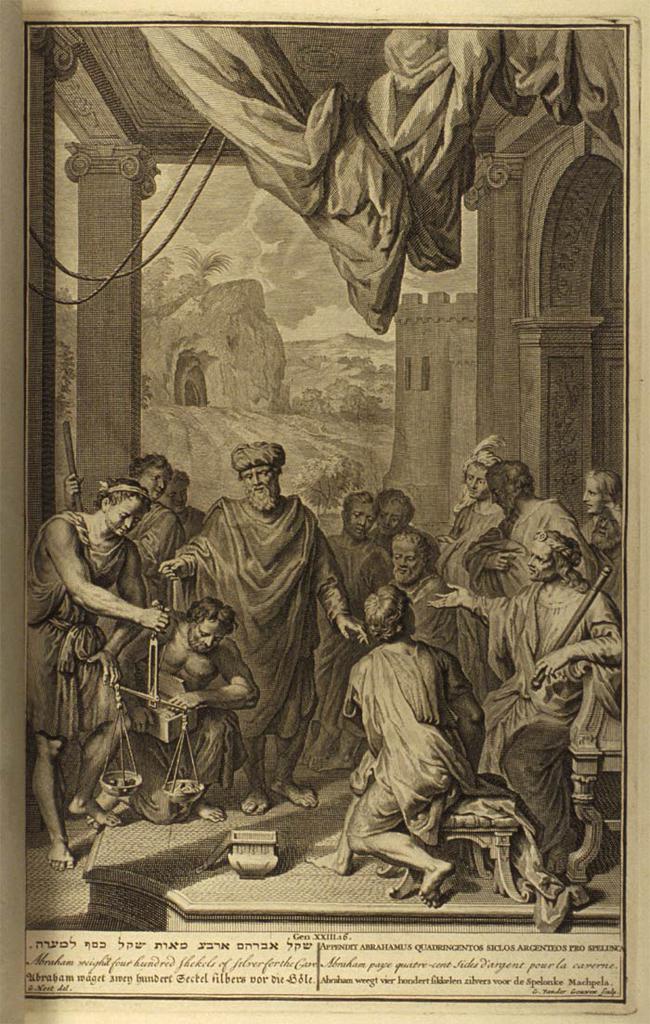
(11) “No, my lord, hear me: I give you the field and I give you the cave that is in it; I give it to you in the presence of my people. Bury your dead.” (12) Then Abraham bowed low before the landowning citizens, (13) and spoke to Ephron in the hearing of the landowning citizens, saying, “If only you would hear me out! Let me pay the price of the land; accept it from me, that I may bury my dead there.” (14) And Ephron replied to Abraham, saying to him, (15) “My lord, do hear me! A piece of land worth four hundred shekels of silver—what is that between you and me? Go and bury your dead.” (16) Abraham accepted Ephron’s terms. Abraham paid out to Ephron the money that he had named in the hearing of the Hittites—four hundred shekels of silver at the going merchants’ rate.
רַבִּי חָמָא בְּרַבִּי חֲנִינָא אָמַר: אַף מֹשֶׁה רַבֵּינוּ אֵינוֹ יוֹדֵעַ הֵיכָן קָבוּר. כְּתִיב הָכָא: ״וְלֹא יָדַע אִישׁ אֶת קְבֻרָתוֹ״, וּכְתִיב הָתָם: ״וְזֹאת הַבְּרָכָה אֲשֶׁר בֵּרַךְ מֹשֶׁה אִישׁ הָאֱלֹהִים״. וְאָמַר רַבִּי חָמָא בְּרַבִּי חֲנִינָא: מִפְּנֵי מָה נִקְבַּר מֹשֶׁה אֵצֶל בֵּית פְּעוֹר — כְּדֵי לְכַפֵּר עַל מַעֲשֵׂה פְעוֹר. וְאָמַר רַבִּי חָמָא בְּרַבִּי חֲנִינָא, מַאי דִּכְתִיב: ״אַחֲרֵי יקוק אֱלֹקֵיכֶם תֵּלֵכוּ״, וְכִי אֶפְשָׁר לוֹ לְאָדָם לְהַלֵּךְ אַחַר שְׁכִינָה? וַהֲלֹא כְּבָר נֶאֱמַר ״כִּי יקוק אֱלֹקֶיךָ אֵשׁ אוֹכְלָה הוּא״! אֶלָּא, לְהַלֵּךְ אַחַר מִדּוֹתָיו שֶׁל הַקָּדוֹשׁ בָּרוּךְ הוּא: מָה הוּא מַלְבִּישׁ עֲרוּמִּים, דִּכְתִיב: ״וַיַּעַשׂ יקוק אֱלֹקִים לְאָדָם וּלְאִשְׁתּוֹ כׇּתְנוֹת עוֹר וַיַּלְבִּשֵׁם״ — אַף אַתָּה הַלְבֵּשׁ עֲרוּמִּים. הַקָּדוֹשׁ בָּרוּךְ הוּא בִּיקֵּר חוֹלִים, דִּכְתִיב: ״וַיֵּרָא אֵלָיו יקוק בְּאֵלֹנֵי מַמְרֵא״ — אַף אַתָּה בַּקֵּר חוֹלִים. הַקָּדוֹשׁ בָּרוּךְ הוּא נִיחֵם אֲבֵלִים, דִּכְתִיב: ״וַיְהִי אַחֲרֵי מוֹת אַבְרָהָם וַיְבָרֶךְ אֱלֹקִים אֶת יִצְחָק בְּנוֹ״ — אַף אַתָּה נַחֵם אֲבֵלִים. הַקָּדוֹשׁ בָּרוּךְ הוּא קָבַר מֵתִים, דִּכְתִיב: ״וַיִּקְבֹּר אוֹתוֹ בַּגַּי״ — אַף אַתָּה קְבוֹר מֵתִים.
Rabbi Ḥama, son of Rabbi Ḥanina, says: Even Moses our teacher himself does not know where he is buried. It is written here: “And no man knows of his grave,” and it is written there: “And this is the blessing wherewith Moses the man of God blessed the children of Israel before his death” (Deuteronomy 33:1). In other words, even Moses, as he is referred to by the term “man,” does not know his burial place. And Rabbi Ḥama, son of Rabbi Ḥanina, says: For what reason was Moses buried near Beth Peor? In order to atone for the incident that transpired at Beth Peor (Numbers, chapter 25). And Rabbi Ḥama, son of Rabbi Ḥanina, says: What is the meaning of that which is written: “After the Lord your God shall you walk, and Him shall you fear, and His commandments shall you keep, and unto His voice shall you hearken, and Him shall you serve, and unto Him shall you cleave” (Deuteronomy 13:5)? But is it actually possible for a person to follow the Divine Presence? But hasn’t it already been stated: “For the Lord your God is a devouring fire, a jealous God” (Deuteronomy 4:24), and one cannot approach fire. He explains: Rather, the meaning is that one should follow the attributes of the Holy One, Blessed be He. He provides several examples. Just as He clothes the naked, as it is written: “And the Lord God made for Adam and for his wife garments of skin, and clothed them” (Genesis 3:21), so too, should you clothe the naked. Just as the Holy One, Blessed be He, visits the sick, as it is written with regard to God’s appearing to Abraham following his circumcision: “And the Lord appeared unto him by the terebinths of Mamre” (Genesis 18:1), so too, should you visit the sick. Just as the Holy One, Blessed be He, consoles mourners, as it is written: “And it came to pass after the death of Abraham, that God blessed Isaac his son” (Genesis 25:11), so too, should you console mourners. Just as the Holy One, Blessed be He, buried the dead, as it is written: “And he was buried in the valley in the land of Moab” (Deuteronomy 34:6), so too, should you bury the dead.
Mass and money
By illustrators of the 1728 Figures de la Bible, Gerard Hoet (1648-1733) and others, published by P. de Hondt in The Hague in 1728 - http://www.mythfolklore.net/lahaye/023/LaHaye1728Figures023GenXXIII16AbrahamWeighsSilver.jpg, Public Domain, https://commons.wikimedia.org/w/index.php?curid=8332106
By illustrators of the 1728 Figures de la Bible, Gerard Hoet (1648-1733) and others, published by P. de Hondt in The Hague in 1728 - http://www.mythfolklore.net/lahaye/023/LaHaye1728Figures023GenXXIII16AbrahamWeighsSilver.jpg, Public Domain, https://commons.wikimedia.org/w/index.php?curid=8332106
The Babylonian system, which the Israelites followed, measured weight with units of the kikar (talent), mina, shekel, and giru (Hebrew Gerah), related to one another as follows:
1 shekel = 24 gerah
1 mina = 60 shekels
1 kikar = 60 mina
In the Israelite system, the ratio of the gerah to the shekel was altered to 20:1 (Exodus 30:13). In later generations, the minah was renamed to litra, being the Greek form of the Latin libra, meaning pound.[4][43] Thus, the Jewish system was as follows:
1 mina = 60 shekels
1 kikar = 60 mina
In the Israelite system, the ratio of the gerah to the shekel was altered to 20:1 (Exodus 30:13). In later generations, the minah was renamed to litra, being the Greek form of the Latin libra, meaning pound.[4][43] Thus, the Jewish system was as follows:
1 shekel = 20 gerah
1 litra = 60 shekels (later 100 zuz)
1 kikar = 60 litra
There were, however, different versions of the talent/kikkar in use; a royal and a common version. In addition, each of these forms had a heavy and a light version, with the heavy version being exactly twice the weight of the lighter form; the light royal talent was often represented in the form of a duck, while the heavy royal talent often took the form of a lion. The mina for the heavy royal talent weighed 1.01 kilograms (2.23 lbs), while that for the heavy common talent weighed only 984 grams (2.17 lbs); accordingly, the heavy common shekel would be about 15.87 grams (0.56 oz).[1] According to Josephus, it was the heavy common talent, and its mina and shekel, that was the normal measure of weight in Syria and Judea;[44] Josephus also mentions an additional unit – the bekah – which was exactly half a shekel.
1 litra = 60 shekels (later 100 zuz)
1 kikar = 60 litra
There were, however, different versions of the talent/kikkar in use; a royal and a common version. In addition, each of these forms had a heavy and a light version, with the heavy version being exactly twice the weight of the lighter form; the light royal talent was often represented in the form of a duck, while the heavy royal talent often took the form of a lion. The mina for the heavy royal talent weighed 1.01 kilograms (2.23 lbs), while that for the heavy common talent weighed only 984 grams (2.17 lbs); accordingly, the heavy common shekel would be about 15.87 grams (0.56 oz).[1] According to Josephus, it was the heavy common talent, and its mina and shekel, that was the normal measure of weight in Syria and Judea;[44] Josephus also mentions an additional unit – the bekah – which was exactly half a shekel.
Gradually, the system was reformed, perhaps under the influence of Egypt, so that a mina was worth only 50 shekels rather than 60; to achieve this, the shekel remained the same weight, while the weight of the standard mina was reduced. Moses mandated that the standard coinage would be in single shekels of silver; thus each shekel coin would constitute about 15.86 grams (0.51 troy ounces) of pure silver. In Judea, the Biblical shekel was initially worth about 3⅓ denarii, but over time the measurement had enlarged so that it would be worth exactly four denarii.[1]
(כב) נִ֥בְהָֽל־לַה֗וֹן אִ֭ישׁ רַ֣ע עָ֑יִן וְלֹא־יֵ֝דַ֗ע כִּי־חֶ֥סֶר יְבֹאֶֽנּוּ׃
(22) A miserly man runs after wealth; He does not realize that loss will overtake it.
(טז) וַיִּשְׁמַ֣ע אַבְרָהָם֮ אֶל־עֶפְרוֹן֒ וַיִּשְׁקֹ֤ל אַבְרָהָם֙ לְעֶפְרֹ֔ן אֶת־הַכֶּ֕סֶף אֲשֶׁ֥ר דִּבֶּ֖ר בְּאׇזְנֵ֣י בְנֵי־חֵ֑ת אַרְבַּ֤ע מֵאוֹת֙ שֶׁ֣קֶל כֶּ֔סֶף עֹבֵ֖ר לַסֹּחֵֽר׃
(16) Abraham accepted Ephron’s terms. Abraham paid out to Ephron the money that he had named in the hearing of the Hittites—four hundred shekels of silver at the going merchants’ rate.
וישקל אברהם לעפרן. חָסֵר וָי"ו; לְפִי שֶׁאָמַר הַרְבֵּה, וַאֲפִלּוּ מְעַט לֹא עָשָׂה (בבא מציעא פ"ז), שֶׁנָּטַל מִמֶּנוּ שְׁקָלִים גְּדוֹלִים שֶׁהֵן קַנְטָרִין, שֶׁנֶּאֱמַר עֹבֵר לַסֹּחֵר, שֶׁמִּתְקַבְּלִים בְּשֶׁקֶל בְּכָל מָקוֹם (שם ובכורות נ'), וְיֵשׁ מָקוֹם שֶׁשִּׁקְלֵיהֶן גְּדוֹלִים, שֶׁהֵן קַנְטָרִין צנטינא"רש בלע"ז:
וישקל אברהם לעפרן AND ABRAHAM WEIGHED TO EPHRON [THE SILVER] — The name Ephron is written defectively (without the ו) to indicate that there was something missing in Ephron viz, sincerity — because he promised much but did not do even the very least (Bava Metzia 87a): He took from him big Shekels, viz., centenaria (worth a full 100 smaller units) as it is said, “money current with the merchant” which means, such coins as were everywhere accepted as worth a full Shekel — for there are places where their Shekels are of large size, centenaria; old French Centenars (cf. Ruth R. 7).
פְּרַגְמַטְיָא, פְּרַקְ׳ f. (πραγματεία) business; ware, goods. B. Mets. 42ᵃשליש בקרקע שליש בפ׳ וכ׳ (invest) one third in land, one third in business, and (retain) one third in ready money. Cant. R. to III, 6הוו עסקין בפ׳ והוון נסבין וכ׳ engaged in business and dealt in silk; Gen. R. s. 77. Cant. R. l. c. כל פ׳ שישראל עושין וכ׳ in whatever business Israelites are engaged and meet with success, they owe it to that dust which Jacob raised (when wrestling with the angel). Tanḥ. Mishp. 9טול ממני … ותעשה פ׳ וכ׳ take from me a loan of one hundred thousand (zuz), and do business with it, and assign as security to me &c. Ib. 5כל פ׳ שאתה רואה וכ׳ whatever goods you find to be low and lying in the ground (despised), engage in it, for it will rise in the end. Ib.הפסידה פ׳ שלך thy goods have gone down; a. fr.
(יז) וַיָּ֣קׇם ׀ שְׂדֵ֣ה עֶפְר֗וֹן אֲשֶׁר֙ בַּמַּכְפֵּלָ֔ה אֲשֶׁ֖ר לִפְנֵ֣י מַמְרֵ֑א הַשָּׂדֶה֙ וְהַמְּעָרָ֣ה אֲשֶׁר־בּ֔וֹ וְכׇל־הָעֵץ֙ אֲשֶׁ֣ר בַּשָּׂדֶ֔ה אֲשֶׁ֥ר בְּכׇל־גְּבֻל֖וֹ סָבִֽיב׃ (יח) לְאַבְרָהָ֥ם לְמִקְנָ֖ה לְעֵינֵ֣י בְנֵי־חֵ֑ת בְּכֹ֖ל בָּאֵ֥י שַֽׁעַר־עִירֽוֹ׃
(17) So Ephron’s land in Machpelah, near Mamre—the field with its cave and all the trees anywhere within the confines of that field—passed (18) to Abraham as his possession, in the presence of the Hittites, of the assembly in his town’s gate.

(יג) רְאֵ֖ה אֶת־מַעֲשֵׂ֣ה הָאֱלֹקִ֑ים כִּ֣י מִ֤י יוּכַל֙ לְתַקֵּ֔ן אֵ֖ת אֲשֶׁ֥ר עִוְּתֽוֹ׃
(13) Consider God’s doing! Who can straighten what He has twisted?
רְאֵה אֶת מַעֲשֵׂה הָאֱלֹקִים כִּי מִי יוּכַל לְתַקֵּן אֵת אֲשֶׁר עִוְּתוֹ, בְּשָׁעָה שֶׁבָּרָא הַקָּדוֹשׁ בָּרוּךְ הוּא אֶת אָדָם הָרִאשׁוֹן, נְטָלוֹ וְהֶחֱזִירוֹ עַל כָּל אִילָנֵי גַּן עֵדֶן, וְאָמַר לוֹ, רְאֵה מַעֲשַׂי כַּמָּה נָאִים וּמְשֻׁבָּחִין הֵן, וְכָל מַה שֶּׁבָּרָאתִי בִּשְׁבִילְךָ בָּרָאתִי, תֵּן דַּעְתְּךָ שֶׁלֹא תְקַלְקֵל וְתַחֲרִיב אֶת עוֹלָמִי, שֶׁאִם קִלְקַלְתָּ אֵין מִי שֶׁיְתַקֵּן אַחֲרֶיךָ,
“See the work of God, for who can mend what He has warped?” (Ecclesiastes 7:13)
“See the work of God, for who can mend what He has warped?” When the Holy One blessed be He created Adam the first man, He took him and showed him all the trees in the Garden of Eden, and He said to him: ‘See My creations, how beautiful and exemplary they are. Everything I created, I created for you. Make certain that you do not ruin and destroy My world, as if you destroy it, there will be no one to mend it after you.
“See the work of God, for who can mend what He has warped?” When the Holy One blessed be He created Adam the first man, He took him and showed him all the trees in the Garden of Eden, and He said to him: ‘See My creations, how beautiful and exemplary they are. Everything I created, I created for you. Make certain that you do not ruin and destroy My world, as if you destroy it, there will be no one to mend it after you.
(יג) רְאֵ֖ה אֶת־מַעֲשֵׂ֣ה הָאֱלֹקִ֑ים כִּ֣י מִ֤י יוּכַל֙ לְתַקֵּ֔ן אֵ֖ת אֲשֶׁ֥ר עִוְּתֽוֹ׃
(13) Consider God’s doing! Who can straighten what He has twisted?
Ahem, me, Izzun Kohelet - forthcoming
The first chapter of Isaiah Berlin’s The Crooked Timber of Humanity, ends as follows “[This] liberal sermon recommends machinery designed to prevent people from doing to each other too much harm, giving each human group sufficient room to realise its own idiosyncratic, unique, particular ends without too much interference with the ends of others. [This] is not a passionate battle-cry to inspire men to sacrifice and martyrdom and heroic feats. Yet, if it were adopted, it might yet prevent mutual destruction, and, in the end, preserve the world. Immanuel Kant observed that ‘Out of the crooked timber of humanity no straight thing was ever made.’ And for that reason, no perfect solution is, not merely in practice, but in principle, possible in human affairs, and any determined attempt to produce it is likely to lead to suffering, disillusionment and failure.”
Kohelet would have approved.
Kohelet would have approved.
קוֹלְמוֹס m. (calamus) reed, writing pen. Sabb. 92ᵇשנים … בק׳ כותבין if two take hold … of a pen and write; Tosef. ib. IX (X), 10; Sifra Vayiḳra, Ḥob., ch. IX, Par. 7. Sabb. I, 3בקוֹלְמוֹסוֹ; Y. ib. 3ᵇ, v. לִבְלָר. Taan. 20ᵇלפיכך זכה קנה … ק׳ וכ׳ therefore (because of its yielding nature) the reed was privileged to supply the pen with which to write the Torah &c. Tanḥ. Ki Thissa 37 עד שמשה … נשתייר בק׳ וכ׳ when Moses wrote the Torah, something (of the fire-ink) was left in the pen, and he passed it over his head &c. Pes. 118ᵇ (ref. to Ps. LXVIII, 31) געור בחיה … בק׳ אחד rebuke the beast (Rome) all of whose deeds are written down with the same pen (of tyranny); a. fr.—Ḥull. 30ᵇשחיטה העשויה כק׳ a cut (of the animal’s throat) shaped like the cut of a writing reed (slanting).—Pl. קוֹלְמוֹסִים, קוֹלְמוֹסִין. Y. Sabb. XII, 13ᶜ bot. כמין ק׳ היו עשויין the boards were cut like pens (thinner and slanting on top). Gen. R. s. 58, a. e. כמה ק׳ משתברין how many pens were broken &c., v. דְּיוֹ. Tosef. Kel. B. Bath. VII, 12הק׳ metal pens (styluses; Kel. XII, 8 sing.). Sabb. 11ᵃאם יהיו … ואנמים ק׳ וכ׳ if all seas were ink, and all reeds pens &c.; Ab. d’R. N. ch. XXVקלְמוֹסִים (ed. Schechter קול׳, Var. קוּלְמְסִין).
Historical Setting
Barzillai the Gileadite emerges during Absalom’s rebellion when King David retreats east of the Jordan. Rogelim lies in Gilead, north of Mahanaim. The episode takes place near the close of David’s reign, around 970 BC. Barzillai the Meholathite is connected to an earlier generation under Saul, while the priestly family appears more than four centuries later during the return from Babylonian exile (circa 538 BC).
Barzillai the Gileadite: Loyal Benefactor of David
2 Samuel 17:27-29 records Barzillai’s immediate response to David’s need: “They brought bedding, bowls, and articles of pottery, along with wheat, barley, flour, roasted grain, beans, lentils, honey, curds, sheep, and cheese from cattle, for David and the people with him to eat. For they said, ‘The people have become hungry, exhausted, and thirsty in the wilderness.’”

(יט) וְאַחֲרֵי־כֵן֩ קָבַ֨ר אַבְרָהָ֜ם אֶת־שָׂרָ֣ה אִשְׁתּ֗וֹ אֶל־מְעָרַ֞ת שְׂדֵ֧ה הַמַּכְפֵּלָ֛ה עַל־פְּנֵ֥י מַמְרֵ֖א הִ֣וא חֶבְר֑וֹן בְּאֶ֖רֶץ כְּנָֽעַן׃
(19) And then Abraham buried his wife Sarah in the cave of the field of Machpelah, facing Mamre—now Hebron—in the land of Canaan.
(כא) רֹ֭דֵף צְדָקָ֣ה וָחָ֑סֶד יִמְצָ֥א חַ֝יִּ֗ים צְדָקָ֥ה וְכָבֽוֹד׃
(21) He who strives to do good and kind deeds Attains life, success, and honor.
(יט) כִּ֣י יְדַעְתִּ֗יו לְמַ֩עַן֩ אֲשֶׁ֨ר יְצַוֶּ֜ה אֶת־בָּנָ֤יו וְאֶת־בֵּיתוֹ֙ אַחֲרָ֔יו וְשָֽׁמְרוּ֙ דֶּ֣רֶךְ יקוק לַעֲשׂ֥וֹת צְדָקָ֖ה וּמִשְׁפָּ֑ט לְמַ֗עַן הָבִ֤יא יקוק עַל־אַבְרָהָ֔ם אֵ֥ת אֲשֶׁר־דִּבֶּ֖ר עָלָֽיו׃
(ז) וְאֵ֗לֶּה יְמֵ֛י שְׁנֵֽי־חַיֵּ֥י אַבְרָהָ֖ם אֲשֶׁר־חָ֑י מְאַ֥ת שָׁנָ֛ה וְשִׁבְעִ֥ים שָׁנָ֖ה וְחָמֵ֥שׁ שָׁנִֽים׃
(7) This was the total span of Abraham’s life: one hundred and seventy-five years.
(א) וְאַבְרָהָ֣ם זָקֵ֔ן בָּ֖א בַּיָּמִ֑ים וַֽיקוק בֵּרַ֥ךְ אֶת־אַבְרָהָ֖ם בַּכֹּֽל׃
(1) Abraham was now old, advanced in years, and יקוק had blessed Abraham in all things.
Ahem, me, Izzun Megilat Ester
Clothing, Levush, always acts simultaneously in two opposite valences, functioning both to protect and disguise of our most intimate naked self and simultaneously as clearest expression of how we expose ourselves to the world. Our self, our inchoate potential (or in Aristotelian terms our matter) is always in need of being clothed, or expressed in a form that both protects and expresses. That’s true even for the ineffable God who ‘wears glory and majesty, like a robe’ (Psalm 104). Metzudat David suggests that God wears the Universe as a person wears a garment.
Clothing, Levush, always acts simultaneously in two opposite valences, functioning both to protect and disguise of our most intimate naked self and simultaneously as clearest expression of how we expose ourselves to the world. Our self, our inchoate potential (or in Aristotelian terms our matter) is always in need of being clothed, or expressed in a form that both protects and expresses. That’s true even for the ineffable God who ‘wears glory and majesty, like a robe’ (Psalm 104). Metzudat David suggests that God wears the Universe as a person wears a garment.