


The 4th annual yahrtzeit shiur in memory of four Savtas:
Minette Schwartz Radin Kochman
Lillian Klaff
Sadie Jaffe
Yolanda Rosenschein
(א) בַּעֲשָׂרָה מַאֲמָרוֹת נִבְרָא הָעוֹלָם. וּמַה תַּלְמוּד לוֹמַר, וַהֲלֹא בְמַאֲמָר אֶחָד יָכוֹל לְהִבָּרְאוֹת, אֶלָּא לְהִפָּרַע מִן הָרְשָׁעִים שֶׁמְּאַבְּדִין אֶת הָעוֹלָם שֶׁנִּבְרָא בַעֲשָׂרָה מַאֲמָרוֹת, וְלִתֵּן שָׂכָר טוֹב לַצַּדִּיקִים שֶׁמְּקַיְּמִין אֶת הָעוֹלָם שֶׁנִּבְרָא בַעֲשָׂרָה מַאֲמָרוֹת:
(1) With ten utterances the world was created. And what does this teach, for surely it could have been created with one utterance? But this was so in order to punish the wicked who destroy the world that was created with ten utterances, And to give a good reward to the righteous who maintain the world that was created with ten utterances.
וַֽיְהִי־שָׁ֣ם עִם־יְהֹוָ֗ה אַרְבָּעִ֥ים יוֹם֙ וְאַרְבָּעִ֣ים לַ֔יְלָה לֶ֚חֶם לֹ֣א אָכַ֔ל וּמַ֖יִם לֹ֣א שָׁתָ֑ה וַיִּכְתֹּ֣ב עַל־הַלֻּחֹ֗ת אֵ֚ת דִּבְרֵ֣י הַבְּרִ֔ית עֲשֶׂ֖רֶת הַדְּבָרִֽים׃
And he was there with יהוה forty days and forty nights; he ate no bread and drank no water; and he wrote down on the tablets the terms of the covenant, the Ten Commandments.
(א) וַיְדַבֵּ֣ר אֱלֹהִ֔ים אֵ֛ת כׇּל־הַדְּבָרִ֥ים הָאֵ֖לֶּה לֵאמֹֽר׃ {ס}
(1) God spoke all these words, saying:
אֶלָּא הָא דְּתָנֵי רַב שִׁימִי: אֵין פּוֹחֲתִין מֵעֲשָׂרָה פְּסוּקִין בְּבֵית הַכְּנֶסֶת, ״וַיְדַבֵּר״ עוֹלֶה מִן הַמִּנְיָן. הָנֵי עֲשָׂרָה כְּנֶגֶד מִי? אָמַר רַבִּי יְהוֹשֻׁעַ בֶּן לֵוִי: כְּנֶגֶד עֲשָׂרָה בַּטְלָנִין שֶׁבְּבֵית הַכְּנֶסֶת. רַב יוֹסֵף: אָמַר כְּנֶגֶד עֲשֶׂרֶת הַדִּבְּרוֹת שֶׁנֶּאֶמְרוּ לְמֹשֶׁה בְּסִינַי. (רַבִּי לֵוִי אָמַר: כְּנֶגֶד עֲשָׂרָה הִילּוּלִין שֶׁאָמַר דָּוִד בְּסֵפֶר תְּהִלִּים.) וְרַבִּי יוֹחָנָן אָמַר: כְּנֶגֶד עֲשָׂרָה מַאֲמָרוֹת שֶׁבָּהֶן נִבְרָא הָעוֹלָם.
The Gemara raises a question: But with regard to this baraita that Rav Shimi taught: One may not decrease to fewer than ten the number of verses read during a public Torah reading in the synagogue, and a generic verse, e.g., “And God spoke to Moses saying,” is included in the count, to what do these ten verses correspond? Why specifically the number ten? Rabbi Yehoshua ben Levi said: They correspond to the ten idlers that are in the synagogue, i.e., ten men who have the leisure not to work, and instead sit in the synagogue and are available to attend to communal needs. Rav Yosef said: They correspond to the Ten Commandments that were spoken to Moses at Sinai. Rabbi Levi said: They correspond to the ten psalms of praise that David said in the book of Psalms. And Rabbi Yoḥanan said: They correspond to the ten utterances with which the world was created.
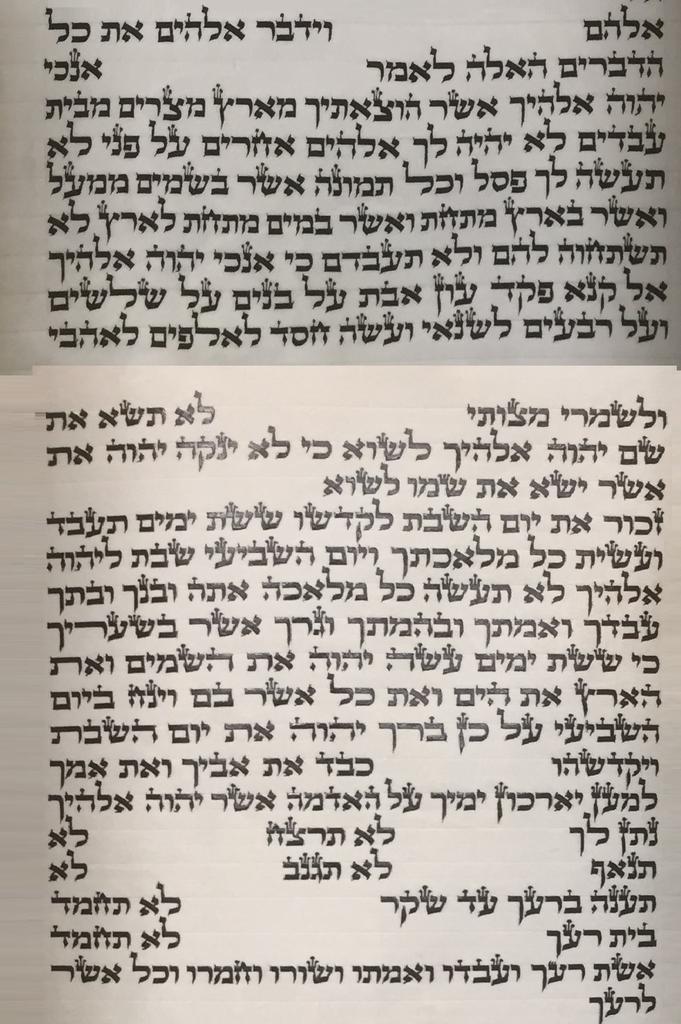
(image by: By NYC Guru - Self-photographed, CC BY-SA 4.0, https://commons.wikimedia.org/w/index.php?curid=128443158
את כל הדברים האלה. מְלַמֵּד שֶׁאָמַר הַקָּבָּ"ה עֲשֶׂרֶת הַדִּבְּרוֹת בְּדִבּוּר אֶחָד, מַה שֶּׁאִי אֶפְשָׁר לְאָדָם לוֹמַר כֵּן, אִם כֵּן מַה תַּ"לֹ עוֹד אָנֹכִי וְלֹא יִהְיֶה לְךָ? שֶׁחָזַר וּפֵרֵשׁ עַל כָּל דִּבּוּר וְדִבּוּר בִּפְנֵי עַצְמוֹ (שם):
את כל הדברים האלה ALL THESE WORDS — This statement (that God spake all these words) tells us that the Holy One, blessed be He, said all these words in one utterance, something that is impossible to a human being to do — to speak in this manner. Now if this be so, why does Scripture again say the first two Commandments, אנכי and לא יהיה לך? But the explanation is that He repeated and expressly uttered each of these two commandments by itself (Mekhilta).
(טז) וַיֹּֽאמְרוּ֙ אֶל־מֹשֶׁ֔ה דַּבֵּר־אַתָּ֥ה עִמָּ֖נוּ וְנִשְׁמָ֑עָה וְאַל־יְדַבֵּ֥ר עִמָּ֛נוּ אֱלֹהִ֖ים פֶּן־נָמֽוּת׃
“You speak to us,” they said to Moses, “and we will obey; but let not God speak to us, lest we die.”
וְאָמַר רַבִּי יְהוֹשֻׁעַ בֶּן לֵוִי: כׇּל דִּיבּוּר וְדִיבּוּר שֶׁיָּצָא מִפִּי הַקָּדוֹשׁ בָּרוּךְ הוּא יָצְתָה נִשְׁמָתָן שֶׁל יִשְׂרָאֵל, שֶׁנֶּאֱמַר: ״נַפְשִׁי יָצְאָה בְדַבְּרוֹ״. וּמֵאַחַר שֶׁמִּדִּיבּוּר רִאשׁוֹן יָצְתָה נִשְׁמָתָן, דִּיבּוּר שֵׁנִי הֵיאַךְ קִיבְּלוּ? — הוֹרִיד טַל שֶׁעָתִיד לְהַחֲיוֹת בּוֹ מֵתִים וְהֶחְיָה אוֹתָם, שֶׁנֶּאֱמַר: ״גֶּשֶׁם נְדָבוֹת תָּנִיף אֱלֹהִים נַחֲלָתְךָ וְנִלְאָה אַתָּה כוֹנַנְתָּהּ״. וְאָמַר רַבִּי יְהוֹשֻׁעַ בֶּן לֵוִי: כׇּל דִּיבּוּר וְדִיבּוּר שֶׁיָּצָא מִפִּי הַקָּדוֹשׁ בָּרוּךְ הוּא חָזְרוּ יִשְׂרָאֵל לַאֲחוֹרֵיהֶן שְׁנֵים עָשָׂר מִיל וְהָיוּ מַלְאֲכֵי הַשָּׁרֵת מְדַדִּין אוֹתָן, שֶׁנֶּאֱמַר: ״מַלְאֲכֵי צְבָאוֹת יִדֹּדוּן יִדֹּדוּן״ — אַל תִּיקְרֵי ״יִדֹּדוּן״, אֶלָּא ״יְדַדּוּן״.
And Rabbi Yehoshua ben Levi said: From each and every utterance that emerged from the mouth of the Holy One, Blessed be He, the souls of the Jewish people left their bodies, as it is stated: “My soul departed when he spoke” (Song of Songs 5:6). And since their souls left their bodies from the first utterance, how did they receive the second utterance? Rather, God rained the dew upon them that, in the future, will revive the dead, and He revived them, as it is stated: “You, God, poured down a bountiful rain; when Your inheritance was weary You sustained it” (Psalms 68:10). And Rabbi Yehoshua ben Levi said: With each and every utterance that emerged from the mouth of the Holy One, Blessed be He, the Jewish people retreated in fear twelve mil, and the ministering angels walked them back toward the mountain, as it is stated: “The hosts of angels will scatter [yidodun]” (Psalms 68:13). Do not read the word as yidodun, meaning scattered; rather, read it as yedadun, they walked them.
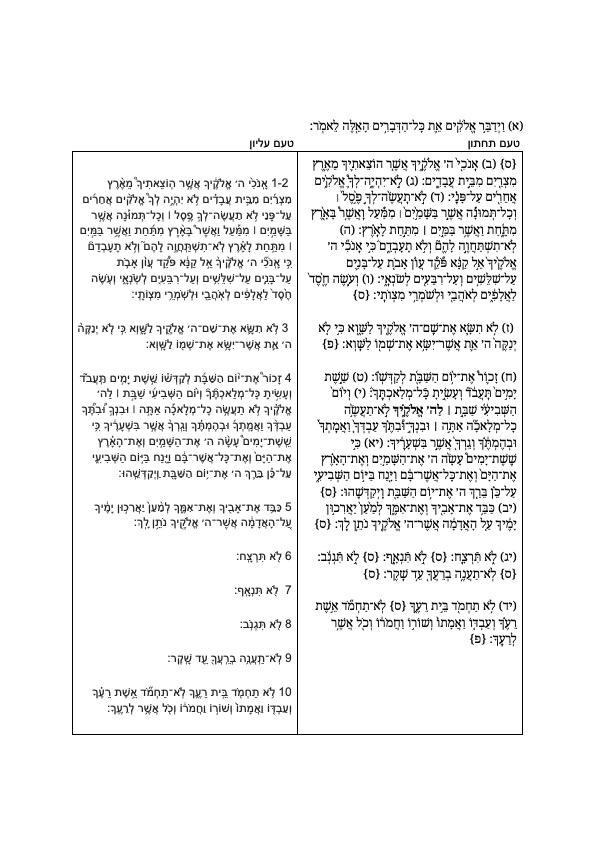
(ד) וכיוון שכך, נהגו לקרוא את עשרת הדיברות שבחג השבועות בטעם עליון. כלומר, בקריאה לפי הטעמים הרגילים שכתובים בחומשים, חלוקת נגינת הקריאה היא לפי הפסוקים, ובטעם עליון חלוקת הנגינה לפי המצוות. למשל, דיבור 'זכור' מחולק לארבעה פסוקים, ובטעם עליון הוא נקרא כפסוק אחד ארוך. לעומת זאת ארבעה דיבורים: "לֹא תִּרְצָח, לֹא תִּנְאָף, לֹא תִּגְנֹב, לֹא תַעֲנֶה בְרֵעֲךָ עֵד שָׁקֶר", נקראים בטעמים הרגילים כפסוק אחד, ואילו לפי טעם עליון הם נקראים כארבעה פסוקים. חלוקה שונה זו משפיעה כמעט על כל הטעמים, עד שנקבעה מנגינה שונה במקצת לקריאה בטעם עליון (באו"ה תצד, ג). לכל הדעות קוראים בחג השבועות את עשרת הדיברות בטעם עליון, אולם לגבי קריאת עשרת הדיברות בסדר פרשיות השבוע נחלקו המנהגים. וכיום נוהגים בכל קריאה בציבור לקרוא את עשרת הדיברות בטעם עליון.
(4) On account of this, the custom on Shavu’ot is to read the Ten Commandments with the festive (“upper”) cantillation (ta’am elyon). When reading with the usual cantillation, one pauses at the end of each verse; when reading with the festive cantillation, one pauses at the end of each commandment. For example, the commandment to remember the Sabbath day extends over four verses, but it is read as one long verse with the festive cantillation. Likewise, there is a single verse that contains four commandments: “Do not murder,” “Do not commit adultery,” “Do not steal,” and “Do not bear false witness.” Normally they are read as one verse, but in the festive cantillation they are read as if they are four separate verses. This different division of verses affects the cantillation of so many words that a slightly different tune was established for reading according to this division (BHL 494:3). All agree that on Shavu’ot, the Ten Commandments are read with the ta’am elyon. Although there used to be various customs as to how to read them during the year in the normal cycle of Torah readings, nowadays at all public Torah readings it is standard to read the Ten Commandments with the festive cantillation.
Division of the 10 commandments according to the two sets of cantillation marks
וְתַרְגּוּם שֶׁל תּוֹרָה, אוּנְקְלוֹס הַגֵּר אֲמָרוֹ? וְהָא אָמַר רַב אִיקָא בַּר אָבִין אָמַר רַב חֲנַנְאֵל אָמַר רַב: מַאי דִּכְתִיב: ״וַיִּקְרְאוּ בְּסֵפֶר תּוֹרַת הָאֱלֹהִים מְפוֹרָשׁ וְשׂוֹם שֶׂכֶל וַיָּבִינוּ בַּמִּקְרָא״. ״וַיִּקְרְאוּ בְּסֵפֶר תּוֹרַת הָאֱלֹהִים״ — זֶה מִקְרָא; ״מְפוֹרָשׁ״ — זֶה תַּרְגּוּם; ״וְשׂוֹם שֶׂכֶל״ — אֵלּוּ הַפְּסוּקִין; ״וַיָּבִינוּ בַּמִּקְרָא״ — אֵלּוּ פִּיסְקֵי טְעָמִים, וְאָמְרִי לַהּ — אֵלּוּ הַמָּסוֹרֹת! — שְׁכָחוּם וְחָזְרוּ וְיִסְּדוּם.
The Gemara asks: Was the translation of the Torah really composed by Onkelos the convert? Didn’t Rav Ika bar Avin say that Rav Ḥananel said that Rav said: What is the meaning of that which is written with respect to the days of Ezra: “And they read in the book, the Torah of God, distinctly; and they gave the sense, and they caused them to understand the reading” (Nehemiah 8:8)? The verse should be understood as follows: “And they read in the book, the Torah of God,” this is the scriptural text; “distinctly,” this is the translation, indicating that they immediately translated the text into Aramaic, as was customary during public Torah readings. “And they gave the sense,” these are the divisions of the text into separate verses. “And they caused them to understand the reading,” these are the cantillation notes, through which the meaning of the text is further clarified. And some say that these are the Masoretic traditions with regard to the manner in which each word is to be written. This indicates that the Aramaic translation already existed at the beginning of the Second Temple period, well before the time of Onkelos. The Gemara answers: The ancient Aramaic translation was forgotten and then Onkelos came and reestablished it.
פיסקי הטעמים - הנגינות קרויין טעמים:
בחדש השלישי.[א] אמר הקב"ה לישר' בניי, היו קורין את הפרשה הזאת בכל שנה ואני מעלה עליכם כאילו שאתם עומדים לפני הר סיני ומקבלין את התורה. אימתיי, בחודש השלישי לצאת בני ישראל מארץ מצרים (שמות יט:א).
(ה) רבים נוהגים לעמוד בעת קריאת עשרת הדיברות, זכר למעמד הנכבד והנורא, שכל השומע את עשרת הדיברות בציבור כאילו מקבל פני שכינה. מנהג זה נזכר לראשונה בתקופת הראשונים לפני כשמונה מאות שנה, אולם רק בתקופת האחרונים נעשה רווח ברוב קהילות ישראל. כך נוהגים כל האשכנזים וחלק מהספרדים. ויש שפקפקו על המנהג, מפני שמצינו בתלמוד (ברכות יב, א), שנמנעו חכמים מלקבוע את קריאת עשרת הדיברות יחד עם קריאת שמע, כדי שלא יטעו אחר המינים שטוענים שאפשר להסתפק בשמירת עשרת הדיברות. אולם לדעת רוב הפוסקים אין בזה שום טענה, שכן גם במעמד הר סיני עמדו, ורק קריאה יום יומית בעשרת הדיברות עלולה לגרום לטעות. בנוסף לכך, המינים שטוענים שאין צורך לשמור את שאר המצוות אינם מצויים בינינו.4מצינו בתשובת הרמב"ם שהסכים לדעת הרב שביטל את המנהג לעמוד. וכ"כ באמת ליעקב ור' חיים פלאג'י, ובדורנו ביחו"ד א, כט. לעומת זאת רבים קיימו את המנהג, ומהם: חיד"א טוב עין יא; דבר שמואל רעו; מטה יהודה או"ח א, ו; ישכיל עבדי ב, א; ז, א; אג"מ או"ח ד, כב; שמש ומגן א או"ח נז. וכן נהגו בצפון אפריקה כמבואר בדברי שלום ואמת א' עמ' 166. ומ"מ מי שאינו נוהג לעמוד ונמצא במקום שרגילים לעמוד, יעמוד מעת תחילת העלייה, ובזה לא יראה כמי שנעמד לכבוד עשרת הדיברות ומאידך לא יפרוש מהציבור (יחו"ד ו, ח).
(5) Many stand during the reading of the Ten Commandments, as a remembrance of the awesome and magnificent event it describes. Listening to a public reading of the Ten Commandments is considered to be greeting the Divine Presence. The custom of standing is first mentioned in the time of the Rishonim about 800 years ago, but has become widespread only in the last 200 years or so. All Ashkenazim and some Sephardim follow this custom. Some object to it, because the Sages of the Gemara chose not to require the daily recitation of the Ten Commandments together with the Shema. They felt that this way, people would be less likely to be led astray by the heretical claim that it is sufficient to keep the Ten Commandments alone and disregard the rest of the mitzvot (Berakhot 12a). For the same reason, some object to standing for the Ten Commandments. Nevertheless, most poskim are not concerned about this. After all, the people stood at Sinai. They feel that the Sages were concerned only that the daily recitation of the Ten Commandments might lead people astray. Additionally, nowadays it is unusual to find heretics who argue that the Ten Commandments are the only obligatory mitzvot.4Rambam, in his responsa, speaks approvingly of a rabbi who stopped his community from following the custom to stand. Centuries later, R. Ḥayim Palachi and Emet Le-Ya’akov opposed the custom as well, as did R. Ovadia Yosef in our time (Yeḥaveh Da’at 1:29). On the other hand, many have supported the custom, including Ḥida, Tuv Ayin §11; Devar Shmuel §276; Mateh Yehuda OḤ 1:6; Yaskil Avdi 2:1 and 7:1; Igrot Moshe OḤ 4:22; Shemesh U-magen vol. 1 OḤ §57. This was also the custom in North Africa, as is explained in Divrei Shalom Ve-emet vol. 1, p. 166. If one’s custom is not to stand, but he is praying in a place where the custom is to stand, he should stand from the beginning of the aliya. This way he does not look like one who stands up to honor the Ten Commandments, and at the same time he is not separating himself from the congregation (Yeḥaveh Da’at 6:8).
א אָמַר לָהֶם הַמְמוּנֶּה: בָּרְכוּ בְּרָכָה אַחַת! וְהֵם בֵּרְכוּ. קָרְאוּ עֲשֶׂרֶת הַדִּבְּרוֹת, ״שְׁמַע״, ״וְהָיָה אִם שָׁמוֹעַ״, ״וַיֹּאמֶר״. בֵּרְכוּ אֶת הָעָם שָׁלֹשׁ בְּרָכוֹת: ״אֱמֶת וְיַצִּיב״, וַעֲבוֹדָה וּבִרְכַּת כֹּהֲנִים. וּבַשַּׁבָּת מוֹסִיפִין בְּרָכָה אַחַת לַמִּשְׁמָר הַיּוֹצֵא.
MISHNA: 5:1 After the priests completed laying the parts of the daily offering on the ramp, they went to the Chamber of Hewn Stone to recite Shema. The appointed priest who oversaw the lotteries in the Temple said to the priests: Recite a single blessing of the blessings that accompany Shema. And the members of the priestly watch recited a blessing, and then they recited the Ten Commandments, Shema (see Deuteronomy 6:4–9), VeHaya im Shamoa (see Deuteronomy 11:13–21), and VaYomer (see Numbers 15:37–41), the standard formula of Shema. Additionally, they blessed with the people three blessings. These blessings were: True and Firm, the blessing of redemption recited after Shema; and the blessing of the Temple service, which is also a blessing recited in the Amida prayer; and the Priestly Benediction, recited in the form of a prayer, without the lifting of hands that usually accompanies that blessing (Tosafot). And on Shabbat, when the new priestly watch would begin its service, the priests would add one blessing recited by the outgoing priestly watch, that love, fraternity, peace, and friendship should exist among the priests of the incoming watch.
אָמַר רַב יְהוּדָה אָמַר שְׁמוּאֵל: אַף בִּגְבוּלִין בִּקְּשׁוּ לִקְרוֹת כֵּן, אֶלָּא שֶׁכְּבָר בִּטְּלוּם מִפְּנֵי תַּרְעוֹמֶת הַמִּינִין. תַּנְיָא נָמֵי הָכִי, רַבִּי נָתָן אוֹמֵר: בִּגְבוּלִין בִּקְּשׁוּ לִקְרוֹת כֵּן, אֶלָּא שֶׁכְּבָר בִּטְּלוּם מִפְּנֵי תַּרְעוֹמֶת הַמִּינִין. רַבָּה בַּר בַּר חַנָּה סְבַר לְמִקְבְּעִינְהוּ בְּסוּרָא, אֲמַר לֵיהּ רַב חִסְדָּא: כְּבָר בִּטְּלוּם מִפְּנֵי תַּרְעוֹמֶת הַמִּינִין. אֲמֵימַר סְבַר לְמִקְבְּעִינְהוּ בִּנְהַרְדְּעָא, אֲמַר לֵיהּ רַב אָשֵׁי: כְּבָר בִּטְּלוּם מִפְּנֵי תַּרְעוֹמֶת הַמִּינִין.
Rav Yehuda said that Shmuel said: Even in the outlying areas, outside the Temple, they sought to recite the Ten Commandments in this manner every day, as they are the basis of the Torah (Rambam), but they had already abolished recitation of the Ten Commandments due to the grievance of the heretics, who argued that the entire Torah, with the exception of the Ten Commandments, did not emanate from God (Jerusalem Talmud). If the Ten Commandments were recited daily, that would lend credence to their claim, so their recitation was expunged from the daily prayers. That was also taught in a baraita that Rabbi Natan says: In the outlying areas, they sought to recite the Ten Commandments in this manner, but they had already abolished their recitation due to the grievance of the heretics. The Gemara relates that several Sages sought to reinstitute recitation of the Ten Commandments, as Rabba bar bar Ḥana thought to institute this in the city of Sura, but Rav Ḥisda said to him: They already abolished them due to the grievance of the heretics. So too, Ameimar thought to institute this in the city of Neharde’a. Rav Ashi, the most prominent of the Sages in that generation, said to him: They already abolished them due to the grievance of the heretics.
בקשו – לקבוע עשרת הדברות בקריאת שמע:
מפני תרעומת המינין – שלא יאמרו לעמי הארץ אין שאר תורה אמת ותדעו שאין קורין אלא מה שאמר הקדוש ב"ה ושמעו מפיו בסיני:
מִפְּנֵי מַה קוֹרִין שְׁתֵּי פַּרְשִׁיּוֹת הַלָּלוּ בְכָל־יוֹם. רִבִּי סִימוֹן אָמַר מִפְּנֵי שֶׁכָּתוּב בְּהֶן שְׁכִיבָה וְקִימָה. רִבִּי לֵוִי אָמַר מִפְּנֵי שֶׁעֲשֶׂרֶת הַדִּבְּרוֹת כְּלוּלִין בָּהֶן. אָנֹכִי י֙י אֱלֹהֶיךָ. שְׁמַע יִשְׂרָאֵל י֙י אֱלֹהֵינוּ. לֹא יִהְיֶה לְךָ אֱלֹהִים אַחֵרִים עַל פָּנָי. י֙י אֶחָד. לֹא תִשָּׂא אֶת שֵׁם י֙י אֱלֹהֶיךָ לַשָּׁוְא. וְאָהַבְתָּ אֶת י֙י אֱלֹהֶיךָ. מַאן דְּרָחִים מַלְכָּא לֹא לִישְׁתַּבַּע בִּשְׁמֵיהּ וּמְשַׁקֵּר. זָכוֹר אֶת יוֹם הַשַּׁבָּת לְקַדְּשׁוֹ. לְמַעַן תִּזְכְּרוּ. רִבִּי אוֹמֵר זוּ מִצְוַת שַׁבָּת שֶׁהִיא שְׁקוּלָה כְּנֶגֶד כָּל־מִצְווֹתֶיהָ שֶׁל תּוֹרָה דִּכְתִיב וְאֶת שַׁבַּת קָדְשְׁךָ הוֹדַעְתָּ לָהֶם וּמִצְווֹת וְחוּקִּים וְתוֹרָה צִוִּיתָ וגו׳ לְהוֹדִיעֲךָ שֶׁהִיא שְׁקוּלָה כְּנֶגֶד מִצְווֹתֶיהָ שֶׁל תּוֹרָה. כַּבֵּד אֶת אָבִיךָ וְאֶת אִמֶּךָ. לְמַעַן יִרְבּוּ יְמֵיכֶם וִיְמֵי בְנֵיכֶם. לֹא תִרְצַח. וַאֲבַדְתֶּם מְהֵרָה. מַאן דְּקָטֵיל מִתְקַטֵּיל. לֹא תִנְאַף. לֹא תָתוּרוּ אַחֲרֵי לְבַבְכֶם וְאַחֲרֵי עֵינֵיכֶם. אָמַר רִבִּי לֵוִי לִיבָּא וְעֵינָא תְּרֵין סִרְסוּרֵי דְחַטָּאָה כְּתִיב תְּנָה בְנִי לִבְּךָ לִי וְעֵינֶיךָ דְּרָכָי תִּצֹּרְנָה. אָמַר הַקָּדוֹשּׁ בָּרוּךְ הוּא אִי יְהָבַת לִי לִבָּךְ וְעֵינָךְ אֲנָא יְדַע דְּאַתְּ לִי. לֹא תִגְנֹב. וְאָסַפְתָּ דְגָֽנְךָ וְלֹא דְגָנוֹ שֶׁל חֲבֵרְךָ. לֹא תַעֲנֶה בְרֵעֲךָ עֵד שָׁקֶר. אֲנִי י֙י אֱלֹהֵיכֶם. וּכְתִיב וַי֙י אֱלֹהִים אֱמֶת. מַהוּ אֱמֶת אָמַר רִבִּי אַבוּן שֶׁהוּא אֱלֹהִים חַיִּים וּמֶלֶךְ עוֹלָם. אָמַר רִבִּי לֵוִי אָמַר הַקָּדוֹשּׁ בָּרוּךְ הוּא אִם הֵעַדְתָּ לַחֲבֵירָךְ עֵדוּת שֶׁקֶר מַעֲלֵה אֲנִי עָלֶיךָ כְּאִילּוּ הֵיעַדְתָּ עָלַי שֶׁלֹּא בָרָאתִי שָׁמַיִם וָאָרֶץ. לֹא תַחְמוֹד בֵּית רְעֶיךָ. וּכְתַבְתָּם עַל מְזוּזּוֹת בֵּיתֶךָ. בֵּיתֶךָ וְלֹא בֵית חֲבֵירָךְ.
Why does one read these two sections every day? Rebbi Simon says because they mention lying down and getting up. Rebbi Levi said, because the Ten Commandments are contained in them. “I am the Eternal, your God.” - “Hear, o Israel, The Eternal, our God.” “You should not have any other gods before me.” - “The Eternal is One.” “Do not take the name of the Eternal, your God, in vain.” - “You must love the Eternal, your God.” He who loves the king will not swear in his name and lie. “Remember the Sabbath day to sanctify it.” - “So that you shall remember;” Rebbi said: that is the commandment of Sabbath which is as important as all other commandments of the Torah together, as it is written (Neh. 9:14): “You informed them about Your Sabbath, commandments, laws, and Torah you commanded them, …” to show that it is as important as the other commandments of the Torah. “Honor your father and mother” - “So that your days and the days of your children should increase.” “Do not murder” - “You will soon be lost.” He who kills will be killed. “Do not commit adultery” - “Do not stray after your hearts and after your eyes.” Rebbi Levi said: heart and eye are the two agents of sin. It is written (Prov. 23:26) “My son, give Me your heart; your eyes should watch My ways.” The Holy One, Praise to Him, says: If you give me your heart and eyes I know that you are mine. “Do not steal” - “You shall harvest your grain,” not your neighbor’s grain” “Do not testify against your neighbor as a false witness,” - “I am the Lord, your God.” And it is written (Jer. 10:10) “But the Lord is the God of truth.” What is truth? Rebbi Abun said: that (Jer. 10:10) “He is God of life and king of the world.” Rebbi Levi said: The Holy One, praise to Him, said, if you gave false testimony against your neighbor, I count that against you as if you gave testimony against Me that I did not create heaven and earth. “Do not covet your neighbor’s house” - “You shall write them on the doorposts of your house,” your house and not your neighbor’s house.
משֶׁה רַבֵּנוּ לֹא הֶאֱמִינוּ בּוֹ יִשְׂרָאֵל מִפְּנֵי הָאוֹתוֹת שֶׁעָשָׂה. ... וּבַמֶּה הֶאֱמִינוּ בּוֹ. בְּמַעֲמַד הַר סִינַי שֶׁעֵינֵינוּ רָאוּ וְלֹא זָר וְאָזְנֵינוּ שָׁמְעוּ וְלֹא אַחֵר הָאֵשׁ וְהַקּוֹלוֹת וְהַלַּפִּידִים וְהוּא נִגַּשׁ אֶל הָעֲרָפֶל וְהַקּוֹל מִדַּבֵּר אֵלָיו וְאָנוּ שׁוֹמְעִים משֶׁה משֶׁה לֵךְ אֱמֹר לָהֶן כָּךְ וְכָךְ. וְכֵן הוּא אוֹמֵר (דברים ה ד) "פָּנִים בְּפָנִים דִּבֶּר יהוה עִמָּכֶם". וְנֶאֱמַר (דברים ה ג) "לֹא אֶת אֲבֹתֵינוּ כָּרַת יהוה אֶת הַבְּרִית הַזֹּאת". וּמִנַּיִן שֶׁמַּעֲמַד הַר סִינַי לְבַדּוֹ הִיא הָרְאָיָה לִנְבוּאָתוֹ שֶׁהִיא אֱמֶת שֶׁאֵין בּוֹ דֹּפִי שֶׁנֶּאֱמַר (שמות יט ט) "הִנֵּה אָנֹכִי בָּא אֵלֶיךָ בְּעַב הֶעָנָן בַּעֲבוּר יִשְׁמַע הָעָם בְּדַבְּרִי עִמָּךְ וְגַם בְּךָ יַאֲמִינוּ לְעוֹלָם". מִכְלַל שֶׁקֹּדֶם דָּבָר זֶה לֹא הֶאֱמִינוּ בּוֹ נֶאֱמָנוּת שֶׁהִיא עוֹמֶדֶת לְעוֹלָם אֶלָּא נֶאֱמָנוּת שֶׁיֵּשׁ אַחֲרֶיהָ הִרְהוּר וּמַחֲשָׁבָה:
The Jews did not believe in Moses, our teacher, because of the wonders that he performed. ...What is the source of our belief in him? The [revelation] at Mount Sinai. Our eyes saw, and not a stranger's. Our ears heard, and not another's. There was fire, thunder, and lightning. He entered the thick clouds; the Voice spoke to him and we heard, "Moses, Moses, go tell them the following:...."Thus, [Deuteronomy 5:4] relates: "Face to face, God spoke to you," and [Deuteronomy 5:3] states: "God did not make this covenant with our fathers, [but with us, who are all here alive today]."How is it known that the [revelation] at Mount Sinai alone is proof of the truth of Moses' prophecy that leaves no shortcoming? [Exodus 19:9] states: "Behold, I will come to you in a thick cloud, so that the people will hear Me speaking to you, [so that] they will believe in you forever." It appears that before this happened, they did not believe in him with a faith that would last forever, but rather with a faith that allowed for suspicions and doubts.