


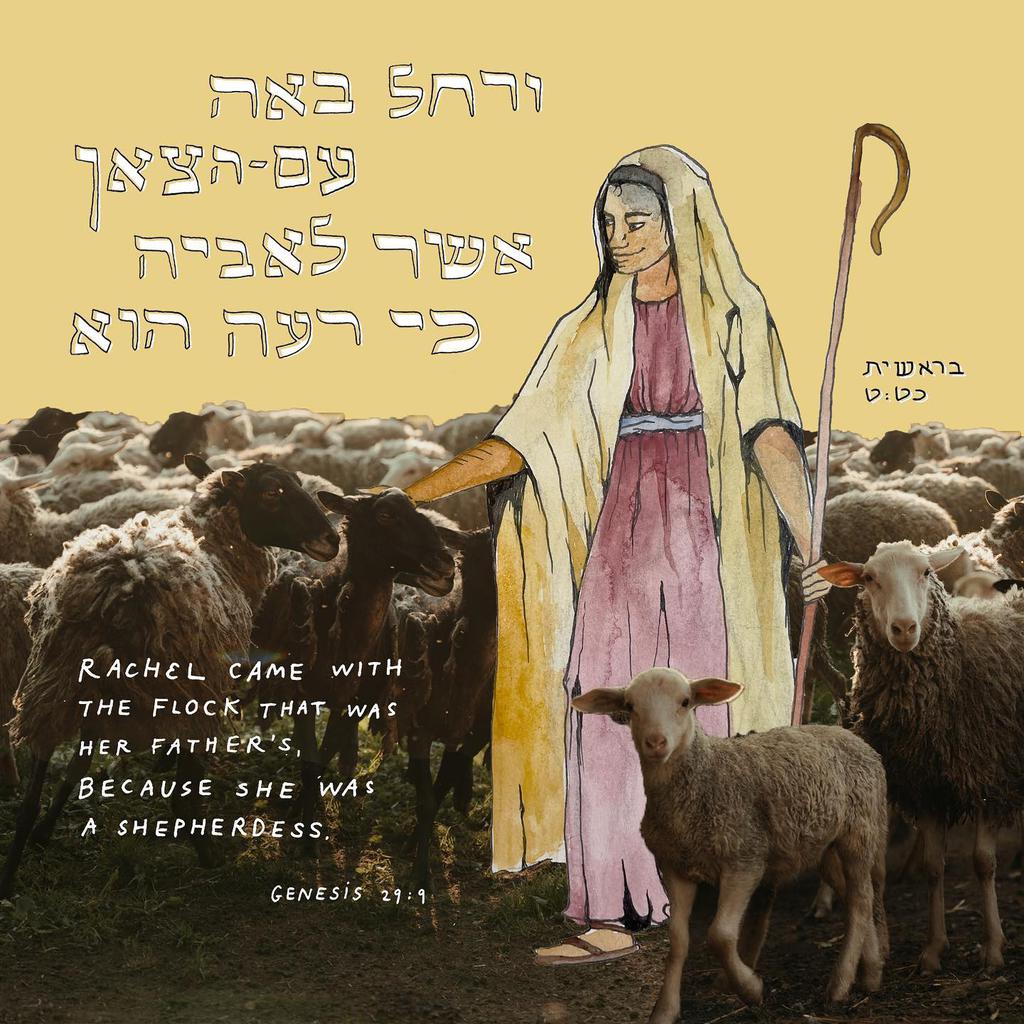
The LORD is my shepherd;
I lack nothing. (2) He makes me lie down in green pastures;
He leads me to aOthers “still waters.”water in places of repose;-a (3) He renews my life;
He guides me in right paths
as befits His name. (4) Though I walk through bOthers “the valley of the shadow of death.”a valley of deepest darkness,-b
I fear no harm, for You are with me;
Your rod and Your staff—they comfort me.
(5) You spread a table for me in full view of my enemies;
You anoint my head with oil;
my drink is abundant. (6) Only goodness and steadfast love shall pursue me
all the days of my life,
and I shall dwell in the house of the LORD
for many long years.
(טז) וּלְכֹהֵ֥ן מִדְיָ֖ן שֶׁ֣בַע בָּנ֑וֹת וַתָּבֹ֣אנָה וַתִּדְלֶ֗נָה וַתְּמַלֶּ֙אנָה֙ אֶת־הָ֣רְהָטִ֔ים לְהַשְׁק֖וֹת צֹ֥אן אֲבִיהֶֽן׃ (יז) וַיָּבֹ֥אוּ הָרֹעִ֖ים וַיְגָרְשׁ֑וּם וַיָּ֤קָם מֹשֶׁה֙ וַיּ֣וֹשִׁעָ֔ן וַיַּ֖שְׁקְ אֶת־צֹאנָֽם׃ (יח) וַתָּבֹ֕אנָה אֶל־רְעוּאֵ֖ל אֲבִיהֶ֑ן וַיֹּ֕אמֶר מַדּ֛וּעַ מִהַרְתֶּ֥ן בֹּ֖א הַיּֽוֹם׃ (יט) וַתֹּאמַ֕רְןָ אִ֣ישׁ מִצְרִ֔י הִצִּילָ֖נוּ מִיַּ֣ד הָרֹעִ֑ים וְגַם־דָּלֹ֤ה דָלָה֙ לָ֔נוּ וַיַּ֖שְׁקְ אֶת־הַצֹּֽאן׃ (כ) וַיֹּ֥אמֶר אֶל־בְּנֹתָ֖יו וְאַיּ֑וֹ לָ֤מָּה זֶּה֙ עֲזַבְתֶּ֣ן אֶת־הָאִ֔ישׁ קִרְאֶ֥ן ל֖וֹ וְיֹ֥אכַל לָֽחֶם׃
(16) Now the priest of Midian had seven daughters; and they came and drew water, and filled the troughs to water their father’s flock. (17) And the shepherds came and drove them away; but Moses stood up and helped them, and watered their flock. (18) And when they came to Reuel their father, he said: ‘How is it that ye are come so soon to-day?’ (19) And they said: ‘An Egyptian delivered us out of the hand of the shepherds, and moreover he drew water for us, and watered the flock.’ (20) And he said unto his daughters: ‘And where is he? Why is it that you have left the man? call him, that he may eat bread.’
- Otzar Midrashim, Aharon, Midrash on the Death of Aharon 3
... Our teachers have said: Once, while Moses our Teacher was tending [his father-in-law] Yitro’s sheep, one of the sheep ran away. Moses ran after it until it reached a small, shaded place. There, the lamb came across a pool and began to drink. As Moses approached the lamb, he said, “I did not know you ran away because you were thirsty. You are so exhausted!” He then put the lamb on his shoulders and carried him back. The Holy One said, “Since you tend the sheep of human beings with such overwhelming love - by your life, I swear you shall be the shepherd of My sheep, Israel.”
Adam Huggins I really want to stop and emphasize this point for a moment. In my own reading of history, people who cultivate intimate relationships with the more-than-human world often become leaders, and resources in times of disaster, of deprivation, and of demagoguery. In this respect, I would argue that you could draw a straight line from St. Francis of Assisi to Henry David Thoreau, and right on to Jim Corbett. Few people would have made the decision that Jim and John made, and fewer still would have actually been able to pull it off. Jim's years of roaming in the desert with his goats turned out to be a singular contribution.
Goat Walker Part 2, Future Ecologies Podcast
Amid gentle chides from the satnav, the 61-year-old switched off his headlights, so that no one would see where he’d gone. Then he bumped and veered through unmarked farm trails and shepherd paths that led eventually westwards, but away from the main roads. After 20 minutes, he stopped in a field, and turned to a blanket on the backseat. “OK,” said Breuer to the blanket. “You can come out now.” From under the fabric, three heads emerged – a Syrian Kurd, Galbari al-Hussein, and her two children, Hussein and Shahed.
Already well known in Austria, Breuer came to international attention recently when he uploaded a video of himself singing Yiddish folk songs, in chorus with a car load of Syrian-Palestinians. On this night, Breuer tries something similar. To cheer everyone up, he sings a recent composition – another Yiddish tune set to lyrics about the plight of refugees.
“All my shoes got torn to pieces at the Hungaaaaaarian border,” sings Breuer, to the tune of a Jewish wedding song. “Macedonians shot at us with tear-gas to make oooooorder. They forced us to give fingerprints – and took away our phoooones. We have to sleep just on the ground – can feel it in my bo-ooones.”
https://www.theguardian.com/world/2015/sep/20/austrian-shepherd-drives-refugees-across-border-hans-breuer
"And that was part of his philosophy is we're not separate. We're part of the herd, we're part of the desert. We can be part of the desert in a low impact way. We had a tremendous amount of respect for him. We thought he knew everything.
- Ann Russell (young participant on one of Jim's goat-herding 'summer camps').
"Sabbatical times weave Sinai stillness into history, as the warp holding time's weft. The sabbath day is a time to quit grabbing at the world, to rest, and to rejoice in the Creation's goodness. During the sabbatical year all are to cease making their living agriculturally, supporting themselves instead from the land's spontaneous, uncultivated growth. Debts are to be cancelled and slaves are to be freed..... Lacking a Sabbath, a people would also lack a gathering place in time from which to hallow the earth.... Sabbatical communion also opens a way to bridge divisions between peoples and classes and to transcend humankind's alienation from land and livelihood."
It asks us to put aside our bottomless need for productivity and entertainment, and to try – even for just a short time – to be at home in wildlands. You could do this any number of ways. And for Jim, goatwalking was his portal. It was a way to become feral for a time in a society that all but makes this impossible.