


Is eating part of the seder?
מַאי שְׁנֵי תַבְשִׁילִין? אָמַר רַב הוּנָא: סִילְקָא וְאָרוֹזָא ...
חִזְקִיָּה אָמַר: אֲפִילּוּ דָּג וּבֵיצָה שֶׁעָלָיו. רַב יוֹסֵף אָמַר: צָרִיךְ שְׁנֵי מִינֵי בָשָׂר, אֶחָד זֵכֶר לַפֶּסַח, וְאֶחָד זֵכֶר לַחֲגִיגָה. רָבִינָא אָמַר: אֲפִילּוּ גַּרְמָא וּבִישּׁוּלָא.
The Gemara asks: What are these two cooked foods mentioned in the mishna? Rav Huna said: Beets and rice ...
Ḥizkiya said: The two cooked foods can even be fish and the egg that that was fried on it. Rav Joseph said: One requires two types of meat on Passover night, one in remembrance of the Paschal lamb and the other one in remembrance of the Festival peace-offering, which was also eaten on Passover night. Ravina said: For the two cooked foods one may use even the meat on the bone and the gravy in which it was cooked.
Our sages command that we eat two dishes at the seder? Why may they care what we eat? Is it even necessary to eat at all ... is the eating considered essential?
From 1977 lecture by Rav Soloveitchik, transcribed by R. David Etengoff
The Rav was fond of the analytical and conceptual distinction between a nisa(object) and a nosa (subject). The former is something or someone acted upon, whereas the latter is an actor in the historical drama we call life. At first blush, we look at Pesach, Matzah, and Maror as mere objects that must be consumed during the Seder (i.e. inclusive of the Korban Pesach when the Holy Temple is extant). Yet, in a creative tour de force, Rav Soloveitchik perceived each of these items as a nosa, as an active participant in the mitzvah of explaining/telling the story of the Exodus.
The telling of the story of the Exodus is a blend of storytelling, Torah teaching, and eating symbolic food items. It is a fusion of the spoken word and the physiological functions of eating and drinking, the intermingling of physical pleasure with Torah debate, the combining of the word of God with an activity motivated by biological pressure and characteristic not only of man but of animals. Eating the paschal sacrifice, matzah and maror constitutes a double mizvah. The mitzvah of eating (i.e. physically consuming these items), is per se, a religious performance. But eating the Pesach, matzah, and maror is also the instrument or medium of telling the story of the Exodus. We narrate the story not only through speech but through eating as well. [Therefore,] in order to fulfill the mizvah of explaining/telling in the most perfect manner, one must interpret and explicate the symbolic meaning of Pesach, matzah, and maror.
The "order" of the three symbolic foods
רַבָּן גַּמְלִיאֵל הָיָה אוֹמֵר: כָּל שֶׁלֹּא אָמַר שְׁלשָׁה דְּבָרִים אֵלּוּ בַּפֶּסַח, לא יָצָא יְדֵי חוֹבָתוֹ, וְאֵלּוּ הֵן: פֶּסַח, מַצָּה, וּמָרוֹר.
Rabban Gamliel was accustomed to say, Anyone who has not said these three things on Pesach has not fulfilled his obligation, and these are them: the Pesach sacrifice, matzah, and maror.
If you were to list the three key elements chronologically it should be Maror (slavery), Pesach (Plague of the Firstborn), and then Matzah (Exodus). Why did Rabban Gamilel pick the order he did?
One way of telling the story is through symbols. We speak about matzah and maror at the Seder. Yet why do they appear in this particular order? If matzah symbolizes freedom and maror slavery, shouldn't maror be mentioned first and the matzah afterwards? The answer can be found in a verse in Ecclesiastes: “In the day of prosperity be joyful, and in the day of adversity consider; God has made the one as well as the other, to the end that man should find nothing but Him.” If we remembered the sad and tragic days first before the happy day of rejoicing, they would cast a dark pall over the happy days. Therefore, we mention the Matzah first, a reminder of the God's kindness and love, before we mention maror, the painfulness of slavery and oppression. The story of the Exodus should be a story about triumph and rejoicing and not just a story about oppression......The transformation did not just take place at that time and in that place, but in every generation. It is not enough, then, just to perform these acts; one must explain their connection to the Divine.
(2) Pesach, matzah, and maror: Why are they included in this order? Shouldn’t the bitter herbs have been mentioned first since the people’s lives were made bitter before they consumed the unleavened bread and the Passover offering? Rabban Gamliel’s order follows scripture: “They shall consume the flesh on this night along with matzah and bitter herbs.” Also the first two are the essential foods we eat on this night since they point to the miraculous redemption of the Israelites more so than the bitter herbs. The matzah and the Passover offering are also obligatory unlike the bitter herbs. The bitter herb is simply a reminder of the bitterness of slavery.
Is there an alternative order of mentioning these foods that may make sense?
HIAS Haggadah 5782
As we conclude our Seder this evening, we draw our attention to the final item on our Seder plate. The zeroah (shank bone), which literally means “arm,” reminds us of the “outstretched arm” with which God brought the Israelite people out of slavery in Egypt. Jewish tradition teaches us that we are God’s partners in the continual act of creating a more just world in which all human beings are treated with dignity and compassion. As we recall the strength that God extended to the Jewish people in the season of our escape from oppression, we extend our arms to embrace those in our world still experiencing persecution because of who they are.
May tonight’s Seder inspire each of us to take action on behalf of today’s refugees and asylum seekers, as we join and strengthen the Jewish response to the global refugee crisis at this critical moment in history.
Maror - What is it?

Account of J. A. Joel of the 23rd Ohio Volunteer Regiment
Fayette, West Virginia, 1862
"Horseradish or parsley we could not obtain, but in lieu we found a weed whose bitterness, I apprehend, exceeded anything our forefathers ‘enjoyed.’ …
The necessaries for the choroutzes we could not obtain, so we got a brick which, rather hard to digest, reminded us, by looking at it, for what purpose it was intended . . ."
"We all had a large portion of the herb ready to eat at the moment I said the blessing; each [ate] his portion, when horrors! What a scene ensued . . . The herb was very bitter and very fiery like Cayenne pepper, and excited our thirst to such a degree that we forgot the law authorizing us to drink only four cups, and the consequence was we drank up all the cider. . ."
Published originally in the Jewish Messenger, March 30, 1866
חַיָּב אָדָם לְבָרֵךְ עַל הָרָעָה כְּשֵׁם שֶׁהוּא מְבָרֵךְ עַל הַטּוֹבָה, שֶׁנֶּאֱמַר (דברים ו) וְאָהַבְתָּ אֵת יהוה אֱלֹהֶיךָ בְּכָל לְבָבְךָ וּבְכָל נַפְשְׁךָ וּבְכָל מְאֹדֶךָ. בְּכָל לְבָבְךָ, בִּשְׁנֵי יְצָרֶיךָ, בְּיֵצֶר טוֹב וּבְיֵצֶר רָע. וּבְכָל נַפְשְׁךָ, אֲפִלּוּ הוּא נוֹטֵל אֶת נַפְשֶׁךָ. וּבְכָל מְאֹדֶךָ, בְּכָל מָמוֹנֶךָ. דָּבָר אַחֵר בְּכָל מְאֹדֶךָ, בְּכָל מִדָּה וּמִדָּה שֶׁהוּא מוֹדֵד לְךָ הֱוֵי מוֹדֶה לוֹ בִּמְאֹד מְאֹד. לֹא יָקֵל אָדָם אֶת רֹאשׁוֹ כְּנֶגֶד שַׁעַר הַמִּזְרָח, שֶׁהוּא מְכֻוָּן כְּנֶגֶד בֵּית קָדְשֵׁי הַקָּדָשִׁים. לֹא יִכָּנֵס לְהַר הַבַּיִת בְּמַקְלוֹ, וּבְמִנְעָלוֹ, וּבְפֻנְדָּתוֹ, וּבְאָבָק שֶׁעַל רַגְלָיו, וְלֹא יַעֲשֶׂנּוּ קַפַּנְדַּרְיָא, וּרְקִיקָה מִקַּל וָחֹמֶר. כָּל חוֹתְמֵי בְרָכוֹת שֶׁהָיוּ בַמִּקְדָּשׁ, הָיוּ אוֹמְרִים מִן הָעוֹלָם. מִשֶּׁקִּלְקְלוּ הַמִּינִין, וְאָמְרוּ, אֵין עוֹלָם אֶלָּא אֶחָד, הִתְקִינוּ שֶׁיְּהוּ אוֹמְרִים, מִן הָעוֹלָם וְעַד הָעוֹלָם. וְהִתְקִינוּ, שֶׁיְּהֵא אָדָם שׁוֹאֵל אֶת שְׁלוֹם חֲבֵרוֹ בַּשֵּׁם, שֶׁנֶּאֱמַר (רות ב) וְהִנֵּה בֹעַז בָּא מִבֵּית לֶחֶם, וַיֹּאמֶר לַקּוֹצְרִים יהוה עִמָּכֶם, וַיֹּאמְרוּ לוֹ, יְבָרֶכְךָ יהוה. וְאוֹמֵר (שופטים ו) יהוה עִמְּךָ גִּבּוֹר הֶחָיִל. וְאוֹמֵר (משלי כג) אַל תָּבוּז כִּי זָקְנָה אִמֶּךָ. וְאוֹמֵר (תהלים קיט) עֵת לַעֲשׂוֹת לַייָ הֵפֵרוּ תוֹרָתֶךָ. רַבִּי נָתָן אוֹמֵר, הֵפֵרוּ תוֹרָתֶךָ עֵת לַעֲשׂוֹת לַייָ:
The mishna articulates a general principle: One is obligated to recite a blessing for the bad that befalls him just as he recites a blessing for the good that befalls him, as it is stated: “And you shall love the Lord your God with all your heart, with all your soul, and with all your might” (Deuteronomy 6:5). The mishna explains this verse as follows: “With all your heart” means with your two inclinations, with your good inclination and your evil inclination, both of which must be subjugated to the love of God. “With all your soul” means even if God takes your soul. “And with all your might” means with all your money, as money is referred to in the Bible as might. Alternatively, it may be explained that “with all your might” means with every measure that He metes out to you; whether it is good or troublesome, thank Him. The mishna teaches several Temple-related halakhot. One may not act irreverently or conduct himself flippantly opposite the eastern gate of the Temple Mount, which is aligned opposite the Holy of Holies. In deference to the Temple, one may not enter the Temple Mount with his staff, his shoes, his money belt [punda], or even the dust on his feet. One may not make the Temple a shortcut to pass through it, and through an a fortiori inference, all the more so one may not spit on the Temple Mount. The mishna relates: At the conclusion of all blessings recited in the Temple, those reciting the blessing would say: Blessed are You Lord, God of Israel, until everlasting [haolam], the world. But when the Sadducees strayed and declared that there is but one world and there is no World-to-Come, the Sages instituted that at the conclusion of the blessing one recites: From everlasting [haolam] to everlasting [haolam]. The Sages also instituted that one should greet another in the name of God, i.e., one should mention God’s name in his greeting, as it is stated: “And presently Boaz came from Bethlehem and said to the harvesters, The Lord is with you, and they said to him, May the Lord bless you” (Ruth 2:4). And it says: “And the angel of God appeared to him and said to him, God is with you, mighty man of valor” (Judges 6:12). And it says: “And despise not your mother when she is old” (Proverbs 23:22), i.e., one must not neglect customs which he inherits. And lest you say that mentioning God’s name is prohibited, it says: “It is time to work for the Lord; they have made void Your Torah” (Psalms 119:126), i.e., it is occasionally necessary to negate biblical precepts in order to perform God’s will, and greeting another is certainly God’s will. Rabbi Natan says another interpretation of the verse: “Make void Your Torah” because “it is the time to work for the Lord,” i.e., occasionally it is necessary to negate biblical precepts in order to bolster the Torah.
Gefilte Fish?
Rav Sherira Gaon (10th century Babylonia)
Most opinions think that the z'roa (shankbone) and the b'etza (egg) are the symbols of the Pesach sacrifice and the regular holiday sacrifice. But there is another opinion. He would always have three cooked foods on the seder plate. The egg - a product of the birds of the sky, a sign of renewal and rebirth, represented Moses, the law, the heavens, and the revelational aspects of faith. The shankbone - a product of the animals of the field, a commemoration of the original Pesach sacrifice, represented Aaron, the priesthood, the earth, and the ritual aspects of faith. And the fish - representing the constant flowing nature of water, represented Miriam, prophecy, the waters, and the spiritual aspects of faith, as we read in the prophet Micah.
דָּרֵשׁ רַב עַוִּירָא בִּשְׂכַר נָשִׁים צִדְקָנִיּוֹת שֶׁהָיוּ בְּאוֹתוֹ הַדּוֹר נִגְאֲלוּ יִשְׂרָאֵל מִמִּצְרַיִם בְּשָׁעָה שֶׁהוֹלְכוֹת לִשְׁאוֹב מַיִם הַקָּדוֹשׁ בָּרוּךְ הוּא מְזַמֵּן לָהֶם דָּגִים קְטַנִּים בְּכַדֵּיהֶן וְשׁוֹאֲבוֹת מֶחֱצָה מַיִם וּמֶחֱצָה דָּגִים וּבָאוֹת וְשׁוֹפְתוֹת שְׁתֵּי קְדֵירוֹת אַחַת שֶׁל חַמִּין וְאַחַת שֶׁל דָּגִים
§ Rav Avira taught: In the merit of the righteous women that were in that generation, the Jewish people were redeemed from Egypt. At the time when these women would go to the river to draw water, the Holy Blessed One would make for them small fish that would enter into their pails, and they would therefore draw pails that were half filled with water and half filled with fish. And they would then come and place two pots on the fire, one of hot and one of fish.
A foreshadowing of the messianic ...
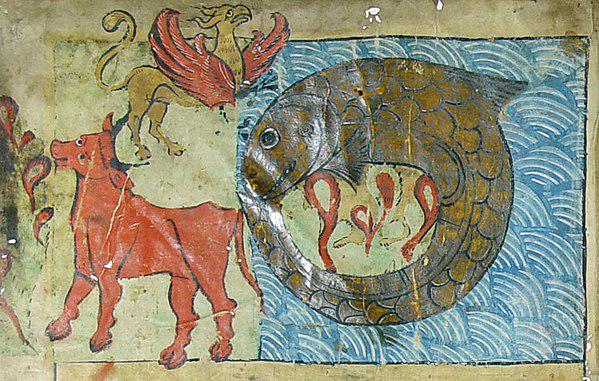
By the 15th century it became common to connect three mythic animals - the Ziv, Behemoth and Leviathan as the food that would be eaten at the time of the meal we eat with the messiah.
Beet Horseradish
מַאי שְׁנֵי תַבְשִׁילִין? אָמַר רַב הוּנָא: סִילְקָא וְאָרוֹזָא. רָבָא הֲוָה מְיהַדַּר אַסִּילְקָא וְאָרוֹזָא הוֹאִיל וְנָפֵיק מִפּוּמֵּיהּ דְּרַב הוּנָא.
The Gemara asks: What are these two cooked foods mentioned in the mishna that fulfill eating two dishes at the seder meal? Rav Huna said: Beets and rice. The Gemara relates that Rava would seek beets and rice for his meal on Passover night, since this ruling came from Rav Huna’s mouth. Although Rava realized that Rav Huna was merely citing examples and did not mean that one must eat those specific foods, he wanted to fulfill the statement of his teacher precisely.
The color of beets, which never leaves our hands, symbolizes the teachings of the sages, which are still passed down. And the redness symbolizes the blood of the covenant, still there after all these years. So the traditional text of the Haggadah quotes Ezekiel 16:6, whose repeated final phrase is said to represent the blood of the Pesach sacrifice and the blood of the covenant with Abraham.
וָאֶעֱבֹ֤ר עָלַ֙יִךְ֙ וָֽאֶרְאֵ֔ךְ מִתְבּוֹסֶ֖סֶת בְּדָמָ֑יִךְ וָאֹ֤מַר לָךְ֙ בְּדָמַ֣יִךְ חֲיִ֔י וָאֹ֥מַר לָ֖ךְ בְּדָמַ֥יִךְ חֲיִֽי׃
When I passed by you and saw you soiled in your blood, I said to you: “Through your blood you will live.” I said to you: “Through your blood you will live!"