


(א) בִּשְׁנַת־מוֹת֙ הַמֶּ֣לֶךְ עֻזִּיָּ֔הוּ וָאֶרְאֶ֧ה אֶת־אדושם יֹשֵׁ֥ב עַל־כִּסֵּ֖א רָ֣ם וְנִשָּׂ֑א וְשׁוּלָ֖יו מְלֵאִ֥ים אֶת־הַהֵיכָֽל׃ (ב) שְׂרָפִ֨ים עֹמְדִ֤ים ׀ מִמַּ֙עַל֙ ל֔וֹ שֵׁ֧שׁ כְּנָפַ֛יִם שֵׁ֥שׁ כְּנָפַ֖יִם לְאֶחָ֑ד בִּשְׁתַּ֣יִם ׀ יְכַסֶּ֣ה פָנָ֗יו וּבִשְׁתַּ֛יִם יְכַסֶּ֥ה רַגְלָ֖יו וּבִשְׁתַּ֥יִם יְעוֹפֵֽף׃ (ג) וְקָרָ֨א זֶ֤ה אֶל־זֶה֙ וְאָמַ֔ר קָד֧וֹשׁ ׀ קָד֛וֹשׁ קָד֖וֹשׁ ה׳ צְבָא֑וֹת מְלֹ֥א כׇל־הָאָ֖רֶץ כְּבוֹדֽוֹ׃
(1) In the year that King Uzziah died, I beheld my Lord seated on a high and lofty throne; and the skirts of His robe filled the Temple. (2) Seraphs stood in attendance on Him. Each of them had six wings: with two he covered his face, with two he covered his legs, and with two he would fly.(3) And one would call to the other,
“Holy, holy, holy!
The LORD of Hosts!
His presence fills all the earth!”
(א) וַיִּשְׁמַ֞ע יִתְר֨וֹ כֹהֵ֤ן מִדְיָן֙ חֹתֵ֣ן מֹשֶׁ֔ה אֵת֩ כׇּל־אֲשֶׁ֨ר עָשָׂ֤ה אֱלֹקִים֙ לְמֹשֶׁ֔ה וּלְיִשְׂרָאֵ֖ל עַמּ֑וֹ כִּֽי־הוֹצִ֧יא ה׳ אֶת־יִשְׂרָאֵ֖ל מִמִּצְרָֽיִם׃
(1) Jethro priest of Midian, Moses’ father-in-law, heard all that God had done for Moses and for Israel His people, how the LORD had brought Israel out from Egypt.
וישמע יתרו. מַה שְּׁמוּעָה שָׁמַע וּבָא? קְרִיעַת יַם סוּף וּמִלְחֶמֶת עֲמָלֵק:
וישמע יתרו AND JETHRO HEARD — What was the particular report which he heard so that he came? — The division of the Red Sea and the war with Amalek.
וישמע. מה שמועה שמע ובא, מלחמת עמלק שמע ובא, שהיא כתובה בצדו, דברי ר' יהושע.
ר' אלעזר המודעי אומר, מתן תורה שמע ובא, שבשעה שנתנה תורה לישראל זעו כל מלכי האדמה בהיכליהם ...
רבי אליעזר אומר, קריעת ים סוף שמע ובא, שבשעה שנקרע ים סוף נשמע מסוף העולם ועד סופו ...
(Exodus 18:1) "And Yithro heard": What did he hear that caused him to come (and join Israel)?
The war with Amalek, which is juxtaposed with this section. These are the words of R. Yehoshua.
R. Elazar HaModa'i says, he heard of the giving of the Torah and he came. For when the Torah was to be given to Israel, all the kings of the earth shook in their palaces ...
R. Eliezer says: Yithro heard the splitting of the sea and came. For the splitting of the sea was heard from one end of the world to the other ...
כבר נחלקו רבותינו (מכילתא כאן, זבחים קטז) בפרשה הזאת. יש מהם אומרים כי קודם מתן תורה בא יתרו כסדר הפרשיות, ויש מהן שאמרו שאחר מתן תורה בא.
וזה ודאי יסתייע מן הכתוב (שמות י״ח:ה׳) שאמר ויבא יתרו חתן משה ובניו ואשתו אל משה אל המדבר אשר הוא חונה שם הר האלקים הנה אמר שבא אליו בחנותו לפני הר סיני שחנו שם שנה אחת, וזה טעם אשר הוא חונה שם ועוד, שאמר והודעתי את חוקי האלקים ואת תורותיו (שמות י״ח:ט״ז), שהם הנתונים לו בהר סיני ועוד, כי כאן (שמות י״ח:כ״ז) אמר וישלח משה את חותנו וילך לו אל ארצו, והיה זה בשנה השניה בנסעם מהר סיני ... ואם כן נצטרך טעם למה מקדים הפרשה הזאת לכותבה בכאן:
Our Rabbis have already differed concerning this section. Some say that Jethro came to Moses before the Giving of the Torah, as the sequence of the sections of the Torah indicate, and some say that he came after the Giving of the Torah.
Now this [latter] opinion [that he came after the Giving of the Torah] is certainly assisted by the verse [here] which states, And Jethro, Moses’ father-in-law, came with his sons and his wife unto Moses into the wilderness where he was encamped, at the mount of G-d. Thus Scripture states that Jethro came to Moses when he was encamped before Mount Sinai, the place in which the Israelites camped for one year, this being the meaning of the expression, where he was encamped. Moreover, Moses said to Jethro, and I make them know the statutes of G-d, and His laws, [thus indicating that the Torah had already been given]. Besides, it says here, And Moses let his father-in-law depart; and he went his way unto his own land. This had taken place in the second year when they journeyed from Mount Sinai ... All of this serves to prove that Jethro came to Moses after the Giving of the Torah]. And if this is so, we are in need of a reason for this section being written here before [the account of the Giving of the Torah]!
Yet with all this, I find it difficult to understand this opinion [that Jethro came after the Revelation, for the following reasons]: When Scripture says, Now Jethro…heard of all that G-d had done for Moses, and for Israel His people, how that the Eternal had brought Israel out of Egypt, why does it not say that he heard what G-d had done to Moses and to Israel by giving the Torah, which is among the great wonders that were done for them ... why did not Moses tell him about the Revelation on Sinai? Jethro would thereby know that the Eternal is the true G-d and that His Torah is the truth, there being no other but He ...The most likely explanation seems to me to be to follow the sequence of the sections of the Torah, i.e., that Jethro came before the Giving of the Torah when the Israelites were yet in Rephidim ... He then journeyed with the Israelites from Rephidim to Mount Sinai ...
לשפט את העם - אפילו אם בא יתרו קודם מתן תורה דיני ממונות היה להם מעולם. אף כי אמרו רבותינו כי במרה נתנו להם דינים, כדכתיב שם: שם לו חוק ומשפט. ונראים הדברים שאחר מתן תורה בא. כתיב כאן: אשר הוא חנה שם הר האלקים. ולפנינו הוא אומר: בחדש השלישי לצאת בני ישראל מארץ מצרים ביום הזה באו מדבר סיני ויסעו מרפידים ויבאו מדבר סיני ויחן שם ישראל נגד ההר, נמצאת פרשת רפידים וחניית ההר קדמה לפרשה זו וכדי שלא להפסיק בפרשיות של מצות, הקדים פרשת יתרו.
לשפוט את העם. Even if we accept the opinion that Moses had arrived at the encampment of the Jewish people before the revelation at Mount Sinai, mundane matters had been subject of judgment all the time. Any disagreement concerning people’s property needed adjudication. While it is true that at Marah, prior to the revelation at Sinai, not only social laws but also some ritual laws had been revealed (Exodus 15,25), the opinion that Yitro arrived after the revelation at Mount Sinai is more plausible seeing that we read here of the Israelites being encamped at the Mountain of G’d (verse 5). Moreover, chapter 19 commences with the words: “In the third month after the Exodus on the first of the month the Israelites entered the desert of Sinai after having journeyed from Refidim.” It is clear from there that what happened at Refidim and the encampment at Mount Sinai occurred before what is discussed in our paragraph, but that this paragraph was inserted here in order not to interrupt the portions dealing with all the commandments which commence in chapter 21 after the revelation at Mount Sinai.
וישמע יתרו. ... ועתה אפרש למה נכנסה פרשת יתרו במקום הזה. בעבור שהזכיר למעלה הרעה שעשה עמלק לישראל הזכיר כנגדו הטובה שעשה יתרו לישראל. וכתוב ויחד יתרו על כל הטובה. ונתן להם עצה טובה ונכונה למשה ולישראל. ומשה אמר לו והיית לנו לעינים והטעם שהאיר עיניהם. ושאול אמר ואתה עשית חסד עם כל בני ישראל. ובעבור שכתוב למעלה מלחמה לה׳ בעמלק. שישראל חייבים להלחם בו כאשר יניח השם להם. הזכיר דבר יתרו כי הם היו עם גוי עמלק שיזכירו ישראל חסד אביהם ולא יגעו בזרעו ...
NOW JETHRO HEARD. ... I will now explain why the chapter dealing with Jethro was inserted here. It was placed here because Scripture had just mentioned the evil that Amalek did to Israel. The Torah wants to contrast it with the good that Jethro rendered Israel. Scripture notes, And Jethro rejoiced for all the goodness which the Lord had done to Israel (v. 9) and that he gave proper and correct counsel to Moses and Israel. Moses told Jethro, and thou shalt be to us instead of eyes (Num. 10:31), meaning that he enlightened their eyes. King Saul similarly said, for ye showed kindness to all the children of Israel (I Sam. 15:6). Now because Scripture states in the preceding chapter, the Lord will have war with Amalek from generation to generation (Ex. 17:16), namely, that when God gives Israel rest they are obligated to wage war against Amalek, the Torah mentions the account of Jethro. For the descendants of Jethro lived in proximity to the nation of Amalek, and the Torah wants Israel to remember the kindness that Jethro demonstrated so that they do not harm his seed ...
(כ) וַיַּרְא֙ אֶת־עֲמָלֵ֔ק וַיִּשָּׂ֥א מְשָׁל֖וֹ וַיֹּאמַ֑ר רֵאשִׁ֤ית גּוֹיִם֙ עֲמָלֵ֔ק וְאַחֲרִית֖וֹ עֲדֵ֥י אֹבֵֽד׃ (כא) וַיַּרְא֙ אֶת־הַקֵּינִ֔י וַיִּשָּׂ֥א מְשָׁל֖וֹ וַיֹּאמַ֑ר אֵיתָן֙ מֽוֹשָׁבֶ֔ךָ וְשִׂ֥ים בַּסֶּ֖לַע קִנֶּֽךָ׃ (כב) כִּ֥י אִם־יִהְיֶ֖ה לְבָ֣עֵֽר קָ֑יִן עַד־מָ֖ה אַשּׁ֥וּר תִּשְׁבֶּֽךָּ׃
(20) He saw Amalek and, taking up his theme, he said: A leading nation is Amalek; But its fate is to perish forever.
(21) He saw the Kenites and, taking up his theme, he said: Though your abode be secure, And your nest be set among cliffs,
(22) Yet shall Kain be consumed, When Asshur takes you captive.
(כד) תְּבֹרַךְ֙ מִנָּשִׁ֔ים יָעֵ֕ל אֵ֖שֶׁת חֶ֣בֶר הַקֵּינִ֑י {ס} מִנָּשִׁ֥ים בָּאֹ֖הֶל תְּבֹרָֽךְ׃ {ס}
(24) Most blessed of women be Jael,
Wife of Heber the Kenite,
Most blessed of women in tents.
(ו) וַיֹּ֣אמֶר שָׁא֣וּל אֶֽל־הַקֵּינִ֡י לְכוּ֩ סֻּ֨רוּ רְד֜וּ מִתּ֣וֹךְ עֲמָלֵקִ֗י פֶּן־אֹֽסִפְךָ֙ עִמּ֔וֹ וְאַתָּ֞ה עָשִׂ֤יתָֽה חֶ֙סֶד֙ עִם־כׇּל־בְּנֵ֣י יִשְׂרָאֵ֔ל בַּעֲלוֹתָ֖ם מִמִּצְרָ֑יִם וַיָּ֥סַר קֵינִ֖י מִתּ֥וֹךְ עֲמָלֵֽק׃
(6) Saul said to the Kenites, “Come, withdraw at once from among the Amalekites, that I may not destroy you along with them; for you showed kindness to all the Israelites when they left Egypt.” So the Kenites withdrew from among the Amalekites.
(א) בַּחֹ֙דֶשׁ֙ הַשְּׁלִישִׁ֔י לְצֵ֥את בְּנֵי־יִשְׂרָאֵ֖ל מֵאֶ֣רֶץ מִצְרָ֑יִם בַּיּ֣וֹם הַזֶּ֔ה בָּ֖אוּ מִדְבַּ֥ר סִינָֽי׃
(1) On the third new moon after the Israelites had gone forth from the land of Egypt, on that very day, they entered the wilderness of Sinai.
(יא) בִּשְׁנַ֨ת שֵׁשׁ־מֵא֤וֹת שָׁנָה֙ לְחַיֵּי־נֹ֔חַ בַּחֹ֙דֶשׁ֙ הַשֵּׁנִ֔י בְּשִׁבְעָֽה־עָשָׂ֥ר י֖וֹם לַחֹ֑דֶשׁ בַּיּ֣וֹם הַזֶּ֗ה נִבְקְעוּ֙ כׇּֽל־מַעְיְנֹת֙ תְּה֣וֹם רַבָּ֔ה וַאֲרֻבֹּ֥ת הַשָּׁמַ֖יִם נִפְתָּֽחוּ׃
(11) In the six hundredth year of Noah’s life, in the second month, on the seventeenth day of the month, on that day, all the fountains of the great deep burst apart, and the floodgates of the sky broke open.
ביום הזה. בְּרֹאשׁ חֹדֶשׁ
ביום הזה THE SAME (lit., this) DAY — on the day of the New Moon. (Mekhilta d'Rabbi Yishmael 19:1:3; Shabbat 86b).
בחדש השלישי. לא ידענו טעם ביום הזה. אם לא יהיה פי' רבי משה נכון שהוא ראש חדש. כמו מחר חדש. והזכיר הכ' זה כי אחר ימים מועטים ליום חנותם היה מתן תורה. אולי יום אחד עלה אל השם וירד ודבר עם ישראל. וביום השלישי לחדש עלה פעם אחרת להשיב אל השם דברי העם. ושם נאמר לו כי ביום השלישי יהיה מתן תורה וכל זה דרך הסברא. כי על הקבלה נסמוך שבששה בסיון נתנה התורה ועל דרך העבורים ששי בשבוע היה אם לא היה חדש אייר מעובר. אולי טעם ביום הזה כי רחוק מרפידים ובין הר סיני היה רב יותר ממרחק כל מסע:
IN THE THIRD MONTH. We do not know the meaning of the same day (ba-yom ha-zeh) unless the interpretation of Rabbi Moses to the effect that it refers to the new moon is correct. It is like Tomorrow is the new moon (I Sam 20:18). Scripture notes this because the Torah was given a few days after Israel camped. Perhaps Moses went up to God on day one and then came down and spoke to Israel. Then on the third day of the month he went up again to report the words of the people to God. It was then told to Moses that the giving of the Torah would take place on the third day. All of this is by way of logical exegesis because we accept the tradition that the Torah was given on the sixth day of Sivan. According to the rules of the calendar, if a day was not added to the month of Iyyar, then the Torah was given on a Friday. It is possible that Scripture reads, the same day because the distance from Rephidim and Mount Sinai was greater than the distance between each journey.
התורה אומרת: אני הייתי כלי אומנותו של הקב"ה. בנוהג שבעולם, מלך בשר ודם בונה פלטין, אינו בונה אותה מדעת עצמו אלא מדעת אומן, והאומן אינו בונה אותה מדעת עצמו, אלא דיפתראות, ופינקסאות יש לו, לדעת היאך הוא עושה חדרים, היאך הוא עושה פשפשין, כך היה הקב"ה מביט בתורה, ובורא את העולם, והתורה אמרה בראשית ברא אלקים, ואין ראשית אלא תורה, היאך מה דאת אמר (משלי ח, כב): "ה' קָנָנִי רֵאשִׁית דַּרְכּוֹ".
The Torah is saying, "I was the artisan's tool of Hashem." In the way of the world, a king of flesh and blood who builds a castle does not do so from his own knowledge, but rather from the knowledge of an architect, and the architect does not build it from his own knowledge, but rather he has scrolls and books in order to know how to make rooms and doorways. So too Hashem gazed into the Torah and created the world. Similarly the Torah says, "Through the reishis Hashem created [the heavens and the earth]," and reishis means Torah, as in "Hashem made me [the Torah] the beginning (reishis) of His way" (Mishlei 8:22).
ביום הזה. בְּרֹאשׁ חֹדֶשׁ; לֹא הָיָה צָרִיךְ לִכְתֹּב אֶלָּא בַּיּוֹם הַהוּא, מַהוּ בַּיּוֹם הַזֶּה? שֶׁיִּהְיוּ דִּבְרֵי תוֹרָה חֲדָשִׁים עָלֶיךָ כְּאִלּוּ הַיּוֹם נְתָנָם (ברכות ס"ג):
ביום הזה THE SAME (lit., this) DAY — on the day of the New Moon. (Mekhilta d'Rabbi Yishmael 19:1:3; Shabbat 86b). It ought not to write ביום הזה, but ביום ההוא, “on that day”; what, then, is the force of the words “on this day”? Since they refer to the day when the Israelites came to Sinai to receive the Torah they imply that the commands of the Torah should be to you each day as something new, as though He had only given them to you for the first time on the day in question (Yalkut Shimoni on Torah 273; cf. Berakhot 63b).
(א) וַיְדַבֵּ֣ר אֱלֹקִ֔ים אֵ֛ת כׇּל־הַדְּבָרִ֥ים הָאֵ֖לֶּה לֵאמֹֽר׃ {ס}
(ב) אָֽנֹכִ֖י֙ ה' אֱלֹקֶ֑֔יךָ אֲשֶׁ֧ר הוֹצֵאתִ֛יךָ מֵאֶ֥רֶץ מִצְרַ֖יִם מִבֵּ֣֥ית עֲבָדִ֑͏ֽים׃
(ג) לֹֽ֣א־יִהְיֶ֥͏ֽה־לְךָ֛֩ אֱלֹקִ֥֨ים אֲחֵרִ֖֜ים עַל־פָּנָֽ֗͏ַי׃ (ד) לֹֽ֣א־תַֽעֲשֶׂ֨ה־לְךָ֥֣ פֶ֣֙סֶל֙ ׀ וְכׇל־תְּמוּנָ֔֡ה אֲשֶׁ֤֣ר בַּשָּׁמַ֣֙יִם֙ ׀ מִמַּ֔֡עַל וַֽאֲשֶׁ֥ר֩ בָּאָ֖֨רֶץ מִתָּ֑֜͏ַחַת וַאֲשֶׁ֥ר בַּמַּ֖֣יִם ׀ מִתַּ֥֣חַת לָאָֽ֗רֶץ׃ (ה) לֹֽא־תִשְׁתַּחֲוֶ֥֣ה לָהֶ֖ם֮ וְלֹ֣א תׇעׇבְדֵ֑ם֒ כִּ֣י אָֽנֹכִ֞י ה' אֱלֹקֶ֙יךָ֙ אֵ֣ל קַנָּ֔א פֹּ֠קֵד עֲוֺ֨ן אָבֹ֧ת עַל־בָּנִ֛ים עַל־שִׁלֵּשִׁ֥ים וְעַל־רִבֵּעִ֖ים לְשֹׂנְאָֽ֑י׃ (ו) וְעֹ֥֤שֶׂה חֶ֖֙סֶד֙ לַאֲלָפִ֑֔ים לְאֹהֲבַ֖י וּלְשֹׁמְרֵ֥י מִצְוֺתָֽי׃ {ס}
(ז) לֹ֥א תִשָּׂ֛א אֶת־שֵֽׁם־ה' אֱלֹקֶ֖יךָ לַשָּׁ֑וְא כִּ֣י לֹ֤א יְנַקֶּה֙ ה' אֵ֛ת אֲשֶׁר־יִשָּׂ֥א אֶת־שְׁמ֖וֹ לַשָּֽׁוְא׃ {פ}
(ח) זָכ֛וֹר֩ אֶת־י֥֨וֹם הַשַּׁבָּ֖֜ת לְקַדְּשֽׁ֗וֹ׃ (ט) שֵׁ֤֣שֶׁת יָמִ֣ים֙ תַּֽעֲבֹ֔ד֮ וְעָשִׂ֖֣יתָ כׇּֿל־מְלַאכְתֶּֽךָ֒׃ (י) וְי֨וֹם֙ הַשְּׁבִיעִ֔֜י שַׁבָּ֖֣ת ׀ לַה' אֱלֹקֶ֑֗יךָ לֹֽ֣א־תַעֲשֶׂ֣֨ה כׇל־מְלָאכָ֜֡ה אַתָּ֣ה ׀ וּבִנְךָ֣͏ֽ־וּ֠בִתֶּ֗ךָ עַבְדְּךָ֤֨ וַאֲמָֽתְךָ֜֙ וּבְהֶמְתֶּ֔֗ךָ וְגֵרְךָ֖֙ אֲשֶׁ֥֣ר בִּשְׁעָרֶֽ֔יךָ׃ (יא) כִּ֣י שֵֽׁשֶׁת־יָמִים֩ עָשָׂ֨ה ה' אֶת־הַשָּׁמַ֣יִם וְאֶת־הָאָ֗רֶץ אֶת־הַיָּם֙ וְאֶת־כׇּל־אֲשֶׁר־בָּ֔ם וַיָּ֖נַח בַּיּ֣וֹם הַשְּׁבִיעִ֑י עַל־כֵּ֗ן בֵּרַ֧ךְ ה' אֶת־י֥וֹם הַשַּׁבָּ֖ת וַֽיְקַדְּשֵֽׁהוּ׃ {ס}
(יב) כַּבֵּ֥ד אֶת־אָבִ֖יךָ וְאֶת־אִמֶּ֑ךָ לְמַ֙עַן֙ יַאֲרִכ֣וּן יָמֶ֔יךָ עַ֚ל הָאֲדָמָ֔ה אֲשֶׁר־ה' אֱלֹקֶ֖יךָ נֹתֵ֥ן לָֽךְ׃ {ס}
(יג) לֹ֥֖א תִּֿרְצָ֖͏ֽח׃ {ס}
לֹ֣֖א תִּֿנְאָ֑͏ֽף׃ {ס}
לֹ֣֖א תִּֿגְנֹֽ֔ב׃ {ס}
לֹֽא־תַעֲנֶ֥ה בְרֵעֲךָ֖ עֵ֥ד שָֽׁקֶר׃ {ס}
(יד) לֹ֥א תַחְמֹ֖ד בֵּ֣ית רֵעֶ֑ךָ {ס} לֹֽא־תַחְמֹ֞ד אֵ֣שֶׁת רֵעֶ֗ךָ וְעַבְדּ֤וֹ וַאֲמָתוֹ֙ וְשׁוֹר֣וֹ וַחֲמֹר֔וֹ וְכֹ֖ל אֲשֶׁ֥ר לְרֵעֶֽךָ׃ {פ}
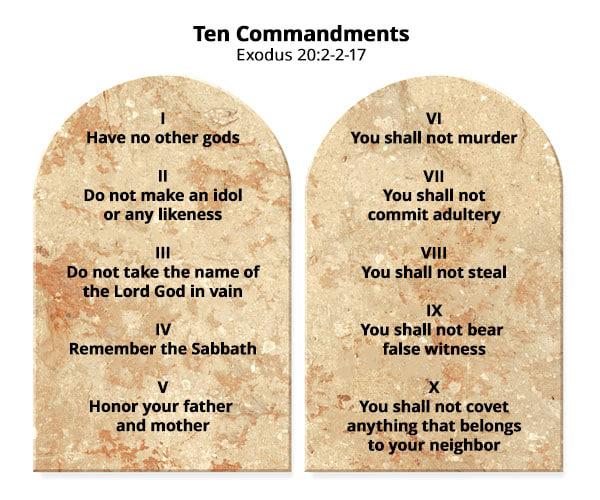
(1) God spoke all these words, saying:
(2) I the LORD am your God who brought you out of the land of Egypt, the house of bondage:
(3) You shall have no other gods besides Me. (4) You shall not make for yourself a sculptured image, or any likeness of what is in the heavens above, or on the earth below, or in the waters under the earth. (5) You shall not bow down to them or serve them. For I the LORD your God am an impassioned God, visiting the guilt of the parents upon the children, upon the third and upon the fourth generations of those who reject Me, (6) but showing kindness to the thousandth generation of those who love Me and keep My commandments.
(7) You shall not swear falsely by the name of the LORD your God; for the LORD will not clear one who swears falsely by His name.
(8) Remember the sabbath day and keep it holy. (9) Six days you shall labor and do all your work, (10) but the seventh day is a sabbath of the LORD your God: you shall not do any work—you, your son or daughter, your male or female slave, or your cattle, or the stranger who is within your settlements. (11) For in six days the LORD made heaven and earth and sea, and all that is in them, and He rested on the seventh day; therefore the LORD blessed the sabbath day and hallowed it.
(12) Honor your father and your mother, that you may long endure on the land that the LORD your God is assigning to you.
(13) You shall not murder.
You shall not commit adultery.
You shall not steal.
You shall not bear false witness against your neighbor.
(14) You shall not covet your neighbor’s house: you shall not covet your neighbor’s wife, or his male or female slave, or his ox or his ass, or anything that is your neighbor’s.
ד"א ויאמר ה' מסיני בא - כשנגלה המקום ליתן תורה לישראל לא על ישראל בלבד הוא נגלה, אלא על כל האומות:
בתחילה הלך אצל בני עשו ואמר להם: מקבלים אתם את התורה? אמרו לו: מה כתוב בה? אמר להם לא תרצח. אמרו: רבש"ע, כל עצמו של אותו אביהם רוצח הוא, שנ' והידים ידי עשו, ועל כך הבטיחו אביו, שנאמר (בראשית כז) על חרבך תחיה.
הלך לו אצל בני עמון ומואב ואמר להם: מקבלים אתם את התורה? אמרו לו מה כתוב בו? אמר להם לא תנאף. אמרו לפניו: רבש"ע, עצמה של ערוה להם היא, שנ' ותהרן שתי בנות לוט מאביהם.
הלך ומצא בני ישמעאל, אמר להם: מקבלים אתם את התורה? אמרו לו מה כתוב בה? אמר להם לא תגנוב. אמרו לפניו: רבש"ע, כל עצמו אביהם לסטים היה, שנא' והוא יהיה פרא אדם.
לא היתה אומה באומות שלא הלך ודבר, ודפק על פתחם מה ירצו ויקבלו את התורה ...
Variantly: "And He said: The L-rd came from Sinai": When the L-rd appeared to give Torah to Israel, it is not to Israel alone that He appeared, but to all of the nations.
First He went to the children of Esav, and He asked them: Will you accept the Torah? They asked: What is written in it? He answered: "You shall not kill" (Shemoth 20:13). They answered: The entire essence of our father is murder, as it is written (Bereshith 27:22) "And the hands are the hands of Esav." And it is with this that his father assured him (Ibid. 27:40) "And by your sword shall you live."
He then went to the children of Ammon and Moav and asked them: Will you accept the Torah? They asked: What is written in it? He answered "You shall not commit adultery." They answered: L-rd of the Universe, ervah (illicit relations) is our entire essence, as it is written (Ibid. 19:36) "And the two daughters of Lot conceived by their father."
He then went and found the children of Yishmael and asked them: Will you accept the Torah? They asked: What is written in it? He answered: "You shall not steal" (Shemoth, Ibid.) They answered: L-rd of the Universe, our father's entire essence is stealing, viz. (Bereshith 16:12) "And he (Yishmael) shall be a wild man, his hand against all."
There was none among all of the nations to whom He did not go and speak and knock at their door, asking if they would accept the Torah ...
אנכי ה׳ אלקיך. למה נאמר עשרת הדברות בלשון יחיד, לומר לך שצריך כל אחד ואחד מישראל לומר בשבילי ניתנו עשרת הדברות, ואני חייב לקיימן, ולא שיאמר דייה לתורה שיתקיים על ידי אחרים.
Why were the Ten Commandments given in singular (not plural) form? To tell you that every person from Israel should say: the Ten Commandments were given for me, and I must keep them; it is not enough for the Torah to be kept by others.
דרש רבי שמלאי שש מאות ושלש עשרה מצות נאמרו לו למשה שלש מאות וששים וחמש לאוין כמנין ימות החמה ומאתים וארבעים ושמונה עשה כנגד איבריו של אדם אמר רב המנונא מאי קרא (דברים לג, ד) תורה צוה לנו משה מורשה תורה בגימטריא שית מאה וחד סרי הוי אנכי ולא יהיה לך מפי הגבורה שמענום:
Rabbi Simlai taught: There were 613 mitzvot stated to Moses in the Torah, consisting of 365 prohibitions corresponding to the number of days in the solar year, and 248 positive mitzvot corresponding to the number of a person’s limbs. Rav Hamnuna said: What is the verse that alludes to this? “Moses commanded to us the Torah, an inheritance of the congregation of Jacob” (Deuteronomy 33:4). The word Torah, in terms of its numerical value [gimatriyya], is 611. In addition, there are two mitzvot: “I am the Lord your God” and: “You shall have no other gods” (Exodus 20:2, 3), the first two of the Ten Commandments, that we heard from the mouth of the Almighty, for a total of 613.
אנכי ה' אלקיך ... מה ת"ל אלקיך אמר הקב"ה אם [אתם] עושין רצונו הרי אנכי ה' ונאמר בי (ל"ד ו') ה' ה' אל רחום וחנון ואם לאו אלקיך אני נפרע משנאיכם שאין ת״ל אלקיך אלא לשון דיין:
I THE LORD AM YOUR GOD ... What does GOD (אלוקיך) teach us? God said: if you follow my will, I AM THE LORD; it is written (Shemot 34:6): "The LORD! The Lord! is compassionate and gracious". And if not, then GOD (אלוקיך), which means judge, will exact justice.
... לא יהיה לך אלקים אחרים, וכי אלהות הן והלא כבר נאמר ונתון את אלקיהם באש כי לא אלקים המה ומה תלמוד לומר אלקים אחרים אלא שאחרים קוראים אותם אלקים.
... YOU SHALL HAVE NO OTHER GODS. Are they gods? The verse says (Isaiah 37:19): "And they have committed their gods to the flames and have destroyed them; for they are not gods, but man’s handwork of wood and stone." So what does "other gods" tell us? That others call them gods.
אמר מר אומרין לו הוי יודע שכל העולם כולו נזדעזע בשעה שאמר הקב"ה לא תשא את שם ה' אלקיך לשוא ... אלא כדקתני טעמא וכל עבירות שבתורה נאמר בהן ונקה וכאן נאמר לא ינקה ...
The Master said in the baraita above that the judges say to him: Be aware that the entire world trembled when the Holy One, Blessed be He, said: “You shall not take the name of the Lord, your God, in vain.” ... the reason the world trembled particularly when this prohibition was given is as it is taught subsequently in the baraita: And with regard to all of the other transgressions in the Torah it is stated: “And will…clear the guilty,” whereas here, it is stated: “Will not hold guiltless.” ...
זכור ושמור ד"ה זכור זכרהו על הכוס מיכאן שאין מקדשין אלא על הכוס של יין:
ד"א זכור ושמור זכרה עד שלא תיכנס ושמרה משתיכנס מיכאן שמוסיפים מחול על קודש בכניסתה וביציאתה: ...
ד"א לקדשו במה אתה מקדשו במאכל ובמשתה ובכסות נקיה שלא תהא סעודתך של שבת כסעודת החול ולא עטיפתך של שבת בעטיפתך בחול: ומניין שאפלו עני לא יהא מאכלו של שבת כמאכל החול ת"ל זכור את יום השבת לקדשו:
ZACHOR: remember Shabbat with the cup. From here we learn that kiddush is done on a cup of wine.
Another thing. Remember (זכור) and Keep (שמור). Remember it until it begins; keep it after it begins. From here we learn that we add from secular to holy at the beginning and at the end ...
Another thing. "Keep it holy". How do you keep it holy? With food and drink, and clean clothes. Your Shabbat meals should not be like your weekday meals. Your Shabbat clothes should not be like your weekday clothes. And how do we know that even a poor person should have a different meal on Shabbat? From the verse "Remember the Sabbath day and keep it holy".
תַּנְיָא: אָמְרוּ עָלָיו עַל שַׁמַּאי הַזָּקֵן, כׇּל יָמָיו הָיָה אוֹכֵל לִכְבוֹד שַׁבָּת. מָצָא בְּהֵמָה נָאָה, אוֹמֵר: זוֹ לַשַּׁבָּת. מָצָא אַחֶרֶת נָאָה הֵימֶנָּה — מַנִּיחַ אֶת הַשְּׁנִיָּה וְאוֹכֵל אֶת הָרִאשׁוֹנָה.
It is taught in a baraita: They said about Shammai the Elder that all his days he would eat in honor of Shabbat. How so? If he found a choice animal, he would say: This is for Shabbat. If he subsequently found another one choicer than it, he would set aside the second for Shabbat and eat the first. He would eat the first to leave the better-quality animal for Shabbat, which continually rendered his eating an act of honoring Shabbat.
תָּנוּ רַבָּנַן אֵיזֶהוּ מוֹרָא וְאֵיזֶהוּ כִּיבּוּד מוֹרָא לֹא עוֹמֵד בִּמְקוֹמוֹ וְלֹא יוֹשֵׁב בִּמְקוֹמוֹ וְלֹא סוֹתֵר אֶת דְּבָרָיו וְלֹא מַכְרִיעוֹ כִּיבּוּד מַאֲכִיל וּמַשְׁקֶה מַלְבִּישׁ וּמְכַסֶּה מַכְנִיס וּמוֹצִיא
The Sages taught: What is fear and what is honor? Fear of one’s father includes the following: One may not stand in his father’s fixed place, and may not sit in his place, and may not contradict his statements by expressing an opinion contrary to that of his father, and he may not choose sides when his father argues with someone else. What is considered honor? He gives his father food and drink, dresses and covers him, and brings him in and takes him out for all his household needs.
כי תימא ה"נ והאמר רב יהודה אמר שמואל שאלו את ר"א עד היכן כיבוד אב ואם אמר להם צאו וראו מה עשה עובד כוכבים אחד לאביו באשקלון ודמא בן נתינה שמו פעם אחת בקשו ממנו אבנים לאפוד בששים רבוא שכר רב כהנא מתני בשמונים רבוא והיו מפתחות מונחות תחת מראשותיו של אביו ולא צערו ... ועוד קתני סיפא לשנה אחרת נולדה לו פרה אדומה בעדרו נכנסו חכמי ישראל אצלו אמר להם יודע אני בכם שאם אני מבקש מכם כל ממון שבעולם אתם נותנין לי עכשיו איני מבקש מכם אלא אותו ממון שהפסדתי בשביל אבא
The Sages asked Rabbi Eliezer: To what extent must one exert himself to fulfill the mitzva of honoring one’s father and mother? Rabbi Eliezer said to them: Go and see what a certain gentile did for his father in Ashkelon, and his name is Dama ben Netina. Once, the Sages sought to purchase precious stones from him for the ephod of the High Priest for six hundred thousand gold dinars’ profit, and Rav Kahana teaches that it was eight hundred thousand dinars’ profit. But the keys to the chest holding the jewels were placed under his father’s head who was asleep, and he would not disturb him ... In a subsequent year, a red heifer was born in Dama’s herd and the Sages of Israel approached him, seeking to purchase the heifer. Dama said to them: I know concerning you that if I were to ask from you all the money in the world, you would give it to me. Now I am requesting from you only that amount of money which I lost by refraining from waking my father.
ל״א) דבור ששי: לא תרצח. אל תתחבר לרוצחים, התרחק מחבורתם שלא ילמדו בניך מעשה רצחנות. ובעון רציחה חרב בא לעולם. נפש שאינך יכול להשיבה למה תאבדה בלא דין תורה? נר שאי אתה יכול להחיותה למה תכבה, כי מעשה אלקים [להמית ולהחיות] הוא מעט בבני אדם ואתה לא תדע, כמה שכתוב (קהלת י"א ה') כַּאֲשֶׁר אֵינְךָ יוֹדֵעַ מַה דֶּרֶךְ הָרוּחַ כַּעֲצָמִים בְּבֶטֶן הַמְּלֵאָה כָּכָה לֹא תֵדַע אֶת מַעֲשֵׂה הָאֱלֹקִים אֲשֶׁר יַעֲשֶׂה אֶת הַכֹּל ...
YOU SHALL NOT MURDER. Do not connect with murderers, stay away from them so that they may not teach your children about murder. If you cannot bring back a soul, why kill it without proper Torah justice? If you cannot relight a candle, why put it out? God can kill and revive. Men cannot. As it says (Kohelt 11:5): "Just as you do not know how the lifebreath passes into the limbs within the womb of the pregnant woman, so you cannot foresee the actions of God, who causes all things to happen."
לא תנאף ... ד"א לא תנאף מרובע שלא ינאף לא ביד ולא ברגל ולא בעין ולא בלב: ומניין שהיד מזנה דכתיב (ישעיה א' ט"ו) ידיכם רמים מלאו: ומניין שהרגלים מזנה דכתיב (משלי י"ט ב') [ואץ] ברגלים חוטא: ומניין שהעינים והלב מזנין דכתיב (במדבר ט״ו ל"ט) ולא תתורו אחרי לבבכם ואחרי עיניכם אשר אתם זונים אחריהם:
YOU SHALL NOT COMMIT ADULTERY ... Four letters (תנאף), meaning you should not commit adultery with your hands, your legs, your eyes, and your heart. How can a hand commit adultery? It says (Isaiah 1:15): "Your hands are stained with crime". And how can legs commit adultery? It says (Proverbs 19:2): "he who runs with his legs, is sinful". And how can eyes and heart commit adultery? It says (Numbers 15:39): "so that you do not follow your heart and eyes in your lustful urge".
לא תגנב. בְּגוֹנֵב נְפָשׁוֹת הַכָּתוּב מְדַבֵּר, לֹא תִּגְנֹבוּ (ויקרא י"ט), בְּגוֹנֵב מָמוֹן; אוֹ אֵינוֹ אֶלָּא זֶה בְגוֹנֵב מָמוֹן וּלְהַלָּן בְּגוֹנֵב נְפָשׁוֹת? אָמַרְתָּ דָּבָר לָמֵד מֵעִנְיָנוֹ – מַה לֹא תִרְצָח, לֹא תִנְאָף, מְדַבֵּר בְּדָבָר שֶׁחַיָּבִין עָלָיו מִיתַת בֵּית דִּין, אַף לֹא תִגְנֹב דָּבָר שֶׁחַיָּב עָלָיו מִיתַת בֵּית דִּין (סנהדרין פ"ו):
לא תגנוב THOU SHALT NOT STEAL — Scripture here is speaking about a case of one who steals human beings, whilst the command (Leviticus 19:11) “Ye shall not steal” speaks about a case of one who steals money (another person’s property in general). Or perhaps this is not so, but this speaks about the case of one who money and the other about the case of one who steals human beings! The statement must be explained from its context. “Thou shalt not murder” and “Thou shalt not commit adultery” speak of a matter for which one becomes liable to death by sentence of the court; similarly, “Thou shalt not steal”, must speak of a matter for which one becomes liable to death by sentence of the court, and this is not so in the case of theft of money but only in that of kidnapping (Sanhedrin 86a; cf.Mekhilta d'Rabbi Yishmael 20:3:13).
מ״א) דבור תשיעי: לא תענה ברעך עד שקר. אמר שלמה המלך בחכמתו, כל מה שיכול אדם לעמול ולסגל במצות ובמעשים טובים אינו די להספיק להיות כפרה על היוצא מפיו לרע, לכך חייב אדם לשמור פיו מלשון הרע, שהלשון נכווית תחלה לכל האברים, והיא באה תחלה לדין. בא וראה כמה קשה לשון הרע ... וכשם שחץ שיוצא מתחת ידו של אדם שוב אינו יכול להשיבו, כך מי שמעיד עדות שקר על חבירו בבית דין, אע״פ שמתחרט מאה פעמים, שוב אינו יכול לחזור מרעתו ולהצילו.
YOU SHALL NOT BEAR FALSE WITNESS. King Shlomo said in his wisdom: everything that man labors to achieve mitzvot and good deeds is not enough to make up for what his mouth says. Therefore, man should refrain from speaking slander, for the tongue is the first to suffer from all limbs, the first to come to justice. Witness how bad slander is ... just as an arrow that is shot cannot be retrieved, so a person who bears false witness on his friend in court, even if he repents a hundred times, he cannot take back the evil he did and save his friend.
לא תחמוד. אנשים רבים יתמהו על זאת המצוה. איך יהיה אדם שלא יחמוד דבר יפה בלבו כל מה שהוא נחמד למראה עיניו. ועתה אתן לך משל. דע כי איש כפרי שיש לו דעת נכונה והוא ראה בת מלך שהיא יפה לא יחמוד אותה בלבו שישכב עמה. כי ידע כי זה לא יתכן. ואל תחשוב זה הכפרי שהוא כאחד מן המשוגעים שיתאוה שיהיו לו כנפים לעוף השמים. ולא יתכן להיות כאשר אין אדם מתאוה לשכב עם אמו אע"פ שהיא יפה. כי הרגילוהו מנעוריו לדעת שהיא אסורה לו. ככה כל משכיל צריך שידע כי אשה יפה או ממון לא ימצאנו אדם בעבור חכמתו ודעתו. רק כאשר חלק לו השם ... ואמר שידע שאשת רעהו אסרה השם לו יותר היא נשגבה בעיניו מבת מלך בלב הכפרי על כן הוא ישמח בחלקו ולא ישים אל לבו לחמוד ולהתאוות דבר שאינו שלו. כי ידע שהשם לא רצה לתת לו ...
THOU SHALT NOT COVET. Many people are amazed at this commandment. They ask, how is it possible for a person not to covet in his heart all beautiful things that appear desirable to him? I will now give you a parable. Note, a peasant of sound mind who sees a beautiful princess will not entertain any covetous thoughts about sleeping with her, for he knows that this is an impossibility. This peasant will not think like the insane who desire to sprout wings and fly to the sky, for it is impossible to do so. Now just as a man does not desire to sleep with his mother, although she be beautiful, because he has been trained from his childhood to know that she is prohibited to him, so must every intelligent person know that a person does not acquire a beautiful woman or money because of his intelligence or wisdom, but only in accordance with what God has apportioned to him ... The intelligent person will therefore neither desire nor covet. Once he knows that God has prohibited his neighbor’s wife to him she will be more exalted in his eyes than the princess is in the eyes of the peasant. He will therefore be happy with his lot and will not allow his heart to covet and desire anything which Goo did not give him ...