
Save "Parshas Noach 5786"
In preparation for the Flood, Hashem commands Noach to gather the animals to preserve the animal kingdom. We picture Noach at the gangplank entrance in his ancient, flowing robes, wearing a practiced flight attendant smile, as he welcomes each pair aboard with a welcoming sweep of his hand. (Perhaps even offering a gentle "Mind the gap" to the mice.)
But as we will see, the selection process for which animals could enter the Ark was highly selective and involved both Noach's active discernment and, miraculously, the Ark itself, in the vetting process.
The passuk says in this week’s parsha:

(יט) וּמִכׇּל־הָ֠חַ֠י מִֽכׇּל־בָּשָׂ֞ר שְׁנַ֧יִם מִכֹּ֛ל תָּבִ֥יא אֶל־הַתֵּבָ֖ה לְהַחֲיֹ֣ת אִתָּ֑ךְ זָכָ֥ר וּנְקֵבָ֖ה יִֽהְיֽוּ׃ (כ)מֵהָע֣וֹף לְמִינֵ֗הוּ וּמִן־הַבְּהֵמָה֙ לְמִינָ֔הּ מִכֹּ֛ל רֶ֥מֶשׂ הָֽאֲדָמָ֖ה לְמִינֵ֑הוּ שְׁנַ֧יִם מִכֹּ֛ל יָבֹ֥אוּ אֵלֶ֖יךָ לְהַֽחֲיֽוֹת׃

(19) And of all that lives, of all flesh, you shall take two of each into the ark to keep alive with you; they shall be male and female. (20)From birds according to its kind, cattle of its kind, every kind of creeping thing on earth, two of each shall come to you to stay alive.

There's emphasis on the birds and cattle being “to their kind” seems unnecessary. Isn’t it taken for granted that birds are inherently birds, and cattle are inherently cattle? What is this extra phrase coming to teach us? Rashi addresses this question:

מהעוף למינהו. אוֹתָן שֶׁדָּבְקוּ בְמִינֵיהֶם וְלֹא הִשְׁחִיתוּ דַרְכָּם, וּמֵאֵלֵיהֶם בָּאוּ, וְכֹל שֶׁהַתֵּבָה קוֹלַטְתּוֹ הִכְנִיס (ב"ר):

מהעוף למינהו OF THE BIRDS ACCORDING TO ITS KIND— those that had kept to their own species and had not corrupted their way (taking the words to mean, “of the fowls that had kept to their own kind”). All these came of their own accord, but only those which the Ark was allowing to pass in did Noah permit to enter (Sanhedrin 108b).

In other words, in this generation preceding the flood, an animal "being of its kind" couldn't be taken for granted. As the Torah relates at the parsha's opening, rampant debauchery and corruption had infected the world—and this moral decay had spread even to the animals themselves. Therefore, Rashi explains that the animals allowed into the ark needed to meet these requirements of maintaining their species integrity, which the ark miraculously ascertained.
But in order to fully understand this miraculous vetting process we need to follow the source of Rashi's comments, which takes us to a Gemara in Sanhedrin The Gemara reads:

״מִכֹּל הַבְּהֵמָה הַטְּהוֹרָה תִּקַּח לְךָ שִׁבְעָה שִׁבְעָה אִישׁ וְאִשְׁתּוֹ״, אִישׁוּת לִבְהֵמָה מִי אִית לַהּ? אָמַר רַבִּי שְׁמוּאֵל בַּר נַחְמָנִי אָמַר רַבִּי יוֹנָתָן: מֵאוֹתָם שֶׁלֹּא נֶעֶבְדָה בָּהֶם עֲבֵירָה. מְנָא יְדַע?

אָמַר רַב חִסְדָּא: שֶׁהֶעֱבִירָן לִפְנֵי הַתֵּיבָה, כֹּל שֶׁהַתֵּיבָה קוֹלַטְתּוֹ – בְּיָדוּעַ שֶׁלֹּא נֶעֶבְדָה בָּהֶם עֲבֵירָה, וְכֹל שֶׁאֵין הַתֵּיבָה קוֹלַטְתּוֹ – בְּיָדוּעַ שֶׁנֶּעֶבְדָה בָּהּ עֲבֵירָה.

רַבִּי אֲבָהוּ אָמַר: מֵאוֹתָן הַבָּאִין מֵאֵילֵיהֶן.

§ With regard to the verse: “Of every kosher animal you shall take to you by sevens, husband and wife” (Genesis 7:2), the Gemara asks: Is there marriage for animals? Rabbi Shmuel bar Naḥmani says that Rabbi Yonatan says: The reference is to those animals with which the transgression of relations with another species was not performed. Therefore, the Torah underscores that the animals that entered the ark were husband and wife. The Gemara asks: From where did Noah know which animals were not involved in that transgression?

Rav Chisda says: He passed them before the ark. All animals that the ark accepted, it was known that a transgression had not been performed with them. And any animal that the ark did not accept, it was known that a transgression had been performed with it.

Rabbi Abbahu says: Noah took onto the ark only from those animals that came on their own, as it appeared that they were sent from Heaven, and they were certainly fit for this purpose.

1. Notice that Rashi cites this Gemara in his commentary to Bereishis 6:20, where the Torah records Hashem's initial and general command him about gathering in the animals, while the Gemara itself is basing this phenomenon on Bereishis 7:2 where the Torah is discussing Hashem's specific command to about bringing “pure” animals onto the ark.
2. Even more puzzling is that on the passuk where the Gemara introduces this concept (in Bereishis 7:2), Rashi cites a different approach as to how Noach was able to distinguish which animals were pure and which were impure:
(3. Rashi also rolls together the two ideas of the animals coming on their own and the ark "deciding" which could enter into one cohesive comment, but the Gemara puts these as separate views one of Rav Chisda and one of Rav Abahu.)

מִכֹּ֣ל ׀ הַבְּהֵמָ֣ה הַטְּהוֹרָ֗ה תִּֽקַּח־לְךָ֛ שִׁבְעָ֥ה שִׁבְעָ֖ה אִ֣ישׁ וְאִשְׁתּ֑וֹ וּמִן־הַבְּהֵמָ֡ה אֲ֠שֶׁ֠ר לֹ֣א טְהֹרָ֥ה הִ֛וא שְׁנַ֖יִם אִ֥ישׁ וְאִשְׁתּֽוֹ׃

Of every pure animal you shall take seven pairs, males and their mates, and of every animal that is not pure, two, a male and its mate;

הטהורה. הָעֲתִידָה לִהְיוֹת טְהוֹרָה לְיִשְׂרָאֵל; לָמַדְנוּ שֶׁלָּמַד נֹחַ תּוֹרָה (שם פ' כ"ו):

הטהורה CLEAN—It means those cattle which will in future be permitted to Israel as clean; we thus learn that Noah studied the Torah.

The commentaries (see Mahrasha to Zevachim 116a) ask, why does Rashi give a different explanation from the Gemara itself in understanding how Noach knew which animals were pure or impure when the Gemara says that the ark ascertained it, so why did Rashi need to create his own explanation as to how Noach knew?
To answer all of these questions, perhaps the explanation is as follows: (Based on alternate ways to read the Gemara brought in the commentaries, Rashi understands that the test that the ark administered was of a totally different kind than what Noach administered. As we will see, the ark tested all animals, whereas Noach was focused on the pure animals.) There were two essential qualifications for entry onto the Ark, and Noach's and Ark's worked in tandem to ensure that only animals meeting Hashem's standards were admitted.
Noach, as the resident Torah scholar, was well-versed in the signs of a kosher animal as detailed in Vayikra 11:3: "That has split hooves and brings up its cud." One glance at an animal's feet and chewing pattern, and Noach could render his verdict.
But there was a second layer of vetting: behavioral purity. The animals chosen to rebuild the world could not have be among those who had participated in the generation's signature corruption, and only the Ark could make this miraculous revelation.
I’d like to picture it as a two-checkpoint system: Noach was "security," checking for possible disqualifications on the animal’s “person”, so to speak, while the Ark served as "customs," searching into the animals’ background to flag any “questionable” history.
But the vetting process didn’t end there. If we take a closer look into Rashi on 6:20, he notes that there was yet another thing that the ark checked:
“That the animal that had kept its own species.”
I think this is a very significant point, as it really drives at the intersection between the two duties of both Noah and the ark.
As we mentioned, Noach was able to notice what the signs of a kosher animal were. But even with that knowledge, a crucial question remained beyond his ability to answer: Was this even a "proper" animal in the first place? Or was it the product of the generation's corruption, some freak (or a publicity stunt)?
This is precisely where the Ark's miraculous discernment became essential yet again. The Ark could signal to Noach: "Yes, this animal may display the signs of kashrus, but it's corrupted—a product of forbidden interbreeding, and has no place on the Ark.”
The Ark's ability to detect corrupted lineage beneath a kosher exterior points to a profound truth about purity itself, and, I think, speaks directly to a challenge we sometimes face in our spiritual lives.
Let's explore this concept through the lens of the topic of kashrus itself.
The Mei Shiluach (Parshas Shemini) offers a beautiful insight into why split hooves serve as a sign of a kosher animal. Split hooves provide an animal with a wide and stable base, and this physical characteristic represents the superior spiritual ideal to live with calm trust in Hashem that He will provide for us.
In contrast to the animal which needs to act more nimble and scamper to get its food, the split-hooved animal stands firmly, representing a confidence that it will be provided for.
But this concept can be corrupted just as easily if it is "mixed" with the wrong "breed". A person can lead a life driven by anxiety and frantic decision-making, yet somehow rationalize that life as "stable" despite its interfering with one's belief in Hashem.
A person can take the very lesson of trust seen in the calm cow on the pasture and morph it with the cat's nervous, suspicious vigilance - all while convincing himself that he is living with the calm steadiness that split hooves represent.
This is why the Ark needed this additional security measure; the Ark had to ensure that the animals who would be responsible for repopulating the post-flood world embodied genuine purity, not corrupted versions of it.
Additional Notes and Sources:

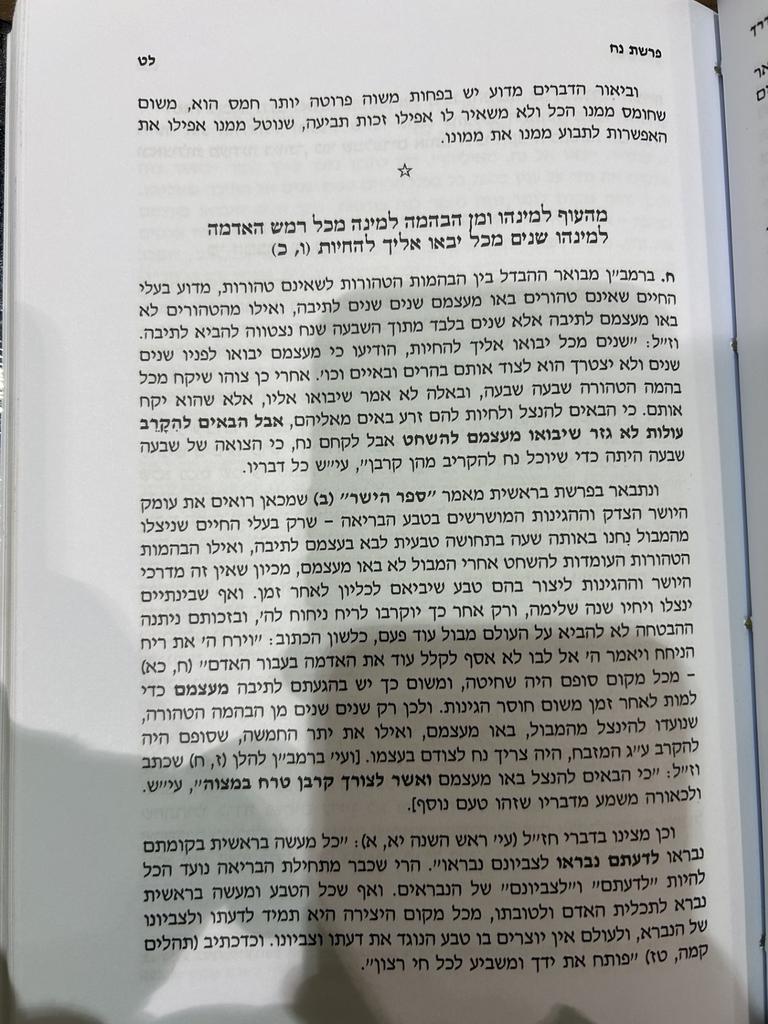
(א)ומאליהן באו וכו'. דאם לא כן מהיכן ידע נח שדבקו במיניהם, אלא שבאו מעצמן (סנהדרין קח ע"ב). ומפני שקשה דמכל מקום אף על גב שבאו מאליהן – שמא במקרה היה נמצא אצל אותן שדבקו במיניהם גם אותן שלא דבקו במיניהם, ולכך הוסיף רש"י שלא היה התיבה קולטת אלא אותן שדבקו במיניהם, ואם היה התיבה קולט אותו העוף ידוע היה שדבק במינו, ואם לא היה התיבה קולטת אותם – בידוע שלא דבק במינו.

אותן שדבקו במיניהם ולא השחיתו. דאל"כ למינהו למה לי פי' ולא השחיתו שלא נעברה בהן עבירה כלומר שלא היו אלו מאותן שהרביעו עליהם בהמה על חיה וחיה על בהמה והכל על אדם שבפרק חלק אמרו בפירוש שלא נעברה בהן עבירה:

סימני בהמה טהורה, מעלת גרה ומפרסת פרסה. מעלת גרה היינו, שאינו חוטף הטוב מהש"י ותמיד הוא מוכן להחזירו, אף שקבל כבר הוא מוכן להחזירו ורק מקבלו בנייחא. ומפריס פרסה הוא שאינו קופץ ידיו לאחוז במה שנחלק לו מהש"י, וזהו מגודל בטחונו ביהוה כי על זה רומז מפריס פרסה כמ"ש (תהלים י"ח,ל"ז) תרחיב צעדי שעומד במרחב.

Signs of Pure Animals. “Whatever has parted hooves, is cloven footed, and chews the cud, of these you may eat” (Vayikra, 11:2). “Chews the cud” means one who does not snatch the good from God, and is always willing to return it. Even if he has already received it he is ready to return it, and he only receives it in a pleasant way. “That has parted hooves” means that his hands do not jump to seize that which God has allotted him, and this comes out of his great trust in God. “That has parted hooves” hints at this, as it is written (Tehilim, 18:37), “You have enlarged my steps under me,” meaning that he stands in a wide space.

It's worth noting that even Noach's role as the "outer physical signs judge" was more limited than we might assume. The Maskil L'David points out that while Noach could easily identify split hooves through visual inspection, determining whether an animal chews its cud would require prolonged observation—a nearly impossible task when processing pairs of every species. Therefore, the Ark miraculously handled this verification as well.
This perhaps reflects a fundamental principle: Hashem expects us to do our hishtadlus—our human effort—even when He could accomplish everything miraculously, because Hashem values our active participation in His plans.

הטהרה וכו׳ למדנו וכולי מוכרח הוא דאל״כ מלה זו שא״ל הקב״ה מכל הבהמה הטהורה ה״ז בלתי הבנה אצלו כלל דמהיכן ידע מה ר״ל טהורה אם לא שלמד תורה וידע דשייך טהורה וטמאה ומ״מ הוצרכו בגמ׳ לומר בזבחים "כל שהתיבה קולטתו" טהור דאל״כ אע״ג דלמד נח תורה וידע מאי טהורה ומאי טמאה א״א להכיר בין טמאה לטהורה כשרואה החיות שהרי סימן מפריס פרסה לחוד לא סגי והיה טורח גדול להאכיל לכל בהמה וחיה לראות אם היא גם כן מעלת גרה ונח לאו קניגי ובליסטרי היה להכיר כל המינים ועוד בעופות היכי יכיר כל הטהורים שהרי מסימנים שלהם זפק וקורקבן נקלף ובזה א״א לו לבדוק מחיים כלל לכך הוצרכו לומר מאליהם באו וכו׳ א״נ העבירום לפני התיבה וכל שהתיבה קולטתו טהור ומעתה אזרת לה קו׳ הרא״ם ז״ל ע״ע:

Another point about Noach's involvement in bringing in the animals regards the 7 pure animals which Hashem commanded him to bring.
Why was Noach commanded to go out and gather these animals himself? Why couldn't they simply come to him on their own, like all the other animals that arrived at the Ark to save their species?
The passuk says:

(ה) וַיַּ֖עַשׂ נֹ֑חַ כְּכֹ֥ל אֲשֶׁר־צִוָּ֖הוּ יהוה׃

(5) And Noah did just as יהוה commanded him.

1. Ramban:

וְעַל דַּעְתִּי שֶׁכֵּן הָיָה שֶׁבָּאוּ מִכֻּלָּם שְׁנַיִם זָכָר וּנְקֵבָה מֵעַצְמָם, וְנֹחַ הוֹסִיף לְהָבִיא מִן הַטְּהוֹרִים שִׁשָּׁה זוּגוֹת, כִּי הַבָּאִים לְהִנָּצֵל בָּאוּ מֵעַצְמָם, וַאֲשֶׁר לְצֹרֶךְ קָרְבָּן טָרַח בַּמִּצְוָה, כִּי כֵן נֶאֱמַר לוֹ. וְטַעַם "וַיַּעַשׂ נֹחַ כְּכֹל אֲשֶׁר צִוָּהוּ יהוה" (בראשית ז':ה) אָמְרוּ בִּבְרֵאשִׁית רַבָּה (בראשית רבה ל"ב:ה), זֶה שֶׁיָּכִין לִכְנוֹס בְּהֵמָה וְחַיָּה וְעוֹף, כְּלוֹמַר הַטְּהוֹרִים, שֶׁטָּרַח הוּא אַחֲרֵיהֶם וּלְקָחָם אֶל בֵּיתוֹ.

(1) OF CLEAN BEASTS, AND OF BEASTS THAT ARE NOT CLEAN. TWO AND TWO THERE CAME IN UNTO NOAH. Rashi explained: “They were all equal with respect to this number for the least number of any species was two.” Others said that the meaning of “two” is pairs, meaning that they came couplewise, male and female together. In my opinion, the matter was thus: two — a male and a female — came of their own accord from each species, and Noah added by bringing six additional pairs from the clean ones since those that came to be saved arrived of their own accord while he busied himself for the sake of the commandment with those that were destined for sacrifice, for so it was told to him. And the meaning of the verse, And Noah did according unto all that the Eternal commanded him, is, as the Rabbis have said in Bereshith Rabbah, that he was to prepare to bring in the cattle, beast, and fowl, meaning the clean ones, those which he himself went after and brought to his house. The verse which states a third time, as G-d hath commanded Noah, means that he did as He had commanded him concerning entering the ark, for this verse is connected with the above verse: And Noah came in. The verse thus states that Noah and his sons and his wife and his sons’ wives came into the ark along with two and two of the cattle and fowl and creeping things that came to him in order to enter into the ark. All of them came with him, entering the ark because of the waters of the flood, as G-d commanded him. Scripture then returns and sets forth the month and the day in which the flood came and how he entered the ark, stating that on that selfsame day when the rains began — and not before — Noah entered the ark, and with him were all living things.
Another answer is offered by the Sam Derech. The issue wasn't about Noach needing to exert effort for the mitzvah's sake. Rather, it stemmed from the animals' nature: it would violate the natural order for an animal to willingly walk toward its own death. Since these kosher animals were destined to become sacrifices after the flood, they could not come on their own—Noach had to bring them.
A third, and very novel answer, is offered by Oznayim LaTorah as to why Noach had to go out to get these animals.
--
There are some other finer details on the topic of Noach's involvement in the "pre-boarding" process. Ramban (in the same place as above) discusses Noach's involvement as doing the actual transfer into the ark, a more practical involvement.
Maskil L'David also notes that after all of what the ark did in regards to the "checking out", Noach's involvement was practical:

(א)מהעוף וכו׳ ומאליהם באו וכולי ק״ק דמעיקרא קאמר דמאליהן באו תוך התיבה ואח״כ קאמר וכל שהתיבה קולטתו הכניס בה ומאי שייך לומר הכניס הואיל וכבר באו ונכנסו מאליהן והול״ל כל שהתיבה קולטתו הניח בה וי״ל דר״ל כל שהתיבה קולטתו היה מכניס לקילון שהם לא באו רק בתיבה ואחר כך הוא היה מכניס כל א׳ לקינו דהיינו למדור שלו:

Onkelos' approach to this whole topic seems to suggest that Noach's role was strictly practical as well (not even looking at the hooves) See Onkelos to 6:20 with meforshim, and to 7:9 with Pas'shegen.
See also 6:12 in regards to this opinion on whether the animals also engaged in unnatural relationships. On this idea specifically, Gur Aryeh (6:12, 8:21 has an explanation to reconcile the two opinions, and how it relates to the two opinions brought in Rashi 6:7)