(יג) וְהָיָ֗ה אִם־שָׁמֹ֤עַ תִּשְׁמְעוּ֙ אֶל־מִצְוֺתַ֔י אֲשֶׁ֧ר אָנֹכִ֛י מְצַוֶּ֥ה אֶתְכֶ֖ם הַיּ֑וֹם לְאַהֲבָ֞ה אֶת־יהוה אֱלֹֽהֵיכֶם֙ וּלְעׇבְד֔וֹ בְּכׇל־לְבַבְכֶ֖ם וּבְכׇל־נַפְשְׁכֶֽם׃(יד) וְנָתַתִּ֧י מְטַֽר־אַרְצְכֶ֛ם בְּעִתּ֖וֹ יוֹרֶ֣ה וּמַלְק֑וֹשׁ וְאָסַפְתָּ֣ דְגָנֶ֔ךָ וְתִירֹֽשְׁךָ֖ וְיִצְהָרֶֽךָ׃(טו) וְנָתַתִּ֛י עֵ֥שֶׂב בְּשָׂדְךָ֖ לִבְהֶמְתֶּ֑ךָ וְאָכַלְתָּ֖ וְשָׂבָֽעְתָּ׃(טז) הִשָּֽׁמְר֣וּ לָכֶ֔ם פֶּ֥ן יִפְתֶּ֖ה לְבַבְכֶ֑ם וְסַרְתֶּ֗ם וַעֲבַדְתֶּם֙ אֱלֹהִ֣ים אֲחֵרִ֔ים וְהִשְׁתַּחֲוִיתֶ֖ם לָהֶֽם׃(יז) וְחָרָ֨ה אַף־יהוה בָּכֶ֗ם וְעָצַ֤ר אֶת־הַשָּׁמַ֙יִם֙ וְלֹֽא־יִהְיֶ֣ה מָטָ֔ר וְהָ֣אֲדָמָ֔ה לֹ֥א תִתֵּ֖ן אֶת־יְבוּלָ֑הּ וַאֲבַדְתֶּ֣ם מְהֵרָ֗ה מֵעַל֙ הָאָ֣רֶץ הַטֹּבָ֔ה אֲשֶׁ֥ר יהוה נֹתֵ֥ן לָכֶֽם׃(יח) וְשַׂמְתֶּם֙ אֶת־דְּבָרַ֣י אֵ֔לֶּה עַל־לְבַבְכֶ֖ם וְעַֽל־נַפְשְׁכֶ֑ם וּקְשַׁרְתֶּ֨ם אֹתָ֤ם לְאוֹת֙ עַל־יֶדְכֶ֔ם וְהָי֥וּ לְטוֹטָפֹ֖ת בֵּ֥ין עֵינֵיכֶֽם׃(יט) וְלִמַּדְתֶּ֥ם אֹתָ֛ם אֶת־בְּנֵיכֶ֖ם לְדַבֵּ֣ר בָּ֑ם בְּשִׁבְתְּךָ֤ בְּבֵיתֶ֙ךָ֙ וּבְלֶכְתְּךָ֣ בַדֶּ֔רֶךְ וּֽבְשׇׁכְבְּךָ֖ וּבְקוּמֶֽךָ׃(כ) וּכְתַבְתָּ֛ם עַל־מְזוּז֥וֹת בֵּיתֶ֖ךָ וּבִשְׁעָרֶֽיךָ׃(כא) לְמַ֨עַן יִרְבּ֤וּ יְמֵיכֶם֙ וִימֵ֣י בְנֵיכֶ֔ם עַ֚ל הָֽאֲדָמָ֔ה אֲשֶׁ֨ר נִשְׁבַּ֧ע יהוה לַאֲבֹתֵיכֶ֖ם לָתֵ֣ת לָהֶ֑ם כִּימֵ֥י הַשָּׁמַ֖יִם עַל־הָאָֽרֶץ׃ {ס}
(13) If, then, you obey the commandments that I enjoin upon you this day, loving your God יהוה and serving [God] with all your heart and soul,(14) I will grant the rain for your land in season, the early rain and the late. You shall gather in your new grain and wine and oil—(15) I will also provide grass in the fields for your cattle—and thus you shall eat your fill.(16) Take care not to be lured away to serve other gods and bow to them.(17) For יהוה’s anger will flare up against you, shutting up the skies so that there will be no rain and the ground will not yield its produce; and you will soon perish from the good land that יהוה is assigning to you.(18) Therefore impress these My words upon your very heart: bind them as a sign on your hand and let them serve as a symbol on your forehead, (19) and teach them to your children—reciting them when you stay at home and when you are away, when you lie down and when you get up;(20) and inscribe them on the doorposts of your house and on your gates—(21) to the end that you and your children may endure, in the land that יהוה swore to your fathers to assign to them, as long as there is a heaven over the earth.
(1)If, then, you obey. This passage links the distinctive qualities of the land and its agricultural fertility to the concept of divine reward and retribution. God rewards obedience via timely rain that will assure plenitude of crops and success; God retaliates against disobedience with a lack of rain—and thus with a lack of produce that will result in famine and annihilation. (2) Having given these geographical and climatic conditions such theological importance, vv. 13–21 were incorporated by the Rabbis into the daily liturgy as the second paragraph of the Sh’ma, following the V’ahavta (6:5–9). The Rabbis further secured the prominence of this passage by having it placed in the mezuzah and in the t’fillin, along with other passages from the Torah.
Usually, no alternative is provided, but the Reconstructionist liturgy of 1945 substitutes Deuteronomy 28:1-6...The Israeli Ha'avodah Shbalev provides a similar option: Deuteronomy 30:15-20...Like Kol Han'shamah, however, Ha'avodah Shbalevoffers it only as an alternative, not a substitute.
David Ellenson, My People's Prayer Book, Vol. 1
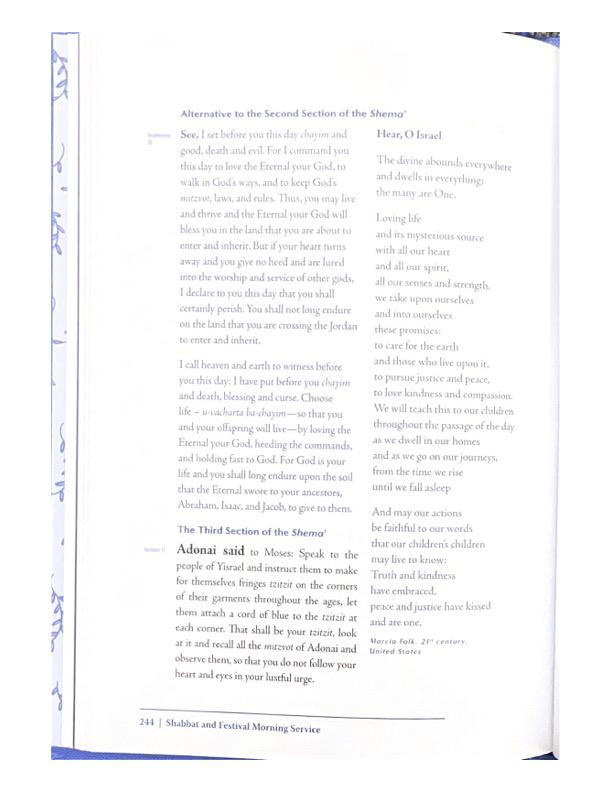
Nonetheless, the verses describing an angry God 'sealing up the heavens' were printed in smaller type, acknowledging the theological difficulties with this image. The paragraph ultimately remained sufficiently problematic to require both a recommendation from the Siddur Editorial Committee and a vote by the CCAR Executive Committee. Both decided to uphold the earlier Reform deletion of the paragraph in its entirety: even though subject to mitigating non-literalist interpretations, the text itself remains difficult for a modern Jew to recite in the liturgy --although the second reading on page 235 (117 Shabbat edition), 'If we can hear the words from Sinai,' by Rabbi Richard Levy, is in fact a contemporary interpretation of the second paragraph of the Sh'ma.
The third paragraph of the Sh'ma is variously referred to by the Rabbis as parashat tzitzit, since it deals with the obligation to wear fringes on the four corners of one's garment that are to serve as reminders of God's commandments, and as Y'tziat Mitzrayim, 'the Exodus from Egypt,' since at the end it refers to God as the One who redeemed the Israelites from Egypt.... When the custom of wearing a tallit during morning prayers became less frequent among Reform Jews, this paragraph came to be dropped from the liturgy (...the Berlin Reformers, Einhorn, and the Union Prayer Book were typical of this trend; the 1918 revision of the UPB reinstated a portion of the final part of the paragraph, beginning L'maan tizk'ru the full conclusion was reinstated in Gates of Prayer, 1975). Now that many Reform Jews wear tallitot at morning prayers, Mishkan T'filah has restored the entire third paragraph as an option for those who wish to recite it--but only in the morning, since the tallit is not worn at night." -- Sarason, Rabbi Richard S. Divrei Mishkan T'filah: Delving into the Siddur. CCAR Press, 2017. p 42-43.
רבי שמעון בן יוחי אומר, משל למלך בשר ודם שהיו לו בנים ועבדים הרבה והיו נזונים ומתפרנסים מתחת ידו ומפתחות של אוצר בידו, כשהם עושים רצונו הוא פותח את האוצר והם אוכלים ושבעים, וכשאין עושים רצונו הוא נועל את האוצר והם מתים ברעב. כך ישראל כשעושים רצונו של מקום (דברים כח יב) יפתח יהוה לך את אוצרו הטוב את השמים, וכשאינם עושים רצונו מה הוא אומר (שם יא יז) וחרה אף יהוה בכם ועצר את השמים ולא יהיה מטר.
R. Shimon b. Yochai says: An analogy: A king had many sons and servants, who were fed and sustained by him, the key to the storehouse being in his hand. When they do his will, he opens the storehouse and they eat and are sated. When they do not do his will, he locks the storehouse and they die of hunger. Thus with Israel. When they do the L-rd's will — (Devarim 18:12) "The L-rd will open for you His goodly treasure trove, the heavens," and when they do not do His will — (Ibid. 11:17) "And the wrath of the L-rd will burn against you, and He will hold back the heavens and there will not be rain."