


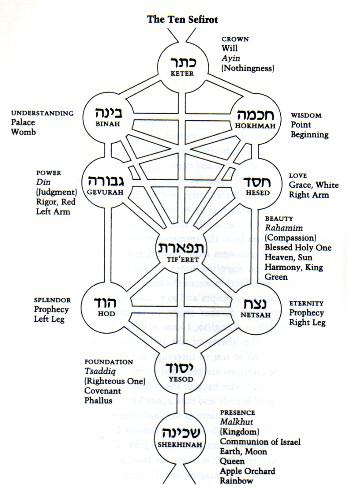
Iyar is the month of healing. The Hebrew letters for the name Iyar spell out the initials of the verse "Ani Yud-Yud Rofecha," "I am God your Healer" - it's also the only month that is entirely spanned by the omer, a period of time between Pesach and Shavuot during which it is a mitzvah to count each day out loud. Each day also corresponds to different "sefirot" or divine attributes in the kabbalistic Tree of Life. In this sourcesheet, we'll explore texts about the origins of the omer, the sefirot, brokenness, and the spiritual significance of counting and calendars.
From where do we learn to count the Omer?
(טו) וּסְפַרְתֶּ֤ם לָכֶם֙ מִמָּחֳרַ֣ת הַשַּׁבָּ֔ת מִיּוֹם֙ הֲבִ֣יאֲכֶ֔ם אֶת־עֹ֖מֶר הַתְּנוּפָ֑ה שֶׁ֥בַע שַׁבָּת֖וֹת תְּמִימֹ֥ת תִּהְיֶֽינָה׃ (טז) עַ֣ד מִֽמָּחֳרַ֤ת הַשַּׁבָּת֙ הַשְּׁבִיעִ֔ת תִּסְפְּר֖וּ חֲמִשִּׁ֣ים י֑וֹם וְהִקְרַבְתֶּ֛ם מִנְחָ֥ה חֲדָשָׁ֖ה לַיהוה׃
(15) And from the day on which you bring the sheaf of elevation offering—the day after the sabbath—you shall count off seven weeks. They must be complete: (16) you must count until the day after the seventh week—fifty days; then you shall bring an offering of new grain to the LORD.
גופא אמר אביי מצוה למימני יומי ומצוה למימני שבועי רבנן דבי רב אשי מנו יומי ומנו שבועי אמימר מני יומי ולא מני שבועי אמר זכר למקדש הוא:
§ The Gemara analyzes the matter itself of Abaye’s statement cited in the course of the previous discussion. Abaye said: It is a mitzva to count days, and it is also a mitzva to count weeks. The Gemara notes that in fact the Sages of the study hall of Rav Ashi counted days and they also counted weeks. Ameimar counted days but not weeks. In explanation of his practice, Ameimar said: Since there is no longer an omer offering, the counting is performed only in commemoration of the Temple. Therefore, one does not need to be so scrupulous to count both days and weeks.
תנו רבנן (ויקרא כג, טו) וספרתם לכם שתהא ספירה לכל אחד ואחד
The Sages taught in a baraita: The phrase: “And you shall count for you,” (Leviticus 23:15) teaches that the mitzva of counting is not a communal obligation. Rather, there should be a counting by each and every person.
The Ari's Story of Creation
Rabbi Isaac Luria (1534-1572), also known as The Ari (The Lion), was a rabbi and mystic in Safed. His teachings are referred to as Lurianic Kabbalah. He taught the following story:
Before God created the world, the entire universe was filled with a holy presence. God took a breath to draw back and make room for the world. From that first breath, darkness was created. And when God said, “Let there be light,” lightness was created filling vessels, sefirot, with holy light. God sent those vessels to the world, and if they had each arrived whole, the world would have been perfect. But the holy light was too powerful to be contained, and the vessels split open sending sparks flying everywhere. Some of God’s holy light became trapped inside the shards of the vessels.
It is our job to release and gather the sparks. When enough sparks have been gathered, tikkun olam, repair of the world will be complete. How do we gather sparks? By doing mitzvot, tzedakah and acts of gemilut hasadim (loving kindness).
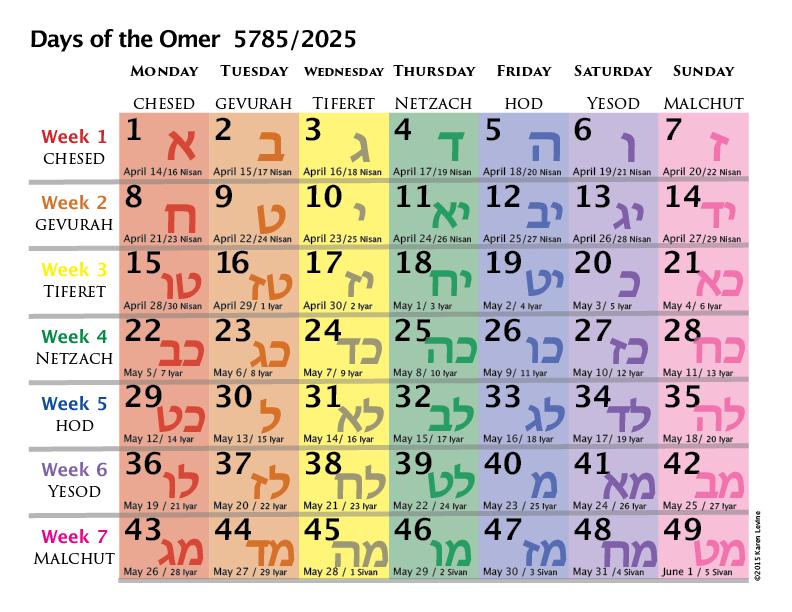
Sefirat HaOmer Calendar
This Sefirat HaOmer Calendar was created by the Certificate Program's very own Karen Levine, as part of a daily omer counting project. What do you notice about this visual layout? What does it mean for each day to be imbued with a different sacred angle?
The Trans Calendar
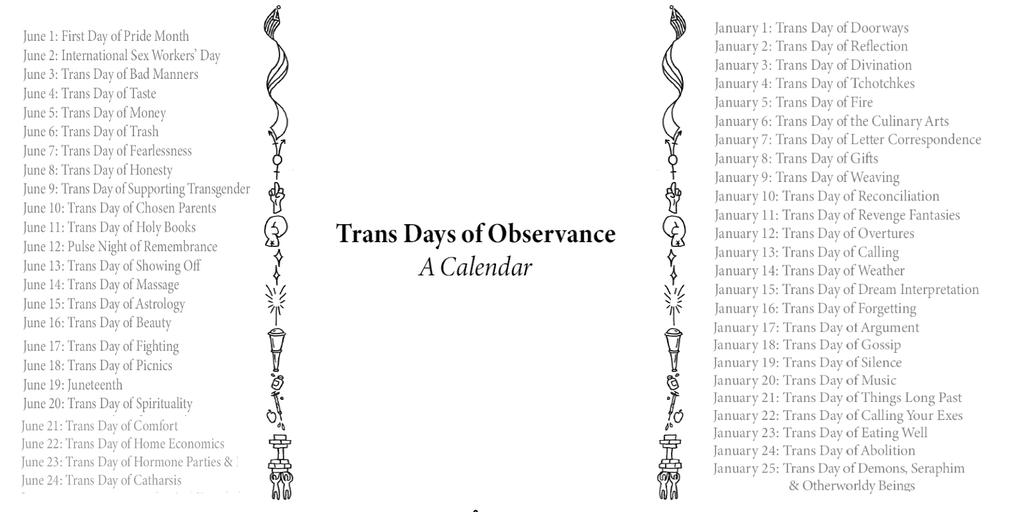
Download the PDF of "Trans Days of Observance", a calendar by Rena Yehuda Newman. What is this calendar trying to accomplish? What does it have in common (or in contrast to) the Jewish calendar?
Reflection Questions
What is the difference between healing and curing?
How does counting or accounting aid a process of healing?
What is the value in counting? In counting days, specifically? In counting the days leading up to the revelation of the Torah at Mount Sinai?
Each of the different days of the Omer correspond to a different set of sefirot. Why do you think that in the month of healing, we reference a kabbalistic creation story that begins with something being deeply broken?
Do you feel time is linear, cyclical, or some other shape?
What is the spiritual value of a calendar?
What other calendars guide the movement of your life?
How might a calendar relate to a process of healing?