6. What is the Story we tell this evening?
מַתְחִיל בִּגְנוּת וּמְסַיֵּים בְּשֶׁבַח. מַאי בִּגְנוּת? רַב אָמַר: ״מִתְּחִלָּה עוֹבְדֵי עֲבוֹדָה זָרָה הָיוּ אֲבוֹתֵינוּ״. [וּשְׁמוּאֵל] אָמַר: ״עֲבָדִים הָיִינוּ״. אֲמַר לֵיהּ רַב נַחְמָן לְדָרוּ עַבְדֵּיהּ: עַבְדָּא דְּמַפֵּיק לֵיהּ מָרֵיהּ לְחֵירוּת, וְיָהֵיב לֵיהּ כַּסְפָּא וְדַהֲבָא, מַאי בָּעֵי לְמֵימַר לֵיהּ? אֲמַר לֵיהּ: בָּעֵי לְאוֹדוֹיֵי וּלְשַׁבּוֹחֵי, אֲמַר לֵיהּ: פְּטַרְתַּן מִלּוֹמַר ״מָה נִשְׁתַּנָּה״. פָּתַח וְאָמַר ״עֲבָדִים הָיִינוּ״.
It was taught in the mishna that the father begins his answer with disgrace and concludes with glory. The Gemara asks: What is the meaning of the term: With disgrace? Rav said that one should begin by saying: At first our forefathers were idol worshippers, before concluding with words of glory. And Shmuel said: The disgrace with which one should begin his answer is: We were slaves
Haggadah for Passover from the Beit HaLevi (Rav Velvel Soloveitchik) (Trans. R. Frederick Klein)
“And now God has brought us close to His worship” In Gemara Pesachim 116a the Mishna teaches us that when telling the Exodus we must ‘begin with words of denigration and end with praise’. The Gemara askes, “What is the denigration? Rav says ‘In the beginning we were idol worshipers’ and Shmuel says ‘ we were slaves to Pharoah in Egypt.’
However, the gemara does not ask the same thing regarding praise. Now according to Rav the denigration is that ‘we were idol worshippers’ and the end is ‘now God has brought us close to God’s worship’. But what is the ‘praise’ for Shmuel. In appears that in fact that even for Shmuel the praise is the same thing, ‘now God has brought us close to God’s worship’. As it states in Leviticus (25:42), “they are my servants who I took out of the Land of Egypt and you shall not sell them the way of a slave,” and there it also states (v 55), “The Jewish people are my servants (avadim). They are my servants that I took out of Egypt, I am the Lord your God.” Because they are servants/slaves to God, they cannot be servants/slaves to another human being. And this was the entire point of the Exodus from Egypt, as it says (Numbers 15:41, last line of Shma), “I am the Lord your God who took you out of Egypt in order to be your God.” Thus, according to my reading, also according to Shmuel who speaks of the denigration of slavery, the praise is also “God has brought us close to his worship’, because through the process of Exodus they became servants of God and could no longer be slaves to humanity’.
Excepted from Rabbi Shmuel Silber Beginning & Ending: Reflections on the Haggadah (rabbisilber.com)
The great Maggid of Kohznitz (Rav Yisroel Hopstein, 1737-1814) provides another beautiful insight. The Maggid explains that the greatest danger we face in life is believing we are beyond salvation. A person may think to himself, “I have done so many terrible things, I have tarnished my soul, I have sullied my reputation, I have failed to actualize my potential; what hope is there for me?” Maschil B’Genus, even if the beginning is degrading, even if the beginning is stunted and handicapped, Misayeym B’Shevach, I choose how the story ends, I can change, I can live better, do better and create a beautiful future. We were slaves, we were more animal than man, we were viewed by others and we viewed ourselves as cattle and property. And yet, look at us now; we are a strong and free people. We were idolaters, spiritually bankrupt and estranged from God and yet, we managed to find our way home. We lifted ourselves from serving the creations of our hands to serving the King of Kings. We cannot always rewrite the past but we can absolutely decide how to script our future. - Excepted from Rabbi Shmuel Silber Beginning & Ending: Reflections on the Haggadah (rabbisilber.com)
7. What does it mean to be the wicked son?
בָּרוּךְ הַמָּקוֹם, בָּרוּךְ הוּא, בָּרוּךְ שֶׁנָּתַן תּוֹרָה לְעַמּוֹ יִשְׂרָאֵל, בָּרוּךְ הוּא. כְּנֶגֶד אַרְבָּעָה בָנִים דִּבְּרָה תוֹרָה: אֶחָד חָכָם, וְאֶחָד רָשָׁע, וְאֶחָד תָּם, וְאֶחָד שֶׁאֵינוֹ יוֹדֵעַ לִשְׁאוֹל.
חָכָם מָה הוּא אוֹמֵר? מָה הָעֵדוֹת וְהַחֻקִּים וְהַמִּשְׁפָּטִים אֲשֶׁר צִוָּה יהוה אֱלֹהֵינוּ אֶתְכֶם. וְאַף אַתָּה אֱמוֹר לוֹ כְּהִלְכוֹת הַפֶּסַח: אֵין מַפְטִירִין אַחַר הַפֶּסַח אֲפִיקוֹמָן:
רָשָׁע מָה הוּא אוֹמֵר? מָה הָעֲבוֹדָה הַזּאֹת לָכֶם. לָכֶם – וְלֹא לוֹ. וּלְפִי שֶׁהוֹצִיא אֶת עַצְמוֹ מִן הַכְּלָל כָּפַר בְּעִקָּר. וְאַף אַתָּה הַקְהֵה אֶת שִׁנָּיו וֶאֱמוֹר לוֹ: "בַּעֲבוּר זֶה עָשָׂה יהוה לִי בְּצֵאתִי מִמִּצְרָיִם". לִי וְלֹא־לוֹ. אִלּוּ הָיָה שָׁם, לֹא הָיָה נִגְאָל:
תָּם מָה הוּא אוֹמֵר? מַה זּאֹת. וְאָמַרְתָּ אֵלָיו "בְּחוֹזֶק יָד הוֹצִיאָנוּ יהוה מִמִּצְרַיִם מִבֵּית עֲבָדִים".
וְשֶׁאֵינוֹ יוֹדֵעַ לִשְׁאוֹל – אַתְּ פְּתַח לוֹ, שֶׁנֶּאֱמַר, וְהִגַּדְתָּ לְבִנְךָ בַּיּוֹם הַהוּא לֵאמֹר, בַּעֲבוּר זֶה עָשָׂה יהוה לִי בְּצֵאתִי מִמִּצְרָיִם.
The WICKED SON what does he say? “What is this service to you?” “To you,” he says, not to him. When he sets himself apart from the community, he denies the very core of our beliefs. And you must set his teeth on edge and tell him, “Because of this the LORD acted for me when I came out of Egypt.” “For me,” and not for him; had he been there he would not have been redeemed.
אָמַר רַבִּי חִיָּיא בַּר אַבָּא אָמַר רַבִּי סִימַאי: שְׁלֹשָׁה הָיוּ בְּאוֹתָהּ עֵצָה: בִּלְעָם, וְאִיּוֹב, וְיִתְרוֹ. בִּלְעָם שֶׁיָּעַץ — נֶהֱרַג, אִיּוֹב שֶׁשָּׁתַק — נִידּוֹן בְּיִסּוּרִין. יִתְרוֹ שֶׁבָּרַח — זָכוּ מִבְּנֵי בָנָיו שֶׁיָּשְׁבוּ בְּלִשְׁכַּת הַגָּזִית, שֶׁנֶּאֱמַר: ״וּמִשְׁפְּחוֹת סוֹפְרִים יוֹשְׁבֵי יַעְבֵּץ תִּרְעָתִים שִׁמְעָתִים שׂוּכָתִים הֵמָּה הַקִּינִים הַבָּאִים מֵחַמַּת אֲבִי בֵית רֵכָב״, וּכְתִיב: ״וּבְנֵי קֵינִי חֹתֵן מֹשֶׁה וְגוֹ׳״.
Rabbi Ḥiyya bar Abba says that Rabbi Simai says: Three noteworthy people were consulted by Pharaoh in that counsel where Pharaoh questioned what should be done with the Jewish people. They were Balaam, and Job, and Yitro. Rabbi Ḥiyya bar Abba teaches what occurred to each of them: Balaam, who advised Pharaoh to kill all sons born to the Jewish people, was punished by being killed in the war with Midian (see Numbers 31:8). Job, who was silent and neither advised nor protested, was punished by suffering, as detailed in the eponymous book in the Bible. Yitro, who ran away as a sign of protest, merited that some of his children’s children sat in the Sanhedrin in the Chamber of Hewn Stone, as it is stated: “And the families of scribes who dwelt at Jabez, Tirathites, Shimeathites, and Sucathites, these were the Kenites who descended from Hammath, the father of the house of Rechab” (I Chronicles 2:55). And it is written: “The children of the Kenite, Moses’ father-in-law” (Judges 1:16). This teaches that the Kenites, descendants of Yitro, the father-in-law of Moses, dwelt at Jabez [Yabetz], referring to the place where the Jewish people go for advice [eitza], i.e., the Chamber of Hewn Stone.
R. Ethan Tucker, RESPONSIBILITY & REDEMPTION:
The Key Role of Iyyov in the Exodus Story (Published on Machon Hadar Website)
But it is Iyyov who draws our gaze. Iyyov is not a voice for persecution, but he is also unwilling to give up his place at Pharaoh’s table. He therefore tries silence. Whether this is a weaselly form of plausible deniability, or an effort to remain a force for good at a later point in time, the Talmud does not like it. His silence is enough to justify the otherwise inscrutable suffering that Iyyov must withstand in the book that bears his name. Sefer Iyyov is transformed from a tale of righteous suffering to a chronicle of the just deserts meted out to one who would not raise his voice while others suffer.
Iyyov is not an enemy of the Jewish people like Bil’am. He is not an agent of oppression and can therefore be described as righteous to the end. But he failed to actually detach from the oppression, as Yitro did, and he must suffer as a result. Redemption never happens on its own. It requires not only liberators but people with power who are willing to risk some of that power in order to interfere in the schemes of those who would persecute. Iyyov failed to do this.
In Consideration of the Wicked Son (Essay by Rabbi Jonathan Sacks, 2016) -Excerpts
A host of recent studies of outstanding achievement, among them Malcolm Gladwell’s Outliers, David Shenk’s The Genius In All Of Us, Geoffrey Colvin’s Talent is Overrated, Matthew Syed’s Bounce and Daniel Coyle’s The Talent Code, have shown precisely this, that high achievement is the result of tireless dedication (at least 10,000 hours of it) and deep practice. That is why people strive to get into the great universities, or win an Olympic medal or a Nobel Prize. It is also the phenomenon that Mihaly Csikszentmihalyi calls “flow” or “peak experience,” the point at which a challenge tests us to the limits, calling for total focus. To be sure, there are some challenges that are simply too hard and leave us feeling overstressed and inadequate. But in general, we value most highly what tests us most deeply.
Sometimes of course the opposite is true. We appreciate the one-click buy, the one-stop shop, the instant communication and the computer search that takes microseconds. But this applies when we are seeking convenience, not when we are seeking meaning. If what we are looking for in a religion is convenience, no one in his or her right mind would recommend Judaism. But if we are looking for meaning, no religion has ever been more profound....
The [Talmud] Yerushalmi does not tell us how to answer the child who asks why Judaism is such hard work, such avodah. Speaking personally, this is the answer I would give:
“My child, you ask a good question and I respect you for your honesty. You are telling it the way you see it. It is important that you speak what is in your mind. I cannot give you an answer that will end your doubts, but I can say what I have learned in the course of my lifetime.
People are prepared to undergo a long and arduous training to earn a living—to become a doctor or a lawyer or a therapist or an economist. Judaism asks us to undergo an equally long and arduous training in order to live: to be not just a doctor or lawyer or therapist or economist but also a human being who is bigger than his or her specific roles. That is because Judaism takes life—the art of living in the image of God – with absolute and ultimate seriousness.
…Judaism is hard work because freedom is hard work. Pesach is especially hard because it is the festival of freedom. …’ Without halakhah, the code that binds us together across centuries and continents, we would lose the ‘We.’ And yes, it’s hard work. But I tell you from the depth of my heart that there is no achievement worth having that is not hard work.” What we need in Jewish life today is not ways of making Judaism easier. What costs little is valued even less. We need to find ways of showing how Judaism lifts us to greatness. When that happens people will not ask, Mah ha-avodah ha-zot lakhem, “Why all the hard work?” Neither an athlete going for an Olympic gold medal nor a scientist trying a new line of research ever asks that question; nor did Steve Jobs at Apple or Jeff Bezos at Amazon. The pursuit of greatness always involves hard work. The real challenge of our time is to rediscover why Judaism, because it asks great things from us, lifts us to greatness. The rest is commentary."
8. V'hee She'Amdah- Are we Living it Again (?)
Franklin Foer, The Golden Age of American Jewry is Ending, (The Atlantic, March 2024)- Excerpt
In the hatred that I witnessed in the Bay Area, and that has been evident on college campuses and in progressive activist circles nationwide, I’ve come to see left-wing anti-Semitism as characterized by many of the same violent delusions as the right-wing strain. This is not an accident of history. Though right- and left-wing anti-Semitism may have emerged in different ways, for different reasons, both are essentially attacks on an ideal that once dominated American politics, an ideal that American Jews championed and, in an important sense, co-authored. Over the course of the 20th century, Jews invested their faith in a distinct strain of liberalism that combined robust civil liberties, the protection of minority rights, and an ethos of cultural pluralism. They embraced this brand of liberalism because it was good for America—and good for the Jews. It was their fervent hope that liberalism would inoculate America against the world’s oldest hatred.
For several generations, it worked. Liberalism helped unleash a Golden Age of American Jewry, an unprecedented period of safety, prosperity, and political influence. Jews, who had once been excluded from the American establishment, became full-fledged members of it. And remarkably, they achieved power by and large without having to abandon their identity. In faculty lounges and television writers’ rooms, in small magazines and big publishing houses, they infused the wider culture with that identity. Their anxieties became American anxieties. Their dreams became American dreams.
But that era is drawing to a close. America’s ascendant political movements—MAGA on one side, the illiberal left on the other—would demolish the last pillars of the consensus that Jews helped establish. They regard concepts such as tolerance, fairness, meritocracy, and cosmopolitanism as pernicious shams. The Golden Age of American Jewry has given way to a golden age of conspiracy, reckless hyperbole, and political violence, all tendencies inimical to the democratic temperament. Extremist thought and mob behavior have never been good for Jews. And what’s bad for Jews, it can be argued, is bad for America.

וְהִיא שֶׁעָמְדָה לַאֲבוֹתֵינוּ וְלָנוּ. שֶׁלֹּא אֶחָד בִּלְבַד עָמַד עָלֵינוּ לְכַלּוֹתֵנוּ, אֶלָּא שֶׁבְּכָל דּוֹר וָדוֹר עוֹמְדִים עָלֵינוּ לְכַלוֹתֵנוּ, וְהַקָּדוֹשׁ בָּרוּךְ הוּא מַצִּילֵנוּ מִיָּדָם.
וְהִיא שֶׁעָמְדָה AND THIS[promise] is what has stoodby our ancestors and us;for it was not only one man who rose up to destroy us:in every single generation people rise up to destroy us –BUT THE HOLY ONE, BLESSED BE HE,SAVES USFROM THEIR HANDS.
9.Matzah - The Bread of Faith- Lechem D'hemnuta
(יא) וְכָ֘כָה֮ תֹּאכְל֣וּ אֹתוֹ֒ מׇתְנֵיכֶ֣ם חֲגֻרִ֔ים נַֽעֲלֵיכֶם֙ בְּרַגְלֵיכֶ֔ם וּמַקֶּלְכֶ֖ם בְּיֶדְכֶ֑ם וַאֲכַלְתֶּ֤ם אֹתוֹ֙ בְּחִפָּז֔וֹן פֶּ֥סַח ה֖וּא לַיהוה׃
(11) This is how you shall eat it: your loins girded, your sandals on your feet, and your staff in your hand; and you shall eat it hurriedly: it is a passover offering to יהוה.
רַבָּן גַּמְלִיאֵל הָיָה אוֹמֵר: כָּל שֶׁלֹּא אָמַר שְׁלֹשָׁה דְּבָרִים אֵלּוּ בַּפֶּסַח, לֹא יָצָא יְדֵי חוֹבָתוֹ, וְאֵלּוּ הֵן: פֶּסַח, מַצָּה, וּמָרוֹר.
פֶּסַח שֶׁהָיוּ אֲבוֹתֵינוּ אוֹכְלִים בִּזְמַן שֶׁבֵּית הַמִּקְדָּשׁ הָיָה קַיָּם, עַל שׁוּם מָה? עַל שׁוּם שֶׁפָּסַח הַקָּדוֹשׁ בָּרוּךְ הוּא עַל בָּתֵּי אֲבוֹתֵינוּ בְּמִצְרַיִם, שֶׁנֶּאֱמַר: וַאֲמַרְתֶּם זֶבַח־פֶּסַח הוּא לַייָ, אֲשֶׁר פָּסַח עַל־בָּתֵּי בְנֵי־יִשְׂרָאֵל בְּמִצְרַיִם בְּנָגְפּוֹ אֶת־מִצְרַיִם, וְאֶת־בָּתֵּינוּ הִצִּיל, וַיִּקֹּד הָעָם וַיִּשְׁתַּחֲווּ.
אוחז המצה בידו ומראה אותה למסובין:
מַצָּה זוֹ שֶׁאָנוּ אוֹכְלִים, עַל שׁוּם מַה? עַל שׁוּם שֶׁלֹּא הִסְפִּיק בְּצֵקָם שֶׁל אֲבוֹתֵינוּ לְהַחֲמִיץ עַד שֶׁנִּגְלָה עֲלֵיהֶם מֶלֶךְ מַלְכֵי הַמְּלָכִים, הַקָּדוֹשׁ בָּרוּךְ הוּא, וּגְאָלָם, שֶׁנֶּאֱמַר: וַיֹּאפוּ אֶת־הַבָּצֵק אֲשֶׁר הוֹצִיאוּ מִמִּצְרַיִם עֻגֹת מַצּוֹת, כִּי לֹא חָמֵץ, כִּי גֹרְשׁוּ מִמִּצְרַיִם וְלֹא יָכְלוּ לְהִתְמַהְמֵהַּ, וְגַם־צֵדָה לֹא־עָשׂוּ לָהֶם.
אוחז המרור בידו ומראה אותו למסובין:
מָרוֹר זֶה שֶׁאָנוּ אוֹכְלִים, עַל שׁוּם מַה? עַל שׁוּם שֶׁמֵּרְרוּ הַמִּצְרִים אֶת־חַיֵּי אֲבוֹתֵינוּ בְּמִצְרַיִם, שֶׁנֶּאֱמַר: וַיְמָרְרוּ אֶת־חַיֵּיהם בַּעֲבֹדָה קָשָה, בְּחֹמֶר וּבִלְבֵנִים וּבְכָל־עֲבֹדָה בַּשָּׂדֶה אֶת כָּל עֲבֹדָתָם אֲשֶׁר־עָבְדוּ בָהֶם בְּפָרֶךְ.
בְּכָל־דּוֹר וָדוֹר חַיָּב אָדָם לִרְאוֹת אֶת־עַצְמוֹ כְּאִלּוּ הוּא יָצָא מִמִּצְרַיִם, שֶׁנֶּאֱמַר: וְהִגַּדְתָּ לְבִנְךָ בַּיּוֹם הַהוּא לֵאמֹר, בַּעֲבוּר זֶה עָשָׂה יהוה לִי בְּצֵאתִי מִמִּצְרַיִם. לֹא אֶת־אֲבוֹתֵינוּ בִּלְבַד גָּאַל הַקָּדוֹשׁ בָּרוּךְ הוּא, אֶלָּא אַף אוֹתָנוּ גָּאַל עִמָּהֶם, שֶׁנֶּאֱמַר: וְאוֹתָנוּ הוֹצִיא מִשָּׁם, לְמַעַן הָבִיא אוֹתָנוּ, לָתֶת לָנוּ אֶת־הָאָרֶץ אֲשֶׁר נִשְׁבַּע לַאֲבֹתֵינוּ.
Rabban Gamliel would say: Anyone who does not say these three things on Pesaḥ has not fulfilled his obligation, and these are they: PESAḤ, MATZA, AND BITTER HERBS.
...
THIS MATZA that we eat: what does it recall? It recalls the dough of our ancestors, which did not have time to rise before the King, King of kings, the Holy One, blessed be He, revealed Himself and redeemed them, as it is said: “They baked the dough that they had brought out of Egypt into unleavened cakes, for it had not risen, for they were cast out of Egypt and could not delay, and they made no provision for the way.”
Rabbi Levi of Berditchev's approach to Matzah (Quoted by R. Yitz Greenberg in The Jewish Way
The great Levi Yitzchak of Berditchev, whose analyses always portrayed the people of Israel in a favorable light, insisted that the willingness of the Israelites to enter the desert with hard bread continues to evoke God’s love. Levi Yitzchak asked: Why does the Torah continually call Passover hag hamatzot–the feast of unleavened bread–while the Jews call it hag haPesach–the feast of Passover? Because as lovers they stress each other’s goodness. Israel praises God who passed over the homes of the Jews when destroying Egypt. God praises the Jews who went so trustingly out of the fertile plain of Egypt into a barren desert with meager food.
10. Chametz and the Notion of Time
(א) החדש הזה לכם ראש חדשים. מכאן ואילך יהיו החדשים שלכם, לעשות בהם כרצונכם, אבל בימי השעבוד לא היו ימיכם שלכם, אבל היו לעבודת אחרים ורצונם, לפיכך ראשון הוא לכם לחדשי השנה. כי בו התחיל מציאותכם הבחיריי:
(1) החודש הזה לכם ראש חדשים, from now on these months will be yours, to do with as you like. [you have My authority to organise your own calendar. Ed.] This is by way of contrast to the years when you were enslaved when you had no control over your time or timetable at all. [Freedom, i.e. retirement from the “rat race,” means being able to formulate one’s own timetable. Ed.] While you were enslaved, your days, hours, minutes even, were always at the beck and call of your taskmasters.
Rabbi Joseph B. Soloveitchik on the Meaning of Time (adapted by Rabbi Klein)
What is the difference between chametz and matzah? They are both made of flower and water. The only difference is that of time. If the dough is baked within eighteen minutes, it is matzah. If the dough rises for even one second longer it is chametz. One second. Who really cares? Eighteen minutes and the verdict is- kosher! Eighteen minutes and one second- not kosher?! Could anyone see the difference, much less taste the difference. Clearly there must be some philosophical teaching here. Rabbi Soloveitchik asks us to consider the life of a slave. His life is not his own, and therefore his time is not his own either. Yesterday becomes today becomes tomorrow. A slave has no past and no future, because he has no freedom to actualize his goals. Like a cog in a machine, every second is alike, and therefore the qualitative nature of time is flattened. When God liberates the people in Egypt the first commandment, they are given is to establish a calendar and sanctify the new moon. “And God said to Moses: This month shall mark for you the beginning of the months; it shall be the first of the months of the year for you” (Exodus 12:1-2). In other words, with freedom, the Jewish people take ownership of their own time. Time is the most important commodity we have. Rabbi Joseph B Soloveitchik, a great 20th century Jewish thinker, expresses this idea beautifully:
“Time is of critical importance- not years or months- but seconds and split seconds. This time-awareness and appreciation is the singular gift given to free man, because time belongs to him: it is his time, and he can utilize it to the utmost or waste it. A free man does not want time to pass; he wants time to slow down, because to him time is a treasure. To the slave, however, time is a curse; he waits for the day to pass… The slave personality lacks the great excitement of opportunities knocking at the door, of challenges summoning him to action, of tense expectations and fears of failure… The Judaic philosophy of time comes to expression in the in the text of kiddush. In physics, time is measured by the clock. But pure time- real time, cannot be quantified; it is pure quality. With kiddush, we sanctify time and endow it with creativity and meaning. It is the first thing we do as a free people at the Seder.” (From Rabbi Joseph B Solovetichik, Festival of Freedom: Essays on Pesach and the Haggadah, Ktav, 2006, pp 41-42.)
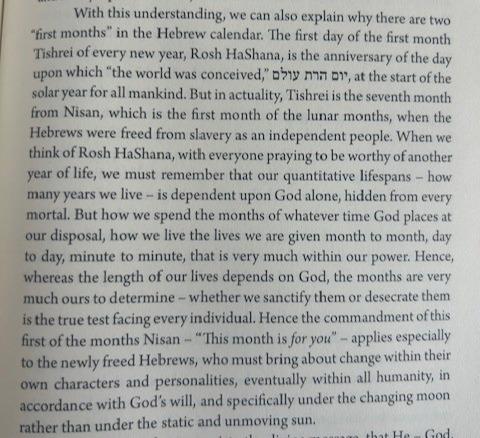
The First Mitzvah given to the Jewish People is to sanctify the lunar month, starting with the first month of Nissan, the month of Exodus. Thus, the Jewish tradition has two beginnings of the year, the Solar year (Rosh Hashanah) and the historical year which is the way the Israelite kings counted their dynasties, from the month of Nissan. Thus, the kings counted from the month of the Exodus. Rabbi Shlomo Riskin, in his book Judaism: A Love Story (Maggid: USA 2025) writes the sun reflects that which is cyclical and unchanging. Ecclesiastes writes there is 'nothing new under the sun." Conversely, the moon is dynamic, always waxing and waning. (Excerpt p. 195) Passover occurs on the 15th day, the apex of the waxing of the moon, while the new month is in total darkness, representing pregnant potential. The new moon in Hebrew is called the molad, the 'birth' of the moon.