


"The apparel oft proclaims the man"
Polonius to his son Laertes, Hamlet, Act 1, Scene 3, lines 73-75
Why do we dress in costumes on Purim?
(י) בַּיּוֹם֙ הַשְּׁבִיעִ֔י כְּט֥וֹב לֵב־הַמֶּ֖לֶךְ בַּיָּ֑יִן אָמַ֡ר לִ֠מְהוּמָ֠ן בִּזְּתָ֨א חַרְבוֹנָ֜א בִּגְתָ֤א וַאֲבַגְתָא֙ זֵתַ֣ר וְכַרְכַּ֔ס שִׁבְעַת֙ הַסָּ֣רִיסִ֔ים הַמְשָׁ֣רְתִ֔ים אֶת־פְּנֵ֖י הַמֶּ֥לֶךְ אֲחַשְׁוֵרֽוֹשׁ׃ (יא) לְ֠הָבִ֠יא אֶת־וַשְׁתִּ֧י הַמַּלְכָּ֛ה לִפְנֵ֥י הַמֶּ֖לֶךְ בְּכֶ֣תֶר מַלְכ֑וּת לְהַרְא֨וֹת הָֽעַמִּ֤ים וְהַשָּׂרִים֙ אֶת־יׇפְיָ֔הּ כִּֽי־טוֹבַ֥ת מַרְאֶ֖ה הִֽיא׃
(10) On the seventh day, when the king was merry with wine, he ordered Mehuman, Bizzetha, Harbona, Bigtha, Abagtha, Zethar, and Carcas, the seven eunuchs in attendance on King Ahasuerus, (11) to bring Queen Vashti before the king wearing a royal diadem, to display her beauty to the peoples and the officials; for she was a beautiful woman.
(א) וַיְהִ֣י ׀ בַּיּ֣וֹם הַשְּׁלִישִׁ֗י וַתִּלְבַּ֤שׁ אֶסְתֵּר֙ מַלְכ֔וּת וַֽתַּעֲמֹ֞ד בַּחֲצַ֤ר בֵּית־הַמֶּ֙לֶךְ֙ הַפְּנִימִ֔ית נֹ֖כַח בֵּ֣ית הַמֶּ֑לֶךְ וְ֠הַמֶּ֠לֶךְ יוֹשֵׁ֞ב עַל־כִּסֵּ֤א מַלְכוּתוֹ֙ בְּבֵ֣ית הַמַּלְכ֔וּת נֹ֖כַח פֶּ֥תַח הַבָּֽיִת׃
(1) On the third day, Esther put on royal apparel and stood in the inner court of the king’s palace, facing the king’s palace, while the king was sitting on his royal throne in the throne room facing the entrance of the palace.
(ו) וַיָּבוֹא֮ הָמָן֒ וַיֹּ֤אמֶר לוֹ֙ הַמֶּ֔לֶךְ מַה־לַּעֲשׂ֕וֹת בָּאִ֕ישׁ אֲשֶׁ֥ר הַמֶּ֖לֶךְ חָפֵ֣ץ בִּיקָר֑וֹ וַיֹּ֤אמֶר הָמָן֙ בְּלִבּ֔וֹ לְמִ֞י יַחְפֹּ֥ץ הַמֶּ֛לֶךְ לַעֲשׂ֥וֹת יְקָ֖ר יוֹתֵ֥ר מִמֶּֽנִּי׃ (ז) וַיֹּ֥אמֶר הָמָ֖ן אֶל־הַמֶּ֑לֶךְ אִ֕ישׁ אֲשֶׁ֥ר הַמֶּ֖לֶךְ חָפֵ֥ץ בִּיקָרֽוֹ׃ (ח) יָבִ֙יאוּ֙ לְב֣וּשׁ מַלְכ֔וּת אֲשֶׁ֥ר לָֽבַשׁ־בּ֖וֹ הַמֶּ֑לֶךְ וְס֗וּס אֲשֶׁ֨ר רָכַ֤ב עָלָיו֙ הַמֶּ֔לֶךְ וַאֲשֶׁ֥ר נִתַּ֛ן כֶּ֥תֶר מַלְכ֖וּת בְּרֹאשֽׁוֹ׃ (ט) וְנָת֨וֹן הַלְּב֜וּשׁ וְהַסּ֗וּס עַל־יַד־אִ֞ישׁ מִשָּׂרֵ֤י הַמֶּ֙לֶךְ֙ הַֽפַּרְתְּמִ֔ים וְהִלְבִּ֙ישׁוּ֙ אֶת־הָאִ֔ישׁ אֲשֶׁ֥ר הַמֶּ֖לֶךְ חָפֵ֣ץ בִּֽיקָר֑וֹ וְהִרְכִּיבֻ֤הוּ עַל־הַסּוּס֙ בִּרְח֣וֹב הָעִ֔יר וְקָרְא֣וּ לְפָנָ֔יו כָּ֚כָה יֵעָשֶׂ֣ה לָאִ֔ישׁ אֲשֶׁ֥ר הַמֶּ֖לֶךְ חָפֵ֥ץ בִּיקָרֽוֹ׃ (י) וַיֹּ֨אמֶר הַמֶּ֜לֶךְ לְהָמָ֗ן מַ֠הֵ֠ר קַ֣ח אֶת־הַלְּב֤וּשׁ וְאֶת־הַסּוּס֙ כַּאֲשֶׁ֣ר דִּבַּ֔רְתָּ וַֽעֲשֵׂה־כֵן֙ לְמׇרְדֳּכַ֣י הַיְּהוּדִ֔י הַיּוֹשֵׁ֖ב בְּשַׁ֣עַר הַמֶּ֑לֶךְ אַל־תַּפֵּ֣ל דָּבָ֔ר מִכֹּ֖ל אֲשֶׁ֥ר דִּבַּֽרְתָּ׃
(6) Haman entered, and the king asked him, “What should be done for a man whom the king desires to honor?” Haman said to himself, “Whom would the king desire to honor more than me?” (7) So Haman said to the king, “For the man whom the king desires to honor, (8) let royal garb which the king has worn be brought, and a horse on which the king has ridden and on whose head a royal diadem has been set; (9) and let the attire and the horse be put in the charge of one of the king’s noble courtiers. And let the man whom the king desires to honor be attired and paraded on the horse through the city square, while they proclaim before him: This is what is done for the man whom the king desires to honor!” (10) “Quick, then!” said the king to Haman. “Get the garb and the horse, as you have said, and do this to Mordecai the Jew, who sits in the king’s gate. Omit nothing of all you have proposed.”
David Schwartz, Background on Purim Customs
- The first mention of wearing costumes on Purim is from the Italian rabbi Yehudah Mintz / Mahari Minz (late 1400s-1508) (Responsa #17), where he says that it’s fine to dress up in costume on Purim.
- Moritz Steinschneider (1816-1907) notes that this is the same setting as Carnival season and Mardi Gras, which comes around February (prior to Lent, which is around Passover), and involves public celebration with costumes.
- It is possible that the Jews of Italy noticed that dressing in costumes is similar to the fact that Esther hides her identity from the king (and the name “Esther” is linguistically connected to the word “hidden”).
- Moreover, Mordechai is dressed in the royal garments when Haman parades him through the streets.
- Additionally, G-d is not mentioned in the Megillah, and so it is thought that G-d might be in disguise as well.
- Another theory is based on Rashi’s comment about the Canaanites attacking the Israelites from the area inhabited by Amalek (Numbers 21:1). Rashi thought that the Amalekites disguised themselves as Canaanites so that the Israelites would pray for deliverance from the Canaanites and not get Divine help since the Canaanites weren’t actually attacking them. This episode got written into a piyut (liturgical poem) for “Shabbat Zachor” right before Purim. The theory goes that some French and/or German Jews thought that the Jews were disguising themselves, so they put on costumes on Purim. The main advantage of this theory is that it removes non-Jewish influence from this custom.
- From Italy in the 1400s the custom of costumes spread across Europe. It arrived in the Middle East in the 1800s.- An advantage of dressing in costume on Purim is that when giving Matanot LeEvyonim the giver and receiver are less likely to recognize each other, thus preserving the dignity of the recipient.
- In the 1800s in America, masquerade Purim balls were the big social events and Purim was the big holiday. This lasted until the rise of Chanukah in the 1920s.
Parshat Tetzaveh: The Priestly Vestments
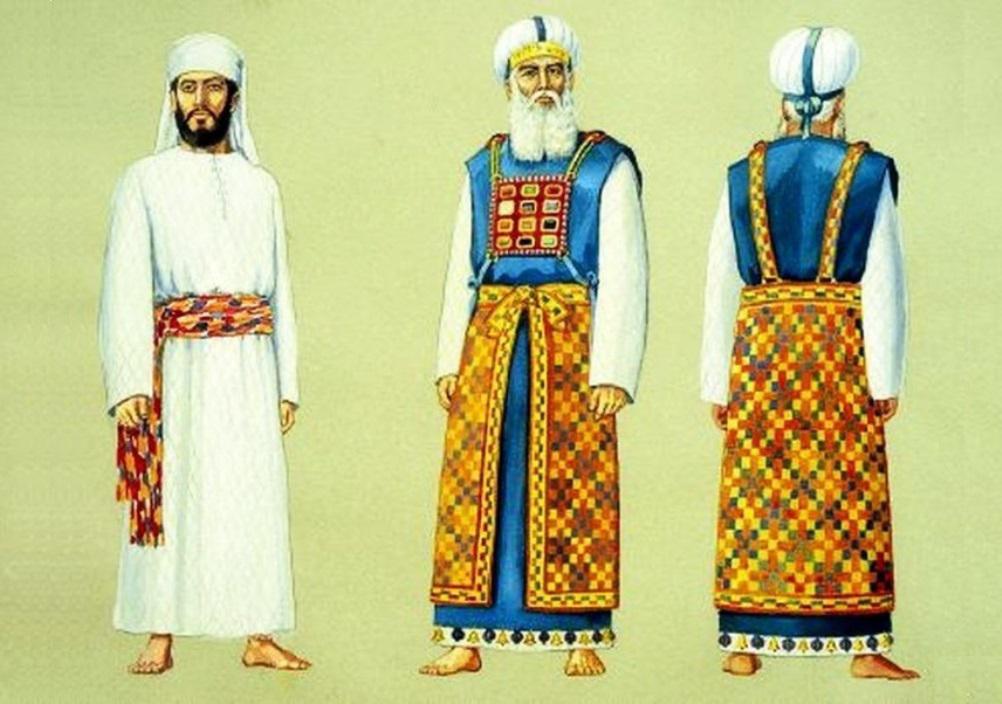
(ד) וְאֵ֨לֶּה הַבְּגָדִ֜ים אֲשֶׁ֣ר יַעֲשׂ֗וּ חֹ֤שֶׁן וְאֵפוֹד֙ וּמְעִ֔יל וּכְתֹ֥נֶת תַּשְׁבֵּ֖ץ מִצְנֶ֣פֶת וְאַבְנֵ֑ט וְעָשׂ֨וּ בִגְדֵי־קֹ֜דֶשׁ לְאַהֲרֹ֥ן אָחִ֛יךָ וּלְבָנָ֖יו לְכַהֲנוֹ־לִֽי׃ (ה) וְהֵם֙ יִקְח֣וּ אֶת־הַזָּהָ֔ב וְאֶת־הַתְּכֵ֖לֶת וְאֶת־הָֽאַרְגָּמָ֑ן וְאֶת־תּוֹלַ֥עַת הַשָּׁנִ֖י וְאֶת־הַשֵּֽׁשׁ׃ {פ} (ו) וְעָשׂ֖וּ אֶת־הָאֵפֹ֑ד זָ֠הָ֠ב תְּכֵ֨לֶת וְאַרְגָּמָ֜ן תּוֹלַ֧עַת שָׁנִ֛י וְשֵׁ֥שׁ מׇשְׁזָ֖ר מַעֲשֵׂ֥ה חֹשֵֽׁב׃ (ז) שְׁתֵּ֧י כְתֵפֹ֣ת חֹֽבְרֹ֗ת יִֽהְיֶה־לּ֛וֹ אֶל־שְׁנֵ֥י קְצוֹתָ֖יו וְחֻבָּֽר׃ (ח) וְחֵ֤שֶׁב אֲפֻדָּתוֹ֙ אֲשֶׁ֣ר עָלָ֔יו כְּמַעֲשֵׂ֖הוּ מִמֶּ֣נּוּ יִהְיֶ֑ה זָהָ֗ב תְּכֵ֧לֶת וְאַרְגָּמָ֛ן וְתוֹלַ֥עַת שָׁנִ֖י וְשֵׁ֥שׁ מׇשְׁזָֽר׃ (ט) וְלָ֣קַחְתָּ֔ אֶת־שְׁתֵּ֖י אַבְנֵי־שֹׁ֑הַם וּפִתַּחְתָּ֣ עֲלֵיהֶ֔ם שְׁמ֖וֹת בְּנֵ֥י יִשְׂרָאֵֽל׃ (י) שִׁשָּׁה֙ מִשְּׁמֹתָ֔ם עַ֖ל הָאֶ֣בֶן הָאֶחָ֑ת וְאֶת־שְׁמ֞וֹת הַשִּׁשָּׁ֧ה הַנּוֹתָרִ֛ים עַל־הָאֶ֥בֶן הַשֵּׁנִ֖ית כְּתוֹלְדֹתָֽם׃
(4) These are the vestments they are to make: a breastpiece, an ephod, a robe, a fringed tunic, a headdress, and a sash. They shall make those sacral vestments for your brother Aaron and his sons, for priestly service to Me; (5) they, therefore, shall receive the gold, the blue, purple, and crimson yarns, and the fine linen. (6) They shall make the ephod of gold, of blue, purple, and crimson yarns, and of fine twisted linen, worked into designs. (7) It shall have two shoulder-pieces attached; they shall be attached at its two ends. (8) And the decorated band that is upon it shall be made like it, of one piece with it: of gold, of blue, purple, and crimson yarns, and of fine twisted linen. (9) Then take two lazuli stones and engrave on them the names of the sons of Israel: (10) six of their names on the one stone, and the names of the remaining six on the other stone, in the order of their birth.
Baruch Schwartz, "The Garments of the High Priest: Anthropomorphism in the Worship of God," TheTorah.com
The fact that the garments are included in the instructions for the building of the miškān and its furnishings and in the account of their manufacture indicates that they were not thought of as items belonging to the priest but rather as sacred equipment, appertaining to the miškān and only used there. Indeed, they are explicitly designated for use לְשָׁרֵת בַּקֹּדֶש “when serving in the sanctuary” (Exodus 28:43; 29:30 etc.). The list of materials needed for the sanctuary (Exodus 25:1–7) includes the precious stones required for the ephod and breastplate. Further, the fabric portions of the garments were made of the same materials, and fashioned in the same manner, as the fabrics in the miškān itself, with those used to make the High Priest’s garments identical to those used in the most sacred sections of the miškān.
Rabbi Leah Lewis, "Anavah - Humility: The Breastplate of Anavah" The Mussar Torah Commentary, pp. 125-127
The breastplate, with its four rows of three precious gemstones each, was designed to represent the twelve tribes of Israel. Every stone had its place...The instructions for the choshen [the breastplate] ensured that there was a place for every tribe and that none's space dominated any other. By divine design, all of Israel was given their rightful space. As a result, this elaborate accessory was, from the outset, a lesson in the middah of anavah ("humility") for the tribes, lest one try either to dominate the space of the others or to wither into the background.
At the same time, those instructions were also a reminder for the High Priest to occupy his rightful space only and to remain mindful of his role.
To act with anavah does not simply mean to refrain from standing out. Instead, to act with anavah means to limit "oneself to an appropriate space while leaving room for others." (Alan Morinis, Everyday Holiness, p. 49) Identifying our "appropriate space" in different contexts is the first step of this Mussar challenge. What follows is the task of filling that space - no more and no less.
Shakespeare's tragic character believed that his son needed to take up more space. In a remarkably direct and clear way, Parashat T'tzaveh teaches that occupying one's rightful place requires finding a divine balance.
Practice for the Middah of Anavah:
If you are accustomed to wearing clothes that make you stand out, experiment with wearing clothes that are easily overlooked. If you are accustomed to wearing neutral clothes, experiment with wearing something that makes you stand out. Notice any changes in how you feel, how you behave, and how people respond to you.
How might we apply Rabbi Lewis' Mussar practice to Purim, and what do you think you might learn?