


Q: What do you call somebody who derives pleasure from eating the Bread of Affliction?
A: A matzah-chist
This is the first text in the Maggid section of the Passover seder. It talks about matzah as the bread of affliction / poverty that our ancestors ate in Egypt (perhaps because it was a quick meal for slaves to make) rather than as the bread of freedom that our ancestors ate as they left Egypt (perhaps this makes matzah “the bread of paradox”, both a food of oppression and of freedom). Yet the Aramaic phrase “lachma anya” (“bread of affliction”) is a translation of the Hebrew phrase “lechem oni”, which in its original context (Deuteronomy 16:3) talks about leaving Egypt, and the first mentions of matzah in Egypt occur in the context of getting ready to leave (Exodus 12-13). So perhaps it really is a bread of freedom. The text is composed of a memory, an action, and a hope.
According to a 1955 Haggadah published in Israel, the text for those in Israel is changed to hashata ul’shana Haba’a b’ar’a d’yisrael; hashata ul’shana Haba’a B’nai chorin (“This year and next year in the Land of Israel; this year and next year as free people”).
Most versions have the word “L’shana”, but some have the word “Lashana” (both times).
https://jewish-music.huji.ac.il/en/content/yedidyah-admon; https://www.youtube.com/watch?v=HD5U5ySHgsw;
(ג) לֹא־תֹאכַ֤ל עָלָיו֙ חָמֵ֔ץ שִׁבְעַ֥ת יָמִ֛ים תֹּֽאכַל־עָלָ֥יו מַצּ֖וֹת לֶ֣חֶם עֹ֑נִי כִּ֣י בְחִפָּז֗וֹן יָצָ֙אתָ֙ מֵאֶ֣רֶץ מִצְרַ֔יִם לְמַ֣עַן תִּזְכֹּ֗ר אֶת־י֤וֹם צֵֽאתְךָ֙ מֵאֶ֣רֶץ מִצְרַ֔יִם כֹּ֖ל יְמֵ֥י חַיֶּֽיךָ׃
(3) You shall not eat anything leavened with it; for seven days thereafter you shall eat unleavened bread, bread of distress—for you departed from the land of Egypt hurriedly—so that you may remember the day of your departure from the land of Egypt as long as you live.
כִּי הֲוָה כָּרֵךְ רִיפְתָּא, הֲוָה פָּתַח לְבָבֵיהּ, וְאָמַר: כׇּל מַאן דִּצְרִיךְ לֵיתֵי וְלֵיכוֹל. אָמַר רָבָא: כּוּלְּהוּ מָצֵינָא מְקַיַּימְנָא, לְבַר מֵהָא דְּלָא מָצֵינָא לְמִיעְבַּד,
The Gemara further relates: When Rav Huna would eat bread, he would open the doors to his house, saying: Whoever needs, let him come in and eat. Rava said: I can fulfill all these customs of Rav Huna, except for this one, which I cannot do
This text is written in Aramaic. Thus, it probably dates to a time when that was the spoken language of the Jewish community. The text does not come from the Babylonian Talmud (so it is not earlier than 500 CE); it is first found in the first siddur (which had a “haggadah” as an appendix), that of Rav Amram Ga’on in 868 CE. It therefore was presumably added some time in between 500 and 800 CE. According to the Jewish Encyclopedia, Arabic displaced Aramaic with the Muslim conquests (https://www.jewishencyclopedia.com/articles/1707-aramaic-language-among-the-jews), so that starting with 651 Arabic was starting to make inroads with the Jews of Babylonia. Thus, the timing of this text’s composition is probably 500-650 CE. (Incidentally, there are those who think it dates to the time of Jesus, and that Jesus was pushing back against it by saying “This [matzah] is my body”, or that the Jews were responding to his statement by composing this. However, this does not explain why this text is neither in the Mishnah nor the Talmud.)
In the 1000s CE, the Machzor Vitry, a commentary on the Siddur (and Haggadah) written by a disciple of Rashi, says that the "bread of affliction" means "the bread of leaving our affliction."
Some medieval Haggadot have the verses in a different order, and start with an introductory line “We left Egypt hastily” (bivhilu yatsanu mimitzrayim). This is also in Maimonides' version from 1175.
Some versions from the Middle Ages have the first word as “k’ha” instead of “ha”, meaning “this is like the” instead of “this is the”. This is probably a reaction to the Christians saying that the “host” (the wafer) used for Mass was the actual body of Jesus.
By the 1300s, Rabbi David Abudaharam (in Spain) notes that this text is written in Aramaic, which was the vernacular until the 650s-800s, so that everybody, no matter their level of education, might understand that they were being invited to join the Seder.
One question that the text might have been composed to answer is, “If we are in exile in Babylonia, why bother celebrating leaving the Egyptian exile?” After all, if you are not free in your own homeland, what’s the point? The answer seems to be, “The timing of the Egyptian Exile was ordained by G-d, but we can take steps to hasten the end of this exile by being charitable” (based on Bava Batra 10a:12 - “Giving charity hastens the redemption”). Thus, we celebrate the fact that G-d saved us once and use this text to remind ourselves that it’s up to us and our charitableness / hospitality to end this current exile.
(ב) בבהילו יצאנו ממצרים. הא לחמא עניא דאכלו אבהתנא בארעא דמצרים: כל דכפין ייתי וייכול, כל דצריך לפסח ייתי ויפסח. שתא הכא, לשנה הבאה בארעא דישראל. שתא הדא עבדי, לשתא דאתיא בני חורי.
(2) We left Egypt in frenzy. This is the bread of poverty that our ancestors ate in the land of Egypt. Anyone who is famished should come and eat; anyone who is in need to have the Passover sacrifice should come and partake of the Passover sacrifice. Now we are here, next year we will be in the Land of Israel; this year we are slaves, the year that is coming we will be free people.
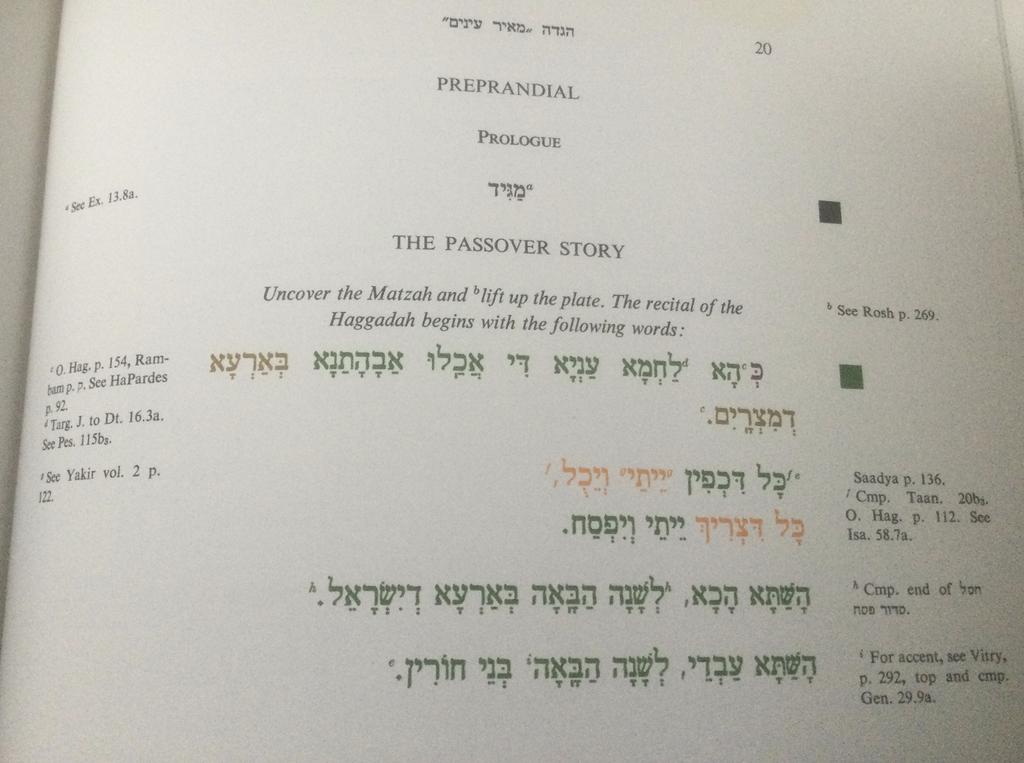
מַגִּיד
מגלה את המצות, מגביה את הקערה ואומר בקול רם:
הָא לַחְמָא עַנְיָא דִּי אֲכָלוּ אַבְהָתָנָא בְּאַרְעָא דְמִצְרָיִם. כָּל דִכְפִין יֵיתֵי וְיֵיכֹל, כָּל דִצְרִיךְ יֵיתֵי וְיִפְסַח. הָשַּׁתָּא הָכָא, לְשָׁנָה הַבָּאָה בְּאַרְעָא דְיִשְׂרָאֵל. הָשַּׁתָּא עַבְדֵי, לְשָׁנָה הַבָּאָה בְּנֵי חוֹרִין.
MAGGID / TELLING
During the recital of this paragraph
the seder plate is held up
and the middle matza is displayed to the company.
הָא לַחְמָא עַנְיָא THIS
IS THE BREAD OF OPPRESSION
our ancestors ate
in the land of Egypt.
Let all who are hungry
come in and eat;
let all who are in need
come and join us for the Pesaḥ.
Now we are here;
next year in the land of Israel.
Now – slaves;
next year we shall be free.
2. Is the bread of affliction — The Aramaic “Lachma Anya” is the same as the Hebrew “lechem oni”, from Deuteronomy 16:3. The phrase can also mean “bread of poverty”, which connects to the rest of this text (Pesachim 36a:6), and “bread of questions”, a fitting preface to “The Four Questions” which comes immediately after this. Why start a celebration of freedom with a reference to bread of not-freedom?
3. That our ancestors ate in the Land of Egypt — Some translations say “forefathers”; the word could go either way, but “ancestors” recognizes that women (and children) have been involved in Passover since the very beginning. Talking about our ancestors eating this in Egypt establishes a commonality between hosts and guests so that guests feel at ease. While converts share spiritual ancestors with those who were born Jewish, how can this commonality be implemented at a seder where not everybody is Jewish?
4. Come and eat — Some see this as a reference to material need, vs. spiritual need being referred to in the next sentence. It’s possible that when this was added to the Haggadah, festive celebrations were not held behind closed doors like today, thus making this an actual invitation (thus a Spanish custom of using white wine at the Seder so it’s clear there is not blood involved). Maimonides says that any holiday celebration when less fortunate Jews have not been helped is not a celebration of the holiday but rather a celebration of the stomach (Mishneh Torah, Rest on a Holiday 6:18). This phrase in our text goes back to the Talmud (Ta’anit 20b:15), where Rav Huna would invite people in need to eat with him, each meal year-round. The very next thing in the Talmud is Rava saying that he can’t do that. Since most people are like Rava today, what organization(s) can you give to (in accordance with your own financial means) to ensure that more Jews will have the means to celebrate Passover?
5. Come and join us — If “let all who are hungry” is explained by “come and eat”, then “let all who are in need” could be explained by “come and join us”. Who in your Jewish community could use an invitation to join you for a meal, whether that be on Passover, Shabbat, or a regular weekday?
6. Join us for the Pesach — This might refer to the fact that in the time of the Temple, everybody had to find a Passover lamb sacrifice to join in the eating of (it was too much food to be eaten by one family, but you couldn’t have leftovers). Abudarham (1300s, Spain) points out that this not only is an invitation to Jews who don’t have enough money for food in general, but also Jews who have enough money for food but are just getting by and don’t have the extra money required for all the expenses of a Passover seder. These Jews should be made privately talked to after the meal to help them not feel embarrassed about having to rely on others. How does this connect to those who feel they lack the knowledge required to run a Passover seder?
7. Now we are here — Michael Walzer writes in Exodus and Revolution: “First; that wherever you live, it is probably Egypt; second; that there is a better place, a world more attractive, a promised land; and third, that the way to the land is through the wilderness. There is no way to get from here to there except by joining together and marching.“ What is the promised land that you can think of (in terms of a better world), and who do you want to reach out to to help you march there together?
8. Next year in the land of Israel — The seder has this idea here, toward the beginning, and at the end (“Next year in Jerusalem”). The idea of Israel being a home for Jews is an ancient one, even as it should not be meant to exclude others from also being at home in the same land. What is a positive association you have with Israel?
9. Now we are slaves — What enslaves you today? (The notifications on your phone? Unequal division of labor at home? Something else?). How might you go about liberating yourself?
10. Next year we will be free — These words are in Hebrew, unlike most of the rest of the text. It is possible that this was so that the non-Jews around them might not think that the Jews felt oppressed and not happy in their communities. In the Talmud (Rosh Hashanah 11a:2), Rabbi Joshua says that the Jews were redeemed from Egypt in the month of Nisan (when Passover is), and that the Messianic redemption will happen also in the month of Nisan. This connects to opening the door for Elijah to announce the coming of the Messiah. Yet some say that we all have our own part to play in bringing the Messiah, which is why some people pass around Elijah’s cup so all can pour a little from their own glass into it. What is something that you can do to make the world a better place?
To be read right after “Ha Lachma Anya”, “This is the matzah of affliction”
This matzah, which we set aside as a symbol of hope for the three and a half million Jews of the Soviet Union, reminds us of the indestructible links that exist between us.
As we observe this festival of freedom, we know that Soviet Jews are not free — not free to leave, not free to learn of their Jewish past or to hand it down to their children. They cannot learn the languages of their fathers. They cannot teach their children to be teachers, and the rabbis of future generations.
As they courageously assert their proud determination to live in Israel, we add our voices to theirs, and we shall be joined by all whose consciences are aroused by the wrongs inflected on Soviet Jews. Thus shall they know that they have not been forgotten and they shall yet emerge into the light of freedom.
- p. 16
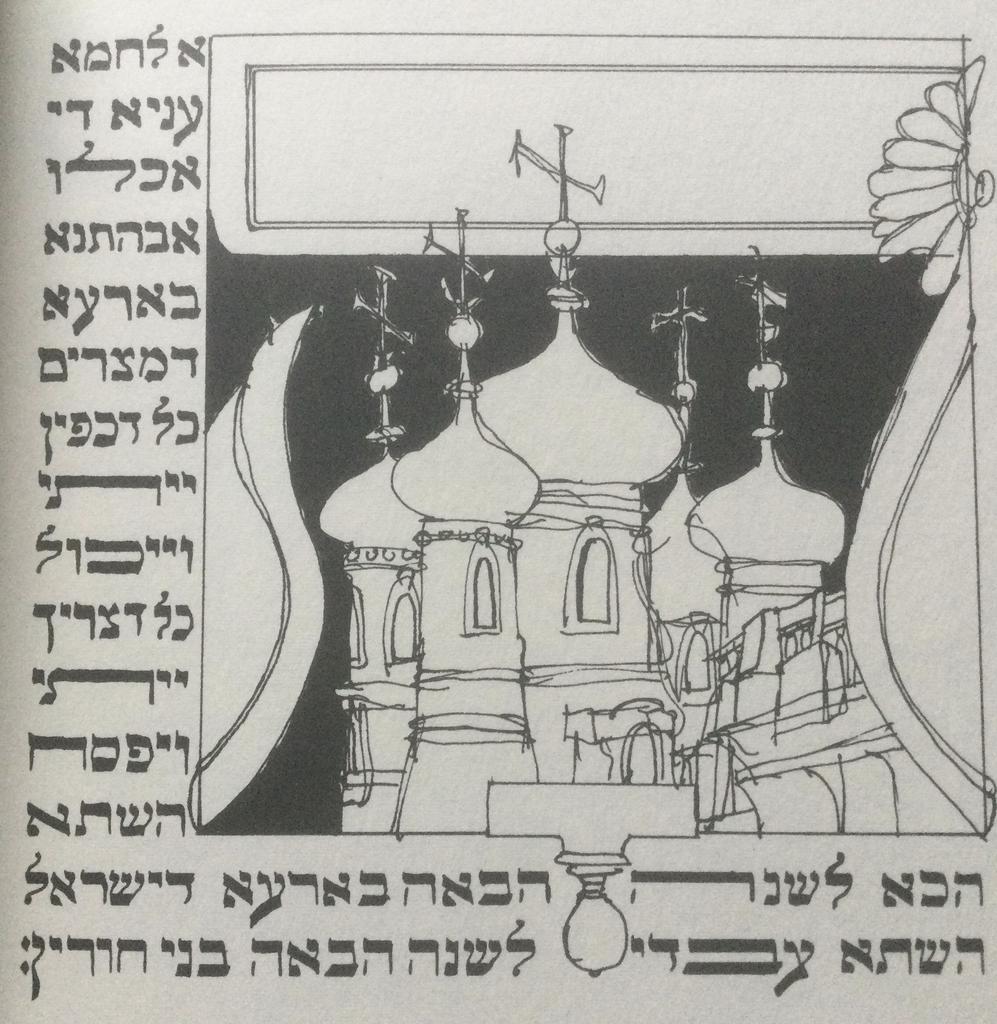
Behold the matzah, symbol of the bread of poverty our ancestors were made to eat in their affliction, when they were slaves in the land of Egypt! Let it remind us of our fellowmen who are today poor and hungry. Would that they could come and eat with us! Would that all who are in need could partake with us of this Pesach feast!
Let us here resolve to strive unceasingly for that blessed day when all will share equally in the joy of Pesach -- when poverty will be no more, when Erez Yisrael will be upbuilt, and when all mankind will enjoy freedom, justice, and peace.
- P. 10
Este es el pan de afliccion que nosostros antepasados comeieron en el pais de Egipto. Quien tenga hambre venga y coma. Todo menesteroso venga y celebre Pascua. Este ano estamos aqui, el ano venidero en la Tierra de Israel. Este ano somos siervos, el ano proximo seremos libres.
- P. 11
Este es el pan de afliccion que comieron nuestros padres en Egipto. Todo el que quiera comen que venga y coma; todo el que necesite pascuar que venga y pascue. Este ano aqui, el ano que viene en tierra de Israel. Este ano esclavos en exilio; el ano que viene hombres libres en la tierra de Israel.
- P. 10
Voici le pain de misere que nos peres ont mange en Egypte, Quiconque a faim, vienne et mange! Quiconque est dans le besoin vienne feter Pessach, avec nous! Cette annee -- encore ici, l'an prochain -- dans le pays d'Israel! Cette annee ici comme esclaves, l'an prochain dans la terre d'Israel, comme hommes libres!
- P. 10
Passover’s cry for freedom does not end with the parochial boundaries of the Jewish people. Our compassion extends beyond the Jewish community: “Let all who are hungry, come and eat,” we announce as we sit down to begin the seder. “Let all who are in need come and share the Passover meal.” The holiday gathering is imbued with an inclusive and universal message that calls on us to set a place — literally and figuratively — for anyone in need. Embedded in the Passover story is a message oriented toward all of humankind. Immigrants on the southern border, refugees around the world, reproductive rights, the LGBTQ+ community — any group of people on the periphery is welcomed into the fold.
- p. 51
This is a strange invitation: "This is the bread of oppression our fathers ate in the land of Egypt. Let all who are hungry come in and eat." Why (would we offer) hungry people the taste of suffering? …matza represents two things: it is the food of slaves, and also the bread eaten by the Israelites as they left Egypt in liberty. What transforms the bread of oppression into the bread of freedom is the willingness to share it with others....
Sharing food is the first act through which slaves become free human beings…That is why we begin the seder by inviting others to join us. Bread shared is no longer the bread of oppression (suffering). Reaching out to others, giving help to the needy…we bring freedom into the world, and with freedom, God.
The theme of hospitality is threaded through the Seder, through Pesach, through all our festivals. We open our homes to those who are homeless, and we open our door to Elijah, symbol of the weary wayfarer. Moreover, these symbolic gestures are prefaced by practical measures.
Before Pesach we collect and distribute Maot Chitin (literally “money for grain”), so that every Jew should be free to celebrate the festival of freedom. Halakha prescribes that matzah and wine for the Four Cups must be provided for even the poorest among us, those who subsist entirely on charity. To allow any Jew to suffer deprivation on this day would be a mockery of Pesach, for it would mean that we had forgotten that we were all once slaves in Mitzrayim.
- The Feast of Freedom, p. 30
A memory from my town, Sighet: Our Seder table was never without a stranger. I remember that we went from one synagogue to the other, from one house of study to the other, looking for a stranger without whom our holiday would be incomplete. And this was true of most Jews in my town and probably of most Jews in other towns. On Passover eve, the poor, the uprooted, the unhappy were the most sought-after, the most beloved guests. It was for them and with them that we recited: “This year we are still slaves. Next year may we all be free.” Without comforting our impoverished guest, our riches would shame us. And so we were grateful to him. In some towns, before Passover, Jews would raise funds discreetly: One by one, they would enter a room in the community house. There they would find a dish filled with money. Those who had money left some; those who needed money took some. No one knew how much was given or how much was taken. Thus, the needy were taken care of with dignity.
- The Elie Wiesel Haggadah, p. 24
The contrast between the hungry and the needy is masterfully and lovingly described in Shmuel Yosef Agnon's short story "The Passover Celebrants" (Passover Anthology, Jewish Publication Society, Philadelphia, 1966). Here is the bitterly poor shammes trudging home after evening services to an empty room, to a "Seder" made up only of the bare necessities for which he scrimped and saved for months. And there is the wealthy childless wido, who from force of habit has prepared the same marvelous Seder she always did when her husband was still alive. The Seder plate and the food are waiting on a table gleaming with silver and spotless linen, but the widow is alone and empty in soul and spirit. By chance she discovers the shammes on his way home and invites him to share the Seder with her. The time-honored words of the Haggadah and the old, familiar ritual blend into the most wonderful Seder for both of them, the hungry and the needy. At the conclusion, when the widow and the shammes recite the Shir Ha-Shirim together, there is hope that there will be no more hunger and loneliness at least for these Passover celebrants.
- The Shlomo Riskin Haggadah, p. 43
This is the bread of affliction.
At the Seder, we begin as slaves. We eat matzah, the bread of affliction, which leaves us hungry and longing for redemption. The matzah enables us to imagine what it was like to have only poor bread to eat, to be denied our right to live free and healthy lives.
But, while we will soon enjoy a large meal and end the Seder night as free people, 795 million people around the world live with the daily reality of hunger. Let us awaken to their cries and declare:
Let all who are hungry, come and eat.
Let us work toward a time when all who are hungry will eat as free people.
Let all people have access to sustenance. Let local farms flourish and local economies strengthen. Let exploitation of natural resources cease so that the land may nourish its inhabitants. Let our world leaders recognize food as a basic human right and put an end to hunger. Let us support the communities of the world on their paths to sustenance.
This year we are slaves, next year we will be free people.
This year, hunger and malnutrition are among the greatest risks to health around the world. Next year, may the bread of affliction be simply a symbol, and may all people enjoy the bread of plenty, the bread of freedom.
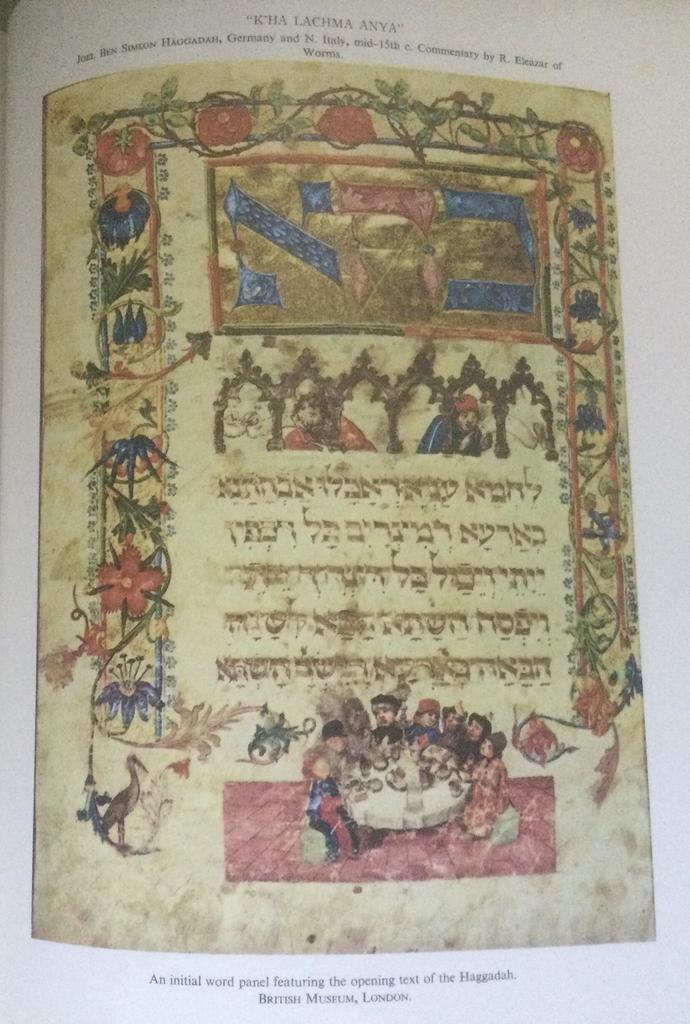
The Haggadah was not known in Ethiopia, until the mid-twentieth century when it was introduced either by emissaries of the Jewish Agency, or by other sources. On Passover eve, a sacrifice was offered. Then, at the evening meal on Qorvan the first evening of Fasika - (Passover), the Qes (priest) recounted the story of the Exodus, from the Orit (Torah). After the meal, which consisted of the sacrifice and Qita (matzah), the priests held a prayer service of their own prayers in Ge’ez (the holy language). While many of the prayers were written they were spoken out loud, with the service conducted only by the Qes. The laity’s role was to listen and say Amen. When Ethiopian Jews immigrated to Israel, they learned of other “normative” customs for the Passover Seder.
- The North American Conference on Ethiopian Jewry Haggadah (1998), p. 1A