
Save "Weekly Torah Study:  Vayera

Eshel Avraham - Abraham's Tamarisk Tree

5785/2024
"
Weekly Torah Study: Vayera Eshel Avraham - Abraham's Tamarisk Tree 5785/2024
  • Today was the yahrzeit of Rachel Imenu
  • Dedicate learning to our veterans
(לא) עַל־כֵּ֗ן קָרָ֛א לַמָּק֥וֹם הַה֖וּא בְּאֵ֣ר שָׁ֑בַע כִּ֛י שָׁ֥ם נִשְׁבְּע֖וּ שְׁנֵיהֶֽם׃ (לב) וַיִּכְרְת֥וּ בְרִ֖ית בִּבְאֵ֣ר שָׁ֑בַע וַיָּ֣קׇם אֲבִימֶ֗לֶךְ וּפִיכֹל֙ שַׂר־צְבָא֔וֹ וַיָּשֻׁ֖בוּ אֶל־אֶ֥רֶץ פְּלִשְׁתִּֽים׃ (לג) וַיִּטַּ֥ע אֶ֖שֶׁל בִּבְאֵ֣ר שָׁ֑בַע וַיִּ֨קְרָא־שָׁ֔ם בְּשֵׁ֥ם ה׳ אֵ֥ל עוֹלָֽם׃
(31) Hence that place was called Beer-sheba,*Beer-sheba I.e., “well of seven” or “well of oath.” for there the two of them swore an oath. (32) When they had concluded the pact at Beer-sheba, Abimelech and Phicol, chief of his troops, departed and returned to the land of the Philistines. (33) [Abraham] planted a tamarisk at Beer-sheba, and invoked there the name of ה׳, the Everlasting God.
(א) אשל. רַב וּשְׁמוּאֵל, חַד אֲמַר פַּרְדֵּס לְהָבִיא מִמֶּנוּ פֵּרוֹת לָאוֹרְחִים בַּסְּעוּדָה, וְחַד אֲמַר פֻּנְדָּק לְאַכְסַנְיָא וּבוֹ כָּל מִינֵי פֵּרוֹת. וּמָצִינוּ לְשׁוֹן נְטִיעָה בְּאֹהָלִים, שֶׁנֶּאֱמַר וְיִטַּע אָהֳלֵי אַפַּדְנוֹ (דניאל י"א): (ב) ויקרא שם וגו'. עַל יְדֵי אוֹתוֹ אֵשֶׁל נִקְרָא שְׁמוֹ שֶׁל הַקָּבָּ"ה אֱלוֹקַּ לְכָל הָעוֹלָם, לְאַחַר שֶׁאוֹכְלִים וְשׁוֹתִים אוֹמֵר לָהֶם בָּרְכוּ לְמִי שֶׁאֲכַלְתֶּם מִשֶּׁלּוֹ, סְבוּרִים אַתֶּם שֶׁמִּשֶּׁלִּי אֲכַלְתֶּם? מִשֶּׁל מִי שֶׁאָמָר וְהָיָה הָעוֹלָם אֲכַלְתֶּם (סוטה י'):
(1) אשל [AND ABRAHAM PLANTED AN] אשל — Rab and Samuel differ as to what this was. One said it was an orchard from which to supply fruit for the guests at their meal. The other said it was an inn for lodging in which were all kinds of fruit (Sotah 10a). And we can speak of planting an inn for we find the expression planting used of tents, as it is said, (Daniel 11:45) “And he shall plant the tents of his palace”. (2) 'ויקרא שם וגו AND HE CALLED THERE etc. — Through this Eshel the name of the Holy One, blessed be He, was called “God of the entire Universe”. For after they had eaten and drunk he said to them, “Bless Him of whose possessions you have eaten! Do you think that you have eaten of what is mine? You have eaten of that which belongs to Him Who spake and the Universe came into existence” (Sotah 10a).
״וַיִּקְרָא שָׁם בְּשֵׁם ה׳ אֵל עוֹלָם״. אָמַר רֵישׁ לָקִישׁ: אַל תִּיקְרֵי ״וַיִּקְרָא״,
The verse there states: “And he planted an eshel in Beersheba, and called there [vayyikra] on the name of the Lord, the Everlasting God” (Genesis 21:33). Reish Lakish said: Do not read this word literally as vayyikra,” and he called,
אֶלָּא ״וַיַּקְרִיא״. מְלַמֵּד שֶׁהִקְרִיא אַבְרָהָם אָבִינוּ לִשְׁמוֹ שֶׁל הַקָּדוֹשׁ בָּרוּךְ הוּא בְּפֶה כׇּל עוֹבֵר וָשָׁב. כֵּיצַד? לְאַחַר שֶׁאָכְלוּ וְשָׁתוּ, עָמְדוּ לְבָרְכוֹ. אָמַר לָהֶם: וְכִי מִשֶּׁלִּי אֲכַלְתֶּם? מִשֶּׁל אֱלֹקֵי עוֹלָם אֲכַלְתֶּם! הוֹדוּ וְשַׁבְּחוּ וּבָרְכוּ לְמִי שֶׁאָמַר וְהָיָה הָעוֹלָם.
but rather as vayyakri, and he caused others to call. This teaches that Abraham our forefather caused the name of the Holy One, Blessed be He, to be called out in the mouth of all passersby. How so? After the guests of Abraham ate and drank, they arose to bless him. He said to them: But did you eat from what is mine? Rather, you ate from the food of the God of the world. Therefore, you should thank and praise and bless the One Who spoke and the world was created. In this way, Abraham caused everyone to call out to God.
(א) אשל. אילן גם ויטע לאות:
(1) A TAMARISK-TREE. Eshel (a tamarisk tree) is a tree.19Cf. I Sam. 22:6. Some of the Talmudic sages interpret eshel to mean an inn (Sotah 10a), hence I.E.’s comment. The word va-yitta (and he planted) which precedes it is also proof of this.20Aside from the fact that we know from other sources that eshel is a tree, our verse also indicates the same.
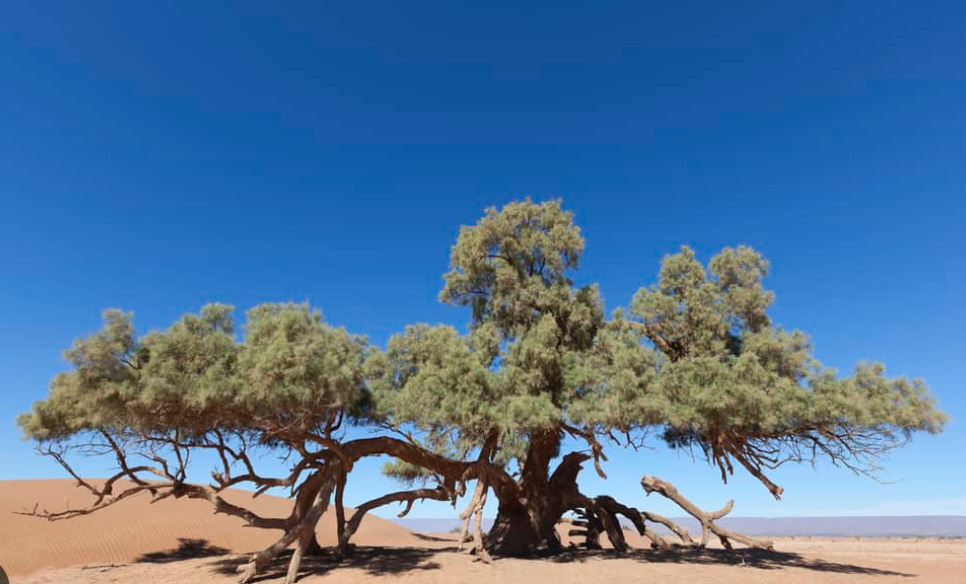
  • At certain times of year, scale insects feeding upon the tender twigs of tamarisk plants excrete a sweet substance known as honeydew, which has been gathered for use as a food source and sweetener for thousands of years. The substance is also known locally as "manna", and some scholars have suggested that this substance is the biblical manna that fed the Israelites during their flight from Egypt, though others dispute this interpretation.[20]

(א) אַ֥שְֽׁרֵי הָאִ֗ישׁ אֲשֶׁ֤ר ׀ לֹ֥א הָלַךְ֮ בַּעֲצַ֢ת רְשָׁ֫עִ֥ים וּבְדֶ֣רֶךְ חַ֭טָּאִים לֹ֥א עָמָ֑ד וּבְמוֹשַׁ֥ב לֵ֝צִ֗ים לֹ֣א יָשָֽׁב׃ (ב) כִּ֤י אִ֥ם בְּתוֹרַ֥ת ה׳ חֶ֫פְצ֥וֹ וּֽבְתוֹרָת֥וֹ יֶהְגֶּ֗ה יוֹמָ֥ם וָלָֽיְלָה׃ (ג) וְֽהָיָ֗ה כְּעֵץ֮ שָׁת֢וּל עַֽל־פַּלְגֵ֫י־מָ֥יִם אֲשֶׁ֤ר פִּרְי֨וֹ ׀ יִתֵּ֬ן בְּעִתּ֗וֹ וְעָלֵ֥הוּ לֹֽא־יִבּ֑וֹל וְכֹ֖ל אֲשֶׁר־יַעֲשֶׂ֣ה יַצְלִֽיחַ׃

(1) Happy is the man who has not followed the counsel of the wicked,
or taken the path of sinners,
or joined the company of the insolent;
(2) rather, the teaching of the LORD is his delight,
and he studiesaOr “recites”; lit. “utters.” that teaching day and night.
(3) He is like a tree planted beside streams of water,
which yields its fruit in season,
whose foliage never fades,
and whatever bOr “he does prospers.”it produces thrives.-b

(א) וַיִּקְרָא שָׁם בְּשֵׁם ה׳ אֵל עוֹלָם פי' הַכָּתוּב שֶׁקָּרָא בְּשֵׁם ה׳ הַמַּנְהִיג בְּכֹחוֹ הַזְּמַן, אוֹ שֶׁיִּקָּרְאוּ הַשָּׁמַיִם וְהָאָרֶץ "עוֹלָם" כַּלָּשׁוֹן הַבָּא תָּמִיד בְּדִבְרֵי רַבּוֹתֵינוּ, וְהוֹדִיעַ בָּזֶה שֶׁקָּרָא אַבְרָהָם וְהוֹדִיעַ לַבְּרִיּוֹת סוֹד הַנְהָגַת הָעוֹלָם בִּכְלָלוֹ, שֶׁהוּא בְּשֵׁם ה׳ הֶחָסִין בַּכֹּחַ, שֶׁיֵּשׁ לוֹ אֱיָלוּת בְּכֻלָּם. וְהָרַב אָמַר בְּמוֹרֶה הַנְּבֻכִים (ב יג) שֶׁהוּא רוֹמֵז לְקַדְמוּת הָאֵל, כִּי הוֹדִיעַ הֱיוֹתוֹ קֹדֶם לַזְּמַן. אֲבָל אוּנְקְלוֹס (תרגום אונקלוס על בראשית כ"א:ל"ג) אָמַר בְּ"וַיִּקְרָא" שֶׁהוּא תְּפִלָּה:

(1) AND HE CALLED THERE IN THE NAME OF THE ETERNAL, ‘E-IL OLAM’ (THE EVERLASTING G-D). Scripture explains that Abraham called by the name Eternal He Who in His might directs the time.
It may be that heaven and earth are here being called olam (world) [so that the sense of the verse is, “he called by the name Eternal the G-d of the world”], as is a customary expression in the words of our Rabbis. Thus Scripture informs us by this that Abraham called out and informed people of the secret of the leadership of the entire world, namely, that it is in the name of the Eternal, the Mighty One in strength, Supreme in power over all.
Now the Rabbi that this alludes to the principle of the pre-existence of G-d since Abraham let it be known that G-d existed before the creation of time. Onkelos, however, said of the word vayikra (and he called), that it refers to prayer.

4 meanies of the root עלם (root of Olam)

  • Space - the world, the universe
  • Time - eternity
  • Mystery - what's hidden
  • Youthfulness/energy - elem
(א) ויקרא שם בשם ה׳ אל עולם. וקרא והודיע לרבים שהאל יתעלה הוא אלקי הזמן וממציאו נגד דעת אפיקורסים חדשים גם ישנים:
(1) ויקרא שם בשם ה׳ א-ל עולם, he used the occasion to proclaim the eternal nature of G’d, as opposed to any other deities, which, even if on occasion appearing to have demonstrated some power to protect those worshipping them, could at best enjoy a brief period of effectiveness.
Seeing that such agricultural activities when undertaken by a righteous individual such as Avraham (who was a shepherd by profession) are merely a preparation for spiritual activities in their wake, the Torah immediately testified to this by writing ויקרא שם בשם ה׳, “He called out there in the name of the Lord.”
A Midrashic approach: The three letters in the word א-ש-ל are an acronym for אכילה- שתיה- לויה that true hospitality involves providing one’s guests with food,-drink, - and an escort when they depart. [some versions have the word שכיבה, “lodging”, instead of שתיה “drink.”]. Avraham was in the habit of saying to his guests: “ask whatever I can do for you and I will endeavour to do it.”
Rabbenu Bahya
(א) ויטע אשל, נטע שם נטיעה סמוך לבאר שחהיה לו לעדות כי נשארה הבאר לו בלא מחלוקת. אשל, לשון נטיעה, וכן תחת האשל ברמה (שמואל א' כ"ב). ובדברי רז"ל (ביצה כ"ז) דתליא באשלי רברבי, פירוש אילנות גדולות, ורז"ל דרשו נוטריקון אכילה שתיה לויה, ר"ל שהנהיג אנשי באר שבע להכניס אורחים ושחייב אדם לעשות לאורח הבא עליו שלשה דברים, אכילה שתייה לויה. (ב) ויקרא שם, כמו שפירשנו; ולפי מה שקרה לו עם אבימלך בדבר אשתו, ובדבר הבאר אסף את הבנים שם וקראו להם בשם ה׳ שיחזיקו באמונתו מעבוד זולתו, כי נלחם מלחמתו; עד שאבימלך שהוא מלך בא אלי ובקש אהבתי ובריתי והחזר לי זאת הבאר אשר גזלו ממני עבדיו, ובזה תוכלו להכיר כי הוא אל עולם, ואין זולתו ועושה ביצוריו נרצונו כמו שעשה בפרעה ובאבימלך בעבורי, מכל זה תכירו כי הוא אל עולם ויכול על הכל.
(1) ויטע אשל, he planted some saplings there to serve as proof that the well nearby was now his undisputed property. The word אשל describes certain plants (fruit-bearing) as In Samuel I 22,6 תחת האשל ברמה, “under the eshel in Ramah). According to our sages in Beytzah 27 the reference is to tall trees which are difficult to uproot. Our sages in Midrash Tehillim 110 understand the word אשל as an acronym for אכילה, שתיה, לינה, “eating, drinking, staying overnight.” In other words, Avraham established a hotel there to serve people passing that region. He taught the people around Beer Sheva to practice the art (virtue) of hosting strangers. In order to fulfill that virtue one must provide the three ingredients represented by the three letters in the word אשל. (2) ויקרא שם, Avraham used the opportunity of assembling the local people and describing his and Sarah’s experiences to them in order to give them first-hand evidence of how G’d had looked after him against all odds. He contrasted this with the local deities being worshipped who could not protect those who sacrificed to them.
א-ל עולם, he pointed out that his G’d was not only powerful locally, but was a G’d Who was equally powerful allover the globe, seeing the globe is His, He being the One Who had created it.
Guide for the Perplexed, Part 3 29:7
When [Abraham] the “Pillar of the World” appeared, he became convinced that there is a spiritual Divine Being, which is not a body, nor a force residing in a body, but is the author of the spheres and the stars: and he saw the absurdity of the tales in which he had been brought up. He therefore began to attack the belief of the Sabeans, to expose the falsehood of their opinions, and to proclaim publicly in opposition to them, “the name of the Lord, the God of the Universe” (Gen. 21:33), which proclamation included at the same time the Existence of God, and the Creation of the Universe by God.
Maimonides
  • The religion of Sabea was as well organized as that of any Semitic state in the Ancient Near East. Temples were well built and endowed with a large and well-organized staff. Inscriptions attest to native polytheism, including many unnamed gods of families and divine local lords (Baals). The chief gods were the moon-god, called Aʾlmaqah in Sabea; the sun-goddess; and ʿAthtar, the god of the planet Venus, the brightest star in those latitudes, who was the guide of caravans. Unlike the Mesopotamian Venus deity Ishtar, the South Arabian ʿAthtar was not worshipped as a goddess but as a god.

EJ, Sabea

Sefer HaYashar 2:20
The first quality: Know that the love of Abraham, peace be upon him, was to teach all those who came into the world the service of the Creator, blessed be He, and proclaim His name always, as it is said (Genesis 13:4), “And Abraham called there on the name of the Lord.” It is also said (ibid., 12:8), “And he built an altar unto the Lord, Who appeared unto him.” And it is said (ibid., 21:33), “And Abraham planted a tamarisk tree in Beersheba and called there on the name of the Lord.” These verses are to let you know that every place that Abraham went he would call on the name of the Lord and would occupy himself with service to Him. He was not restrained from doing so by the fear of the nations of the world.