


אָ֣ז יָשִֽׁיר־מֹשֶׁה֩ וּבְנֵ֨י יִשְׂרָאֵ֜ל אֶת־הַשִּׁירָ֤ה הַזֹּאת֙ לַֽה׳ וַיֹּאמְר֖וּ לֵאמֹ֑ר אָשִׁ֤ירָה לַֽה׳ כִּֽי־גָאֹ֣ה גָּאָ֔ה ס֥וּס וְרֹכְב֖וֹ רָמָ֥ה בַיָּֽם׃...וַתִּקַּח֩ מִרְיָ֨ם הַנְּבִיאָ֜ה אֲח֧וֹת אַהֲרֹ֛ן אֶת־הַתֹּ֖ף בְּיָדָ֑הּ וַתֵּצֶ֤אןָ כָֽל־הַנָּשִׁים֙ אַחֲרֶ֔יהָ בְּתֻפִּ֖ים וּבִמְחֹלֹֽת׃ וַתַּ֥עַן לָהֶ֖ם מִרְיָ֑ם שִׁ֤ירוּ לַֽה׳ כִּֽי־גָאֹ֣ה גָּאָ֔ה ס֥וּס וְרֹכְב֖וֹ רָמָ֥ה בַיָּֽם׃
Then Moshe and Benei Yisrael sang this song to God and they said: I will sing to God for He has triumphed greatly, horse and his rider He has cast into the sea…And Miryam the prophet, sister of Aharon, took a timbrel in her hand and all the women went out after her with timbrels and with dancing. And Miriam called out responsively to them: Sing to God for He has triumphed greatly, horse and his rider He has cast into the sea…
ר' פנחס אומר, ערב שבת עמדו ישראל בהר סיני עורכין האנשים לבד והנשים לבד
Rav Pinchas says: on a Shabbat eve Israel stood at Mount Sinai, arranged with the men to themselves and the women to themselves.
תנא דבי אליהו ... לא יעמוד ברשות הרבים ויתפלל מפני דעת הבריות. ולא יעמוד בין הנשים ויתפלל מפני דעת הנשים
It was taught in the beit midrash of Eliyahu: …One should not stand in the public domain and pray, because [one is likely to be distracted by] the thoughts of others. And one should not stand among women and pray, because [one is likely to be distracted by] the thoughts of women.
מַתְנִי׳ מִי שֶׁלֹּא רָאָה שִׂמְחַת בֵּית הַשּׁוֹאֵבָה, לֹא רָאָה שִׂמְחָה מִיָּמָיו. בְּמוֹצָאֵי יוֹם טוֹב הָרִאשׁוֹן שֶׁל חַג יָרְדוּ לְעֶזְרַת נָשִׁים, וּמְתַקְּנִין שָׁם תִּיקּוּן גָּדוֹל...
גְּמָ׳ ...מַאי תִּיקּוּן גָּדוֹל? אָמַר רַבִּי אֶלְעָזָר: כְּאוֹתָהּ שֶׁשָּׁנִינוּ: חֲלָקָה הָיְתָה בָּרִאשׁוֹנָה. וְהִקִּיפוּהָ גְּזוּזְטְרָא, וְהִתְקִינוּ שֶׁיְּהוּ נָשִׁים יוֹשְׁבוֹת מִלְמַעְלָה וַאֲנָשִׁים מִלְּמַטָּה.תָּנוּ רַבָּנַן: בָּרִאשׁוֹנָה הָיוּ נָשִׁים מִבִּפְנִים וַאֲנָשִׁים מִבַּחוּץ, וְהָיוּ בָּאִים לִידֵי קַלּוּת רֹאשׁ. הִתְקִינוּ שֶׁיְּהוּ נָשִׁים יוֹשְׁבוֹת מִבַּחוּץ וַאֲנָשִׁים מִבִּפְנִים, וַעֲדַיִין הָיוּ בָּאִין לִידֵי קַלּוּת רֹאשׁ. הִתְקִינוּ שֶׁיְּהוּ נָשִׁים יוֹשְׁבוֹת מִלְּמַעְלָה וַאֲנָשִׁים מִלְּמַטָּה.הֵיכִי עֲבִיד הָכִי? וְהָכְתִיב: ״הַכֹּל בִּכְתָב מִיַּד ה׳ עָלַי הִשְׂכִּיל״.אָמַר רַב: קְרָא אַשְׁכַּחוּ וּדְרוּשׁ —״וְסָפְדָה הָאָרֶץ מִשְׁפָּחוֹת מִשְׁפָּחוֹת לְבָד מִשְׁפַּחַת בֵּית דָּוִד לְבָד וּנְשֵׁיהֶם לְבָד״. אָמְרוּ: וַהֲלֹא דְּבָרִים קַל וָחוֹמֶר: וּמָה לֶעָתִיד לָבֹא, שֶׁעוֹסְקִין בְּהֶסְפֵּד וְאֵין יֵצֶר הָרָע שׁוֹלֵט בָּהֶם — אָמְרָה תּוֹרָה אֲנָשִׁים לְבַד וְנָשִׁים לְבַד. עַכְשָׁיו, שֶׁעֲסוּקִין בְּשִׂמְחָה וְיֵצֶר הָרָע שׁוֹלֵט בָּהֶם — עַל אַחַת כַּמָּה וְכַמָּה.
MISHNA: One who did not see the Celebration of the Place of the Drawing of the Water never saw celebration in his days. At the conclusion of the first Festival day [the priests and the Levites] descended [from the Israelites’ courtyard] to the Women’s Courtyard, where they would introduce a significant repair...
GEMARA: ...What is this significant repair? Rabbi Elazar said that it is like that which we learned: [The walls of the Women’s Courtyard] were smooth initially. Subsequently, they surrounded [the courtyard] with a balcony [gezuztra]. And they instituted that the women should sit above and the men below.The Sages taught in the Tosefta: Initially, women would [stand] on the inside [of the Women’s Courtyard, closer to the Sanctuary], and the men were on the outside. And they would come to [conduct themselves with inappropriate] levity. [Therefore, the Sages] instituted that the women should sit on the outside and the men on the inside, and still they would come to [conduct themselves with inappropriate] levity. [Therefore,] they instituted that the women would sit above and the men below.How could one do so? But isn’t it written [with regard to the Temple]: “All this I give you in writing, as the Lord has made me wise by His hand upon me...” (I Chronicles 28:19)?Rav said: They found a verse, and interpreted it homiletically:It is stated: “The land will eulogize, each family separately; the family of the house of David separately, and their women separately, [the family of the house of Nathan separately, and their women separately]” (Zechariah 12:12). They said: And are these matters not inferred a fortiori? If in the future, when people are involved in a eulogy and the evil inclination does not dominate them, the Torah says: Men separately and women separately; then now that they are involved in the Celebration [of the Drawing of the Water], and as such the evil inclination dominates them, all the more so [should men and women be separate].
מתנמנמין היו: ומתקנין שם תיקון גדול. מה תיקון היו עושין שם. שהיו מעמידין האנשים בפני עצמן והנשים בפני עצמן כהיא דתנינן תמן...ממי למדו מדבר תורה. (זכריה יב) וספדה הארץ משפחות משפחות לבד תרין אמורין חד אמר זה הספידו של משיח וחורנה אמר זה הספידו של יצר הרע. מאן דאמר זה הספידו של משיח מה אם בשעה שהן אבילין את אמר האנשים בפני עצמן והנשים בפני עצמן בשעה שהן שמחים לא כל שכן מאן דאמר זה הספידו של יצר הרע מה אם בשעה שאין יצר הרע קיים את אמר האנשים בפני עצמן והנשים בפני עצמן בשעה שיצר הרע קיים לא כל שכן:
"And they enact there a great enactment". What enactment were they making there? That they would place the men alone and the women alone. As we have learned there, "and smooth...". From whom did they learn it? From the word of the Torah, "And the land shall mourn, each family by itself" (Zechariah 12:12).
Two amoraim, one said this is the eulogy of the Moshiach, and the other said this is the eulogy of the evil inclination. The one who said this is the eulogy of the Moshiach - if when they are mourning, the men and women are separated, when they are happy, how much the more so! The one who said this is the eulogy of the evil inclination - if at a time when the evil inclination does not exist, you say that men and women are separated, when the evil inclination exists, how much the more so!
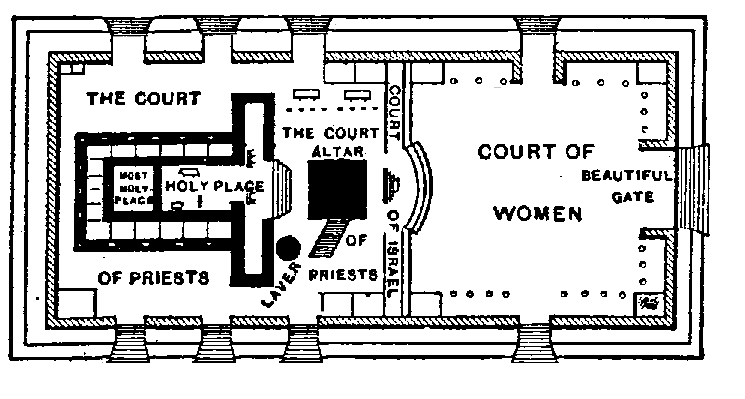
עֶזְרַת הַנָּשִׁים הָיְתָה אֹרֶךְ מֵאָה וּשְׁלשִׁים וְחָמֵשׁ עַל רֹחַב מֵאָה וּשְׁלֹשִׁים וְחָמֵשׁ. וְאַרְבַּע לְשָׁכוֹת הָיוּ בְאַרְבַּע מִקְצוֹעוֹתֶיהָ, שֶׁל אַרְבָּעִים אַרְבָּעִים אַמָּה...וַחֲלָקָה הָיְתָה בָּרִאשׁוֹנָה, וְהִקִּיפוּהָ כְצוֹצְרָה, שֶׁהַנָּשִׁים רוֹאוֹת מִלְמַעְלָן, וְהָאֲנָשִׁים מִלְּמַטָּן, כְּדֵי שֶׁלֹּא יְהוּ מְעֹרָבִין...
The courtyard of the women was a hundred and thirty-five cubits long by a hundred and thirty-five wide. It had four chambers in its four corners, each of which was forty cubits...It [the courtyard of the women] had originally been smooth [without protrusions in the walls] but subsequently they surrounded it with a balcony so that the women could look on from above while the men were below, and they should not mix together....
תָּנוּ רַבָּנַן: לְאַחַר פְּטִירָתוֹ שֶׁל רַבִּי מֵאִיר אָמַר לָהֶם רַבִּי יְהוּדָה לְתַלְמִידָיו: אַל יִכָּנְסוּ תַּלְמִידֵי רַבִּי מֵאִיר לְכָאן, מִפְּנֵי שֶׁקַּנְתְּרָנִים הֵם, וְלֹא לִלְמוֹד תּוֹרָה הֵם בָּאִים אֶלָּא לְקַפְּחֵנִי בַּהֲלָכוֹת הֵם בָּאִים. דָּחַק סוֹמְכוֹס וְנִכְנַס. אָמַר לָהֶם: כָּךְ שָׁנָה לִי רַבִּי מֵאִיר: הַמְקַדֵּשׁ בְּחֶלְקוֹ, בֵּין קׇדְשֵׁי קֳדָשִׁים וּבֵין קֳדָשִׁים קַלִּים – לֹא קִידֵּשׁ. כָּעַס רַבִּי יְהוּדָה (עֲלֵיהֶם). אָמַר לָהֶם: לֹא כָּךְ אָמַרְתִּי לָכֶם: אַל יִכָּנְסוּ מִתַּלְמִידֵי רַבִּי מֵאִיר לְכָאן מִפְּנֵי שֶׁקַּנְתְּרָנִים הֵם, וְלֹא לִלְמוֹד תּוֹרָה הֵם בָּאִים אֶלָּא לְקַפְּחֵנִי בַּהֲלָכוֹת הֵם בָּאִים. וְכִי אִשָּׁה בַּעֲזָרָה מִנַּיִן?!
The Sages taught: After the death of Rabbi Meir, Rabbi Yehuda said to his students: Do not let the students of Rabbi Meir enter here [into our house of study], because they are vexatious [kanteranim]. And they do not come to study Torah, but rather they come to overwhelm me with halakhot. Sumakhos, [a student of Rabbi Meir], pushed and entered [anyway]. He said to them: This is what Rabbi Meir taught me: One who betroths [a woman] with his portion [of the offerings], whether with offerings of the most sacred order or offerings of lesser sanctity, he has not betrothed her. Rabbi Yehuda became angry with [his students]. He said to them: Didn’t I say this to you: Do not let the students of Rabbi Meir enter here because they are vexatious? And they do not come to study Torah, but rather they come to overwhelm me with halakhot. [This halakha is not relevant], as from where would a woman appear in the Temple courtyard?
וכי אשה בעזרה מנין - ...ונשים אין נכנסות לה כדתנן באבות הטומאות בפ"ק דמסכת כלים:
R' Shlomo Yitzchaki (1040-1105)
From where would a woman appear in the Temple courtyard - ...women cannot enter there, as it is taught regarding primary categories of impurity in the first chapter of tractate Keilim.
וכי אשה בעזרה מנין - פי' הקונטרס דאין אשה נכנסת בעזרה כדתנן פ"ק דכלים ולא דק דלא אשכחן בשום דוכתא דנשים אסורות ליכנס בעזרה...ועוד תנן בפרק כל הפסולין (זבחים דף לא:) שהשחיטה כשרה בנשים א"כ יכולה ליכנס בעזרה ועוד הרי סוטה ונזירה נכנסות בעזרה להניף לכך נראה לי וכי אשה בעזרה להתקדש מנין הרי אין רגילות שתכנס לשם כדי להתקדש שהרי בזיון הוא ומילתא דלא שכיחא היא ולא איירי תנא מזה:
Multiple Authors (12th-13th C)
From where would a woman appear in the Temple courtyard - Rashi explains that a woman cannot enter the courtyard, as it is taught in the first chapter of Keilim. But this is imprecise for we do not find in any place that it is prohibited for women to enter the courtyard......and furthermore it is taught in the chapter of Hakol Hapesulin (Zevachim 31b) that shechitah is kosher when done by women, and so evidently she can enter the courtyard. And furthermore there are the cases of sotah and a nezirah who enter the courtyard to wave [sacrifices]. Therefore it seems to me that 'from where would a woman appear' [means] for betrothal, as it is uncommon for her to enter there for betrothal for it would be disgraceful and uncommon and it is not a relevant teaching.
Into the first court everybody was allowed to go, even foreigners, and none but women, during their courses, were prohibited to pass through it; all the Jews went into the second court, as well as their wives, when they were free from all uncleanness; into the third court (The Court of the Israelites) went in the Jewish men, when they were clean and purified.
״וָאֱהִי לָהֶם לְמִקְדָּשׁ מְעַט״, אָמַר רַבִּי יִצְחָק: אֵלּוּ בָּתֵּי כְנֵסִיּוֹת וּבָתֵּי מִדְרָשׁוֹת שֶׁבְּבָבֶל. וְרַבִּי אֶלְעָזָר אָמַר: זֶה בֵּית רַבֵּינוּ שֶׁבְּבָבֶל.
[The verse states]: “Yet I have been to them as a little sanctuary [in the countries where they have come]” (Ezekiel 11:16). Rabbi Yitzḥak said: This is referring to the synagogues and study halls in Babylonia. And Rabbi Elazar said: This is referring to the house of our master (i.e. Rav) in Babylonia.
וְהָיָה֙ כִּ֣י הִרְבְּתָ֔ה לְהִתְפַּלֵּ֖ל לִפְנֵ֣י ה׳ וְעֵלִ֖י שֹׁמֵ֥ר אֶת־פִּֽיהָ׃ וְחַנָּ֗ה הִ֚יא מְדַבֶּ֣רֶת עַל־לִבָּ֔הּ רַ֚ק שְׂפָתֶ֣יהָ נָּע֔וֹת וְקוֹלָ֖הּ לֹ֣א יִשָּׁמֵ֑עַ וַיַּחְשְׁבֶ֥הָ עֵלִ֖י לְשִׁכֹּרָֽה׃ וַיֹּ֤אמֶר אֵלֶ֙יהָ֙ עֵלִ֔י עַד־מָתַ֖י תִּשְׁתַּכָּרִ֑ין הָסִ֥ירִי אֶת־יֵינֵ֖ךְ מֵֽעָלָֽיִךְ׃ וַתַּ֨עַן חַנָּ֤ה וַתֹּ֙אמֶר֙ לֹ֣א אֲדֹנִ֔י אִשָּׁ֤ה קְשַׁת־ר֙וּחַ֙ אָנֹ֔כִי וְיַ֥יִן וְשֵׁכָ֖ר לֹ֣א שָׁתִ֑יתִי וָאֶשְׁפֹּ֥ךְ אֶת־נַפְשִׁ֖י לִפְנֵ֥י ה׳׃
And it came to pass, as she continued praying before the Lord, that ῾Eli marked her mouth. Now Ḥanna spoke in her heart; only her lips moved, but her voice was not heard: therefore ῾Eli thought she was drunk. And ῾Eli said to her, How long wilt thou be drunken? put away thy wine from thee. And Ḥanna answered and said, No, my lord, I am a woman of a sorrowful spirit: I have drunk neither wine nor strong drink, but have poured out my soul before the Lord.
נוֹלַד לוֹ בֶן בְתִשְׁעָה בְאַב וְהָיוּ מִתְעַנִּין. מֵת בִּתּוֹ בַחֲנוכָּה וְהִדְלִיקוּ נֵירוֹת. שָֽׁלְחָה אִשְׁתּוֹ וְאָֽמְרָה לוֹ. עַד שֶׁאַתְּ מְכַבֵּשׁ אֶת הַבַּרְבָּרִיִּים בוֹא וּכְבִישׁ אֶת הַיְּהוּדִים שֶׁמָּֽרְדוּ בָךְ. חָשֵׁב מֵיתֵי לַעֲשָׂרָה יוֹמִין וַאֲתַא לַחֲמִשָּׁה. אֲתַא וָאַשְׁכַּחוֹן עֲסִיקִין [בְּאוֹרַייְתָא בִּפְסוּקָא] יִשָּׂ֣א עָלֶ֨יךָ גּ֤וֹי מֵֽרָחֹק֙ מִקְצֵ֣ה הָאָ֔רֶץ וגו׳. אֲמַר לוֹן. מַה הֲוִיתוֹן עֲסִיקִין. אָֽמְרוֹן לֵיהּ. הָכֵין וָכֵן. אֲמַר לוֹן. הַהוּא גַבְרָא הוּא דַחֲשַׁב מֵיתֵי לַעֲשָׂרָה יוֹמִין וַאֲתַא לַחֲמִשָּׁה. וְהִקִּיפָן לִיגְיוֹנוֹת וְהָֽרְגָן. אֲמַר לִנְשֵׁיהֶן. נִשְׁמָעוֹת אַתֶּם לְלִיגְיוֹנוֹתַיי וְאֵין אֲנִי הוֹרֵג אֶתְכֶם. אָמְרוֹן לֵיהּ. מַה דְעַבְדַּת בָּאֲרַעִייָא עֲבִיד בְּעִילִייָא. וְעִירֵב דָּמָן בְּדָמָן וְהָלַךְ הַדָּם בַּיָּם עַד קִיפְּרוֹס. בְּאוֹתָהּ הַשָּׁעָה נִגְדְּעָה קֶרֶן יִשְׂרָאֵל וְעוֹד אֵינָהּ עֲתִידָה לַחְזוֹר לִמְקוֹמָהּ עַד שֶׁיָּבוֹא בֶּן דָּוִד.
A son was born to him on the Ninth of Ave and they did fast. His daughter died on Ḥanukkah and they lit lights. His wife sent and told him, instead that you conquer the barbarians come and conquer the Jews who revolted against you. He intended to come in ten days and came and found them occupied [in the Torah with the verse:] He will carry against you a people from far away, from the ends of the earth, etc. He asked them, with what were you occupied. They answered him, with such-and-such. He said to them, this man is he since he intended to come in ten days but came in five. He surrounded them by legions and killed them. He said to their wives, if you listen to my legions I shall not kill you. They told him, what you did to those on the ground floor do to those on the gallery. He mixed their blood with their blood and the blood flowed in the sea up to Cyprus. At that moment the horn of Israel was trimmed and will not be restituted until the Son of David will come.
"[The meeting hall] was comprised of two galleries, one for men and one for women...the wall between the galleries, its bottom half was built to a height of three or four cubits, similar to a fence, while the upper part until the ceiling was left open. There were two reasons for this: to maintain the modesty appropriate for women's nature, and so that their ears can easily hear the words while sitting in hearing distance...without a barrier to the voice of the speaker"

...over one hundred ancient synagogues have been unearthed in Eretz Yisrael, the Golan and Trans-Jordan and another ten in the diaspora. Evidence of a gallery has been found in only five of the Palestinian synagogues and in none of the diaspora synagogues. Furthermore, there is no archaeological proof whatsoever that the five galleries discovered were used by women...
Some argue that the reason no physical divider has been found in any ancient synagogue is that women simply did not attend. However, many sources do testify to the regular attendance of women in the synagogue during the period of the Talmud.
ת"ר הכל עולין למנין שבעה ואפילו קטן ואפילו אשה אבל אמרו חכמים אשה לא תקרא בתורה מפני כבוד צבור
§ The Sages taught in a Tosefta (Megilla 3:11): All count toward the quorum of seven [readers], even a minor and even a woman. However, the Sages said that a woman should not read the Torah, out of respect for the congregation...
תניא נמי הכי מניח ישראל בשר על גבי גחלים ובא עובד כוכבים ומהפך בו עד שיבא ישראל מבית הכנסת או מבית המדרש ואינו חושש שופתת אשה קדירה על גבי כירה ובאת עובדת כוכבים ומגיסה עד שתבא מבית המרחץ או מבית הכנסת ואינה חוששת
This is also taught in a baraita: A Jew may place meat on hot coals and let a gentile come and turn it over until the Jew comes back from the synagogue or from the study hall, and [the Jew need] not be concerned [for the prohibition of eating cooking of gentiles]. [A Jewish] woman may set a pot upon the stove and let a gentile woman come and stir it until she comes back from the bathhouse or from the synagogue, and [she need] not be concerned.
רִבִּי אָחָא רִבִּי תַנְחוּמָא בֵּרִבִּי חִייָא בְּשֵׁם רִבִּי שִׂמְלַאי עִיר שֶׁכּוּלָּהּ כֹהֲנִים נוֹשְׂאִין אֶת כַּפֵּיהֶן. לְמִי הֵן מְבָֽרְכִין לַאֲחֵיהֶן שֶׁבְּצָפוֹן לַאֲחֵיהֶן שֶׁבְּדָרוֹם לַאֲחֵיהֶן שֶׁבְּמִזְרָח לַאֲחֵיהֶן שֶׁבְּמַעֲרָב. וּמִי עוֹנֶה אַחֲרֵיהֶן אָמֵן הַנָּשִׁים וְהַטַּף.
Rebbi Aḥa, Rebbi Tanḥuma ben Rebbi Ḥiyya in the name of Rebbi Simlai: They lift their hands in a town where all are Cohanim. Whom do they bless? Their brethren in North, South, East, and West. Who answers Amen after them? Women and small children.
תוספות הרא”ש קידושין נב:
…ואפילו שלא לצורך אין איסור אם נכנסת…ומ”מ שפיר קאמר אשה בעזרה מנין משום דלא שכיח מילתא שתכנס כמו בבתי כנסיות ובבתי מדרשות …
Tosafot Rosh Kiddushin 52bR' Asher ben Yechiel (c. 1259-1327)
…and even when not necessary, there is no prohibition if she enters [the courtyard]…Still, it is well-stated “Whence is a woman in the azara?” Since it is uncommon for her to enter, as it is in synagogues and in batei midrash.
הגהות מיימוניות הלכות שביתת עשור מנהגי יום הכפורים
ונוהגים בני אדם לישן בבית הכנסת לפי שאומרים רוב הלילה מזמורים שירות ותושבחות...וכן נהג מהר"ם אמנם במערב רחוק ממקום התפלה היה ישן או בבהכ"נ של נשים כשלא היו שם נשים.
Hagahot Maimoniot, Hilchot Shvitat Asor, Minhagei Yom HaKippurimR' Meir ben Yekutiel of Rottenberg (13th Century)
And people have the practice to sleep in the beit hakensset since they say prayers and songs and praises for most of the night...And this was the practice of Maharam (of Rottenberg), however he would sleep in the west, far from the place of prayer, or in the women's beit haknesset when there were no women there.
שו"ת אורח משפט (לראי"ה קוק זצ"ל) אורח חיים סימן לה
והנה כבר ביארנו שאלה הדברים של איסור התערבות אנשים ונשים בביהכ"נ...הם איסורים חמורים של תורה...ואפילו אם היו הדברים הללו אסורים רק מפני מנהג אבותינו בלבד, כמו שיש טועים בזה ואומרים שהם רק דברים של מנהג, הנה גם אז היו הדברים חמורים מאד. ומנהגי אבות הם הם גופי תורה ואמרו ע"ז בגמ' פסחים (נ:) כבר קבלו אבותיכם עליכם שנאמר שמע בני מוסר אביך ואל תטש תורת אמך.
Shu"t Orach Mishpat (R' Kook), Orach Chaim Section 35R' Avraham Yitzchak Kook (1865-1935)
And we have already explained that these matters regarding the prohibition of men and women mixing in the beit haknesset...they are stringent prohibitions of the Torah...and even if these were only prohibitions from the practice of our fathers, as some err and say that they are only matters of custom, even then they would be very stringent matters. And the practices of fathers is itself Torah, and it says about this in Pesachim 50b, our fathers already accepted upon themselves, as it says, "Hear my son the word of your father and do not forget the Torah of your mother".
שו"ת ציץ אליעזר חלק ז סימן ח וזה שלא נזכר בשו"ע מדין עשיית מחיצה בין ביהכ"נ לעז"נ הוא מפני שאז לא היתה קיימת בעיה כזאת בכלל, כי כל בתי הכנסיות היו עשוים באופן שכותל עב היה מפסיק בין ביהכ"נ לעז"נ והיתה מגעת מהרצפה ועד הגג וקול התפלה היה מגיע להם דרך חלונות קטנים או דרך חלולים חלולים, שהיו עשוים בכותל, ולא עלה על הדעת כי תתקיים בכלל בעיא כזאת אם צריכים מחיצה
Shu”t Tzitz Eliezer 7:8R' Eliezer Yehuda Waldenberg (1915–2006)
And the fact that the Shulchan Aruch doesn’t mention the law of putting up a mechitza between the beit haknesset and the women's section, that is because they did not have this issue at all then, because all shuls had a thick wall between the beit haknesset and the women’s section which reached from the floor to the ceiling, and the women would hear from small windows made in the wall, and so the question of whether a mechitza was required was never asked.
והנה יש כמה מצות תדיריות [עשין ולאוין] שמוטלות על האדם לעשות ולהזהר בהן בכל עת ואינן מובאות בהשו"ע וכמה מהן העתיקן המ"א מדברי הרמב"ם ושארי הראשוני' וכן כמה הנהגות טובות המוזכרים בדחז"ל...כתב הרמב"ם (פ"ו מהלכות דעות הלכה ב) מצות עשה להדבק בחכמים ותלמידיהם כדי ללמוד ממעשיהם כענין שנאמר ובו תדבק...עוד כתב בפ"י הלכה ג' מצוה על כל אדם לאהוב את כ"א מישראל כגופו שנא' ואהבת לרעך כמוך...אהבת הגר שנתגייר [בזה"ב] שני מ"ע הן...השונא אחד מישראל בלבו עובר בל"ת שנאמר לא תשנא את אחיך בלבבך...ועוד יש הרבה והרבה שלא הובאו בהשו"ע ונמצאים בספרי מוני המצות הרמב"ם והסמ"ג והחינוך...
R' Yisrael Meir Kagan (1838-1933)And there are many common mitzvot (positive and negative) that a person has to do and be careful with at every time but they are not brought in the Shulchan Aruch. And the Magen Avraham details many of them from the words of Rambam and other rishonim, and so too there are other good practices mentioned by Chazal...[For example,] the Rambam writes (Ch. 6 of Hilchot Deot, Halacha 2) the positive commandment to cleave to sages and their students to learn from their ways, as it says 'you shall cleave'...he further writes in Ch. 10 Halacha 3 that it is a mitzvah for everyone to love every Jew like themselves, as it says 'veahavta lere'echa kemocha'...loving a convert who converted is two positive commandments...one who hates a Jew in his heart transgresses a negative commandment, as it says "Do not hate your brother in your heart"...and there are multitudes and multitudes [of commandments] that are not brought in Shulchan Aruch but are found in the books counting the mitzvot [compiled by] Rambam, the Smag, the [Sefer] Hachinuch...
(יב) אַף עַל פִּי שֶׁכָּל הַמּוֹעֲדוֹת מִצְוָה לִשְׂמֹחַ בָּהֶן. בְּחַג הַסֻּכּוֹת הָיְתָה בַּמִּקְדָּשׁ יוֹם שִׂמְחָה יְתֵרָה שֶׁנֶּאֱמַר (ויקרא כג מ) "וּשְׂמַחְתֶּם לִפְנֵי ה׳ אֱלֹקֵיכֶם שִׁבְעַת יָמִים". וְכֵיצַד הָיוּ עוֹשִׂין. עֶרֶב יוֹם טוֹב הָרִאשׁוֹן הָיוּ מְתַקְּנִין בַּמִּקְדָּשׁ מָקוֹם לַנָּשִׁים מִלְּמַעְלָה וְלָאֲנָשִׁים מִלְּמַטָּה כְּדֵי שֶׁלֹּא יִתְעָרְבוּ אֵלּוּ עִם אֵלּוּ. וּמַתְחִילִין לִשְׂמֹחַ מִמּוֹצָאֵי יוֹם טוֹב הָרִאשׁוֹן. וְכֵן בְּכָל יוֹם וְיוֹם מִימֵי חֻלּוֹ שֶׁל מוֹעֵד מַתְחִילִין מֵאַחַר שֶׁיַּקְרִיבוּ תָּמִיד שֶׁל בֵּין הָעַרְבַּיִם לִשְׂמֹחַ לִשְׁאָר הַיּוֹם עִם כָּל הַלַּיְלָה:
Rambam (1138-1204)(12) Although we are required to rejoice on all festivals, there was special rejoicing in the Temple during the Sukkoth festival, as it is written: "You shall rejoice before the Lord your God seven days" (Leviticus 23:40). How was this done? On the day preceding the first day of Sukkoth, a raised section for women and a lower section for men were prepared in the Temple, so that they might not mingle. They began to celebrate at the conclusion of the first day of the festival. On each day of Hol ha-Mo'ed, the celebrations began after the daily afternoon sacrifice and continued for the rest of the day and the entire night.
(ט) עֶזְרַת הַנָּשִׁים הָיְתָה מֻקֶּפֶת גְּזוּזְטְרָא כְּדֵי שֶׁיִּהְיוּ הַנָּשִׁים רוֹאוֹת מִלְּמַעְלָן וְהָאֲנָשִׁים מִלְּמַטָּן כְּדֵי שֶׁלֹּא יִהְיוּ מְעֵרְבָּבִין.
Rambam (1138-1204)
The Court of Women was surrounded by a balcony, so that women would observe from above and the men from below so they would not mingle.
פירוש המשניות לרמב"ם, מסכת סוכה ה:אתיקון גדול, כלומר גדול התועלת, והוא שהיו מכינים מקום לנשים ומקום גדור לאנשים, ומקום הנשים למעלה על מקום האנשים גבוה ממנו כדי שלא יסתכלו האנשים בנשים.
Perush HaMishna l’Rambam Sukka 5:1Rambam (1138-1204)A great decree, meaning that it has great value, that they created a space for the men and a space for the women. The place of the women above the men’s space so the men would not look at the women.
חותם סופר, אורח חיים ה: קצ (1813) אם נכון לעשות כן עפ"י דת תורתינו הקדושה לשמוע קול אשה בבה"כ אשר שם מקובצים אנשים והקול הולך מעזרת נשים לעזרת אנשים היתכן לעשות כן או לא?והטעם לזה כי אנו מאמינים שכל תפלה או שבח והודאה שמתערב במחשבה ההיא שום הרהור אפי' באשתו לא תעלה במעלות לפני הי"ת ולא תקובל לפניו. ומפני זה אנו מפרישי' הנשי' מן האנשים בבה"כ בפ"ע שלא יבאו לידי הרהור בשעת תפלה ותהי' תפלה נדחית רחמנא לצלן. ויצא לנו זה משמחת בית השואבה דאמרי' מס' סוכהשהי' מתקנין שיהי' נשים מלמעלה ואנשים מלמטה שלא יבואו לידי קלות ראש. ואמרי' התם נ"ב ע"א דיצא להם כן מקרא "וספדה הארץ משפחות לבד משפחות בית דוד לבד נשותיהם לבד" (זכרי' י"ב) אמרו והלא דברי' ק"ו ומה לעיל שעוסקי' בהספד ואין יצה"ר שולט בהם אמרה תורה אנשים לבד עכשיו שעסוקי' בשמחה ויצה"ר שולט בהם על אחת כמה וכמה! יע"ש.
Chatam Sofer, Orech Chaim 5:190R' Moshe Schreiber (1762–1839), Germany
Is it right according to our Torah law to listen to the voice of a woman in shul, in a place that men congregate, and the women’s voice goes from the women’s section to the men’s section?
The reason for this, is that we believe that all prayer and praise and thanksgiving that mixes with a thought which has any improper element, even regarding one's wife, will not ascend to the ascents before God and will not be accepted before God. And because of this we separate the women from the men in beit haknesset so one will not come to improper thoughts at the time of prayer such that one's prayer will be dismissed by God. And we learn this from the simchat beit hashoeivah that is spoken about in Tractate Sukkawhere they made sure the women were above and the men below so they would not come to kalut rosh. And it is said there on 52a, as it says: “And the land shall mourn, every family apart: The family of the house of David apart, and their wives apart; the family of the house of Nathan apart, and their wives apart.” (Zecharia 12:12). And it is a kal v’chomer- here where they are talking about a eulogy where there is no evil inclination the Torah tells us that the men were separate, and here that we are talking about happiness, where there is an evil inclination, all the more so there should be a separation. See there.
שו”ת שרידי אש חלק א סימן ח
ומה שהנערות מתפללות בקול רם - אין מכך כלום. וכבר התירו גדולי אשכנז ובתוכם הגאון ר' עזריאל הילדסהיימר זצ"ל לאנשים ולנשים לזמר ביחד זמירות, משני טעמים: א. תרי קלי לא משתמעי. ב. זמירות קודש אין מביאים להרוהרי עבירות.
Responsa Seridei Eish 1:8R' Yechiel Yaakov Weinberg (1884–1966)
And regarding girls praying loudly - there is no issue here at all. For the great authorities of Ashkenaz, among them the genius R' Azriel Hildesheimer, have already allowed men and women to sing zemirot together for two reasons: A: Two voices cannot be distinguished. B: Holy zemirot do not bring about thoughts of sin.
In 1845, the Reform Congregation of Berlin abolished the separate women's gallery in the synagogue and the traditional mechitsa (partition) between men and women. Although mandating "the seating of men and women on the same floor," the congregation continued to preserve the principle of sexual separation during worship: Men occupied the left side of the auditorium, women the right. As late as the early twentieth century, the Hamburg temple, the cradle of German Reform, refused a donation of one million marks from the American banker Henry Budge, who had returned to settle in Hamburg following his father's death, because the sum was conditional on "men and women sitting together" in the new edifice.
In 1865, R. Hillel Lichtenstein circulated to Hungarian rabbis for their signature a judicial decision prohibiting a list of moderate synagogue innovations. Failing to achieve the desired number of signatures, he convened a conference in November in the town of Michalowitz. The 24 rabbis at the conference jointly issued the judicial decision, with more rabbis signing subsequently, reaching 71 and then well over 100. This judicial decision was directed at the left wing of Orthodoxy, which allowed moderate changes. Rabbis of the center, particularly R. Moshe Schick, refrained from endorsing the judicial decision. On the left, R. Hildesheimer wrote a response explaining his disagreement. Initially, he planned on obtaining other rabbinic signatures, but he changed plans and published the response under his name alone.

פסק בית דין "תקנות מיהאלאוויץ", אונגוואר תרכ”ו
א. אסור לדרוש בלשון אוה"ע...
ה. אסור לעשות המחיצה המבדלת בין עזרת נשים ואנשים באופן שיוכלו להסתכל אנשים בנשים רק יעשו כנהוג מימי קדם, וכן אם כבר נעשה לא יכנסו בה...
Psak Beit Din Takanot Meholowitz, Hungary 1866
1. Preaching in local language: It is forbidden to preach in a gentile language...
5. Partition: It is forbidden to make the partition separating the mens’ and women’s sections in a way that men can look at women. Rather, they must be made as was practiced in the past. And if it was already done, people should not enter it.
שו”ת מהר”ם שיק, או”ח ע”ז
ועתה איזה רשעים שלחו יד להרוס בעזרת נשים דבר המפסיק בין עזרת נשי[ם] לעזרת אנשי[ם] שלא תהא סגור לגמרי בקרשי[ם] רק בעמודי[ם] ויוכלו לראו[ת] ולהראות…והנה חלילה לכם להכשרים לשתוק ע”ד [=על דבר] הפריצות שעשו החצופים ההם כי מדינא אנו חייבים לעשות הפסק בין עזרת אנשים לעזרת נשים כמו שהיה בבית המקדש עזרת נשים לחוד ועזרת אנשים לחוד…שלא יראו אנשים לנשים מפני שמביא לידי קלות ראש ושאר עבירות.
Responsa Maharam Shick OC 77Moshe Schick (1807-1879)
Now some wicked people have set out their hand to destroy in the women’s section the partition between the women’s section and the men’s section, so it will not be totally enclosed with boards, just with pillars, and they will be able to see and to be seen….And behold, God forbid that you righteous ones should be silent on the immodest deed that those brazen ones have committed, for according to the law we are obligated to make a separation between the men’s section and the women’s section as there was in the Temple the women's courtyard separate from the men's courtyard…that the men not see the women, because it leads to frivolity [kalut rosh] and other transgressions.
פסקי רי”ד מסכת סוכה נא:
ועדיין היו באין לידי קלות ראש. פי[רוש] שהיו מסתכלין אילו באילו וקורצין בעיניהן. התקינו שיהו הנשים רואות מלמעלה והאנשים מלמטה.
Piskei Rid Sukka 51bR' Isaiah di Trani (1165–1240)
They still would come to frivolity. That means that they would gaze at each other and wink their eyes. They [the sages] enacted that the women see from above and the men from below.
שו”ת דברי יואלאו”ח י
…שהי[ה] החשש רק בשביל ההסתכלות שעפ”י רוב א”א להשגיח ע”ז ולהבחין אם הי[תה] הבטה בכוונה, אבל סוף כל סוף הרגישו שהי[תה] בין העם הסתכלות והרהורי עבירה וזה נקרא קלות ראש….
Responsa Divrei Yoel OC 10R' Yoel Teitelbaum (1887-1979)
…For the concern was solely gazing, for on the whole it is impossible to supervise this and to discern whether the gazing is intentional [for pleasure]. Rather in the end they [the sages at the time of simchat beit ha-sho’eiva] felt that there was gazing among the people and thoughts of sin and this is called kalut rosh…
מראה פני כתיבת ס"ת לעם העומדים לימינו ולשמאלו ומחזירו לפניו ולאחריו שמצוה על כל אנשים ונשים לראות הכתב ולכרוע ולומר וזאת התורה וכו' תורת ה׳ תמימה וכו': הגה ונהגו לעשות כן אחר שקראו בתורה אבל כשמוציאין אותו אומר הש"ץ גדלו והקהל אומרים רוממו כו' אב הרחמים הוא ירחם עם עמוסים וכו' וי"א לומר על הכל יתגדל [מ"ס פי"ד וטור ומהרי"ל] וכן נוהגין ביו"ט ובשבת ויש להחזיק התורה בימין (מהרי"ל) וכשעולה הראשון לקרות אומרים ברוך שנתן תורה וכו': [כל בו]:
R' Yosef Karo (1488-1575)
One shows the writing of the Torah scroll to the people standing to his right and to his left, and then turns it to those before him and those behind him, for it is a mitzvah for all the men and women to see the writing and to bow and to say "Ve'zot Hatorah... Torat Hashem Temima etc." ("And this is the Torah... Hashem's Torah is Perfect etc."). Rem"a: And the custom is to do this after they read from the Torah, but when they remove it [from the Ark] they prayer leader says "Gad'lu" and the congregation answers "Romemu... Av Harachamim Hu Yeracheim Am Amusim etc."("Exalt... May the Father of mercy have compassion on the people borne by Him etc."). And some say to say "Al Hakol Yit'gadal [Masechet Sofrim - chapter 14, and the Tur and Mahari"l] and this is the custom on Shabbat and Yom Tov. And one [who carries the Torah] should hold the Torah on his right (Mahari"l). And when the first one goes up to read, they say "Baruch She'natan Torah etc." (Blessed is the One who gave the Torah etc.") [Kol Bo]
שו”ת שרידי אש חלק א סימן ח
אמנם רבני אונגארן מחמירים מאוד ודורשים שהמחיצה תהי[ה] גבוהה למעלה מראשי הנשים, ועוד מרחיקים ללכת ודורשים שבאם אין בביהכ”נ מחיצה כזו אסור להתפלל שם, ואסור לנשים לבוא ולהתפלל ומוטב שישארו בבתיהם. וודאי שכוונתם לטובה, לשמור על הצניעות כפי שהיתה נהוגה בדורות הקודמים, אבל בזמננו נשתנה המצב ונשתנו הטבעים, והנשים אם תשארנה בבית ולא תבואנה לביהכ”נ תשתכח מהם תורת היהדות לגמרי, ובוודאי שאסור להדיחן ולהרחיקן בגלל חומרא יתירה שאין לה יסוד מוצק בש”ס ופוסקים….ובזמננו הנשים מקפידות מאוד אם מרחיקים אותן מבתי התפילה, והליכה לתפילה בביהכ”נ היא בזמננו קיום היהדות לנשים ולאמהות.
Responsa Seridei Eish I:8R' Yechiel Yaakov Weinberg (1884–1966)
However, the rabbis of Hungary are very stringent and demand that the mechitza be higher than the heads of the women, and they go further and demand that, if the synagogue does not have a mechitza like this, it is prohibited to pray there, and it is prohibited for the women to come and pray and it is better for them to stay at home. Certainly their intention is for the good, to preserve modesty as it was practiced in prior generations, but in our times the situation has changed and nature has changed, and if women stay at home and don’t come to synagogue, they will lose their Judaism entirely, and it is certainly prohibited to push them away and distance them because of an excessive stringency that has no solid source in the Talmud or halachic authorities…In our time women are very disturbed if we distance them from houses of prayer, and going to prayer in synagogue in our time is the fulfillment of Judaism for women and for mothers.
A pamphlet, called a “Judicial Decision,” came to our attention. It was signed by many rabbis from the Unterland of Hungary, including the rabbi of Sanz [R' Chaim Halberstam of Sanz]. After initial words of chastisement on the obligation of rabbis to rebuke sinners, and that whoever fails to rebuke is cursed, they agreed on the following without citing sources or references...
Behold, just like it is not allowed to permit that which is forbidden, similarly it is not allowed to forbid that which is permitted, as explained in the Shach (Y.D. 242)...1. Preaching in local language: This cannot be found in any legal authority. Of the proofs brought for support, some are inconclusive and others can be conclusively. It is clear that there is no hint anywhere that listeners must go outside...5. Partition: On this we agree completely with the judicial decision. The source for this law is the Mishnah and Gemara in Succah (52a) and Berachos (24), and Shulchan Aruch (Orach Chaim 75:1–2).
טפח מגולה באשה במקום שדרכה לכסותו אפי' היא אשתו אסו' לקרות ק"ש כנגדה:הגה וי"א דוקא באשתו אבל באשה אחרת אפי' פחות מטפח הוה ערוה (הגהות מיימוני פרק ג') ויראה מדברי הרא"ש דטפח באשה ערוה אפילו לאשה אחרת רק שבעצמה יכולה לקרות אע"פ שהיא ערומה כדלעיל סי' ע"ד:שער של אשה שדרכה לכסות אסו' לקרות כנגדו:הגה (אפי' אשתו) אבל בתולות שדרכן לילך פרועות הראש מות': הגה וה"ה השערות של נשים שרגילין לצאת מחוץ לצמתן (ב"י בשם הרשב"א) וכ"ש שער נכרית אפי' דרכה לכסות (הגהות אלפסי החדשים):
R' Yosef Caro (1488-1575)If a handbreadth is uncovered on a woman in a place [on her body] where the practice (lit. way) is to cover it, even if it his wife, then it is forbidden to recite the Recitation of the Sh'ma in front of her.Rem"a: And there are those who say that this is specifically with respect to his wife, but with another woman even less than a handbreadth is [considered] nakedness (Hagahot Maimoni Chapter 3). And it seems from the words of the Rosh that a handbreadth on a woman is [considered] nakedness even [in regards] to another woman, except that to herself she is able to recite [the Recitation of the Sh'ma] even though she is naked like was said earlier in Siman 74.The hair of a woman that it is the practice (lit. way) to cover is forbidden to recite [the Recitation of the Sh'ma] in front of it. Rem"a: Even his wife . But unmarried women for whom it is their way to go with an uncovered head, it is permitted. Rem"a: And so too is the law with the hairs of women that regularly come out of their covering (Beit Yosef in the name of Rashba) and certainly foreign hair (i.e. a wig) even if it is her practice to cover (Hagahot Alfasi haChadashim).
אגרות משה, אורח חיים א:לטבהא דשאילנא לבאר ענין המחיצה שצריך להיות בין אנשים לנשים בביהכ"נ וכמה הוא שיעור גובהה אליבא דהלכתא משום שיש מקומות במדינתנו זו שהתחילו לפרוץ בענין המחיצה שבין אנשים לנשים בביהכ"נ שנשאר לנו למקדש מעט......וממילא חזינן מסוגיא דסוכה נ"א דאף אם היתה מחיצה אבל כזו שאפשר לבא לידי קלות ראש יש עדיין אותו האיסור מדאורייתא, דהא אף בראשונה שהיו נשים מבפנים ואנשים מבחוץ פרש"י שהנשים היו בעזרת נשים והאנשים היו ברחבה של הר הבית ובחיל, שהיתה מחיצה גדולה ביניהם בדין מחיצה אבל כיון שהוצרכו לעמוד נגד השערים הפתוחים כדי לראות את השמחה ראו שבאו לידי קלות ראש ולא הועילה המחיצה וא"כ היה עדיין אסור מדאורייתא שלכן הותר לעשות הגזוזטרא......ולכן צריך לומר שהאיסור הוא רק משום קלות ראש, וחשבו מתחלה שמה שבאו לידי קלות ראש היה מחמת שהאנשים הוצרכו לראות...אבל כשראו שבאו מזה לידי קלות ראש שהוא להרבות שיחה ביניהם ולנגיעה בידיהם וכדומה, התקינו להחליף שהנשים יהיו מבחוץ אחורי האנשים שבזה יש מעלה שאין הכרח שיסתכלו בהן עיין בתוס' סנהדרין דף כ'. אבל עדיין באו לידי קלות ראש שכיון שלא היתה מחיצה במקום השערים היה בא הקלות ראש מצד הנשים שראו דרך האנשים ולפיכך אף שלכל דבר הצריך מחיצה הרי הוא מחיצה גמורה...ונתברר שצריכים מדאורייתא לעשות גזוזטרא שיהיו הנשים מלמעלה והאנשים מלמטה שרק אז אינם כמעורבין...היוצא מזה גם בבתי כנסיות שמתקבצין שם אנשים ונשים להתפלל טוב יותר לעשות גזוזטרא שהנשים יהיו למעלה, ואם מאיזה טעם קשה לעשות גזוזטרא צריכים לעשות מחיצה ממש כזו שתמנע מלבוא לידי קלות ראש...ולכן לא סגי גם במחיצה של עשרה טפחים מן הקרקע שאינה כלום לענין קלות ראש שהרי יכולים לדבר ולהרבות שיחה עם הנשים בלי שום קושי וליגע בידיהם ואין לך קלות ראש גדולה מזו ונחשבו כמעורבין ממש ואסור מדאורייתא...אלא צריכים לעשות מחיצה גבוהה במדה כזו שלא יבואו לידי קלות ראש.אבל מסתבר לע"ד שסגי במחיצה גבוהה עד אחר הכתפים, דהרי חזינן שהמחיצה אינה מצד איסור הסתכלות כדכתבתי לעיל שזה הרי ידעו גם מתחלה ומ"מ התירו ולא חשו לזה. ואף אחר התיקון הגדול לא נזכר שהיתה שם רק גזוזטרא שהיא מקרשים מונחים על הזיזין הבולטים וסתם גזוזטרא אינה במחיצה עיין עירובין דף פ"ז ובתוס' דף פ"ו ובפי' המשנה להרמב"ם שם ונמצא שנראו הנשים כיון שלא הקיפו את הגזוזטרא במחיצה ולא חשו לזה, ואף שלא נראו להאנשים שעמדו תחת הגזוזטרא מ"מ הרי נראו להאנשים העומדים באמצע....ולכן במחיצה גבוהה עד אחר הכתפים שמסתבר שאין לבוא לידי קלות ראש יש להתיר. והוא גובה ג' אמות שהן י"ח טפחים...ואף שנראים הראשים אף בי"ח טפחים כשעומדות, לא יבא מזה לידי קלות ראש. והמחמירין להגביה המחיצה עד שלא יתראו גם ראשיהן תבוא עליהן ברכה. ובפרט שהרבה נשים במדינה זו אינן נזהרות בכסוי הראש. אבל לדינא יש להתיר גם בגבוהה רק י"ח טפחים ואם שנמצאות שם גם פרועי ראש כבר הורה זקן בעל ערוך השולחן שבזה"ז שבעוה"ר יש הרבה כמותן מותר להתפלל כנגדן ולכן אין למחות אבל בפחות מי"ח טפחים אסור וצריך למחות בכל התוקף כי אף אם היה אסור רק מדרבנן צריך למחות כ"ש שלע"ד הוא מדאורייתא כדהוכחתי לעיל.
Igrot Moshe, Orach Chaim 1:39R' Moshe Feinstein(1895–1986)I have been asked to talk about the issue of mechitza that must be between men and women in shul, and how tall it must be according to halacha, because it seems that there are places in this country that are lax in the separation between men and women in shul, but it should stay a mikdash me'at......And we can also learn from TB Sukkah that even if there is a mechitza but it is still possible to have kalut rosh (lightness of mind) there still is a biblical prohibition, because even originally women were inside and men were outside. According to Rashi this means that women were in the Ezrat Nashim (women’s courtyard) and the men were in the main courtyard on the Temple Mount; that there was a large separation between them because of the laws of separation. But since they needed to stand facing the gates in order to see the celebration, they noticed that they would have kalut rosh and they didn’t raise the divider. And if so, it was still biblically prohibited, and so to they allowed the balcony to be built to prevent this...And so we need to say that the prohibition is about kalut rosh, and they thought in the beginning that they would have kalut rosh because the men would want to look at the women...But when they saw that this brought about a lot of kalut rosh meaning that there were many conversations between the sexes, and touching of hands, etc. they made a decree that women would be behind or above so that the men would not be able to look at them (Tosfot TB Sanhedrin 20). But still they fell into kalut rosh because there was not a divided at the gates, and it was on the side of the women who were watching the men enter, and so to when we need a mechitza it must be a full divider...And it seems that we would need a balcony according to the Torah, that the women would be upstairs and the men on the main floor, because this is the only way they would not interact...And so in shuls that have both men and women, it is better that there is a balcony for the women. And if for some reason it is difficult to build a balcony there needs to be a real divider between the men and women, so they do not fall into having kalut rosh...And therefore it is not sufficient to have a mechitzah that is ten tefachim from the ground for that is nothing with regards to kalut rosh for they can talk and have much conversation with women with no difficulty and they can touch hands and there is no greater kalut rosh than this and it is considered literal mingling and biblically prohibited......rather one needs to make a mechitzah a measure higher than this so they do not come to kalut rosh. But it seems in my humble opinion it suffices to have a mechitzah that is as high as one's shoulders, for we see that a mechitzah is not a function of a prohibition of looking, as I wrote above, for this is already known from the outset and nevertheless it is permitted and there is no concern for it. And even after the great tikkun they only say there was a balcony there where planks rested on protrusions and a balcony as standard does not have a mechitzah, see Eiruvin Ch. 7 and Tosfot to 86 and Rambam's Peirush Hamishna. And we find that the women were seen since the balcony was not surrounded with a wall and there was no concern for this, and although they were not visible to the men standing under the balcony, nevertheless they would have been visible to the men standing in the middle...And therefore for a mechitzah that reaches shoulder height where it seems one will not come to kalut rosh one can permit it. And that is a height of three amot which is eighteen tefachim...And although heads are visible even when it is eighteen tefachim and they are standing, they will not come to kalut rosh. And those who are stringent to raise the mechitzah until the heads are also not visible, a blessing upon them. And particularly because many women in this country are not careful about covering their heads. But by law there is room to allow it also where the height is only eighteen tefachim and if one finds there some with uncovered heads, the Aruch Hashulchan has ruled that in our time, in our many sins, there are many like this [and] it is mutar to pray facing them, and therefore we do not protest. But if it is less than eighteen tefachim, it is prohibited and one has to protest with all one's might, for even if it is only prohibited rabbinically, one has to protest, and all the more so since in my humble opinion it is biblical, as I demonstrated above.
שו”ת אגרות משה או”ח ג:כג
לכל הפחות מחיצה גבוהה עד הכתפים, והוא לפי המדה לרש”י ותוס[פות] י”ח טפחים ולרשב”ם הוא ערך י”ז טפחים עיין שם, אבל כפי שחזינן בזמננו שעד הכתפים ברוב נשים הוא פחות, לכן המיקל במחיצה דששים אינטשעס שהם חמשה פוט אין למחות...יש בתי כנסיות שהגביהו את רצפת עזרת הנשים לערך פוט ויותר ואין מניחין להגביה את המחיצה, וזה לא טוב לע”ד…
אך מ”מ איני אומר איסור ברור...
Igrot Moshe Orach Chaim 3:23R' Moshe Feinstein(1895–1986)
At the least a mechitza to shoulder height, and according to the measure of Rashi and Tosafot this is 18 handbreadths, and for Rashbam it is the amount of 17 handbreadths (see there), but as we have seen nowadays that shoulder height for most women is less, so one who is lenient with a mechitza of 60 inches [152 cm], which is five feet, one should not protest…There are synagogues that raised the floor of the women’s section a foot or more and don’t allow for raising the mechitza and this is not good in my humble opinion…but in any event I don’t say it is absolutely prohibited…
שו”ת אגרות משה או”ח ג:כג
והנה לבד ענין המחיצה שזהו דבר המחוייב אפילו נשים צנועות ביותר, יש ענין מחיצה בשביל איסור הסתכלות ממש מבקומות שצריך שיהיו מכוסות שהן בדין ערוה בזמננו שבעוה"ר הולכות כמה נשים בפריצות, שאף שיש להקל בשביל אלו שבאות לביהכ"נ פרועי ראש...אבל הא הרבה נשים בעוה"ר הולכות בזרועות מגולות וכדומה שזהו ודאי הוא בדין ערוה שאסור להתפלל נגדן, ובשביל זה נמי מעוילה המחיצה דעד הכתפים. אבל נוגע זה למחיצה מזכוכית שמעוילה לדין המחיצה ואינה מעוילה לאיסור ק"ש ותפלה נגד ערוה דערוה בעששית אסור לקרות ק"ש כנגדה...
Igrot Moshe Orach Chaim 3:23R' Moshe Feinstein (1895-1986)
And aside from the matter of a mechitzah as an obligatory matter even where the women are exceptionally tznaua, there is the matter of a mechitzah with regards to the prohibition of looking at places that have to be covered, where there is the law of nakedness. In our time in our many sins, many women go around immodestly, and although one can be lenient with regards to those who come to beit haknesset with uncovered heads...but many women, in our many sins, go with bear arms and the like, which is definitely subject to the law of nakedness where it is forbidden to pray facing them, and for this too a mechitzah of shoulder height is effective. But relatedly, a glass mechitzah is effective for the law of mechitzah but not effectively regarding the prohibition of [saying] Keriat Shema and Tefillah facing nakedness, where [the rule is] that it is prohibited to read Keriat Shema facing nakedness [visible] through glass...
אגרות משה, אורח חיים א:מג
ושמעתי כי יש זכוכית שדק מצד אחד יכולין לראות וטוב לעשות בזכוכית כזו שהנשים יוכלו לראות ואנשים לא יוכלו לראות.
Igrot Moshe Orach Chaim 1:43R' Moshe Feinstein(1895–1986)
And I have heard that there is glass that can be seen in one direction, and it is good to use this glass so the women can see but the men cannot see.
שו”ת אגרות משה או”ח ד:לב
שתי טבלאות של עץ יפים והם עשוין לנוי וליופי נקבים נקבים...לע"ד הם ראוין לעשות מחיצה באשר דרך נקבים האלו אי אפשר לבא לידי קלות ראש, וגובה המחיצה ממקום שהנשים עומדות הוא לא פחות מששים אינטשעס.
Igrot Moshe Orach Chaim 4:32R' Moshe Feinstein(1895–1986)
…Two pretty wood panels made decoratively with many holes…in my humble opinion they are fit to make a mechitza, when through these holes it is impossible to come to kalut rosh, and the height of the mechitzah from the women's side should not be less than 60 inches.
שו”ת אגרות משה או”ח, ד:לא
ומש"כ כתר"ה שראה את המחיצה באיזה ביהכ"נ שרק מצד האנשים הוא 70 אינטשעס מצד הנשים הוא רק 30 אינטשעס ידע כתר"ה שמה שהגביהו הנשים ודאי אינה ע"פ עצתי בהרבה דברים אומרים בשמי מה שלא אמרתי כי ודאי יש להצריך שיהיה שיעור המחיצה ששים אינטשעס מצד הנשים, ושמעתי שיש בתי כנסיות שמגביהין מקום הנשים אבל לא נכון לעשות כן ואיני דן את הרבנים דשם לכף חוב אולי לא יכלו לעשות יותר והקלו בעצמן מצד נסיון הגדול דפרנסה ואולי קצת לשם שמים שחושבין שאם ילכו משם יהפכו לקאנסערוואטיוון ח"ו.
Igrot Moshe, Orach Chaim 4:31R' Moshe Feinstein(1895–1986)
And regarding what the honoured Rabbi wrote that he saw a mechitzah in a beit haknesset that was only 70 inches from the men's side and just 30 inches from the women's side, the honoured rabbi should know that regarding the raising of the women's side, that was certainly not done on my advice, for many things are said in my name which I did not say, for certainly the measurement of the mechitzah of 60 inches has to be from the women's side. And I have heard that in some shuls they have raised the women's place, but it is not correct to do so. But I do not judge the rabbis unfavourably, maybe they could not do more and were lenient with themselves on the grounds of the great challenge of parnasah, and maybe a little for the sake of heaven, for they thought that if they leave there it will turn to conservatism, God forbid.
שו"ת שרידי אש חלק א סימן ח
ובדבר שיעור גובה המחיצה, נולדה מחלוקת באמריקה. הגאון ר' משה פיינשטיין שליט"א, גאון גדול ומובהק בהוראה, פסק שדי אם המחיצה גבוהה י"ח טפחים, למטה מהכתפיים, כדי שלא יבואו האנשים והנשים לדבר זע"ז ולבוא ע"י כך לקלות ראש, ואעפ"י שיכולים להסתכל. מ"מ מותר, והראה לרמב"םהלכות בית הבחירה פ"ה ה"ט, שעיקר טעם האיסור שלא להתערב זה בזה.
וכנגדו יצא האדמו"ר מסאטמאר ועמו כל רבני אונגארן ואסרו מחיצה כזו, ופסקו שהמחיצה צריכה להיות גבוהה מעל הראשים, ואף הם הורו על מה שכתב הרמב"ם בפירושו לפ"ה ממס' סוכה, שהאיסור הוא שלא יסתכלו האנשים בנשים.
ולי נראים יותר דברי הגאון רמ"פ שליט"א וראיותיו בספרו אגרות משה או"ח (ח"א, סי' ל"ט) הן מכריחות, ובדברים שנכתבו נגדו לא ראיתי אף דבר אחד שיש בו כדי דחיית דבריו. וברור, שמה שכתב הרמב"ם בפירוש המשניות שלא יסתכלו האנשים בנשים, כוונתו, שלא יבואו פריצים להסתכל לשם הנאה. וכן מוכח מלשון הגמרא בסוכה נ"א, ב: ת"ר, בראשונה היו נשים מבפנים ואנשים בחוץ והיו באים לידי קלות ראש, התקינו שיהו נשים יושבות מבחוץ ואנשים מבפנים ועדיין הי' באים לידי קלות ראש התקינו שיהו נשים יושבים מלמעלה ואנשים מלמטה...
ובמחיצה של י"ח טפחים אי אפשר לבוא לידי קלות ראש, ואין לחוש כי בשעת התפילה יבואו להסתכל לשם הנאה. וברור, שמה שכתב הרמב"ם שלא יסתכלו היינו לשם הנאה, אבל בהבטה בעלמא אין איסור, כמש"כ בהלכות איסורי ביאה פכ"א ה"ב, שאסור להסתכל במתכוין להנאה.
...
Shu"t Seridei Eish, Part 1 Section 8R' Yechiel Yaakov Weinberg (1884–1966)
And with regards to the height of a mechitza, a dispute has emerged in the United States. The Great Rav Moshe Feinstein, great in knowledge and adhered to in his final rulings, ruled that it is enough for it to be 18 tefachim (60 in.) a little below the shoulders, in order to reduce the possibility of frivolous behavior, even though the men and women can still see each other. Against him, the Rebbe from Satmar, along with all of the Hungarian Rabbanim forbade such a mechitza, as they held the mechitza must be high enough to cover the heads of the people. And they based themselves on Maimonides in his explanation of the Mishna, that the prohibition is that men cannot look at women.
To me, the words of Rav Moshe Feinstein and his proofs are clear and powerful, and in the words written against him, I don’t see anything which would push aside his words. And it is clear, that regarding what Rambam writes in his explanation of the Mishna that men should not look at women, his intent is that they should not come to impropriety, looking at them for the purposes of pleasure. And this is clear from the language of the Gemara in Succah 51b: The Rabbis taught, originally the women were inside and the men outside and they came to kalut rosh, they established that the women sit on the outside and the men on the inside and they still came to kalut rosh, they established that the women sit above and the men below...
And with a mechitzah of 18 tefachim it is impossible to come to kalut rosh, and there is no concern that at the time of prayer [men] will come to look for the purposes of pleasure. And it is clear, that regarding what the Rambam writes that they should not look, that is for the purposes of pleasure, but there is no prohibition in merely glancing, as is written in the laws of Issurei Biah 21:2, that it is prohibited to look with the intent to gain pleasure.
שו"ת דברי יואל, אורח חיים, סימן יומה שכתב לבסוף להתיר אף כשהנשים עומדות למטה בבית הכנסת אם יש מחיצה עד אחר הכתפים על סמך סברתו שכתב שמסתבר שאז אין לבוא לקלות ראש, זה תמו׳ אף לפי שיטתו שטפה בהבנת דברי הש״ס לומר שלא הקפידו טל הסתכלות אלא כשעומדות למטה שאז אפשר להרבות בדברים, א״כ מה יועיל לזה המחיצה שעד אחר הכחפים אם הראשים והצורות מגולות, .הלא יכולים להרבות בדברים ושחוק וקלות ראש...והלא הוא הכריח שם באותה התשובה P הש״ס שהוא איסור לאורייתא, והאיך אפשר להתיר באיסור לאורייתא על סמך סברא בעלמא אף אלו הי׳ הסברא ׳טובה, וכמבואר בגמרא גיטין לף ל״ז ע״א שאר״י וכי בשביל שאנו מלמין נעשה מעשה, ופירש״י ז״ל ׳מלמין נראה בעינינו וכמלומין אנו כן ולא שמענו מרבותינו, ובש״ס מיירי מסברת ר״י שהי׳ בולאי טובה עכ״ז אמר שאין להקל על סברא שלא שמע מרבותיו...אמנם, אין להאריך בפרט זה, כי גם עיקר החלטתו שהחליט שאין לחוש להסתכלות זה אינו. וברמב״ם ז״ל בפיה״מ בסוכה )פ״ה מ״ב) מבואר בפירוש שעשו מקום הנשים למעלה כלי שלא יסתכלו כאנשים בנשים...ובתשו׳ הנ״ל רוצה להעמיס בלברי הרמב״ם ז״ל בפיה״מ שאין כוונתו לחוש להסתכלות אלא להסתכלות כזאת שיכולה להביא לילי שיחה וקלות ראש, וזה ולאי ;א״א להעמיס כלל בלברי הרמב״ם ז״ל, שהרי אין שם שום רמז ורמיזה בלברי הרמב״ם...
x
…The [mechitzah] has been introduced in accordance with the old maxim, va’assu seyag latorah, “Make a fence around the Law (Aboth 1, 1) as a safety measure in order to prevent the mingling of the sexes.
In a personal hora'ah halakha le-ma'aseh (Cambridge, Mass. 1971) Rabbi Joseph B. Soloveitchik shlita ruled that a mehitsa need only be 50 inches high.
שו"ת בני בנים חלק א סימנים א-ב
גם אגלה לו מה שראיתי ושמעתי מגאוני ארצי שהועד נאמנה שהרגי"ד סולוויציק שליט"א כמה פעמים התיר תפלה במחיצה בת י" טפחים בשעת דחק גדול...
Shu"t Bnei Vanim, Part 1, Sections 1-2R' Yehuda Herzl Henkin (1945-2020)
I will also tell him what I saw and heard from the geniuses of the [United States] who testified truthfully that the gaonR' Yosef Dov Soloveitchik shlit"a on multiple occasions allowed prayer with a mechitzah of 10 tefachim at a time of great need.
To make absolutely clear my position on this laden question, I would like to relate this incident: A young man moved into a suburb of Boston, where the only existent synagogue had men and women sitting together. He asked me what he should do on the High Holy Days ... until then, on account of the mixed seating, he had not entered the synagogue; but on the Days of Awe he was very reluctant to remain at home. I answered him that it were better for him to pray at home both Rosh Hashana and Yom Kippur, and not cross the threshold of that synagogue. A few days later he telephoned me again; he had met the man who was to sound the shofar in that synagogue, and this man had warned him that if he did not come to the synagogue he would not sound the shofar again, privately, for his benefit. The young man practically implored me that I grant him permission to enter the edifice, at least for half an hour, that he might hear the shofar blasts. I hesitated not for a moment, but directed him to remain at home. It would be better not hear the shofar than to enter a synagogue whose sanctity has been profaned....
My stringent position regarding the mingling of men and women [in the Synagogue], arises from several reasons.
First of all, such mingling is forbidden according to the halachah. In certain instances, Biblical law prohibits praying in a synagogue where men and women are seated together. Such a locale has none of the sanctity of a synagogue; any prayers offered there are worthless in the eyes of the Jewish Law.
Secondly, the separation of the sexes in the synagogue derives historically from the Sanctuary, where there were both a Court of Women and a Court of Israelites. In its martyr’s history of a thousand years, the people of Israel have never violated this sacred principle. Moreover, when primitive Christianity arose as a sect in the Holy Land, and began to slowly introduce reforms, one of the innovations which the sect established at once in the externals of synagogue practice, was to have men and women sit together. In many instances mixed seating was the unmistakable sign by which a Jew could recognize that he had found not a place of sanctity for Jews to pray, but rather a prayer-house for a deviating sect…It would seem to me that our remembrance of history alone should keep us from imitating today the practice of primitive Christianity almost 1900 years ago. Thirdly, the entire concept of “family pews” is in contradiction to the Jewish spirit of prayer. Prayer means communion with the Master of the World, and therefore withdrawal from all and everything. During prayer man must feel alone, removed, isolated. He must then regard the Creator as an only Friend, from whom alone he can hope for support and consolation. Behold, as the eyes of servants look unto the hand of their master, as the eyes of a maiden unto the hand of her mistress; so our eyes look unto the Lord our God, until He be gracious unto us (Psalms 123:2).
Clearly, the presence of women among men, or of men among women, which often evokes a certain frivolity in the group, either in spirit or in behavior, can contribute little to sanctification or to the deepening of religious feeling; nor can it help instill that mood in which a man must be immersed when he would communicate with the Almighty. Out of the depths have I called to Thee, O Lord (Psalms 130:1), says the Psalmist. Such a state of being will not be realized amid “family pews.”
I have been asked to clarify, according to the laws of our sacred Torah, whether it would be permissible for an orthodox congregation to change its traditional seating arrangement so as to have men and women sit together in the synagogue… I shall now cite, with the help of the Almighty, some of the sources drawn from Talmudic writings to establish this prohibition…
10. There is, further, a question of usurpation of property rights. Most, if not all, of the original contributors to the construction of the synagogue proffered their money to build an Orthodox synagogue in accordance with the Laws of the Torah and the decisions of the Talmudic sages… Surely the founders would not have contributed a penny to the building of such a synagogue. There can be no doubt that the proposed change is completely contrary to their intentions; it would therefore be, according to the Laws of our holy Torah, a usurpation of property rights of both the living and the dead.
The Michigan Supreme Court ended a four-year dispute involving Congregation Beth Tefilas Moses in Mt. Clemens when it voted unanimously last Friday to forbid mixed seating during religious services at the synagogue. The move which caught members of the congregation by surprise, reversed a decision rendered last year by Circuit Judge Edward T. Kane, who refused to hear the case on the grounds that the court lacked jurisdiction in a religious dispute.
The Supreme Court opinion, written by Justice Thomas M. Kavanagh, hinged on a definition of the congregation as Orthodox, at the same time establishing that one of the tenets of Orthodox Judaism is separate seating for men and women. Also involved in the case, which was appealed at its conclusion by only one man–Baruch Litvin–was the issue of the property rights of an individual.Mr. Litvin, who claims to have spent $12,000 in battling the suit for four years, stated that the court’s decision was not a personal triumph, but a victory for Orthodox Judaism. However, a spokesman for the board of trustees of the synagogue, interviewed by Frank Simons for the Detroit Jewish News, implied that in the future nearly every one of the 75 member-families would join in forming a new congregation.“Mr. Litvin’s victory has won him a congregation but lost him the congregants; has won him a decision that has cost him the friendship of the rabbi of the synagogue and nearly every family in the Mt. Clemens community; has won him a court case that gives him use of a building that prohibits mixed seating but lost him a minyan to conduct services,” the board member stated...
Listed as appellants in the Supreme Court suit with Litvin were Meyer Davis, now deceased, and Sam Schwartz, who had, since the suit began, joined the majority in favor of mixed seating and even accepting membership on the board of trustees.
אגרות משה, אורח חיים א:לט...והנה עצם הדין שאף אם האנשים הם בצד אחד והנשים בצד אחר אסורין הן להיות בלא מחיצה הוא לע"ד דינא דאורייתא. וראיה מסוכה דף נ"א שהקשה בגמ' על הגזוזטרא...שאסור להוסיף שום דבר בבנין הבית ובעזרה ותירץ רב דקרא אשכחו שצריך להבדיל אנשים מנשים כדפרש"י עיי"ש. ופשוט שכוונת התירוץ הוא שלכן הוא כמפורש שצריך לעשות הזיזין והגזוזטרא ולא הוצרך להאמר זה ע"י גד החוזה ונתן הנביא שהודיעו להם ע"פ ה׳ מלאכת התבנית והוי ג"ז ממילא בכלל הכל בכתב. ואם היה זה רק איסור דרבנן לא היה שייך למימר שהוא ממילא בכלל הכל בכתב כיון שא"צ זה מדאורייתא ולדחות ודאי לא שייך שידחה את האיסור דהכל בכתב אף אם היה איסור מדאורייתא וכ"ש איסור שהוא מדרבנן לא ידחה איסור הכל בכתב שהוא מדאורייתא...וכן הוא בירושלמי סוכה פ"ה ה"ב שאמרו ע"ז שעשו התיקון בהוספה על הבנין ממי למדו מדבר תורה עיי"ש אלמא שהוא נקרא דבר תורה. ואף שאינו אלא קרא בדברי קבלה יש למילף שפיר שהרי לא בא הקרא לחדש איסורין שנימא לא ילפינן משם אלא שנאמר בקרא דדברי קבלה שיסידו כדין התורה אנשים לבד ונשים לבד. והוא כמו שלמדנו כמה דינים ממעשיהם של הנביאים והשופטים והמלכים שהוזכרי בקראי דדברי קבלה...
Igrat Moshe, Orach Chaim 1:39Rav Moses Feinstein(1895–1986)
...the core of the law is that even if the men are on one side and the women on another, it is forbidden for them to be without a mechitzah [and] in my humble opinion this is a Torah-level law. And a proof comes from Sukkah 51 where the Gemara objects to the balcony...that it is forbidden to add anything to the construction of the Temple and courtyard. And Rav answers that they found a verse [which implies] that one needs to separate the men from the women, as Rashi explains, see there. And it is obvious that the intent of the answer is that it is therefore as if it is explicit that one needs to make the boards and balcony and there was no need to have Gad the Seer and Nathan the Prophet transmit this mater when they were informed by the word of God of [how to] build the [Temple]. And this was automatically within the bounds of 'All this I give you in writing'. And if it were just a rabbinic prohibition it would not make sense to say that it is automatically within the bounds of 'All this I give you in writing'; since it would not be needed biblically and would be dismissed, it would certainly not make sense to dismiss the prohibition of 'All this I give you in writing' even if it were a biblical prohibition, and all the more so a rabbinic prohibition would not override the biblical prohibition of 'All this I give you in writing'...So it would also seem from a passage in the Jerusalem Talmud, Sukkah 5, 5: Commenting on this addition which amended the Temple structure, it states, "Whence did they learn [that they should build it]? From something in the Torah." Thus, such a separation is referred to as a Biblical matter. And even though its source in the Bible—Zechariah 12:12—is a verse from the prophets (Divrei kabalah), in which case the rule is that it cannot establish any Biblical prohibition, here a Biblical law can well be derived from it: for the verse does not seek to originate any prohibition, but merely requires that mourning be observed in accordance with [apparently preexisting] Scriptural law—men separate and women separate.' We learn similarly of many Biblical laws from the actions of the Prophets Judges and Kings, out of verses quoted in passages of Oral Tradition….
…There is certainly a requirement for the erection of a partition, and the synagogue which fails to erect one is guilty of violating a very sacred tradition. However, there is a basic difference between this wrong and that of the complete mingling of the sexes, for, as I indicated above, separation has its origin in the Bible itself, whereas the requirement of a mechitzah must be attributed to a Rabbinic ordinance. The Biblical passage from which the Talmud derives the interdiction against mixed pews [Zechariah 12:12 in Sukkah 51b], and also the Pentateuchic injunction, Let him see no unseemly thing in thee (Deuteronomy 23:15), deal with separation only. There is no mention, however, of segregation. The latter has been introduced in accordance with the old maxim, va’assu seyag latorah, “Make a fence around the Law (Aboth 1, 1) as a safety measure in order to prevent the mingling of the sexes.