


אישי > לאומי > פרטי > לאומי > אוניברסלי
(א) הֹד֣וּ לַיהֹוָ֣ה כִּי־ט֑וֹב כִּ֖י לְעוֹלָ֣ם חַסְדּֽוֹ׃ (ב) יֹ֭אמְרוּ גְּאוּלֵ֣י יְהֹוָ֑ה אֲשֶׁ֥ר גְּ֝אָלָ֗ם מִיַּד־צָֽר׃ (ג) וּֽמֵאֲרָצ֗וֹת קִ֫בְּצָ֥ם מִמִּזְרָ֥ח וּמִֽמַּעֲרָ֑ב מִצָּפ֥וֹן וּמִיָּֽם׃ (ד) תָּע֣וּ בַ֭מִּדְבָּר בִּישִׁימ֣וֹן דָּ֑רֶךְ עִ֥יר מ֝וֹשָׁ֗ב לֹ֣א מָצָֽאוּ׃ (ה) רְעֵבִ֥ים גַּם־צְמֵאִ֑ים נַ֝פְשָׁ֗ם בָּהֶ֥ם תִּתְעַטָּֽף׃ (ו) וַיִּצְעֲק֣וּ אֶל־יְ֭הֹוָה בַּצַּ֣ר לָהֶ֑ם מִ֝מְּצ֥וּקוֹתֵיהֶ֗ם יַצִּילֵֽם׃ (ז) וַֽ֭יַּדְרִיכֵם בְּדֶ֣רֶךְ יְשָׁרָ֑ה לָ֝לֶ֗כֶת אֶל־עִ֥יר מוֹשָֽׁב׃ (ח) יוֹד֣וּ לַיהֹוָ֣ה חַסְדּ֑וֹ וְ֝נִפְלְאוֹתָ֗יו לִבְנֵ֥י אָדָֽם׃ (ט) כִּֽי־הִ֭שְׂבִּיעַ נֶ֣פֶשׁ שֹׁקֵקָ֑ה וְנֶ֥פֶשׁ רְ֝עֵבָ֗ה מִלֵּא־טֽוֹב׃ (י) יֹ֭שְׁבֵי חֹ֣שֶׁךְ וְצַלְמָ֑וֶת אֲסִירֵ֖י עֳנִ֣י וּבַרְזֶֽל׃ (יא) כִּֽי־הִמְר֥וּ אִמְרֵי־אֵ֑ל וַעֲצַ֖ת עֶלְי֣וֹן נָאָֽצוּ׃ (יב) וַיַּכְנַ֣ע בֶּעָמָ֣ל לִבָּ֑ם כָּ֝שְׁל֗וּ וְאֵ֣ין עֹזֵֽר׃ (יג) וַיִּזְעֲק֣וּ אֶל־יְ֭הֹוָה בַּצַּ֣ר לָהֶ֑ם מִ֝מְּצֻ֥קוֹתֵיהֶ֗ם יוֹשִׁיעֵֽם׃ (יד) י֭וֹצִיאֵם מֵחֹ֣שֶׁךְ וְצַלְמָ֑וֶת וּמוֹסְר֖וֹתֵיהֶ֣ם יְנַתֵּֽק׃ (טו) יוֹד֣וּ לַיהֹוָ֣ה חַסְדּ֑וֹ וְ֝נִפְלְאוֹתָ֗יו לִבְנֵ֥י אָדָֽם׃ (טז) כִּֽי־שִׁ֭בַּר דַּלְת֣וֹת נְחֹ֑שֶׁת וּבְרִיחֵ֖י בַרְזֶ֣ל גִּדֵּֽעַ׃ (יז) אֱ֭וִלִים מִדֶּ֣רֶךְ פִּשְׁעָ֑ם וּֽ֝מֵעֲוֺ֥נֹתֵיהֶ֗ם יִתְעַנּֽוּ׃ (יח) כׇּל־אֹ֭כֶל תְּתַעֵ֣ב נַפְשָׁ֑ם וַ֝יַּגִּ֗יעוּ עַד־שַׁ֥עֲרֵי־מָֽוֶת׃ (יט) וַיִּזְעֲק֣וּ אֶל־יְ֭הֹוָה בַּצַּ֣ר לָהֶ֑ם מִ֝מְּצֻ֥קוֹתֵיהֶ֗ם יוֹשִׁיעֵֽם׃ (כ) יִשְׁלַ֣ח דְּ֭בָרוֹ וְיִרְפָּאֵ֑ם וִ֝ימַלֵּ֗ט מִשְּׁחִֽיתוֹתָֽם׃ (כא) יוֹד֣וּ לַיהֹוָ֣ה חַסְדּ֑וֹ וְ֝נִפְלְאוֹתָ֗יו לִבְנֵ֥י אָדָֽם׃ (כב) וְ֭יִזְבְּחוּ זִבְחֵ֣י תוֹדָ֑ה וִיסַפְּר֖וּ מַעֲשָׂ֣יו בְּרִנָּֽה׃ (כג) ׆ יוֹרְדֵ֣י הַ֭יָּם בׇּאֳנִיּ֑וֹת עֹשֵׂ֥י מְ֝לָאכָ֗ה בְּמַ֣יִם רַבִּֽים׃ (כד) ׆ הֵ֣מָּה רָ֭אוּ מַעֲשֵׂ֣י יְהֹוָ֑ה וְ֝נִפְלְאוֹתָ֗יו בִּמְצוּלָֽה׃ (כה) ׆ וַיֹּ֗אמֶר וַֽ֭יַּעֲמֵד ר֣וּחַ סְעָרָ֑ה וַתְּרוֹמֵ֥ם גַּלָּֽיו׃ (כו) ׆ יַעֲל֣וּ שָׁ֭מַיִם יֵרְד֣וּ תְהוֹמ֑וֹת נַ֝פְשָׁ֗ם בְּרָעָ֥ה תִתְמוֹגָֽג׃ (כז) ׆ יָח֣וֹגּוּ וְ֭יָנוּעוּ כַּשִּׁכּ֑וֹר וְכׇל־חׇ֝כְמָתָ֗ם תִּתְבַּלָּֽע׃ (כח) ׆ וַיִּצְעֲק֣וּ אֶל־יְ֭הֹוָה בַּצַּ֣ר לָהֶ֑ם וּֽ֝מִמְּצ֥וּקֹתֵיהֶ֗ם יוֹצִיאֵֽם׃ (כט) יָקֵ֣ם סְ֭עָרָה לִדְמָמָ֑ה וַ֝יֶּחֱשׁ֗וּ גַּלֵּיהֶֽם׃ (ל) וַיִּשְׂמְח֥וּ כִֽי־יִשְׁתֹּ֑קוּ וַ֝יַּנְחֵ֗ם אֶל־מְח֥וֹז חֶפְצָֽם׃ (לא) יוֹד֣וּ לַיהֹוָ֣ה חַסְדּ֑וֹ וְ֝נִפְלְאוֹתָ֗יו לִבְנֵ֥י אָדָֽם׃ (לב) וִֽ֭ירוֹמְמוּהוּ בִּקְהַל־עָ֑ם וּבְמוֹשַׁ֖ב זְקֵנִ֣ים יְהַלְלֽוּהוּ׃ (לג) יָשֵׂ֣ם נְהָר֣וֹת לְמִדְבָּ֑ר וּמֹצָ֥אֵי מַ֝֗יִם לְצִמָּאֽוֹן׃ (לד) אֶ֣רֶץ פְּ֭רִי לִמְלֵחָ֑ה מֵ֝רָעַ֗ת י֣וֹשְׁבֵי בָֽהּ׃ (לה) יָשֵׂ֣ם מִ֭דְבָּר לַאֲגַם־מַ֑יִם וְאֶ֥רֶץ צִ֝יָּ֗ה לְמֹצָ֥אֵי מָֽיִם׃ (לו) וַיּ֣וֹשֶׁב שָׁ֣ם רְעֵבִ֑ים וַ֝יְכוֹנְנ֗וּ עִ֣יר מוֹשָֽׁב׃ (לז) וַיִּזְרְע֣וּ שָׂ֭דוֹת וַיִּטְּע֣וּ כְרָמִ֑ים וַ֝יַּעֲשׂ֗וּ פְּרִ֣י תְבוּאָֽה׃ (לח) וַיְבָרְכֵ֣ם וַיִּרְבּ֣וּ מְאֹ֑ד וּ֝בְהֶמְתָּ֗ם לֹ֣א יַמְעִֽיט׃ (לט) וַיִּמְעֲט֥וּ וַיָּשֹׁ֑חוּ מֵעֹ֖צֶר רָעָ֣ה וְיָגֽוֹן׃ (מ) ׆ שֹׁפֵ֣ךְ בּ֭וּז עַל־נְדִיבִ֑ים וַ֝יַּתְעֵ֗ם בְּתֹ֣הוּ לֹא־דָֽרֶךְ׃ (מא) וַיְשַׂגֵּ֣ב אֶבְי֣וֹן מֵע֑וֹנִי וַיָּ֥שֶׂם כַּ֝צֹּ֗אן מִשְׁפָּחֽוֹת׃ (מב) יִרְא֣וּ יְשָׁרִ֣ים וְיִשְׂמָ֑חוּ וְכׇל־עַ֝וְלָ֗ה קָ֣פְצָה פִּֽיהָ׃ (מג) מִי־חָכָ֥ם וְיִשְׁמׇר־אֵ֑לֶּה וְ֝יִתְבּוֹנְנ֗וּ חַֽסְדֵ֥י יְהֹוָֽה׃ {פ}
His steadfast love is eternal!” (2) Thus let the redeemed of the LORD say,
those He redeemed from adversity, (3) whom He gathered in from the lands,
from east and west,
from the north and from the sea.
(4) Some lost their way in the wilderness,
in the wasteland;
they found no settled place. (5) Hungry and thirsty,
their spirit failed. (6) In their adversity they cried to the LORD,
and He rescued them from their troubles. (7) He showed them a direct way
to reach a settled place. (8) Let them praise the LORD for His steadfast love,
His wondrous deeds for mankind; (9) for He has satisfied the thirsty,
filled the hungry with all good things.
(10) Some lived in deepest darkness,
bound in cruel irons, (11) because they defied the word of God,
spurned the counsel of the Most High. (12) He humbled their hearts through suffering;
they stumbled with no one to help. (13) In their adversity they cried to the LORD,
and He rescued them from their troubles. (14) He brought them out of deepest darkness,
broke their bonds asunder. (15) Let them praise the LORD for His steadfast love,
His wondrous deeds for mankind; (16) for He shattered gates of bronze,
He broke their iron bars.
(17) There were fools who suffered for their sinful way,
and for their iniquities. (18) All food was loathsome to them;
they reached the gates of death. (19) In their adversity they cried to the LORD
and He saved them from their troubles. (20) He gave an order and healed them;
He delivered them from the pits.aViz., of death. (21) Let them praise the LORD for His steadfast love,
His wondrous deeds for mankind. (22) Let them offer thanksgiving sacrifices,
and tell His deeds in joyful song.
(23) Others go down to the sea in ships,
ply their trade in the mighty waters; (24) they have seen the works of the LORD
and His wonders in the deep. (25) By His word He raised a storm wind
that made the waves surge. (26) Mounting up to the heaven,
plunging down to the depths,
disgorging in their misery, (27) they reeled and staggered like a drunken man,
all their skill to no avail. (28) In their adversity they cried to the LORD,
and He saved them from their troubles. (29) He reduced the storm to a whisper;
the waves were stilled. (30) They rejoiced when all was quiet,
and He brought them to the port they desired. (31) Let them praise the LORD for His steadfast love,
His wondrous deeds for mankind. (32) Let them exalt Him in the congregation of the people,
acclaim Him in the assembly of the elders.
(33) He turns the rivers into a wilderness,
springs of water into thirsty land, (34) fruitful land into a salt marsh,
because of the wickedness of its inhabitants. (35) He turns the wilderness into pools,
parched land into springs of water. (36) There He settles the hungry;
they build a place to settle in. (37) They sow fields and plant vineyards
that yield a fruitful harvest. (38) He blesses them and they increase greatly;
and He does not let their cattle decrease, (39) after they had been few and crushed
by oppression, misery, and sorrow. (40) He pours contempt on great men
and makes them lose their way in trackless deserts; (41) but the needy He secures from suffering,
and increases their families like flocks.
(42) The upright see it and rejoice;
the mouth of all wrongdoers is stopped. (43) The wise man will take note of these things;
he will consider the steadfast love of the LORD.
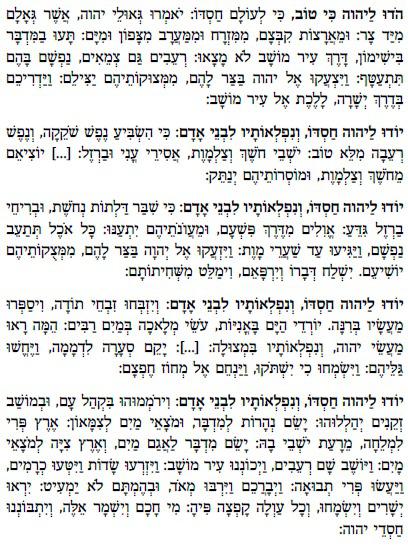
אָמַר רַב יְהוּדָה אָמַר רַב: אַרְבָּעָה צְרִיכִין לְהוֹדוֹת: יוֹרְדֵי הַיָּם, הוֹלְכֵי מִדְבָּרוֹת, וּמִי שֶׁהָיָה חוֹלֶה וְנִתְרַפֵּא, וּמִי שֶׁהָיָה חָבוּשׁ בְּבֵית הָאֲסוּרִים וְיָצָא.
יוֹרְדֵי הַיָּם מְנָלַן? — דִּכְתִיב: ״יוֹרְדֵי הַיָּם בָּאֳנִיּוֹת וְגוֹ׳ הֵמָּה רָאוּ מַעֲשֵׂי ה׳״. וְאוֹמֵר: ״וַיַּעֲמֵד רוּחַ סְעָרָה יַעֲלוּ שָׁמַיִם יֵרְדוּ תְהוֹמוֹת״, וְאוֹמֵר: ״יָחוֹגּוּ וְיָנוּעוּ כַּשִּׁכּוֹר״, וְאוֹמֵר: ״וַיִּצְעֲקוּ אֶל ה׳ בַּצַּר לָהֶם וּמִמְּצוּקֹתֵיהֶם יוֹצִיאֵם״, וְאוֹמֵר: ״יָקֵם סְעָרָה לִדְמָמָה״, וְאוֹמֵר: ״וַיִּשְׂמְחוּ כִי יִשְׁתֹּקוּ״, וְאוֹמֵר: ״יוֹדוּ לַה׳ חַסְדּוֹ וְנִפְלְאוֹתָיו לִבְנֵי אָדָם״.
הוֹלְכֵי מִדְבָּרוֹת מְנָלַן? דִּכְתִיב: ״תָּעוּ בַמִּדְבָּר בִּישִׁימוֹן דָּרֶךְ עִיר מוֹשָׁב לֹא מָצָאוּ … וַיִּצְעֲקוּ אֶל ה׳ … וַיַּדְרִיכֵם בְּדֶרֶךְ יְשָׁרָה … יוֹדוּ לַה׳ חַסְדּוֹ״.
מִי שֶׁחָלָה וְנִתְרַפֵּא, דִּכְתִיב: ״אֱוִילִים מִדֶּרֶךְ פִּשְׁעָם וּמֵעֲוֹנֹתֵיהֶם יִתְעַנּוּ. כׇּל אֹכֶל תְּתַעֵב נַפְשָׁם וְגוֹ׳ וַיִּזְעֲקוּ אֶל ה׳ בַּצַּר לָהֶם וְגוֹ׳ יִשְׁלַח דְּבָרוֹ וְיִרְפָּאֵם וְגוֹ׳ יוֹדוּ לַה׳ חַסְדּוֹ״.
מִי שֶׁהָיָה חָבוּשׁ בְּבֵית הָאֲסוּרִין מְנָלַן? — דִּכְתִיב: ״יֹשְׁבֵי חֹשֶׁךְ וְצַלְמָוֶת וְגוֹ׳ כִּי הִמְרוּ אִמְרֵי אֵל וְגוֹ׳״. וְאוֹמֵר: ״וַיַּכְנַע בֶּעָמָל לִבָּם וְגוֹ׳״, וְאוֹמֵר: ״וַיִּזְעֲקוּ אֶל ה׳ בַּצַּר לָהֶם״, וְאוֹמֵר: ״יוֹצִיאֵם מֵחֹשֶׁךְ וְצַלְמָוֶת וְגוֹ׳״, וְאוֹמֵר: ״יוֹדוּ לַה׳ חַסְדּוֹ״.
מַאי מְבָרֵךְ? אָמַר רַב יְהוּדָה: ״בָּרוּךְ גּוֹמֵל חֲסָדִים טוֹבִים״.
אַבָּיֵי אָמַר: וְצָרִיךְ לְאוֹדוֹיֵי קַמֵּי עַשְׂרָה, דִּכְתִיב: ״וִירוֹמְמוּהוּ בִּקְהַל עָם וְגוֹ׳״.
מָר זוּטְרָא אָמַר: וּתְרֵין מִינַּיְיהוּ רַבָּנַן, שֶׁנֶּאֱמַר: ״וּבְמוֹשַׁב זְקֵנִים יְהַלְלוּהוּ״.
מַתְקֵיף לַהּ רַב אָשֵׁי: וְאֵימָא כּוּלְּהוּ רַבָּנַן?! — מִי כְּתִיב ״בִּקְהַל זְקֵנִים״? ״בִּקְהַל עָם״ כְּתִיב. וְאֵימָא בֵּי עַשְׂרָה שְׁאָר עַמָּא, וּתְרֵי רַבָּנַן!
קַשְׁיָא.
רַב יְהוּדָה חֲלַשׁ וְאִתְּפַח. עָל לְגַבֵּיהּ רַב חָנָא בַּגְדָּתָאָה וְרַבָּנַן. אָמְרִי לֵיהּ: ״בְּרִיךְ רַחֲמָנָא דְּיַהֲבָךְ נִיהֲלַן וְלָא יַהֲבָךְ לְעַפְרָא״. אֲמַר לְהוּ: פְּטַרְתּוּן יָתִי מִלְּאוֹדוֹיֵי.
וְהָא אָמַר אַבָּיֵי בָּעֵי אוֹדוֹיֵי בְּאַפֵּי עַשְׂרָה! — דַּהֲווֹ בֵּי עַשְׂרָה. וְהָא אִיהוּ לָא קָא מוֹדֵה! — לָא צְרִיךְ, דְּעָנֵי בָּתְרַיְיהוּ ״אָמֵן״.
As it is written: “They who go down to the sea in ships, who do business in great waters; they see the works of the Lord” (Psalms 107:23–24).
And it says: “For He commands and raises the stormy wind which lifts up the waves thereof.
They mount up to the heaven, they go down again to the depths: their soul is melted because of trouble” (Psalms 107:25–26).
And it says: “They reel to and fro, and stagger like a drunken man, and are at their wits’ end.”
And it says immediately thereafter: “Then they cry unto the Lord in their trouble, and He brings them out of their distress” (Psalms 107:28).
And it says: “He makes the storm calm, so the waves thereof are still” (Psalms 107:29),
and it says: “Then are they glad because they be quiet; so He brings them unto their desired haven” (Psalms 107:30),
and it says: “They are grateful to God for His loving-kindness and His wonders for mankind” (Psalms 107:31). The Gemara asks: From where do we derive that those who walk in the desert are required to thank God? The Gemara answers:
As it is written in the same psalm:
“They wandered in the wilderness in a solitary way; they found no city in which to dwell” (Psalms 107:4),
“And then they cried unto the Lord in their trouble, and He delivered them out of their distresses.
And He led them forth by the right way” (Psalms 107:6–7).
After God guides them on the right way, it is said: “They are grateful to God for His goodness” (Psalms 107:8). That one who was ill and recovered must offer thanks is derived, as it is written:
“Fools, because of their transgression and because of their iniquities, are afflicted.
Their soul abhors all manner of food and they draw near unto the gates of death” (Psalms 107:17–18),
and: “Then they cry unto the Lord in their trouble, and He saves them from their distress” (Psalms 107:19),
and then: “He sent His word and healed them, and delivered them from their destructions” (Psalms 107:20).
After they are healed: “They are grateful to God for His goodness” (Psalms 107:21). From where do we derive that one who was incarcerated in prison must offer thanks?
As it is written: “Such as sit in darkness and in the shadow of death, bound in affliction and iron.
Because they rebelled against the words of God and scorned the counsel of the most High” (Psalms 107:10–11).
And it says: “Therefore He brought down their heart with labor; they fell down, and there was none to help” (Psalms 107:12),
and it says: “Then they cried unto the Lord in their trouble, and He saved them from their distresses” (Psalms 107:13),
and it says: “He brought them out of darkness and the shadow of death,
and broke their shackles” (Psalms 107:14).
And after God takes them out from that darkness and shadow of death, it says: “They are grateful to God for His goodness.” The Gemara asks: What blessing does he recite? Rav Yehuda said: Blessed is…Who bestows acts of loving-kindness. Abaye said: And he must offer thanks before ten people, as it is written in the same chapter: “Let them exalt Him also in the congregation of the people and praise Him in the assembly of the elders” (Psalms 107:32), and congregation indicates a group of at least ten. Mar Zutra said: Two of them must be Sages, as it is stated there: “And praise Him in the assembly of elders.” These elders are the Sages, and the use of the plural indicates a minimum of two. Rav Ashi strongly objects to this: Say that all of them must be Sages. The Gemara rejects this: Is it written: In the congregation of elders? In the congregation of the people is written; and the Sages are among them. Yet there is still room to object: Say that ten are from the rest of the people, and in addition there must be two Sages. No satisfactory answer was found, and the question remains difficult, although the halakha was not rejected. The Gemara relates: Rav Yehuda fell sick and recovered, Rav Ḥana of Baghdad and the Sages entered to visit him. They said to him: Blessed is God Who gave you to us and did not give you to the dust. He said to them: You have exempted me from offering thanks, as your statement fulfilled my obligation to recite a blessing. The Gemara asks: But didn’t Abaye say that one must offer thanks before ten? The Gemara answers: There were ten people there when the Sages blessed God in Rav Yehuda’s presence. The Gemara raises another difficulty: But Rav Yehuda did not offer thanks himself; others offered thanks on his behalf. The Gemara answers: He did not need to recite it himself as he answered amen after their blessing. Answering amen after a blessing is tantamount to reciting the blessing himself. Incidental to Rav Yehuda’s earlier statement, which organized several cases into a single category, the Gemara cites similar statements of his. Rav Yehuda said: Three require protection from harm: A sick person, a bridegroom, and a bride. It was taught in a baraita: A sick person, a woman in childbirth, a bridegroom, and a bride require protection from harm. And some say: Even a mourner. And some say: Even Torah scholars at night. Those whose thoughts are focused elsewhere or are in a weakened physical state require protection. And Rav Yehuda said: There are three matters which, when one who prolongs their duration, they extend a person’s days and years. They are: One who prolongs his prayer, one who prolongs his mealtime at the table, and one who prolongs his time in the bathroom. The Gemara asks: And one who prolongs his prayer; is that a virtue? Didn’t Rabbi Ḥiyya bar Abba say that Rabbi Yoḥanan said:
(א) ברכת הודאת היחיד. ובו ט סעיפים:
ארבעה צריכים להודות יורדי הים כשעלו ממנה והולכי מדברות כשיגיעו ליישוב ומי שהיה חולה ונתרפא ומי שהיה חבוש בבית האסורים ויצא וסימנך וכל החיי"ם יודוך סלה "חולה "יסורין "ים "מדבר:
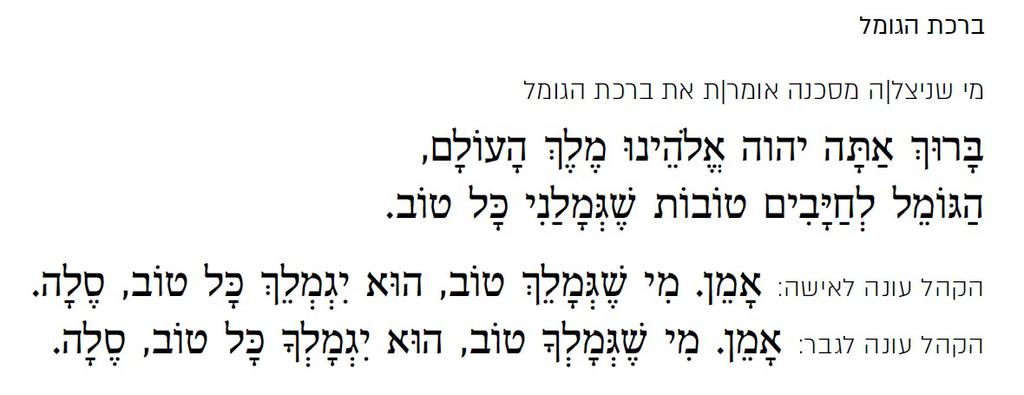
יְהוּדִים שֶׁנִצְּלוּ מִסַּכָּנָה נָהֲגוּ בְּמֶשֶׁךְ דּוֹרוֹת רַבִּים לְהוֹסִיף, אַחֲרֵי עֲלִיָּה לַתּוֹרָה בְּבֵית הַכְּנֶסֶת, אֶת בִּרְכַּת הַגּוֹמֵל, וְאָנוּ נֹאמַר בְּמִלִּים שֶׁלָּנוּ:
רֶגַע קָצָר וּמְלֵא אֵימָה שֶׁל סַכָּנָה מַפְרִיד בֵּין כָּל חַיֵּינוּ שֶׁלִּפְנֵי רֶגַע זֶה לְבֵין הַחַיִּים הַחֲדָשִׁים שֶׁנִּתְּנוּ לָנוּ אַחֲרָיו. כְּפֶסַע הָיָה בֵּינֵינוּ וּבֵין הַמָּוֶת, וְנִצַּלְנוּ. לִבֵּנוּ מָלֵא פְּלִיאָה וְתוֹדָה. אֶת הַמַּתָּנָה שֶׁקִּבַּלְנוּ לֹא נִקַּח כְּמוּבֶנֶת מֵאֱלֶיהָ. תּוֹדָה עַל הַחַיִּים!