


Dedicated to the incredible love and impending marriage of Leenie Baker and Jake Gindy. May you continue to know each other.
(טז) כָּל אַהֲבָה שֶׁהִיא תְלוּיָה בְדָבָר, בָּטֵל דָּבָר, בְּטֵלָה אַהֲבָה. וְשֶׁאֵינָהּ תְּלוּיָה בְדָבָר, אֵינָהּ בְּטֵלָה לְעוֹלָם.
(16) All love that depends on a something, [when the] thing ceases, [the] love ceases; and [all love] that does not depend on anything, will never cease.
Discussion Questions:
1. In your own words, what does this mean? Do you agree or disagree with this text?
2. What might love depend on?
3. How can we ensure that love isn’t dependent on something? Is that the goal?
(ט) טוֹבִ֥ים הַשְּׁנַ֖יִם מִן־הָאֶחָ֑ד אֲשֶׁ֧ר יֵשׁ־לָהֶ֛ם שָׂכָ֥ר ט֖וֹב בַּעֲמָלָֽם׃ (י) כִּ֣י אִם־יִפֹּ֔לוּ הָאֶחָ֖ד יָקִ֣ים אֶת־חֲבֵר֑וֹ וְאִ֣יל֗וֹ הָֽאֶחָד֙ שֶׁיִּפּ֔וֹל וְאֵ֥ין שֵׁנִ֖י לַהֲקִימֽוֹ׃ (יא) גַּ֛ם אִם־יִשְׁכְּב֥וּ שְׁנַ֖יִם וְחַ֣ם לָהֶ֑ם וּלְאֶחָ֖ד אֵ֥יךְ יֵחָֽם׃
(9) Two are better off than one, in that they have greater benefit from their earnings. (10) For should they fall, one can raise the other; but woe betide him who is alone and falls with no companion to raise him! (11) Further, when two lie together they are warm; but how can he who is alone get warm?
Discussion Questions:
1. What other benefits do relationships offer us, romantic or otherwise?
2. How can we rely on our partners in appropriate ways?
(יח) וַיֹּ֙אמֶר֙ ה׳ אֱלֹקִ֔ים לֹא־ט֛וֹב הֱי֥וֹת הָֽאָדָ֖ם לְבַדּ֑וֹ אֶֽעֱשֶׂה־לּ֥וֹ עֵ֖זֶר כְּנֶגְדּֽוֹ׃ (יט) וַיִּ֩צֶר֩ ה׳ אֱלֹקִ֜ים מִן־הָֽאֲדָמָ֗ה כׇּל־חַיַּ֤ת הַשָּׂדֶה֙ וְאֵת֙ כׇּל־ע֣וֹף הַשָּׁמַ֔יִם וַיָּבֵא֙ אֶל־הָ֣אָדָ֔ם לִרְא֖וֹת מַה־יִּקְרָא־ל֑וֹ וְכֹל֩ אֲשֶׁ֨ר יִקְרָא־ל֧וֹ הָֽאָדָ֛ם נֶ֥פֶשׁ חַיָּ֖ה ה֥וּא שְׁמֽוֹ׃ (כ) וַיִּקְרָ֨א הָֽאָדָ֜ם שֵׁמ֗וֹת לְכׇל־הַבְּהֵמָה֙ וּלְע֣וֹף הַשָּׁמַ֔יִם וּלְכֹ֖ל חַיַּ֣ת הַשָּׂדֶ֑ה וּלְאָדָ֕ם לֹֽא־מָצָ֥א עֵ֖זֶר כְּנֶגְדּֽוֹ׃ (כא) וַיַּפֵּל֩ ה׳ אֱלֹקִ֧ים ׀ תַּרְדֵּמָ֛ה עַל־הָאָדָ֖ם וַיִּישָׁ֑ן וַיִּקַּ֗ח אַחַת֙ מִצַּלְעֹתָ֔יו וַיִּסְגֹּ֥ר בָּשָׂ֖ר תַּחְתֶּֽנָּה׃ (כב) וַיִּ֩בֶן֩ ה׳ אֱלֹקִ֧ים ׀ אֶֽת־הַצֵּלָ֛ע אֲשֶׁר־לָקַ֥ח מִן־הָֽאָדָ֖ם לְאִשָּׁ֑ה וַיְבִאֶ֖הָ אֶל־הָֽאָדָֽם׃
(18) God ה׳ said, “It is not good for the Human to be alone; I will make a fitting counterpart for him.” (19) And God ה׳ formed out of the earth all the wild beasts and all the birds of the sky, and brought them to the Human to see what he would call them; and whatever the Human called each living creature, that would be its name. (20) And the Human gave names to all the cattle and to the birds of the sky and to all the wild beasts; but no fitting counterpart for a human being was found. (21) So God ה׳ cast a deep sleep upon the Human; and, while he slept, [God] took one of his sides and closed up the flesh at that site. (22) And God ה׳ fashioned the side that had been taken from the Human into a woman, bringing her to the Human.
Discussion Questions:
1. Based on this text, how do you understand what it means for a person to be a “fitting counterpart” (ezer k’negdo)?
2. What seems to be the role of the man? The role of a woman? What message(s) does this source send about the relationship between men and women? God and human beings?
3. What, if anything, resonates with or troubles you about this depiction of partnership?
(א) וְהָ֣אָדָ֔ם יָדַ֖ע אֶת־חַוָּ֣ה אִשְׁתּ֑וֹ וַתַּ֙הַר֙...
(1) Now Adam knew his wife Eve, and she conceived...
Discussion Questions:
1. The Torah uses the euphemism "to know" to mean sex. What does this tell us about the nature of intimacy in the Bible?
2. Nowhere in this story does it say that Adam and Eve love each other. What kind of relationship do they have? Does "knowing" one another mean love or something else?
(סג) וַיֵּצֵ֥א יִצְחָ֛ק לָשׂ֥וּחַ בַּשָּׂדֶ֖ה לִפְנ֣וֹת עָ֑רֶב וַיִּשָּׂ֤א עֵינָיו֙ וַיַּ֔רְא וְהִנֵּ֥ה גְמַלִּ֖ים בָּאִֽים׃ (סד) וַתִּשָּׂ֤א רִבְקָה֙ אֶת־עֵינֶ֔יהָ וַתֵּ֖רֶא אֶת־יִצְחָ֑ק וַתִּפֹּ֖ל מֵעַ֥ל הַגָּמָֽל׃ (סה) וַתֹּ֣אמֶר אֶל־הָעֶ֗בֶד מִֽי־הָאִ֤ישׁ הַלָּזֶה֙ הַהֹלֵ֤ךְ בַּשָּׂדֶה֙ לִקְרָאתֵ֔נוּ וַיֹּ֥אמֶר הָעֶ֖בֶד ה֣וּא אֲדֹנִ֑י וַתִּקַּ֥ח הַצָּעִ֖יף וַתִּתְכָּֽס׃ (סו) וַיְסַפֵּ֥ר הָעֶ֖בֶד לְיִצְחָ֑ק אֵ֥ת כׇּל־הַדְּבָרִ֖ים אֲשֶׁ֥ר עָשָֽׂה׃ (סז) וַיְבִאֶ֣הָ יִצְחָ֗ק הָאֹ֙הֱלָה֙ שָׂרָ֣ה אִמּ֔וֹ וַיִּקַּ֧ח אֶת־רִבְקָ֛ה וַתְּהִי־ל֥וֹ לְאִשָּׁ֖ה וַיֶּאֱהָבֶ֑הָ וַיִּנָּחֵ֥ם יִצְחָ֖ק אַחֲרֵ֥י אִמּֽוֹ׃ {פ}
(63) And Isaac went out walking in the field toward evening and, looking up, he saw camels approaching. (64) Raising her eyes, Rebekah saw Isaac. She alighted from the camel (65) and said to the servant, “Who is that man walking in the field toward us?” And the servant said, “That is my master.” So she took her veil and covered herself. (66) The servant told Isaac all the things that he had done. (67) Isaac then brought her into the tent of his mother Sarah, and he took Rebekah as his wife. Isaac loved her, and thus found comfort after his mother’s death.
Discussion Questions:
1. This is the first mention of love in the Torah. Given that context, what do you think this text is trying to say about the meaning and significance of love?
2. What do you imagine is happening for Isaac and Rebekah at this moment? Is this love at first sight, Isaac responding to the grief of losing his mother, something else?
3. The text tells us that Isaac’s love for Rebekah comforts him after his mother’s death. What does this tell us about the power of love and relationships?
(ט) עוֹדֶ֖נּוּ מְדַבֵּ֣ר עִמָּ֑ם וְרָחֵ֣ל ׀ בָּ֗אָה עִם־הַצֹּאן֙ אֲשֶׁ֣ר לְאָבִ֔יהָ כִּ֥י רֹעָ֖ה הִֽוא׃ (י) וַיְהִ֡י כַּאֲשֶׁר֩ רָאָ֨ה יַעֲקֹ֜ב אֶת־רָחֵ֗ל בַּת־לָבָן֙ אֲחִ֣י אִמּ֔וֹ וְאֶת־צֹ֥אן לָבָ֖ן אֲחִ֣י אִמּ֑וֹ וַיִּגַּ֣שׁ יַעֲקֹ֗ב וַיָּ֤גֶל אֶת־הָאֶ֙בֶן֙ מֵעַל֙ פִּ֣י הַבְּאֵ֔ר וַיַּ֕שְׁקְ אֶת־צֹ֥אן לָבָ֖ן אֲחִ֥י אִמּֽוֹ׃ (יא) וַיִּשַּׁ֥ק יַעֲקֹ֖ב לְרָחֵ֑ל וַיִּשָּׂ֥א אֶת־קֹל֖וֹ וַיֵּֽבְךְּ׃ (יב) וַיַּגֵּ֨ד יַעֲקֹ֜ב לְרָחֵ֗ל כִּ֣י אֲחִ֤י אָבִ֙יהָ֙ ה֔וּא וְכִ֥י בֶן־רִבְקָ֖ה ה֑וּא וַתָּ֖רׇץ וַתַּגֵּ֥ד לְאָבִֽיהָ׃... (טז) וּלְלָבָ֖ן שְׁתֵּ֣י בָנ֑וֹת שֵׁ֤ם הַגְּדֹלָה֙ לֵאָ֔ה וְשֵׁ֥ם הַקְּטַנָּ֖ה רָחֵֽל׃ (יז) וְעֵינֵ֥י לֵאָ֖ה רַכּ֑וֹת וְרָחֵל֙ הָֽיְתָ֔ה יְפַת־תֹּ֖אַר וִיפַ֥ת מַרְאֶֽה׃ (יח) וַיֶּאֱהַ֥ב יַעֲקֹ֖ב אֶת־רָחֵ֑ל וַיֹּ֗אמֶר אֶֽעֱבׇדְךָ֙ שֶׁ֣בַע שָׁנִ֔ים בְּרָחֵ֥ל בִּתְּךָ֖ הַקְּטַנָּֽה׃ (יט) וַיֹּ֣אמֶר לָבָ֗ן ט֚וֹב תִּתִּ֣י אֹתָ֣הּ לָ֔ךְ מִתִּתִּ֥י אֹתָ֖הּ לְאִ֣ישׁ אַחֵ֑ר שְׁבָ֖ה עִמָּדִֽי׃ (כ) וַיַּעֲבֹ֧ד יַעֲקֹ֛ב בְּרָחֵ֖ל שֶׁ֣בַע שָׁנִ֑ים וַיִּהְי֤וּ בְעֵינָיו֙ כְּיָמִ֣ים אֲחָדִ֔ים בְּאַהֲבָת֖וֹ אֹתָֽהּ׃
(9) While he was still speaking with them, Rachel came with her father’s flock—for she was its shepherd. (10) And when Jacob saw Rachel, the daughter of his uncle Laban, and the flock of his uncle Laban, Jacob went up and rolled the stone off the mouth of the well, and watered the flock of his uncle Laban. (11) Then Jacob kissed Rachel, and broke into tears. (12) Jacob told Rachel that he was her father’s kinsman, that he was Rebekah’s son; and she ran and told her father... (16) Now Laban had two daughters; the name of the older one was Leah, and the name of the younger was Rachel. (17) Leah had weak eyes; Rachel was shapely and beautiful. (18) Jacob loved Rachel; so he answered, “I will serve you seven years for your younger daughter Rachel.” (19) Laban said, “Better that I give her to you than that I should give her to an outsider. Stay with me.” (20) So Jacob served seven years for Rachel and they seemed to him but a few days because of his love for her.
Discussion Qs:
1. Why do you think Jacob kissed Rachel in verse 11? Do you think the same thing would have happened if he saw Leah first?
2. How does Jacob's love for Rachel compare to Isaac's for Rebekah?
(א) וַיְהִ֗י כְּכַלֹּתוֹ֙ לְדַבֵּ֣ר אֶל־שָׁא֔וּל וְנֶ֙פֶשׁ֙ יְה֣וֹנָתָ֔ן נִקְשְׁרָ֖ה בְּנֶ֣פֶשׁ דָּוִ֑ד וַיֶּֽאֱהָבֵ֥הוּ יְהוֹנָתָ֖ן כְּנַפְשֽׁוֹ׃ (ב) וַיִּקָּחֵ֥הוּ שָׁא֖וּל בַּיּ֣וֹם הַה֑וּא וְלֹ֣א נְתָנ֔וֹ לָשׁ֖וּב בֵּ֥ית אָבִֽיו׃ (ג) וַיִּכְרֹ֧ת יְהוֹנָתָ֛ן וְדָוִ֖ד בְּרִ֑ית בְּאַהֲבָת֥וֹ אֹת֖וֹ כְּנַפְשֽׁוֹ׃ (ד) וַיִּתְפַּשֵּׁ֣ט יְהוֹנָתָ֗ן אֶֽת־הַמְּעִיל֙ אֲשֶׁ֣ר עָלָ֔יו וַֽיִּתְּנֵ֖הוּ לְדָוִ֑ד וּמַדָּ֕יו וְעַד־חַרְבּ֥וֹ וְעַד־קַשְׁתּ֖וֹ וְעַד־חֲגֹרֽוֹ׃
(1) When [David] finished speaking with Saul, Jonathan’s soul became bound up with the soul of David; Jonathan loved David as himself. (2) Saul took him [into his service] that day and would not let him return to his father’s house.— (3) Jonathan and David made a pact, because he loved him as himself. (4) Jonathan took off the cloak and tunic he was wearing and gave them to David, together with his sword, bow, and belt.
(טז) וַיִּכְרֹ֥ת יְהוֹנָתָ֖ן עִם־בֵּ֣ית דָּוִ֑ד וּבִקֵּ֣שׁ ה' מִיַּ֖ד אֹיְבֵ֥י דָוִֽד׃ (יז) וַיּ֤וֹסֶף יְהֽוֹנָתָן֙ לְהַשְׁבִּ֣יעַ אֶת־דָּוִ֔ד בְּאַהֲבָת֖וֹ אֹת֑וֹ כִּֽי־אַהֲבַ֥ת נַפְשׁ֖וֹ אֲהֵבֽוֹ׃ {ס}
(16) Thus has Jonathan covenanted with the house of David; and may the LORD requite the enemies of David!” (17) Jonathan, out of his love for David, adjured (Septuagint reads “swore to") him again, for he loved him as himself.
Discussion Questions:
1. What is the nature of David and Jonathan's relationship?
2. What does it mean for their souls to be "bound up" together?
3. David and Jonathan never marry, never do anything overtly romantic, yet we see a deep love and connection. How are we meant to understand this love?
תָּנוּ רַבָּנַן: הָאוֹהֵב אֶת אִשְׁתּוֹ כְּגוּפוֹ, וְהַמְכַבְּדָהּ יוֹתֵר מִגּוּפוֹ... עָלָיו הַכָּתוּב אוֹמֵר: ״וְיָדַעְתָּ כִּי שָׁלוֹם אׇהֳלֶךָ״.
The Sages taught: One who loves his wife as he loves himself, and who honors her more than himself... about him the verse states: And you shall know that your tent is in peace. As a result of his actions, there will be peace in his home, as it will be devoid of quarrel and sin.
כִּי הָא דְּרַב רְחוּמִי הֲוָה שְׁכִיחַ קַמֵּיהּ דְּרָבָא בְּמָחוֹזָא, הֲוָה רְגִיל דַּהֲוָה אָתֵי לְבֵיתֵיהּ כֹּל מַעֲלֵי יוֹמָא דְכִיפּוּרֵי. יוֹמָא חַד מְשַׁכְתֵּיהּ שְׁמַעְתָּא. הֲוָה מְסַכְּיָא דְּבֵיתְהוּ: הַשְׁתָּא אָתֵי, הַשְׁתָּא אָתֵי. לָא אֲתָא. חֲלַשׁ דַּעְתַּהּ, אַחִית דִּמְעֲתָא מֵעֵינַהּ. הֲוָה יָתֵיב בְּאִיגָּרָא, אִפְּחִית אִיגָּרָא מִתּוּתֵיהּ וְנָח נַפְשֵׁיהּ.
This is as it is related about Rav Reḥumi, who would commonly study before Rava in Meḥoza: He was accustomed to come back to his home every year on the eve of Yom Kippur. One day he was particularly engrossed in the halakha he was studying, and so he remained in the study hall and did not go home. His wife was expecting him that day and continually said to herself: Now he is coming, now he is coming. But in the end, he did not come. She was distressed by this and a tear fell from her eye. At that exact moment, Rav Reḥumi was sitting on the roof. The roof collapsed under him and he died. This teaches how much one must be careful, as he was punished severely for causing anguish to his wife, even inadvertently.
Discussion Questions:
1. Forgiving the one-sided gendered language, what do these texts tell us is the responsibility of a partner?
2. Is this achievable? Sustainable? A good goal?
3. What are the pros and cons to this type of marriage?
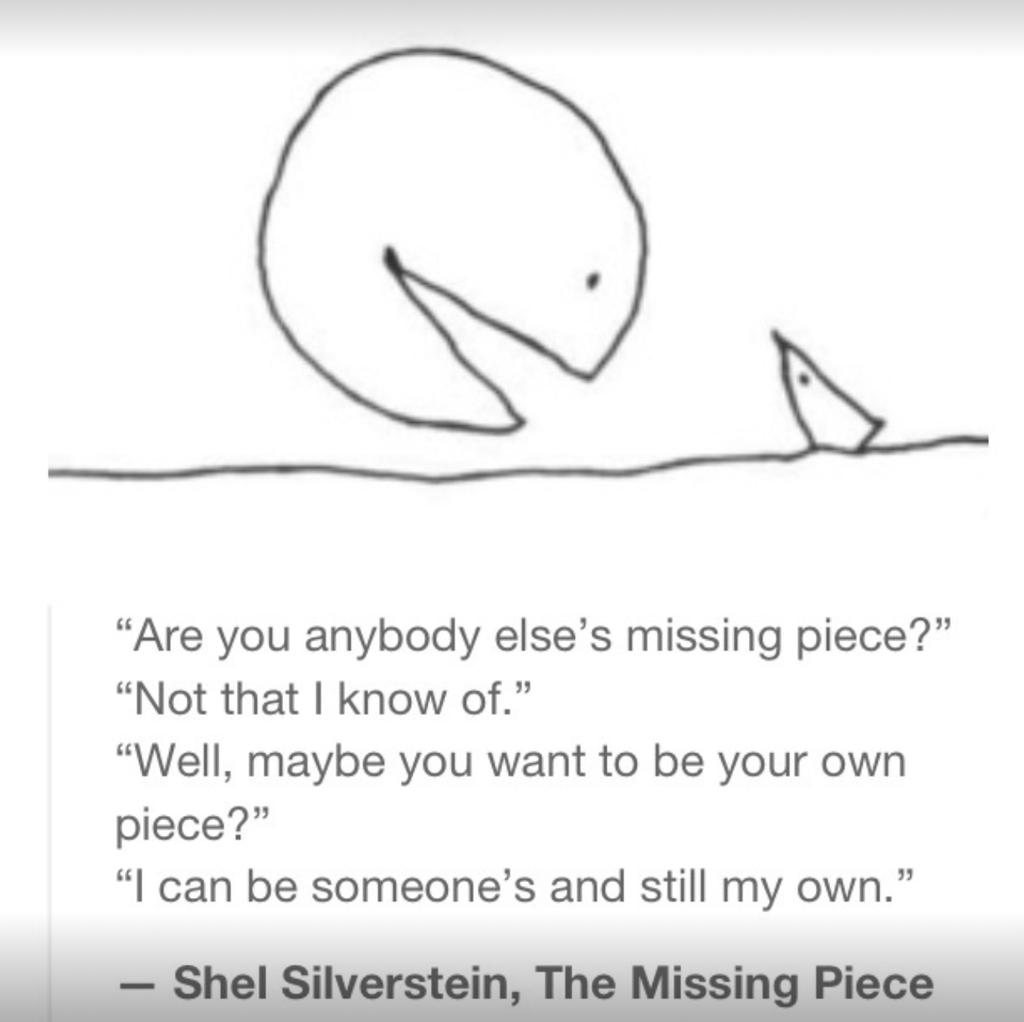
“The Missing Piece,” Shel Silverstein (1976)
“Why is Modern Love So Damn Hard?,” Esther Perel (2023)
Esther Perel (born 1958) is a Jewish Belgian-American psychotherapist, known for her work on human relationships and sexuality. |
I want to speak to those of you who view commitment as a loss of self.
The idea that we lose ourselves in the presence of our partner is deeply ingrained in the modern perception of love, particularly in the United States. As almost all of our communal institutions give way to a heightened sense of individualism, we look more frequently to our partner to provide the emotional and physical resources that a village or community used to provide.
Is it any wonder that, tied up in relying on a partner for compassion, reassurance, sexual excitement, financial partnership, etc. that we end up looking to them for identity or, even worse, for self-worth? Combine that with the commodification of love, the increasingly omnipresent “is there somebody better?”, and we have a recipe for decreasing the perceived “cost” of love. All the while increasing our expectations on our partnerships, and even adding more to the list, without really understanding what we’re asking.
So, what is the solution? How can we commit to another without losing ourselves in trying to meet these vast expectations? How can we be in a fulfilling partnership that also helps us grow as individuals?
Here’s a place to start. We can think more clearly about our expectations from a partner. Research shows that people who have more social resources, and more people to talk to about various issues in their lives, do better in marriage. So in what areas do we want to invest with our partners, and in which areas do we need to invest in ourselves and our personal networks?
Discussion Questions:
1. What do these texts (Silverstein and Perel) teach us about identity and partnership?
2. How can we give ourselves wholly to our partners while not losing our sense of self?
3. How do we balance partnership and individuality?