
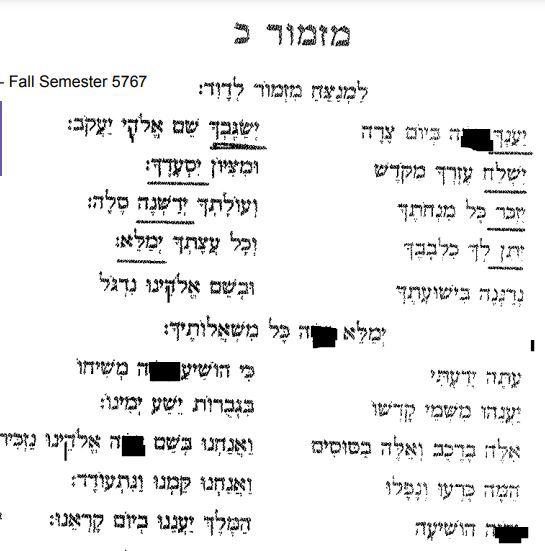
Save "פרק כ
"
פרק כ
Above layout taken from Rav Avishai David at Naaleh.com

(א) למנצח מזמור לדוד. ראשי תיבות גימטריא ק' רמז לק' ברכות כן כתב בספר ארץ החיים

The Gemmatriah of the first letter of the introduction: ל.מ.ל is 100. The Sefer Eretz Hachaim brings this as a source that David Hamelech instituted to say 100 berachot a day. (This was during a time of a terrible plague and David launched this initiative to end the plague)
Who wrote this Mizmor and why? (3 opinions)

(א) דרך א' - למנצח, מקישור דברי המזמור ועניניו מורה שנוסד על מלחמה שהיה לו לדוד עם איזה עם רחוק מירושלים והיה שם בסכנה וכשבא השמועה לציון התפללו שם עליו וגם שלחו חיל לעזרתו

According to the Malbim, this perek refers to a war David fought far away from Jerusalem. Word came to the capital that David was in danger. The people responded by Davening for David and sending an army to help him. (Either he was alone and needed help or his army need reinforcements.)
(א) לדוד. המשורר אמר אותו בעבור דוד בצאתו למלחמה:
According to the Metzudos David, this was the standard Tefillah said on behalf of David when he went out to battle.

(א) יענך ה' ביום צרה. המזמור הזה על שם שהיה שולח את יואב ואת כל ישראל למלחמה והוא היה עומד בירושלם ומתפלל עליהן כענין שנאמר (שמואל ב י״ח:ג׳-ד׳) טוב כי תהיה לנו מעיר לעזור ואמרו רבותינו אילמלא דוד לא עשה יואב מלחמה:

(1) May the Lord answer you on a day of distress This psalm was [composed] because he [David] would send Joab and all Israel to war, and he would stand in Jerusalem and pray for them, as the matter is stated (in II Sam. 18:3): “It is better that you be for us from the city as aid.” Were it not for David, Joab would not have succeeded in battle. (2) the name of the God of Jacob Who promised him [Jacob] when he went to Haran and kept His promise; therefore, it is stated: “the God of Jacob.”
Rashi explains that this refers to a time when David Hamelech sent Yoav and the army to fight and he stayed behind to Daven. The specific battle Rashi brings as a reference is the battle against Avshalom, David's son who rebelled. Based on this, the Gemara teaches that David's tefillos at home enabled Yoav's victories on the battle field.

ישגבך שם אלקי יעקב, השם שהבטיח ליעקב בהיותו חוץ לארץ והנה אנכי עמך ושמרתיך וגו' והשיבותיך אל האדמה הזאת, השם הזה יהיה גם לך למשגב שתשוב לא"י:

The Malbim explains why the name of the G-d of Yaakov specifically is invoked: The name Hashem used when He promised Yaakov when he was in a foreign land, saying, ‘And behold, I am with you, and I will keep you,’ etc., and ‘I will bring you back to this land’ – this same name will also be a protection (or reassurance) that you will return to Eretz Yisrael. (This is consistent with Malbim's understanding that David is far away fighting a battle)

(ב) אל שדי. וּמִדְרָשׁוֹ מִי שֶׁאָמַר לָעוֹלָם דַּי, יֹאמַר דַּי לְצָרוֹתַי, שֶׁלֹּא שָׁקַטְתִּי מִנְּעוּרַי, צָרַת לָבָן, צָרַת עֵשָׂו, צָרַת רָחֵל, צָרַת דִּינָה, צָרַת יוֹסֵף, צָרַת שִׁמְעוֹן, צָרַת בִּנְיָמִין:

(1) ואל שדי AND GOD ALMIGHTY — Now you lack nothing except prayer, and therefore I pray for you (Genesis Rabbah 91:11). (2) אל שדי God שֶׁ-דַּי who gives plenteous mercy and in whose hand is sufficient power to give — may He give you mercy. This is the real meaning of the words. A Midrashic explanation is: He who said to the Universe, “Enough!”, may He say “Enough!” to my troubles. I have had no rest since my youth — trouble through Laban, trouble through Esau, the trouble of Rachel, the trouble of Dinah, the trouble of Joseph, the trouble of Simeon, the trouble of Benjamin (Genesis Rabbah 92:1). (3) ושלח לכם means AND MAY HE RELEASE UNTO YOU, as the Targum renders it — may He release him from his bonds. It has the same meaning as (Exodus 21:26) “He shall let him go, יְשַׁלְּחֶנוּ (Piel) free”. It would not have been correct to translate it in the Targum by “and may he send to you your other brother”, because, as a matter of fact, they were going there where he was. (4) את אחיכם YOUR BROTHER — This refers to Simeon. (5) אחר THE OTHER ONE — The spirit of prophecy was diffused upon him so that he included Joseph also (Genesis Rabbah 92:3). (6) ואני AND AS FOR ME — until you return I shall feel myself bereaved of my children being in constant suspense. (7) כאשר שכלתי means EVEN AS I AM BEREAVED of Joseph and of Simeon (8) שכלתי I SHALL BE BEREAVED of Benjamin.
According to Rashi, Yaakov invoked this name of Hashem as a Tefillah that He should end all his suffering because he (Yaakov) has suffered enough; specifically, he already suffered from Lavan, Eisav, Rachel's death, Dina's abduction, Yosef's kidnapping, Shimon's arrest and Binyamin going down to Egypt.
Pay careful attention to the progression of Hashem's name. At this point the author does not feel personally worthy of being redeemed, so he invokes the merit of the Avos, specifically Yaakov Avinu

(א) ואף גם שם זה לא ע"י עצמו רק על ידי שליח כי ישלח עזרך מקדש ע"י מלאך

The author still does not feel worthy of Hashem's protection so he asks Hashem to send help through an intermediary. (Romemut Kel)
The author now invokes the merit of Mishkan/Beit Hamikdash. He still does not perceive himself as being under the direct hashgacha of Hashem.
(א) ועולתך. שם המין, עולתך אשר ידשנה, אשר נשאר הדשן ממנה על ידי אש מן השמים :
Minchot are the actions we do, Olot are our thoughts and Deshen are the remains of yesterday, our efforts that did not quiet come to fruition, but we will continue today what we were working on yesterday.

(א) יתן לך כלבבך ובדרש (שוחר טוב; ושם נדרש על רבן גמליאל; ובשנוים אחרים): דוד, על ידי שהיה שלם לפני בוראו ובלב שלם מתפלל אליו, היו אומרים לו: יתן לך כלבבך; אבל לכל אדם אין אומרים כן, שפעמים שיש בלבו של אדם לגנוב או לעבור עברה, או דבר שאינו ראוי. אלא מה אומרים לו? ימלא ה' כל משאלותיך.

Radak explains that for someone as great as David Hamelech, one can ask that everything in his heart be fulfilled because his heart is complete with Hashem. However, an ordinary person may not have the best desires in their heart. Therefore we say about them: "Hashem should answer the requests that you articulate."
DISCUSSION: What do you think is the difference between desires of the heart and desires actively expressed?

(א) משיבים ישראל ואומרים הנה זאת נעשה כי גם ששתי ישועות הן העתידות(1) א' ישועתו יתברך כי יציל שכינתו מהגלות.(2) ב' ישועת ישראל והיה ראוי נשמח על הנוגע לנו כי ישועתו של הקב"ה ישועתן של ישראל כי היא כמשכון לנו

David Hamelech composed Tehillim to reflect both his needs and the needs of all Jewish people in the future. In addition to a personal redemption, David asks for two things: The redemption of the Shechina by ending the galus. Also, the understanding that the honor of Bnei Yisrael is closely intertwined with the honor of Hashem. Any time we, the Jewsih people, are attacked, it is as if the honor of Hashem is also attacked. When we have victory, espceically when it is a miraculous victoy, the honor of Hashem is restored.
Once we realize our role as Hashem's representatives, the author no longer needs to rely on Zechut Avot or the Zechut of the Mikdash, rather he realizes he is under the direct Hashgacha of Hashem and proudly call out to Hashem OUR G-d.

כי הושיע ה׳ משיחו כלומר: משיחו ומלכו הוא, והוא רוצה בו; ולא כמו שהיו אומרים עליו איביו, כי חוטא היה, ולא היה רוצה האל בו, כמו שהיו אומרים לו אין ישועתה לו באלקים סלה (תהלים ג ג). ועתה כשתושיעהו יודו כלם, כי משיחו הוא והוא מושיעו.

Radak explains that ensuring that David was victorious in battle, proved that David was indeed the anointed one from Hashem. David's enemies would mock him and say that Hashem had rejected him because of his sins. However, David's victories in battle, proved his enemies wrong.
Some examples of how our enemies rely on their weapons and we rely on Hashem:
(א) אָ֣ז יָשִֽׁיר־מֹשֶׁה֩ וּבְנֵ֨י יִשְׂרָאֵ֜ל אֶת־הַשִּׁירָ֤ה הַזֹּאת֙ לַֽה' וַיֹּאמְר֖וּ לֵאמֹ֑ר אָשִׁ֤ירָה לַֽה' כִּֽי־גָאֹ֣ה גָּאָ֔ה ס֥וּס וְרֹכְב֖וֹ רָמָ֥ה בַיָּֽם׃
(1) Then Moses and the Israelites sang this song to ה'. They said:
I will sing to ה', for He*He The poetic figure in vv. 1–4 takes ancient Near Eastern gender roles as a given: the (male) role of expert warrior represented salvation from military threats. See the Dictionary under “male metaphors for God.” has triumphed gloriously;
Horse and driver He has hurled into the sea.
(א) וַיֹּסִ֙פוּ֙ בְּנֵ֣י יִשְׂרָאֵ֔ל לַעֲשׂ֥וֹת הָרַ֖ע בְּעֵינֵ֣י ה' וְאֵה֖וּד מֵֽת׃ (ב) וַיִּמְכְּרֵ֣ם ה' בְּיַד֙ יָבִ֣ין מֶלֶךְ־כְּנַ֔עַן אֲשֶׁ֥ר מָלַ֖ךְ בְּחָצ֑וֹר וְשַׂר־צְבָאוֹ֙ סִֽיסְרָ֔א וְה֥וּא יוֹשֵׁ֖ב בַּחֲרֹ֥שֶׁת הַגּוֹיִֽם׃ (ג) וַיִּצְעֲק֥וּ בְנֵֽי־יִשְׂרָאֵ֖ל אֶל־ה' כִּ֠י תְּשַׁ֨ע מֵא֤וֹת רֶֽכֶב־בַּרְזֶל֙ ל֔וֹ וְ֠ה֠וּא לָחַ֞ץ אֶת־בְּנֵ֧י יִשְׂרָאֵ֛ל בְּחׇזְקָ֖ה עֶשְׂרִ֥ים שָׁנָֽה׃ {פ}
(1) The Israelites again did what was offensive to GOD —Ehud now being dead. (2) And GOD surrendered them to King Jabin of Canaan, who reigned in Hazor. His army commander was Sisera, whose base was Harosheth-goiim. (3) The Israelites cried out to GOD; for he had nine hundred iron chariots, and he had oppressed Israel ruthlessly for twenty years.
(כח) בְּעַד֩ הַחַלּ֨וֹן נִשְׁקְפָ֧ה וַתְּיַבֵּ֛ב אֵ֥ם סִֽיסְרָ֖א בְּעַ֣ד הָאֶשְׁנָ֑ב מַדּ֗וּעַ בֹּשֵׁ֤שׁ רִכְבּוֹ֙ לָב֔וֹא מַדּ֣וּעַ אֶֽחֱר֔וּ פַּעֲמֵ֖י מַרְכְּבוֹתָֽיו׃
(28) Through the window peered Sisera’s mother,
Behind the lattice she whined:pwhined Or “gazed”; meaning of Heb. uncertain.
“Why is his chariot so long in coming?
Why so late the clatter of his wheels?”
(מה) וַיֹּ֤אמֶר דָּוִד֙ אֶל־הַפְּלִשְׁתִּ֔י אַתָּה֙ בָּ֣א אֵלַ֔י בְּחֶ֖רֶב וּבַחֲנִ֣ית וּבְכִיד֑וֹן וְאָנֹכִ֣י בָֽא־אֵלֶ֗יךָ בְּשֵׁם֙ ה' צְבָא֔וֹת אֱלֹקֵ֛י מַעַרְכ֥וֹת יִשְׂרָאֵ֖ל אֲשֶׁ֥ר חֵרַֽפְתָּ׃
(45) David replied to the Philistine, “You come against me with sword and spear and javelin; but I come against you in the name of the LORD of Hosts, the God of the ranks of Israel, whom you have defied.