


(1) Hallelujah.
Praise the Eternal from the heavens;
praise [God] on high. (2) Praise [God], all angels,
praise [God], all hosts. (3) Praise [God], sun and moon,
praise [God], all bright stars. (4) Praise [God], highest heavens,
and you waters that are above the heavens. (5) Let them praise the name of the Eternal,
for it was [God] who commanded that they be created. (6) [God] made them endure forever,
establishing an order that shall never change. (7) Praise the Eternal, O you who are on earth,
all sea monsters and ocean depths, (8) fire and hail, snow and smoke,
storm wind that executes Divine command, (9) all mountains and hills,
all fruit trees and cedars, (10) all wild and tamed beasts,
creeping things and winged birds, (11) all kings and peoples of the earth,
all princes of the earth and its judges, (12) youths and maidens alike,
old and young together. (13) Let them praise the name of the Eternal,
for [God's] name, [God's] alone, is sublime;
Whose splendor covers heaven and earth. (14) [God] has exalted the horn of [God's] people
for the glory of all [God's] faithful ones,
Israel, the people close to [God].
Hallelujah.
-In opening section of morning service (Pesukei DeZimra, songs of Praise), in the section of Psalms 145-150.
-Last two verses are part of the morning Torah service.
"Praise God! Praise Adonai from the heavens" In contrast to the previous psalm, which emphasized many different aspects of God's greatness, Psalm 148 concentrates on God as creator, suggesting that all of creation owes God praise - even the heavenly bodies, like angels and luminaries. Other biblical texts (especially Isaiah 6, whence we get the angelic choir singing, "Holy, holy, holy") feature angels praising God, an idea that is further developed in the Dead Sea Scrolls and that serves as the basis for the Kdushah section of the Amidah...
"Because by his commandment they were created" In agreement with the first creation story of Genesis 1. In general, shows this psalm shows many thematic and vocabulary agreements with that chapter, though (as we shall see) other traditions influenced it also.
"He gave a law that shall never pass" Probably referring to a myth, not preserved in Genesis, that the waters attempted to rebel against God, who quelled them by establishing a boundary that they may not pass. The myth is reflected in a wide variery of biblical sources and rabbinic literature and is probably influenced by earlier Canaanite traditions that are also found in the literature of Ugarit, a Syrian city on the Mediterranean coast that has yielded a large number of texts from a civilization that preceded Israel.
"All cedars" Throughout the Bible, the cedar is an image of strength. The psalmist thus emphasizes that even the strongest building material is not autonomous, but grows according to God's will.
"Wild beasts and all animals, bugs and birds and fowl" This is the way that the biblical world viewed the animal kingdom: it classified large animals as either wild or domesticated, leaving over creepy crawly and swarming things (remes- here "bugs) and birds. Oddly, here, as in the flood account, fish are absent.
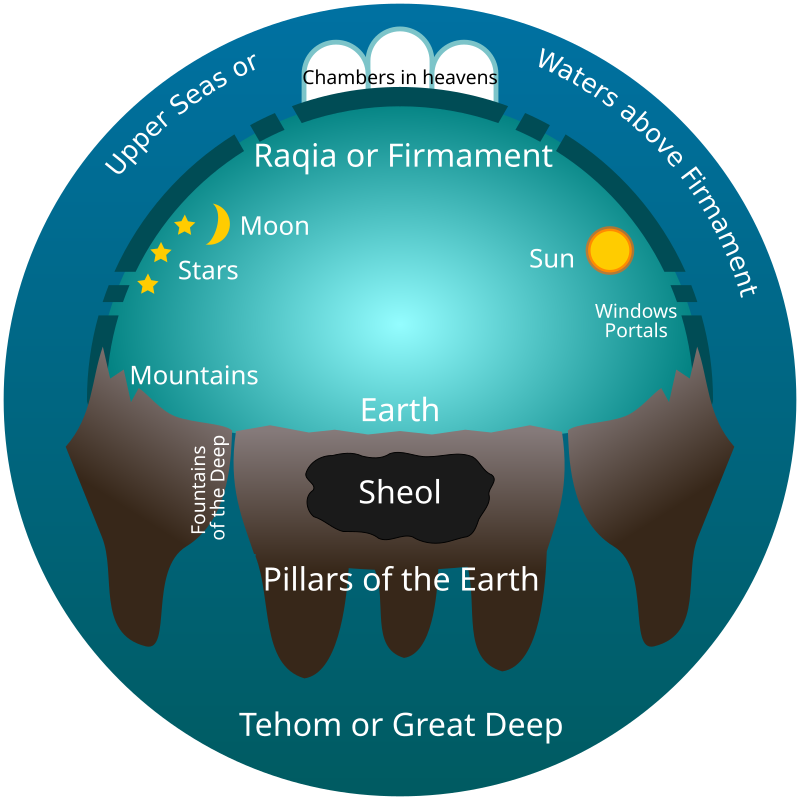
"Praise God! Praise Adonai from the heavens" This psalm celebrates the interconnectedness of all creation, which is unified through its subordination to God's sovereign will. From the heavenly heights and the waters above those heights, including our own young, who crawl upon the earth, God's grandeur invites universal praise. Ranging in scale from the cosmic to the human, the vividly concrete imagery of this psalm, portraying a God both remote and intimate, lyrically reconciles these opposites. So, for instance, we are assured that God's name is nisgar, literally "inaccessible," like a wall too high to scale, yet we are also assured that we are am krovo, the people near to God, a word that that derives from the same Hebrew root as for "kinsman" and the innermost organs of the body. Thus, even as we praise God's transcendent name, we draw near to God's intimate presence. And so, paradoxically, when we surrender our individual voices to the universal symphony, God singles us out to hear the call of God's keren, the "horn of plenty" that sustains faithful Israel.
The nature of the God of the first creation story is well-expressed in Psalm 148:5; וכי הוא צוה ונבראו, “for it was He who commanded that they be created.” God is extremely powerful, and His (yes—this God is masculine) words cause the primordial chaos (see 1:1-2) to restructure itself into the well-organized world that we know, where everything occupies its proper place. Although powerful, He has a divine council with whom He sometimes deliberates, as made clear in the plural נעשה, “let us make” in 1:26. (see Rashi and the sources he cites from b. Sanhedrin 38b and Tanhuma). This suggests that God is king—it is kings who have such advisors, and engage in massive building projects.
The Sages said concerning King David that when he completed the book of Psalms, he became proud. He said before the Holy Blessed One “Is there any creature You have created in Your world that says more songs and praises than I?” At that moment a frog happened across his path, and it said to him: David! Do not become proud, for I recite more songs and praises than you...
The Heavens are saying: “The heavens speak of God's glory, and the skies tell of Divine
handiwork.” (Psalms 19:2)...
The Night is saying: “To speak of God's kindness in the morning, and of Divine faithfulness by nights.” (Psalms 92:3)...
The Sea Monsters are saying: “Praise God from the land, the sea monsters and all the
depths.” (Psalms 148:7)...
אם בא לב"ה ומצא צבור בסוף פסוקי דזמרה אומר ברוך שאמר עד מהולל בתשבחות ואח"כ תהלה לדוד עד מעתה ועד עולם הללויה ואח"כ הללו את ה' מן השמים עד לבני ישראל עם קרובו הללויה ואחר כך הללו אל בקדשו עד כל הנשמה תהלל יה: הגה ואם יש לו שהות יותר יאמר הודו לה' קראו עד והוא רחום וידלג עד והוא רחום שקודם אשרי כי בנתיים אינן רק פסוקים מלוקטים [הגהות מיימוני פ"ז מהלכות תפלה] ואח"כ ישתבח ואח"כ יוצר וק"ש וברכותיה ויתפלל עם הצבור ואם אין שהות כ"כ ידלג גם מזמור הללו את ה' מן השמים: הגה אם עוד אין שהות לא יאמר רק ברוך שאמר ותהלה לדוד וישתבח [הרא"ש והר"י פ' אין עומדין] ואם כבר התחילו הצבור יוצר ואין שהות לומר פסוקי דזמר' אפי' בדלוג יקרא ק"ש וברכותיה עם הצבור ויתפלל עמהם ואח"כ יקרא כל פסוקי דזמר' בלא ברכ' שלפניה' ולא של אחריהם: הגה ומ"מ יאמר כל הברכות שמחוייב לברך בבוקר [כל בו וב"י בשם מהרי"א] כמו שנתבאר סי' מ"ו ומ"ז: