


This man sins against his soul when he completes his nezirut – for now he is leaving his holiness and Divine service; it would have been more fitting to remain a nazir forever, all his day as a nazir and Holy to his God. Behold he requires atonement when he returns to be besmirched with worldly passions
If man should argue, since envy, passion and pride are evil... (and says) I shall divorce and separate myself utterly from them till I eat no meat nor drink wine, nor marry.. this is an evil path and it is forbidden to walk on it. One who walks in the path is called a sinner and needs atonement.
Moses Maimonides, Moses ben Maimon, Moses son of Maimon; known in rabbinical literature as Rambam from the acronym of Rabbi Moses Ben Maimon, his Arabic name was Abū ʿImrān Mūsā bin Maimūn; 1135–1204 CE, rabbinic authority, codifier, philosopher, and royal physician. Born in Cordoba, Spain and died in Egypt.
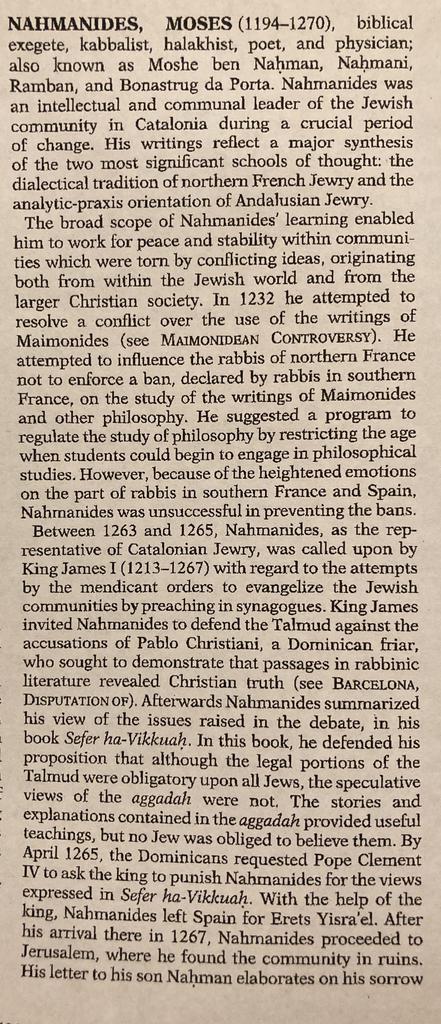
Nahmanides (edited from the Encyclopedia Judaica, Second Addition)
Moses ben Naḥman, Naḥamani, and, RaMBaN from the acronym of Rabbi Moses Ben Naḥman, his Spanish name was Bonastrug da Porta; 1194–1270 CE, rabbi, scholar, philosopher, kabbalist, biblical exegete, poet, and physician. Born in Catalonia and died in the land of Israel.
(edited from the Encyclopedia Judaica, Second Edition)
The Foundation of Foundations and the Pillar of all Wisdom is to know that there is a First Cause, which brought everything else into existence, and that everything that exists, from the heavens to the earth and everything that is in them would not exist, were not God's existence true.
אֱלוֹהַּ זֶה אֶחָד הוּא וְאֵינוֹ שְׁנַיִם וְלֹא יֶתֶר עַל שְׁנַיִם. אֶלָּא אֶחָד. שֶׁאֵין כְּיִחוּדוֹ אֶחָד מִן הָאֲחָדִים הַנִּמְצָאִים בָּעוֹלָם. לֹא אֶחָד כְּמִין שֶׁהוּא כּוֹלֵל אֲחָדִים הַרְבֵּה. וְלֹא אֶחָד כְּגוּף שֶׁהוּא נֶחְלָק לְמַחְלָקוֹת וְלִקְצָווֹת. אֶלָּא יִחוּד שֶׁאֵין יִחוּד אַחֵר כְּמוֹתוֹ בָּעוֹלָם... וְאִלּוּ הָיָה הַיּוֹצֵר גּוּף וּגְוִיָּה הָיָה לוֹ קֵץ וְתַכְלִית שֶׁאִי אֶפְשָׁר לִהְיוֹת גּוּף שֶׁאֵין לוֹ קֵץ. וְכָל שֶׁיֵּשׁ לְגוּפוֹ קֵץ וְתַכְלִית יֵשׁ לְכֹחוֹ קֵץ וָסוֹף. וֵאלֹהֵינוּ בָּרוּךְ שְׁמוֹ הוֹאִיל וְכֹחוֹ אֵין לוֹ קֵץ וְאֵינוֹ פּוֹסֵק שֶׁהֲרֵי הַגַּלְגַּל סוֹבֵב תָּמִיד. אֵין כֹּחוֹ כֹּחַ גּוּף. וְהוֹאִיל וְאֵינוֹ גּוּף לֹא יֶאֶרְעוּ לוֹ מְאֹרְעוֹת הַגּוּפוֹת כְּדֵי שֶׁיְּהֵא נֶחְלָק וְנִפְרָד מֵאַחֵר. לְפִיכָךְ אִי אֶפְשָׁר שֶׁיִּהְיֶה אֶלָּא אֶחָד. וִידִיעַת דָּבָר זֶה מִצְוַת עֲשֵׂה שֶׁנֶּאֱמַר (דברים ו ד) "ה' אֱלֹהֵינוּ ה' אֶחָד":
This God is one; God is neither two nor more than two; God is simply one. God’s unity is not like any other oneness that exists in the world. God’s is not the unity of a kind that encompasses many other single particulars; and it is not like the unity of a body that is divided into parts and extremities; rather it is a unity that is entirely unlike any other sort of oneness in the universe. . . . Were the Creator God to have body and form, God would have limitation and definition, because it is impossible for a body not to be limited. And any entity which itself is limited and defined [possesses] only limited and defined power. Since our God, blessed be God’s name, possesses unlimited power, as evidenced by the continuous revolution of the sphere, we see that God’s power is not the power of a body. Since God is not a body, the circumstances associated with bodies that produce division and separation are not relevant to Him. Therefore, it is impossible for God to be anything other than one.
The knowledge of this concept fulfills a positive commandment, as [Deuteronomy 6:4]: "Listen Israel, YHVH is our God, YHVH is one."
...מאמיני ההגשמה להאמין בה. וזה – כי מאמין ההגשמה, לא הביאהו אליה עיון שכלי, אבל נמשך אחר פשוטי הכתוב... ועל הכל נאמר: ׳דברה תורה כלשון בני אדם׳“ ואמנם הכונה בכולם – לתארו בשלמות, לא בעצם הענין ההוא, אשר הוא שלמות לבעל הנפש מן הנבראות...
Those who believe in the corporeality of God have not arrived at that belief by speculation, but by following the literal sense of certain passages in the
Bible. . . . However, as it is stated, “The Torah speaks in human language (said many times in Talmud).” Indeed, the biblical depictions of God are meant to portray God’s perfection not in the essential sense—but rather in relation to created living beings. . . . The attributes found in Holy Scripture are qualifications of God’s actions, without any reference to God’s essence . . .
ודע שהדברים שאומרם באלו הפרקים, ובמה שיבא מן הפירוש אינם ענינים בדיתים אני מעצמי, ולא פירושים שחדשתים, ואמנם הם ענינים לקטתים מדברי החכמים במדרשות ובתלמוד וזולתו מחבוריהם, ומדברי הפילוסופים גם כן הקדומים והחדשים, ומחבורים הרבה מבני אדם, ושמע האמת ממי שאמרו.
Know, however, that the ideas presented in these chapters and in the following commentary are not of my own invention; neither did I think out the explanations contained therein, but I have gleaned them from the words of the wise occurring in the Midrashim, in the Talmud, and in other of their works, as well as from the words of the philosophers, ancient and recent, and also from the works of various authors, as one should accept truth no matter the source.
(א) עֲשֵׂה לְךָ רַב... כִּי אֵין לִמּוּד הָאָדָם מֵעַצְמוֹ כְּלִמּוּדוֹ מִזּוּלָתוֹ שֶׁהַלִּמּוּד מֵעַצְמוֹ טוֹב הוּא אֲבָל לִמּוּדוֹ מִזּוּלָתוֹ יִתְקַיֵּם בְּיָדוֹ יוֹתֵר... וְכֵן בֵּאֲרוּ בְּפֵרוּשׁ זֹאת הַמִּצְוָה.
וְאָמַר וְקָנָה לְךָ חָבֵר. זָכָר אוֹתוֹ בִּלְשׁוֹן קְנִיָּה וְלֹא אָמַר עֲשֵׂה לְךָ חָבֵר אוֹ הִתְחַבֵּר לַאֲחֵרִים הַכַּוָּנָה בְּזֶה שֶׁצָּרִיךְ לָאָדָם שֶׁיִּקְנֶה אוֹהֵב לְעַצְמוֹ שֶׁיְּתַקְּנוּ בּוֹ מַעֲשָׂיו וְכָל עִנְיָנָיו כְּמוֹ שֶׁאָמְרוּ אוֹ חַבְרוּתָא אוֹ מִיתוּתָא... וּמָה טוֹב מַאֲמָר אֲרִיסְטוֹטְלוּס הָאָהוּב אֶחָד הוּא וְהָאוֹהֲבִים.
(1) "Make for yourself a teacher": As the study of a man on his own is good, but his study from someone else will be better... this is how they (the rabbis of the Talmud) elucidate the explanation of this commandment.
And he said, "acquire for yourself a friend". He said it with an expression of acquisition and he did not say, "Make for yourself a friend," or "Befriend others." The intention of this is that a person must acquire a friend for himself, so that all of his deeds and all of his matters be refined through him, as they said, "Either a friend or death. (Taanit 23a)"... And how good is the statement of Aristotle, "Beloved friends are one."


In all your actions, words and thoughts, always regard yourself as standing before Hashem, with His Shechinah above you, for His glory fills the whole world. Speak with fear and awe, as a slave standing before his master. Act with restraint in front of everyone. When someone calls you, don't answer loudly, but gently and softly, as one who stands before his master.
Torah should always be learned diligently, so you will be able to fulfill it's commands. When you arise from your learning reflect carefully on what you have studied, in order to see what in it that you can be put into practice. Examine your actions every morning and evening, and in this way every one of your days will be spent in teshuvah (repentance).
Concentrate on your prayers by removing all worldly concerns from your heart. Prepare your heart before Hashem, purify your thoughts and think about what you are going to say. If you follow this in all your daily actions, you will not come to sin. This way everything you do will be proper, and your prayer will be pure, clear, clean, devout and acceptable to Hashem, as it is written (Tehillim 10:17), "When their heart is directed to You, listen to them."
Read this letter at least once a week and neglect none of it. Fulfill it, and in so doing, walk with it forever in the ways of Hashem, may He be blessed, so that you will succeed in all your ways. Thus you will succeed and merit the World to Come which lies hidden away for the righteous. Every day that you shall read this letter, heaven shall answer your heart's desires. Amen, Sela!
(source http://www.pirchei.com/specials/ramban/ramban.htm)
The reason for the Torah being written in this form [in the the third person] is that it preceded the creation of the world (Shabbat 88b), and, needless to say, it preceded the birth of Moses our teacher. It has been transmitted to us by tradition that it [the Torah] was written with letters of black fire upon a background of white fire (Midrash Tanchuma Genesis 1). Thus Moses was like a scribe who copies from an ancient book, and therefore he wrote anonymously. However, it is true and clear that the entire Torah — from the beginning of Genesis to "before the eyes of all Israel" (the last words in Deuteronomy) — reached the ear of Moses from the mouth of the Holy One, blessed be He, just as it is said elsewhere, "He pronounced all these words unto me with his mouth, and I wrote them with ink on parchment (Jeremiah 36:8)."
עוד יש בידינו קבלה של אמת, כי כל התורה כולה שמותיו של הקב"ה, שהתיבות מתחלקות לשמות בענין אחד. כאילו תחשוב על דרך משל, כי פסוק בראשית יתחלק לתיבות אחרות, כגון: 'בראש יתברא אלהים'...
We have yet another mystic tradition that the whole Torah is comprised of Names of the Holy One, blessed be He, and that the letters of the words separate themselves into Divine Names when divided different ways, as you may imagine by way of example that the verse of Bereishieet divides itself into these other words: berosh yithbare Elokim...
ועוד אמרו: בזכות משה, שנאמר (דברים לג כא): "וַיַּרְא רֵאשִׁית לוֹ". וכוונתם זו, שמילת בְּרֵאשִׁית תרמוז כי בעשר ספירות נברא העולם. ורמז לספירה הנקראת חכמה שבה יסוד כל, כעניין שנאמר (משלי ג יט): "ה' בְּחָכְמָה יָסַד אָרֶץ".
The Rabbis have further said: “For the merit acquired by Moses [the world has been created], as it is said, And he saw a first part for himself.” Their intention in the above texts is as follows: the word bereshith alludes to the creation of the world by Ten Emanations, and hints in particular to the emanation called Wisdom, in which is the foundation of everything, even as it says, "With wisdom YHVH established the earth (Proverbs 3:19)".
I dismount from my animal, wash my hands, enter, and ask my patients to bear with me while I briefly eat, the only meal I take in the twenty-four hours. Then I see to my patients, write prescriptions for their various illnesses. Patients go in and out until nightfall, and sometimes even until two hours and more in the night. I talk to them while lying down from sheer fatigue, and when night falls, I am so exhausted that I can hardly speak.
Because of this no Israelite can have any private interview with me, except on Shabbat. Then the whole congregation visit me after the morning service. We study together a little until noon, and then they leave. Some of them return, and read with me after the afternoon service until evening prayers.
(source
https://www.rabbisacks.org/covenant-conversation-family-edition/naso/sages-and-saints/)
Indeed, the biblical depictions of God are meant to portray God’s perfection not in the essential sense—but rather in relation to created living beings. . . . The attributes found in Holy Scripture are qualifications of God’s actions, without any reference to God’s essence . . .
הָיָה לְפָנָיו נֵר בֵּיתוֹ וְנֵר חֲנֻכָּה אוֹ נֵר בֵּיתוֹ וְקִדּוּשׁ הַיּוֹם נֵר בֵּיתוֹ קוֹדֵם מִשּׁוּם שְׁלוֹם בֵּיתוֹ שֶׁהֲרֵי הַשֵּׁם נִמְחָק לַעֲשׂוֹת שָׁלוֹם בֵּין אִישׁ לְאִשְׁתּוֹ. גָּדוֹל הַשָּׁלוֹם שֶׁכָּל הַתּוֹרָה נִתְּנָה לַעֲשׂוֹת שָׁלוֹם בָּעוֹלָם שֶׁנֶּאֱמַר (משלי ג יז) "דְּרָכֶיהָ דַרְכֵי נֹעַם וְכָל נְתִיבֹתֶיהָ שָׁלוֹם":
If a person has the opportunity to fulfill only one of two mitzvot, lighting a lamp for one's home [i.e., Sabbath candles] or lighting a Chanukah lamp - or, alternatively, lighting a lamp for one's home or reciting kiddush - the lamp for one's home receives priority, since it generates peace within the home. God's name may be be blotted out to create peace between a husband and his wife. [As mentioned in Hilchot Yesodei HaTorah, Chapter 6, blotting out God's name is a severe matter and constitutes a Torah prohibition.] Nevertheless, this prohibition is waived. Great is peace, the entire Torah was given to bring peace to the world, as [Proverbs 3:17] states: "Its ways are pleasant and all its paths lead to peace."