


"...something of His attributes—His “goodness,” the directional pitch of His ethical intentions, the afterglow of the effulgence of His presence—can be glimpsed by humankind. "
Robert Alter on Exodus 33:23, Parsha KiSisa
[MS: A comment on the parsha and the Passover Seder Experience:
Alter's Note is a wakeup call to experience the moment of Exodus 33:23 afresh, something we rediscover, new, exciting - like the Pesach Seder we do today, now. We are deeply questioning. In spite of that, at the Seder, we try to live out both the first Exodus and a Seder in our own times, all at once. By all means, Alter implies in his Note, read the volumes of theology explaining the laws of Exodus 33:23. But, per the messages in this Biblical text, do so in context of experiencing today, in our times, God's Goodness, the continuing "effulgence of His presence."]
Exodus 33:23
(כג) וַהֲסִרֹתִי֙ אֶת־כַּפִּ֔י וְרָאִ֖יתָ אֶת־אֲחֹרָ֑י וּפָנַ֖י לֹ֥א יֵרָאֽוּ׃ {פ}
(23) Then I will take My hand away and you will see My back; but My face must not be seen.”
Alter's Note on Exodus 33:23
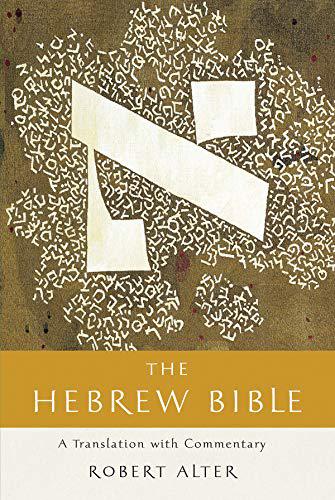
Exodus 33:23 . you will see My back, but My face will not be seen. Volumes of theology have been spun out of these enigmatic words. Imagining the deity in frankly physical terms was entirely natural for the ancient monotheists: this God had, or at least could assume, a concrete manifestation which had front and rear, face and back, and that face man was forbidden to see. But such concreteness does not imply conceptual naïveté. Through it the Hebrew writer suggests an idea that makes good sense from later theological perspectives: that God’s intrinsic nature is inaccessible, and perhaps also intolerable, to the finite mind of man, but that something of His attributes—His “goodness,” the directional pitch of His ethical intentions, the afterglow of the effulgence of His presence—can be glimpsed by humankind.
[MS: Copyrighted work. Emphasis, formatting and comments are added.]
/-/-/-/-/-/-//-/-/-/-/-
[MS: Alter writes about this verse: "Volumes of theology have been spun out of these enigmatic words." And yet, Alter spares us those "volumes of theology," (or encourages us to find that theology ourselves on Sefaria after a few clicks).
What does Alter find in this strange verse that generated volumes of theology? One might think his Note would be a long one. Instead, its very short. Alter expresses profound emotion and hopefulness in one sentence at the end.
He often does the opposite as a translator. Alter generally investigates a single phrase or sentence, to considerable effect. Correcting the mistranslation of one word buried in pages of description of building the Tent of Meeting, leads to new comprehension of the verse, of Jewish women and the power of love. See MS Sefaria Sheet: Robert Alter - Parshat Vayakhel Exodus 35:1-38:20 - "Alter's Correct Translation of One Word Upholds Women, Their Mirrors and Love of Their Husbands - and Rashi's
[MS: What theology? They are not all the same. So what is the point? Alter makes an odd, uncharacteristically vague reference here, without any citations or any named sources, from Talmud/Rashi to current thinkers. However, Alter consistently brings in relevant sources in his other Notes. But not so here. It implies a dismissive posture, like just a gesture, against theology. Yes, there are tons of theology, but something else is important about this critical verse.
This reader wonders about that vagueness. What theology, or better in the plural, what theologies - plus what ideologies and philosophies and laws or Halacha have been spun out these enigmatic words? And which of these does Alter think is correct vs out of bounds or unlikely? He does not say.
To catch the flavor, here is a fascinating sample from the Rambam:
Rambam:
"I take “his face” to mean “the face of God”; our Teachers likewise interpreted “his face” as being identical with “the face of God.” And, although this is found in the midst of Agadic interpretations which would be out of place in this our work, yet it is some support of our view, that the pronoun “his” is employed in this passage as a substitute for “God’s”—and the whole passage could in my opinion be explained as follows: Moses sought to attain to a certain perception which is called “the perception of the Divine face,” a term occurring in the phrase “My face cannot be seen”; but God vouchsafed to him a perception of a lower degree, viz., the one called, “the seeing of the back,” in the words, “And thou shalt see my back” (Exod. 33:23). We have mentioned this subject in our work Mishneh Torah. Accordingly, it is stated in the above-mentioned passage that the Lord withheld from Moses that perception which is termed “the seeing of the Divine face,” and substituted for it another gift, viz., the knowledge of the acts attributed to God, which, as I shall explain (chap. liv.) are considered to be different and separate attributes of the Supreme. In asserting that God withheld from Moses (the higher knowledge) I mean to say that this knowledge was unattainable, that by its nature it was inaccessible to Moses; for man, whilst able to gain perfection by applying his reasoning faculties to the attainment of what is within the reach of his intellect, either weakens his reason or loses it altogether as soon as he ventures to seek a higher degree of knowledge—as I shall elucidate in one of the chapters of this work—unless he be granted a special aid from heaven, as is described in the words, “And I will cover thee with my hand until I pass by” (Exod. 33:23)
Today Sefaira makes it easier than ever to search for those theologies, commentaries, "volumes" and to learn from the thousands of Sheets and "Topics" in commentary, much of it translated. Over 500,000 Sefaria unique readers log in each month, creating Sheets and generating new discussions. There will be no end to the volumes of "theology".
If Alter is not opposed to theology per se, what is his point here?
As I understand it, Alter is saying look beyond the theology for a moment. Go back into the scene in the parsha. before it was absorbed and forced into a pattern of theology. This is similar to recognizing the famous Alter Type Scenes discussed in his Art of Biblical Narratives.
The scene of Moses and God is a drama, part of the storytelling that started at the burning bush. Like a scene from Shakespearean play (Romeo and Juliet, MacBeth or Lear, perhaps) we learn by being present in the moment of drama We take it into our heart for wisdom or insights after the play.
We reflect on the moods and emotions that scene has planted in us.
Alter might be suggesting that as readers today, we should relive that moment of Moses and God. By reliving those feelings in the scene in Exodus 33:3, we uncover insight and wisdom. How are we to live with God without complete understanding?
For example, how do we understand the "goodness" of God in spite of the manifest cruelty and suffering on Earth or Creation? Can we know or even have an opinion since God's nature is not knowable? Why do bad things happen to good people?
Alter, however, finds an exuberantly positive message in the scene:
... The "Hebrew writer suggests an idea that makes good sense from later theological perspectives: that God’s intrinsic nature is inaccessible, and perhaps also intolerable, to the finite mind of man, but that something of His attributes—His “goodness,” the directional pitch of His ethical intentions, the afterglow of the effulgence of His presence—can be glimpsed by humankind. "
Alter says that the Biblical text, in this scene, creates a moment where the unknowable God is "glimpsed" nonetheless as Good, Ethically well-inclined, and Compassionate, a kindly God to Moses and his People, the Jews. From this literary scene the Bible creates feelings and a resolve to know God in this way. This foundation of feelings supports the philosophical and legal structures in the subsequent volumes of theology.
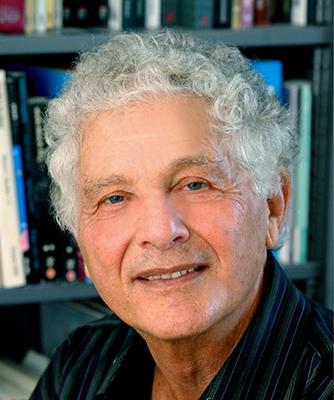
Alter, is the greatest translator of our era and the pathbreaking scholar of the Bible's literary styles and its complex literary/religious messages. Here, Alter sees the religious message of the very text itself, before the theology.
His Note is a wakeup call to experience the moment of Exodus 33:23 afresh, new, exciting - like the Pesach Seder we do today, now, where we live out the first Exodus and our own times all at once. By all means, read the volumes of theology - but do so in context of experiencing today in our times the continuing "effulgence of His presence."
Despite his Note, a question may be asked: What are Alter's religious beliefs, ie, his theology? Do we know? Does Alter believe in God's Goodness and does he feel today the "afterglow of the effulgence of His presence?" Does he feel that at the Seder?
Alter is translating and explicating the Bible's text - and not writing a commentary on Biblical laws or theologies.
Alter is also and emphatically not writing a personal essay about his beliefs. Thus, we do not know what his religious beliefs are. Maybe they are the same ones in his Note - and maybe not. (If anyone knows of an article or lecture where Alter does reveal his theology, I hope it will be posted on Sefaria.). See the discussion about Alter's personal views (not known) verses his role as translator of the Bible's religious messages in MS Sefaria Sheet Collection: The Robert Alter Version, last paragraphs.
He is writing today in order to reopen and magnify the Biblical text, to make it fresh, as good, gripping and wise as any modern literature. Does Exodus 33:23 mean what Alter says it does in his Note? That is the better, answerable question. Views may differ. I believe tha Alter gets it correctly. He is attuned to the religious messages of the Biblical text and how they are delivered to us by the Bible's unique literary tools and its conventions that he has explained over a lifetime of study.
/-/-/-/-/-/-/-/-/-/-/
MS: Revised Passover 2023.