


How welcoming is Judaism to newcomers?
How welcoming should it be, in your view?
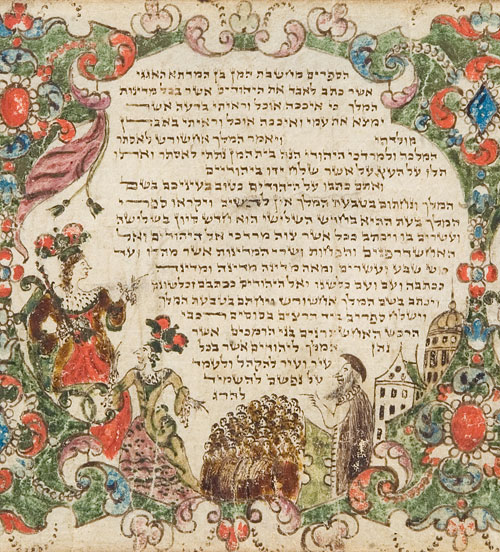
- The Book of Ruth (Hebrew) on parchment
- Artwork by William Blake
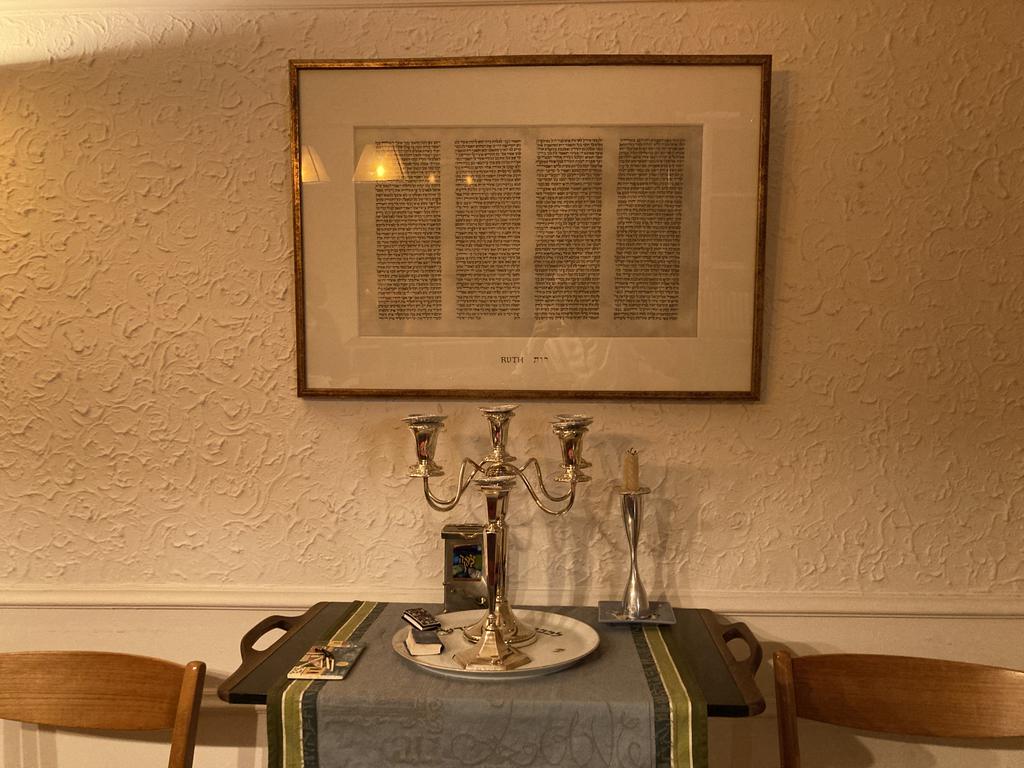
The book of Ruth on parchment, framed. Notice the number of columns. How many paragraph/parashah breaks do you see here?
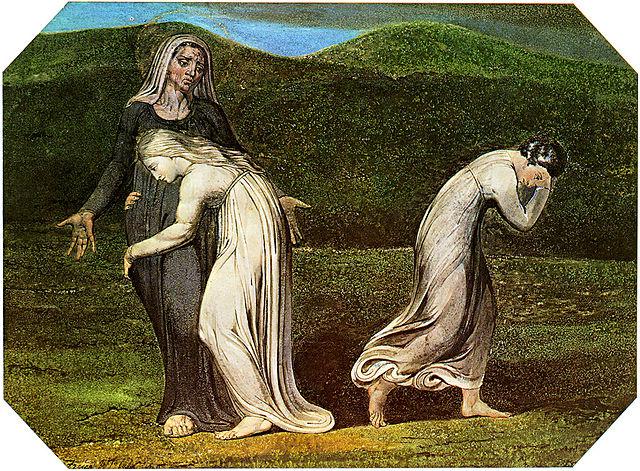
Ruth: Naomi entreating Ruth and Orpah to return to the land of Moab by William Blake, 1795
Scanned by H. Churchyard, Public Domain, https://commons.wikimedia.org/w/index.php?curid=583358
- Map of Moab in the 9th century BCE
- Mesha Stele, circa 840 BCE
- Moab and Moabites
- Genesis, Deuteronomy, Samuel, Nehemiah, Mishnah Yevamot
Ruth in a nutshell:
Tamara Cohn Eskenazi, JPS Commentary: Ruth, p. xv
Megillat Ruth, 'the Scroll of Ruth,' is a book about kindness and audacity--about kindness that propels people to act audaciously for the sake of others. It is a book filled with ḥesed and hutzpah. Such actions bring about redemption, a notion that in the Book of Ruth expands from the personal fortunes of specific individuals to the larger thematic arc of biblical narrative...
The story traces a journey from Bethlehem and back, a journey from famine to fullness, from futility to fertility.
- Place in Bible
- Current Hebrew Bibles - in Ketuvim (Writings), grouped with the other Megillot/Scrolls, often in second position after Song of Songs
- Greek and Christian Bibles - between Judges and Samuel
- Historical Setting:
- (Reign of Omri, King of Israel: 876-869 BCE)
- Reign of King David: circa 1000-961 BCE
- Era of Judges : circa 1200-1000 BCE
- Geographical Settings (see map, below)
- Moab (Moav)
- Bethlehem (lit. 'House of Bread') of Judah (south of Jerusalem)
- Date and Authorship:
- Traditionally: written in the 11th c. BCE by the prophet Samuel (https://www.sefaria.org/Bava_Batra.14b.12?lang=bi&with=all&lang2=en)
- Critical scholarship tends to place the book in the 6th or 5th centuries BCE
- Literary Features:
- Prose, with some poetic elements.
- A short book; a short story that is, for Tanach, a long story
- Idyll. https://www.ahdictionary.com/word/search.html?q=idyll
-
1.a. A short poem or prose piece depicting a rural or pastoral scene, usually in idealized terms.b. A narrative poem treating an epic or romantic theme.
-
- Four chapters/four distinct scenes
- Look out for envelope structure, parallels, and contrasts
- Themes
- Relations between Israel and Moab (see below)
- Whether and how the stranger is welcomed
- Conversion?
- Chesed חסד - Loving kindness
- God's role in the life of the individual, family, and nation
- Place in Jewish liturgy: Read widely at Shavuot (associations with time of barley and wheat harvest; theme of accepting Torah; association with traditional birthday and day of death of King David)

Kingdoms around (Biblical) Israel, 830
By Kingdoms_of_Israel_and_Judah_map_830.svg: *Oldtidens_Israel_&_Judea.svg: FinnWikiNoderivative work: Richardprins (talk)derivative work: Richardprins (talk) - Kingdoms_of_Israel_and_Judah_map_830.svg, CC BY-SA 3.0, https://commons.wikimedia.org/w/index.php?curid=10876701
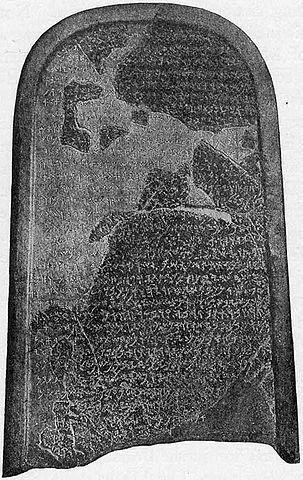
The Mesha stele describes King Mesha's wars against the Israelites
Public Domain, https://commons.wikimedia.org/w/index.php?curid=645532
The Mesha Stele, also known as the Moabite Stone, is a stele dated around 840 BCE containing a significant Canaanite inscription in the name of King Mesha of Moab ... It is written in a variant of the Phoenician alphabet, closely related to the Paleo-Hebrew script.
The stele has been part of the collection of the Louvre Museum in Paris, France, since 1873. https://en.wikipedia.org/wiki/Mesha_Stele
Lines 1-2. ʾnk.mš*.bn.kmš(yt).mlk.mʾb.hdybny /
I am Mesha, son of Kemosh(yat), king of Moab, the Dibonite.
Line 5 ʿmry.mlk.yśrʾl. wyʿnw.ʾt.mʾb.ymn.rbn.
Now as for Omri, King of Israel, he oppressed Moab for many days
𐤏𐤌𐤓𐤉 𐤟 𐤌𐤋𐤊 𐤟 𐤉𐤔𐤓𐤀𐤋 𐤟 𐤅𐤉𐤏𐤍𐤅 𐤟 𐤀𐤕 𐤟 𐤌𐤀𐤁 𐤟 𐤉𐤌𐤍 𐤟 𐤓𐤁𐤍
Transcription into later Hebrew letters and adaptation into later Hebrew (DR)
עמרי . מלכ . ישראל . ויענו . את . מאב. ימנ . רבנ.
עמרי מלך ישראל ענה את מואב ימים רבים
(https://en.wikipedia.org/wiki/Mesha_Stele)
(35) That night also they made their father drink wine, and the younger one went and lay with him; he did not know when she lay down or when she rose. (36) Thus the two daughters of Lot became pregnant by their father. (37) The older one bore a son and named him Moab [NJPS note: As though me-’ab “from (my) father."] ; he is the father of the Moabites of today.
(26) Then I sent messengers from the wilderness of Kedemoth to King Sihon of Heshbon with an offer of peace, as follows, (27) “Let me pass through your country. I will keep strictly to the highway, turning off neither to the right nor to the left. (28) What food I eat you will supply for money, and what water I drink you will furnish for money; just let me pass through — (29) as the descendants of Esau who dwell in Seir did for me, and the Moabites who dwell in Ar—that I may cross the Jordan into the land that our God ה' is giving us.”
(3) David went from there to Mizpeh of Moab, and he said to the king of Moab, “Let my father and mother come [and stay] with you, until I know what God will do for me.” (4) So he led them to-b the king of Moab, and they stayed with him as long as David remained in the stronghold.
(4) No Ammonite or Moabite shall be admitted into the congregation of ה'; no descendants of such, even in the tenth generation, shall ever be admitted into the congregation of ה', (5) because they did not meet you with food and water on your journey after you left Egypt, and because they hired Balaam son of Beor, from Pethor of Aram-naharaim, to curse you.— (6) But your God ה' refused to heed Balaam; instead, your God ה' turned the curse into a blessing for you, for your God ה' loves you.— (7) You shall never concern yourself with their welfare or benefit as long as you live.
Intermarriage with Moabites in Jerusalem, 5th c BCE
(1) At that time they read to the people from the Book of Moses, and it was found written that no Ammonite or Moabite might ever enter the congregation of God, (2) since they did not meet Israel with bread and water, and hired Balaam against them to curse them; but our God turned the curse into a blessing. (3) When they heard the Teaching, they separated all the alien admixture from Israel.
(23) Also at that time, I saw that Jews had married Ashdodite, Ammonite, and Moabite women; (24) a good number of their children spoke the language of Ashdod and the language of those various peoples, and did not know how to speak Judean. (25) I censured them, cursed them, flogged them, tore out their hair, and adjured them by God, saying, “You shall not give your daughters in marriage to their sons, or take any of their daughters for your sons or yourselves.
(ג) עַמּוֹנִי וּמוֹאָבִי, אֲסוּרִים, וְאִסּוּרָן אִסּוּר עוֹלָם, אֲבָל נְקֵבוֹתֵיהֶם מֻתָּרוֹת מִיָּד.
Rabbinic law makes a distinction:
(3) Ammonite and Moabite converts are prohibited from entering into the congregation and marrying a woman who was born Jewish, and their prohibition is eternal, for all generations. However, their female counterparts, even the convert herself, are permitted immediately.
(יד) יַעַשׂ ה' עִמָּכֶם חֶסֶד, רַבִּי חֲנִינָא בַּר אָדָא אָמַר, יַעֲשֶׂה כְּתִיב, כַּאֲשֶׁר עֲשִׂיתֶם עִם הַמֵּתִים, שֶׁנִּטְפַּלְתֶּם בְּתַכְרִיכֵיהוֹן, וְעִמָּדִי, שֶׁוִתְּרוּ לָהּ כְּתֻבּוֹתֵיהֶן. אָמַר רַבִּי זְעֵירָא, מְגִלָּה זוֹ אֵין בָּהּ לֹא טֻמְאָה, וְלֹא טָהֳרָה, וְלֹא אִסּוּר, וְלֹא הֶתֵּר, וְלָמָּה נִכְתְּבָה לְלַמֶּדְךָ כַּמָּה שָׂכָר טוֹב לְגוֹמְלֵי חֲסָדִים.
(14) “May the Lord perform [ya’as] kindness/חסד/chesed with you” – Rabbi Ḥanina bar Ada said: It is written “ya’aseh.” “As you performed with the dead” – that you tended to their shrouds; “and with me” – that you relinquished your marriage contracts. Rabbi Ze’eira said: This scroll does not contain [the laws of] purity or impurity, and not prohibitions or allowances. Why was it written? It is to teach you the extent of the good reward for those who perform kindness.
Things to consider
- Names
- Time frame
(א) וַיְהִ֗י בִּימֵי֙ שְׁפֹ֣ט הַשֹּׁפְטִ֔ים וַיְהִ֥י רָעָ֖ב בָּאָ֑רֶץ וַיֵּ֨לֶךְ אִ֜ישׁ מִבֵּ֧ית לֶ֣חֶם יְהוּדָ֗ה לָגוּר֙ בִּשְׂדֵ֣י מוֹאָ֔ב ה֥וּא וְאִשְׁתּ֖וֹ וּשְׁנֵ֥י בָנָֽיו׃ (ב) וְשֵׁ֣ם הָאִ֣ישׁ אֱֽלִימֶ֡לֶךְ וְשֵׁם֩ אִשְׁתּ֨וֹ נׇעֳמִ֜י וְשֵׁ֥ם שְׁנֵֽי־בָנָ֣יו ׀ מַחְל֤וֹן וְכִלְיוֹן֙ אֶפְרָתִ֔ים מִבֵּ֥ית לֶ֖חֶם יְהוּדָ֑ה וַיָּבֹ֥אוּ שְׂדֵֽי־מוֹאָ֖ב וַיִּֽהְיוּ־שָֽׁם׃ (ג) וַיָּ֥מׇת אֱלִימֶ֖לֶךְ אִ֣ישׁ נׇעֳמִ֑י וַתִּשָּׁאֵ֥ר הִ֖יא וּשְׁנֵ֥י בָנֶֽיהָ׃ (ד) וַיִּשְׂא֣וּ לָהֶ֗ם נָשִׁים֙ מֹֽאֲבִיּ֔וֹת שֵׁ֤ם הָאַחַת֙ עׇרְפָּ֔ה וְשֵׁ֥ם הַשֵּׁנִ֖ית ר֑וּת וַיֵּ֥שְׁבוּ שָׁ֖ם כְּעֶ֥שֶׂר שָׁנִֽים׃ (ה) וַיָּמֻ֥תוּ גַם־שְׁנֵיהֶ֖ם מַחְל֣וֹן וְכִלְי֑וֹן וַתִּשָּׁאֵר֙ הָֽאִשָּׁ֔ה מִשְּׁנֵ֥י יְלָדֶ֖יהָ וּמֵאִישָֽׁהּ׃
(1) In the days when the chieftains ruled, there was a famine in the land; and a man of Bethlehem in Judah, with his wife and two sons, went to reside in the country of Moab. (2) The man’s name was Elimelech, his wife’s name was Naomi, and his two sons were named Mahlon and Chilion—Ephrathites of Bethlehem in Judah. They came to the country of Moab and remained there. (3) Elimelech, Naomi’s husband, died; and she was left with her two sons. (4) They married Moabite women, one named Orpah and the other Ruth, and they lived there about ten years. (5) Then those two—Mahlon and Chilion—also died; so the woman was left without her two sons and without her husband.
Questions - Things to focus on
- How do you understand Ruth's persistence in the face of Naomi's entreaties?
- According to chapter 1, what is God's role in Naomi's life?
Returning to Judah
(6) She started out with her daughters-in-law to return from the country of Moab; for in the country of Moab she had heard that the LORD had taken note of His people and given them food. (7) Accompanied by her two daughters-in-law, she left the place where she had been living; and they set out on the road back to the land of Judah. (8) But Naomi said to her two daughters-in-law, “Turn back, each of you to her mother’s house. May the LORD deal kindly with you, as you have dealt with the dead and with me! (9) May the LORD grant that each of you find security in the house of a husband!” And she kissed them farewell. They broke into weeping (10) and said to her, “No, we will return with you to your people.”
Naomi's entreaties
(11) But Naomi replied, “Turn back, my daughters! Why should you go with me? Have I any more sons in my body who might be husbands for you? (12) Turn back, my daughters, for I am too old to be married. Even if I thought there was hope for me, even if I were married tonight and I also bore sons, (13) should you wait for them to grow up? Should you on their account debar yourselves from marriage? Oh no, my daughters! My lot is far more bitter than yours, for the hand of the LORD has struck out against me.” (14) They broke into weeping again, and Orpah kissed her mother-in-law farewell. But Ruth clung to her.
Ruth's insistence
(15) So she said, “See, your sister-in-law has returned to her people and her gods. Go follow your sister-in-law.” (16) But Ruth replied, “Do not urge me to leave you, to turn back and not follow you. For wherever you go, I will go; wherever you lodge, I will lodge; your people shall be my people, and your God my God. (17) Where you die, I will die, and there I will be buried. Thus and more may the LORD do to me-b if anything but death parts me from you.” (18) When [Naomi] saw how determined she was to go with her, she ceased to argue with her;
Back in Bethlehem
(19) and the two went on until they reached Bethlehem.
When they arrived in Bethlehem, the whole city buzzed with excitement over them. The women said, “Can this be Naomi?” (20) “Do not call me Naomi,” she replied. “Call me Mara, for Shaddai has made my lot very bitter. (21) I went away full, and the LORD has brought me back empty. How can you call me Naomi, when the LORD has dealt harshly with-f me, when Shaddai has brought misfortune upon me!” (22) Thus Naomi returned from the country of Moab; she returned with her daughter-in-law Ruth the Moabite. They arrived in Bethlehem at the beginning of the barley harvest.
Class 8 (after Passover): Ruth 2 - In the Field
חג שמח! Chag Sameach!