


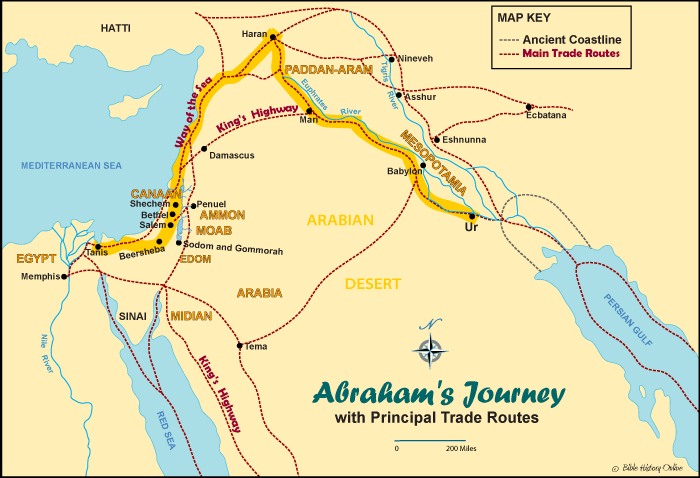
But Avram and his father Terach already left his home in Ur at the end of last week’s Parsha on the way to Canaan.
וְאֵ֙לֶּה֙ תּוֹלְדֹ֣ת תֶּ֔רַח תֶּ֚רַח הוֹלִ֣יד אֶת־אַבְרָ֔ם אֶת־נָח֖וֹר וְאֶת־הָרָ֑ן וְהָרָ֖ן הוֹלִ֥יד אֶת־לֽוֹט׃ וַיָּ֣מׇת הָרָ֔ן עַל־פְּנֵ֖י תֶּ֣רַח אָבִ֑יו בְּאֶ֥רֶץ מוֹלַדְתּ֖וֹ בְּא֥וּר כַּשְׂדִּֽים... וַיִּקַּ֨ח תֶּ֜רַח אֶת־אַבְרָ֣ם בְּנ֗וֹ וְאֶת־ל֤וֹט בֶּן־הָרָן֙ בֶּן־בְּנ֔וֹ וְאֵת֙ שָׂרַ֣י כַּלָּת֔וֹ אֵ֖שֶׁת אַבְרָ֣ם בְּנ֑וֹ וַיֵּצְא֨וּ אִתָּ֜ם מֵא֣וּר כַּשְׂדִּ֗ים לָלֶ֙כֶת֙ אַ֣רְצָה כְּנַ֔עַן וַיָּבֹ֥אוּ עַד־חָרָ֖ן וַיֵּ֥שְׁבוּ שָֽׁם׃ וַיִּהְי֣וּ יְמֵי־תֶ֔רַח חָמֵ֥שׁ שָׁנִ֖ים וּמָאתַ֣יִם שָׁנָ֑ה וַיָּ֥מׇת תֶּ֖רַח בְּחָרָֽן׃ {פ}
Now this is the line of Terah: Terah begot Abram, Nahor, and Haran; and Haran begot Lot. Haran died in the lifetime of his father Terah, in his native land, Ur of the Chaldeans... Terah took his son Abram, his grandson Lot the son of Haran, and his daughter-in-law Sarai, the wife of his son Abram, and they set out together from Ur of the Chaldeans for the land of Canaan; but when they had come as far as Haran, they settled there. The days of Terah came to 205 years; and Terah died in Haran.
Maimonides explains the background to Avram's flight from Ur to Harran with his father Terach.
בִימֵי אֱנוֹשׁ טָעוּ בְּנֵי הָאָדָם טָעוּת גָּדוֹל וְנִבְעֲרָה עֲצַת חַכְמֵי אוֹתוֹ הַדּוֹר וֶאֱנוֹשׁ עַצְמוֹ מִן הַטּוֹעִים הָיָה. וְזוֹ הָיְתָה טָעוּתָם. אָמְרוּ הוֹאִיל וְהָאֱלֹהִים בָּרָא כּוֹכָבִים אֵלּוּ וְגַלְגַּלִּים לְהַנְהִיג אֶת הָעוֹלָם וּנְתָנָם בַּמָּרוֹם וְחָלַק לָהֶם כָּבוֹד וְהֵם שַׁמָּשִׁים הַמְשַׁמְּשִׁים לְפָנָיו רְאוּיִין הֵם לְשַׁבְּחָם וּלְפָאֲרָם וְלַחֲלֹק לָהֶם כָּבוֹד. וְזֶהוּ רְצוֹן הָאֵל בָּרוּךְ הוּא לְגַדֵּל וּלְכַבֵּד מִי שֶׁגִּדְּלוֹ וְכִבְּדוֹ...
וְאַחַר שֶׁאָרְכוּ הַיָּמִים עָמְדוּ בִּבְנֵי הָאָדָם נְבִיאֵי שֶׁקֶר וְאָמְרוּ שֶׁהָאֵל צִוָּה וְאָמַר לָהֶם עִבְדוּ כּוֹכָב פְּלוֹנִי אוֹ כָּל הַכּוֹכָבִים וְהַקְרִיבוּ לוֹ וְנַסְּכוּ לוֹ כָּךְ וְכָךְ וּבְנוּ לוֹ הֵיכָל וַעֲשׂוּ צוּרָתוֹ כְּדֵי לְהִשְׁתַּחֲווֹת לוֹ כָּל הָעָם הַנָּשִׁים וְהַקְּטַנִּים וּשְׁאָר עַמֵּי הָאָרֶץ...
וְעַל דֶּרֶךְ זֶה הָיָה הָעוֹלָם הוֹלֵךְ וּמִתְגַּלְגֵּל עַד שֶׁנּוֹלַד עַמּוּדוֹ שֶׁל עוֹלָם וְהוּא אַבְרָהָם אָבִינוּ: כֵּיוָן שֶׁנִּגְמַל אֵיתָן זֶה הִתְחִיל לְשׁוֹטֵט בְּדַעְתּוֹ וְהוּא קָטָן וְהִתְחִיל לַחֲשֹׁב בַּיּוֹם וּבַלַּיְלָה וְהָיָה תָּמֵהַּ הֵיאַךְ אֶפְשָׁר שֶׁיִּהְיֶה הַגַּלְגַּל הַזֶּה נוֹהֵג תָּמִיד וְלֹא יִהְיֶה לוֹ מַנְהִיג וּמִי יְסַבֵּב אוֹתוֹ. כִּי אִי אֶפְשָׁר שֶׁיְּסַבֵּב אֶת עַצְמוֹ. וְלֹא הָיָה לוֹ מְלַמֵּד וְלֹא מוֹדִיעַ דָּבָר אֶלָּא מֻשְׁקָע בְּאוּר כַּשְׂדִּים בֵּין עוֹבְדֵי כּוֹכָבִים הַטִּפְּשִׁים וְאָבִיו וְאִמּוֹ וְכָל הָעָם עוֹבְדֵי כּוֹכָבִים וְהוּא עוֹבֵד עִמָּהֶם וְלִבּוֹ מְשׁוֹטֵט וּמֵבִין עַד שֶׁהִשִּׂיג דֶּרֶךְ הָאֱמֶת וְהֵבִין קַו הַצֶּדֶק מִתְּבוּנָתוֹ הַנְּכוֹנָה. וְיָדַע שֶׁיֵּשׁ שָׁם אֱלוֹהַּ אֶחָד וְהוּא מַנְהִיג הַגַּלְגַּל וְהוּא בָּרָא הַכּל וְאֵין בְּכָל הַנִּמְצָא אֱלוֹהַּ חוּץ מִמֶּנּוּ. וְיָדַע שֶׁכָּל הָעוֹלָם טוֹעִים וְדָבָר שֶׁגָּרַם לָהֶם לִטְעוֹת זֶה שֶׁעוֹבְדִים אֶת הַכּוֹכָבִים וְאֶת הַצּוּרוֹת עַד שֶׁאָבַד הָאֱמֶת מִדַּעְתָּם. וּבֶן אַרְבָּעִים שָׁנָה הִכִּיר אַבְרָהָם אֶת בּוֹרְאוֹ. כֵּיוָן שֶׁהִכִּיר וְיָדַע הִתְחִיל לְהָשִׁיב תְּשׁוּבוֹת עַל בְּנֵי אוּר כַּשְׂדִּים וְלַעֲרֹךְ דִּין עִמָּהֶם וְלוֹמַר שֶׁאֵין זוֹ דֶּרֶךְ הָאֱמֶת שֶׁאַתֶּם הוֹלְכִים בָּהּ וְשִׁבֵּר הַצְּלָמִים וְהִתְחִיל לְהוֹדִיעַ לָעָם שֶׁאֵין רָאוּי לַעֲבֹד אֶלָּא לֶאֱלוֹהַּ הָעוֹלָם וְלוֹ רָאוּי לְהִשְׁתַּחֲווֹת וּלְהַקְרִיב וּלְנַסֵּךְ כְּדֵי שֶׁיַּכִּירוּהוּ כָּל הַבְּרוּאִים הַבָּאִים. וְרָאוּי לְאַבֵּד וּלְשַׁבֵּר כָּל הַצּוּרוֹת כְּדֵי שֶׁלֹּא יִטְעוּ בָּהֶן כָּל הָעָם כְּמוֹ אֵלּוּ שֶׁהֵם מְדַמִּים שֶׁאֵין שָׁם אֱלוֹהַּ אֶלָּא אֵלּוּ. כֵּיוָן שֶׁגָּבַר עֲלֵיהֶם בִּרְאָיוֹתָיו בִּקֵּשׁ הַמֶּלֶךְ לְהָרְגוֹ וְנַעֲשָׂה לוֹ נֵס וְיָצָא לְחָרָן. וְהִתְחִיל לַעֲמֹד וְלִקְרֹא בְּקוֹל גָּדוֹל לְכָל הָעוֹלָם וּלְהוֹדִיעָם שֶׁיֵּשׁ שָׁם אֱלוֹהַּ אֶחָד לְכָל הָעוֹלָם וְלוֹ רָאוּי לַעֲבֹד. וְהָיָה מְהַלֵּךְ וְקוֹרֵא וּמְקַבֵּץ הָעָם מֵעִיר לְעִיר וּמִמַּמְלָכָה לְמַמְלָכָה עַד שֶׁהִגִּיעַ לְאֶרֶץ כְּנַעַן וְהוּא קוֹרֵא שֶׁנֶּאֱמַר (בראשית כא לג) "וַיִּקְרָא שָׁם בְּשֵׁם ה' אֵל עוֹלָם"...
During the times of Enosh, mankind made a great mistake, and the wise men of that generation gave thoughtless counsel. Enosh himself was one of those who erred.
Their mistake was as follows: They said God created stars and spheres with which to control the world. He placed them on high and treated them with honor, making them servants who minister before Him. Accordingly, it is fitting to praise and glorify them and to treat them with honor. [They perceived] this to be the will of God, blessed be He, that they magnify and honor those whom He magnified and honored, just as a king desires that the servants who stand before him be honored...
After many years passed, there arose people - false prophets - who told [their nations] that God had commanded them to say: Serve this star - or all the stars - sacrifice to it, offer libations to it, build a temple for it and make an image of it so that all people - including the women, the children, and the common people - could bow to it.
The world continued in this fashion until the pillar of the world - the Patriarch Abraham - was born. After this mighty man was weaned, he began to explore and think. Though he was a child, he began to think [incessantly] throughout the day and night, wondering: How is it possible for the sphere to continue to revolve without having anyone controlling it? Who is causing it to revolve? Surely, it does not cause itself to revolve.
He had no teacher, nor was there anyone to inform him. Rather, he was mired in Ur Kasdim among the foolish idolaters. His father, mother, and all the people [around him] were idol worshipers, and he would worship with them. [However,] his heart was exploring and [gaining] understanding.
Ultimately, he appreciated the way of truth and understood the path of righteousness through his accurate comprehension. He realized that there was one God who controlled the sphere, that He created everything, and that there is no other God among all the other entities. He knew that the entire world was making a mistake. What caused them to err was their service of the stars and images, which made them lose awareness of the truth.
Abraham was forty years old when he became aware of his Creator. When he recognized and knew Him, he began to formulate replies to the inhabitants of Ur Kasdim and debate with them, telling them that they were not following a proper path.
He broke their idols and began to teach the people that it is fitting to serve only the God of the world. To Him [alone] is it fitting to bow down, sacrifice, and offer libations, so that the people of future [generations] would recognize Him. [Conversely,] it is fitting to destroy and break all the images, lest all the people err concerning them, like those people who thought that there are no other gods besides these [images].
When he overcame them through the strength of his arguments, the king desired to kill him. He was [saved through] a miracle and left for Charan. [There,] he began to call in a loud voice to all people and inform them that there is one God in the entire world and it is proper to serve Him. He would go out and call to the people, gathering them in city after city and country after country, until he came to the land of Canaan - proclaiming [God's existence the entire time] - as [Genesis 21:33] states: "And He called there in the name of the Lord, the eternal God."
And when Abraham was forty years old etc. There is an Agadah (folktale) that he was three years old, as it is said: 'Because that Abraham hearkened unto My voice' (Gen. 26.5.). Hebrew for "Because" is 'EKB, which in numerals represent 172. Thus God says: 'EKB, or 172 years, that Abraham hearkened unto My voice. Abraham lived 175 years; deducting the three years before he recognized God, leaves 172.
ובן ארבעים שנה הכיר אברהם את בוראו. כתב הראב''ד א''א יש אגדה וכו' מנין עק''ב עכ''ל. ואגדה זו היא ספ''ג דנדרים [ל''ב.] והגהות כתבו בשם הרמ''ך שאפשר לקיים זה וזה דבן שלש שנים היה כשהתחיל לחשוב ולשוטט במחשבתו להכיר בוראו אבל כשהיה בן ארבעים השלים להכירו. ורבינו כתב העיקר שהוא גמר ההיכרא דהיינו כשהיה בן ארבעים. וצ''ל שהיה גורס ר' יוחנן ורבי חנינא דאמרי תרוייהו בן ארבעים שנה הכיר אברהם את בוראו ולא בן מ''ח כמו שהוא בספרים:
According to Seforno, Terach was the first "Zionist".
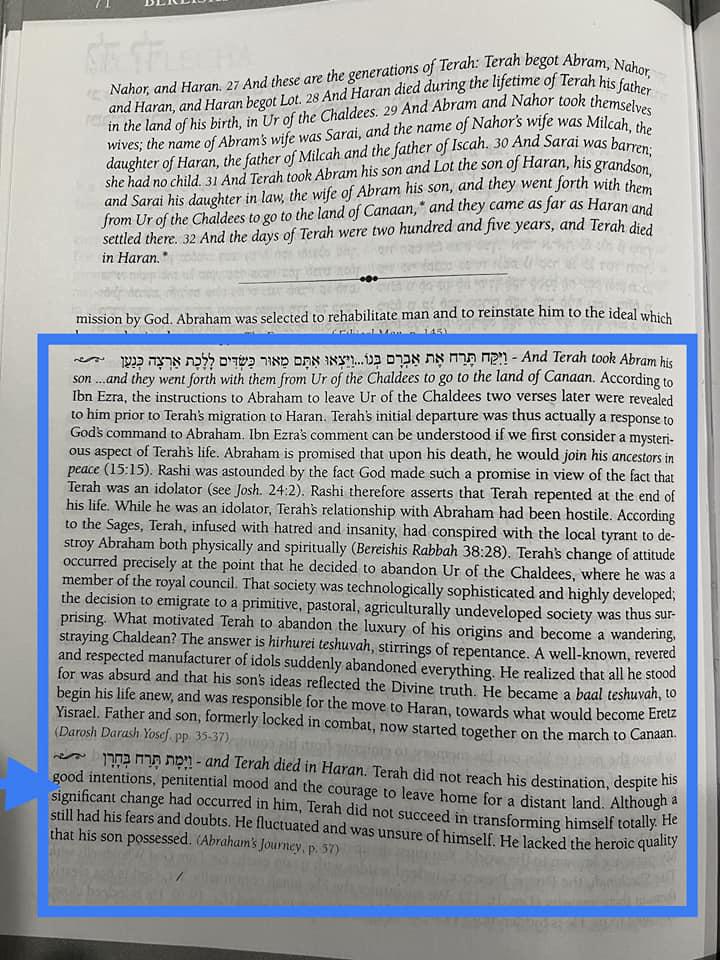
But why didn't Terach continue to Canaan like his son Avram? Rabbi Yosef Dov Soloveitchik offers an insightful explanation of Terach's mindset.
This can be illustrated by a famous scene from the film, The Matrix.
Terach almost followed his son but ultimately took the blue pill. He couldn’t stay in Wonderland and see you how deep the rabbit-hole goes.