


One midrash to do with Shavuot is consistently cited in Jewish education, and has led to a multitude of floral Shavuot crafts. But where does it come from? Join me in a hunt through the sources!
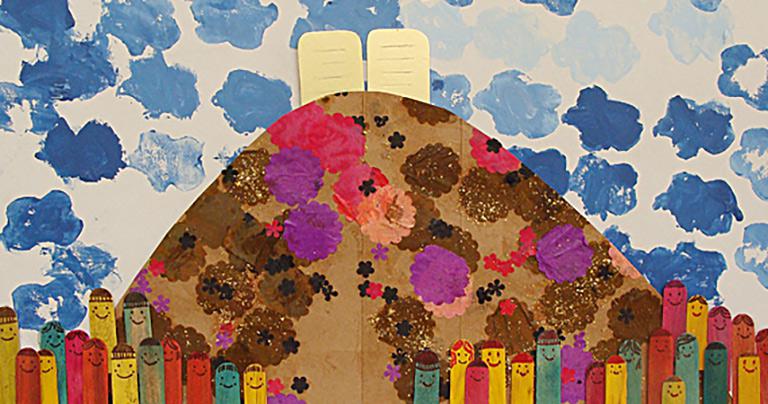
image credit: CreativeJewishMom.com via PJ Library
The foot of Mount Sinai, according to the ancient Midrash, became beautifully covered with flowers prior to the giving of the Torah on its summit. Create decorative flowers with your children in time for Shavuot.
https://pjlibrary.org/beyond-books/pjblog/may-2013/kid-friendly-mt-sinai-crafts-for-shavuot
Cited not only for children . . .
Sivan, which can be translated as “season” or “time” in Akkadian (an ancient semitic pre-Aramaic language), can also mean “muddy”–speaking to the dirt-based realities of the agricultural cycles that our ancestors danced in. In the wheel of the year, Nisan (the month of Passover), marks the season of our birth/rebirth/liberation, Iyar is a month of healing and wandering and preparing for revelation, and then Sivan brings us into the blossom, blush and crush of late spring, what is often thought of as “wedding season.” Thankfully, we can liberate ourselves from that narrow concept and experience and embody this month as a time of opening up like flowers, falling in love like bees, and tasting what ripens thanks to the collaboration between earth and sky, rain and sunlight, human hands and Divine forces. This month, we harvest and make offerings of our first gleanings . . .
According to the midrash, Mt. Sinai burst into blossom in anticipation of the giving of the Torah. I love this a response – flowering as a language of excitement, blossoms opening as an act of trust and faith. And just like a flower is the product of the collaboration of light and seed, and fruit is born from the bees’ love affair with blossoms, Torah is the fruiting body of this cosmic dance between us and the Divine, earth and sky. Many wise ones think of this as the moment we receive collective purpose and identity as a Jewish people, the Torah defining who we are and what we are committed to. For thousands of years Torah has meant many things:
Rav Google

Moritz Daniel Oppenheim (German, 1800–1882), Shavuot (Pentecost) (Das Wochen- oder Pfingst-Fest), 1880. Oil on canvas. 27 15/16 × 23 7/8 in. (71 × 60.7 cm). The Jewish Museum, New York. Gift of the Oscar and Regina Gruss Charitable and Educational Foundation, Inc., 1999–85.
https://stories.thejewishmuseum.org/shavuot-revelation-at-mount-sinai-a-mystical-wedding-greenery-and-cheesecake-1620a8e63ec6
https://www.chabad.org/library/article_cdo/aid/2159/jewish/7-Classic-Reasons-for-Shavuot-Flowers-and-Greenery.htm
(ג) הַקְּרוֹבִים מְבִיאִים הַתְּאֵנִים וְהָעֲנָבִים, וְהָרְחוֹקִים מְבִיאִים גְּרוֹגָרוֹת וְצִמּוּקִים. וְהַשּׁוֹר הוֹלֵךְ לִפְנֵיהֶם, וְקַרְנָיו מְצֻפּוֹת זָהָב, וַעֲטֶרֶת שֶׁל זַיִת בְּרֹאשׁוֹ. הֶחָלִיל מַכֶּה לִפְנֵיהֶם, עַד שֶׁמַּגִּיעִים קָרוֹב לִירוּשָׁלָיִם. הִגִּיעוּ קָרוֹב לִירוּשָׁלַיִם, שָׁלְחוּ לִפְנֵיהֶם, וְעִטְּרוּ אֶת בִּכּוּרֵיהֶם. הַפַּחוֹת, הַסְּגָנִים וְהַגִּזְבָּרִים יוֹצְאִים לִקְרָאתָם. לְפִי כְבוֹד הַנִּכְנָסִים הָיוּ יוֹצְאִים. וְכָל בַּעֲלֵי אֻמָּנִיּוֹת שֶׁבִּירוּשָׁלַיִם עוֹמְדִים לִפְנֵיהֶם וְשׁוֹאֲלִין בִּשְׁלוֹמָם, אַחֵינוּ אַנְשֵׁי הַמָּקוֹם פְּלוֹנִי, בָּאתֶם לְשָׁלוֹם:
(3) Those who lived near [Jerusalem] would bring fresh figs and grapes, while those who lived far away would bring dried figs and raisins. An ox would go in front of them, his horns bedecked with gold and with an olive-crown on its head. The flute would play before them until they would draw close to Jerusalem. When they drew close to Jerusalem they would send messengers in advance, and they would adorn their bikkurim. The governors and chiefs and treasurers [of the Temple] would go out to greet them, and according to the rank of the entrants they would go forth. All the skilled artisans of Jerusalem would stand up before them and greet them saying, “Our brothers, men of such and such a place, we welcome you in peace.”
אסור להתענות במוצאי חג השבועות: הגה ... ונוהגין לשטוח עשבים בשבועות בבית הכנסת והבתים זכר לשמחת מתן תורה ונוהגין בכל מקום לאכול מאכלי חלב ביום ראשון של שבועות ...
It is prohibited to fast immediately after the holiday of Shavuot. Ramah: ... We have the custom to spread out plants on Shavuot in the synagogue and in houses, as a memory for the happiness of the receiving of the Torah. We have a custom everywhere to eat dairy food on the first day of Shavuot. ....
{י} זכר לשמחת מתן תורה - שהיו שם עשבים סביב הר סיני כדכתיב הצאן והבקר אל ירעו וגו'.
In remembrance of the joy of receiving the Torah: for there were grasses around Mount Sinai, as it says "The flocks and cattle shall not graze..."
To the Library!
(40) THE REVELATION ON MOUNT SINAI
(41) From the first day of the third month, the day on which Israel arrived at Mount Sinai, a heavy cloud rested upon them, and every one except Moses was forbidden to ascend the mountain, yea, they durst not even stay near it, lest God smite those who pushed forward, with hail or fiery arrows. The day of the revelation announced itself as an ominous day even in the morning, for diverse rumblings sounded from Mount Sinai. Flashes of lightning, accompanied by an ever swelling peal of horns, moved the people with mighty fear and trembling. God bent the heavens, moved the earth, and shook the bounds of the world, so that the depths trembled, and the heavens grew frightened. His splendor passed through the four portals of fire, earthquake, storm and hail. The kings of the earth trembled in their palaces, and they all came to the villain Balaam, and asked him if God intended the same fate for them as for the generation of the flood. But Balaam said to them: "O ye fools! The Holy One, blessed be He, has long since promised Noah never again to punish the world with a flood." The kings of the heathen, however, were not quieted, and furthermore said: "God has indeed promised never again to bring a flood upon the world, but perhaps He now means to destroy it by means of fire." Balaam said: "Nay, God will not destroy the world either through fire or through water. The commotion throughout nature was caused through this only, that He is not about to bestow the Torah upon His people. 'The Eternal will give strength unto His people.'" At this all the kings shouted, "May the Eternal bless His people with peace," and each one, quieted in spirit, went to his house.
Just as the inhabitants of the earth were alarmed at the revelation, and believed the end of all time had arrived, so too did the earth. She thought the resurrection of the dead was about to take place, and she would have to account for the blood of the slain that she had absorbed, and for the bodies of the murdered whom she covered. The earth was not calmed until she heard the first words of the Decalogue.
Although phenomena were perceptible on Mount Sinai in the morning, still God did not reveal Himself to the people until noon. For owing to the brevity of the summer nights, and the pleasantness of the morning sleep in summer, the people were still asleep when God had descended upon Mount Sinai. Moses betook himself to the encampment and awakened them with these words: "Arise from your sleep, the bridegroom is at hand, and is waiting to lead his bride under the marriage-canopy." Moses, at the head of the procession, hereupon brought the nation to its bridegroom, God, to Sinai, himself going up the mountain. He said to God: "Announce Thy words, Thy children are ready to obey them." These words of Moses rang out near and far, for on the occasion, his voice, when he repeated the words of God to the people, had as much power as the Divine voice that he heard.
The heavens opened and Mount Sinai, freed from the earth, rose into the air, so that its summit towered into the heavens, while a thick cloud covered the sides of it, and touched the feet of the Divine Throne. Accompanying God on one side, appeared twenty-two thousand angels with crowns for the Levites, the only tribe that remained true to God while the rest worshipped the Golden Calf. On the second side were sixty myriads, three thousand five hundred and fifty angels, each bearing a crown of fire for each individual Israelite. Double this number of angels was on the third side, whereas on the fourth side they were simply innumerable. For God did not appear from one direction, but from all four simultaneously, which, however, did not prevent His glory from filling the heaven as well as all the earth. In spite of these innumerable hosts of angels there was no crowding on Mount Sinai, no mob, there was room for all the angels that had appeared in honor of Israel and the Torah. They had, however, at the same time received the order to destroy Israel in case they intended to reject the Torah.
THE FIRST COMMANDMENT
In order to convince Israel of the unity and uniqueness of God, He bade all nature stand still, that all might see that there is nothing beside Him. When God bestowed the Torah, no bird sang, no ox lowed, the Ofannim did not fly, the Seraphim uttered not their "Holy, holy, holy," the sea did not roar, no creature uttered a sound-all listened in breathless silence to the words announced by an echoless voice, "I am the Lord you God."
These words as well as the others, made know by God on Mount Sinai, were not heard by Israel alone, but by the inhabitants of all the earth. The Divine voice divided itself into the seventy tongues of men, so that all might understand it; but whereas Israel could listen to the voice without suffering harm, the souls of the heathens almost fled from them when they heard it. When the Divine voice sounded, all the dead in Sheol were revived, and betook themselves to Sinai; for the revelation took place in the presence of the living as well as of the dead, yea, even the souls of those who were not yet born were present. Every prophet, every sage, received at Sinai his share of the revelation, which in the course of history was announced by them to mankind. All heard indeed the same words, but the same voice, corresponding to the individuality of each, was God's way of speaking with them. And as the same voice sounded differently to each one, so did the Divine vision appear differently to each, wherefore God warned them not to ascribe the various forms to various beings, saying: "Do not believe that because you have seen Me in various forms, there are various gods, I am the same that appeared to you at the Red Sea as a God of war, and at Sinai as a teacher."
Philip Goodman in The Shavuot Anthology (JPS, 1974),
"Roses were the most favorite among the flowers used on Shavuot. The verse 'And the decree (dat) was proclaimed in Shushan' (Esther 8:14) was interpreted to mean that the Law was given with a rose (shoshan)." (Goodman, 87).
Goodman doesn't cite this midrash. Is it his?!
(יד) הָרָצִ֞ים רֹכְבֵ֤י הָרֶ֙כֶשׁ֙ הָֽאֲחַשְׁתְּרָנִ֔ים יָ֥צְא֛וּ מְבֹהָלִ֥ים וּדְחוּפִ֖ים בִּדְבַ֣ר הַמֶּ֑לֶךְ וְהַדָּ֥ת נִתְּנָ֖ה בְּשׁוּשַׁ֥ן הַבִּירָֽה׃ {ס}
(14) The couriers, mounted on royal steeds, went out in urgent haste at the king’s command; and the decree was proclaimed in the fortress Shushan.
ואין לי אלא מצוה שקיבלו עליהם מהר סיני מצות העתידות להתחדש כגון מקרא מגילה מנין ת"ל (אסתר ט, כז) קימו וקבלו קיימו מה שקבלו כבר
And I have derived only that the mitzvot that the Jewish people accepted upon themselves at Mount Sinai were included in the oath. From where is it derived that mitzvot that were to be initiated in the future, for example, the reading of the Megilla, the Scroll of Esther, on Purim, were also included? The verse states: “The Jews ordained and took upon themselves…that they would keep these two days” (Esther 9:27), which is homiletically interpreted to mean: They ordained, in the generation of Esther, mitzvot that they had already accepted upon themselves by oath in the plains of Moab.
(כז) קִיְּמ֣וּ (וקבל) [וְקִבְּל֣וּ] הַיְּהוּדִים֩ ׀ עֲלֵיהֶ֨ם ׀ וְעַל־זַרְעָ֜ם וְעַ֨ל כׇּל־הַנִּלְוִ֤ים עֲלֵיהֶם֙ וְלֹ֣א יַעֲב֔וֹר לִהְי֣וֹת עֹשִׂ֗ים אֵ֣ת שְׁנֵ֤י הַיָּמִים֙ הָאֵ֔לֶּה כִּכְתָבָ֖ם וְכִזְמַנָּ֑ם בְּכׇל־שָׁנָ֖ה וְשָׁנָֽה׃
(27) the Jews undertook and irrevocably obligated themselves and their descendants, and all who might join them, to observe these two days in the manner prescribed and at the proper time each year.
דכתיב (שמות יט, יז) ויתיצבו בתחתית ההר ואמר רב דימי בר חמא מלמד שכפה הקב"ה הר כגיגית על ישראל ואמר להם אם אתם מקבלין את התורה מוטב ואם לאו שם תהא קבורתכם מיד אומר להם הקב"ה הראשונות ישמיעונו שנא' (ישעיהו מג, ט) וראשונות ישמיענו שבע מצות שקיבלתם היכן קיימתם ומנלן דלא קיימום דתני רב יוסף (חבקוק ג, ו) עמד וימודד ארץ ראה ויתר גוים מאי ראה ראה ז' מצות שקבלו עליהן בני נח ולא קיימום כיון שלא קיימום עמד והתירן להן איתגורי איתגור א"כ מצינו חוטא נשכר אמר מר בריה דרבינא לומר שאף על פי שמקיימין אותן אין מקבלין עליהם שכר ולא והתניא היה רבי מאיר אומר מנין שאפילו עובד כוכבים ועוסק בתורה שהוא ככהן גדול תלמוד לומר (ויקרא יח, ה) אשר יעשה אותם האדם וחי בהם כהנים לוים וישראלים לא נאמר אלא האדם הא למדת שאפילו עובד כוכבים ועוסק בתורה הרי הוא ככהן גדול אלא לומר לך שאין מקבלין עליהם שכר כמצווה ועושה אלא כמי שאינו מצווה ועושה דאמר ר' חנינא גדול המצווה ועושה יותר משאינו מצווה ועושה אלא כך אומרים העובדי כוכבים לפני הקב"ה רבש"ע ישראל שקיבלוה היכן קיימוה אמר להם הקב"ה אני מעיד בהם שקיימו את התורה כולה אומרים לפניו רבש"ע כלום יש אב שמעיד על בנו דכתיב (שמות ד, כב) בני בכורי ישראל אמר להם הקב"ה שמים וארץ יעידו בהם שקיימו את התורה כולה אומרים לפניו רבש"ע שמים וארץ נוגעין בעדותן שנאמ' (ירמיהו לג, כה) אם לא בריתי יומם ולילה חוקות שמים וארץ לא שמתי (דאר"ש) [ואר"ש] בן לקיש מאי דכתיב (בראשית א, לא) ויהי ערב ויהי בקר יום הששי מלמד שהתנה הקב"ה עם מעשה בראשית ואמר אם ישראל מקבלין את תורתי מוטב ואם לאו אני אחזיר אתכם לתוהו ובוהו והיינו דאמר חזקיה מאי דכתיב (תהלים עו, ט) משמים השמעת דין ארץ יראה ושקטה אם יראה למה שקטה ואם שקטה למה יראה אלא בתחלה יראה ולבסוף שקטה אמר להם הקב"ה מכם יבאו ויעידו בהן בישראל שקיימו את התורה כולה יבא נמרוד ויעיד באברהם שלא עבד עבודת כוכבים יבא לבן ויעיד ביעקב שלא נחשד על הגזל תבא אשת פוטיפרע ותעיד ביוסף שלא נחשד על העבירה יבא נבוכד נצר ויעיד בחנניה מישאל ועזריה שלא השתחוו לצלם יבא דריוש ויעיד בדניאל שלא ביטל את התפלה יבא בלדד השוחי וצופר הנעמתי ואליפז התימני ואליהו בן ברכאל הבוזי ויעידו בהם בישראל שקיימו את כל התורה כולה שנאמר (ישעיהו מג, ט) יתנו עידיהם ויצדקו
The Gemara provides the background for this claim: As it is written: “And they stood at the nether part of the mount” (Exodus 19:17), and Rav Dimi bar Ḥama says: The verse teaches that the Holy One, Blessed be He, overturned the mountain, i.e., Mount Sinai, above the Jews like a basin, and He said to them: If you accept the Torah, excellent, and if not, there, under the mountain, will be your burial. The nations of the world will claim that they too could have been coerced to accept the Torah. Immediately, the Holy One, Blessed be He, says to them: The first mitzvot will let us hear the truth, as it is stated in the continuation of the same verse under discussion: “And announce to us the first things” (Isaiah 43:9). With regard to the seven Noahide mitzvot that preceded the giving of the Torah that even you accepted, where is the proof that you fulfilled them? The Gemara asks: And from where do we derive that they did not fulfill them? As Rav Yosef teaches in explanation of the verse: “He stands, and shakes the earth, He sees, and makes the nations tremble [vayater]” (Habakkuk 3:6): What did God see? He saw the seven mitzvot that the descendants of Noah accepted upon themselves, and He saw that they did not fulfill them. Since they did not fulfill them, He arose and nullified for them [vehitiran] the command to heed these mitzvot. The Gemara asks: Do they gain from not obeying, as they are now released from the obligation to fulfill these mitzvot? If so, we find that a sinner profits from his transgression. Mar, son of Ravina, said: This serves to say that even if they fulfill the seven Noahide mitzvot they do not receive a reward for their fulfilment. The Gemara asks: And are they not rewarded for fulfilling those mitzvot? But isn’t it taught in a baraita that Rabbi Meir would say: From where is it derived that even a gentile who engages in Torah study is considered like a High Priest? The verse states: “You shall therefore keep My statutes and My ordinances, which if a person do, and shall live by them” (Leviticus 18:5). It is not stated: Priests, Levites, and Israelites, but rather the general term “person.” From here you learn that even a gentile who engages in the study of Torah is like a High Priest. This demonstrates that gentiles are rewarded for fulfilling mitzvot, despite the fact that they are not commanded to do so. Rather, the verse serves to tell you that they do not receive as great a reward for their fulfillment as one who is commanded and performs a mitzva. Rather, they receive a lesser reward, like that of one who is not commanded and still performs a mitzva. As Rabbi Ḥanina says: Greater is one who is commanded to do a mitzva and performs it than one who is not commanded and performs it. The Gemara returns to the discussion between God and the nations of the world, whose claims are rejected with the rebuttal that they did not receive the Torah because they did not fulfill the seven Noahide mitzvot that were incumbent upon them. Rather, this is what the gentiles say before the Holy One, Blessed be He: Master of the Universe, as for the Jewish people who accepted the Torah, where is the evidence that they fulfilled its mitzvot? The Holy One, Blessed be He, says to them in response: I will testify about the Jewish people that they fulfilled the Torah in its entirety. The nations say before Him: Master of the Universe, is there a father who can testify about his son? As it is written: “Israel is My son, My firstborn” (Exodus 4:22). Since God is considered the Father of the Jewish people, He is disqualified from testifying on their behalf. The Holy One, Blessed be He, said to them: Heaven and earth will testify about them that they fulfilled the Torah in its entirety. The nations say before Him: Master of the Universe, in this matter the testimony of heaven and earth is tainted by a conflict of interest, as it is stated: “If My covenant be not with day and night, I would not have appointed the ordinances of heaven and earth” (Jeremiah 33:25). And concerning this verse, Rabbi Shimon ben Lakish says: What is the meaning of that which is written: “And there was evening and there was morning, the sixth day” (Genesis 1:31)? This teaches that the Holy One, Blessed be He, established a condition with the acts of Creation, and said: If the Jewish people accept My Torah at the revelation at Sinai, all is well, but if they do not accept it, I will return you to the primordial state of chaos and disorder. And this is similar to that which Ḥizkiyya says with regard to a different matter: What is the meaning of that which is written: “You caused sentence to be heard from heaven; the earth feared, and was silent” (Psalms 76:9)? If the earth feared, why was it silent, and if it was silent, why did it fear? One who is afraid does not stay silent, and one who remains silent thereby demonstrates that he is not afraid. Rather, this is the meaning of the verse: At first, when God came to give the Torah to the Jewish people, the earth feared that they might not accept it, and it would be destroyed. This is alluded to by the phrase “You caused sentence to be heard.” But ultimately, when the Jews accepted the Torah, the earth was silent. Consequently, heaven and earth are interested parties and cannot testify about the Jewish people’s commitment to the Torah. Instead, the Holy One, Blessed be He, says to the nations: Let the witnesses come from among you and testify that the Jewish people fulfilled the Torah in its entirety. Let Nimrod come and testify about Abraham that he did not engage in idol worship. Let Laban come and testify about Jacob that he is not suspect with regard to robbery (see Genesis 31:36–42). Let the wife of Potiphar come and testify about Joseph that he is not suspect with regard to the sin of adultery (see Genesis 39:7–12). Let Nebuchadnezzar come and testify about Hananiah, Mishael, and Azariah that they did not prostrate themselves before a graven image. Let Darius come and testify about Daniel that he did not neglect his prayer (see Daniel 6). Let Bildad the Shuhite, and Zophar the Naamathite, and Eliphaz the Temanite, and Elihu, son of Barachel, the Buzite, friends of Job (see Job 2:11 and 32:2) come and testify about the Jewish people that they fulfilled the Torah in its entirety. As it is stated: “All the nations are gathered together…let them bring their witnesses, that they may be justified” (Isaiah 43:9), i.e., the gathered gentiles will submit testimony on behalf of the Jewish people and demonstrate the Jews’ righteousness.
(שמות יט יז) ויתיצבו בתחתית ההר אמר ר׳ אבדימי בר חסא מלמד שכפה הקב״ה עליהם את ההר כגיגית ואמר להם אם אתם מקבלים את התורה מוטב ואם לאו שם תהא קבורתכם. אמר רב אחא בר יעקב מכאן מודעה רבה לאורייתא. אמר רבא אף על פי כן הדור קבלוה בימי אחשורוש. דכתיב (אסתר ט כז) קימו וקבלו היהודים קימו מה שקבלו כבר:
And they stood at the foot of the mountain (Ex. 19, 17.) "We learn from this passage," said R. Dimi b. Chassa. "that the Holy One, praised be He! arched the mountain over them like a tank and said to them: 'If you accept the Torah then it is well, but if not, there shall be your graves.'" R. Acha b. Jacob said: "This is a great protest against [the forcible influence] concerning the acceptance of the Torah." "However," said Raba, "at the time of Ahasuerus (King of Persia) Israel accepted it voluntarily, for it is written (Est. 9, 27.) The Jews confirmed it as a duty, and took upon themselves, i.e., they confirmed (the Torah) what they had taken long ago."
Ask My Colleagues

Back to Shir HaShirim Rabba
It has to be there! (right?)
עַד־שֶׁ֤הַמֶּ֙לֶךְ֙ בִּמְסִבּ֔וֹ נִרְדִּ֖י נָתַ֥ן רֵיחֽוֹ׃
While the king was on his couch,
My nard gave forth its fragrance.
עַד שֶׁהַמֶּלֶךְ בִּמְסִבּוֹ, רַבִּי מֵאִיר וְרַבִּי יְהוּדָה, רַבִּי מֵאִיר אוֹמֵר עַד שֶׁהַמֶּלֶךְ מַלְכֵי הַמְּלָכִים הַקָּדוֹשׁ בָּרוּךְ הוּא בִּמְסִבּוֹ, בָּרָקִיעַ, נָתְנוּ יִשְׂרָאֵל רֵיחַ רָע, וְאָמְרוּ לָעֵגֶל (שמות לב, ד): אֵלֶּה אֱלֹהֶיךָ יִשְׂרָאֵל. אָמַר לֵיהּ רַבִּי יְהוּדָה דַּיֶּךָ מֵאִיר אֵין דּוֹרְשִׁין שִׁיר הַשִּׁירִים לִגְנַאי אֶלָּא לְשֶׁבַח, שֶׁלֹא נִתַּן שִׁיר הַשִּׁירִים אֶלָּא לְשִׁבְחָן שֶׁל יִשְׂרָאֵל, וּמַהוּ עַד שֶׁהַמֶּלֶךְ בִּמְסִבּוֹ, עַד שֶׁהַמֶּלֶךְ מַלְכֵי הַמְּלָכִים הַקָּדוֹשׁ בָּרוּךְ הוּא בִּמְסִבּוֹ, בָּרָקִיעַ, נָתְנוּ יִשְׂרָאֵל רֵיחַ טוֹב לִפְנֵי הַר סִינַי, וְאָמְרוּ (שמות כד, ז): כֹּל אֲשֶׁר דִּבֶּר יהוה נַעֲשֶׂה וְנִשְׁמָע. הִיא דַעְתֵּיהּ דְּרַבִּי מֵאִיר לְמֵימַר סִירַי נָתַן רֵיחוֹ, אֶלָּא מַסֶּכְתָּא עָלְתָה בְּיָדָם מִן הַגּוֹלָה וְשָׁנוּ בָהּ, שֶׁקָּפַץ לָהֶם מַעֲשֵׂה הָעֵגֶל וְהִקְדִּים לָהֶם מַעֲשֵׂה הַמִּשְׁכָּן. רַבִּי אֱלִיעֶזֶר וְרַבִּי עֲקִיבָא וְרַבִּי בֶּרֶכְיָה. רַבִּי אֱלִיעֶזֶר אוֹמֵר, עַד שֶׁהַמֶּלֶךְ בִּמְסִבּוֹ, עַד שֶׁמֶּלֶךְ מַלְכֵי הַמְּלָכִים הַקָּדוֹשׁ בָּרוּךְ הוּא בִּמְסִבּוֹ, בָּרָקִיעַ, כְּבָר הַר סִינַי מִתַּמֵּר בָּאוּר, שֶׁנֶּאֱמַר (דברים ד, יא): וְהָהָר בֹּעֵר בָּאֵשׁ. רַבִּי עֲקִיבָא אוֹמֵר עַד שֶׁמֶּלֶךְ מַלְכֵי הַמְּלָכִים הַקָּדוֹשׁ בָּרוּךְ הוּא בִּמְסִבּוֹ, בָּרָקִיעַ, כְּבָר (שמות כד, טז): וַיִּשְׁכֹּן כְּבוֹד יהוה עַל הַר סִינַי. רַבִּי בֶּרֶכְיָה אוֹמֵר, עַד שֶׁמּשֶׁה בִּמְסִבּוֹ, בָּרָקִיעַ, שֶׁנִּקְרָא מֶלֶךְ, שֶׁנֶּאֱמַר (דברים לג, ה): וַיְהִי בִישֻׁרוּן מֶלֶךְ בְּהִתְאַסֵּף רָאשֵׁי עָם, כְּבָר (שמות כ, א): וַיְדַבֵּר אֱלֹהִים אֶת כָּל הַדְּבָרִים הָאֵלֶּה לֵאמֹר. רַבִּי אֱלִיעֶזֶר בֶּן יַעֲקֹב וְרַבָּנָן. רַבִּי אֱלִיעֶזֶר אוֹמֵר, עַד שֶׁמֶּלֶךְ מַלְכֵי הַמְּלָכִים הַקָּדוֹשׁ בָּרוּךְ הוּא בִּמְסִבּוֹ, בָּרָקִיעַ, כְּבָר יָרַד מִיכָאֵל הַשַֹּׂר הַגָּדוֹל מִן הַשָּׁמַיִם וְהִצִּיל אֶת אַבְרָהָם אָבִינוּ מִכִּבְשַׁן הָאֵשׁ. וְרַבָּנָן אָמְרֵי הַקָּדוֹשׁ בָּרוּךְ הוּא יָרַד וְהִצִּילוֹ, שֶׁנֶּאֱמַר (בראשית טו, ז): אֲנִי יהוה אֲשֶׁר הוֹצֵאתִיךָ מֵאוּר כַּשְׂדִּים. וְאֵימָתַי יָרַד מִיכָאֵל, בִּימֵי חֲנַנְיָה מִישָׁאֵל וַעֲזַרְיָה. אָמַר רַבִּי טַבְיוֹמֵי, עַד שֶׁיַּעֲקֹב אָבִינוּ מֵסֵב בְּמִטָּתוֹ, נִצְנְצָה בּוֹ רוּחַ הַקֹּדֶשׁ וְאָמַר לְבָנָיו (בראשית מח, כא): וְהָיָה אֱלֹהִים עִמָּכֶם, אָמַר לָהֶם עָתִיד הוּא לְהַשְׁרוֹת שְׁכִינָתוֹ בֵּינֵיכֶם. אָמַר רַב נַחְמָן כְּתִיב (בראשית מו, א): וַיִּסַּע יִשְׂרָאֵל וְכָל אֲשֶׁר לוֹ וַיָּבֹא בְּאֵרָה שָּׁבַע, לְהֵיכָן הָלַךְ, הָלַךְ לָקֹץ אֲרָזִים שֶׁנָּטַע אַבְרָהָם אָבִינוּ בִּבְאֵר שָׁבַע, שֶׁנֶּאֱמַר (בראשית כא, לג): וַיִּטַּע אֵשֶׁל בִּבְאֵר שָׁבַע. אָמַר רַבִּי לֵוִי, כְּתִיב (שמות כו, כח): וְהַבְּרִיחַ הַתִּיכֹן בְּתוֹךְ הַקְּרָשִׁים, הַבְּרִיחַ שְׁלשִׁים וּשְׁתַּיִם אַמָּה הָיָה, וּמֵהֵיכָן הָיְתָה נִמְצֵאת בְּיָדָם לְשָׁעָה, מְלַמֵּד שֶׁהָיוּ מֻצְנָעִים עִמָּהֶם מִימוֹת יַעֲקֹב אָבִינוּ, הֲדָא הוּא דִכְתִיב (שמות לה, כד): וְכֹל אִישׁ אֲשֶׁר נִמְצָא אִתּוֹ עֲצֵי שִׁטִּים, אֲשֶׁר נִמְצָא עֲצֵי שִׁטִּים, אֵין כְּתִיב כָּאן, אֶלָּא אֲשֶׁר נִמְצָא אִתּוֹ, מִתְּחִלָּה. אָמַר רַבִּי לֵוִי בַּר חִיָּא בְּמַגְדְּלָא דְּצַבָּעַיָּא קְצָצוּם וְהוֹרִידוּם עִמָּם לְמִצְרַיִם, וְלֹא נִמְצָא בָהֶם קֶשֶׁר וּפָקַע אָעִין דְּשִׁטִּים הֲווֹ בְּמַגְדְּלָא וַהֲווֹ נוֹהֲגִים בָּהֶם בְּאִסּוּר מִפְּנֵי קְדֻשַּׁת הָאָרוֹן, אֲתוֹן וּשְׁאֵלוּן לְרַב חֲנַנְיָה חַבְרִין דְּרַבָּנָן, וַאֲמַר לוֹן אַל תְּשַׁנּוּ מִמִּנְהַג אֲבוֹתֵיכֶם.
“While the king was at his feast, my nard released its fragrance” (Song of Songs 1:12).“While the king was at his feast,” Rabbi Meir and Rabbi Yehuda, Rabbi Meir says: While the King of kings was at His feast, in the firmament, Israel released a foul odor and said to the calf: “This is your god, Israel” (Exodus 32:4). Rabbi Yehuda said to him: ‘Enough, Meir, one does not expound Song of Songs disparagingly, but rather, favorably, as Song of Songs was given only in praise of Israel. What is: “While the king was at his feast”? While the King of kings was at His feast, in the firmament, Israel released a fine fragrance before Mount Sinai, and said: “Everything that the Lord has spoken we will perform and we will obey” (Exodus 24:7).According to the opinion of Rabbi Meir, it should have said: My stench released its odor. Rather, a treatise ascended in their hand from the Diaspora, and they taught in its regard that He skipped the incident of the calf for them and the act of the Tabernacle preceded it. Rabbi Eliezer, Rabbi Akiva, and Rabbi Berekhya, Rabbi Eliezer says: “While the king was at his feast,” while the King of kings was at His feast, in the firmament, Mount Sinai was already enveloped in flames, as it is stated: “The mountain was burning with fire” (Deuteronomy 4:11). Rabbi Akiva says: While the King of kings was at His feast, in the firmament, already, “the glory of the Lord rested on Mount Sinai” (Exodus 24:16). Rabbi Berekhya says: While Moses was at his feast in the firmament, as he is called king, as it is stated: “He became king in Yeshurun, when the heads of the people were assembled” (Deuteronomy 33:5), already, “God spoke all these matters saying” (Exodus 20:1). Rabbi Eliezer ben Yaakov and the Rabbis, Rabbi Eliezer says: While the King of kings was at His feast, in the firmament, Mikhael, the great prince, had already descended from the heavens and rescued Abraham our patriarch from the fiery furnace. The Rabbis say: The Holy One blessed be He descended and rescued him, as it is stated: “I am the Lord who took you out of Ur of the Chaldeans” (Genesis 15:7). When did Mikhael descend? It was in the days of Ḥanaya, Mishael, and Azarya. Rabbi Tavyomei said: While Jacob our patriarch was lying [mesev] in his bed, the Divine Spirit gleamed in him, and he said to his sons: “God will be with you” (Genesis 48:21). He said to them: ‘He is destined to rest His Divine Presence in your midst.’ Rav Naḥman said: It is written: “Israel and everything that he had traveled and came to Beersheba” (Genesis 46:1). Where did he go? He went to chop down the cedars that Abraham our patriarch had planted in Beersheba, as it is stated: “He planted a tamarisk in Beersheba” (Genesis 21:33). Rabbi Levi said: It is written: “The central bar inside the planks extending from end to end” (Exodus 26:28). The bar was thirty-two cubits long. From where did they have it in their possession at that moment? It teaches that they were hidden with them from the days of Jacob our patriarch. That is what is written: “And everyone with whom acacia wood was found” (Exodus 35:24); “acacia wood was found,” is not written here, but rather, “with whom…it was found”—from the outset. Rabbi Levi bar Ḥiyya said: They chopped them down in Magdala of the dyers and took them with them down to Egypt. They had no knots and no cracks. There were acacia trees in Magdala and the custom was to prohibit [using] them due to the sanctity of the Ark. They came and asked Rav Ḥananya, colleague of the Rabbis, and he said to them: Do not deviate from the custom of your ancestors.
עד שהמלך במסבו. לשעבר עד שהשם נגלה בסיני ליתן תורה לישראל.
While the King was on his couch: Even before God was revealed on Sinai to give Torah to Israel . . .
כְּשֽׁוֹשַׁנָּה֙ בֵּ֣ין הַחוֹחִ֔ים כֵּ֥ן רַעְיָתִ֖י בֵּ֥ין הַבָּנֽוֹת׃
Like a lily among thorns,
So is my darling among the maidens.
רַבִּי עֲזַרְיָה בְּשֵׁם רַבִּי יְהוּדָה אָמַר רַבִּי סִימוֹן, מָשָׁל לְמֶלֶךְ שֶׁהָיָה לוֹ פַּרְדֵּס וְיָרְדוּ וְנָטְעוּ שׁוּרָה שֶׁל תְּאֵנִים וְשׁוּרָה שֶׁל גְּפָנִים וְשׁוּרָה שֶׁל רִמּוֹנִים וְשׁוּרָה שֶׁל תַּפּוּחִים, וּמְסָרוֹ לְאָרִיס וְהָלַךְ לוֹ. לְאַחַר יָמִים בָּא הַמֶּלֶךְ וְהֵצִיץ בַּפַּרְדֵּס לֵידַע מֶה עָשָׂה, וּמָצָא מָלֵא חוֹחִין וְדַרְדַּרִים, הֵבִיא קַצָּצִים לְקַצְּצוֹ, וְרָאָה בוֹ שׁוֹשַׁנָּה אַחַת שֶׁל וֶרֶד וּנְטָלָהּ וְהֵרִיחַ בָּהּ וְשָׁבַת נַפְשׁוֹ עָלָיו, אָמַר הַמֶּלֶךְ בִּשְׁבִיל שׁוֹשַׁנָּה זוֹ יִנָּצֵל הַפַּרְדֵּס. כָּךְ הָעוֹלָם לֹא נִבְרָא אֶלָּא בִּשְׁבִיל יִשְׂרָאֵל, לְאַחַר עֶשְׂרִים וְשִׁשָּׁה דוֹרוֹת הֵצִיץ הַקָּדוֹשׁ בָּרוּךְ הוּא בְּעוֹלָמוֹ לִרְאוֹת מַה שֶּׁעָשָׂה, וּמְצָאוֹ מַיִם בְּמַיִם, דּוֹר אֱנוֹשׁ נִמְחֶה מִן הַמַּיִם, דּוֹר הַמַּבּוּל נִמְחֶה מִן הַמַּיִם, דּוֹר הַפְלָגָה, בְּמַיִם, הֵבִיא קַצָּצִים לְקַצְּצוֹ, שֶׁנֶּאֱמַר (תהלים כט, י): יהוה לַמַּבּוּל יָשָׁב, וְרָאָה שׁוֹשַׁנָּה שֶׁל וֶרֶד, אֵלּוּ יִשְׂרָאֵל, וּנְטָלָהּ וְהֵרִיחַ בָּהּ, בְּשָׁעָה שֶׁסִּדְּרוּ יִשְׂרָאֵל עֲשֶׂרֶת הַדִּבְּרוֹת, וְשָׁבַת נַפְשׁוֹ עָלָיו, בְּשָׁעָה שֶׁאָמְרוּ יִשְׂרָאֵל (שמות כד, ז): נַעֲשֶׂה וְנִשְׁמָע, אָמַר הַקָּדוֹשׁ בָּרוּךְ הוּא בִּשְׁבִיל שׁוֹשַׁנָּה זוֹ יִנָּצֵל הַפַּרְדֵּס, בִּזְכוּת הַתּוֹרָה וְלוֹמְדֶיהָ, יִנָּצֵל הָעוֹלָם.
Rabbi Azarya [said] in the name of Rabbi Yehuda that Rabbi Simon said: This is analogous to a king who had an orchard, and they descended and planted a row of fig trees, a row of grapevines, a row of pomegranate trees, and a row of apple trees. He entrusted it to a sharecropper and went. Some time later, the king came and peered at the orchard to ascertain what he had done, and he found it filled with thorns and briars. He brought cutters to cut it down, but he saw a rose in it and smelled it, and he was placated. The king said: Because of this rose, the orchard will be saved. So too, the world was created only for Israel. After twenty-six generations passed, the Holy One blessed be He peered at His world to ascertain what it had done, and He saw that it was water in water. The generation of Enosh was obliterated with water. The Generation of the Flood was obliterated with water; the Generation of the Dispersion, in water. He brought cutters to cut it, as it is stated: “The Lord sat enthroned at the Flood” (Psalms 29:10). He saw a rose, this is, Israel; He took it and smelled it when Israel assented to the Ten Commandments, and He was placated. When Israel said: “We will perform and we will heed” (Exodus 24:7), the Holy One blessed be He said: ‘Due to this rose, the orchard will be spared; due to the merit of the Torah and those who engage in its study, the world will be spared.’
וְאָמַר רַבִּי יְהוֹשֻׁעַ בֶּן לֵוִי, מַאי דִּכְתִיב: ״לְחָיָו כַּעֲרוּגַת הַבֹּשֶׂם״ — כׇּל דִּיבּוּר וְדִיבּוּר שֶׁיָּצָא מִפִּי הַקָּדוֹשׁ בָּרוּךְ הוּא נִתְמַלֵּא כָּל הָעוֹלָם כּוּלּוֹ בְּשָׂמִים. וְכֵיוָן שֶׁמִּדִּיבּוּר רִאשׁוֹן נִתְמַלֵּא, דִּיבּוּר שֵׁנִי לְהֵיכָן הָלַךְ? הוֹצִיא הַקָּדוֹשׁ בָּרוּךְ הוּא הָרוּחַ מֵאוֹצְרוֹתָיו וְהָיָה מַעֲבִיר רִאשׁוֹן רִאשׁוֹן, שֶׁנֶּאֱמַר: ״שִׂפְתוֹתָיו שׁוֹשַׁנִּים נוֹטְפוֹת מוֹר עֹבֵר״. (אַל תִּקְרֵי ״שׁוֹשַׁנִּים״, אֶלָּא ״שֶׁשּׁוֹנִים״).
And Rabbi Yehoshua ben Levi said: What is the meaning of that which is written: “His cheeks are as a bed of spices, as banks of sweet herbs, his lips are lilies dripping with flowing myrrh” (Song of Songs 5:13)? It is interpreted homiletically: From each and every utterance that emerged from His cheeks, i.e., the mouth of the Holy One, Blessed be He, the entire world was filled with fragrant spices. And since the world was already filled by the first utterance, where was there room for the spices of the second utterance to go? The Holy One, Blessed be He, brought forth wind from His treasuries and made the spices pass one at a time, leaving room for the consequences of the next utterance. As it is stated: “His lips are lilies [shoshanim] dripping with flowing myrrh.” Each and every utterance resulted in flowing myrrh. Do not read the word in the verse as shoshanim; rather, read it as sheshonim, meaning repeat. Each repeat utterance produced its own fragrance.
A Final Remez (hint) of flowering associated with the Revelation at Mount Sinai:
אָמַר רַבִּי אֶלְעָזָר: בְּשָׁעָה שֶׁהִקְדִּימוּ יִשְׂרָאֵל ״נַעֲשֶׂה״ לְ״נִשְׁמָע״ יָצְתָה בַּת קוֹל וְאָמְרָה לָהֶן: מִי גִּלָּה לְבָנַי רָז זֶה שֶׁמַּלְאֲכֵי הַשָּׁרֵת מִשְׁתַּמְּשִׁין בּוֹ? דִּכְתִיב: ״בָּרְכוּ ה׳ מַלְאָכָיו גִּבֹּרֵי כֹחַ עֹשֵׂי דְבָרוֹ לִשְׁמֹעַ בְּקוֹל דְּבָרוֹ״ — בְּרֵישָׁא ״עֹשֵׂי״, וַהֲדַר ״לִשְׁמֹעַ״. אָמַר רַבִּי חָמָא בְּרַבִּי חֲנִינָא: מַאי דִּכְתִיב ״כְּתַפּוּחַ בַּעֲצֵי הַיַּעַר וְגוֹ׳״ — לָמָּה נִמְשְׁלוּ יִשְׂרָאֵל לְתַפּוּחַ, לוֹמַר לָךְ: מָה תַּפּוּחַ זֶה פִּרְיוֹ קוֹדֶם לְעָלָיו, אַף יִשְׂרָאֵל הִקְדִּימוּ ״נַעֲשֶׂה״ לְ״נִשְׁמָע״.
Rabbi Elazar said: When the Jewish people accorded precedence to the declaration “We will do” over “We will hear,” a Divine Voice emerged and said to them: Who revealed to my children this secret that the ministering angels use? As it is written: “Bless the Lord, you angels of His, you mighty in strength, that fulfill His word, hearkening unto the voice of His word” (Psalms 103:20). At first, the angels fulfill His word, and then afterward they hearken. Rabbi Ḥama, son of Rabbi Ḥanina, said: What is the meaning of that which is written: “As an apple tree among the trees of the wood, so is my beloved among the sons. Under its shadow I delighted to sit and its fruit was sweet to my taste” (Song of Songs 2:3)? Why were the Jewish people likened to an apple tree? It is to tell you that just as this apple tree, its fruit grows before its leaves, so too, the Jewish people accorded precedence to “We will do” over “We will hear.”
Back to the Internet . . .
Responsa in a Moment: Volume 9, Issue No. 5, May 2015 by David Golinkin
The best compendium I've found so far of related midrashim.
II. 8. Prof. Sperber himself refers to Midrash Hadash al Hatorah to Exodus 19:11 (ed. Mann, p. 251; and see now ed. Gila Vachman, Jerusalem, 2013, p. 82). That midrash makes a connection between Exodus 19:11 — to be prepared to receive the torah on the third day — and the third day of creation (Genesis 1:11) on which God created grasses and trees. He suggests that this midrash may have given Jews the idea to decorate their synagogues and homes with grass, flowers and trees on Shavuot, the holiday of Giving the Torah.
III) The original reason
Rabbi Avraham Danzig (Vilna, d. 1820) makes a brief but very important statement about our topic in his classic code of Jewish law:
The G”ra [the Gaon of Vilna] abolished the custom of setting up trees on Shavuot, because it is hok ha’amim [the law of the nations, i.e., Christians] to set up trees on their holiday (Hayyei Adam, Hilkhot Pesah 131:13 and cf. his Hokhmat Adam 89:1).
As it turns out, it appears that the Gaon of Vilna was correct. As Prof. Theodor Gaster writes in his classic book The Festivals of the Jewish Year:
In many parts of Europe… it is customary to deck the churches at Whitsun [=Pentecost, the seventh Sunday after Easter] with wreaths and bunches of flowers; in Catholic districts of Germany, even private dwellings are adorned with green twigs on this occasion. In Italy, rose leaves are scattered from the ceilings of churches during the progress of the services… similarly, in Russia it is (or was) customary to carry flowers and green twigs on Whitsun… All of this appears to be but a Christian transformation of the ancient Roman festival of Rosalia, celebrated in the preceding month. At this festival, it was the practice to adore Venus by decorating her images with roses… (and cf. more recently, Wikipedia, s.v. Pentecost, near note 21)
Of course, one could then object that if we borrowed these Shavuot customs from our Christian neighbors, doesn’t this invalidate them? I would reply that, first of all, many poskim [halakhic authorities], have justified this specific custom despite the objections of the Gaon of Vilna. (See Ben-Ezra, p. 287, note 23; Rabbi Gaguine; Rabbi Zevin; Rabbi Mondshein, p. 293; and Rabbi Sperber p. 119 and note 5.)
But, more generally, I have shown elsewhere that many Jewish laws and customs began as pagan or Christian or Muslim customs and they were Judaized by rabbis and/or the Jewish people. The most famous example is the Pesah Seder, where the rabbis took the Hellenistic symposium and transformed it into the central ritual of Pesah. (See my book Insight Israel, Second Series, Jerusalem, 2006, Chapter 9 and especially pp. 75-76.)
Floral and arboreal decorations on Shavuot may have begun as Christian customs, but over the past 600 years they became Jewish customs, with all of the beautiful explanations given above.
David Golinkin
Jerusalem
3 Sivan 5775
הרב יעקב סופר בספרו "כף החיים" כתב: "יש נוהגים בחג השבועות לפזר שושנים בבית הכנסת, ומשליכין על הספר תורה בהוצאתו מן ההיכל ובחזרתו. גם יש נוהגים ליתן מיני שושנים בעששיות, ותולין אותם בבית הכנסת כו' ויש סמך לזה [במסכת שבת] אמר רבי יהושע בן לוי מהו דכתיב "לחייו כערוגת הבושם" [שיר השירים], כל דיבור ודיבור שיצא מפי הקב"ה נתמלא כל העולם כולו בשמים". (וכן מובא במסכת שבת דף פח/ב)
Rabbi Ya'akov Sofer in his book, Kaf HeChayim (Palm of Life), wrote: “There are those who have the practice on Shavuot to spread flowers [shoshanim] in the synagogue, and to drape the sefer Torah when it is taken out from the ark and upon its return. There are also those who have the practice to adorn lamps with all sorts of flowers, and to hang them from the synagogue, etc. And this is based on (Masechet Shabbat), ‘Said Rabbi Yehoshua Ben Levi: What is the meaning of that which is written: “My beloved is to me like a bundle of myrrh that lies between my breasts” (Song of Songs 1:13)? The Congregation of Israel said before the Holy One, Blessed be He: Master of the Universe, even though my beloved, God, causes me suffering and bitterness, He still lies between my breasts.” (from Chayim Lando)
Shavuot: The Tree of Life, Rabbi Shlomo Riskin, Chief Rabbi of Efrat, Jerusalem Post, June 3, 2011
The Levush (Rabbi Mordecai ben Avraham Yoffe 1530-1612) and the Birkei Yosef (Rabbi Haim Joseph David, 1724-1807) in their commentaries to this passage in the Shulchan Aruch explain: “‘In order to enhance the joy of the giving of the Torah’ because Mount Sinai sprouted vegetation and blossomed, as we know from the fact that the Israelites were prevented from grazing their sheep near the mountain (Exodus 34:3).”
עשבים. ואם חל ביום א' שוטחין בכניסת שבת מהרי"ל. אבל המנהג ששוטחין בי"ט ע' מ"א ונוהגין גם כן להעמיד אילנות בבה"נ זכר (שנידונו) [שנידונין] על פירות האילן ויתפללו עליהם. וכתבו האחרונים בשם של"ה מה שנוהגים לחלק עשבים בבה"כ לא יחלקו עד אחר תפלת י"ח כדי שיוכל לברך דאסור להפסיק מברוך שאמר עד אחר י"ח עכ"ל והח"י כתב שמותר לברך על הריח בין הפרקים ע"ש. צריך לטבול בערב שבועות. כל מי שלא ישן בלילה כלל ועוסק בתורה מובטח לו שישלים שנתו ולא יארע לו שום נזק. ובבוקר אין לברך ענט"י ולא על טלית קטן. וברכת התורה צריך לברך אך הרוצה לצאת ידי ספק ישמע ברכת התורה מאחר ויתכוין לצאת י"ח מ"א ע"ש. ועיין סי' רל"ה דצריך לקרות ק"ש אחר צ"ה כיון שאין קורא על מטתו. ליל שבועות אסור בזווג ואם חל ליל טבילתה ישמש. ספר הכונות:
ונוהגין לשטוח עשבים. ואם חל ביום א' שוטחין בכניסת שבת מהרי"ל אבל המנהג ששוטחין בי"ט כ"כ המ"א ונוהגין גם כן להעמיד אילנות בבה"כ זכר שנידונו על פירות האילן. וכתבו האחרונים בשם השל"ה מה שנוהגין לחלק עשבים בבה"כ לא יחלקו עד אחר תפלת י"ח כדי שיוכל לברך דאסור להפסיק מברוך שאמר עד אחר י"ח עכ"ל ובאמת נוהגין לחלק מקודם והטעם אפשר דסומכין דבין הפרקים קי"ל שואל מפני הכבוד ומשיב לכל אדם וכ"ש שמותר לברך על הריח בין הפרקים:
[יב] עשבים וכו'. בשמים של עשבים ושושנים שמחת הרגל (מהרי"ל), כשחל ביום ראשון הנהיג לשטוח בהכנסת שבת ופורסין פרוכת של יום טוב בערב שבת, וטעמא נראה לי דעשבים לא היה אפשר לשטוח במוצאי שבת אחר שנכנסו לבית הכנסת וקודם שנכנסו הוי שבת ואין שבת מכין ליום טוב אבל משום טילטול ודאי לא שייך איסור דהא הם בשמים כדלעיל ועוד קחשיב עליהם מבעוד יום, ומגן אברהם לא דק בזה. כתב בשל"ה שלא יחלק השמש עשבים עד אחר תפילת שמונה עשרה ואם יחלק לא יברך, וחק יעקב כתב דמותר לברך דקיימא לן בין הפרקים שואל מפני הכבוד ולא נהירא דלא עדיף מברכת טלית בסימן ס"ו. נוהגים להעמיד אילנות בבית הכנסת ובבתים והטעם במגן אברהם שבעצרת נידונין על פירות האילן:
דנ) שם בהגה. ונוהגין לשטוח עשבים וכו' בבשמים של עשבים ובשושנים. דרשות מהרי"ל ה' שבועות. א"ר או' י"ב.
גנ) שם בהגה. ונוהגין לשטוח עשבים וכו' יש סמך למנהג זה ממ"ש באגדה דהמן אמר לאחשורוש דמנהג ישראל לשטוח עשבים בעצרת. ברכ"י או' ו' והלבוש כתב זכר לשמחת מ"ת שהיו עשבים סביב הר סיני שנאמר גם הצאן והבקר אל ורעו וכו' ש"מ שהיה שם מרעה.