16 Adar 5777 | March 14, 2017
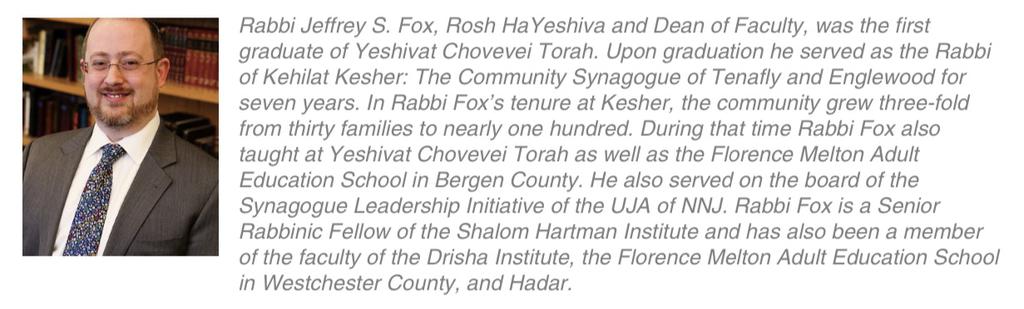
Rabbi Jeffrey Fox
Rosh HaYeshiva and Dean of Faculty
Rabbi Yosef Engel, one of the most creative Rabbinic writers and thinkers in Jewish history, shared a critical insight that we are going to rely upon as we move forward. He returned to the same idea in several different places. He first wrote about it in his גיליוני הש"ס onYevamot 46a, and then in a more expanded form in his בית האוצר מערכת ב. His בית האוצר is an extraordinary alphabetical encyclopedia that brings together material from all corners of Jewish life. Rav Engel died in 1920 and tragically much of his literary oeuvre was lost during the Shoah. What remains is a tribute to a brilliant mind.
He uses a short selection from a Gemara in Sanhedrin 58b where we learn that a non-Jewish slave who is owned by a Jew is technically permitted to marry his [the non-Jewish slave’s] immediate relatives. It is important to keep in mind that becoming a non-Jewish slave in a Jewish home (עבד כנעני) required a kind of quasi-conversion. This person had to go the Mikvah and a man needed a circumcision. The slave had to observe the vast majority of Jewish Law, but was exempt from positive time bound commandments.
The Gemara articulates the status of this person in a very important and puzzling way:
יצא מכלל נכרי, ולכלל ישראל לא בא.
He has left the general category of nochri (non-Jew), but he has not yet come into the category of yisrael (Jew).
Rashi then explains:
יצא מכלל נכרי. ופקע שם בן נח מיניה
He has left the general category of nochri- the assignation of Noachide has been removed.
Rambam also codifies this Law in a straight-forward manner in Hilkhot Issurei Biah 12:11. This concept, that a person can leave the status of non-Jew and not yet enter in to the Jewish People, is central to the notion of identity on a spectrum.
Rav Yosef Engel uses this liminal category to express the idea of a two-stage process of conversion:
הרי צריך בגירות ב' פעולות- הסרת הכותיות וקבלת הישראליות- כיון דיש מיצוע לב' הדברים האלו. וע"י שנעשה אינו כותי עדיין לא נעשה עי"ז ישראל. וא"כ הרי צריך הסרת עניין הכותיות ועוד קבלת עניין הישראליות, והן הן פעולות מילה וטבילה דגר. כי הסרת הערלה מסרת תיעוב הכותיות, והטבילה נותנת קדושה. כמבואר בספרי החכמה ומקדשתו להיות ישראל. ולכן המילה קודמת לטבילה דא"א לו לקבל עניין הישראליות כ"ז שלא נסתלק עניין הכותיות דא"א להיות ישראליות וכותיות יחד.
Conversion necessitates two processes- the removal of kutiut (non-Jewishness) and the acceptance of yisraelut (Jewishness)- since there is a middle-ground between these two poles. By becoming a non-kuti he has not become a yisrael. And if so he needs to the removal of the non-Jewish aspect and also the acceptance of the Jewish aspect, and these are the two processes of conversion: circumcision and immersion. For the removal of the foreskin removes the stain of kutiut and the immersion grants the holiness, as has been explained in the books of wisdom, and sanctifies him to be a yisrael. And therefore, the circumcision precedes the immersion for it is impossible for him to accept the yisraeliut until he has removed the kutiut, for it is impossible to both a Jew and a non-Jew.
The notion of a liminal space between Jewish and not-Jewish is a powerful way to explain some strange Halakhik phenomena. We will continue to return to this idea for the next several weeks. On the surface, it appears that this in-between status may be very limited. The Halakhik system does not do well with people who do not fit into a simple box. For now, though, I wonder if there are any other people who might occupy a similar place on the spectrum of identity?