


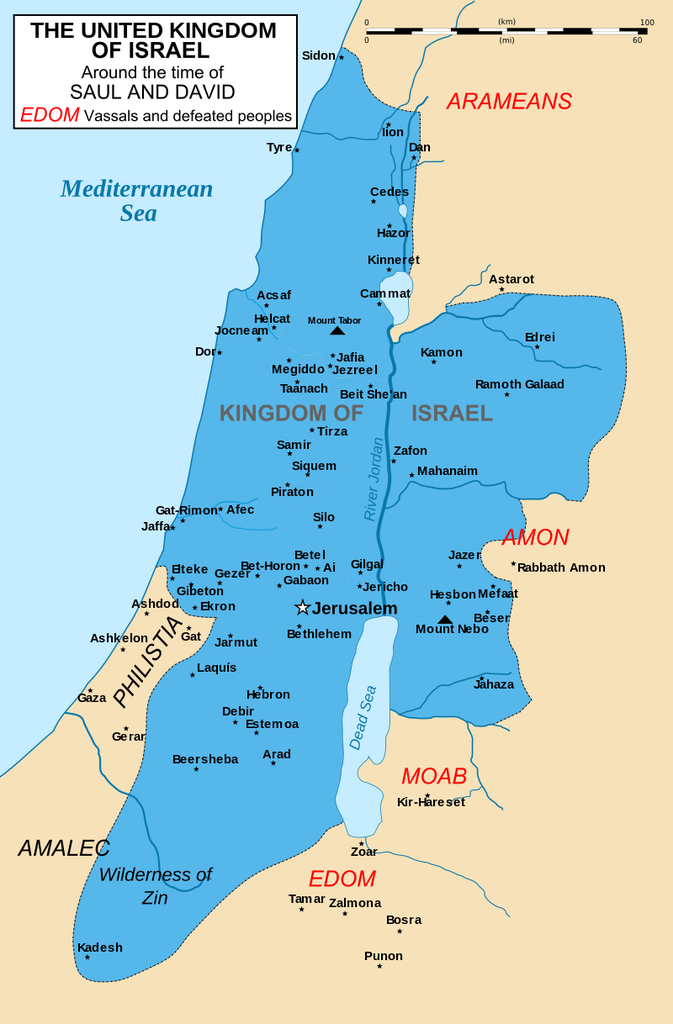
Map is from Wikipedia article, https://en.wikipedia.org/wiki/Kingdom_of_Israel_(united_monarchy)
By Regno di Davide.svg: RobertoReggi12 Tribes of Israel Map.svg: Richardprins12_tribus_de_Israel.svg: Translated by Kordas12 staemme israels heb.svg: by user:יוסי12 staemme israels.png: by user:Janzderivative work: Richardprins (talk) - Regno di Davide.svg12 Tribes of Israel Map.svg12_tribus_de_Israel.svg12 staemme israels heb.svg12 staemme israels.png, CC BY-SA 3.0, https://commons.wikimedia.org/w/index.php?curid=10878075
Overview:
The first 15 chapters of I Samuel are about the establishment of the monarchy.
The primary characters are Samuel, Saul and Hashem (Hebrew for the name, my choice for referring to the Jewish God, whose name is the tetragrammaton), with guest appearances including Hannah, Eli, the Ark, and the Philistines.
Chapter One - the birth of Samuel:
Hannah, the favored wife of Elkanah, prays for a son while her family is at Shiloh. The priest Eli at first thinks she is drunk, but hopes her prayer is answered. It is, and when her son, Samuel is weaned, she presents him to Eli and explains that she has lent him to the Lord for as long as he lives.
I wondered why Samuel was able to perform sacrifices. Turns out that Elkanah is a Levite who lives in the territory of Ephraim:
(1) There was a man from Ramathaim of the Zuphites,-a in the hill country of Ephraim, whose name was Elkanah son of Jeroham son of Elihu son of Tohu son of Zuph, an Ephraimite.
(18) Those were the appointed men; and their sons were: the Kohathites: Heman the singer, son of Joel son of Samuel (19) son of Elkanah son of Jeroham son of Eliel son of Toah (20) son of Zuph son of Elkanah son of Mahath son of Amasai (21) son of Elkanah son of Joel son of Azariah son of Zephaniah (22) son of Tahath son of Assir son of Ebiasaph son of Korah (23) son of Izhar son of Kohath son of Levi son of Israel; ... (51) And some of the families of the sons of Kohath had cities of their territory out of the tribe of Ephraim. (52)
Elkanah might have married Peninah after it became apparent that Hannah was not having children.
On the one hand, Peninah might have been provoking Hannah so that Hannah would pray for a child; on the other hand, the Midrash has Peninah's children dying two at a time as Hannah gives birth to each child after Samuel until Peninah asks her to do something. [Ginzberg, p. 525-526]
Eli is deserving of praise: When Hannah corrects him, not only does he not double down on berating her, he actually wishes her well and hopes that her pray will be answered.
There is no further mention after verse 11 about Samuel never cutting his hair---part of being a Nazirite).
(יא) וַתִּדֹּ֨ר נֶ֜דֶר וַתֹּאמַ֗ר יקוק צְבָא֜וֹת אִם־רָאֹ֥ה תִרְאֶ֣ה ׀ בׇּעֳנִ֣י אֲמָתֶ֗ךָ וּזְכַרְתַּ֙נִי֙ וְלֹֽא־תִשְׁכַּ֣ח אֶת־אֲמָתֶ֔ךָ וְנָתַתָּ֥ה לַאֲמָתְךָ֖ זֶ֣רַע אֲנָשִׁ֑ים וּנְתַתִּ֤יו לַֽיקוק כׇּל־יְמֵ֣י חַיָּ֔יו וּמוֹרָ֖ה לֹא־יַעֲלֶ֥ה עַל־רֹאשֽׁוֹ׃
(11) And she made this vow: “O LORD of Hosts, if You will look upon the suffering of Your maidservant and will remember me and not forget Your maidservant, and if You will grant Your maidservant a male child, I will dedicate him to the LORD for all the days of his life; and no razor shall ever touch his head.”
(טז) אַל־תִּתֵּן֙ אֶת־אֲמָ֣תְךָ֔ לִפְנֵ֖י בַּת־בְּלִיָּ֑עַל כִּֽי־מֵרֹ֥ב שִׂיחִ֛י וְכַעְסִ֖י דִּבַּ֥רְתִּי עַד־הֵֽנָּה׃
(16) Do not take your maidservant for a worthless woman; I have only been speaking all this time out of my great anguish and distress.”
(יח) וַתֹּ֕אמֶר תִּמְצָ֧א שִׁפְחָתְךָ֛ חֵ֖ן בְּעֵינֶ֑יךָ וַתֵּ֨לֶךְ הָֽאִשָּׁ֤ה לְדַרְכָּהּ֙ וַתֹּאכַ֔ל וּפָנֶ֥יהָ לֹא־הָֽיוּ־לָ֖הּ עֽוֹד׃
(18) She answered, “You are most kind to your handmaid.” So the woman left, and she ate, and was no longer downcast.
Hannah repeatedly calls herself a handmaid/maidservant verse 11 - three times to Hashem in verse 11 and once to Eli in verse16. (She uses a different term with Eli in verse 18). Similarly, Abigail refers to herself in the same way when she appeals to David. (The word abigail meant a maidservant since about1616; it is used in Jane Eyre.) Both women are far from humble servants, they boldly speak up---Hannah to an important priest, and Abigail to David, head of a band of armed men and, later, her husband and king of Israel.
(כד) וַתִּפֹּל֙ עַל־רַגְלָ֔יו וַתֹּ֕אמֶר בִּֽי־אֲנִ֥י אֲדֹנִ֖י הֶעָוֺ֑ן וּֽתְדַבֶּר־נָ֤א אֲמָֽתְךָ֙ בְּאׇזְנֶ֔יךָ וּשְׁמַ֕ע אֵ֖ת דִּבְרֵ֥י אֲמָתֶֽךָ׃ (כה) אַל־נָ֣א יָשִׂ֣ים אֲדֹנִ֣י ׀ אֶת־לִבּ֡וֹ אֶל־אִישׁ֩ הַבְּלִיַּ֨עַל הַזֶּ֜ה עַל־נָבָ֗ל כִּ֤י כִשְׁמוֹ֙ כֶּן־ה֔וּא נָבָ֣ל שְׁמ֔וֹ וּנְבָלָ֖ה עִמּ֑וֹ וַֽאֲנִי֙ אֲמָ֣תְךָ֔ לֹ֥א רָאִ֛יתִי אֶת־נַעֲרֵ֥י אֲדֹנִ֖י אֲשֶׁ֥ר שָׁלָֽחְתָּ׃ (כו) וְעַתָּ֣ה אֲדֹנִ֗י חַי־יקוק וְחֵֽי־נַפְשְׁךָ֙ אֲשֶׁ֨ר מְנָעֲךָ֤ יקוק מִבּ֣וֹא בְדָמִ֔ים וְהוֹשֵׁ֥עַ יָדְךָ֖ לָ֑ךְ וְעַתָּ֗ה יִֽהְי֤וּ כְנָבָל֙ אֹֽיְבֶ֔יךָ וְהַֽמְבַקְשִׁ֥ים אֶל־אֲדֹנִ֖י רָעָֽה׃ (כז) וְעַתָּה֙ הַבְּרָכָ֣ה הַזֹּ֔את אֲשֶׁר־הֵבִ֥יא שִׁפְחָתְךָ֖ לַֽאדֹנִ֑י וְנִתְּנָה֙ לַנְּעָרִ֔ים הַמִּֽתְהַלְּכִ֖ים בְּרַגְלֵ֥י אֲדֹנִֽי׃ (כח) שָׂ֥א נָ֖א לְפֶ֣שַׁע אֲמָתֶ֑ךָ כִּ֣י עָשֹֽׂה־יַעֲשֶׂה֩ יקוק לַאדֹנִ֜י בַּ֣יִת נֶאֱמָ֗ן כִּֽי־מִלְחֲמ֤וֹת יקוק אֲדֹנִ֣י נִלְחָ֔ם וְרָעָ֛ה לֹא־תִמָּצֵ֥א בְךָ֖ מִיָּמֶֽיךָ׃ (כט) וַיָּ֤קׇם אָדָם֙ לִרְדׇפְךָ֔ וּלְבַקֵּ֖שׁ אֶת־נַפְשֶׁ֑ךָ וְֽהָיְתָה֩ נֶ֨פֶשׁ אֲדֹנִ֜י צְרוּרָ֣ה ׀ בִּצְר֣וֹר הַחַיִּ֗ים אֵ֚ת יקוק אֱלֹקֶ֔יךָ וְאֵ֨ת נֶ֤פֶשׁ אֹיְבֶ֙יךָ֙ יְקַלְּעֶ֔נָּה בְּת֖וֹךְ כַּ֥ף הַקָּֽלַע׃ (ל) וְהָיָ֗ה כִּֽי־יַעֲשֶׂ֤ה יקוק לַֽאדֹנִ֔י כְּכֹ֛ל אֲשֶׁר־דִּבֶּ֥ר אֶת־הַטּוֹבָ֖ה עָלֶ֑יךָ וְצִוְּךָ֥ לְנָגִ֖יד עַל־יִשְׂרָאֵֽל׃ (לא) וְלֹ֣א תִהְיֶ֣ה זֹ֣את ׀ לְךָ֡ לְפוּקָה֩ וּלְמִכְשׁ֨וֹל לֵ֜ב לַאדֹנִ֗י וְלִשְׁפׇּךְ־דָּם֙ חִנָּ֔ם וּלְהוֹשִׁ֥יעַ אֲדֹנִ֖י ל֑וֹ וְהֵיטִ֤ב יקוק לַֽאדֹנִ֔י וְזָכַרְתָּ֖ אֶת־אֲמָתֶֽךָ׃ {ס}
(24) Prostrate at his feet, she pleaded, “Let the blame be mine, my lord, but let your handmaid speak to you; hear your maid’s plea. (25) Please, my lord, pay no attention to that wretched fellow Nabal. For he is just what his name says: His name means ‘boor’ and he is a boor.
“Your handmaid did not see the young men whom my lord sent. (26) I swear, my lord, as the LORD lives and as you live—the LORD who has kept you from seeking redress by blood with your own hands—let your enemies and all who would harm my lord fare like Nabal! (27) Here is the present which your maidservant has brought to my lord; let it be given to the young men who are the followers of my lord. (28) Please pardon your maid’s boldness. For the LORD will grant my lord an enduring house, because my lord is fighting the battles of the LORD, and no wrong is ever to be found in you. (29) And if anyone sets out to pursue you and seek your life, the life of my lord will be bound up in the bundle of life in the care of the LORD; but He will fling away the lives of your enemies as from the hollow of a sling. (30) And when the LORD has accomplished for my lord all the good He has promised you, and has appointed you ruler of Israel, (31) do not let this be a cause of stumbling and of faltering courage to my lord that you have shed blood needlessly and that my lord sought redress with his own hands. And when the LORD has prospered my lord, remember your maid.”
Chapter Two - Samuel's good behavior as Eli's assistant is appreciated. Hannah prays poetically. Samuel becomes Eli's assistant and is admired by God and men. Hannah makes him a small robe and brings it to him each year when she and her husband go to sacrifice. Hannah has more children. The bad behavior of Eli's sons has consequences. Eli's sons are corrupt and someone appears to Eli to tell him that the priesthood will not continue in his family.
Part of Hannah's prayer is repeated in Hallel, which is included in the Passover Seder and holiday services. Only the trope is different. Hertz explains, "In the East beggars and lepers sit [on a dunghill] and solicit alms." [p. 955]
(ח) מֵקִ֨ים מֵעָפָ֜ר דָּ֗ל מֵֽאַשְׁפֹּת֙ יָרִ֣ים אֶבְי֔וֹן לְהוֹשִׁיב֙ עִם־נְדִיבִ֔ים וְכִסֵּ֥א כָב֖וֹד יַנְחִלֵ֑ם כִּ֤י לַֽיקוק מְצֻ֣קֵי אֶ֔רֶץ וַיָּ֥שֶׁת עֲלֵיהֶ֖ם תֵּבֵֽל׃
(8) He raises the poor from the dust,
Lifts up the needy from the dunghill,
Setting them with nobles,
Granting them seats of honor.
For the pillars of the earth are the LORD’s;
He has set the world upon them.
(ז) מְקִ֥ימִ֣י מֵעָפָ֣ר דָּ֑ל מֵ֝אַשְׁפֹּ֗ת יָרִ֥ים אֶבְיֽוֹן׃ (ח) לְהוֹשִׁיבִ֥י עִם־נְדִיבִ֑ים עִ֝֗ם נְדִיבֵ֥י עַמּֽוֹ׃
(7) He raises the poor from the dust,
lifts up the needy from the refuse heap (8) to set them with the great,
with the great men of His people.
Chapter Three: Prophecy is rare. So when Hashem calls Samuel while he is sleeping---three times---Samuel assumes that Eli is speaking. Finally, Samuel replies to Hashem and is told that He is going to do something really scary and that Eli's house is in big trouble. When Samuel reluctantly tells Eli, Eli accepts this. All Israel accepts Samuel as a trustworthy prophet.
Samuel replies Hineni three times when he thinks Eli is calling him. He doesn't say this to Hashem, who calls "Samuel, Samuel" eventually. This is similar to God calling Abraham before the Akedah (Genesis 22:1), telling Jacob what will happen as he prepares to reunite with Joseph in Egypt, and calling Moses at the burning bush (Exodus 3:4). However, in those instances, Abraham and Moses are told to do memorable things; Samuel is only told that Eli's house/family is doomed and that something will happen in the future.
"'Here am I' is a phrase of humble readiness and consent, uttered by Abraham (Gen. 22:1), Jacob (Gen. 46:2), Moses (Exod. 3:5), Samuel (I Sam. 3:4)." [Heschel, footnote on p. 439]
(ד) וַיִּקְרָ֧א יקוק אֶל־שְׁמוּאֵ֖ל וַיֹּ֥אמֶר הִנֵּֽנִי׃
(ו) וַיֹּ֣סֶף יקוק קְרֹ֣א עוֹד֮ שְׁמוּאֵל֒ וַיָּ֤קׇם שְׁמוּאֵל֙ וַיֵּ֣לֶךְ אֶל־עֵלִ֔י וַיֹּ֣אמֶר הִנְנִ֔י כִּ֥י קָרָ֖אתָ לִ֑י וַיֹּ֛אמֶר לֹא־קָרָ֥אתִֽי בְנִ֖י שׁ֥וּב שְׁכָֽב׃
(ח) וַיֹּ֨סֶף יקוק קְרֹא־שְׁמוּאֵל֮ בַּשְּׁלִישִׁת֒ וַיָּ֙קׇם֙ וַיֵּ֣לֶךְ אֶל־עֵלִ֔י וַיֹּ֣אמֶר הִנְנִ֔י כִּ֥י קָרָ֖אתָ לִ֑י וַיָּ֣בֶן עֵלִ֔י כִּ֥י יקוק קֹרֵ֥א לַנָּֽעַר׃
(א) וַיְהִ֗י אַחַר֙ הַדְּבָרִ֣ים הָאֵ֔לֶּה וְהָ֣אֱלֹקִ֔ים נִסָּ֖ה אֶת־אַבְרָהָ֑ם וַיֹּ֣אמֶר אֵלָ֔יו אַבְרָהָ֖ם וַיֹּ֥אמֶר הִנֵּֽנִי׃
(ב) וַיֹּ֨אמֶר אֱלֹקִ֤ים ׀ לְיִשְׂרָאֵל֙ בְּמַרְאֹ֣ת הַלַּ֔יְלָה וַיֹּ֖אמֶר יַעֲקֹ֣ב ׀ יַעֲקֹ֑ב וַיֹּ֖אמֶר הִנֵּֽנִי׃
(ד) וַיַּ֥רְא יקוק כִּ֣י סָ֣ר לִרְא֑וֹת וַיִּקְרָא֩ אֵלָ֨יו אֱלֹקִ֜ים מִתּ֣וֹךְ הַסְּנֶ֗ה וַיֹּ֛אמֶר מֹשֶׁ֥ה מֹשֶׁ֖ה וַיֹּ֥אמֶר הִנֵּֽנִי׃
A point of interest about v. 13: "Jewish tradition suggests that this is a tikkun sopherim, 'an emendation of the scribes.' Originally the text read 'did curse Me' (li instead of lahem and was altered by the scribes out of a sense of reverence." [Goldman, p. 18] [see also Alter, p. 18]
(יג) וְהִגַּ֣דְתִּי ל֔וֹ כִּֽי־שֹׁפֵ֥ט אֲנִ֛י אֶת־בֵּית֖וֹ עַד־עוֹלָ֑ם בַּֽעֲוֺ֣ן אֲשֶׁר־יָדַ֗ע כִּֽי־מְקַלְלִ֤ים לָהֶם֙ בָּנָ֔יו וְלֹ֥א כִהָ֖ה בָּֽם׃
(13) And I declare to him that I sentence his house to endless punishment for the iniquity he knew about—how his sons committed sacrilege at will [ [meaning of Heb. uncertain. Septuagint reads “against God.”] -a—and he did not rebuke them.
Chapter Four: Israel gathers at Eben-Ezer to fight the Philistines. After about 4,000 Israelite soldiers die, the Elders of Israel decide they need the Ark of the Covenant and Eli's sons bring it from Shiloh. Everybody cheers and the Philistines worry that the God who plagued the Egyptians in the wilderness will overcome them; but they stop worrying and kill 30,000 Israelites, including Eli's sons, and capture the Ark. When Eli, now 98 and blind, hears this he falls over and breaks his neck and dies. When is daughter-in-law hears this, she goes into labor and dies, but not before naming her son Ichabod.
Alter prefer "The glory has gone into exile."
This is not the only time a woman dies in childbirth after naming her son:
(18) But as she breathed her last—for she was dying—she named him Ben-oni; but his father called him Benjamin.
The tribe of Benjamin is about to become important in this story. Admittedly, there's not much connection between Phineas, Eli's son and the father of Ichabod, and Saul, but if Eli's sons had been honorable men, then the desire to replace the current system of judges with a king might not have been so strong.
Chapter Five: The Philistines put the Ark in a temple in Ashdod for their god, Dagon, only to find Dagon face down and then in pieces on the floor. When the Ashdodites start dying from boils or hemorrhoids, they get rid of the Ark by giving to Gath, another of the five Philistine cities. The Gathites suffer the same fate and they send the Ark to Ekron. Finally Ekronites assemble the Philistines to figure out how to get rid of the Ark.
Chapter Six: The Ark is with the Philistines for seven months. Their priests and diviners tell them how to return the Ark, along with five golden hemorrhoids and five golden mice, in such a way as to make sure that the Israelite God is responsible for all their troubles. The Ark arrives in Beth-shemesh and everyone is happy. But people die because they looked into the Ark and they ask the inhabitants of Kiriath-jearim to take the Ark from them.
Chapter Seven: Eleazar, the son of Abinadab, takes charge of the Ark in his house in Kiriath-jearim, where it stayed for 20 years. Samuel convinces the Israelites to get rid of their idols. Samuel assembles them at Mizpah. When the Philistines hear this, they get ready to attack and the Israelites beg Samuel to pray and save them. Hashem sends thunder, the Philistines are terrified, and the Israelites pursue them to somewhere around Beth-car. Samuel sets up a stone and calls it Eben-ezer. The Israelites regain all the towns that Philistines had taken and are at peace for the lifetime of Samuel. They are also at peace with the Amorites, one of the Canaanite tribes. Samuel judged Israel; he traveled a yearly circuit and judged the people and would then return to his home in Ramah.
Chapter Eight: When Samuel was old, he appointed his sons, Joel and Abijah, judges. The elders come to Samuel in Ramah to say that his sons are not acted as Samuel has and they want a king like all the other nations. Samuel is unhappy about this; he feels rejected, and prays. Hashem reassures him that the people aren't rejecting him, they are rejecting Him! Nonetheless, Samuel should go along with this most recent example of the people forsaking God from the time of Egypt, but warn them what about all the misery a king will bring them. They still want a king, so that they will be like the other nations and the king will lead them in battle. Hashem tells Samuel to appoint a king and Samuel tells the people to go home.
Chapter Nine: We meet Saul. His father, Kish, is a Benjaminite of substance. Saul is an impressive young man, handsome and very tall. When some of his father's asses go astray, his father sends him and his servant to look for them. They look everywhere, but are unsuccessful; finally the servant suggests they ask the seer, who happens to be Samuel. Meanwhile, Hashem told Samuel that he would meet a Benjaminite who would become the king and deliver the people from the Philistines. Saul, when told that all Israel is yearning for him, says that he is only a Benjaminite, and from the smallest clan at that!
Chapter nine and chapter one both start with "And there was a man." Elkanah is the father of Samuel and Kish is the father of Saul.
(א) וַיְהִי֩ אִ֨ישׁ אֶחָ֜ד מִן־הָרָמָתַ֛יִם צוֹפִ֖ים מֵהַ֣ר אֶפְרָ֑יִם וּשְׁמ֡וֹ אֶ֠לְקָנָ֠ה בֶּן־יְרֹחָ֧ם בֶּן־אֱלִיה֛וּא בֶּן־תֹּ֥חוּ בֶן־צ֖וּף אֶפְרָתִֽי׃
(1) There was a man from Ramathaim of the Zuphites,-a in the hill country of Ephraim, whose name was Elkanah son of Jeroham son of Elihu son of Tohu son of Zuph, an Ephraimite.
(א) וַיְהִי־אִ֣ישׁ (מבן ימין) [מִבִּנְיָמִ֗ין] וּ֠שְׁמ֠וֹ קִ֣ישׁ בֶּן־אֲבִיאֵ֞ל בֶּן־צְר֧וֹר בֶּן־בְּכוֹרַ֛ת בֶּן־אֲפִ֖יחַ בֶּן־אִ֣ישׁ יְמִינִ֑י גִּבּ֖וֹר חָֽיִל׃
(1) There was a man of Benjamin whose name was Kish son of Abiel son of Zeror son of Becorath son of Aphiah, a Benjaminite, a man of substance.
Chapter Ten: Samuel anoints Saul with oil and tells him what will happen to prove that he is the king. Saul meets up with a band of prophets and acts ecstatically with them; Samuel tells him he will become another man. When Saul returns home, his uncle asks about him what happened and what Samuel said to him; Saul only mentions the lost asses. Samuel asks everyone to come to Hashem at Mizpah. He reminds the people, Bnai Yisrael, that Hashem brought Israel out of Egypt and saved them from other kingdoms, but is now rejected by them because they want a king. A ceremony with lots shows that Saul has been selected as the new king. He is hiding among the baggage. Samuel points out that no one is like him; he is head and shoulders above everyone. ***Samuel tells the people the rules of the monarchy and writes them in a book, which he deposits before the Lord.*** Saul and Samuel then go home. Some people are not impressed; Saul ignores them.
My understanding of the text (and I'm not alone) is that Samuel establishes a constitutional monarchy: The king is not an absolute ruler and he is not a god.
Chapter Eleven: Saul's first accomplishment as king. He unites the people and wins a battle. Saul is magnanimous to the people who were not impressed at the end of Chapter Ten; when others want them killed, Saul says no man shall be put to death today. The monarchy is then inaugurated at Gilgal.
Chapter Eleven: I Sam 11:14 - 12:22 is Haftorah Korach, where the Torah reading Korach is Numbers 41 - 48. I'm not alone in connecting Samuel to Moses. In Korach (some of ) the people complain about Moses. Here Samuel feels that he is being attacked personally by the petition for a king. In this farewell speech, he asks what has he ever done to deserve this treatment and, of course, the answer is nothing. v. 8 Hertz notes, "The history is abbreviated." [p. 650] v. 11 Jerubbaal is Gideon, Bedan "Another name for Samson, i.e. ben Dan, son of the tribe of Dan (Targum, Rashi)." [also Hertz, p. 650] v. 14 "King and people alike must acknowledge the sovereignty of God and His law." [Hertz, p. 651]
When the Ammonites offer unreasonable terms of surrender Jabesh, Saul is outraged.
In Judges 19:29 the body of a concubine brutally raped by the inhabitants of Gibeah in Benjamin is cut in twelve pieces by her husband and sent to the other tribes, who unite to attack the Benjaminites, who are then nearly wiped out.
As I understand the text, Jabesh-gilead is not an innocent town. When the other Israelite tribes nearly wipe out the tribe of Benjamin, they become concerned and look for a way to repopulate it. And that is how Judges ends: "In those days there was no king in Israel; everyone did as he pleased." Perhaps this is why a king was needed!
(יג) וַֽיִּשְׁלְחוּ֙ כׇּל־הָ֣עֵדָ֔ה וַֽיְדַבְּרוּ֙ אֶל־בְּנֵ֣י בִנְיָמִ֔ן אֲשֶׁ֖ר בְּסֶ֣לַע רִמּ֑וֹן וַיִּקְרְא֥וּ לָהֶ֖ם שָׁלֽוֹם׃ (יד) וַיָּ֤שׇׁב בִּנְיָמִן֙ בָּעֵ֣ת הַהִ֔יא וַיִּתְּנ֤וּ לָהֶם֙ הַנָּשִׁ֔ים אֲשֶׁ֣ר חִיּ֔וּ מִנְּשֵׁ֖י יָבֵ֣שׁ גִּלְעָ֑ד וְלֹא־מָצְא֥וּ לָהֶ֖ם כֵּֽן׃ (טו) וְהָעָ֥ם נִחָ֖ם לְבִנְיָמִ֑ן כִּֽי־עָשָׂ֧ה יקוק פֶּ֖רֶץ בְּשִׁבְטֵ֥י יִשְׂרָאֵֽל׃ (טז) וַיֹּֽאמְרוּ֙ זִקְנֵ֣י הָֽעֵדָ֔ה מַה־נַּעֲשֶׂ֥ה לַנּוֹתָרִ֖ים לְנָשִׁ֑ים כִּֽי־נִשְׁמְדָ֥ה מִבִּנְיָמִ֖ן אִשָּֽׁה׃ (יז) וַיֹּ֣אמְר֔וּ יְרֻשַּׁ֥ת פְּלֵיטָ֖ה לְבִנְיָמִ֑ן וְלֹא־יִמָּחֶ֥ה שֵׁ֖בֶט מִיִּשְׂרָאֵֽל׃ (יח) וַאֲנַ֗חְנוּ לֹ֥א נוּכַ֛ל לָתֵת־לָהֶ֥ם נָשִׁ֖ים מִבְּנוֹתֵ֑ינוּ כִּֽי־נִשְׁבְּע֤וּ בְנֵֽי־יִשְׂרָאֵל֙ לֵאמֹ֔ר אָר֕וּר נֹתֵ֥ן אִשָּׁ֖ה לְבִנְיָמִֽן׃ {ס} (יט) וַיֹּאמְר֡וּ הִנֵּה֩ חַג־יקוק בְּשִׁל֜וֹ מִיָּמִ֣ים ׀ יָמִ֗ימָה אֲשֶׁ֞ר מִצְּפ֤וֹנָה לְבֵֽית־אֵל֙ מִזְרְחָ֣ה הַשֶּׁ֔מֶשׁ לִ֨מְסִלָּ֔ה הָעֹלָ֥ה מִבֵּֽית־אֵ֖ל שְׁכֶ֑מָה וּמִנֶּ֖גֶב לִלְבוֹנָֽה׃ (כ) (ויצו) [וַיְצַוּ֕וּ] אֶת־בְּנֵ֥י בִנְיָמִ֖ן לֵאמֹ֑ר לְכ֖וּ וַאֲרַבְתֶּ֥ם בַּכְּרָמִֽים׃ (כא) וּרְאִיתֶ֗ם וְ֠הִנֵּ֠ה אִם־יֵ֨צְא֥וּ בְנוֹת־שִׁילוֹ֮ לָח֣וּל בַּמְּחֹלוֹת֒ וִֽיצָאתֶם֙ מִן־הַכְּרָמִ֔ים וַחֲטַפְתֶּ֥ם לָכֶ֛ם אִ֥ישׁ אִשְׁתּ֖וֹ מִבְּנ֣וֹת שִׁיל֑וֹ וַהֲלַכְתֶּ֖ם אֶ֥רֶץ בִּנְיָמִֽן׃ (כב) וְהָיָ֡ה כִּֽי־יָבֹ֣אוּ אֲבוֹתָם֩ א֨וֹ אֲחֵיהֶ֜ם (לרוב) [לָרִ֣יב ׀] אֵלֵ֗ינוּ וְאָמַ֤רְנוּ אֲלֵיהֶם֙ חׇנּ֣וּנוּ אוֹתָ֔ם כִּ֣י לֹ֥א לָקַ֛חְנוּ אִ֥ישׁ אִשְׁתּ֖וֹ בַּמִּלְחָמָ֑ה כִּ֣י לֹ֥א אַתֶּ֛ם נְתַתֶּ֥ם לָהֶ֖ם כָּעֵ֥ת תֶּאְשָֽׁמוּ׃ {ס} (כג) וַיַּֽעֲשׂוּ־כֵן֙ בְּנֵ֣י בִנְיָמִ֔ן וַיִּשְׂא֤וּ נָשִׁים֙ לְמִסְפָּרָ֔ם מִן־הַמְּחֹלְל֖וֹת אֲשֶׁ֣ר גָּזָ֑לוּ וַיֵּלְכ֗וּ וַיָּשׁ֙וּבוּ֙ אֶל־נַ֣חֲלָתָ֔ם וַיִּבְנוּ֙ אֶת־הֶ֣עָרִ֔ים וַיֵּשְׁב֖וּ בָּהֶֽם׃ (כד) וַיִּתְהַלְּכ֨וּ מִשָּׁ֤ם בְּנֵֽי־יִשְׂרָאֵל֙ בָּעֵ֣ת הַהִ֔יא אִ֥ישׁ לְשִׁבְט֖וֹ וּלְמִשְׁפַּחְתּ֑וֹ וַיֵּצְא֣וּ מִשָּׁ֔ם אִ֖ישׁ לְנַחֲלָתֽוֹ׃ {פ}
(כה) בַּיָּמִ֣ים הָהֵ֔ם אֵ֥ין מֶ֖לֶךְ בְּיִשְׂרָאֵ֑ל אִ֛ישׁ הַיָּשָׁ֥ר בְּעֵינָ֖יו יַעֲשֶֽׂה׃
(5) The Israelites asked, “Is there anyone from all the tribes of Israel who failed to come up to the assembly before the LORD?” For a solemn oath had been taken concerning anyone who did not go up to the LORD at Mizpah: “He shall be put to death.” (6) The Israelites now relented toward their kinsmen the Benjaminites, and they said, “This day one tribe has been cut off from Israel! (7) What can we do to provide wives for those who are left, seeing that we have sworn by the LORD not to give any of our daughters to them in marriage?” (8) They inquired, “Is there anyone from the tribes of Israel who did not go up to the LORD at Mizpah?” Now no one from Jabesh-gilead had come to the camp, to the assembly. (9) For, when the roll of the troops was taken, not one of the inhabitants of Jabesh-gilead was present. (10) So the assemblage dispatched 12,000 of the warriors, instructing them as follows: “Go and put the inhabitants of Jabesh-gilead to the sword, women and children included. (11) This is what you are to do: Proscribe every man, and every woman who has known a man carnally.” (12) They found among the inhabitants of Jabesh-gilead 400 maidens who had not known a man carnally; and they brought them to the camp at Shiloh, which is in the land of Canaan. (13) Then the whole community sent word to the Benjaminites who were at the Rock of Rimmon, and offered them terms of peace. (14) Thereupon the Benjaminites returned, and they gave them the girls who had been spared from the women of Jabesh-gilead. But there were not enough of them.-b (15) Now the people had relented toward Benjamin, for the LORD had made a breach in the tribes of Israel. (16) So the elders of the community asked, “What can we do about wives for those who are left, since the women of Benjamin have been killed off?” (17) For they said, “There must be a saving remnant for Benjamin, that a tribe may not be blotted out of Israel; (18) yet we cannot give them any of our daughters as wives,” since the Israelites had taken an oath: “Cursed be anyone who gives a wife to Benjamin!” (19) They said, “The annual feast of the LORD is now being held at Shiloh.” (It lies north of Bethel, east of the highway that runs from Bethel to Shechem, and south of Lebonah.) (20) So they instructed the Benjaminites as follows: “Go and lie in wait in the vineyards. (21) As soon as you see the girls of Shiloh coming out to join in the dances, come out from the vineyards; let each of you seize a wife from among the girls of Shiloh, and be off for the land of Benjamin. (22) And if their fathers or brothers come to us to complain, we shall say to them, ‘Be generous to them for our sake! We could not provide any of them with a wife on account of the war, and you would have incurred guilt if you yourselves had given them [wives].’”-b (23) The Benjaminites did so. They took to wife, from the dancers whom they carried off, as many as they themselves numbered. Then they went back to their own territory, and rebuilt their towns and settled in them. (24) Thereupon the Israelites dispersed, each to his own tribe and clan; everyone departed for his own territory. (25) In those days there was no king in Israel; everyone did as he pleased.
Chapter Twelve: Samuel talks to the people. They agree that he has never done any wrong to them. He then gives a very brief recap of how Hashem saved them since Jacob went to Egypt and the bad things they did anyway. But if they behave from now on, all will be well; otherwise! There is some miraculous weather. Samuel reassures the people that he will continue to pray for them.
Chapter Thirteen: Jonathan, who we later learn is Saul's son, attacks a Philistine. The people gather at Gilgal, the Philistines hear about this and prepare to attack, and the people hide anywhere they can. The rest rally with Saul at Gilgal, but they get restless as they wait the seven days that Samuel told Saul to wait. So Saul performs the necessary sacrifices just as Samuel finally shows up. Samuel is miffed, so miffed that he tells Saul that there will be no Saulide dynasty. The Philistines attack. The Philistines won't let the Israelites have any metal weapons; only Saul and Jonathan have any.
I'm reminded of the scene in the movie Avalon: "You cut the turkey!"
Did Samuel deliberately arrive late to make things difficult for Saul? I'm reminded of the Golden Calf made when the Israelites thought Moses was late.
“It is not the sound of the tune of triumph,
Or the sound of the tune of defeat;
It is the sound of song that I hear!”
There are more connections. Joshua hears sounds coming from the camp; Moses explains what it is.
Similarly, Samuel hears sound when there shouldn't be any.
Both Samuel and Moses entreat God to be merciful. Moses saves the people after a lot of them die, but Samuel can't convince God to give Saul yet another chance.
Chapter Fourteen: Jonathan and his attendant, unbeknownst to Saul, attack a Philistine outpost and, with God's help, scatter the Philistines. Saul and his troops successfully continues the attack. But there is a problem: Saul forbade his troops to eat anything under the penalty of death. Jonathan, not knowing this, ate some honey, and, when told of Saul's order, said that their victory would have been even greater if the soldiers were allowed to eat. Saul is prepared to execute Jonathan and Jonathan is prepared to die, but the troops object and Jonathan lives. Saul secures his kingdom against many neighboring enemies. Members of his family (including his wife and daughters) are named.
I'm reminded of Jepthah, who apparently sacrifices his daughter because he vowed that he would. You can say that Saul listens to reason, but he also does what he is persuaded to do by his followers. not only on this occasion, but before, when he performs a sacrifice because he is afraid that his troops are getting restless, and later, when he tells Samuel that he and his troops spared all the good cattle of the Amalekites. Maybe that's why he loses favor.
Chapter Fifteen: Samuel, in the name of the Lord of Hosts, tells Saul to kill all the Amalekites because of what they did in the Wilderness. Saul warns the Kenites, who live nearby, to leave. Saul and his men kill them all, probably even women and children, but spare Agag, the Amalekite king, and animals and things of value. Saul proudly tells Samuel what he has done, but Samuel is not happy. It all ends sadly.
This is the Haftarah for Shabbat Zachor, read before Purim. Jethro is from the tribe of the Kenites (see Hertz note on v. 6 on p. 996) v. 15 and 21: Saul says the people made him do it and they did it so they could sacrifice to God. So is Saul pushing the blame onto others or did he really do what was popular instead of what was right (meaning obeying God)?
Samuel says Saul needs to overcome his inferiority complex---he's a leader and needs to act like one, even if he feels like an imposter.
Obeying God is more important than the sacrifice itself. This is reminiscent of all the verses in the Prophets about God caring more about being a decent person than in performing sacrifices.
“Does the LORD delight in burnt offerings and sacrifices
As much as in obedience to the LORD’s command?
Surely, obedience is better than sacrifice,
Compliance than the fat of rams.
v. 27 Saul tears (vayikarah) Samuel's robe; the dynasty is torn from Saul.
(כז) וַיִּסֹּ֥ב שְׁמוּאֵ֖ל לָלֶ֑כֶת וַיַּחֲזֵ֥ק בִּכְנַף־מְעִיל֖וֹ וַיִּקָּרַֽע׃ {ס}
(27) As Samuel turned to leave, Saul seized the corner of his robe, and it tore.
(יט) וּמְעִ֤יל קָטֹן֙ תַּעֲשֶׂה־לּ֣וֹ אִמּ֔וֹ וְהַעַלְתָ֥ה ל֖וֹ מִיָּמִ֣ים ׀ יָמִ֑ימָה בַּֽעֲלוֹתָהּ֙ אֶת־אִישָׁ֔הּ לִזְבֹּ֖חַ אֶת־זֶ֥בַח הַיָּמִֽים׃
Midrash says that the robe grew bigger each year.
The torn robe is symbolic:
(כח) וַיֹּ֤אמֶר אֵלָיו֙ שְׁמוּאֵ֔ל קָרַ֨ע יקוק אֶֽת־מַמְלְכ֧וּת יִשְׂרָאֵ֛ל מֵעָלֶ֖יךָ הַיּ֑וֹם וּנְתָנָ֕הּ לְרֵעֲךָ֖ הַטּ֥וֹב מִמֶּֽךָּ׃ {ס}
(28) And Samuel said to him, “The LORD has this day torn the kingship over Israel away from you and has given it to another who is worthier than you.
v. 34: They go their separate ways, never to see each while both still live.
General Comments:
Our origin stories are not noble. In the Mishah Pesachim 10:4, it says that the story told at the Passover Seder "begins with the Jewish people's disgrace and concludes with their glory."
מַתְחִיל בִּגְנוּת וּמְסַיֵּם בְּשֶׁבַח
Adin Steinzaltz, when comparing Saul and David, explains why Saul failed as a king and David succeeded. Saul followed his heart and David used his brain. And a good king needs to be calculating. Saul is a tragic figure. [p. 143] Robert Alter says his problem is that he is always searching for knowledge and never getting it: not finding the lost asses, asking if God wants him to battle and not getting an answer, not knowing that Jonathan goes off on his own to attack and then tastes honey thereby condemning him to death, and later trying to ask Samuel's ghost what to do. "Saul, from first to last, is a man deprived of the knowledge he desperately seeks." [Alter, p. xix]
Saul is a decent man who didn't want to be king, but does his best. (He may listen to others too much.) He is able to unite the tribes to fight; this is why the people wanted a king. He is not power-hungry or greedy or corrupt; he is willing to execute his own son because he thinks it is the right thing to do.
We don't really know how Samuel feels about his jobs as priest and judge and prophet. He resents it when the people want to replace him with a king, but he also facilitates the replacement.
Hashem feels worse than unappreciated. He keeps saving the Israelites, who keep backsliding and rejecting Him and are therefore punished and in need of being saved. And the people's solution is a human king to save them, while Hashem has been right with them all along.
The God of Israel is known to the neighboring people and, when the Ark is taken by the Philistines, they know it is He who plays a prank on their god, Dagon, and kills a lot of them. [see Alter p. 23]
Connections:
Lots of duplicates stories, with differences, both within the book and also with other parts of the Tanach:
* Eli's sons and Samuel's sons are corrupt. And so their children do not continue to be in charge; Eli's sons die before him and the period of Judges ends with Samuel.
* The dynasty of the first priest in the book should have continued, but the sons sinned and their father should have done more to stop them. Similarly, The family of the first king should have continued to rule, but Saul sinned twice---by not waiting for Samuel to perform a sacrifice and then by not killing Amalek and some cattle.
* Alter notes all the references to nursing mothers and animals. In chapter two, Hannah waits until Samuel has finished nursing to go back to Shiloh and lend Samuel to Eli. In chapter six, two milch cows pull the cart with the Ark; in chapter seven: Samuel sacrifices a suckling lamb. [Alter, p. 33]
* A mother dies in childbirth after naming her son. (Eli's daughter-in-law and Rachel)
* When Samuel selects the king, Saul is nowhere to be seen. Later, David will also be absent as he is off tending sheep.
Lots of words repeated:
* cavod - heavy, honor --- I Sam 2:8, 2:30, 4:18 (Eli was heavy), 4:21 (naming Ichabod), 5:6 ("the hand of the Lord was heavy upon he Ashdodites" [Alter, 28], 6:5 (glory contrasted with God perhaps lightening his hand) [Alter, p. 31]
וְכִסֵּ֥א כָב֖וֹד (seat of honor)
* Handmaid - Hannah and Abigail
* Chapter nine and chapter one both start with "And there was a man." as they introduce an important person---Samuel and Saul.
* crying to heaven
* listen to X's voice - 15:1 has Samuel tell Saul to listen to the voice of the Lord, but 8:19 has the people not listen to Samuel's voice and 8:22 has Hashem tell Samuel to listen to the people's voice. Also lots of places in the Torah.
* Lord of Hosts (first mention in the Tanach is here in Chapter 1)
References are made to Israelites in Egypt; Alter notes that everyone seems to know what our God did to the Egyptians.
Alter: Inserted in the Samuel and Saul story is an Ark Narrative, with miracles but no individual voices.
"... in a 1926 monograph by the German scholar Leonhard Rost." [Alter, p. x]
Saul is from the tribe of Benjamin. Benjamin was the youngest son of Jacob, just as Isaac was the young son of Abraham (until the death of Sarah). Later, David, the youngest son of Jesse, becomes king. (I don't know the birth order of Kish's children.)
In fact, I see connections among these three leaders. Abraham is the first man to have a special covenantal relationship with God; I think Abraham is a proto-Jew. Moses is the first to lead a people who accept a covenantal relationship with God at Mount Sinai. And Samuel helps create a nation state by anointing the first king, albeit against his personal wishes. In other words, we go from an individual to a people to a nation.
All three are separated from their birthplace: Moses and Samuel are both removed from their mothers when they are weaned and taken to a place of authority.
Alter questions whether Samuel is doing what God tells him to or what he himself wants: "does he act with divinely authorized prophetic rightness, or, as Martin Buber thought, is he confusing his own human impulses with God's will?" [Alter, p. xvi]
Alter notes that Samuel, in Ch. 1 v. 25, like Isaac in the Akedah, is called a lad (na'ar); they are both sacrifices in a way. [Alter, p. 8]
The names Samuel and Saul both are related to the word for ask, sha'al. A sh'ailah is a question in Hebrew.
Sources :
The David Story: A translation with commentary of 1 and 2 Samuel by Robert Alter, W. Norton & Company, 1999
Biblical Images by Adin Steinsaltz, Basic Books, 1984
Tanakh: The Holy Scriptures, published by JPS as shown on www.sefaria.org
Five Biblical Portraits by Elie Wiesel
The Pentaeuch and Haftorahs ed. by Dr. J.H. Hertz, Soncino Press, 1979
Samuel by The Rev. Dr. S. Goldman, M.A., Soncino Press, 1959
Legends of the Bible by Louis Ginzberg, JPS
The Prophets by Abraham J. Heschel, JPS, 1962