


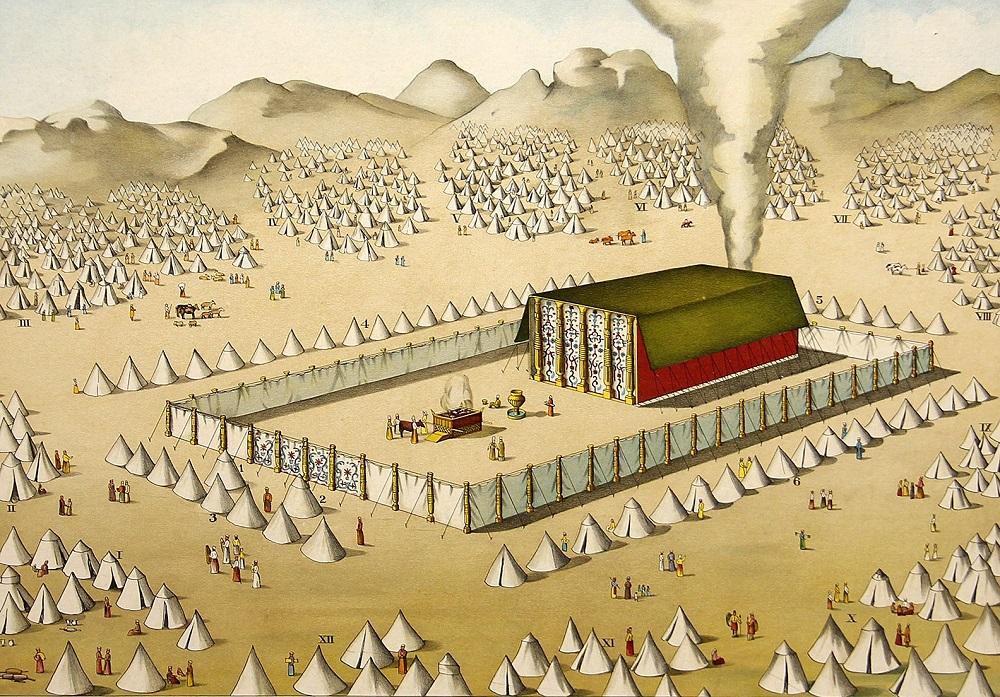
Introduction: This week's Parsha begins the second half of Sefer Shemos, where the Torah begins its discussion of the construction of the Mishkan. The obvious questions become: What is the purpose of this building? Why is it necessary? Why is it discussed now? As we will see, there large argument between the commentaries about when the command of the Mishkan was given. This order of events will greatly affect our understanding of the Mishkan and what it's greater purpose is. Let's take a look!
Discussion Question:
(1) According to the text, what is the purpose of the Mishkan?
(2) Is there anything strange about the language the Torah uses?
(א) ויתן אל משה וגו'. אֵין מֻקְדָּם וּמְאֻחָר בַּתּוֹרָה – מַעֲשֵׂה הָעֵגֶל קֹדֶם לְצִוּוּי מְלֶאכֶת הַמִּשְׁכָּן יָמִים רַבִּים הָיָה – שֶׁהֲרֵי בְי"ז בְּתַמּוּז נִשְׁתַּבְּרוּ הַלּוּחוֹת, וּבְיוֹם הַכִּפּוּרִים נִתְרַצָּה הַקָּבָּ"ה לְיִשְׂרָאֵל, וּלְמָחֳרָת הִתְחִילוּ בְנִדְבַת הַמִּשְׁכָּן וְהוּקַם בְּאֶחָד בְּנִיסָן (תנחומא):
(1) ויתן אל משה וגו׳ AND HE GAVE UNTO MOSES etc. — There is no “earlier” or “later” (no chronological order) in the events related in the Torah: in fact the incident of the golden calf (related in ch. 31) happened a considerable time before the command regarding the work of the Tabernacle was given (ch. 25 and the following chapters). For on the seventeenth of Tammuz were the Tablets broken (when the people were worshipping the calf) and on the Day of Atonement God became reconciled with Israel (after Moses had prayed 80 days for forgivenness; so that it is very unlikely that the command for the building of the Tabernacle should have been given before that day) and on the next day, the eleventh of Tishri (cf. Rashi on Exodus 33:11, at end of comment on ושב אל המחנה), they began to bring their contributions for the Tabernacle which was set up on the first of Nisan. (From the seventeenth of Tammuz until the eleventh of Tishri are almost three months — ימים רבים) (Midrash Tanchuma, Ki Tisa 31).
Discussion Questions:
(1) According to Rashi, when do the People get the command to build the Mishkan in relation the sin of the golden calf?
(2) How does the building of the Mishkan relate to the golden calf?
(3) What does this tell us about the reason for the Mishkan?
You don't have to read the entire source, it is there if you are interested. For our purposes, focus on the bolded parts.
(א) כאשר דבר השם עם ישראל פנים בפנים עשרת הדברות, וצוה אותם על ידי משה קצת מצות שהם כמו אבות למצותיה של תורה, כאשר הנהיגו רבותינו עם הגרים שבאים להתיהד (יבמות מז:), וישראל קבלו עליהם לעשות כל מה שיצום על ידו של משה, וכרת עמהם ברית על כל זה, מעתה הנה הם לו לעם והוא להם לאלהים כאשר התנה עמהם מתחלה ועתה אם שמוע תשמעו בקולי ושמרתם את בריתי והייתם לי סגולה (שמות י״ט:ה׳), ואמר ואתם תהיו לי ממלכת כהנים וגוי קדוש (שם יט ו), והנה הם קדושים ראוים שיהיה בהם מקדש להשרות שכינתו ביניהם ולכן צוה תחלה על דבר המשכן שיהיה לו בית בתוכם מקודש לשמו, ושם ידבר עם משה ויצוה את בני ישראל:
והנה עקר החפץ במשכן הוא מקום מנוחת השכינה שהוא הארון, כמו שאמר (שמות כ״ה:כ״ב) ונועדתי לך שם ודברתי אתך מעל הכפרת, על כן הקדים הארון והכפרת בכאן כי הוא מוקדם במעלה, וסמך לארון השלחן והמנורה שהם כלים כמוהו, ויורו על ענין המשכן שבעבורם נעשה אבל משה הקדים בפרשת ויקהל את המשכן את אהלו ואת מכסהו (שמות ל״ה:י״א), וכן עשה בצלאל (שמות ל״ו:ח׳), לפי שהוא הראוי לקדם במעשה: וסוד המשכן הוא, שיהיה הכבוד אשר שכן על הר סיני שוכן עליו בנסתר וכמו שנאמר שם (שמות כ״ד:ט״ז) וישכן כבוד ה' על הר סיני, וכתיב (דברים ה כא) הן הראנו ה' אלהינו את כבודו ואת גדלו, כן כתוב במשכן וכבוד ה, מלא את המשכן (שמות מ׳:ל״ד). והזכיר במשכן שני פעמים וכבוד ה' מלא את המשכן, כנגד ''את כבודו ואת גדלו,; והיה במשכן תמיד עם ישראל הכבוד שנראה להם בהר סיני. ובבא משה (שמות ל״ד:ל״ד) היה אליו הדבור אשר נדבר לו בהר סיני. וכמו שאמר במתן תורה (דברים ד לו) מן השמים השמיעך את קולו ליסרך ועל הארץ הראך את אשו הגדולה, כך במשכן כתיב (במדבר ז פט) וישמע את הקול מדבר אליו מעל הכפרת מבין שני הכרובים וידבר אליו:
ונכפל ''וידבר אליו'' להגיד מה שאמרו בקבלה שהיה הקול בא מן השמים אל משה מעל הכפרת ומשם מדבר עמו' כי כל דבור עם משה היה מן השמים ביום ונשמע מבין שני הכרובים, כדרך ודבריו שמעת מתוך האש (דברים ד לו), ועל כן היו שניהם זהב וכן אמר הכתוב (להלן כט מב מג) אשר אועד לכם שמה לדבר אליך שם ונקדש בכבודי, כי שם יהיה בית מועד לדבור ונקדש בכבודי: והמסתכל יפה בכתובים הנאמרים במתן תורה ומבין מה שכתבנו בהם (עי' להלן פסוק כא) יבין סוד המשכן ובית המקדש, ויוכל להתבונן בו ממה שאמר שלמה בחכמתו בתפלתו בבית המקדש, ה', אלהי ישראל (מלכים א ח׳:כ״ג) ' כמו שאמר בהר סיני ויראו את אלהי ישראל (שמות כ״ד:י׳), והוסיף שם לפרש ''ה'''לענין שרמזנו שם למעלה כי אלהי ישראל יושב הכרובים (מלכים א ח כג), כמו שאמר וכבוד אלהי ישראל עליהם מלמעלה היא החיה אשר ראיתי תחת אלהי ישראל בנהר כבר ואדע כי כרובים המה (יחזקאל י יט כ) ואמר דוד ולתבנית המרכבה הכרובים זהב לפורשים וסוככים על ארון ברית ה' (דהי''א כח יח), וכן יזכיר תמיד בבית המקדש לשם ה, (מלכים א ה׳:י״ט), לשמך (שם ח מד), ויאמר בכל פעם ופעם ואתה תשמע השמים (שם ח לב), במדת רחמים, וכתיב (שם ח מד מה) והתפללו אל ה' דרך העיר אשר בחרת בה והבית אשר בניתי לשמך ושמעת השמים, ובביאור אמר כי האמנם ישב אלהים את האדם על הארץ הנה שמים ושמי השמים לא יכלכלוך (דהי''ב ו יח). וכתיב על הארון להעלות משם את ארון האלהים אשר נקרא שם שם ה' צבאות יושב הכרובים עליו (שמואל ב ו׳:ב׳). ובדברי הימים (א יג ו) להעלות משם את ארון האלהים ה' יושב הכרובים אשר נקרא שם, כי השם יושב הכרובים:
(1) Now that G-d had told Israel face to face the Ten Commandments, and had further commanded them through Moses some of the precepts which are like general principles to the [individual] commandments of the Torah — in the same way that our Rabbis were accustomed to deal with strangers who come to be converted to the Jewish faith — and now that the Israelites accepted upon themselves to do all that He would command them through Moses and He made a covenant with them concerning all this, from now on they are His people and He is their G-d This is in accordance with the condition He made with them at the beginning: Now, therefore, if you will indeed listen to My voice, and keep My covenant, then you shall be My own treasure, and He said further: and you shall be unto Me a kingdom of priests, and a holy nation. They are now holy, in that they are worthy that there be amongst them a Sanctuary through which He makes His Divine Glory dwell among them. Therefore He first commanded concerning the Tabernacle, so that He have amongst them a house dedicated to His name, from where He would speak with Moses and command the children of Israel. Thus the main purpose of the Tabernacle was to contain a place in which the Divine Glory rests, this being the Aron, just as He said, And there will I meet with you, and I will speak with you from above the Aron-cover. Therefore He first gave the commandment about the Aron and the Aron-cover, for they are first in importance. Next to the Aron He gave the commandment about the Shulchan and the Menorah, which are vessels just like the Aron, and because they indicate the purpose for which the Tabernacle was made. Moses, however, preceded to mention in the section of Vayakheil: the Tabernacle, its Tent, and its covering, and in that order Bezalel made them [first the Tabernacle and then the Aron], because from the practical end it is proper to build the house first [and then make its vessels].
The secret of the Tabernacle is that the Glory which abode upon Mount Sinai [openly] should abide upon it in a concealed manner. For just as it is said there, And the glory of the Eternal abode upon Mount Sinai, and it is further written, Behold, the Eternal our G-d hath shown us His glory and His greatness, so it is written of the Tabernacle, and the glory of the Eternal filled the Tabernacle. Twice is this verse, and the glory of the Eternal filled the Tabernacle mentioned in connection with the Tabernacle, to correspond with His glory and His greatness. Thus Israel always had with them in the Tabernacle the Glory which appeared to them on Mount Sinai. And when Moses went into the Tabernacle, he would hear the Divine utterance being spoken to him in the same way as on Mount Sinai. Thus just as it is said at the Giving of the Torah: Out of heaven He made you to hear His voice, that He might instruct you; and upon earth He made you to see His great fire, so it is written of the Tabernacle, and he heard the voice speaking unto him from above the Aron-cover…from between the two cherubim; and He spoke unto him. The expression “speaking unto him” is mentioned here twice in order to indicate that which the Rabbis have said in the Tradition that the Voice would come from heaven to Moses from upon the Aron-cover, and from there He spoke with him; for every Divine utterance with Moses came from heaven during daytime, and was heard from between the two cherubim, similar to what is said, and thou didst hear His words out of the midst of the fire. It is for this reason that the two cherubim were made of gold. And Scripture so states: where I will meet with you, to speak there unto you; and it shall be sanctified by My glory, for there [in the Tabernacle] will be the appointed place for the Divine utterance, and it will be sanctified by My glory.
Now he who looks carefully at the verses mentioned at the Giving of the Torah, and understands what we have written about them, will perceive the secret of the Tabernacle and the Sanctuary [built later by King Solomon]. He will also be able to understand it from what Solomon in his wisdom said in his prayer in the Sanctuary: O Eternal, the G-d of Israel, just as is said at Mount Sinai: And they saw the G-d of Israel. Solomon however added the Name the Eternal because of a matter which we have alluded to above; for the G-d of Israel sitteth upon the cherubim, just as is said: And the glory of the G-d of Israel was over them above. This is the living creature that I saw, under the G-d of Israel by the river Chebar; and I knew that they were cherubim, and David said, and gold for the pattern of the chariot, even the cherubim, that spread out their wings, and covered the ark of the covenant of the Eternal. Solomon also always mentions that the Sanctuary is to be for the name of the Eternal, or for Thy name, and at each and every section of the prayer he says, then hear Thou in heaven — with the attribute of mercy. And it is further written: If Thy people go out to battle against their enemy… and they pray unto the Eternal toward the city which Thou hast chosen, and toward the house which I have built for Thy name, then hear Thou in heaven, and in explanation Solomon said: But will G-d in very truth dwell with man on the earth? Behold, heaven and the heaven of heavens cannot contain Thee. And it is written concerning the ark, And David arose… to bring up from thence the ark of G-d, whereupon is called the Name, even the Name of the Eternal of hosts that sitteth upon the cherubim, and in the Book of Chronicles it is written: to bring up from thence the ark of G-d, the Eternal, Who sitteth upon the cherubim, whereon is called the Name — for it is G-d Who sitteth upon the cherubim.
Discussion Questions:
(1) According to the Ramban, when is the command to build the Mishkan given?
(2) How does this affect the purpose of the Mishkan?
(3) According to Ramban, what is the main purpose of the Mishkan?
Conclusion: We saw two commentaries about the Mishkan this evening. These two different views completely change how we view the purpose of the Mishkan. According to Rashi, who says the command was only given after the sin of the golden calf, the Mishkan is there in response to the sin. The People needed some physical representation of Hashem, so instead of a calf which wasn't commanded, Hashem gave them the command to build the Mishkan. According to Ramban, the Mishkan has nothing to do with the sin of the golden calf. The Mishkan is the next step in the People's connection to Hashem. They became priests of Hashem at Har Sinai, so now they need a place to serve Him. The Mishkan is a continuation of the Har Sinai experience. It is a way of taking that experience with them throughout their travels towards in the land of Canaan.
We hope this helps bring a better understanding of the purpose of the Mishkan and in relation, the Beis Hamikdash, which we hope will be rebuilt very very soon!
Bonus question: What did Cheruvim look like?