Save "עץ ועצה
"
עץ ועצה

— כִּי הָא דְּיָתֵיב רַבָּן גַּמְלִיאֵל וְקָא דָרֵישׁ: עֲתִידָה אִשָּׁה שֶׁתֵּלֵד בְּכָל יוֹם, שֶׁנֶּאֱמַר ״הָרָה וְיוֹלֶדֶת יַחְדָּיו״. לִיגְלֵג עָלָיו אוֹתוֹ תַּלְמִיד, אָמַר: ״אֵין כׇּל חָדָשׁ תַּחַת הַשָּׁמֶשׁ״! אֲמַר לֵיהּ: בֹּא וְאַרְאֶךָּ דּוּגְמָתָן בָּעוֹלָם הַזֶּה. נְפַק אַחְוִי לֵיהּ תַּרְנְגוֹלֶת. וְתוּ, יָתֵיב רַבָּן גַּמְלִיאֵל וְקָא דָרֵישׁ: עֲתִידִים אִילָנוֹת שֶׁמּוֹצִיאִין פֵּירוֹת בְּכָל יוֹם, שֶׁנֶּאֱמַר: ״וְנָשָׂא עָנָף וְעָשָׂה פֶרִי״ — מֶה עָנָף בְּכָל יוֹם אַף פְּרִי בְּכָל יוֹם. לִיגְלֵג עָלָיו אוֹתוֹ תַּלְמִיד, אָמַר: וְהָכְתִיב ״אֵין כׇּל חָדָשׁ תַּחַת הַשָּׁמֶשׁ״. אֲמַר לֵיהּ: בֹּא וְאַרְאֶךָּ דּוּגְמָתָם בָּעוֹלָם הַזֶּה. נְפַק אַחְוִי לֵיהּ צָלָף.

What did David do? Every Shabbat he would sit and learn all day long to protect himself from the Angel of Death. On that day on which the Angel of Death was supposed to put his soul to rest, the day on which David was supposed to die, the Angel of Death stood before him and was unable to overcome him because his mouth did not pause from study. The Angel of Death said: What shall I do to him? David had a garden [bustana] behind his house; the Angel of Death came, climbed, and shook the trees. David went out to see. As he climbed the stair, the stair broke beneath him. He was startled and was silent, interrupted his studies for a moment, and died. Since David died in the garden, Solomon sent the following question to the study hall: Father died and is lying in the sun, and the dogs of father’s house are hungry. There is room for concern lest the dogs come and harm his body. What shall I do? They sent an answer to him: Cut up an animal carcass and place it before the dogs. Since the dogs are hungry, handling the animal carcass to feed them is permitted. And with regard to your father, it is prohibited to move his body directly. Place a loaf of bread or an infant on top of him, and you can move him into the shade due to the bread or the infant. And is it not appropriate what Solomon said: “For a living dog is better than a dead lion.” The ultimate conclusion of this discussion is that life is preferable to death. And now, with regard to the question that I asked before you; Rav Tanḥum spoke modestly, as, actually, they had asked him the question. A lamp is called ner and a person’s soul is also called ner, as it is written: “The spirit of man is the lamp [ner] of the Lord” (Proverbs 20:27). It is preferable that the lamp of a being of flesh and blood, an actual lamp, will be extinguished in favor of the lamp of the Holy One, Blessed be He, a person’s soul. Therefore, one is permitted to extinguish a flame for the sake of a sick person. Since contradictions in Ecclesiastes were mentioned, the Gemara cites additional relevant sources. Rav Yehuda, son of Rav Shmuel bar Sheilat, said in the name of Rav: The Sages sought to suppress the book of Ecclesiastes and declare it apocryphal because its statements contradict each other and it is liable to confuse its readers. And why did they not suppress it? Because its beginning consists of matters of Torah and its end consists of matters of Torah. The ostensibly contradictory details are secondary to the essence of the book, which is Torah. The Gemara elaborates: Its beginning consists of matters of Torah, as it is written: “What profit has man of all his labor which he labors under the sun?” (Ecclesiastes 1:3), and the Sages of the school of Rabbi Yannai said: By inference: Under the sun is where man has no profit from his labor; however, before the sun, i.e., when engaged in the study of Torah, which preceded the sun, he does have profit. Its ending consists of matters of Torah, as it is written: “The end of the matter, all having been heard: Fear God, and keep His mitzvot; for this is the whole man” (Ecclesiastes 12:13). With regard to this verse, the Gemara asks: What is the meaning of the phrase: For this is the whole man? Rabbi Eliezer said: The entire world was only created for this person. Rabbi Abba bar Kahana said: This person is equivalent to the entire world. Shimon ben Azzai says and some say that Shimon ben Zoma says: The entire world was only created as companion to this man, so that he will not be alone. And to the essence of the matter, the Gemara asks: What is the meaning of: Its statements that contradict each other? It is written: “Vexation is better than laughter” (Ecclesiastes 7:3), and it is written: “I said of laughter: It is praiseworthy” (Ecclesiastes 2:2), which is understood to mean that laughter is commendable. Likewise in one verse it is written: “So I commended mirth” (Ecclesiastes 8:15), and in another verse it is written: “And of mirth: What does it accomplish?” (Ecclesiastes 2:2). The Gemara answers: This is not difficult, as the contradiction can be resolved. Vexation is better than laughter means: The vexation of the Holy One, Blessed be He, toward the righteous in this world is preferable to the laughter which the Holy One, Blessed be He, laughs with the wicked in this world by showering them with goodness. I said of laughter: It is praiseworthy, that is the laughter which the Holy One, Blessed be He, laughs with the righteous in the World-to-Come. Similarly, “So I commended mirth,” that is the joy of a mitzva. “And of mirth: What does it accomplish?” that is joy that is not the joy of a mitzva. The praise of joy mentioned here is to teach you that the Divine Presence rests upon an individual neither from an atmosphere of sadness, nor from an atmosphere of laziness, nor from an atmosphere of laughter, nor from an atmosphere of frivolity, nor from an atmosphere of idle conversation, nor from an atmosphere of idle chatter, but rather from an atmosphere imbued with the joy of a mitzva. As it was stated with regard to Elisha that after he became angry at the king of Israel, his prophetic spirit left him until he requested: “But now bring me a minstrel; and it came to pass, when the minstrel played, that the hand of the Lord came upon him” (II Kings 3:15). Rav Yehuda said: And, so too, one should be joyful before stating a matter of halakha. Rava said: And, so too, one should be joyful before going to sleep in order to have a good dream. The Gemara asks: Is that so, that one should introduce matters of halakha joyfully? Didn’t Rav Giddel say that Rav said: Any Torah scholar who sits before his teacher and his lips are not dripping with myrrh due to fear of his teacher, those lips shall be burnt, as it is stated: “His lips are as lilies, dripping with flowing myrrh [shoshanim notefot mor over]” (Song of Songs 5:13)? He interpreted homiletically: Do not read mor over, flowing myrrh; rather, read mar over, flowing bitterness. Likewise, do not read shoshanim, lilies; rather, read sheshonim, that are studying, meaning that lips that are studying Torah must be full of bitterness. The Gemara explains: This is not difficult, there is no contradiction here, as this, where it was taught that one should introduce matters of halakha joyfully, is referring to a rabbi, and that, where it was taught that one must be filled with bitterness, is referring to a student, who must listen to his teacher with trepidation. And if you wish, say instead that this and that are referring to a rabbi, and it is not difficult. This, where it was taught that he must be joyful, is before he begins teaching, whereas that, where it was taught that he must be filled with bitterness and trepidation, is after he already began teaching halakha. That explanation is like that which Rabba did. Before he began teaching halakha to the Sages, he would say something humorous and the Sages would be cheered. Ultimately, he sat in trepidation and began teaching the halakha. And, the Gemara continues, the Sages sought to suppress the book of Proverbs as well because its statements contradict each other. And why did they not suppress it? They said: In the case of the book of Ecclesiastes, didn’t we analyze it and find an explanation that its statements were not contradictory? Here too, let us analyze it. And what is the meaning of: Its statements contradict each other? On the one hand, it is written: “Answer not a fool according to his folly, lest you also be like him” (Proverbs 26:4), and on the other hand, it is written: “Answer a fool according to his folly, lest he be wise in his own eyes” (Proverbs 26:5). The Gemara resolves this apparent contradiction: This is not difficult, as this, where one should answer a fool, is referring to a case where the fool is making claims about Torah matters; whereas that, where one should not answer him, is referring to a case where the fool is making claims about mundane matters. The Gemara relates how Sages conducted themselves in both of those circumstances. As in the case of that man who came before Rabbi Yehuda HaNasi and said to him: Your wife is my wife and your children are my children, Rabbi Yehuda HaNasi said to him: Would you like to drink a cup of wine? He drank and burst and died. Similarly, the Gemara relates: There was that man who came before Rabbi Ḥiyya and said to him: Your mother is my wife, and you are my son. He said to him: Would you like to drink a cup of wine? He drank and burst and died. Rabbi Ḥiyya said with regard to the incident involving Rabbi Yehuda HaNasi: Rabbi Yehuda HaNasi’s prayer that his children will not be rendered mamzerim, children of illicit relations, was effective for him. As when Rabbi Yehuda HaNasi would pray, he said after his prayer: May it be Your will, O Lord, my God, that You will deliver me today from impudent people and from insolence. Insolence, in this case, refers to mamzerut. It was due to his prayer that that man burst and was unsuccessful in disparaging Rabbi Yehuda HaNasi’s children. In matters of Torah, what is the case with regard to which the verse said that one should respond to a fool’s folly? As in the case where Rabban Gamliel was sitting and he interpreted a verse homiletically: In the future, in the World-to-Come, a woman will give birth every day, as it says: “The woman with child and her that gives birth together” (Jeremiah 31:7), explaining that birth will occur on the same day as conception. A certain student scoffed at him and said: That cannot be, as it has already been stated: “There is nothing new under the sun” (Ecclesiastes 1:9). Rabban Gamliel said to him: Come and I will show you an example of this in this world. He took him outside and showed him a chicken that lays eggs every day. And furthermore: Rabban Gamliel sat and interpreted a verse homiletically: In the future, in the World-to-Come, trees will produce fruits every day, as it is stated: “And it shall bring forth branches and bear fruit” (Ezekiel 17:23); just as a branch grows every day, so too, fruit will be produced every day. A certain student scoffed at him and said: Isn’t it written: There is nothing new under the sun? He said to him: Come and I will show you an example of this in this world. He went outside and showed him a caper bush, part of which is edible during each season of the year. And furthermore: Rabban Gamliel sat and interpreted a verse homiletically: In the future, the World-to-Come, Eretz Yisrael will produce cakes and fine wool garments that will grow in the ground, as it is stated: “Let abundant grain be in the land.” A certain student scoffed at him and said: There is nothing new under the sun. He said to him: Come and I will show you an example in this world. He went outside and showed him truffles and mushrooms, which emerge from the earth over the course of a single night and are shaped like a loaf of bread. And with regard to wool garments, he showed him the covering of a heart of palm, a young palm branch, which is wrapped in a thin net-like covering. Since the Gemara discussed the forbearance of Sages, who remain silent in the face of nonsensical comments, it cites additional relevant examples. The Sages taught in a baraita: A person should always be patient like Hillel and not impatient like Shammai. The Gemara related: There was an incident involving two people
הצלף פורח ונותן פרי בצורה מדורגת, על כל ענף פורח ניתן למצוא בראש הענף ניצנים (פקעים לדעת הראובני) קטנים, וככל שנתקדם לכיוון מרכז הצמח נראה ניצנים גדולים יותר, פרח ומייד לאחר מכן תחילת פרי.
לפיכך, על מנת לאסוף את ניצני הצלף יש לצאת כל יום לאסוף את הניצנים בגודל המתאים. מכאן יצא והראהו צלף במשמעות של מתן פרי בכל יום ויום. להרחבה ראו: שיח ועץ במורשת ישראל, הראובני, נגה

(ה) ט֕וֹב לִשְׁמֹ֖עַ גַּעֲרַ֣ת חָכָ֑ם מֵאִ֕ישׁ שֹׁמֵ֖עַ שִׁ֥יר כְּסִילִֽים׃ (ו) כִּ֣י כְק֤וֹל הַסִּירִים֙ תַּ֣חַת הַסִּ֔יר כֵּ֖ן שְׂחֹ֣ק הַכְּסִ֑יל וְגַם־זֶ֖ה הָֽבֶל׃

(1) A good name is better than fragrant oil, and the day of death than the day of birth. (2) It is better to go to a house of mourning than to a house of feasting; for that is the end of every man, and a living one should take it to heart. (3) Vexation is better than revelry; for though the face be sad, the heart may be glad. (4) Wise men are drawn to a house of mourning, and fools to a house of merrymaking. (5) It is better to listen to a wise man’s reproof than to listen to the praise of fools. (6) For the levity of the fool is like the crackling of nettles under a kettle. But that too is illusory; (7) for cheating may rob the wise man of reason and destroy the prudence of the cautious. (8) The end of a matter is better than the beginning of it.
Better a patient spirit than a haughty spirit.
(9) Don’t let your spirit be quickly vexed, for vexation abides in the breasts of fools. (10) Don’t say, “How has it happened that former times were better than these?” For it is not wise of you to ask that question. (11) Wisdom is as good as a patrimony, and even better, for those who behold the sun. (12) For to be in the shelter of wisdom is to be also in the shelter of money, and the advantage of intelligence is that wisdom preserves the life of him who possesses it. (13) Consider God’s doing! Who can straighten what He has twisted? (14) So in a time of good fortune enjoy the good fortune; and in a time of misfortune, reflect: The one no less than the other was God’s doing; consequently, man may find no fault with Him. (15) In my own brief span of life, I have seen both these things: sometimes a good man perishes in spite of his goodness, and sometimes a wicked one endures in spite of his wickedness. (16) So don’t overdo goodness and don’t act the wise man to excess, or you may be dumfounded. (17) Don’t overdo wickedness and don’t be a fool, or you may die before your time. (18) It is best that you grasp the one without letting go of the other, for one who fears God will do his duty by both. (19) Wisdom is more of a stronghold to a wise man than ten magnates-l that a city may contain. (20) For there is not one good man on earth who does what is best and doesn’t err. (21) Finally, don’t pay attention to everything that is said, so that you may not hear your slave reviling you; (22) for well you remember the many times that you yourself have reviled others. (23) All this I tested with wisdom. I thought I could fathom it, but it eludes me. (24) [The secret of] what happens is elusive and deep, deep down; who can discover it? (25) I put my mind to studying, exploring, and seeking wisdom and the reason of things, and to studying wickedness, stupidity, madness, and folly. (26) Now, I find woman more bitter than death; she is all traps, her hands are fetters and her heart is snares. He who is pleasing to God escapes her, and he who is displeasing is caught by her. (27) See, this is what I found, said Koheleth, item by item in my search for the reason of things. (28) As for what I sought further but did not find, I found only one human being in a thousand, and the one I found among so many was never a woman. (29) But, see, this I did find: God made men plain, but they have engaged in too much reasoning.

הסירה הקוצנית, סירים בלשון המקרא, בוערת היטב כשהיא יבשה או ירוקה. בזמן הבעירה נשמעים קולות פיצפוץ מיוחדים. מחבר קהלת משווה קולות אלו לקול הכסיל, המהלל ומשבח אך אומר דברי הבל ולכן תשבחותיו אינן שוות מאום.

(יג) צַ֭דִּיק כַּתָּמָ֣ר יִפְרָ֑ח כְּאֶ֖רֶז בַּלְּבָנ֣וֹן יִשְׂגֶּֽה׃

(13) The righteous bloom like a date-palm;
they thrive like a cedar in Lebanon;
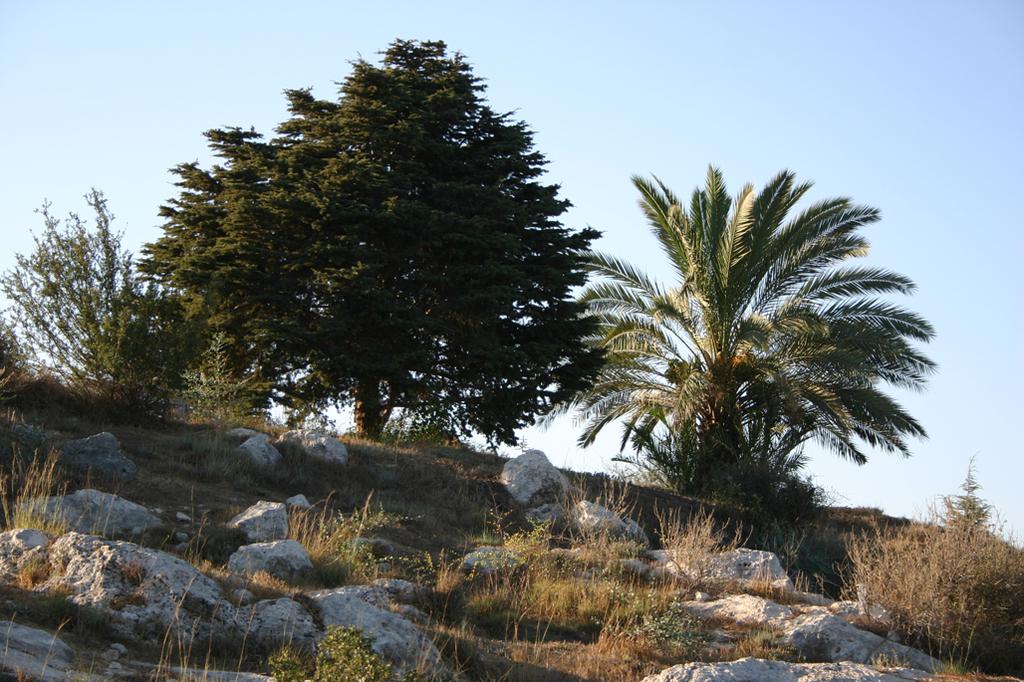
בנאות קדומים שתולים עצי תמר וארז הבולטים למרחוק ביופיים וגובהם המרשים, ניתן להכירם וללמוד בשטח על תכונותיהם השונות ולהבין מדוע הצדיק מתואר כתמר וכארז.

(י) וַיִּגְדְּלוּ הַנְּעָרִים (בראשית כה, כז), רַבִּי לֵוִי אָמַר מָשָׁל לַהֲדַס וְעִצְבוֹנִית שֶׁהָיוּ גְּדֵלִים זֶה עַל גַּבֵּי זֶה, וְכֵיוָן שֶׁהִגְדִּילוּ וְהִפְרִיחוּ זֶה נוֹתֵן רֵיחוֹ וְזֶה חוֹחוֹ.

(10) ..."...And the youths grew up" (Bereishit 25:27). Rabbi Levi made an analogy to a myrtle and wild rosebush which grew next to each other; when they had grown, one gave forth scent and the other thorns. So too with these, for thirteen years they both went to school (beit hasefer) and came back from school, but after thirteen years this one went to study-houses (batei midrashot) and this one went to idolatrous temples (batei avodat kochavim). Rabbi Elazar said, until thirteen years a person needs to take care of their children - from this age onwards, they need to say "Blessed is the one who has exempted me from the punishment of this one." "And Eisav was a man who knew how to hunt..." (ibid.) - he trapped people with his mouth; "you didn't steal?! Who stole with you? You didn't kill?! Who killed with you?" Rabbi Abahu said, robber [is the same as] hunter. He hunted in the house and in the field; in the house he said "How do you tithe salt?" and in the field "how do you tithe straw?" Rabbi Chiya said, he made himself ownerless like a field. Yisrael said before the Holy Blessed One, "Master of all universes: is it not enough for us that we are subjugated by the seventy nations - must we also be subjugated by this one, who is penetrated like women?" The Holy Blessed One said to them, "Even I will come in language [?], I will be revenged upon them." Behold it is written, "And the heart of the heroes of Edom was on that day like the heart of a woman in labour" (Yirmiyahu 49:22). "But Ya'akov was a simple man, a dweller in tents..." (Bereishit 25:27) - two tents, the study-house of Shem and the study-house of Ever. "And Yitzchak loved Eisav, for game was in his mouth..." (Bereishit 25:28) a good piece of meat for his mouth, a good cup of wine for his mouth. "And Rivka loved Ya'akov..." (ibid.) - every time she heard his voice she would add love to her love.


הדס
אשחר ארץ ישראלי-על פי הראובנים עצבונית
משפחת הראובני מציעה לזהות את העצבונית המופיעה במדרש זה כאשחר הארץ ישראלי. הצמח המוכר כיום במגדיר כעצבונית החורש נראה דומה במראהו להדס ובעל קוצים בקצות 'העלים' אולם לא חל בו כל שינוי בין הצמח הצעיר לצמח הבוגר.
כשצמחי ההדס והאשחר הארץ ישראלי צעירים, קשה להבדיל ביניהם במראה החיצוני אך כשהם גדלים, בצמח האשחר הבוגר חל שינוי והוא הופך לקוצני כמתואר במדרש בתחילה שני התאומים היו דומים מאוד "גדלים זה על גבי זה" וכשגדלו והפריחו חל השינוי אחד מהם- ההדס, נתן ריחו וזה- העצבונית, נתן חוחו. בנוסף ישנה גם התאמה בשם שכן הקוצים שיש לצמח הבוגר מעציבים ומכאיבים כשנדקרים מהם.

עצבונית החורש על פי המגדיר (צילום עוזי פז, מתוך אתר פיקיויקי).

וְ תָּנוּ רַבָּנַן: לְעוֹלָם יְהֵא אָדָם רַךְ כְּקָנֶה וְאַל יְהֵא קָשֶׁה כְּאֶרֶז. מַעֲשֶׂה שֶׁבָּא רַבִּי אֶלְעָזָר בְּרַבִּי שִׁמְעוֹן מִמִּגְדַּל גְּדוֹר מִבֵּית רַבּוֹ, וְהָיָה רָכוּב עַל חֲמוֹר וּמְטַיֵּיל עַל שְׂפַת נָהָר, וְשָׂמֵחַ שִׂמְחָה גְּדוֹלָה. וְהָיְתָה דַּעְתּוֹ גַּסָּה עָלָיו מִפְּנֵי שֶׁלָּמַד תּוֹרָה הַרְבֵּה.

נִזְדַּמֵּן לוֹ אָדָם אֶחָד שֶׁהָיָה מְכוֹעָר בְּיוֹתֵר. אָמַר לוֹ: שָׁלוֹם עָלֶיךָ רַבִּי! וְלֹא הֶחְזִיר לוֹ. אָמַר לוֹ: רֵיקָה, כַּמָּה מְכוֹעָר אוֹתוֹ הָאִישׁ! שֶׁמָּא כׇּל בְּנֵי עִירֶךָ מְכוֹעָרִין כְּמוֹתְךָ? אָמַר לוֹ: אֵינִי יוֹדֵעַ, אֶלָּא לֵךְ וֶאֱמוֹר לָאוּמָּן שֶׁעֲשָׂאַנִי: ״כַּמָּה מְכוֹעָר כְּלִי זֶה שֶׁעָשִׂיתָ״. כֵּיוָן שֶׁיָּדַע בְּעַצְמוֹ שֶׁחָטָא, יָרַד מִן הַחֲמוֹר וְנִשְׁתַּטַּח לְפָנָיו, וְאָמַר לוֹ: נַעֲנֵיתִי לְךָ, מְחוֹל לִי! אָמַר לוֹ: אֵינִי מוֹחֵל לְךָ עַד שֶׁתֵּלֵךְ לָאוּמָּן שֶׁעֲשָׂאַנִי וֶאֱמוֹר לוֹ: כַּמָּה מְכוֹעָר כְּלִי זֶה שֶׁעָשִׂיתָ.

הָיָה מְטַיֵּיל אַחֲרָיו עַד שֶׁהִגִּיעַ לְעִירוֹ. יָצְאוּ בְּנֵי עִירוֹ לִקְרָאתוֹ, וְהָיוּ אוֹמְרִים לוֹ: שָׁלוֹם עָלֶיךָ רַבִּי רַבִּי, מוֹרִי מוֹרִי! אָמַר לָהֶם: לְמִי אַתֶּם קוֹרִין רַבִּי רַבִּי? אָמְרוּ לוֹ: לְזֶה שֶׁמְּטַיֵּיל אַחֲרֶיךָ. אָמַר לָהֶם: אִם זֶה רַבִּי — אַל יִרְבּוּ כְּמוֹתוֹ בְּיִשְׂרָאֵל. אָמְרוּ לוֹ: מִפְּנֵי מָה? אָמַר לָהֶם: כָּךְ וְכָךְ עָשָׂה לִי. אָמְרוּ לוֹ: אַף עַל פִּי כֵּן, מְחוֹל לוֹ, שֶׁאָדָם גָּדוֹל בְּתוֹרָה הוּא.

אָמַר לָהֶם: בִּשְׁבִילְכֶם הֲרֵינִי מוֹחֵל לוֹ, וּבִלְבַד שֶׁלֹּא יְהֵא רָגִיל לַעֲשׂוֹת כֵּן. מִיָּד נִכְנַס רַבִּי אֶלְעָזָר בְּרַבִּי שִׁמְעוֹן, וְדָרַשׁ: לְעוֹלָם יְהֵא אָדָם רַךְ כְּקָנֶה וְאַל יְהֵא קָשֶׁה כְּאֶרֶז. וּלְפִיכָךְ זָכָה קָנֶה לִיטּוֹל הֵימֶנּוּ קוּלְמוֹס לִכְתּוֹב בּוֹ סֵפֶר תּוֹרָה תְּפִילִּין וּמְזוּזוֹת.

and now it will rain? He entered the bathhouse in a state of joy, anticipating the large sum of money he was about to receive. As the master entered the bathhouse in his joy, Nakdimon entered the Temple in a state of sadness. He wrapped himself in his prayer shawl and stood in prayer. He said before God: Master of the Universe, it is revealed and known before You that I did not act for my own honor, nor did I act for the honor of my father’s house. Rather, I acted for Your honor, so that there should be water for the Festival pilgrims. Immediately the sky became overcast and rain fell until the twelve cisterns were filled with water, and there was even more water, so that they overflowed. As the master left the bathhouse, Nakdimon ben Guryon left the Temple. When they met one another, Nakdimon said to him: Give me the money you owe me for the extra water you received. The official said to him: I know that the Holy One, Blessed be He, has shaken His world and caused rain to fall only for you. However, I still maintain a claim against you, by which I can legally take my coins from you, as you did not pay me on the agreed date, for the sun had already set, and therefore the rain fell onto my property. Nakdimon went back and entered the Temple, wrapped himself in his prayer shawl, and stood in prayer. He said before God: Master of the Universe, let it be known that You have beloved ones in Your world. Immediately, the clouds scattered and the sun shined. At that time, the master said to him: If the sun had not broken through the clouds, I would have had a claim against you, by which I could have taken my coins from you. A Sage taught: Nakdimon was not his real name; rather his name was Buni. And why was he called Nakdimon? Because the sun broke through [nikdera] for him. The Sages taught: With regard to three people, the sun broke through and shone at an irregular time for their sake: Moses, Joshua, and Nakdimon ben Guryon. The Gemara asks: Granted, the case of Nakdimon ben Guryon is known by the aforementioned tradition. The case of Joshua too is derived from a verse, as it is written: “And the sun stood still, and the moon stayed until the people had avenged themselves upon their enemies” (Joshua 10:13). However, from where do we derive that the sun shined in a supernatural way for Moses? Rabbi Elazar said: It is derived by verbal analogy between “I will begin” and “I will begin.” Here, with regard to Moses, it is written: “This day I will begin to put the dread of you and the fear of you upon the peoples that are under all the whole heaven” (Deuteronomy 2:25). And there, with regard to Joshua, it is written: “On this day I will begin to magnify you in the sight of all Israel, that they may know that just as I was with Moses, so I will be with you” (Joshua 3:7). The repeated use of the phrase “I will begin” indicates that all the miracles performed for Joshua were also performed for Moses. Rabbi Shmuel bar Naḥmani said: The fact that the sun stood still for Moses is derived by a different verbal analogy, between the terms “put” and “put.” Here, with regard to Moses, it is written: “I will begin to put the dread of you” (Deuteronomy 2:25). And there, with regard to Joshua, is it written: “Then Joshua spoke to the Lord, on the day when the Lord put the Amorites before the children of Israel, and he said in the sight of Israel: Sun, stand still upon Gibeon, and you, moon, in the valley of Aijalon” (Joshua 10:12). Rabbi Yoḥanan said: This idea is derived from the verse itself, as it says with regard to Moses: “This day I will begin to put the dread of you and the fear of you upon the peoples that are under all the whole heaven, who, when they hear the report of you, shall tremble, and be in anguish due to you” (Deuteronomy 2:25). When did the nations of the world tremble and when were they in anguish due to you? When the sun broke through for Moses. § The mishna taught: And likewise, if there is a particular city upon which it did not rain, while the surrounding area did receive rain, this is considered a divine curse, as it is written: “And I will cause it to rain on one city, but on one city I will not cause it to rain, one portion will be rained upon, and the portion upon which it did not rain shall wither” (Amos 4:7). Rav Yehuda said that Rav said: And both of the cities are faced with a curse, as one city suffers from drought while the other is afflicted with destructive storms. This statement reverses the plain meaning of a verse. The Gemara provides other interpretations that Rav Yehuda attributed to Rav, which also run contrary to the simple meaning of a verse. “Jerusalem among them was a like a menstruating woman” (Lamentations 1:17). Rav Yehuda said that Rav said: Although the simple meaning of this verse is a curse, it can also be understood as a blessing. Jerusalem was like a menstruating woman: Just as a menstruating woman will become permitted to her husband after the conclusion of her days of ritual impurity, so too, Jerusalem will be repaired from its destruction. Similarly, with regard to the verse: “How she has become like a widow” (Lamentations 1:1), Rav Yehuda said: This too is for a blessing. The verse states that Jerusalem is like a widow, but is not an actual widow. Rather, Jerusalem is like a woman whose husband has gone to a country overseas. Without her husband by her side she is likened to a widow, and yet he intends to return to her. The same manner of explanation is provided for the verse: “Therefore I have also made you contemptible and base” (Malachi 2:9). Rav Yehuda said: This too can be interpreted as a blessing, as meaning that the nations view us as lowly, but nevertheless, they do not assign us unpleasant jobs. They do not appoint from us either river officials or government officials [geziripatei]. The prophet Ahijah the Shilonite cursed Israel in the following terms: “For the Lord will smite Israel as a reed is shaken in the water” (I Kings 14:15). Rav Yehuda said that Rav said: This too is for a blessing, as Rabbi Shmuel bar Naḥmani said that Rabbi Yonatan said: What is the meaning of that which is written: “Faithful are the wounds of a friend, but the kisses of an enemy are deceitful” (Proverbs 27:6)? The curse with which Ahijah the Shilonite cursed the Jewish people is more effective than the blessing with which Balaam the wicked blessed them. Rabbi Yoḥanan elaborates: Ahijah the Shilonite cursed the Jewish people by comparing them to a reed: “For the Lord will smite Israel as a reed is shaken in the water.” Although it seems to be a curse, this verse is actually a blessing. Just as this reed stands in a place of water, and its shoots replenish themselves when cut, and its roots are numerous for a plant of its size, and even if all the winds in the world come and blow against it, they cannot move it from its place, rather, it sways with them until the winds subside, and the reed still stands in its place, the same applies to the Jewish people. After all the difficulties that they endure, they will ultimately survive and return home. However, Balaam the wicked blessed the Jews by comparing them to a cedar, as it is stated: “As cedars beside the waters” (Numbers 24:6). Just as this cedar does not stand in a place of water, and its shoots do not replenish themselves, and its roots are not numerous, Balaam wished that the same should apply to the Jewish people. Furthermore, while it is true that even if all the winds in the world blow against it they will not move it from its place, once the southern wind blows against it, it uproots the cedar and turns it on its face. And not only that, but the reed merited that a quill [kulmos] is taken from it to write with it a Torah scroll, the Prophets, and the Writings. Evidently, the curse comparing Israel to a reed is better than the blessing likening them to a cedar. The Sages further taught in praise of the reed: A person should always be soft like a reed, and he should not be stiff like a cedar. An incident occurred in which Rabbi Elazar, son of Rabbi Shimon, came from Migdal Gedor, from his rabbi’s house, and he was riding on a donkey and strolling on the bank of the river. And he was very happy, and his head was swollen with pride because he had studied much Torah.
מה ניתן ללמוד מההשוואה בין הארז לקנה. הקנה כסמל לגמישות לעומת הארז המסמל חוזק ויופי אך גם נוקשות וחסר גמישות.