21 Cheshvan 5778 | November 10, 2017
Parshat Chayei Sarah
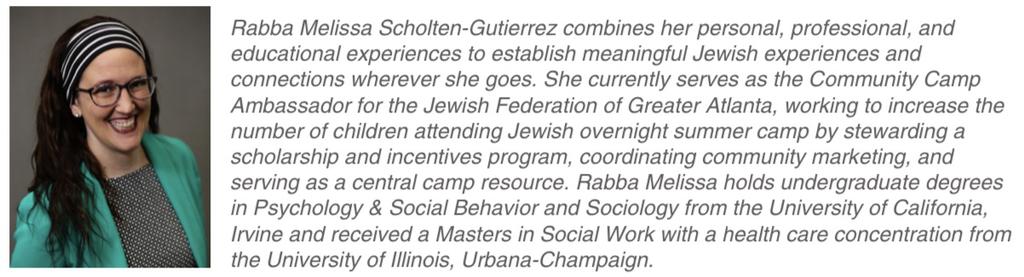
Rabba Melissa Scholten-Gutierrez
Class of 2018
Chayei Sarah - literally the life of Sarah - opens with her death.
We read in Beresheit 23:1-2:
(א) וַיִּהְיוּ֙ חַיֵּ֣י שָׂרָ֔ה מֵאָ֥ה שָׁנָ֛ה וְעֶשְׂרִ֥ים שָׁנָ֖ה וְשֶׁ֣בַע שָׁנִ֑ים שְׁנֵ֖י חַיֵּ֥י שָׂרָֽה׃ (ב) וַתָּ֣מׇת שָׂרָ֗ה בְּקִרְיַ֥ת אַרְבַּ֛ע הִ֥וא חֶבְר֖וֹן בְּאֶ֣רֶץ כְּנָ֑עַן וַיָּבֹא֙ אַבְרָהָ֔ם לִסְפֹּ֥ד לְשָׂרָ֖ה וְלִבְכֹּתָֽהּ׃
And the life of Sarah was a hundred and seven and twenty years; these were the years of the life of Sarah... Sarah died in Kiryat-Arba, now Hebron, in the land of Canaan; and Abraham proceeded to mourn for Sarah and to bewail her.
Rashi, on this pasuk, teaches that the word years is repeated at the end of the pasuk to emphasize that they were all good. Sarah lived a good life. So, if we are talking about death - why are we talking about life?
Perhaps, it is because how one dies can be a reflection of how one lives, or at least there is the opportunity for it should we open ourselves to the conversations. There is a rise in popular culture around this subject with best sellers like Being Mortal by Dr. Atul Gawande and When Breath Becomes Air by Dr. Lucy Kalanithi; and communities nationwide are bringing in The Conversation Project and Respecting Choices. Meanwhile projects like Death Over Dinner - Jewish Edition and What Matters: Caring Conversations About End of Life are adding Jewish influences to the conversations. But, our tradition has taught the importance of both living and dying well, for ages.
The Talmud in Kiddushin 31b teaches about how to honor one’s father and mother, in their life and in their death in a way that makes them seem connected:
תָּנוּ רַבָּנַן מְכַבְּדוֹ בְּחַיָּיו וּמְכַבְּדוֹ בְּמוֹתוֹ בְּחַיָּיו כֵּיצַד הַנִּשְׁמָע בִּדְבַר אָבִיו לְמָקוֹם לֹא יֹאמַר שַׁלְּחוּנִי בִּשְׁבִיל עַצְמִי מַהֲרוּנִי בִּשְׁבִיל עַצְמִי פִּטְרוּנִי בִּשְׁבִיל עַצְמִי אֶלָּא כּוּלְּהוּ בִּשְׁבִיל אַבָּא בְּמוֹתוֹ כֵּיצַד הָיָה אוֹמֵר דָּבָר שְׁמוּעָה מִפִּיו לֹא יֹאמַר כָּךְ אָמַר אַבָּא אֶלָּא כָּךְ אָמַר אַבָּא מָרִי הֲרֵינִי כַּפָּרַת מִשְׁכָּבוֹ וְהָנֵי מִילֵּי תּוֹךְ שְׁנֵים עָשָׂר חֹדֶשׁ מִכָּאן וְאֵילָךְ אוֹמֵר זִכְרוֹנוֹ לִבְרָכָה לְחַיֵּי הָעוֹלָם הַבָּא
The Sages taught: One honors his father in his life and honors him in his death. How does he honor him in his life? One who goes to a place on the command of his father should not say to the people to whom he has been sent, to hurry them along: Send me on my journey on my own behalf, or: Hurry up on my own behalf, or: Allow me to take leave of this business on my own behalf. Rather, he should say all of the above in the following manner: Act in this manner on Father’s behalf, as a mark of respect for his father. How does he honor him in his death? If he says a matter he heard from his father’s mouth, he should not say: So said Father. Rather, he should say: So said Father, my teacher, may I be an atonement for his resting soul. And this halakha applies within twelve months of his death. From this time onward he says: May his memory be for a blessing, for the life of the World-to-Come.
We are commanded to show respect in our words and actions to our parents - not only in their life, but also in their death.
When Avraham fell to his knees and wailed, then picked himself up and went about planning for Sarah’s burial - do you think he knew what she wanted? When your parents die - will you know what they want? What about when they are suddenly ill or slip slowly into dementia? Don’t wait to have the conversation. It is hard, but it is the ultimate way to honor your loved ones. Immediately after this devastating loss, Avraham gets up and proceeds to move forward, as we read in Beresheit 23:3-4:
Then Avraham rose from beside his dead, and spoke to the Hittites, saying, “I am a resident alien among you; sell me a burial site among you, that I may remove my dead for burial.”
While his heart was filled with sadness, Avraham knew that he had to accept Sarah’s death and move forward with planning her burial and the challenges of his life. Grief is not endless. We too must get up and move forwards, with our loved ones in our hearts and continue to honor their lives.