


תִּתֵּ֤ן אֱמֶת֙ לְיַֽעֲקֹ֔ב חֶ֖סֶד לְאַבְרָהָ֑ם אֲשֶׁר־נִשְׁבַּ֥עְתָּ לַאֲבֹתֵ֖ינוּ מִ֥ימֵי קֶֽדֶם׃
You will show truth to Yaakov, kindness to Avraham, as you have sworn to our fathers from days of old.
וְהִנֵּה כָּל הָעוֹלָם כֻּלּוֹ נִזּוֹן מִשֶּׁפַע שֶׁל אֶרֶץ יִשְׂרָאֵל, כַּיָּדוּעַ. וְאֶרֶץ יִשְׂרָאֵל בְּעַצְמוֹ מְקַבֵּל הַשֶּׁפַע מִן אֱמֶת, שֶׁהוּא מִדַּת יַעֲקֹב, כַּנֶּאֱמַר (מיכה ז׳:כ׳): תִּתֵּן אֱמֶת לְיַעֲקֹב;
7. And behold, the entire world is sustained on an influx of bounty from the Land of Israel, as is known. And the Land of Israel itself receives the bounty from truth, the attribute of Yaakov, as is said, “Give truth to Yaakov.”
Confident that you will prevail,
Praying for your success,
[Signed] Yitzchak Hutner.
וַיֵּצֵ֤א הָרִאשׁוֹן֙ אַדְמוֹנִ֔י כֻּלּ֖וֹ כְּאַדֶּ֣רֶת שֵׂעָ֑ר וַיִּקְרְא֥וּ שְׁמ֖וֹ עֵשָֽׂו׃ וְאַֽחֲרֵי־כֵ֞ן יָצָ֣א אָחִ֗יו וְיָד֤וֹ אֹחֶ֙זֶת֙ בַּעֲקֵ֣ב עֵשָׂ֔ו וַיִּקְרָ֥א שְׁמ֖וֹ יַעֲקֹ֑ב וְיִצְחָ֛ק בֶּן־שִׁשִּׁ֥ים שָׁנָ֖ה בְּלֶ֥דֶת אֹתָֽם׃
The first one emerged red, like a hairy mantle all over; so they named him Esau. Then his brother emerged, holding on to the heel of Esau; so they named him Jacob. Isaac was sixty years old when they were born.
ויקראו שמו עשו. הַכֹּל קָרְאוּ לוֹ כֵן, לְפִי שֶׁהָיָה נַעֲשֶׂה וְנִגְמָר בִּשְׂעָרוֹ כְבֶן שָׁנִים הַרְבֵּה:
ויקרא שמו עשו AND THEY CALLED HIS NAME ESAU — every one called him thus because he was made (עשה means to make) and fully developed with hair as a lad several years old.
(כז) וַֽיִּגְדְּלוּ֙ הַנְּעָרִ֔ים וַיְהִ֣י עֵשָׂ֗ו אִ֛ישׁ יֹדֵ֥עַ צַ֖יִד אִ֣ישׁ שָׂדֶ֑ה וְיַעֲקֹב֙ אִ֣ישׁ תָּ֔ם יֹשֵׁ֖ב אֹהָלִֽים׃
(27) When the boys grew up, Esau became a skillful hunter, a man of the outdoors; but Jacob was a mild man who stayed in camp.
וַיֹּ֕אמֶר בָּ֥א אָחִ֖יךָ בְּמִרְמָ֑ה וַיִּקַּ֖ח בִּרְכָתֶֽךָ׃ וַיֹּ֡אמֶר הֲכִי֩ קָרָ֨א שְׁמ֜וֹ יַעֲקֹ֗ב וַֽיַּעְקְבֵ֙נִי֙ זֶ֣ה פַעֲמַ֔יִם אֶת־בְּכֹרָתִ֣י לָקָ֔ח וְהִנֵּ֥ה עַתָּ֖ה לָקַ֣ח בִּרְכָתִ֑י וַיֹּאמַ֕ר הֲלֹא־אָצַ֥לְתָּ לִּ֖י בְּרָכָֽה׃
But he answered, “Your brother came with guile and took away your blessing.” [Esau] said, “Was he, then, named Jacob that he might supplant me these two times? First he took away my birthright and now he has taken away my blessing!” And he added, “Have you not reserved a blessing for me?”
במרמה. שלא דבר אמת:
WITH GUILE. He did not speak the truth.
ויעקבני. כמו מרמה וכן בעקבה ויתכן היותו מגזרת עקוב הלב. והעקוב הפך המישור:
FOR HE HATH SUPPLANTED ME. Va-yakeveni (for he hath supplanted me) is to be rendered: for he hath deceived me. Ve-okbah (in subtlety) in But Jehu did it in subtlety (ve-okbah) (II Kings 10:19) is similar. It is possible that it comes from the same root as akov (deceitful) in The heart is deceitful (akov) (Jer. 17:9). Akov is the opposite of mishor (straight).
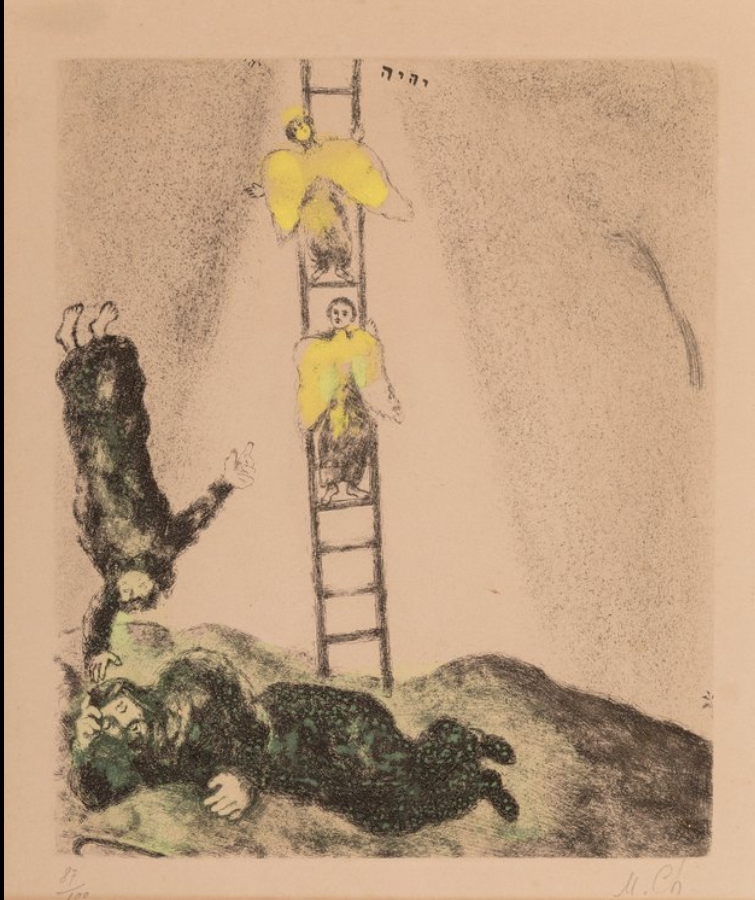
וַֽיַּחֲלֹ֗ם וְהִנֵּ֤ה סֻלָּם֙ מֻצָּ֣ב אַ֔רְצָה וְרֹאשׁ֖וֹ מַגִּ֣יעַ הַשָּׁמָ֑יְמָה וְהִנֵּה֙ מַלְאֲכֵ֣י אֱלֹהִ֔ים עֹלִ֥ים וְיֹרְדִ֖ים בּֽוֹ׃
He had a dream; a stairway was set on the ground and its top reached to the sky, and messengers of God were going up and down on it.
תנא עולין ומסתכלין בדיוקנו של מעלה ויורדין ומסתכלין בדיוקנו של מטה בעו לסכוניה מיד (בראשית כח, יג) והנה יהוה נצב עליו אמר רבי שמעון בן לקיש אלמלא מקרא כתוב אי אפשר לאמרו כאדם שמניף על בנו
It was taught that the angels were ascending and gazing at the image of [bidyokeno] Jacob above, engraved on the Throne of Glory, and descending and gazing at his image below. The angels subsequently became jealous of Jacob, and wanted to endanger his life. Immediately Jacob received divine protection, as the verse states: “And behold, the Lord stood over him” (Genesis 28:13). Rabbi Shimon ben Lakish says: Were it not written in a verse it would be impossible to utter it, in deference to God, since it describes God as standing over Jacob to protect him from the angels like a man who waves a fan over his son to cool him down.
וַיְהִ֣י בַבֹּ֔קֶר וְהִנֵּה־הִ֖וא לֵאָ֑ה וַיֹּ֣אמֶר אֶל־לָבָ֗ן מַה־זֹּאת֙ עָשִׂ֣יתָ לִּ֔י הֲלֹ֤א בְרָחֵל֙ עָבַ֣דְתִּי עִמָּ֔ךְ וְלָ֖מָּה רִמִּיתָֽנִי׃ וַיֹּ֣אמֶר לָבָ֔ן לֹא־יֵעָשֶׂ֥ה כֵ֖ן בִּמְקוֹמֵ֑נוּ לָתֵ֥ת הַצְּעִירָ֖ה לִפְנֵ֥י הַבְּכִירָֽה׃ מַלֵּ֖א שְׁבֻ֣עַ זֹ֑את וְנִתְּנָ֨ה לְךָ֜ גַּם־אֶת־זֹ֗את בַּעֲבֹדָה֙ אֲשֶׁ֣ר תַּעֲבֹ֣ד עִמָּדִ֔י ע֖וֹד שֶֽׁבַע־שָׁנִ֥ים אֲחֵרֽוֹת׃ וַיַּ֤עַשׂ יַעֲקֹב֙ כֵּ֔ן וַיְמַלֵּ֖א שְׁבֻ֣עַ זֹ֑את וַיִּתֶּן־ל֛וֹ אֶת־רָחֵ֥ל בִּתּ֖וֹ ל֥וֹ לְאִשָּֽׁה׃
When morning came, there was Leah! So he said to Laban, “What is this you have done to me? I was in your service for Rachel! Why did you deceive me?” Laban said, “It is not the practice in our place to marry off the younger before the older. Wait until the bridal week of this one is over and we will give you that one too, provided you serve me another seven years.” Jacob did so; he waited out the bridal week of the one, and then he gave him his daughter Rachel as wife.—
(ה)לא יעשה כן במקומנו לתת הצעירה לפני הבכירה, קינטר אותו ברמז כאומר אפשר במקומכם המנהג כן להקדים הצעיר לפני הבכור אבל במקומנו לא יעשה כן:
וַיִּ֥חַר לְיַעֲקֹ֖ב וַיָּ֣רֶב בְּלָבָ֑ן וַיַּ֤עַן יַעֲקֹב֙ וַיֹּ֣אמֶר לְלָבָ֔ן מַה־פִּשְׁעִי֙ מַ֣ה חַטָּאתִ֔י כִּ֥י דָלַ֖קְתָּ אַחֲרָֽי׃ כִּֽי־מִשַּׁ֣שְׁתָּ אֶת־כׇּל־כֵּלַ֗י מַה־מָּצָ֙אתָ֙ מִכֹּ֣ל כְּלֵי־בֵיתֶ֔ךָ שִׂ֣ים כֹּ֔ה נֶ֥גֶד אַחַ֖י וְאַחֶ֑יךָ וְיוֹכִ֖יחוּ בֵּ֥ין שְׁנֵֽינוּ׃ זֶה֩ עֶשְׂרִ֨ים שָׁנָ֤ה אָנֹכִי֙ עִמָּ֔ךְ רְחֵלֶ֥יךָ וְעִזֶּ֖יךָ לֹ֣א שִׁכֵּ֑לוּ וְאֵילֵ֥י צֹאנְךָ֖ לֹ֥א אָכָֽלְתִּי׃ טְרֵפָה֙ לֹא־הֵבֵ֣אתִי אֵלֶ֔יךָ אָנֹכִ֣י אֲחַטֶּ֔נָּה מִיָּדִ֖י תְּבַקְשֶׁ֑נָּה גְּנֻֽבְתִ֣י י֔וֹם וּגְנֻֽבְתִ֖י לָֽיְלָה׃ הָיִ֧יתִי בַיּ֛וֹם אֲכָלַ֥נִי חֹ֖רֶב וְקֶ֣רַח בַּלָּ֑יְלָה וַתִּדַּ֥ד שְׁנָתִ֖י מֵֽעֵינָֽי׃ זֶה־לִּ֞י עֶשְׂרִ֣ים שָׁנָה֮ בְּבֵיתֶ֒ךָ֒ עֲבַדְתִּ֜יךָ אַרְבַּֽע־עֶשְׂרֵ֤ה שָׁנָה֙ בִּשְׁתֵּ֣י בְנֹתֶ֔יךָ וְשֵׁ֥שׁ שָׁנִ֖ים בְּצֹאנֶ֑ךָ וַתַּחֲלֵ֥ף אֶת־מַשְׂכֻּרְתִּ֖י עֲשֶׂ֥רֶת מֹנִֽים׃ לוּלֵ֡י אֱלֹהֵ֣י אָבִי֩ אֱלֹהֵ֨י אַבְרָהָ֜ם וּפַ֤חַד יִצְחָק֙ הָ֣יָה לִ֔י כִּ֥י עַתָּ֖ה רֵיקָ֣ם שִׁלַּחְתָּ֑נִי אֶת־עׇנְיִ֞י וְאֶת־יְגִ֧יעַ כַּפַּ֛י רָאָ֥ה אֱלֹהִ֖ים וַיּ֥וֹכַח אָֽמֶשׁ׃ וַיַּ֨עַן לָבָ֜ן וַיֹּ֣אמֶר אֶֽל־יַעֲקֹ֗ב הַבָּנ֨וֹת בְּנֹתַ֜י וְהַבָּנִ֤ים בָּנַי֙ וְהַצֹּ֣אן צֹאנִ֔י וְכֹ֛ל אֲשֶׁר־אַתָּ֥ה רֹאֶ֖ה לִי־ה֑וּא וְלִבְנֹתַ֞י מָֽה־אֶעֱשֶׂ֤ה לָאֵ֙לֶּה֙ הַיּ֔וֹם א֥וֹ לִבְנֵיהֶ֖ן אֲשֶׁ֥ר יָלָֽדוּ׃ וְעַתָּ֗ה לְכָ֛ה נִכְרְתָ֥ה בְרִ֖ית אֲנִ֣י וָאָ֑תָּה וְהָיָ֥ה לְעֵ֖ד בֵּינִ֥י וּבֵינֶֽךָ׃
Now Jacob became incensed and took up his grievance with Laban. Jacob spoke up and said to Laban, “What is my crime, what is my guilt that you should pursue me? You rummaged through all my things; what have you found of all your household objects? Set it here, before my kinsmen and yours, and let them decide between us two. “These twenty years I have spent in your service, your ewes and she-goats never miscarried, nor did I feast on rams from your flock. That which was torn by beasts I never brought to you; I myself made good the loss; you exacted it of me, whether snatched by day or snatched by night. Often, scorching heat ravaged me by day and frost by night; and sleep fled from my eyes. Of the twenty years that I spent in your household, I served you fourteen years for your two daughters, and six years for your flocks; and you changed my wages time and again. Had not the God of my father, the God of Abraham and the Fear of Isaac, been with me, you would have sent me away empty-handed. But God took notice of my plight and the toil of my hands, and He gave judgment last night.” Then Laban spoke up and said to Jacob, “The daughters are my daughters, the children are my children, and the flocks are my flocks; all that you see is mine. Yet what can I do now about my daughters or the children they have borne? Come, then, let us make a pact, you and I, that there may be a witness between you and me.”
וַיִּוָּתֵ֥ר יַעֲקֹ֖ב לְבַדּ֑וֹ וַיֵּאָבֵ֥ק אִישׁ֙ עִמּ֔וֹ עַ֖ד עֲל֥וֹת הַשָּֽׁחַר׃ וַיַּ֗רְא כִּ֣י לֹ֤א יָכֹל֙ ל֔וֹ וַיִּגַּ֖ע בְּכַף־יְרֵכ֑וֹ וַתֵּ֙קַע֙ כַּף־יֶ֣רֶךְ יַעֲקֹ֔ב בְּהֵאָֽבְק֖וֹ עִמּֽוֹ׃ וַיֹּ֣אמֶר שַׁלְּחֵ֔נִי כִּ֥י עָלָ֖ה הַשָּׁ֑חַר וַיֹּ֙אמֶר֙ לֹ֣א אֲשַֽׁלֵּחֲךָ֔ כִּ֖י אִם־בֵּרַכְתָּֽנִי׃ וַיֹּ֥אמֶר אֵלָ֖יו מַה־שְּׁמֶ֑ךָ וַיֹּ֖אמֶר יַעֲקֹֽב׃ וַיֹּ֗אמֶר לֹ֤א יַעֲקֹב֙ יֵאָמֵ֥ר עוֹד֙ שִׁמְךָ֔ כִּ֖י אִם־יִשְׂרָאֵ֑ל כִּֽי־שָׂרִ֧יתָ עִם־אֱלֹהִ֛ים וְעִם־אֲנָשִׁ֖ים וַתּוּכָֽל׃ וַיִּשְׁאַ֣ל יַעֲקֹ֗ב וַיֹּ֙אמֶר֙ הַגִּֽידָה־נָּ֣א שְׁמֶ֔ךָ וַיֹּ֕אמֶר לָ֥מָּה זֶּ֖ה תִּשְׁאַ֣ל לִשְׁמִ֑י וַיְבָ֥רֶךְ אֹת֖וֹ שָֽׁם׃ וַיִּקְרָ֧א יַעֲקֹ֛ב שֵׁ֥ם הַמָּק֖וֹם פְּנִיאֵ֑ל כִּֽי־רָאִ֤יתִי אֱלֹהִים֙ פָּנִ֣ים אֶל־פָּנִ֔ים וַתִּנָּצֵ֖ל נַפְשִֽׁי׃
Jacob was left alone. And a man wrestled with him until the break of dawn. When he saw that he had not prevailed against him, he wrenched Jacob’s hip at its socket, so that the socket of his hip was strained as he wrestled with him. Then he said, “Let me go, for dawn is breaking.” But he answered, “I will not let you go, unless you bless me.” Said the other, “What is your name?” He replied, “Jacob.” Said he, “Your name shall no longer be Jacob, but Israel, for you have striven with beings divine and human,-d and have prevailed.” Jacob asked, “Pray tell me your name.” But he said, “You must not ask my name!” And he took leave of him there. So Jacob named the place Peniel, meaning, “I have seen a divine being face to face, yet my life has been preserved.”
ויאבק איש. מְנַחֵם פֵּי' וַיִּתְעַפֵּר אִישׁ, לְשׁוֹן אָבָק, שֶׁהָיוּ מַעֲלִים עָפָר בְּרַגְלֵיהֶם עַ"י נִעְנוּעָם. וְלִי נִרְאֶה שֶׁהוּא לְשׁוֹן וַיִּתְקַשֵּׁר, וְלָשׁוֹן אֲרַמִּי הוּא, בָּתַר דַּאֲבִיקוּ בֵיהּ, וַאֲבֵיק לֵיהּ מֵיבַק – לְשׁוֹן עֲנִיבָה, שֶׁכֵּן דֶּרֶךְ שְׁנַיִם שֶׁמִּתְעַצְּמִים לְהַפִּיל אִישׁ אֶת רֵעֵהוּ, שֶׁחוֹבְקוֹ וְאוֹבְקוֹ בִּזְרוֹעוֹתָיו. וּפֵרְשׁוּ רַזִ"לִ שֶׁהוּא שָׂרוֹ שֶׁל עֵשָׂו (בראשית רבה):
ויאבק איש AND A MAN WRESTLED — Menachem (ben Seruk) explains: “a man covered himself with dust”, taking the verb as connected in sense with אבק “dust”. It would mean that they were raising the dust with their feet through their movements. I, however, am of opinion that is means “he fastened himself on”, and that it is an Aramaic word, as (Sanhedrin 63b) “after they have joined (אביקו) it", and (Menachot 42a) “and he twined (the “Fringes”) with loops”. It denotes “intertwining”, for such is the manner of two people who make strong efforts to throw each other — one clasps the other and twines himself round him with his arms. Our Rabbis of blessed memory explained that he was Esau’s guardian angel (Genesis Rabbah 77:3).
ברכתני. הוֹדֵה לִי עַל הַבְּרָכוֹת שֶׁבֵּרְכַנִי אָבִי, שֶׁעֵשָׂו מְעַרְעֵר עֲלֵיהֶן:
ברכתני [EXCEPT] THOU BLESS ME — admit my right to the blessings which my father gave me and to which Esau lays claim.
לא יעקב.לֹא יֵאָמֵר עוֹד שֶׁהַבְּרָכוֹת בָּאוּ לְךָ בְעָקְבָּה וּרְמִיָּה כִּי אִם בִשְׂרָרָה וְגִלּוּי פָּנִים, וְסוֹפְךָ שֶׁהַקָּבָּ"ה נִגְלֶה אֵלֶיךָ בְּבֵית אֵל וּמַחֲלִיף שִׁמְךָ וְשָׁם הוּא מְבָרֶכְךָ, וַאֲנִי שָׁם אֶהְיֶה וְאוֹדֶה לְךָ עֲלֵיהֶן...
לא יעקב [THY NAME SHALL] NO MORE BE CALLED JACOB [BUT ISRAEL] (literally, “not Jacob — supplanting — shall any more be said to thee”) — It shall no longer be said that the blessings came to you through supplanting and subtlety but through noble conduct (שררה) and in an open manner. Because later on the Holy One, blessed be He, will reveal Himself to you at Bethel and will change your name. There He will bless you, and I shall be there and admit your right to them (the blessings)...
וַיָּ֨רׇץ עֵשָׂ֤ו לִקְרָאתוֹ֙ וַֽיְחַבְּקֵ֔הוּ וַיִּפֹּ֥ל עַל־צַוָּארָ֖ו וַׄיִּׄשָּׁׄקֵ֑ׄהׄוּׄ וַיִּבְכּֽוּ׃ וַיִּשָּׂ֣א אֶת־עֵינָ֗יו וַיַּ֤רְא אֶת־הַנָּשִׁים֙ וְאֶת־הַיְלָדִ֔ים וַיֹּ֖אמֶר מִי־אֵ֣לֶּה לָּ֑ךְ וַיֹּאמַ֕ר הַיְלָדִ֕ים אֲשֶׁר־חָנַ֥ן אֱלֹהִ֖ים אֶת־עַבְדֶּֽךָ׃ וַתִּגַּ֧שְׁןָ הַשְּׁפָח֛וֹת הֵ֥נָּה וְיַלְדֵיהֶ֖ן וַתִּֽשְׁתַּחֲוֶֽיןָ׃ וַתִּגַּ֧שׁ גַּם־לֵאָ֛ה וִילָדֶ֖יהָ וַיִּֽשְׁתַּחֲו֑וּ וְאַחַ֗ר נִגַּ֥שׁ יוֹסֵ֛ף וְרָחֵ֖ל וַיִּֽשְׁתַּחֲוֽוּ׃ וַיֹּ֕אמֶר מִ֥י לְךָ֛ כׇּל־הַמַּחֲנֶ֥ה הַזֶּ֖ה אֲשֶׁ֣ר פָּגָ֑שְׁתִּי וַיֹּ֕אמֶר לִמְצֹא־חֵ֖ן בְּעֵינֵ֥י אֲדֹנִֽי׃ וַיֹּ֥אמֶר עֵשָׂ֖ו יֶשׁ־לִ֣י רָ֑ב אָחִ֕י יְהִ֥י לְךָ֖ אֲשֶׁר־לָֽךְ׃ וַיֹּ֣אמֶר יַעֲקֹ֗ב אַל־נָא֙ אִם־נָ֨א מָצָ֤אתִי חֵן֙ בְּעֵינֶ֔יךָ וְלָקַחְתָּ֥ מִנְחָתִ֖י מִיָּדִ֑י כִּ֣י עַל־כֵּ֞ן רָאִ֣יתִי פָנֶ֗יךָ כִּרְאֹ֛ת פְּנֵ֥י אֱלֹהִ֖ים וַתִּרְצֵֽנִי׃ קַח־נָ֤א אֶת־בִּרְכָתִי֙ אֲשֶׁ֣ר הֻבָ֣את לָ֔ךְ כִּֽי־חַנַּ֥נִי אֱלֹהִ֖ים וְכִ֣י יֶשׁ־לִי־כֹ֑ל וַיִּפְצַר־בּ֖וֹ וַיִּקָּֽח׃
Esau ran to greet him. He embraced him and, falling on his neck, he kissed him; and they wept. Looking about, he saw the women and the children. “Who,” he asked, “are these with you?” He answered, “The children with whom God has favored your servant.” Then the maids, with their children, came forward and bowed low; next Leah, with her children, came forward and bowed low; and last, Joseph and Rachel came forward and bowed low. And he asked, “What do you mean by all this company which I have met?” He answered, “To gain my lord’s favor.” Esau said, “I have enough, my brother; let what you have remain yours.” But Jacob said, “No, I pray you; if you would do me this favor, accept from me this gift; for to see your face is like seeing the face of God, and you have received me favorably. Please accept my present which has been brought to you, for God has favored me and I have plenty.” And when he urged him, he accepted.