14 Iyyar 5781 l April 26, 2021
Pesach Sheni
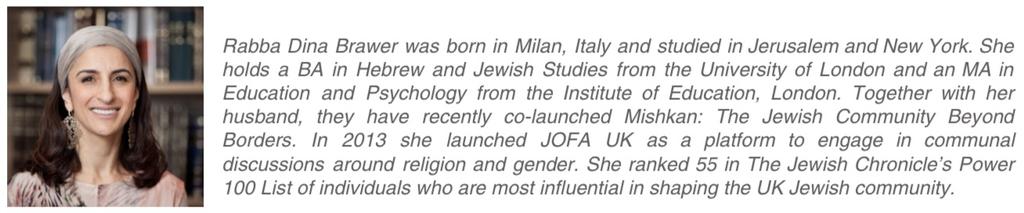
Rabba Dina Brawer
Class of 2018
Our Pesach Seder is largely focused on the Haggadah. In the time of the Beit HaMikdash however, the key ritual was the Korban Pesach (Paschal Lamb). Ritual purity was required of every individual in order to partake in the sacrificial lamb.
Anyone finding themselves unable to return to a state of ritual purity before the fourteenth of Nissan would be unable to take part in the Korban Pesach and be in fact exempt from this mitzvah.
When Moshe gives instruction on how Pesach should be observed and commemorated after the Exodus, a number of individuals, finding themselves ritually impure on erev Pesach, approach Moshe in protest:
The words למה נגרע - literally - ‘why should we be diminished?’ - speak of an attitude towards religious ritual that sees it as something beyond the obligation to adhere to a set of laws and traditions. While the individuals in question are technically ‘exempt’ from taking part, they are sorely aware that they nonetheless are missing out on an experience fundamental to their core identity. Through the Korban Pesach one enters an inner circle of belonging, as each individual is required to be counted in a specific group who will gather to consume the Paschal lamb at the Seder.
In the aftermath of the pandemic the frustrating experience of missing out on key celebrations is all too relatable. Over the last year we had to abstain from many family gatherings and cancel communal celebrations. As the world reopens and we re enter our circles of belonging, Pesach Sheni invites us to pause and consider how inclusion and experience shape us as individuals, and to reframe the concepts of purity and impurity as access or exclusion.
Like those who challenged Moshe, we now are in a position to better appreciate how taking part in a key communal event shapes our overall experience, and how diminishing exclusion can feel.
The frustration of those who lack access to the Korban Pesach is heard by God, Who, in response, establishes a new festival on the fourteenth of Iyar, a month after Pesach, known as Pesach Sheni, literally a second chance Pesach. Granted, this alternative celebration cannot replace the original entirely, but it does convey the importance of creating alternative opportunities to access and experience.