


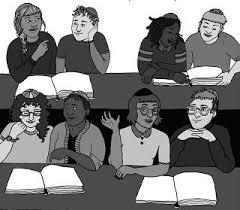
The following insights are gleaned from the 2016 report entitled Generation Now: Understanding and Engaging Jewish Teens Today by the Jewish Education Project. For those of you who work with teens it is important and illuminating reading!
Effective Programs will exhibit the following (this list is shortened from the one in the report):
Teens will . . .
- Have learning experiences that are both challenging and valuable
- Feel a sense of pride about being Jewish
- Develop significant relationships with mentors, role models, and educators.
- Be able to express their values and ethics in relation to Jewish principles and wisdom
- Develop the capacity (skills and language) that allows them to grapple with and express their spiritual journeys
- Develop the desire and commitment to be part of the Jewish people now and in the future
- Be inspired and empowered to make a positive difference in the various communities and world in which they live.
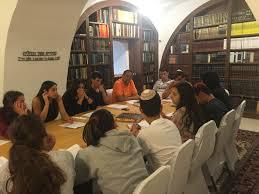
(1) Valuable and Challenging: Far from being something old and rusty that has no meaning for us today, our Jewish textual tradition is utterly relevant to our troubling moral concerns in the 21st century. Jewish texts can provide fertile ground for meaningful and enlightening discussions with peers and teachers that will challenge all involved to think beyond their own selves and circles to the larger community and the world.
(2) Sense of Pride: By studying Jewish text, teens can see that in many ways the Rabbis grappled with the very same issues that they are grappling with. They can begin to recognize what an amazing thing it was that a cultic way of life, based around sacrifices at a main Temple in Jerusalem, came to be the foundational system for all Western ethics. This is something to really be proud of!
(3) Significant Relationships: As the facilitator who provides them the opportunity to engage with Jewish text, perhaps for the first time, at least in a meaningful way, you have a chance to build a relationship based on the discussion of deep and important ideas. You will get to know your students in a way that can potentially have a profound effect on their Jewish selves and their Jewish futures.
(4) Express Themselves and Their Values: This is their chance while studying Jewish text to argue with, agree with, struggle with, and form new ideas in confluence with or in opposition to the Rabbis. In the course of doing this, they will discover who they are, or might be, as Jews and as fellow humans.
(5) Spirituality: Again, this struggle equips them with more tools to do the work that is needed to develop a sense of spirituality, ethics, and morality.
(6) Be a Part of the Jewish People: Honestly, engaging with text and your peers and teachers is just plain fun! Hopefully, this kind of learning will hook them in and instill in them a desire to pursue more Jewish experiences. Just check out Queer Talmud Camp! This is not your Zayde's beit midrash.
(7) Inspiration: With the learning they are doing through engagement with the text and each other, the idea is that they will feel inspired by this 2000 year old conversation to keep it going. And to take the ideas they learn out into the world and apply them.
Before we go on to some actual texts that are perfect for learning sessions with teens, I want to make you familiar with two fun educational videos that can give your students a strong basic background on the material that you will be looking at. Gemara does not have to be confusing; you just need to break it down a little and understand some of the history. Don't worry!! These videos are short and interesting, even for your jaded teenagers. Both of these videos are from Unpacked for Educators, which is a fantastic resource for all kinds of Jewish content. Their videos are top notch. Best of all, they are succinct but contain a lot of info in an engaging format.
A. In our example beit midrash today we are going to look at three different types of texts. When you click on the first source sheet it will take you to The Original Rebel without a Cause: Elisha ben Abuya a.k.a. Aher. This source sheet collects several different texts about the same early Sage Elisha ben Abuya, also referred to as Aher, or Other. As we will see from the texts, Elisha was a rebel and dealt with a lifelong tension between Torah learning and assimilation into the wider Greek culture. He faced the same issues that our teens do today in finding their way as Jews in a world of universalism. Aher was "Other"; he was the rebel that everybody like to pick on and speak badly of. If he lived today, he would vape, have a sleeve tattoo, and drive a motorcycle for sure, among other things, and your parents definitely would not want you to be friends with him! What teen would not be drawn to figure like him?
The format of this first study takes several texts that are connected by one person and looks at who he is and the issues that he deals with. What can we learn from him and the ways he acts? What can we learn from the way other people treat him? This type of text is called aggadah as opposed to halakhah. Aggadah (same word as haggadah) is all the material in the Gemara that is related to story and midrash. Aggadah is non-legalistic and attempts to explain ideas using tales, folklore, moral exhortations, and practical advice. My recommendation is that in exploring Jewish text with teens you stick to aggadic material. If they are really interested and like it, there are ways for them to pursue further Talmudic study that will take them into halakhah. It tends to be denser and requires more specific skills and experience than aggadah.
B. The second source sheet is entitled Frenemies, A Love Story: Reish Lakish and Rabbi Yochanan. This source sheet tells the story of the meet cute between Rabbi Yochanan and Reish Lakish, who were one of the great pairs of hevrutot in Eretz Yisrael. As you can guess from the title, their relationship was a bit fraught at times, which sometimes happens when you have two such large egos coming together to debate matters of halakhah. This is a self-contained story that has a lot to tell us about friendship, always a timely topic for teens. They have a lot of primary source material to share! This is perhaps my absolute favorite story in the Talmud. Their initial meeting just cracks me up! I would love to hear what a room full of teenagers thinks about it. ;-) NB--A baraita is a tradition in the Jewish oral law not incorporated in the Mishnah; nevertheless it still holds a lot of weight.
C. The final source sheet is taken from Pirkei Avot (chapters of the fathers) which is its own Masekhet in the Mishna, Seder Nezikim. Pirkei Avot is traditionally studied from the end of Pesach until Shavuot and consists of sayings, ethical teachings, and maxims. A lot of Jewish homes have artwork on the wall that involves a quotation from Pirkei Avot. Many of these mishnayot will seem very familiar to you and to your students. Don't let that stop you from taking the time to really unpack what they mean! I find these mishnayot to be fantastic discussion starters.
This kind of text study involves taking a pasuk or several pesakim and really digging deep into their meaning. The verses might be part of a larger story, part of a larger debate about halakhah, or, as in our case, a short saying meant to stand alone. They are interesting to study in context or on their own.
As one of my teachers from Pardes, Rabbi Dr. Levi Cooper always says at the end of his podcast, "A Shot of Torah" . . .
TO THE BEIT MIDRASH!
Where does Tik Tok come in, you may ask? Depending on how much time you have, what your set-up is, what your goals are, and what kind of learning you hope to achieve, there are many directions you could go from the initial text study itself. Is the text study a one-off lesson? Is it part of a larger arc that involves different kinds of activities? Is it part of a unit of text study? After studying a Jewish text, a person's learning does not stop there. All Jewish texts are a conversation and conversations require at least two people, if not more, to continue. Your students can record their commentary on the text in any way, shape, or form they choose, whether it be a Tik Tok video, a painting, an interpretive dance, a skit, an short story, a Lego sculpture, you name it! Then, what are they going to do with what they have learned? How are they going to engage with their community? With the world? And then the cycle begins again--text study, expressive interpretation, engagement and implementation of ideas, and sharing. The conversation continues . . .