


Never look down on others. Never think that being Jewish means looking down on gentiles. It doesn’t. Never think that being a religious Jew entitles you to look down on nonreligious Jews. It doesn’t. The greatest Jew, Moses, was also, according to the Torah, “the humblest person on the face of the earth”. Humility does not mean self-abasement. True humility is the ability to see good in others without worrying about yourself.
(ד)..... אַתֶּ֣ם עֹֽבְרִ֗ים בִּגְבוּל֙ אֲחֵיכֶ֣ם בְּנֵי־עֵשָׂ֔ו הַיֹּשְׁבִ֖ים בְּשֵׂעִ֑יר וְיִֽירְא֣וּ מִכֶּ֔ם וְנִשְׁמַרְתֶּ֖ם מְאֹֽד׃ (ה) אַל־תִּתְגָּר֣וּ בָ֔ם כִּ֠י לֹֽא־אֶתֵּ֤ן לָכֶם֙ מֵֽאַרְצָ֔ם עַ֖ד מִדְרַ֣ךְ כַּף־רָ֑גֶל כִּֽי־יְרֻשָּׁ֣ה לְעֵשָׂ֔ו נָתַ֖תִּי אֶת־הַ֥ר שֵׂעִֽיר׃
(4) You will be passing through the territory of your kinsmen, the descendants of Esau, who live in Seir. Though they will be afraid of you, be very careful (5) not to provoke them. For I will not give you of their land so much as a foot can tread on; I have given the hill country of Seir as a possession to Esau.
However Amalek Descends from Esav – and we must destroy his descendants (Today we don't know who they are so not applicable)
(ה) וְכֵן מִצְוַת עֲשֵׂה לְאַבֵּד זֵכֶר עֲמָלֵק. שֶׁנֶּאֱמַר (דברים כה יט) "תִּמְחֶה אֶת זֵכֶר עֲמָלֵק". וּמִצְוַת עֲשֵׂה לִזְכֹּר תָּמִיד מַעֲשָׂיו הָרָעִים....
(5) It is a Positive Commandment to obliterate Amalek, as it says, “erase the memory of Amalek” (Deut. 28:19). It is a Positive Commandment to perpetually remember their wicked deeds
(ח) וַיִּירָ֧א יַעֲקֹ֛ב מְאֹ֖ד וַיֵּ֣צֶר ל֑וֹ....
(8) Jacob was greatly frightened and became anxious...
שֶׁהוּא בָּא עָלַי מִכֹּחַ יְשִׁיבַת אֶרֶץ יִשְׂרָאֵל. כָּל הַשָּׁנִים הַלָּלוּ הוּא יוֹשֵׁב וּמְכַבֵּד אֶת הוֹרָיו, תֹּאמַר שֶׁהוּא בָּא עָלַי מִכֹּחַ כִּבּוּד אָב וָאֵם.....
......because he (Esav) is coming to me with the advantage of living in the land of Israel. All these years he was dwelling (in Israel) and honouring his parents, that is to say he is coming to (meet) me with the advantage of honouring his parents
(1) בן ארבעים שנה [AND ESAU WAS] FORTY YEARS OLD
Esav is compared to a pig….A pig when it lies down stretches forth its cloven hoof as much as to say, “See, I am a clean animal”. In the same way these (descendants of Esav - again this is another whole talk in its own right) rob and extort and pretend to be honourable. For 40 years Esav snatched women from their husbands and abused them. When he was 40 he said (to himself) ‘my father was 40 when he got married – I will do the same’
Bereishis Rabba 65:1
(2) ליצחק ולרבקה TO ISAAC AND REBEKAH, because they worshipped idols (Genesis Rabbah 65:4).
(ו) וַיַּ֣רְא עֵשָׂ֗ו כִּֽי־בֵרַ֣ךְ יִצְחָק֮ אֶֽת־יַעֲקֹב֒ וְשִׁלַּ֤ח אֹתוֹ֙ פַּדֶּ֣נָֽה אֲרָ֔ם לָקַֽחַת־ל֥וֹ מִשָּׁ֖ם אִשָּׁ֑ה בְּבָרֲכ֣וֹ אֹת֔וֹ וַיְצַ֤ו עָלָיו֙ לֵאמֹ֔ר לֹֽא־תִקַּ֥ח אִשָּׁ֖ה מִבְּנ֥וֹת כְּנָֽעַן׃ (ז) וַיִּשְׁמַ֣ע יַעֲקֹ֔ב אֶל־אָבִ֖יו וְאֶל־אִמּ֑וֹ וַיֵּ֖לֶךְ פַּדֶּ֥נָֽה אֲרָֽם׃ (ח) וַיַּ֣רְא עֵשָׂ֔ו כִּ֥י רָע֖וֹת בְּנ֣וֹת כְּנָ֑עַן בְּעֵינֵ֖י יִצְחָ֥ק אָבִֽיו׃ (ט) וַיֵּ֥לֶךְ עֵשָׂ֖ו אֶל־יִשְׁמָעֵ֑אל וַיִּקַּ֡ח אֶֽת־מָחֲלַ֣ת ׀ בַּת־יִשְׁמָעֵ֨אל בֶּן־אַבְרָהָ֜ם אֲח֧וֹת נְבָי֛וֹת עַל־נָשָׁ֖יו ל֥וֹ לְאִשָּֽׁה׃ (ס)
(6) When Esau saw that Isaac had blessed Jacob and sent him off to Paddan-aram to take a wife from there, charging him, as he blessed him, “You shall not take a wife from among the Canaanite women,” (7) and that Jacob had obeyed his father and mother and gone to Paddan-aram, (8) Esau realized that the Canaanite women displeased his father Isaac. (9) So Esau went to Ishmael and took to wife, in addition to the wives he had, Mahalath the daughter of Ishmael son of Abraham, sister of Nebaioth.
(א) וירא עשו כי ברך יצחק את יעקב - בברכות אחרונות הללו נתן לו את ארץ כנען שניתנה לאברהם וגם אמר לו לקחת אשה ממשפחתו וגם צווהו שלא לקחת מבנות כנען, חשב עשו בלבו מה שנשאתי מבנות כנען גזל ממני ברכת אברהם ולקח את בת ישמעאל ממשפחת אברהם, חשב בלבו שמא מעתה אזכה לנחלת אברהם.
(1) וירא עשו כי ברך יצחק את יעקב, Esau realised that in the blessings which Yitzchok had given Yaakov the land of Canaan as his heritage had been included, and that Yitzchok also had given Yaakov specific instructions to get a wife from amongst the daughters of Lavan, the brother of his mother, and on no account to marry a local Canaanite girl. Esau therefore arrived at the conclusion that he had been deprived of his share in the land of Canaan as a penalty for having married Canaanite girls and that this was the reason why Yaakov had been successful in stealing the blessing of Avraham from him. He therefore decided to marry into Avraham’s family, i.e. a descendant of Ishmael. He thought to himself that perhaps by doing this he would restore his claim to Avraham’s heritage.
(1) This is the line of Esau—that is, Edom. (2) Esau took his wives from among the Canaanite women—Adah daughter of Elon the Hittite, and Oholibamah daughter of Anah daughter of Zibeon the Hivite— (3) and also Basemath daughter of Ishmael and sister of Nebaioth.
different opinions about Esav's wives - I followed Rashi
Three wives
- Basemath daughter of Elon the Hittite) Adah daughter of Elon
- (Judith daughter of Beeri the Hittite) Oholibamah
- Machalas Basemath
it is clear that the Torah would not have devoted so much space to this topic unless in contained many sublime mysteries. Though much of such esoteric knowledge eludes us, the kabbalists have dwelt heavily upon it. A profoundly mystical part of the Zohar (part 3 pp127-145) known as the Idra Rabbah is devoted to its exposition.
(ד) וְכֵן נִתְעַסֵּק בְּיִחוּס בְּנֵי עֵשָׂו, וְאֵלֶּה תֹּלְדוֹת עֵשָׂו, לְהוֹדִיעַ נִוּוּלָן. שֶׁאַתְּ מוֹצֵא שֶׁהֵן בְּנֵי זִמָּה....
(4) He concerned Himself also with the genealogy of Esau’s sons in the chapter These are the generations of Esau to disclose their degeneracy. You find that they too were the offspring of incestuous relations....
בת ענה בת צבעון THE DAUGHTER OF ANAH THE DAUGHTER OF ZIBEON
If she was the daughter of Anah she could not have been the daughter of Zibeon, for Anah was the son of Zibeon as it is said (v. 24) “And these are the sons of Zibeon: Aiah and Anah”! Scripture thus tells us that Zibeon took his daughter-in-law, Anah’s wife, and of them Oholibamah was born (so that being a daughter of Anah’s wife she is called also his daughter). This text informs you that these were all of illegitimate birth (Midrash Tanchuma, Vayeshev 1).
(24) The sons of Zibeon were these: Aiah and Anah—that was the Anah who discovered the hot springs in the wilderness while pasturing the asses of his father Zibeon.
We get introduced to another character – Timna – and she is the person that I would like to focus on
She is mentioned 6 times in Tenach here 3 times and 3 times in Divrei hayamim – not to be confused with place called Timna with a heh at the end
(א) יש כאן דברים שהם 'סתרי תורה' גם כן כבר נכשלו בהם רבים וצריך לבארם והם - אלו הסיפורים אשר סופרו ב'תורה' אשר יחשבו רבים שאין תועלת בזכרם -
לא היה לו למשה לכתוב אלא 'ואחות לוטן תמנע וגו''?"...
(ב) דע כי כל סיפור שתמצאהו כתוב ב'תורה' הוא לתועלת הכרחית בתורה אם לאמת דעת שהוא פינה מפינות התורה או לתיקון מעשה מן המעשים עד שלא יהיה בין בני אדם עול וחמס. ...
(1) THERE are in the Law portions which include deep wisdom, but have been misunderstood by many persons.; they require, therefore, an explanation. I mean the narratives contained in the Law which many consider as being of no use whatever....
Had Moses nothing else to write than, And the sister of Lotan was Timna" (Gen. 36:22)
(2) Every narrative in the Law serves a certain purpose in connection with religious teaching. It either helps to establish a principle of faith, or to regulate our actions, and to prevent wrong and injustice among men; ...
(יב) וְתִמְנַ֣ע ׀ הָיְתָ֣ה פִילֶ֗גֶשׁ לֶֽאֱלִיפַז֙ בֶּן־עֵשָׂ֔ו וַתֵּ֥לֶד לֶאֱלִיפַ֖ז אֶת־עֲמָלֵ֑ק ....
(12) Timna was a concubine of Esau’s son Eliphaz; she bore Amalek to Eliphaz....
(מ) וְ֠אֵלֶּה שְׁמ֞וֹת אַלּוּפֵ֤י עֵשָׂו֙ לְמִשְׁפְּחֹתָ֔ם לִמְקֹמֹתָ֖ם בִּשְׁמֹתָ֑ם אַלּ֥וּף תִּמְנָ֛ע אַלּ֥וּף עַֽלְוָ֖ה אַלּ֥וּף יְתֵֽת׃
(40) These are the names of the clans of Esau, each with its families and locality, name by name: the clans Timna, Alvah, Jetheth,
Why is Timna mentioned as a son of Eliphaz - some commentators say Timna the female died in childbirth and gave birth to a male son which was called Timna
וְכֵן נִתְעַסֵּק בְּיִחוּס בְּנֵי עֵשָׂו, וְאֵלֶּה תֹּלְדוֹת עֵשָׂו, לְהוֹדִיעַ נִוּוּלָן. שֶׁאַתְּ מוֹצֵא שֶׁהֵן בְּנֵי זִמָּה, שֶׁכֵּן הוּא אוֹמֵר, בְּנֵי אֱלִיפָז תֵּימָן וְאוֹמָר צְפִי וְגַעְתָּם קְנַז וְתִמְנַע וַעֲמָלֵק (דה״א א, לו). וְתִמְנַע הָיְתָה פִילֶגֶשׁ לֶאֱלִיפַז (בראשית לו, יב), מְלַמֵּד שֶׁנָּשָׂא אֶת בִּתּוֹ. כֵּיצַד, הָיָה בָא אֶל אִשְׁתּוֹ שֶׁל שֵׂעִיר וְעִבְּרָהּ וְיָלְדָה מִמֶּנּוּ תִּמְנָע וּנְשָׂאָהּ כְּנוֹשֵׂא בִתּוֹ שֶׁל שֵׂעִיר, וְהָיְתָה בִתּוֹ.
.To teach that (Eliphaz) married his (own) daughter. How? He had a relationship with the wife of Seir and she became pregnant; from that relationship, she gave birth to Timna – he married her as if he married the daughter of Seir, but she was his daughter …… That is why it says: And the children of Seir: Lotan … and Timna was Lotan’s sister (I Chron. 1:38–39). She was Lotan’s sister by her mother, but not by his father; Elephaz was her father, and Timna became the concubine of Elephaz the son of Esau
(לח) וּבְנֵ֣י שֵׂעִ֔יר לוֹטָ֥ן וְשׁוֹבָ֖ל וְצִבְע֣וֹן וַֽעֲנָ֑ה וְדִישֹׁ֥ן וְאֵ֖צֶר וְדִישָֽׁן׃ (לט) וּבְנֵ֥י לוֹטָ֖ן חֹרִ֣י וְהוֹמָ֑ם וַאֲח֥וֹת לוֹטָ֖ן תִּמְנָֽע׃ (ס)
(38) The sons of Seir: Lotan, Shobal, Zibeon, Anah, Dishon, Ezer, and Dishan. (39) The sons of Lotan: Hori and Homam; and Lotan’s sister was Timna.
Another opinion is seen in the Rabbeinu Bahya ------Esav had a child with Seir's wife,
Timnah was not only Eliphaz’s concubine but his sister from his father Esau
....
וּבָא הַכָּתוּב לְלַמְּדֵנוּ כִּי אֵין עמלק זֶה בֶּן הַשִּׁפְחָה נֶחְשַׁב
בַּכְּלָל זַרְעוֹ שֶׁל עָשׂוּ שֶׁהֵם בְּנֵי הַגְבִירוֹת
וְדָרְשׁוּ רז"ל כִּי עָשׂוּ בָּא עַל אִשְׁתּוֹ שֶׁל שֶׁעִיר וְיָלְדָה תִּמְנַע זֹאת, וע"כ לֹא מָנָה הַכָּתוּב לתמנע בִּכְלָל בְּנִי שֵׂעִיר כִּי הָיְתָה בַּת אִשְׁתּוֹ שֶׁל שֵׂעִיר לֹא בַּת שֵׂעִיר
...... The Torah uses this paragraph to tell us that Amalek, the son of a servant maid was not included in the list of Esau’s true offspring from his proper wives.....
Our sages (Tanchuma Vayeshev 1) claim that Esau slept with the wife of Seir HaChori and that as a result Timnah was born. This is why Timnah had not been included in the count of the sons of Seir, seeing that though she was the daughter of Seir’s wife she was not Seir’s daughter.
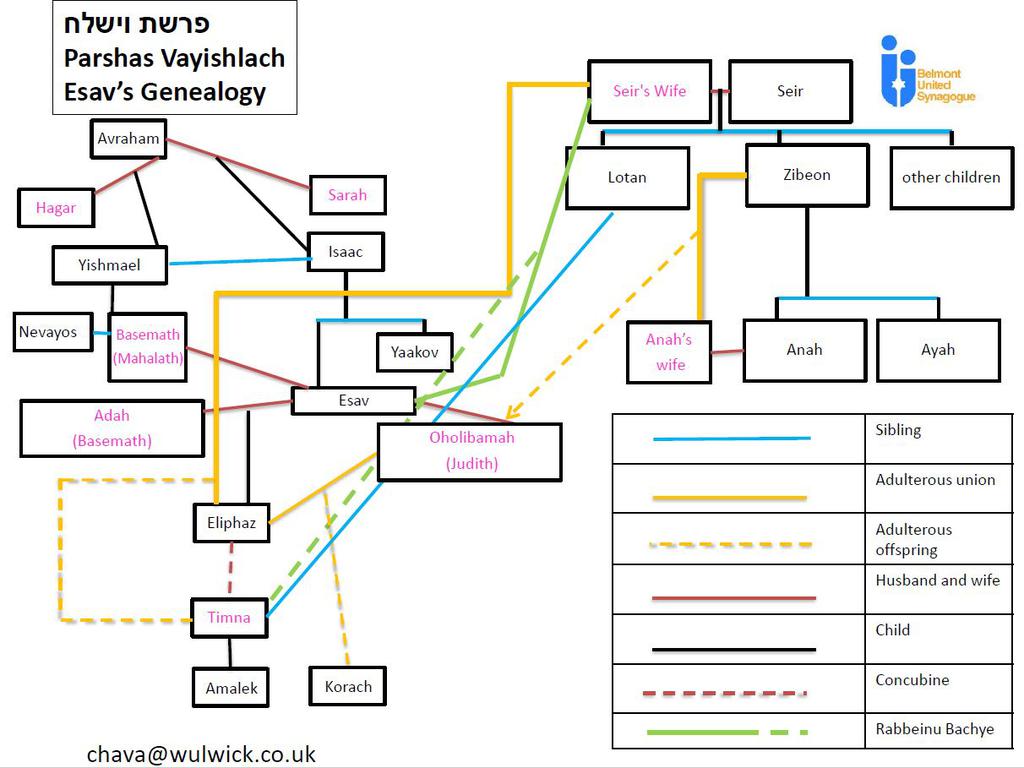
I made the family tree as a powerpoint - please contact me if you would like me to send it to you so that i can be editable for your needs
תמנע היתה פילגש. לְהוֹדִיעַ גְּדֻלָּתוֹ שֶׁל אַבְרָהָם, כַּמָּה הָיוּ תְאֵבִים לִדַּבֵּק בְּזַרְעוֹ. תִּמְנַע זוֹ בַּת אַלּוּפִים הָיְתָה, שֶׁנֶּאֱמַר וַאֲחוֹת לוֹטָן תִּמְנָע, וְלוֹטָן מֵאַלּוּפֵי יוֹשְׁבֵי שֵׂעִיר הָיָה מִן הַחוֹרִים שֶׁיָּשְׁבוּ בָהּ לְפָנִים, אָמְרָה אֵינִי זוֹכָה לְהִנָּשֵׂא לְךָ, הַלְוַאי וְאֶהְיֶה פִּילֶגֶשׁ. וּבְדִבְרֵי הַיָּמִים מוֹנֶה אוֹתָהּ בְּבָנָיו שֶׁל אֱלִיפַז, מְלַמֵּד שֶׁבָּא עַל אִשְׁתּוֹ שֶׁל שֵׂעִיר וְיָצְאָה תִּמְנָע מִבֵּינֵיהֶם, וּכְשֶׁגָּדְלָה נַעֲשֵׂית פִּילַגְשׁוֹ, וְזֶהוּ וַאֲחוֹת לוֹטָן תִּמְנָע, וְלֹא מְנָאָהּ עִם בְּנֵי שֵׂעִיר שֶׁהָיְתָה אֲחוֹתוֹ מִן הָאֵם וְלֹא מִן הָאָב:
מנשה בן חזקיה שהיה יושב ודורש בהגדות של דופי אמר וכי לא היה לו למשה לכתוב אלא (בראשית לו, כב) ואחות לוטן תמנע ותמנע היתה פלגש לאליפז ...... דאתן עלה מיהת אחות לוטן תמנע מאי היא תמנע בת מלכים הואי דכתיב (בראשית לו, כט) אלוף לוטן אלוף תמנע וכל אלוף מלכותא בלא תאגא היא בעיא לאיגיורי באתה אצל אברהם יצחק ויעקב ולא קבלוה הלכה והיתה פילגש לאליפז בן עשו אמרה מוטב תהא שפחה לאומה זו ולא תהא גבירה לאומה אחרת נפק מינה עמלק דצערינהו לישראל מאי טעמא דלא איבעי להו לרחקה
Manasseh ben Hezekiah, king of Israel, who would sit and teach flawed interpretations of Torah narratives. Manasseh said: But did Moses need to write only insignificant matters that teach nothing, for example: “And Lotan’s sister was Timna” (Genesis 36:22), or: “And Timna was concubine to Eliphaz, son of Esau” (Genesis 36:12)........
Manasseh began by mocking a few verses and ultimately violated the entire Torah. The Gemara asks: With regard to that verse that we came to discuss, in any event, what is the significance of the phrase in the verse “And Lotan’s sister was Timna”? The Gemara explains: Timna was the daughter of kings, as it is written: “The chief of Lotan” (Genesis 36:29), and: “The chief of Timna” (Genesis 36:40), and each chief is a member of a monarchy, albeit without a crown. That is why they are called chief and not king. Timna sought to convert. She came before Abraham, Isaac, and Jacob, and they did not accept her. She went and became a concubine of Eliphaz, son of Esau, and said, referring to herself: It is preferable that she will be a maidservant for this nation, and she will not be a noblewoman for another nation. Ultimately, Amalek, son of Eliphaz, emerged from her, and that tribe afflicted the Jewish people. What is the reason that the Jewish people were punished by suffering at the hand of Amalek? It is due to the fact that they should not have rejected her when she sought to convert. Therefore, the verse is significant.
It would seem impossible that Timna actually came to Avraham in as much as she was Eliphaz daughter and he was Esavs son and Esav was 15 when Avraham died – what this means is that she sought to attach herself to the decendants of Avraham
Why did Partiarchs reject Timna after having converted so many other idolaters?
I have found a variety of anwers but I am not personally satisfied with them….
The Rif[1] (1013–1103) Rif (Rabbi Isaac al-Fasi in ein Yaakov[2] explains as she was illegitimate – mamzeres born of an adulterous union of either Siers wife and Esav or Eliphaz – they refused as an illegitimate child cannot marry and ordinary Jew
Why were the descendants of the Avos punished if they acted prudently?
Rif explains that even though our forebearers could never sanction Timna’s marrying an ordinary Jew – they should have allowed her to come closer by joining his people
Yalkut Hameiri – Rabbi Abraham Meir Israel (1913-1995)
suggest that the patriacrch were aware that Timna’s was primarily motivated by her desire to marry into Abrahams family . However the Jewish law rejects those who wish to convert in order to marry a Jew
[1] Isaac ben Jacob Alfasi ha-Cohen (1013–1103) (Hebrew: ר' יצחק אלפסי, Arabic: إسحاق الفاسي) - also known as the Alfasi or by his Hebrew acronym Rif (Rabbi Isaac al-Fasi),[1] was an Algerian Talmudist and posek (decider in matters of halakha - Jewish law). He is best known for his work of halakha, the legal code Sefer Ha-halachot, considered the first fundamental work in halakhic literature. His name "Alfasi" means "of Fez" in Arabic, but opinions differ as to whether he ever lived in Fez.
[2] Ein Yaakov (Hebrew: עין יעקב) is a 16th Century compilation of all the Aggadic material in the Talmud together with commentaries.
...וְאִם אִישׁ הוּא בּוֹדְקִין אַחֲרָיו שֶׁמָּא עֵינָיו נָתַן בְּאִשָּׁה יְהוּדִית. וְאִם אִשָּׁה הִיא בּוֹדְקִין אַחֲרֶיהָ שֶׁמָּא עֵינֶיהָ נָתְנָה בְּבַחוּרִי יִשְׂרָאֵל.
....
.....if he is a man, check after him perhaps he placed his eyes on a Jewish woman. And if she is a woman, check after her perhaps she placed her eyes on the single men of Israel.
Timna's actions seem so righteous, so altruistic and pure. Why then would they result in a child who represents the antithesis of goodness and who is the very paradigm of evil?
Avraham was the ultimate seeker of converts eagerly taught and accepted converts into their midst; in fact, that was his stated goal. If our patriarchs rejected Timna, there must have been a strong reason for them to do so, perceiving that her motives were insincere.
Perhaps Timna was not searching for G‑d, but rather for her personal aggrandizement. Her motives were not selfless, but rather all about herself.
Had Timna truly wanted to join a nation serving G‑d and following His ways, maybe she would not have "settled" for joining the family of Esau, whose path was the antithesis of the Abrahamitic teachings.
Timna desired, rather, to be part of Avrahams family - for whatever reason but she may not necessarily have wanted to be part of the Jewish Nation.
She was willing to temporarily sacrifice her personal status, but only for what she perceived as a greater, more fulfilling gratification. Perhaps Her actions were not about being close to Hashem, but entirely about herself. Our perceptive patriarchs realized this and therefore rejected her from joining the nation of G‑d.
Why then if she so much wanted to be a part of Am Yisrael did her son Amalek come from her
First we have to work on ourselves not to take things personally
Second if we need to reject someone let them down softly
Employing job
How it will come back to bite you – if not
|
הקדמת רמב"ם לפרק חלק
היסוד השמיני הַתּוֹרָה מִן הַשָּׁמַיִם. וְהוּא שֶׁנַּאֲמִין כִּי כָּל הַתּוֹרָה הַזֹּאת הנתונה עַ' י מֹשֶׁה רַבֵּנוּ ע"ה, שֶׁהִיא כֻּלָּהּ מִפִּי הַגְּבוּרָה. כְּלוֹמַר, שֶׁהִגִּיעָה אֵלָיו כֻּלָּהּ מֵאֵת ה' יִתְבָּרַךְ וְתִמְנַ֣ע הָיְתָ֣ה פִילֶ֗גֶשׁ וּבֵין אָנֹכִי ה' אלקיך וְשׁמַע יִשְׂרָאֵל. כִּי הַכֹּל מִפִּי הַגְּבוּרָה, וְהַכֹּל תּוֹרַת ה' תְּמִימָה טְהוֹרָה וּקְדוֹשָׁה אֱמֶת |
Rambam Introduction to Perek Chelek The Eighth Fundamental Principle is that the Torah came from God. We are to believe that the whole Torah was given us through Moses our Teacher entirely from God. ..... There is no distinction between a verse of Scripture like .... ''his concubine was Timna” (Gen. 36:39,12), and one like “I am the Lord your God, and all are the Torah of God, perfect, pure, holy and true
Every possuk in the Torah is the word of important
Rambam tells us that these pessukim and specifically about Timna are of equal importance
Maybe we do not understand but it is all the words of Hashem
For me the fact he singles out the possuk about Timna - hightlights he within this perek and even though there are many other lessons we can learn
Conclusion
- In peshat – Esav didn’t appear to do anything bad
- Rabbi Sacks – respect everyone – we are not superior
- kingship before Yisrael gives it some historic importance. Edom and Rome significance
- Don’t mix up Esav and Seir family with Amalek and kill anyone unjustly
- contained many sublime mysteries – we don’t know about - plenty I don’t know about – if anyone knows they are welcome to contribute their suggestions!
- Incestuous relationships
- Timna – Rejection – what can happen as a result of rejection? Even if for a legitimate reason someone needs to be rejected – let them down gently eg job application etc
- every possuk is important
The rest of the sources i did not include in my speech but they contain more information which could be useful if someone has more time in the class and to give better background knowledge
this source is quoted above - this is the full source
ותמנע היתה פילגש, “and Timnah had been a concubine.” After the Torah has provided a list of the principal descendants of Esau, i.e. the ones born by either Adah or Oholivamah, Esau’s major wives, it goes on to mention that Amalek was also a descendant of Esau through his son Eliphaz and a concubine by the name of Timnah. The Torah uses this paragraph to tell us that Amalek, the son of a servant maid was not included in the list of Esau’s true offspring from his proper wives. We know already from Ishmael and Sarah that the son of a servant-woman has no share in the father’s inheritance seeing he is a slave and as such whatever he has belongs to his master. (compare Genesis 21,10). The reason that the Torah had to tell us these details is that the descendants of Seir HaChori intermarried with the descendants of Esau so that their respective families were completely integrated with one another. At a later time the Torah commanded the Jewish people not to harass the descendants of Esau nor to invade and conquer their land. In fact the Torah (Deut. 23,9) deliberately commands us לא תתעב אדומי, “do not despise or reject an Edomite (descendant of Esau)” while at the same time commanding us to wipe out Amalek completely (Deut. 25,19), something which appears contradictory in view of the fact that Amalek is a descendant of Esau/Edom. In order to know which people qualify for treatment according to the commandment in Deut. 23,9 and which are subject to the commandment to destroy Amalek and any memory of it, it was necessary to describe the makeup of the descendants of Esau and the respective mothers who bore his or his sons’ children. When the Israelites left Egypt and Amalek attacked them in no man’s land, these were the Amalekites who were descended from Timnah the concubine of Eliphaz. This Amalek was not considered as a direct descendant of Esau, neither was he the product of any major wife of Esau or his sons.
Our sages (Tanchuma Vayeshev 1) claim that Esau slept with the wife of Seir HaChori and that as a result Timnah was born. This is why Timnah had not been included in the count of the sons of Seir, seeing that though she was the daughter of Seir’s wife she was not Seir’s daughter. (The Torah teaches that Amalek was the product of an illegitimate union which his mother had indulged in- i need to check if this is the correct translation). The Torah underlines this by describing her as a sister of Lotan instead of as a daughter of Seir, Lotan’s father (compare verse 22). Timnah was not only Eliphaz’s concubine but his sister from his father Esau. Eliphaz begat a son from Timnah who died at the birth of that son. They therefore called the son Timnah in order to keep her name alive. This is the reason that you find that name cropping up amongst the descendants of Esau. This is what is meant in verse 40 אלוף תמנע אלוף עלוה. The chieftain in question was a son of Eliphaz from his concubine Timnah.
The following paragraph beginning with אלה בני שעיר החורי, was written only in order to avoid us misunderstanding the words “Timnah was a sister of Lotan.” It teaches that this particular Timnah was the sister of chieftains and was interested in intermarrying with the family of Avraham even if it meant to become merely a concubine of one of Avraham’s descendants. This shows in what high regard Avraham’s family was held. Consider the fact that the verse commencing with ותמנע contains eight words totaling forty letters. This is an allusion to the eight times Yaakov addressed Esau as “my lord,” and to the words ארבעים יכנו, in Deut. 25,3 “that the guilty, evil party is to have forty strikes administered against him.”
(א) כָּל מָקוֹם שֶׁהוּא אוֹמֵר וַיֵּשֶׁב, לְשׁוֹן צַעַר הוּא. וַיֵּשֶׁב יִשְׂרָאֵל בְּאֶרֶץ מִצְרַיִם בְּאֶרֶץ גֹּשֶׁן וְגוֹ', וַיִּקְרְבוּ יְמֵי יִשְׂרָאֵל לָמוּת (בראשית מז, כט). וַיֵּשֶׁב הָעָם לֶאֱכֹל וְשָׁתוֹ וַיָּקֻמוּ לְצַחֵק וְגוֹ', וַיִּפֹּל מִן הָעָם בַּיּוֹם הַהוּא (שמות לב, כח). וַיֵּשְׁבוּ לֶאֱכָל לֶחֶם, וְהִנֵּה אֹרְחַת יִשְׁמְעֵאלִים (בראשית לז, כה). וַיֵּשֶׁב יְהוּדָה וְיִשְׂרָאֵל לָבֶטַח (מלכים א ה, ה), וַיָּקֶם ה' שָׂטָן לִשְׁלֹמֹה (מלכים א יא, יד). וַיֵּשֶׁב יִשְׂרָאֵל בַּשִּׁטִּים, וַיָּחֶל הָעָם לִזְנוֹת (במדבר כה, א). וְכֵן אַתָּה פּוֹתֵר אֶת כֻּלָּם בָּרָעָה הַזּוֹ. וְאַף כָּאן וַיֵּשֶׁב יַעֲקֹב, וַיָּבֵא יוֹסֵף אֶת דִּבָּתָם רָעָה.
(ב) מַה כְּתִיב לְמַעְלָה מִן הָעִנְיָן, אֵלֶּה אַלּוּפֵי בְנֵי עֵשָׂו אַלּוּף מַגְדִּיאֵל אַלּוּף עִירָם. כֵּיוָן שֶׁרָאָה יַעֲקֹב אַלּוּפֵי בְנֵי עֵשָׂו נִתְיָרֵא, אָמַר מִי יוּכַל לַעֲמֹד כְּנֶגֶד אַלּוּפִים אֵלּוּ. מָשָׁל לְמָה הַדָּבָר דּוֹמֶה, לִגְמַלִּים הַרְבֵּה שֶׁהָיוּ טְעוּנִין פִּשְׁתָּן, הָיָה עוֹמֵד הַנַּפָּח וְתָמֵהּ וְאָמַר הֵיכָן יִכָּנֵס כָּל הַפִּשְׁתָּן הַזֶּה. פִּקֵּחַ אֶחָד הָיָה שָׁם, אָמַר לוֹ מַה לְּךָ לִתְמוֹהַ, נִיצוֹץ אֶחָד יֵצֵא מִמַּפּוּחַ שֶׁלְּךָ וִיכַלֶּה אוֹתוֹ. אַף כָּךְ, כְּשֶׁרָאָה יַעֲקֹב אָבִינוּ עֵשָׂו וְאַלּוּפָיו, נִתְיָרֵא. אָמַר, מִי יוּכַל לַעֲמֹד לִי כְּנֶגֶד אֵלּוּ. אָמַר לוֹ הַקָּדוֹשׁ בָּרוּךְ הוּא, גֵּץ שֶׁלְּךָ יְכַלֶּה אוֹתָם וְזֶה יוֹסֵף, דִּכְתִיב: וְהָיָה בֵית יַעֲקֹב אֵשׁ וּבֵית יוֹסֵף לֶהָבָה וּבֵית עֵשָׂו לְקַשׁ וְדָלְקוּ בָהֶם וְגוֹ' (עובדיה א, יח), לְכָךְ כְּתִיב וַיֵּשֶׁב יַעֲקֹב וְגוֹ', אֵלֶּה תֹּלְדוֹת יַעֲקֹב יוֹסֵף.
(ג) דָּבָר אַחֵר, לָמָּה נִתְעַסֵּק הַכָּתוּב לִכְתֹּב יִחוּסֵיהֶם. וְכִי לֹא הָיָה לוֹ לְהַקָּדוֹשׁ בָּרוּךְ הוּא מַה שֶּׁיִּכְתֹּב אֶלָּא אַלּוּף תִּמְנָע אַלּוּף לוֹטָן. אֶלָּא לְלַמֶּדְךָ שֶׁמִּתְּחִלַּת בְּרִיָּתוֹ שֶׁל עוֹלָם, הָיָה הַקָּדוֹשׁ בָּרוּךְ הוּא מִתְעַסֵּק וּמִתְיַחֵס בְּיִחוּסֵיהֶן שֶׁל אֻמּוֹת הָעוֹלָם שֶׁלֹּא יִהְיֶה לָהֶם פִּתְחוֹן פֶּה, לְהוֹדִיעַ לַבְּרִיּוֹת עִקָּרֵיהֶן וְנִוּוּלֵיהֶם. כֵּיצַד, כְּשֶׁבָּא לְיַחֵס אֶת בְּנֵי חָם, וּבְנֵי חָם כּוּשׁ וּמִצְרַיִם, וְכוּשׁ יָלַד אֶת נִמְרוֹד, עָמַד לְהַכְעִיס, שֶׁנֶּאֱמַר: הוּא הֵחֵל לִהְיוֹת גִּבּוֹר (בראשית י, ח). וְכֵן הוּא אוֹמֵר, וּמִצְרַיִם יָלַד אֶת לוּדִים וְגוֹ' אֲשֶׁר יָצְאוּ מִשָּׁם וְגוֹ', אֵינוֹ אוֹמֵר אֲשֶׁר הוֹלִידוּ אֶלָּא אֲשֶׁר יָצְאוּ, לְהוֹדִיעַ שֶׁהֵן כֻּלָּן בְּנֵי זִמָּה.
(ד) וְכֵן נִתְעַסֵּק בְּיִחוּס בְּנֵי עֵשָׂו, וְאֵלֶּה תֹּלְדוֹת עֵשָׂו, לְהוֹדִיעַ נִוּוּלָן. שֶׁאַתְּ מוֹצֵא שֶׁהֵן בְּנֵי זִמָּה, שֶׁכֵּן הוּא אוֹמֵר, בְּנֵי אֱלִיפָז תֵּימָן וְאוֹמָר צְפִי וְגַעְתָּם קְנַז וְתִמְנַע וַעֲמָלֵק (דה״א א, לו). וְתִמְנַע הָיְתָה פִילֶגֶשׁ לֶאֱלִיפַז (בראשית לו, יב), מְלַמֵּד שֶׁנָּשָׂא אֶת בִּתּוֹ. כֵּיצַד, הָיָה בָא אֶל אִשְׁתּוֹ שֶׁל שֵׂעִיר וְעִבְּרָהּ וְיָלְדָה מִמֶּנּוּ תִּמְנָע וּנְשָׂאָהּ כְּנוֹשֵׂא בִתּוֹ שֶׁל שֵׂעִיר, וְהָיְתָה בִתּוֹ.
(ה) וְכֵן הוּא אוֹמֵר, אֵלֶּה בְנֵי שֵׂעִיר הַחֹרִי ישְׁבֵי הָאָרֶץ לוֹטָן וְגוֹ'. וַאֲחוֹת לוֹטָן תִּמְנָע, מִן הָאֵם וְלֹא מִן הָאָב, שֶׁהָיְתָה מִן אֱלִיפָז, וְתִמְנַע הָיְתָה פִילֶגֶשׁ לֶאֱלִיפַז בֶּן עֵשָׂו. וְכֵן אַתְּ מוֹצֵא שׁוּב שֶׁאֵין קַלְקָלָה אֶלָּא בְנֵי שֵׂעִיר, דִּכְתִיב: אֵלֶּה בְנֵי שֵׂעִיר הַחֹרִי ישְׁבֵי הָאָרֶץ לוֹטָן וְשׁוֹבָל וְצִבְעוֹן וַעֲנָה (בראשית לו, כא). וּלְהַלָּן עוֹשֶׂה עֲנָה בֶּן צִבְעוֹן, הוּא עֲנָה אֲשֶׁר מָצָא וְגוֹ' (בראשית לו, כד). מְלַמֵּד שֶׁבָּא צִבְעוֹן עַל אִמּוֹ וְיָלְדָה מִמֶּנּוּ אֶת עֲנָה, נִמְצָא שֶׁהָיָה אָחִיו וּבְנוֹ. שׁוּב בָּא אֶל כַּלָּתוֹ אֵשֶׁת עֲנָה וְיָצְתָה אָהֳלִיבָמָה מִבֵּין שְׁנֵיהֶם, שֶׁנֶּאֱמַר: וְאֵלֶּה הָיוּ בְּנֵי אָהֳלִיבָמָה בַת עֲנָה בַּת צִבְעוֹן אֵשֶׁת עֵשָׂו (בראשית לו, יד), וּנְשָׂאָהּ עֵשָׂו לְאִשָּׁה. וּלְפִי שֶׁהָיוּ כֻלָּם בְּנֵי זִמָּה, פֵּרְשָׁם הַכָּתוּב לְהוֹדִיעַ נִוּוּלָם.
(ו) אֲבָל יִשְׂרָאֵל, קֵרְבָן הַקָּדוֹשׁ בָּרוּךְ הוּא וּקְרָאָן חֶבֶל וְנַחֲלָה וָחֵלֶק, שֶׁנֶּאֱמַר: כִּי חֵלֶק ה' עַמּוֹ יַעֲקֹב חֶבֶל נַחֲלָתוֹ (דברים לב, ט). וּכְתִיב: וִהְיִיתֶם לִי סְגֻלָּה מִכָּל הָעַמִּים (שמות יט, ה). וּכְתִיב: וְאָנֹכִי נְטַעְתִּיךְ שׂוֹרֵק כֻּלֹּה זֶרַע אֱמֶת (ירמיה ב, כא). וְלָמָּה נִתְעַסֵּק הַקָּדוֹשׁ בָּרוּךְ הוּא מִתְּחִלָּה בְּיִחוּסֵיהֶן שֶׁל אֻמּוֹת הָעוֹלָם. מָשָׁל לְמֶלֶךְ שֶׁהָיָה לוֹ מַרְגָּלִית מֻשְׁלֶכֶת בְּתוֹךְ הֶעָפָר וּבְתוֹךְ הַצְּרוֹרוֹת. הֻצְרַךְ הַמֶּלֶךְ לְפַשְׁפֵּשׁ בְּעָפָר וּבִצְרוֹרוֹת לְהוֹצִיא אֶת הַמַּרְגָּלִית מִתּוֹכָן. כְּשֶׁהִגִּיעַ הַמֶּלֶךְ לַמַּרְגָּלִית, הִנִּיחַ אֶת הֶעָפָר וְאֶת הַצְּרוֹרוֹת וְנִתְעַסֵּק בַּמַּרְגָּלִית.
(ז) כָּךְ נִתְעַסֵּק הַקָּדוֹשׁ בָּרוּךְ הוּא בְּדוֹרוֹת לְשֶׁעָבַר וּכְלָלָן וּמַנִּיחָן, אָדָם שֵׁת אֱנוֹשׁ, קֵינָן מַהֲלַלְאֵל יָרֶד וְגוֹ' (דה״א א, א-ב). וְכֵן בַּעֲשָׂרָה דוֹרוֹת הַשְּׁנִיִּים, שֵׁם אַרְפַּכְשַׁד שֶׁלַח וְגוֹ'. וְהַתִּינוֹק נוֹטֵל אֶת הַסֵּפֶר וְקוֹרֵא עֲשָׂרָה דוֹרוֹת מֵאָדָם עַד נֹחַ בְּבַת אֶחָת. כְּשֶׁהִגִּיעַ לַעֲשָׂרָה דוֹרוֹת שֶׁמִּנֹּחַ וְעַד אַבְרָהָם, כְּמוֹ כֵן קוֹרְאָם בְּבַת אֶחָת. כְּשֶׁהִגִּיעַ לַמַּרְגָּלִיּוֹת, אַבְרָהָם יִצְחָק וְיַעֲקֹב, הִתְחִיל מִתְעַסֵּק בָּהֶן. לְכָךְ נִסְמְכָה פָּרָשַׁת אַלּוּפֵי בְנֵי עֵשָׂו לְפָרָשָׁה זוֹ.
(ח) דָּבָר אַחֵר, אֵלֶּה תֹּלְדוֹת יַעֲקֹב יוֹסֵף, וַהֲלֹא רְאוּבֵן הוּא הַבְּכוֹר. אֶלָּא, וּבְחַלְּלוֹ יְצוּעֵי אָבִיו נִתְּנָה בְּכֹרָתוֹ לִבְנֵי יוֹסֵף בֶּן יִשְׂרָאֵל וְלוֹ לְהִתְיַחֵשׂ לַבְּכֹרָה (דה״א ה, א). דָּבָר אַחֵר, אֵלֶּה תֹּלְדוֹת יַעֲקֹב יוֹסֵף, אַתָּה מוֹצֵא שֶׁהָיָה יוֹסֵף דּוֹמֶה לְאָבִיו בְּכָל דָּבָר, וְכָל מַה שֶּׁעָבַר עַל יַעֲקֹב כָּךְ עָבַר עַל יוֹסֵף. יַעֲקֹב קִנֵּא בוֹ עֵשָׂו אָחִיו, וְיוֹסֵף קִנְּאוּ בוֹ אֶחָיו. יַעֲקֹב גָּלָה לְחָרָן, יוֹסֵף גָּלָה לְמִצְרָיִם. יַעֲקֹב אָמַר, גְּנֻבְתִי יוֹם וּגְנֻבְתִי לָיְלָה, וְיוֹסֵף אָמַר, כִּי גֻנֹּב גֻּנַּבְתִּי.
(1) And Jacob sat in the land (Gen. 37:1). Whenever Scripture uses the expression and he sat (also translated “and he dwelt”), it connotes misfortune: And Israel sat in the land of Egypt, in the land of Goshen, … and the time drew near that Israel must die (Gen. 47:29); And the people sat down to eat and drink, and rose up to make merry (Exod. 32:37); And there fell of the people on that day three thousand men (Exod. 38:28); And they sat down to eat bread; and they lifted up their eyes and looked, and, behold, a caravan of Ishmaelites (Gen. 37:25); And Judah and Israel sat safely (I Kings 5:5); And the Lord raised up an adversary against Solomon (ibid. 11:14); And Israel sat among the cedars, etc., and the people began to commit harlotry (Num. 25:1). You may explain every other use of “and he sat” with this negative implication. In this instance And Jacob sat is followed by and Joseph brought evil report of them unto his father (Gen. 37:2).
(2) What is written prior to this episode? These are the chiefs of the sons of Esau: … the chief of Lotan, the chief of Magdiel … These are the chiefs of Edom (ibid. 36:15–43). When Jacob saw the chiefs of the sons of Esau, he was terrified. “Who will be able to withstand these chiefs?” he exclaimed. To what may this be compared? It may be compared to many camels laden with flax (in a certain place), and a blacksmith standing nearby asked in amazement: “Where will it be possible to store all this flax?” An observer responded: “Why do you wonder about that? After all, a single spark from your forge can consume it all.” Similarly, when our patriarch Jacob became terrified at the sight of Esau and the chiefs, and cried out: “Who will be able to assist me against them?” The Holy One, blessed be He, answered: A spark from you will consume them. And Joseph was that spark, as it is said: And the house of Jacob shall be a fire, and the house of Joseph a flame, and the house of Esau for stubble, and they shall kindle in them, and devour them (Obad. 19). Therefore it is written: And Jacob sat … these are the generations of Jacob. Joseph, etc.
(3) Another explanation. Why did Scripture concern itself with the genealogy of the chiefs? Did the Holy One, blessed be He, have nothing else to write about other than the chief of Timna, the chief of Lotan, etc.? He did so to teach us that from the very beginning of the creation of the world, the Holy One, blessed be He, concerned himself with the genealogies of the idolatrous nations so that it would not be left to them to describe for mankind their sterility and their degeneracy. How did He do that? When He came to the genealogy of the sons of Ham, He said: The sons of Ham: Cush, and Mizraim … and Cush begot Nimrod (Gen. 10:6–8); thus He indicated that they had become defiant, as it is said: He began to be a mighty one in the earth (ibid., v. 8). Similarly, when He said: And Mizraim begot Ludim … whence went forth (ibid., vv. 13–14), He did not say “he bore him” but he went forth, thereby informing us that he was the product of an incestuous relationship.
(4) He concerned Himself also with the genealogy of Esau’s sons in the chapter These are the generations of Esau to disclose their degeneracy. You find that they too were the offspring of incestuous relations. Scripture states in one place: And the children of Elephaz were: Teman, and Omar, Zepho, and Gatam, and Kenaz. And Timna (ibid. 36:11), and elsewhere it states: And Timna was concubine to Elephaz (ibid., v. 12). This clearly informs us that Elephaz had sexual relations with his own daughter. How did that occur? He had sexual relations with Seir’s wife first and made her pregnant and begot Timna. Later he married Timna, as though she were Seir’s daughter, when in fact she was his own. That is why it says: And the children of Seir: Lotan … and Timna was Lotan’s sister (I Chron. 1:38–39). She was Lotan’s sister by her mother, but not by his father; Elephaz was her father, and Timna became the concubine of Elephaz the son of Esau.
(5) You find likewise (that the expression sat also alludes to) the degeneracy of the descendants of Seir, since it is written: These are the sons of Seir the Horite, who sat on the land: Lotan and Shobal and Zibeon and Anah (Gen. 36:20). However, Anah is elsewhere called the son of Zibeon: And these are the children of Zibeon: Aiah and Anah (ibid., v. 24). We learn from this that Zibeon had sexual relations with his own mother, and conceived and begot Anah by her. Consequently, (Anah) was both (Zibeon’s) brother and his son. Later he had intercourse with his daughter-in-law, the wife of Anah, and Oholibamah was their child, as it is said: And these were the sons of Oholibamah the daughter of Anah, the daughter of Zibeon, Esau’s wife (ibid., v. 14), and Esau took her as a wife. Inasmuch as they were all products of incestuous relations, Scripture mentions them only to disclose their degeneracy.
(6) The Holy One, blessed be He, however, befriended Israel and called them his possessions, inheritance, (and) portion, as it is said: For the portion of the Lord is His people Jacob, the lot of His inheritance (Deut. 32:9); and ye shall be Mine own treasure among all the peoples (Exod. 19:5); and I have planted thee a noble vine, wholly a right seed (Jer. 2:21). Why did the Holy One, blessed be He, concern Himself from the very beginning of time with the genealogies of the nations? This may be likened to a king who dropped a pearl into sand and pebbles. The king was compelled to search the sand and the pebbles to recover the pearl. As soon as he recovered the pearl, however, he discarded the sand and the pebbles, for he was only interested in retrieving the pearl.
(7) Similarly, the Holy One, blessed be He, devoted Himself superficially to the earlier generations, and then ignored them. He mentioned Adam, Seth, Enoch, Kenan, Mahalalel, Jared, etc. (I Chron. 1:1–2), and also the second ten generations, Shem, Arpachshad, Shelah, etc. (ibid. 1:24), so that a child could take the Bible and read about the ten generations from Adam to Noah at a single sitting, and also about the ten generations from Noah to Abraham at one time. But when he reached the section dealing with the pearls, Abraham, Isaac, and Jacob, he would have to apply himself diligently in reading about them. That is why the section on Elephaz the son of Esau is included in this chapter.
(8) Another comment on These are the generations of Jacob. Joseph, etc. (Gen. 37:2). Was not Reuben actually the firstborn? He was, but since he defiled his father’s couch (I Chron. 5:1), his birthright was given to the descendants of Joseph, the descendants of Israel. However, they are not actually accounted as the firstborn in the genealogy of the people. Another explanation. These are the generations of Jacob. Joseph. You find that Joseph resembled his father in every way, and that everything that happened to Jacob also happened to Joseph. Jacob’s brother was envious of him, and Joseph’s brothers were envious of him; Jacob was exiled to Haran, and Joseph was exiled to Egypt; Jacob said: Whether stolen by day or stolen by night (Gen. 31:39), and Joseph said: For indeed, I was stolen away (ibid. 40:15).
(ד) וַיֹּאמֶר לוֹ אֱלֹקִים אֲנִי אֵל שַׁדַּי פְּרֵה וּרְבֵה (בראשית לה, יא), רַבִּי יוּדָן בְּשֵׁם רַבִּי יִצְחָק אָמַר הָיִיתִי אוֹמֵר רְאוּבֵן כְּבָר הוּא מִבַּחוּץ, שִׁמְעוֹן כְּבָר הוּא מִבַּחוּץ, וּבִנְיָמִין כְּבָר יָצָא מֵחֲלָצָיו וַעֲדַיִן הוּא בִּמְעֵי אִמּוֹ. חָזַרְתִּי וְאָמַרְתִּי: גּוֹי, זֶה בִּנְיָמִין, וּקְהַל גּוֹיִם, זֶה מְנַשֶּׁה וְאֶפְרַיִם, דִּכְתִיב (בראשית מח, יט): וְזַרְעוֹ יִהְיֶה מְלֹא הַגּוֹיִם. רַבִּי בֶּרֶכְיָה וְרַבִּי חֶלְבּוֹ וְרַבִּי שְׁמוּאֵל בַּר נַחְמָן (בראשית לה, יא): וּמְלָכִים מֵחֲלָצֶיךָ יֵצֵאוּ, זֶה יָרָבְעָם וְיֵהוּא. רַבָּנָן אָמְרֵי אֶפְשָׁר אַבְנֵר אָדָם צַדִּיק וְהוּא חוֹלֵק עַל מַלְכוּת בֵּית דָּוִד, אֶלָּא מִדְרַשׁ דָּרִישׁ וְהִמְלִיךְ אֶת אִישׁ בּשֶׁת, הֲדָא הוּא דִכְתִיב: וּמְלָכִים מֵחֲלָצֶיךָ יֵצֵאוּ, זֶה שָׁאוּל וְאִישׁ בּשֶׁת. וּמָה רָאוּ לְקָרֵב וּלְרַחֵק בְּפִלֶגֶּשׁ בַּגִּבְעָה, אֶלָּא מִקְרָא קָרְאוּ וְרִחֲקוּ אוֹתוֹ מִקְרָא קָרְאוּ וְקֵרְבוּ אוֹתָם מִיָּד. מִקְרָא קָרְאוּ וְרִחֲקוּ (בראשית לה, ה): אֶפְרַיִם וּמְנַשֶּׁה כִּרְאוּבֵן וְשִׁמְעוֹן יִהְיוּ לִי, מִקְרָא קָרְאוּ וְקֵרְבוּ, גּוֹי וּקְהַל גּוֹיִם יִהְיֶה מִמֶּךָּ.
ויירא ויצר. וַיִּירָא שֶׁמָּא יֵהָרֵג, וַיֵּצֶר לוֹ אִם יַהֲרֹג הוּא אֶת אֲחֵרִים (בראשית רבה ותנחומא):
ויירא...ויצר HE FEARED GREATLY AND WAS DISTRESSED — He was afraid lest he be killed, and he was distressed that he might have to kill someone (Genesis Rabbah 76:2).
(כ) וַיְהִ֤י יִצְחָק֙ בֶּן־אַרְבָּעִ֣ים שָׁנָ֔ה בְּקַחְתּ֣וֹ אֶת־רִבְקָ֗ה בַּת־בְּתוּאֵל֙ הָֽאֲרַמִּ֔י מִפַּדַּ֖ן אֲרָ֑ם אֲח֛וֹת לָבָ֥ן הָאֲרַמִּ֖י ל֥וֹ לְאִשָּֽׁה׃
(20) Isaac was forty years old when he took to wife Rebekah, daughter of Bethuel the Aramean of Paddan-aram, sister of Laban the Aramean.
(א) כָּל מָקוֹם שֶׁהוּא אוֹמֵר וַיֵּשֶׁב, לְשׁוֹן צַעַר הוּא. וַיֵּשֶׁב יִשְׂרָאֵל בְּאֶרֶץ מִצְרַיִם בְּאֶרֶץ גֹּשֶׁן וְגוֹ', וַיִּקְרְבוּ יְמֵי יִשְׂרָאֵל לָמוּת (בראשית מז, כט). וַיֵּשֶׁב הָעָם לֶאֱכֹל וְשָׁתוֹ וַיָּקֻמוּ לְצַחֵק וְגוֹ', וַיִּפֹּל מִן הָעָם בַּיּוֹם הַהוּא (שמות לב, כח). וַיֵּשְׁבוּ לֶאֱכָל לֶחֶם, וְהִנֵּה אֹרְחַת יִשְׁמְעֵאלִים (בראשית לז, כה). וַיֵּשֶׁב יְהוּדָה וְיִשְׂרָאֵל לָבֶטַח (מלכים א ה, ה), וַיָּקֶם ה' שָׂטָן לִשְׁלֹמֹה (מלכים א יא, יד). וַיֵּשֶׁב יִשְׂרָאֵל בַּשִּׁטִּים, וַיָּחֶל הָעָם לִזְנוֹת (במדבר כה, א). וְכֵן אַתָּה פּוֹתֵר אֶת כֻּלָּם בָּרָעָה הַזּוֹ. וְאַף כָּאן וַיֵּשֶׁב יַעֲקֹב, וַיָּבֵא יוֹסֵף אֶת דִּבָּתָם רָעָה.
(ב) מַה כְּתִיב לְמַעְלָה מִן הָעִנְיָן, אֵלֶּה אַלּוּפֵי בְנֵי עֵשָׂו אַלּוּף מַגְדִּיאֵל אַלּוּף עִירָם. כֵּיוָן שֶׁרָאָה יַעֲקֹב אַלּוּפֵי בְנֵי עֵשָׂו נִתְיָרֵא, אָמַר מִי יוּכַל לַעֲמֹד כְּנֶגֶד אַלּוּפִים אֵלּוּ. מָשָׁל לְמָה הַדָּבָר דּוֹמֶה, לִגְמַלִּים הַרְבֵּה שֶׁהָיוּ טְעוּנִין פִּשְׁתָּן, הָיָה עוֹמֵד הַנַּפָּח וְתָמֵהּ וְאָמַר הֵיכָן יִכָּנֵס כָּל הַפִּשְׁתָּן הַזֶּה. פִּקֵּחַ אֶחָד הָיָה שָׁם, אָמַר לוֹ מַה לְּךָ לִתְמוֹהַ, נִיצוֹץ אֶחָד יֵצֵא מִמַּפּוּחַ שֶׁלְּךָ וִיכַלֶּה אוֹתוֹ. אַף כָּךְ, כְּשֶׁרָאָה יַעֲקֹב אָבִינוּ עֵשָׂו וְאַלּוּפָיו, נִתְיָרֵא. אָמַר, מִי יוּכַל לַעֲמֹד לִי כְּנֶגֶד אֵלּוּ. אָמַר לוֹ הַקָּדוֹשׁ בָּרוּךְ הוּא, גֵּץ שֶׁלְּךָ יְכַלֶּה אוֹתָם וְזֶה יוֹסֵף, דִּכְתִיב: וְהָיָה בֵית יַעֲקֹב אֵשׁ וּבֵית יוֹסֵף לֶהָבָה וּבֵית עֵשָׂו לְקַשׁ וְדָלְקוּ בָהֶם וְגוֹ' (עובדיה א, יח), לְכָךְ כְּתִיב וַיֵּשֶׁב יַעֲקֹב וְגוֹ', אֵלֶּה תֹּלְדוֹת יַעֲקֹב יוֹסֵף.
(ג) דָּבָר אַחֵר, לָמָּה נִתְעַסֵּק הַכָּתוּב לִכְתֹּב יִחוּסֵיהֶם. וְכִי לֹא הָיָה לוֹ לְהַקָּדוֹשׁ בָּרוּךְ הוּא מַה שֶּׁיִּכְתֹּב אֶלָּא אַלּוּף תִּמְנָע אַלּוּף לוֹטָן. אֶלָּא לְלַמֶּדְךָ שֶׁמִּתְּחִלַּת בְּרִיָּתוֹ שֶׁל עוֹלָם, הָיָה הַקָּדוֹשׁ בָּרוּךְ הוּא מִתְעַסֵּק וּמִתְיַחֵס בְּיִחוּסֵיהֶן שֶׁל אֻמּוֹת הָעוֹלָם שֶׁלֹּא יִהְיֶה לָהֶם פִּתְחוֹן פֶּה, לְהוֹדִיעַ לַבְּרִיּוֹת עִקָּרֵיהֶן וְנִוּוּלֵיהֶם. כֵּיצַד, כְּשֶׁבָּא לְיַחֵס אֶת בְּנֵי חָם, וּבְנֵי חָם כּוּשׁ וּמִצְרַיִם, וְכוּשׁ יָלַד אֶת נִמְרוֹד, עָמַד לְהַכְעִיס, שֶׁנֶּאֱמַר: הוּא הֵחֵל לִהְיוֹת גִּבּוֹר (בראשית י, ח). וְכֵן הוּא אוֹמֵר, וּמִצְרַיִם יָלַד אֶת לוּדִים וְגוֹ' אֲשֶׁר יָצְאוּ מִשָּׁם וְגוֹ', אֵינוֹ אוֹמֵר אֲשֶׁר הוֹלִידוּ אֶלָּא אֲשֶׁר יָצְאוּ, לְהוֹדִיעַ שֶׁהֵן כֻּלָּן בְּנֵי זִמָּה.
(ד) וְכֵן נִתְעַסֵּק בְּיִחוּס בְּנֵי עֵשָׂו, וְאֵלֶּה תֹּלְדוֹת עֵשָׂו, לְהוֹדִיעַ נִוּוּלָן. שֶׁאַתְּ מוֹצֵא שֶׁהֵן בְּנֵי זִמָּה, שֶׁכֵּן הוּא אוֹמֵר, בְּנֵי אֱלִיפָז תֵּימָן וְאוֹמָר צְפִי וְגַעְתָּם קְנַז וְתִמְנַע וַעֲמָלֵק (דה״א א, לו). וְתִמְנַע הָיְתָה פִילֶגֶשׁ לֶאֱלִיפַז (בראשית לו, יב), מְלַמֵּד שֶׁנָּשָׂא אֶת בִּתּוֹ. כֵּיצַד, הָיָה בָא אֶל אִשְׁתּוֹ שֶׁל שֵׂעִיר וְעִבְּרָהּ וְיָלְדָה מִמֶּנּוּ תִּמְנָע וּנְשָׂאָהּ כְּנוֹשֵׂא בִתּוֹ שֶׁל שֵׂעִיר, וְהָיְתָה בִתּוֹ.
(ה) וְכֵן הוּא אוֹמֵר, אֵלֶּה בְנֵי שֵׂעִיר הַחֹרִי ישְׁבֵי הָאָרֶץ לוֹטָן וְגוֹ'. וַאֲחוֹת לוֹטָן תִּמְנָע, מִן הָאֵם וְלֹא מִן הָאָב, שֶׁהָיְתָה מִן אֱלִיפָז, וְתִמְנַע הָיְתָה פִילֶגֶשׁ לֶאֱלִיפַז בֶּן עֵשָׂו. וְכֵן אַתְּ מוֹצֵא שׁוּב שֶׁאֵין קַלְקָלָה אֶלָּא בְנֵי שֵׂעִיר, דִּכְתִיב: אֵלֶּה בְנֵי שֵׂעִיר הַחֹרִי ישְׁבֵי הָאָרֶץ לוֹטָן וְשׁוֹבָל וְצִבְעוֹן וַעֲנָה (בראשית לו, כא). וּלְהַלָּן עוֹשֶׂה עֲנָה בֶּן צִבְעוֹן, הוּא עֲנָה אֲשֶׁר מָצָא וְגוֹ' (בראשית לו, כד). מְלַמֵּד שֶׁבָּא צִבְעוֹן עַל אִמּוֹ וְיָלְדָה מִמֶּנּוּ אֶת עֲנָה, נִמְצָא שֶׁהָיָה אָחִיו וּבְנוֹ. שׁוּב בָּא אֶל כַּלָּתוֹ אֵשֶׁת עֲנָה וְיָצְתָה אָהֳלִיבָמָה מִבֵּין שְׁנֵיהֶם, שֶׁנֶּאֱמַר: וְאֵלֶּה הָיוּ בְּנֵי אָהֳלִיבָמָה בַת עֲנָה בַּת צִבְעוֹן אֵשֶׁת עֵשָׂו (בראשית לו, יד), וּנְשָׂאָהּ עֵשָׂו לְאִשָּׁה. וּלְפִי שֶׁהָיוּ כֻלָּם בְּנֵי זִמָּה, פֵּרְשָׁם הַכָּתוּב לְהוֹדִיעַ נִוּוּלָם.
(ו) אֲבָל יִשְׂרָאֵל, קֵרְבָן הַקָּדוֹשׁ בָּרוּךְ הוּא וּקְרָאָן חֶבֶל וְנַחֲלָה וָחֵלֶק, שֶׁנֶּאֱמַר: כִּי חֵלֶק ה' עַמּוֹ יַעֲקֹב חֶבֶל נַחֲלָתוֹ (דברים לב, ט). וּכְתִיב: וִהְיִיתֶם לִי סְגֻלָּה מִכָּל הָעַמִּים (שמות יט, ה). וּכְתִיב: וְאָנֹכִי נְטַעְתִּיךְ שׂוֹרֵק כֻּלֹּה זֶרַע אֱמֶת (ירמיה ב, כא). וְלָמָּה נִתְעַסֵּק הַקָּדוֹשׁ בָּרוּךְ הוּא מִתְּחִלָּה בְּיִחוּסֵיהֶן שֶׁל אֻמּוֹת הָעוֹלָם. מָשָׁל לְמֶלֶךְ שֶׁהָיָה לוֹ מַרְגָּלִית מֻשְׁלֶכֶת בְּתוֹךְ הֶעָפָר וּבְתוֹךְ הַצְּרוֹרוֹת. הֻצְרַךְ הַמֶּלֶךְ לְפַשְׁפֵּשׁ בְּעָפָר וּבִצְרוֹרוֹת לְהוֹצִיא אֶת הַמַּרְגָּלִית מִתּוֹכָן. כְּשֶׁהִגִּיעַ הַמֶּלֶךְ לַמַּרְגָּלִית, הִנִּיחַ אֶת הֶעָפָר וְאֶת הַצְּרוֹרוֹת וְנִתְעַסֵּק בַּמַּרְגָּלִית.
(ז) כָּךְ נִתְעַסֵּק הַקָּדוֹשׁ בָּרוּךְ הוּא בְּדוֹרוֹת לְשֶׁעָבַר וּכְלָלָן וּמַנִּיחָן, אָדָם שֵׁת אֱנוֹשׁ, קֵינָן מַהֲלַלְאֵל יָרֶד וְגוֹ' (דה״א א, א-ב). וְכֵן בַּעֲשָׂרָה דוֹרוֹת הַשְּׁנִיִּים, שֵׁם אַרְפַּכְשַׁד שֶׁלַח וְגוֹ'. וְהַתִּינוֹק נוֹטֵל אֶת הַסֵּפֶר וְקוֹרֵא עֲשָׂרָה דוֹרוֹת מֵאָדָם עַד נֹחַ בְּבַת אֶחָת. כְּשֶׁהִגִּיעַ לַעֲשָׂרָה דוֹרוֹת שֶׁמִּנֹּחַ וְעַד אַבְרָהָם, כְּמוֹ כֵן קוֹרְאָם בְּבַת אֶחָת. כְּשֶׁהִגִּיעַ לַמַּרְגָּלִיּוֹת, אַבְרָהָם יִצְחָק וְיַעֲקֹב, הִתְחִיל מִתְעַסֵּק בָּהֶן. לְכָךְ נִסְמְכָה פָּרָשַׁת אַלּוּפֵי בְנֵי עֵשָׂו לְפָרָשָׁה זוֹ.
(ח) דָּבָר אַחֵר, אֵלֶּה תֹּלְדוֹת יַעֲקֹב יוֹסֵף, וַהֲלֹא רְאוּבֵן הוּא הַבְּכוֹר. אֶלָּא, וּבְחַלְּלוֹ יְצוּעֵי אָבִיו נִתְּנָה בְּכֹרָתוֹ לִבְנֵי יוֹסֵף בֶּן יִשְׂרָאֵל וְלוֹ לְהִתְיַחֵשׂ לַבְּכֹרָה (דה״א ה, א). דָּבָר אַחֵר, אֵלֶּה תֹּלְדוֹת יַעֲקֹב יוֹסֵף, אַתָּה מוֹצֵא שֶׁהָיָה יוֹסֵף דּוֹמֶה לְאָבִיו בְּכָל דָּבָר, וְכָל מַה שֶּׁעָבַר עַל יַעֲקֹב כָּךְ עָבַר עַל יוֹסֵף. יַעֲקֹב קִנֵּא בוֹ עֵשָׂו אָחִיו, וְיוֹסֵף קִנְּאוּ בוֹ אֶחָיו. יַעֲקֹב גָּלָה לְחָרָן, יוֹסֵף גָּלָה לְמִצְרָיִם. יַעֲקֹב אָמַר, גְּנֻבְתִי יוֹם וּגְנֻבְתִי לָיְלָה, וְיוֹסֵף אָמַר, כִּי גֻנֹּב גֻּנַּבְתִּי.
(1) And Jacob sat in the land (Gen. 37:1). Whenever Scripture uses the expression and he sat (also translated “and he dwelt”), it connotes misfortune: And Israel sat in the land of Egypt, in the land of Goshen, … and the time drew near that Israel must die (Gen. 47:29); And the people sat down to eat and drink, and rose up to make merry (Exod. 32:37); And there fell of the people on that day three thousand men (Exod. 38:28); And they sat down to eat bread; and they lifted up their eyes and looked, and, behold, a caravan of Ishmaelites (Gen. 37:25); And Judah and Israel sat safely (I Kings 5:5); And the Lord raised up an adversary against Solomon (ibid. 11:14); And Israel sat among the cedars, etc., and the people began to commit harlotry (Num. 25:1). You may explain every other use of “and he sat” with this negative implication. In this instance And Jacob sat is followed by and Joseph brought evil report of them unto his father (Gen. 37:2).
(2) What is written prior to this episode? These are the chiefs of the sons of Esau: … the chief of Lotan, the chief of Magdiel … These are the chiefs of Edom (ibid. 36:15–43). When Jacob saw the chiefs of the sons of Esau, he was terrified. “Who will be able to withstand these chiefs?” he exclaimed. To what may this be compared? It may be compared to many camels laden with flax (in a certain place), and a blacksmith standing nearby asked in amazement: “Where will it be possible to store all this flax?” An observer responded: “Why do you wonder about that? After all, a single spark from your forge can consume it all.” Similarly, when our patriarch Jacob became terrified at the sight of Esau and the chiefs, and cried out: “Who will be able to assist me against them?” The Holy One, blessed be He, answered: A spark from you will consume them. And Joseph was that spark, as it is said: And the house of Jacob shall be a fire, and the house of Joseph a flame, and the house of Esau for stubble, and they shall kindle in them, and devour them (Obad. 1:18). Therefore it is written: And Jacob sat … these are the generations of Jacob. Joseph, etc.
(3) Another explanation. Why did Scripture concern itself with the genealogy of the chiefs? Did the Holy One, blessed be He, have nothing else to write about other than the chief of Timna, the chief of Lotan, etc.? He did so to teach us that from the very beginning of the creation of the world, the Holy One, blessed be He, concerned himself with the genealogies of the idolatrous nations so that it would not be left to them to describe for mankind their sterility and their degeneracy. How did He do that? When He came to the genealogy of the sons of Ham, He said: The sons of Ham: Cush, and Mizraim … and Cush begot Nimrod (Gen. 10:6–8); thus He indicated that they had become defiant, as it is said: He began to be a mighty one in the earth (ibid., v. 8). Similarly, when He said: And Mizraim begot Ludim … whence went forth (ibid., vv. 13–14), He did not say “he bore him” but he went forth, thereby informing us that he was the product of an incestuous relationship.
(4) He concerned Himself also with the genealogy of Esau’s sons in the chapter These are the generations of Esau to disclose their degeneracy. You find that they too were the offspring of incestuous relations. Scripture states in one place: And the children of Elephaz were: Teman, and Omar, Zepho, and Gatam, and Kenaz. And Timna (ibid. 36:11), and elsewhere it states: And Timna was concubine to Elephaz (ibid., v. 12). This clearly informs us that Elephaz had sexual relations with his own daughter. How did that occur? He had sexual relations with Seir’s wife first and made her pregnant and begot Timna. Later he married Timna, as though she were Seir’s daughter, when in fact she was his own. That is why it says: And the children of Seir: Lotan … and Timna was Lotan’s sister (I Chron. 1:38–39). She was Lotan’s sister by her mother, but not by his father; Elephaz was her father, and Timna became the concubine of Elephaz the son of Esau.
(5) You find likewise (that the expression sat also alludes to) the degeneracy of the descendants of Seir, since it is written: These are the sons of Seir the Horite, who sat on the land: Lotan and Shobal and Zibeon and Anah (Gen. 36:20). However, Anah is elsewhere called the son of Zibeon: And these are the children of Zibeon: Aiah and Anah (ibid., v. 24). We learn from this that Zibeon had sexual relations with his own mother, and conceived and begot Anah by her. Consequently, (Anah) was both (Zibeon’s) brother and his son. Later he had intercourse with his daughter-in-law, the wife of Anah, and Oholibamah was their child, as it is said: And these were the sons of Oholibamah the daughter of Anah, the daughter of Zibeon, Esau’s wife (ibid., v. 14), and Esau took her as a wife. Inasmuch as they were all products of incestuous relations, Scripture mentions them only to disclose their degeneracy.
(6) The Holy One, blessed be He, however, befriended Israel and called them his possessions, inheritance, (and) portion, as it is said: For the portion of the Lord is His people Jacob, the lot of His inheritance (Deut. 32:9); and ye shall be Mine own treasure among all the peoples (Exod. 19:5); and I have planted thee a noble vine, wholly a right seed (Jer. 2:21). Why did the Holy One, blessed be He, concern Himself from the very beginning of time with the genealogies of the nations? This may be likened to a king who dropped a pearl into sand and pebbles. The king was compelled to search the sand and the pebbles to recover the pearl. As soon as he recovered the pearl, however, he discarded the sand and the pebbles, for he was only interested in retrieving the pearl.
(7) Similarly, the Holy One, blessed be He, devoted Himself superficially to the earlier generations, and then ignored them. He mentioned Adam, Seth, Enoch, Kenan, Mahalalel, Jared, etc. (I Chron. 1:1–2), and also the second ten generations, Shem, Arpachshad, Shelah, etc. (ibid. 1:24), so that a child could take the Bible and read about the ten generations from Adam to Noah at a single sitting, and also about the ten generations from Noah to Abraham at one time. But when he reached the section dealing with the pearls, Abraham, Isaac, and Jacob, he would have to apply himself diligently in reading about them. That is why the section on Elephaz the son of Esau is included in this chapter.
(8) Another comment on These are the generations of Jacob. Joseph, etc. (Gen. 37:2). Was not Reuben actually the firstborn? He was, but since he defiled his father’s couch (I Chron. 5:1), his birthright was given to the descendants of Joseph, the descendants of Israel. However, they are not actually accounted as the firstborn in the genealogy of the people. Another explanation. These are the generations of Jacob. Joseph. You find that Joseph resembled his father in every way, and that everything that happened to Jacob also happened to Joseph. Jacob’s brother was envious of him, and Joseph’s brothers were envious of him; Jacob was exiled to Haran, and Joseph was exiled to Egypt; Jacob said: Whether stolen by day or stolen by night (Gen. 31:39), and Joseph said: For indeed, I was stolen away (ibid. 40:15).
(ו) אֲבָל יִשְׂרָאֵל, קֵרְבָן הַקָּדוֹשׁ בָּרוּךְ הוּא וּקְרָאָן חֶבֶל וְנַחֲלָה וָחֵלֶק, שֶׁנֶּאֱמַר: כִּי חֵלֶק ה' עַמּוֹ יַעֲקֹב חֶבֶל נַחֲלָתוֹ (דברים לב, ט). וּכְתִיב: וִהְיִיתֶם לִי סְגֻלָּה מִכָּל הָעַמִּים (שמות יט, ה). וּכְתִיב: וְאָנֹכִי נְטַעְתִּיךְ שׂוֹרֵק כֻּלֹּה זֶרַע אֱמֶת (ירמיה ב, כא). וְלָמָּה נִתְעַסֵּק הַקָּדוֹשׁ בָּרוּךְ הוּא מִתְּחִלָּה בְּיִחוּסֵיהֶן שֶׁל אֻמּוֹת הָעוֹלָם. מָשָׁל לְמֶלֶךְ שֶׁהָיָה לוֹ מַרְגָּלִית מֻשְׁלֶכֶת בְּתוֹךְ הֶעָפָר וּבְתוֹךְ הַצְּרוֹרוֹת. הֻצְרַךְ הַמֶּלֶךְ לְפַשְׁפֵּשׁ בְּעָפָר וּבִצְרוֹרוֹת לְהוֹצִיא אֶת הַמַּרְגָּלִית מִתּוֹכָן. כְּשֶׁהִגִּיעַ הַמֶּלֶךְ לַמַּרְגָּלִית, הִנִּיחַ אֶת הֶעָפָר וְאֶת הַצְּרוֹרוֹת וְנִתְעַסֵּק בַּמַּרְגָּלִית.
(6) The Holy One, blessed be He, however, befriended Israel and called them his possessions, inheritance, (and) portion, as it is said: For the portion of the Lord is His people Jacob, the lot of His inheritance (Deut. 32:9); and ye shall be Mine own treasure among all the peoples (Exod. 19:5); and I have planted thee a noble vine, wholly a right seed (Jer. 2:21). Why did the Holy One, blessed be He, concern Himself from the very beginning of time with the genealogies of the nations? This may be likened to a king who dropped a pearl into sand and pebbles. The king was compelled to search the sand and the pebbles to recover the pearl. As soon as he recovered the pearl, however, he discarded the sand and the pebbles, for he was only interested in retrieving the pearl.
The Gemara explains: Jerusalem was destroyed on account of Kamtza and bar Kamtza. This is as there was a certain man whose friend was named Kamtza and whose enemy was named bar Kamtza. He once made a large feast and said to his servant: Go bring me my friend Kamtza. The servant went and mistakenly brought him his enemy bar Kamtza.
The host said to him: No, you must leave. Bar Kamtza said to him: I will give you money for half of the feast; just do not send me away. The host said to him: No, you must leave. Bar Kamtza then said to him: I will give you money for the entire feast; just let me stay. The host said to him: No, you must leave. Finally, the host took bar Kamtza by his hand, stood him up, and took him out. After having been cast out from the feast, bar Kamtza said to himself: Since the Sages were sitting there and did not protest the actions of the host, although they saw how he humiliated me, learn from it that they were content with what he did. I will therefore go and inform [eikhul kurtza] against them to the king. He went and said to the emperor: The Jews have rebelled against you. The emperor said to him: Who says that this is the case? Bar Kamtza said to him: Go and test them; send them an offering to be brought in honor of the government, and see whether they will sacrifice it.
בפיו. כְּתַרְגּוּמוֹ בְּפִיו שֶׁל יִצְחָק. וּמִדְרָשׁוֹ בְּפִיו שֶׁל עֵשָׂו, שֶׁהָיָה צָד אוֹתוֹ וּמְרַמֵּהוּ בִדְבָרָיו:
בפיו [THERE WAS HUNTING] IN HIS MOUTH — Understand this as the Targum renders it: in Isaac’s mouth (i. e. Isaac ate the venison he brought home). But its Midrashic explanation is: there was hunting in Esau’s mouth, meaning that he used to entrap and deceive him by his words (Genesis Rabbah 63:10).
וַיַּגֵּד לְאַבְרָם הָעִבְרִי, רַבִּי יְהוּדָה וְרַבִּי נְחֶמְיָה וְרַבָּנָן, רַבִּי יְהוּדָה אוֹמֵר כָּל הָעוֹלָם כֻּלּוֹ מֵעֵבֶר אֶחָד וְהוּא מֵעֵבֶר אֶחָד. רַבִּי נְחֶמְיָה אָמַר שֶׁהוּא מִבְּנֵי בָּנָיו שֶׁל עֵבֶר. וְרַבָּנָן אָמְרֵי שֶׁהוּא מֵעֵבֶר הַנָּהָר, וְשֶׁהוּא מֵשִׂיחַ בִּלְשׁוֹן עִבְרִי.
...According to Rabbi Yehuda, it is meant to tell us a theological message, namely that the whole world was on one side – idolatry – while Avram was alone on the other – in recognizing Hashem. Rabbi Nechemia offers that “HaIvri” is meant to indicate that he was a descendant of Ever. This message is similar to Rabbi Yehuda’s, since being called a descendant of Ever in this instance is another way to say that Avram remained righteous and followed the ways of his forefather, while the rest of the world veered from the righteous path. Both opinions emphasize Avram’s total uniqueness, whether by focusing on theology or its manifestation in righteousness. He was a lone figure in the world. The Sages, on the other hand, offer a different understanding of the term, which does not connote that Avram is unique but rather embeds him in the world which he left in fulfillment of God’s command. According to the Sages, “HaIvri” is meant to indicate that was from the other side of the river (m’ever ha’nahar) and spoke their language.