


(א) כִּֽי־יִקַּ֥ח אִ֛ישׁ אִשָּׁ֖ה וּבְעָלָ֑הּ וְהָיָ֞ה אִם־לֹ֧א תִמְצָא־חֵ֣ן בְּעֵינָ֗יו כִּי־מָ֤צָא בָהּ֙ עֶרְוַ֣ת דָּבָ֔ר וְכָ֨תַב לָ֜הּ סֵ֤פֶר כְּרִיתֻת֙ וְנָתַ֣ן בְּיָדָ֔הּ וְשִׁלְּחָ֖הּ מִבֵּיתֽוֹ׃ (ב) וְיָצְאָ֖ה מִבֵּית֑וֹ וְהָלְכָ֖ה וְהָיְתָ֥ה לְאִישׁ־אַחֵֽר׃ (ג) וּשְׂנֵאָהּ֮ הָאִ֣ישׁ הָאַחֲרוֹן֒ וְכָ֨תַב לָ֜הּ סֵ֤פֶר כְּרִיתֻת֙ וְנָתַ֣ן בְּיָדָ֔הּ וְשִׁלְּחָ֖הּ מִבֵּית֑וֹ א֣וֹ כִ֤י יָמוּת֙ הָאִ֣ישׁ הָאַחֲר֔וֹן אֲשֶׁר־לְקָחָ֥הּ ל֖וֹ לְאִשָּֽׁה׃ (ד) לֹא־יוּכַ֣ל בַּעְלָ֣הּ הָרִאשׁ֣וֹן אֲשֶֽׁר־שִׁ֠לְּחָ֠הּ לָשׁ֨וּב לְקַחְתָּ֜הּ לִהְי֧וֹת ל֣וֹ לְאִשָּׁ֗ה אַחֲרֵי֙ אֲשֶׁ֣ר הֻטַּמָּ֔אָה כִּֽי־תוֹעֵבָ֥ה הִ֖וא לִפְנֵ֣י יהוה וְלֹ֤א תַחֲטִיא֙ אֶת־הָאָ֔רֶץ אֲשֶׁר֙ יהוה אֱלֹהֶ֔יךָ נֹתֵ֥ן לְךָ֖ נַחֲלָֽה׃
(1) A man takes a woman [into his household as his wife] and becomes her husband. She fails to please him because he finds something obnoxious about her, and he writes her a bill of divorcement, hands it to her, and sends her away from his house; (2) she leaves his household and becomes [the wife] of another man ; (3) then this latter man rejects her, writes her a bill of divorcement, hands it to her, and sends her away from his household; or the man dies who had last taken her as his wife. (4) Then the first husband who divorced her shall not take her [into his household] to become his wife again, since she has been defiled —for that would be abhorrent to יהוה. You must not bring sin upon the land that your God יהוה is giving you as a heritage. (5) When a man has newly taken a woman [into his household as his wife], he shall not go out with the army or be assigned to it for any purpose; he shall be exempt one year for the sake of his household, to give happiness to the woman he has taken. (6) A handmill or an upper millstone shall not be taken in pawn, for that would be taking someone’s life in pawn. (7) If a party is found to have kidnapped—and then enslaved or sold—a fellow Israelite, that kidnapper shall die; thus you will sweep out evil from your midst. (8) In cases of a skin affection be most careful to do exactly as the levitical priests instruct you. Take care to do as I have commanded them. (9) Remember what your God יהוה did to Miriam on the journey after you left Egypt. (10) When you make a loan of any sort to your compatriot, you must not enter the house to seize the pledge. (11) You must remain outside, while the party to whom you made the loan brings the pledge out to you. (12) If that party is needy, you shall not go to sleep in that pledge; (13) you must return the pledge at sundown, that its owner may sleep in the cloth and bless you; and it will be to your merit before your God יהוה. (14) You shall not abuse a needy and destitute laborer, whether a fellow Israelite or a stranger in one of the communities of your land. (15) You must pay out the wages due on the same day, before the sun sets, for the worker is needy and urgently depends on it; else a cry to יהוה will be issued against you and you will incur guilt. (16) Parents shall not be put to death for children, nor children be put to death for parents: they shall each be put to death only for their own crime. (17) You shall not subvert the rights of the stranger or the fatherless; you shall not take a widow’s garment in pawn. (18) Remember that you were a slave in Egypt and that your God יהוה redeemed you from there; therefore do I enjoin you to observe this commandment. (19) When you reap the harvest in your field and overlook a sheaf in the field, do not turn back to get it; it shall go to the stranger, the fatherless, and the widow—in order that your God יהוה may bless you in all your undertakings. (20) When you beat down the fruit of your olive trees, do not go over them again; that shall go to the stranger, the fatherless, and the widow. (21) When you gather the grapes of your vineyard, do not pick it over again; that shall go to the stranger, the fatherless, and the widow. (22) Always remember that you were a slave in the land of Egypt; therefore do I enjoin you to observe this commandment.
(יג) וְזֹאת֙ שֵׁנִ֣ית תַּעֲשׂ֔וּ כַּסּ֤וֹת דִּמְעָה֙ אֶת־מִזְבַּ֣ח יהוה בְּכִ֖י וַאֲנָקָ֑ה מֵאֵ֣ין ע֗וֹד פְּנוֹת֙ אֶל־הַמִּנְחָ֔ה וְלָקַ֥חַת רָצ֖וֹן מִיֶּדְכֶֽם׃ (יד) וַאֲמַרְתֶּ֖ם עַל־מָ֑ה עַ֡ל כִּֽי־יהוה הֵעִ֨יד בֵּינְךָ֜ וּבֵ֣ין ׀ אֵ֣שֶׁת נְעוּרֶ֗יךָ אֲשֶׁ֤ר אַתָּה֙ בָּגַ֣דְתָּה בָּ֔הּ וְהִ֥יא חֲבֶרְתְּךָ֖ וְאֵ֥שֶׁת בְּרִיתֶֽךָ׃ (טו) וְלֹא־אֶחָ֣ד עָשָׂ֗ה וּשְׁאָ֥ר ר֙וּחַ֙ ל֔וֹ וּמָה֙ הָאֶחָ֔ד מְבַקֵּ֖שׁ זֶ֣רַע אֱלֹהִ֑ים וְנִשְׁמַרְתֶּם֙ בְּר֣וּחֲכֶ֔ם וּבְאֵ֥שֶׁת נְעוּרֶ֖יךָ אַל־יִבְגֹּֽד׃ (טז) כִּֽי־שָׂנֵ֣א שַׁלַּ֗ח אָמַ֤ר יהוה אֱלֹהֵ֣י יִשְׂרָאֵ֔ל וְכִסָּ֤ה חָמָס֙ עַל־לְבוּשׁ֔וֹ אָמַ֖ר יהוה צְבָא֑וֹת וְנִשְׁמַרְתֶּ֥ם בְּרוּחֲכֶ֖ם וְלֹ֥א תִבְגֹּֽדוּ׃
(1) And now, O priests, this charge is for you: (2) Unless you obey and unless you lay it to heart, and do honor to My name—said GOD of Hosts—I will send a curse and turn your blessings into curses. (Indeed, I have turned them into curses, because you do not lay it to heart.) (3) I will put your seed under a ban, and I will strew dung upon your faces, the dung of your festal sacrifices, and you shall be carried out to its [heap]. (4) Know, then, that I have sent this charge to you that My covenant with Levi may endure—said GOD of Hosts. (5) I had with him a covenant of life and well-being, which I gave to him, and of reverence, which he showed Me. For he stood in awe of My name. (6)Proper rulings were in his mouth,
And nothing perverse was on his lips;He served Me with complete loyaltyAnd held the many back from iniquity.(7)For the lips of a priest guard knowledge,And rulings are sought from his mouth;For he is a messenger of GOD of Hosts. (8) But you have turned away from that course: You have made the many stumble through your rulings; you have corrupted the covenant of the Levites—said GOD of Hosts. (9) And I, in turn, have made you despicable and vile in the eyes of all the people, because you disregard My ways and show partiality in your rulings. (10) Have we not all one Father? Did not one God create us? Why do we break faith with one another, profaning the covenant of our ancestors? (11) Judah has broken faith; abhorrent things have been done in Israel and in Jerusalem. For Judah has profaned what is holy to, and desired by, GOD—and espoused daughters of alien gods. (12) May GOD leave to any man who has done this no descendants dwelling in the tents of Jacob and presenting offerings to GOD of Hosts. (13) And this you do as well: You cover the altar of GOD with tears, weeping, and moaning, so that [God] refuses to regard the oblation anymore and to accept what you offer. (14) But you ask, “Because of what?” Because GOD is a witness between you and the wife of your youth with whom you have broken faith, though she is your partner and covenanted spouse. (15) Did not the One make [all,] so that all remaining life-breath is that One’s? And what does that One seek but godly folk? So be careful of your life-breath, and let no one break faith with the wife of his youth. (16) For I detest divorce—said the ETERNAL, the God of Israel—and covering oneself with lawlessness as with a garment—said GOD of Hosts. So be careful of your life-breath and do not act treacherously. (17) You have wearied GOD with your talk. But you ask, “By what have we done so?” By saying, “All who do evil are good in the sight of GOD, who delights in them,” or else, “Where is the God of justice?”
(י)בֵּית שַׁמַּאי אוֹמְרִים, לֹא יְגָרֵשׁ אָדָם אֶת אִשְׁתּוֹ אֶלָּא אִם כֵּן מָצָא בָהּ דְּבַר עֶרְוָה, שֶׁנֶּאֱמַר (דברים כד), כִּי מָצָא בָהּ עֶרְוַת דָּבָר. וּבֵית הִלֵּל אוֹמְרִים, אֲפִלּוּ הִקְדִּיחָה תַבְשִׁילוֹ, שֶׁנֶּאֱמַר (שם), כִּי מָצָא בָהּ עֶרְוַת דָּבָר. רַבִּי עֲקִיבָא אוֹמֵר, אֲפִלּוּ מָצָא אַחֶרֶת נָאָה הֵימֶנָּה, שֶׁנֶּאֱמַר (שם), וְהָיָה אִם לֹא תִמְצָא חֵן בְּעֵינָיו:
(10)Beit Shammai say: A man may not divorce his wife unless he finds out about her having engaged in a matter of forbidden sexual intercourse [devar erva], i.e., she committed adultery or is suspected of doing so, as it is stated: “Because he has found some unseemly matter [ervat davar] in her, and he writes her a scroll of severance” (Deuteronomy 24:1). And Beit Hillel say: He may divorce her even due to a minor issue, e.g., because she burned or over-salted his dish, as it is stated: “Because he has found some unseemly matter in her,” meaning that he found any type of shortcoming in her. Rabbi Akiva says: He may divorce her even if he found another woman who is better looking than her and wishes to marry her, as it is stated in that verse: “And it comes to pass, if she finds no favor in his eyes” (Deuteronomy 24:1).
המשנה בכתב יד קאופמן
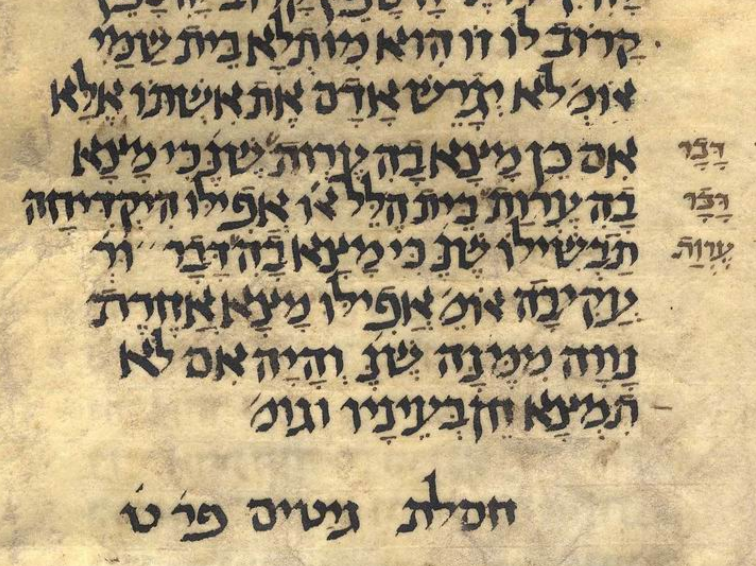
(א) והיה אם לא תמצא חן בעיניו, מיכן היו בית שמיי אומרים לא יגרש אדם את אשתו אלא אם כן מצא בה ערוה שנאמר כי מצא בה ערות דבר ובית הלל אומרים אפילו הקדיחה תבשילו שנאמר דבר. (ב) אמרו בית הלל לבית שמיי אם נאמר דבר למה נאמר ערות ואם נאמר ערות למה נאמר דבר, שאם נאמר דבר ולא נאמר ערות הייתי אומר היוצאה מפני דבר תהא מותרת להנשא והיוצאה מפני ערוה לא תהא מותרת להנשא ואל תתמה אם נאסרה מן המותר לה לא תהא אסורה מן האסור לה תלמוד לומר ערות ויצאה מביתו והלכה והיתה לאיש אחר, ואם נאמר ערות ולא נאמר דבר הייתי אומר מפני ערוה תצא מפני דבר לא תצא תלמוד לומר דבר ויצאה מביתו, (ג) רבי עקיבה אומר אפילו מצא אחרת נאה הימנה שנאמר והיה אם לא תמצא חן בעיניו....
(Devarim 24:1) "and it shall be, if she does not find favor in his eyes, for he found in her a thing of nakedness, (then he shall write her a scroll of divorce.") Beth Shammai say: A man should not divorce his wife unless he find in her a thing of nakedness (i.e., that she had fornicated). And Beth Hillel say: Even if she spoiled his meal, it being written "for he found in her a thing of nakedness." Said Beth Hillel to Beth Shammai: But is it not written "a thing"? Beth Shammai: But is it not written "nakedness"? Beth Hillel: If it were written "nakedness," but not "a thing," I would say, because of nakedness she is divorced, but because of "a thing" she is not divorced. It is, therefore, written "a thing … (2) and she shall go out of his house." And if it were written "a thing," and it were not written "nakedness," I would say: If she is divorced because of "a thing," she is permitted to remarry, but if she is divorced because of nakedness, she is not permitted to remarry. And do not wonder at this, for if she is forbidden (by the divorce) from one who was permitted to her, should she not be forbidden to one (i.e., a new husband), who was forbidden to her? It must, therefore, be written "… nakedness … and she shall go out of his house and she may be to another man." R. Akiva says: (He may divorce her) even if he finds another more beautiful than she, it being written "if she does not find favor in his eyes."
ספרי זוטא לדברים (מהדורת כהנא, עמ' 346)
וְהָא תַנֵּי. בֵּית שַׁמַּי אוֹמְרִים. אֵין לִי אֶלָּא הַיּוֹצֵא מִשּׁוּם עֶרְוָה בִּלְבַד. וּמִנַּיִין הַיּוֹצְאָה וְרֹאשָׁהּ פָּרוּעַ צְדָדֶיהָ פְרוּמִין וּזְרוֹעוֹתֶיהָ חֲלוּצוֹת. תַּלמוּד לוֹמַר כִּי מָצָא בָהּ עֶרְוַת דָּבָר. מַה מְקַיְימִין דְּבֵית שַׁמַּי. שֶׁלֹּא תֹאמַר. הַיּוֹצֵא מִשּׁוּם עֶרְוָה אָסוּר. מִשּׁוּם דָּבָר אַחֵר מוּתֶּרֶת.
MISHNAH:The House of Shammai say, a person should not divorce his wife unless he found her immoral, as it was said: “For he found with her a matter of nakedness.” But the House of Hillel say, even if she spoiled his dish, as it was said: “For he found with her a bad thing.” Rebbi Aqiba said, even if he found another more beautiful than her, as it was said: “It will be if she does not appear pleasing in his eyes, etc.” HALAKHAH: Was it not stated in the name of the House of Shammai: Not only that the woman must leave because of incest; from where that she must leave if her head’s [hair] is loose, if the side seams of her dress are open, or her arms stripped bare? The verse says, “for he found in her a matter of nakedness.” How can the House of Shammai confirm this? Lest you say that one divorced because of immorality is forbidden, for anothercause she would be permitted. Rebbi Shila from Kefar-Tamarta said: The verse is difficult for the House of Shammai: “Her first husband, who had sent her away, cannot afterwards retake her.” Where do we hold? If to forbid her to him, is she not already forbidden to him? But we must hold, to burden him with a prohibition. It is written: “And the unwell in her menstruation and the sufferer from gonorrhea in his flow.” The earlier Elders used to say, “she shall be in her menstruation”, she shall not use kohl nor any make-up until she comes into water. Rebbi Aqiba said to them: Is that a reason? If you say so, she makes herself ugly and he starts thinking to divorce her. It turns out that the Elders follow the House of Shammai and Rebbi Aqiba the House of Hillel.
הברית החדשה
31 נֶאֱמַר, 'אִישׁ כִּי יְשַׁלַּח אֶת אִשְׁתּוֹ יִתֵּן לָהּ סֵפֶר כְּרִיתוּת'. 32 וַאֲנִי אוֹמֵר לָכֶם: כָּל הַמְגָרֵשׁ אֶת אִשְׁתּוֹ חוּץ מֵאֲשֶׁר עַל־דְּבַר זְנוּת, עוֹשֶׂה אוֹתָהּ לְנוֹאֶפֶת; וְהַלּוֹקֵחַ אֶת הַגְּרוּשָׁה לְאִשָּׁה נוֹאֵף הוּא.
מתי יט
יט כְּשֶׁגָּמַר יֵשׁוּעַ לְדַבֵּר אֶת הַדְּבָרִים הָאֵלֶּה יָצָא מִן הַגָּלִיל וּבָא לְאֵזוֹר יְהוּדָה שֶׁבְּעֵבֶר הַיַּרְדֵּן. 2 הֲמוֹן עַם רַב הָלְכוּ אַחֲרָיו וְהוּא רִפֵּא אוֹתָם שָׁם. 3 נִגְּשׁוּ אֵלָיו כַּמָּה פְּרוּשִׁים לְנַסּוֹת אוֹתוֹ וְאָמְרוּ: "הַאִם מֻתָּר לְאִישׁ לְגָרֵשׁ אֶת אִשְׁתּוֹ עַל כָּל דָּבָר?". 4 הֵשִׁיב לָהֶם וְאָמַר: "הַאִם לֹא קְרָאתֶם שֶׁהַבּוֹרֵא עָשָׂה אוֹתָם זָכָר וּנְקֵבָה מִבְּרֵאשִׁית 5 וְגַם אָמַר, 'עַל־כֵּן יַעֲזָב־אִישׁ אֶת־אָבִיו וְאֶת־אִמּוֹ וְדָבַק בְּאִשְׁתּוֹ וְהָיוּ לְבָשָׂר אֶחָד'? 6 אֵין הֵם עוֹד שְׁנַיִם אֶלָּא בָּשָׂר אֶחָד. לָכֵן מַה שֶּׁחִבֵּר הָאֱלֹהִים אַל יַפְרִיד הָאָדָם." 7 "אִם כֵּן לָמָּה צִוָּה מֹשֶׁה לָתֵת לָהּ סֵפֶר כְּרִיתוּת וּלְשַׁלְּחָהּ?" שָׁאֲלוּ אוֹתוֹ. 8 הֵשִׁיב לָהֶם: "בִּגְלַל קְשִׁי לְבַבְכֶם הִתִּיר לָכֶם מֹשֶׁה לְשַׁלֵּחַ אֶת נְשֵׁיכֶם, אַךְ מֵרֵאשִׁית לֹא הָיָה כָּךְ. 9 וַאֲנִי אוֹמֵר לָכֶם, הַמְגָרֵשׁ אֶת אִשְׁתּוֹ שֶׁלֹּא עַל־דְבַר זְנוּת וְנוֹשֵׂא אַחֶרֶת נוֹאֵף הוּא." 10 אָמְרוּ לוֹ הַתַּלְמִידִים: "אִם כָּךְ הוּא דִּין הָאִישׁ וְהָאִשָּׁה לֹא כְּדַאי לְהִתְחַתֵּן." 11 אָמַר לָהֶם: "לֹא הַכֹּל מְבִינִים אֶת הַדָּבָר הַזֶּה, רַק אֵלֶּה שֶׁנִּתַּן לָהֶם. 12 יֵשׁ סָרִיסִים שֶׁנּוֹלְדוּ כָּךְ מִבֶּטֶן אִמָּם, יֵשׁ סָרִיסִים שֶׁנַּעֲשׂוּ סָרִיסִים עַל־יְדֵי בְּנֵי אָדָם, יֵשׁ סָרִיסִים אֲשֶׁר עָשׂוּ עַצְמָם לְסָרִיסִים לְמַעַן מַלְכוּת שָׁמַיִם. מִי שֶׁבִּיכָלְתּוֹ לְקַבֵּל, שֶׁיְּקַבֵּל."
מרקוס י
י הוּא קָם וְהָלַךְ מִשָּׁם אֶל אֵזוֹר יְהוּדָה וְאֶל עֵבֶר הַיַּרְדֵּן. שׁוּב נִקְבְּצוּ אֵלָיו הֲמוֹנִים וּכְמִנְהָגוֹ שׁוּב לִמֵּד אוֹתָם. 2 נִגְּשׁוּ הַפְּרוּשִׁים לְנַסּוֹתוֹ וְשָׁאֲלוּ אוֹתוֹ: "הַאִם מֻתָּר לְאִישׁ לְגָרֵשׁ אֶת אִשְׁתּוֹ?" 3 עָנָה וְאָמַר לָהֶם: "מַה צִּוָּה אֶתְכֶם מֹשֶׁה?"
4 הֵשִׁיבוּ: "מֹשֶׁה הִתִּיר לִכְתֹּב סֵפֶר כְּרִיתוּת וּלְגָרֵשׁ."
5 אָמַר לָהֶם יֵשׁוּעַ: "בִּגְלַל קְשִׁי לְבַבְכֶם כָּתַב לָכֶם אֶת הַמִּצְוָה הַזֹּאת, 6 אֲבָל מֵרֵאשִׁית הַבְּרִיאָה 'זָכָר וּנְקֵבָה בָּרָא אֹתָם. 7 עַל־כֵּן יַעֲזָב אִישׁ אֶת־אָבִיו וְאֶת־אִמּוֹ [וְדָבַק בְּאִשְׁתּוֹ] 8 וְהָיוּ שְׁנֵיהֶם לְבָשָׂר אֶחָד.' וּבְכֵן אֵינָם עוֹד שְׁנַיִם אֶלָּא בָּשָׂר אֶחָד. 9 לְפִיכָךְ מַה שֶּׁחִבֵּר אֱלֹהִים אַל יַפְרִיד אָדָם." 10 כְּשֶׁהָיוּ בַּבַּיִת שָׁאֲלוּ אוֹתוֹ גַּם הַתַּלְמִידִים עַל זֹאת. 11 אָמַר לָהֶם: "כָּל הַמְגָרֵשׁ אֶת אִשְׁתּוֹ וְנוֹשֵׂא אַחֶרֶת נוֹאֵף הוּא. 12 וְאִם הִיא תְּגָרֵשׁ אֶת בַּעֲלָהּ וְתִנָּשֵׂא לְאַחֵר נוֹאֶפֶת הִיא."