


הברכה נאמרת מפי הכוהנים בנשיאת כפיים, כאשר ידיהם מושטות כלפי הציבור.
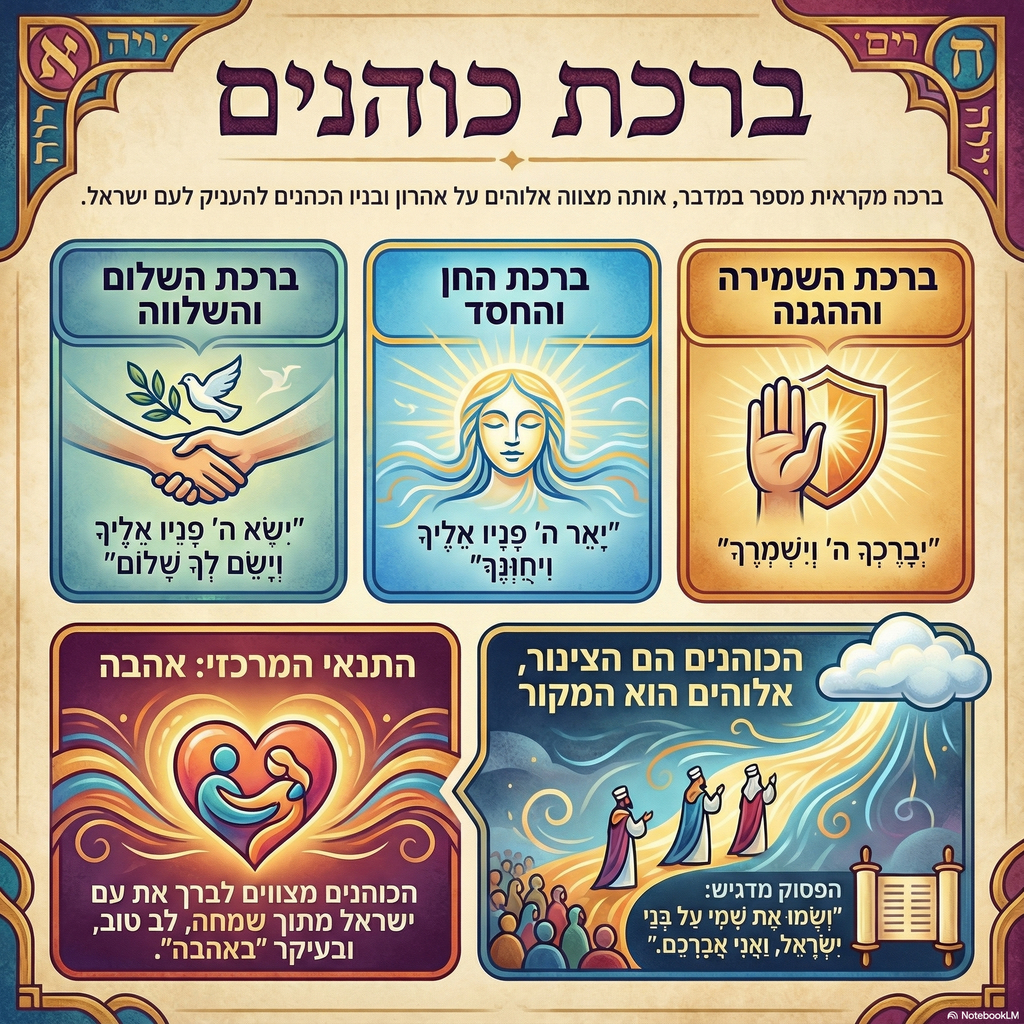
(כב) וַיְדַבֵּ֥ר יהוה אֶל־מֹשֶׁ֥ה לֵּאמֹֽר׃ (כג) דַּבֵּ֤ר אֶֽל־אַהֲרֹן֙ וְאֶל־בָּנָ֣יו לֵאמֹ֔ר כֹּ֥ה תְבָרְכ֖וּ אֶת־בְּנֵ֣י יִשְׂרָאֵ֑ל אָמ֖וֹר לָהֶֽם׃ {ס}(כד) יְבָרֶכְךָ֥ יהוה וְיִשְׁמְרֶֽךָ׃ {ס}(כה) יָאֵ֨ר יהוה ׀ פָּנָ֛יו אֵלֶ֖יךָ וִֽיחֻנֶּֽךָּ׃ {ס}(כו) יִשָּׂ֨א יהוה ׀ פָּנָיו֙ אֵלֶ֔יךָ וְיָשֵׂ֥ם לְךָ֖ שָׁלֽוֹם׃ {ס}
בני אהרון הם הכוהנים.
לכוהנים תפקיד מיוחד בתפילה, הם עולים לבמה בבית הכנסת, ליד ארון הקודש, ומברכים את העם בברכה שקראנו כעת.
(כז) וְשָׂמ֥וּ אֶת־שְׁמִ֖י עַל־בְּנֵ֣י יִשְׂרָאֵ֑ל וַאֲנִ֖י אֲבָרְכֵֽם׃ {ס}
(27) Thus they shall link My name with the people of Israel, and I will bless them.
הכוהנים משמשים כמעין 'צינור'.
(יב) אֵין הַכֹּהֲנִים רַשָּׁאִין בְּכָל מָקוֹם לְהוֹסִיף בְּרָכָה עַל שְׁלֹשֶׁת הַפְּסוּקִים כְּגוֹן (דברים א יא) ״יְיָ׳ אֱלֹהֵי אֲבוֹתֵיכֶם יוֹסֵף עֲלֵיכֶם כָּכֶם אֶלֶף פְּעָמִים״ וְכַיּוֹצֵא בָּהּ לֹא בְּקוֹל רָם וְלֹא בְּלַחַשׁ שֶׁנֶּאֱמַר (דברים ד ב) ״לֹא תּוֹסִיפוּ עַל הַדָּבָר״. בְּשָׁעָה שֶׁכָּל כֹּהֵן עוֹלֶה לַדּוּכָן כְּשֶׁהוּא עוֹקֵר רַגְלָיו לַעֲלוֹת אוֹמֵר יְהִי רָצוֹן מִלְּפָנֶיךָ יְיָ׳ אֱלֹהֵינוּ שֶׁתִּהְיֶה בְּרָכָה זוֹ שֶׁצִּוִּיתָנוּ לְבָרֵךְ אֶת עַמְּךָ יִשְׂרָאֵל בְּרָכָה שְׁלֵמָה וְאַל יְהִי בָּהּ מִכְשׁוֹל וְעָוֹן מֵעַתָּה וְעַד עוֹלָם. וְקֹדֶם שֶׁיַּחֲזִיר פָּנָיו לְבָרֵךְ אֶת הָעָם מְבָרֵךְ בָּרוּךְ אַתָּה יְיָ׳ אֱלֹהֵינוּ מֶלֶךְ הָעוֹלָם אֲשֶׁר קִדְּשָׁנוּ בִּקְדֻשָּׁתוֹ שֶׁל אַהֲרֹן וְצִוָּנוּ לְבָרֵךְ אֶת עַמּוֹ יִשְׂרָאֵל בְּאַהֲבָה. וְאַחַר כָּךְ מַחֲזִיר פָּנָיו לַצִּבּוּר וּמַתְחִיל לְבָרְכָם. וּכְשֶׁמַּחֲזִיר פָּנָיו מִן הַצִּבּוּר אַחַר שֶׁמַּשְׁלִים אוֹמֵר עָשִׂינוּ מַה שֶּׁגָּזַרְתָּ עָלֵינוּ עֲשֵׂה עִמָּנוּ מַה שֶּׁהִבְטַחְתָּנוּ (דברים כו טו) ״הַשְׁקִיפָה מִמְּעוֹן קָדְשְׁךָ מִן הַשָּׁמַיִם וּבָרֵךְ אֶת עַמְּךָ אֶת יִשְׂרָאֵל״:
(12) Wherever [they recite the blessing], the priests are not permitted to add other blessings - e.g., "May God, Lord of your fathers, increase your numbers a thousandfold" (Deuteronomy 11:11) - in addition to the three verses [of the priestly blessing]. [These additions may not be made] either silently or out loud, as [Deuteronomy 4:2] states: "Do not add to the matter."
While a priest is ascending to the duchan, he recites [the following prayer] when he leaves his place to ascend:
May it be Your will, God, our Lord and Lord of our fathers, that this blessing which You have commanded us to bless Your people, Israel, be a perfect blessing, that it not be marred by obstacles or iniquity, from now until eternity.
Before he turns to bless the community, [a priest] should recite the blessing:
Blessed are You, God, our Lord, King of the universe, who has sanctified us with the holiness of Aharon, and commanded us to bless His people Israel with love.
Afterwards, he turns his face to the community and begins reciting the priestly blessings. When he turns his face from the community after completing [the recitation] of the blessings, he recites [the following]:
We have carried out that which You have decreed upon us. Deal with us as You have promised us: Look down from Your abode, from the heavens, and bless Your people, Israel.
צריך שתהיה בליבו אהבת ישראל.
בָּרוּךְ אַתָּה יהוה אֱלֹהֵינוּ מֶלֶךְ הָעוֹלָם אֲשֶׁר קִדְּשָׁנוּ בִּקְדֻשָּׁתוֹ שֶׁל אַהֲרֹן וְצִוָּנוּ לְבָרֵךְ אֶת עַמּוֹ יִשְׂרָאֵל בְּאַהֲבָה
הברכה צריכה להיכתב בתנאים שחלים על ברכת הכוהנים,
באהבה, בשמחה ובעין טובה.