


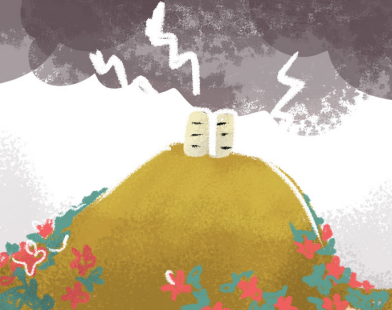
Illustration Credit: Noa Kelner
Halakhah הֲלָכָה
The requirement for Hanukkah lights is one candle per household on each night of the holiday.
תָּנוּ רַבָּנַן: מִצְוַת חֲנוּכָּה, נֵר אִישׁ וּבֵיתוֹ.
Our Sages taught: The basic mitzvah of Hanukkah is one light per household.
- Why do you think this is the minimum way to fulfil the mitzvah?

But the Gemara says that there is a more beautiful way to do the mitzvah, called מְהַדְּרִין (mehadrin):
וְהַמְהַדְּרִין, נֵר לְכׇל אֶחָד וְאֶחָד.
The mehadrin practice is one light for each person in the household.
- How does a candle for every person make a Hanukkah celebration more beautiful?

And, the Gemara adds, it’s possible to perform the mitzvah in an even more beautiful way:
וְהַמְהַדְּרִין מִן הַמְהַדְּרִין, בֵּית שַׁמַּאי אוֹמְרִים: יוֹם רִאשׁוֹן מַדְלִיק שְׁמֹנָה, מִכָּאן וְאֵילָךְ פּוֹחֵת וְהוֹלֵךְ. וּבֵית הִלֵּל אוֹמְרִים: יוֹם רִאשׁוֹן מַדְלִיק אַחַת, מִכָּאן וְאֵילָךְ מוֹסִיף וְהוֹלֵךְ.
The mehadrin of the mehadrin practice:
Beit Shammai say to start with eight lights on the first night and then decrease one light per night. Beit Hillel say to start with one light on the first night and then increase one light per night.
- What’s extra beautiful about lighting a different number of candles on each night of Hanukkah?

R. Shlomo Yosef Zevin explains that the disagreement between Beit Shammai and Beit Hillel has to do with whether this mitzvah should focus on fire or on light.
Fire burns things up, and it has the ability to destroy evil. During the time of the Hanukkah story, the army of the Hashmonaim (aka Makkabim) fought back against the Yevanim (Greeks). Their battle is represented by fire.
Light, and especially the light of Torah, fills and elevates and illuminates each individual person and also the whole entire world. After the Hashmonaim beat the Yevanim, they kindled the light of Torah in the בֵּית הַמִּקְדָּשׁ (Beit HaMikdash, Temple) and it shone far and wide.
R. Shlomo Yosef Zevin (Eastern Europe and Israel, 75 years ago)
Beit Shammai, in their view, say: We remember (through our Hanukkah candles) the fire—the destruction of evil and the elimination of impurity.
Beit Hillel, following their path, believe: We remember the light. Certainly, at the time, war was necessary—and if it was necessary, then we fought it. But we do not turn that into a symbol or a ritual. The temporary means does not become an ultimate goal. That is not the lasting lesson. The lasting lesson is the light.
And now you can understand:
If the most important part is the burning and destruction of evil, then the more the fire burns, the less evil remains (and it makes sense to go from eight candles down to one to show that decrease)…
But if we want to remember the light, then the more it burns, the more it illuminates (and it makes sense to go from one candle up to eight to show that increase).
לתורה ולמועדים
Beit Shammai, in their view, say: We remember (through our Hanukkah candles) the fire—the destruction of evil and the elimination of impurity.
Beit Hillel, following their path, believe: We remember the light. Certainly, at the time, war was necessary—and if it was necessary, then we fought it. But we do not turn that into a symbol or a ritual. The temporary means does not become an ultimate goal. That is not the lasting lesson. The lasting lesson is the light.
And now you can understand:
If the most important part is the burning and destruction of evil, then the more the fire burns, the less evil remains (and it makes sense to go from eight candles down to one to show that decrease)…
But if we want to remember the light, then the more it burns, the more it illuminates (and it makes sense to go from one candle up to eight to show that increase).
לתורה ולמועדים
בֵּית שַׁמַּאי לְשִׁיטָתָם, אוֹמְרִים: הַזִּכָּרוֹן הוּא לָאֵשׁ, לְבִעוּר הָרַע וְכִלְיוֹן הַטֻּמְאָה.
וּבֵית הִלֵּל, לְדַרְכָּם, סוֹבְרִים: הַזִּכָּרוֹן הוּא לָאוֹר. וַדַּאי, בִּשְׁעָתָהּ הַמִּלְחָמָה הָיְתָה נְחוּצָה, וְאִם נְחוּצָה הָיְתָה—עָשִׂינוּ אוֹתָהּ, אֲבָל אֵין עוֹשִׂין מִזֶּה סֵמֶל וּפֻלְחָן, אֵין הָאֶמְצָעִי הַזְּמַנִּי הוֹפֵךְ לְמַטָּרָה תַּכְלִיתִית. לֹא זֶהוּ הַלֶּקַח לְדוֹרוֹת. הַלִּמּוּד לְדוֹרוֹת הוּא הָאוֹר.
וּבֵית הִלֵּל, לְדַרְכָּם, סוֹבְרִים: הַזִּכָּרוֹן הוּא לָאוֹר. וַדַּאי, בִּשְׁעָתָהּ הַמִּלְחָמָה הָיְתָה נְחוּצָה, וְאִם נְחוּצָה הָיְתָה—עָשִׂינוּ אוֹתָהּ, אֲבָל אֵין עוֹשִׂין מִזֶּה סֵמֶל וּפֻלְחָן, אֵין הָאֶמְצָעִי הַזְּמַנִּי הוֹפֵךְ לְמַטָּרָה תַּכְלִיתִית. לֹא זֶהוּ הַלֶּקַח לְדוֹרוֹת. הַלִּמּוּד לְדוֹרוֹת הוּא הָאוֹר.
וּמֵאֵלָיו מוּבָן שֶׁאִם הָעִקָּר הוּא שְׂרֵפַת הָרַע וּבִעוּרוֹ, הֲרֵי כָּל מָה שֶׁהָאֵשׁ שׂוֹרֶפֶת יוֹתֵר, הוֹלֵךְ וּפוֹחֵת יוֹתֵר הָרַע הַמִּתְבַּעֵר...
וְאִם הַזִּכָּרוֹן הוּא הָאוֹר, הֲרֵי כָּל מָה שֶׁדּוֹלֵק יוֹתֵר מֵאִיר יוֹתֵר.
וְאִם הַזִּכָּרוֹן הוּא הָאוֹר, הֲרֵי כָּל מָה שֶׁדּוֹלֵק יוֹתֵר מֵאִיר יוֹתֵר.
- In R. Zevin’s explanation of Beit Hillel’s position, he says that we shouldn’t turn a military victory into a symbol or ritual. Why not? What’s dangerous about doing that?
- We follow Beit Hillel’s opinion, and increase the amount of light every night of Hanukkah. What can we learn from that?
-------------------
Click here to return to the Table of Contents for Hanukkah from Devash
-------------------
Click here to return to the Table of Contents for Hanukkah from Devash
-------------------
