
Save "Sukkot 5786 - Can we find joy in a time of collective face blindness?"
Sukkot 5786 - Can we find joy in a time of collective face blindness?
Sukkot.... zman simchoteinu... the season of our joy. In fact, we are commanded to be joyful (in Parashat Re'eh, in the Book of Deuteronomy):

(יג) חַ֧ג הַסֻּכֹּ֛ת תַּעֲשֶׂ֥ה לְךָ֖ שִׁבְעַ֣ת יָמִ֑ים בְּאׇ֨סְפְּךָ֔ מִֽגׇּרְנְךָ֖ וּמִיִּקְבֶֽךָ׃ (יד)וְשָׂמַחְתָּ֖ בְּחַגֶּ֑ךָ אַתָּ֨ה וּבִנְךָ֤ וּבִתֶּ֙ךָ֙ וְעַבְדְּךָ֣ וַאֲמָתֶ֔ךָ וְהַלֵּוִ֗י וְהַגֵּ֛ר וְהַיָּת֥וֹם וְהָאַלְמָנָ֖ה אֲשֶׁ֥ר בִּשְׁעָרֶֽיךָ׃ (טו) שִׁבְעַ֣ת יָמִ֗ים תָּחֹג֙ לַיהוה אֱלֹהֶ֔יךָ בַּמָּק֖וֹם אֲשֶׁר־יִבְחַ֣ר יהוה כִּ֣י יְבָרֶכְךָ֞ יהוה אֱלֹהֶ֗יךָ בְּכֹ֤ל תְּבוּאָֽתְךָ֙ וּבְכֹל֙ מַעֲשֵׂ֣ה יָדֶ֔יךָ וְהָיִ֖יתָ אַ֥ךְ שָׂמֵֽחַ׃

(13) After the ingathering from your threshing floor and your vat, you shall hold the Feast of Booths for seven days. (14)You shall rejoice in your festival, with your son and daughter, your male and female slave, the [family of the] Levite, the stranger, the fatherless, and the widow in your communities. (15) You shall hold a festival for your God יהוה seven days, in the place that יהוה will choose; for your God יהוה will bless all your crops and all your undertakings, and you shall have nothing but joy.

We are instructed to build a sukkah, a temporary shelter that reminds us of the booths that the children of Israel lived in after their liberation from oppression in Egypt.
Today - a few days after Yom Kippur, a few days before Sukkot - around the world families, synagogues, other groups, are building sukkot and looking forward to joyful celebrations.
"you shall have nothing but joy"... I will be honest: today, as I write this (Sunday 5 October 2025, 13 Tishri 5786); today, the 729th day since October 7 2023, the 729th day of Israel's devastating assault on Gaza... as a human being, as a Jew, as a physician, as a rabbi... today, I am struggling to find joy.
The Torah reading for Sukkot Chol ha'Moed are verses from the Book of Exodus, from Parashat Ki Tissa: Exodus 33:12- 34:26.
In these verses we read the sublime account of Moses' yearning to see God's face, of God placing Moses "in the cleft of a rock" from which Moses will see God's back, but not his face; we have in these verses also God's instructions to Moses to create a second set of tablets, to replace those that Moses had shattered earlier in Parashat Ki Tissa after comprehending the people's involvement in the episode of the Golden Calf; we have God stating God's "Thirteen attributes"... in language that resonates deeply (and which we have just heard, numerous times, during High Holiday liturgy).
Why are we to read these verses at this season? Can we discover something in these verses that can help us connect to joy?
This year, I suggest that these verses, coming as they do in the aftermath of the Golden Calf, can show us ways to cultivate a suitable attitude to work towards repair in the face of moral and ethical devastation. We do not live in an atemporal, ahistorical vacuum. We live in a world that is more potentially interconnected than ever. We have instantaneous access to news from nearly everywhere in the world. How can we fail to register the consequences of actions taken by governments at home and around the world?
How can I have nothing but joy when...
tents... which already are temporary shelters... destroyed...
https://www.vanguardngr.com/2025/09/israel-army-says-over-250000-residents-have-left-gaza-city/
or
https://shelterforce.org/2025/07/03/criminalizing-homelessness-doesnt-work-study-finds/
Moses pleads to see God's face. When we truly see the face of another person, we are capable of connecting, in an intimate and symmetrical way.
Did you know that there's a medical condition called Prosopagnosia - face blindness?
I'm a physician and a rabbi, and this is my provisional diagnosis of the zeitgeist (spirit of our time), a diagnostic formulation that can account for our vast capacity not to see others' suffering: collective face blindness.
As a physician and psychiatrist, I have been aware of this condition for decades. However - and here I will say, buckle up your ethical seatbelt - I only learned today, as I have been writing this commentary, that this name for this condition was was coined by a German physician Dr. Joachim Bodamer (a psychiatrist and neurologist), in 1947.
http://www.prosopagnosia.de/Beschreibung_eng.html
"Proposagnosia - History
Selective inabilities to recognize faces were documented as early as the 19th century, and included case studies by Hughlings Jackson and Jean-Martin Charcot. However, it was not named until the term prosopagnosia was first used in 1947 by Joachim Bodamer [de], a German neurologist. He described three cases, including a 24-year-old man who sustained a bullet wound to the head and lost his ability to recognize his friends, family, and even his own face. However, he was able to recognize and identify them through other sensory modalities such as auditory, tactile, and even other visual stimuli patterns (such as gait and other physical mannerisms). Bodamer gave his paper the title Die Prosop-Agnosie, derived from Classical Greek πρόσωπον (prósōpon) 'face' and αγνωσία (agnōsía) 'non-knowledge'. In October 1996, Bill Choisser began popularizing the term face blindness for the condition; the earliest-known use of the term is in an 1899 medical paper."
https://en.wikipedia.org/wiki/Prosopagnosia
Let's think about this: a German psychiatrist who was working in Germany in the 1940's, throughout WWII, and studied this odd condition in German soldiers... I have not yet had a chance to read Dr. Bodamer's original paper in German, which I intend to do. I must emphasize that at this time, I do not have specific information to suggest what Dr. Bodamer's involvement was with the Third Reich. Nevertheless, a compelling question arises: if a physician was working in with the German army during WWII, and treating German soldiers... was he a Nazi collaborator?
And perhaps I can also suggest, irrespective of this particular physician's connection with the Nazis, it is notable that our terminology for the disabling condition of face blindness arises out of the moral crisis of the mid-20th Century.
I feel a timely urgency to suggest that the condition of not being able to recognize others' faces may be a coping mechanism of the psyche, when we are have participated in grievously violent and cruel acts towards others.
Interestingly, there is little information that is easily discoverable about Dr. Bodamer. He is not mentioned by name in Robert Jay Lifton's z""l ground-breaking 1986 book, The Nazi Doctors: Medical Killing and the Psychology of Genocide. (This book was published during the second year of my psychiatry residency, and I recall reading it with horror and a deep sense both of moral revulsion and moral calling to work as a physician and psychiatrist with eyes open to such betrayals.)
Holding the idea of face blindness in mind and looping back to the special Torah reading for Sukkot - the season when we are commanded to be filled with joy: this Torah reading reminds us of the longing for, and the impossibility of, seeing God's face; reminds us of God's attributes; reeminds us that there can be a second chance to live righteously (the second set of tablets).
Glorious stuff.
But then... moving toward the end of this special Torah reading we encounter suspicion of the other, hatred, instructions for violence. For example:

(יא) שְׁמׇ֨ר־לְךָ֔ אֵ֛ת אֲשֶׁ֥ר אָנֹכִ֖י מְצַוְּךָ֣ הַיּ֑וֹם הִנְנִ֧י גֹרֵ֣שׁ מִפָּנֶ֗יךָ אֶת־הָאֱמֹרִי֙ וְהַֽכְּנַעֲנִ֔י וְהַחִתִּי֙ וְהַפְּרִזִּ֔י וְהַחִוִּ֖י וְהַיְבוּסִֽי׃ (יב) הִשָּׁ֣מֶר לְךָ֗ פֶּן־תִּכְרֹ֤ת בְּרִית֙ לְיוֹשֵׁ֣ב הָאָ֔רֶץ אֲשֶׁ֥ר אַתָּ֖ה בָּ֣א עָלֶ֑יהָ פֶּן־יִהְיֶ֥ה לְמוֹקֵ֖שׁ בְּקִרְבֶּֽךָ׃ (יג) כִּ֤י אֶת־מִזְבְּחֹתָם֙ תִּתֹּצ֔וּן וְאֶת־מַצֵּבֹתָ֖ם תְּשַׁבֵּר֑וּן וְאֶת־אֲשֵׁרָ֖יו תִּכְרֹתֽוּן׃ (יד) כִּ֛י לֹ֥א תִֽשְׁתַּחֲוֶ֖ה לְאֵ֣ל אַחֵ֑ר כִּ֤י יהוה קַנָּ֣א שְׁמ֔וֹ אֵ֥ל קַנָּ֖א הֽוּא׃ (טו) פֶּן־תִּכְרֹ֥ת בְּרִ֖ית לְיוֹשֵׁ֣ב הָאָ֑רֶץ וְזָנ֣וּ ׀ אַחֲרֵ֣י אֱלֹֽהֵיהֶ֗ם וְזָבְחוּ֙ לֵאלֹ֣הֵיהֶ֔ם וְקָרָ֣א לְךָ֔ וְאָכַלְתָּ֖ מִזִּבְחֽוֹ׃ (טז) וְלָקַחְתָּ֥ מִבְּנֹתָ֖יו לְבָנֶ֑יךָ וְזָנ֣וּ בְנֹתָ֗יו אַחֲרֵי֙ אֱלֹ֣הֵיהֶ֔ן וְהִזְנוּ֙ אֶת־בָּנֶ֔יךָ אַחֲרֵ֖י אֱלֹהֵיהֶֽן׃

(11) Mark well what I command you this day. I will drive out before you the Amorites, the Canaanites, the Hittites, the Perizzites, the Hivites, and the Jebusites. (12) Beware of making a covenant with the inhabitants of the land against which you are advancing, lest they be a snare in your midst. (13) No, you must tear down their altars, smash their pillars, and cut down their sacred posts; (14) for you must not worship any other god, because יהוה, whose name is Impassioned, is an impassioned God. (15) You must not make a covenant with the inhabitants of the land, for they will lust after their gods and sacrifice to their gods and invite you, and you will eat of their sacrifices. (16) And when you take [wives into your households] from among their daughters for your sons, their daughters will lust after their gods and will cause your sons to lust after their gods.

How to wrestle with these verses at this particular moment in history? Here's what stands out for me, today:

(יב) הִשָּׁ֣מֶר לְךָ֗ פֶּן־תִּכְרֹ֤ת בְּרִית֙ לְיוֹשֵׁ֣ב הָאָ֔רֶץ אֲשֶׁ֥ר אַתָּ֖ה בָּ֣א עָלֶ֑יהָ פֶּן־יִהְיֶ֥ה לְמוֹקֵ֖שׁ בְּקִרְבֶּֽךָ׃

(12) Beware of making a covenant with the inhabitants of the land against which you are advancing, lest they be a snare in your midst.
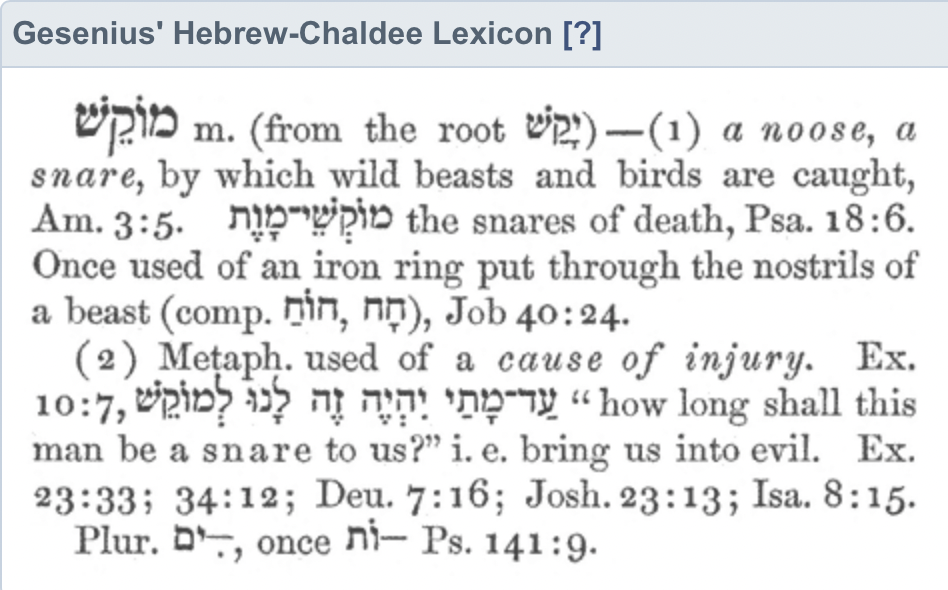
A snare in your / our midst... a snare... a trap...
This word snare - מוֹקֵשׁ - is a rare word in Tanakh (only 27 occurrences).
and is from an even rarer verbal root (8 occurrences in Tanakh) √יקש
Are we collectively and individually ensnared by deep-seated, archaic urges for vengeance and domination, which so often are at war with our impulses for mercy and compassion?
Our political leaders seem ensnared by such urges "in their midst" - which can also be translated as "deep within oneself." For example, the Israeli government's policies of destroying Gazan infrastructure, of starving and killing civilians, journalists, medical personnel... the seeming endless drive and lust for domination and power... and so many Jews', and others', silent complicity with these policies... I suggest that the tolerance of violence and inequity is a snare in which so many are caught at this time.
How to fulfill the mitzvah for Sukkot of being joyful at a time of such violence and despair?
My diagnosis: collective face-blindness. My prescription: concern and compassion.

(ו) בְּפֶ֤שַֽׁע אִ֣ישׁ רָ֣ע מוֹקֵ֑שׁ וְ֝צַדִּ֗יק יָר֥וּן וְשָׂמֵֽחַ׃ (ז) יֹדֵ֣עַ צַ֭דִּיק דִּ֣ין דַּלִּ֑ים רָ֝שָׁ֗ע לֹא־יָבִ֥ין דָּֽעַת׃

(6) An evil man’s offenses are a trap for himself, But the righteous sing out joyously. (7) A righteous man is concerned with the cause of the poor/weak/powerless; A wicked man cannot understand such concern.

Be aware. Be concerned. Be compassionate. Do not allow yourself to be trapped by complicity or insensitivity.
Start this new year of 5786 with awareness and social conscience and a promise to yourself to take actions that are possible for you, to be concerned with the cause of the powerless and weak, and may this concern be a source of joy for you, at this season and throughout the year.

(ב) עִבְד֣וּ אֶת־יהוה בְּשִׂמְחָ֑ה בֹּ֥אוּ לְ֝פָנָ֗יו בִּרְנָנָֽה׃

(2) worship the LORD in gladness; come into His presence with shouts of joy.

(כה) נֶֽפֶשׁ־בְּרָכָ֥ה תְדֻשָּׁ֑ן וּ֝מַרְוֶ֗ה גַּם־ה֥וּא יוֹרֶֽא׃

(25) A generous person enjoys prosperity; and a person who waters others will themself be watered.

Haskiveinu:
הַשְׁכִּיבֵֽנוּ יהוה אֱלֹהֵֽינוּ לְשָׁלוֹם ... וּפְרוֹשׂ עָלֵֽינוּ סֻכַּת שְׁלוֹמֶֽךָ וְתַקְּ֒נֵֽנוּ בְּעֵצָה טוֹבָהךָ...
Adonai our God; make us lie down in peace... Spread over us the sukkah of Your peace, and direct us to better ourselves through Your good counse....