


Part One focused on SH-F-T, the Hebrew root common to judges, judgment (both subjective and judicial,) and laws. The emergence of Deborah in Judges 4:4 was striking in its use of language and imagery that strongly echoed the leadership of Moses.
Now, let's dive deeper into the use of key words that link her story to another story as well. By "key words," I refer to words that stand out from a text, either because they are rare or used awkwardly, and we realize that the same words were used in a different story, so the mind begins to link the two stories, looking for common themes or lessons.
The era of the Book of Judges is a time of anarchy punctuated by sporadic communal cohesion under the charismatic leadership of "judges." The description of the crisis that led to Deborah's dramatic intervention has at least two key words that recall another time of division and trauma that led to the paradigmatic subjugation and oppression of the People of Israel.
Now, let's dive deeper into the use of key words that link her story to another story as well. By "key words," I refer to words that stand out from a text, either because they are rare or used awkwardly, and we realize that the same words were used in a different story, so the mind begins to link the two stories, looking for common themes or lessons.
The era of the Book of Judges is a time of anarchy punctuated by sporadic communal cohesion under the charismatic leadership of "judges." The description of the crisis that led to Deborah's dramatic intervention has at least two key words that recall another time of division and trauma that led to the paradigmatic subjugation and oppression of the People of Israel.
(א)וַיֹּסִ֙פוּ֙ בְּנֵ֣י יִשְׂרָאֵ֔ל לַעֲשׂ֥וֹת הָרַ֖ע בְּעֵינֵ֣י ה׳ וְאֵה֖וּד מֵֽת׃
(ב)וַיִּמְכְּרֵ֣ם ה׳ בְּיַד֙ יָבִ֣ין מֶלֶךְ־כְּנַ֔עַן אֲשֶׁ֥ר מָלַ֖ךְ בְּחָצ֑וֹר וְשַׂר־צְבָאוֹ֙ סִֽיסְרָ֔א וְה֥וּא יוֹשֵׁ֖ב בַּחֲרֹ֥שֶׁת הַגּוֹיִֽם׃
(ב)וַיִּמְכְּרֵ֣ם ה׳ בְּיַד֙ יָבִ֣ין מֶלֶךְ־כְּנַ֔עַן אֲשֶׁ֥ר מָלַ֖ךְ בְּחָצ֑וֹר וְשַׂר־צְבָאוֹ֙ סִֽיסְרָ֔א וְה֥וּא יוֹשֵׁ֖ב בַּחֲרֹ֥שֶׁת הַגּוֹיִֽם׃
(1) The Israelites continued to do what was offensive to YHWH—Ehud now being dead. (2) And YHWH sold them into the hand of King Jabin of Canaan, who reigned in Hazor. His army commander was Sisera, whose base was Harosheth-goiim.
note: I have modified the NJPS translation to accent key-words
The Hebrew word va-yosifu for "continued to" is an odd locution, as is va-yim'k'rem "YHWH sold them," and both link to the same words retelling key events in the life of ... Joseph and his brothers!
The Hebrew word va-yosifu for "continued to" is an odd locution, as is va-yim'k'rem "YHWH sold them," and both link to the same words retelling key events in the life of ... Joseph and his brothers!
(ה) וַיַּחֲלֹ֤ם יוֹסֵף֙ חֲל֔וֹם וַיַּגֵּ֖ד לְאֶחָ֑יו וַיּוֹסִ֥פוּ ע֖וֹד שְׂנֹ֥א אֹתֽוֹ׃
(5) Once Joseph had a dream which he told to his brothers; and they continued to hate him even more.
(כח) וַיַּֽעַבְרוּ֩ אֲנָשִׁ֨ים מִדְיָנִ֜ים סֹֽחֲרִ֗ים וַֽיִּמְשְׁכוּ֙ וַיַּֽעֲל֤וּ אֶת־יוֹסֵף֙ מִן־הַבּ֔וֹר וַיִּמְכְּר֧וּ אֶת־יוֹסֵ֛ף לַיִּשְׁמְעֵאלִ֖ים בְּעֶשְׂרִ֣ים כָּ֑סֶף וַיָּבִ֥יאוּ אֶת־יוֹסֵ֖ף מִצְרָֽיְמָה׃
(28) When Midianite traders passed by, they pulled Joseph up out of the pit. They sold Joseph for twenty pieces of silver to the Ishmaelites, who brought Joseph to Egypt.
What connects the era of Judges 4:1-2 with the sale of Joseph? Rabbi Tali Adler wrote an extraordinary essay titled “Ghosts in the Haggadah” in which she observes: "We did not end up in Egypt by accident. We were there because of a tragedy precipitated by unthinkable hatred: [Joseph]’s brothers selling him into slavery and deceiving their father..." With these two rare Hebrew verbs, the text evokes the fraternal strife that led inexorably to the subjugation from which Moses would rescue his people. It is as though the people are again descending into Egypt. Then Deborah emerges in verse four and there are at least 15 easy-to-find key words that evoke the life of Moses, suggesting that - like Moses - Deborah might redeem her people and reestablish the covenant:
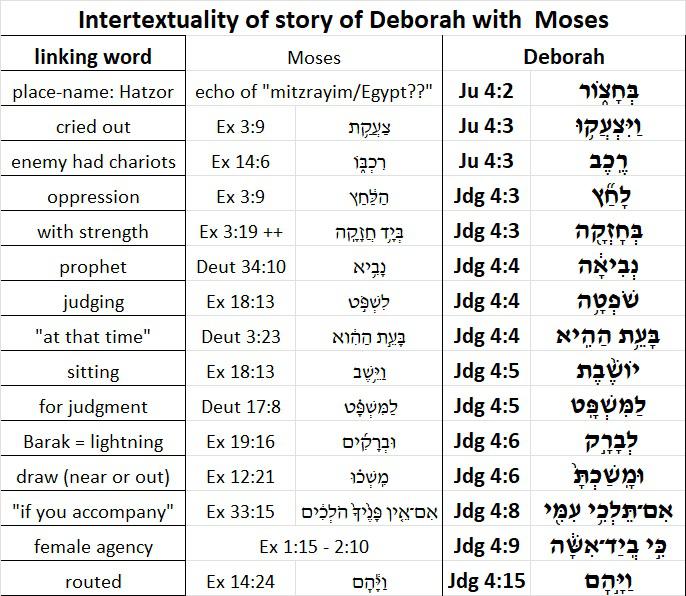
Unlike our awareness of Moses, whom we first encounter in his infancy, when we meet Deborah she is already a fully-formed prophet and judge. Like Moses in Ex 18:13, she appears to be offering judgments on a case-by-case basis, a scene we have not encountered since Exodus 18!
Whatever law code and judicial system Moses established, when we read the Book of Joshua, judges appear only when there is a public ceremonial event (8:33, 23:2, 24:1, and in reference to Cities of Refuge in 20:6.) There is certainly no evidence of courts in most of the Book of Judges save for this fleeting reference to Deborah; "judges" are charismatic military leaders, not those who interpret the law code.
We read of Deborah as a prophet (Judges 4:4,) a spouse (ibid,) an arbiter (ibid,) a commander-in-chief (4:8) and a poet (5:1ff,) a life that resembles Moses' life as prophet (Deut 34:14,) a spouse (Ex 2:21,) an arbiter (Ex 18:13,) a commander-in-chief (Ex 14:21ff) and a poet (Ex 15 and Deut 32.) But Moses is also a lawgiver, whose legacy will endure.
We read of Deborah as a prophet (Judges 4:4,) a spouse (ibid,) an arbiter (ibid,) a commander-in-chief (4:8) and a poet (5:1ff,) a life that resembles Moses' life as prophet (Deut 34:14,) a spouse (Ex 2:21,) an arbiter (Ex 18:13,) a commander-in-chief (Ex 14:21ff) and a poet (Ex 15 and Deut 32.) But Moses is also a lawgiver, whose legacy will endure.
Judges 5:31 relates that after Deborah's victory, "the land was tranquil forty years," the same amount of time that Moses led his less-than-tranquil nation through the wilderness. And then the idyllic period of her leadership came to an unceremonious end, and the nation reverted to anarchy.
(א) וַיַּעֲשׂ֧וּ בְנֵֽי־יִשְׂרָאֵ֛ל הָרַ֖ע בְּעֵינֵ֣י ה׳ וַיִּתְּנֵ֧ם ה׳ בְּיַד־מִדְיָ֖ן שֶׁ֥בַע שָׁנִֽים׃
(1) Then the Israelites did what was offensive to YHWH, and YWHW delivered them into the hands of the Midianites for seven years.
In the Book of Judges, there were three "judges" before Deborah, and nine followed her, but she was the only one who adjudicated cases. Only centuries later would a new prophet/ commander-in-chief emerge and serve as perhaps the first Circuit-Court Judge.
(טו) וַיִּשְׁפֹּ֤ט שְׁמוּאֵל֙ אֶת־יִשְׂרָאֵ֔ל כֹּ֖ל יְמֵ֥י חַיָּֽיו׃ (טז) וְהָלַ֗ךְ מִדֵּ֤י שָׁנָה֙ בְּשָׁנָ֔ה וְסָבַב֙ בֵּֽית־אֵ֔ל וְהַגִּלְגָּ֖ל וְהַמִּצְפָּ֑ה וְשָׁפַט֙ אֶת־יִשְׂרָאֵ֔ל אֵ֥ת כׇּל־הַמְּקוֹמ֖וֹת הָאֵֽלֶּה׃ (יז) וּתְשֻׁבָת֤וֹ הָרָמָ֙תָה֙ כִּֽי־שָׁ֣ם בֵּית֔וֹ וְשָׁ֖ם שָׁפָ֣ט אֶת־יִשְׂרָאֵ֑ל וַיִּבֶן־שָׁ֥ם מִזְבֵּ֖חַ לַה׳׃ {פ}
(15) Samuel judged Israel as long as he lived. (16) Each year he made the rounds of Bethel, Gilgal, and Mizpah, acting as judge over Israel at all those places. (17) Then he would return to Ramah, for his home was there, and there too he would judge Israel. He built an altar there to GOD.
[this is a work-in-progress; I'm pausing to take a break on August 19, 2025]