


The Common View of Satan
What comes to mind when you hear the word Satan?
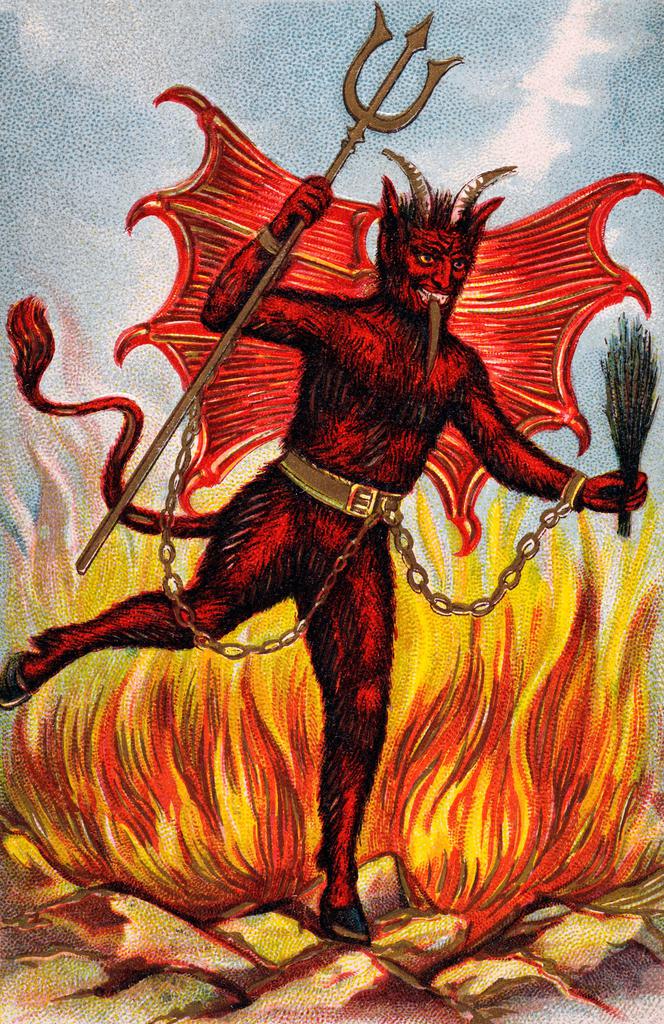
Maybe concepts like... horns, goats, upside-down stars, fallen angels, pitchforks, spiky tails, sacrifices or witchcraft, AKA Christian beliefs. Or maybe fire and brimstone and demons, both Christian and Islamic beliefs. Or maybe the one belief that ties Jews, Christians, and Muslims: temptation.
Maybe you think of the Satanic Panic of the 80s or the antisemitic canard that Jews are in league with the devil.
Maybe you think of the Satanic Panic of the 80s or the antisemitic canard that Jews are in league with the devil.
This is the common idea of Satan in popular culture - a malevolent demonic creature intent on destroying humanity.
When we look at Jewish practice, though, we get a very different picture (as is often the case). The "ha-Satan" of the Tanakh has no red horns or goat head; instead, Satan has the ultimate dirty job: acting as heaven's greatest prosecutor.
Ha-Satan in the Tanakh
Ha-Satan is one of only three B'nai Elohim named in the Torah, along with Michael and Gavriel. The B'nai Elohim, or children of G-d, are commonly referred to collectively as angels (though to call them all malachim would technically be incorrect but that's another source sheet). While ha-Satan gets the honor of being named with the other two major angelic figures, there's actually a possibility that Satan may not be a proper name at all.
Satan translates to "adversary" in Hebrew, from the Hebrew root שט meaning "to turn aside." While some mentions of ha-Satan in the Tanakh are interpreted to be referring to a specific angel, some may be referring to a generic adversary (especially where it's given in plural as satanim).
Our biggest primary textual sources for ha-Satan are Job, Zechariah, and Chronicles. Ha-Satan gets to be the supporting star (or antagonist!) in the book of Job, and this story gives us a good look at the Jewish interpretation of such a being.
Ha-Satan in the Tanakh
Ha-Satan is one of only three B'nai Elohim named in the Torah, along with Michael and Gavriel. The B'nai Elohim, or children of G-d, are commonly referred to collectively as angels (though to call them all malachim would technically be incorrect but that's another source sheet). While ha-Satan gets the honor of being named with the other two major angelic figures, there's actually a possibility that Satan may not be a proper name at all.
Satan translates to "adversary" in Hebrew, from the Hebrew root שט meaning "to turn aside." While some mentions of ha-Satan in the Tanakh are interpreted to be referring to a specific angel, some may be referring to a generic adversary (especially where it's given in plural as satanim).
Our biggest primary textual sources for ha-Satan are Job, Zechariah, and Chronicles. Ha-Satan gets to be the supporting star (or antagonist!) in the book of Job, and this story gives us a good look at the Jewish interpretation of such a being.
(ו) וַיְהִ֣י הַיּ֔וֹם וַיָּבֹ֙אוּ֙ בְּנֵ֣י הָאֱלֹהִ֔ים לְהִתְיַצֵּ֖ב עַל־יהוה וַיָּב֥וֹא גַֽם־הַשָּׂטָ֖ן בְּתוֹכָֽם׃ (ז) וַיֹּ֧אמֶר יהוה אֶל־הַשָּׂטָ֖ן מֵאַ֣יִן תָּבֹ֑א וַיַּ֨עַן הַשָּׂטָ֤ן אֶת־יהוה וַיֹּאמַ֔ר מִשּׁ֣וּט בָּאָ֔רֶץ וּמֵֽהִתְהַלֵּ֖ךְ בָּֽהּ׃ (ח) וַיֹּ֤אמֶר יהוה אֶל־הַשָּׂטָ֔ן הֲשַׂ֥מְתָּ לִבְּךָ֖ עַל־עַבְדִּ֣י אִיּ֑וֹב כִּ֣י אֵ֤ין כָּמֹ֙הוּ֙ בָּאָ֔רֶץ אִ֣ישׁ תָּ֧ם וְיָשָׁ֛ר יְרֵ֥א אֱלֹהִ֖ים וְסָ֥ר מֵרָֽע׃ (ט) וַיַּ֧עַן הַשָּׂטָ֛ן אֶת־יהוה וַיֹּאמַ֑ר הַֽחִנָּ֔ם יָרֵ֥א אִיּ֖וֹב אֱלֹהִֽים׃ (י) הֲלֹֽא־[אַ֠תָּ֠ה](את) שַׂ֣כְתָּ בַעֲד֧וֹ וּבְעַד־בֵּית֛וֹ וּבְעַ֥ד כׇּל־אֲשֶׁר־ל֖וֹ מִסָּבִ֑יב מַעֲשֵׂ֤ה יָדָיו֙ בֵּרַ֔כְתָּ וּמִקְנֵ֖הוּ פָּרַ֥ץ בָּאָֽרֶץ׃ (יא) וְאוּלָם֙ שְֽׁלַֽח־נָ֣א יָֽדְךָ֔ וְגַ֖ע בְּכׇל־אֲשֶׁר־ל֑וֹ אִם־לֹ֥א עַל־פָּנֶ֖יךָ יְבָרְכֶֽךָּ׃ (יב) וַיֹּ֨אמֶר יהוה אֶל־הַשָּׂטָ֗ן הִנֵּ֤ה כׇל־אֲשֶׁר־לוֹ֙ בְּיָדֶ֔ךָ רַ֣ק אֵלָ֔יו אַל־תִּשְׁלַ֖ח יָדֶ֑ךָ וַיֵּצֵא֙ הַשָּׂטָ֔ן מֵעִ֖ם פְּנֵ֥י יהוה׃
(6) One day the divine beings presented themselves before the LORD, and the Adversary came along with them. (7) The LORD said to the Adversary, “Where have you been?” The Adversary answered the LORD, “I have been roaming all over the earth.” (8) The LORD said to the Adversary, “Have you noticed My servant Job? There is no one like him on earth, a blameless and upright man who fears God and shuns evil!” (9) The Adversary answered the LORD, “Does Job not have good reason to fear God? (10) Why, it is You who have fenced him round, him and his household and all that he has. You have blessed his efforts so that his possessions spread out in the land. (11) But lay Your hand upon all that he has and he will surely blaspheme You to Your face.” (12) The LORD replied to the Adversary, “See, all that he has is in your power; only do not lay a hand on him.” The Adversary departed from the presence of the LORD.
In Jewish tradition, Satan is subservient to G-d, but with enough intelligence to come up with tests for G-d's people. Later rabbinic commentary treats Satan as shockingly anthropomorphic, even laying out Satan's thoughts and feelings.
אָמַר רַבִּי יִצְחָק: קָשֶׁה צַעֲרוֹ שֶׁל שָׂטָן, יוֹתֵר מִשֶּׁל אִיּוֹב – מָשָׁל לְעֶבֶד שֶׁאָמַר לוֹ רַבּוֹ: שְׁבוֹר חָבִית, וּשְׁמוֹר אֶת יֵינָהּ.
Rabbi Yitzḥak says: Satan’s suffering was more difficult than that of Job. This can be explained by means of a parable involving a servant whose master said to him: Break the barrel but save its wine. Here too, God told the Satan that he could do whatever he liked short of taking Job’s life, and that limitation caused Satan to suffer.
We see above that Satan takes G-d's words of Job's greatness as a challenge of temptation. Below Satan turns its sights on David Hamelech and causes him to sin by conducting a census.
(א) וַיַּעֲמֹ֥ד שָׂטָ֖ן עַל־יִשְׂרָאֵ֑ל וַיָּ֙סֶת֙ אֶת־דָּוִ֔יד לִמְנ֖וֹת אֶת־יִשְׂרָאֵֽל׃
(1) Satan arose against Israel and incited David to number Israel.
Our last mention of Satan is in these two verses of Zechariah. Verse 2 below is also included in the nighttime Sh'ma, as a safeguard against Satan trying to tempt us in our modern life.
(א) וַיַּרְאֵ֗נִי אֶת־יְהוֹשֻׁ֙עַ֙ הַכֹּהֵ֣ן הַגָּד֔וֹל עֹמֵ֕ד לִפְנֵ֖י מַלְאַ֣ךְ יהוה וְהַשָּׂטָ֛ן עֹמֵ֥ד עַל־יְמִינ֖וֹ לְשִׂטְנֽוֹ׃ (ב) וַיֹּ֨אמֶר יהוה אֶל־הַשָּׂטָ֗ן יִגְעַ֨ר יהוה בְּךָ֙ הַשָּׂטָ֔ן וְיִגְעַ֤ר יהוה בְּךָ֔ הַבֹּחֵ֖ר בִּירֽוּשָׁלָ֑͏ִם הֲל֧וֹא זֶ֦ה א֖וּד מֻצָּ֥ל מֵאֵֽשׁ׃
(1) I was further shown Joshua, the high priest, standing before the angel of GOD, and the Accuser standing at his right to accuse him. (2) But [the angel of] GOD said to the Accuser, “GOD rebukes you, O Accuser; GOD who has chosen Jerusalem rebukes you! For this is a brand plucked from the fire.”
While it may not seem like much, Midrash and the Rabbis of the Talmud took the above and ran with it to flesh out the character of the Accuser.
Satan in Rabbinic Thought: A Heavenly Prosecutor
Based on the sources above, Satan quickly caught on in the rabbinic mind as [G-d]'s prosecuting attorney, tempting people to sin as a test and then indicting them and demanding their punishment. It is a bit like heavenly "entrapment."
Based on the sources above, Satan quickly caught on in the rabbinic mind as [G-d]'s prosecuting attorney, tempting people to sin as a test and then indicting them and demanding their punishment. It is a bit like heavenly "entrapment."
בְּמַתְנִיתָא תָּנָא: יוֹרֵד וּמַתְעֶה, וְעוֹלֶה וּמַרְגִּיז, נוֹטֵל רְשׁוּת, וְנוֹטֵל נְשָׁמָה.
It was taught in a baraita with regard to the methods of the Satan: He descends to this world and misleads a person into sinning. He then ascends to Heaven, levels accusations against that very sinner, and inflames God’s anger against him. He then receives permission to act and takes away the sinner’s soul as punishment.
However, Satan's identity is variable at different times in different texts - it is sometimes also identified as the angel Samael or the Angel of Death.
אָמַר רֵישׁ לָקִישׁ: הוּא שָׂטָן, הוּא יֵצֶר הָרָע, הוּא מַלְאַךְ הַמָּוֶת. הוּא שָׂטָן – דִּכְתִיב: ״וַיֵּצֵא הַשָּׂטָן מֵאֵת פְּנֵי ה׳״. הוּא יֵצֶר הָרָע – כְּתִיב הָתָם: ״רַק רַע כׇּל הַיּוֹם״, וּכְתִיב הָכָא: (״רַק אֶת נַפְשׁוֹ שְׁמֹר״) [״רַק אֵלָיו אַל תִּשְׁלַח יָדֶךָ״]. הוּא מַלְאַךְ הַמָּוֶת – דִּכְתִיב: ״(רַק) [אַךְ] אֶת נַפְשׁוֹ שְׁמֹר״ – אַלְמָא בְּדִידֵיהּ קָיְימָא.
Reish Lakish says: Satan, the evil inclination, and the Angel of Death are one, that is, they are three aspects of the same essence. He is the Satan who seduces people and then accuses them, as it is written: “So the Satan went forth from the presence of the Lord, and smote Job with vile sores” (Job 2:7). He is also the evil inclination, as it is written there: “The impulse of the thoughts of his heart was only evil continuously” (Genesis 6:5); and it is written here: “Only upon himself do not put forth your hand” (Job 1:12). The verbal analogy between the various uses of the word “only” teaches that the evil inclination is to be identified with the Satan. He is also the Angel of Death, as it is written: “Only spare his life” (Job 2:6); apparently Job’s life depends upon him, the Satan, and accordingly the Satan must also be the Angel of Death.
Through creative interpretation, Satan became the catalyst for many of the sins of the characters in the Torah, helping explain why our righteous forefathers erred.
Sins Satan was said to incite: the sin of Adam and Chava, introducing Noah to wine (Tanh. Noah 13), the sin of the golden calf (Shab 89a), luring David into a confrontation with Goliath's brother (Sanh. 45a), and more. According to the mystical text Sefer Hechalot, Satan spends his days with the angels Samael and Dumiel compiling a list of Am Yisrael's sins. But every evening G-d sends fiery angels called seraphim to take the records and burn them to a crisp. (RH 8a-b).
Sins Satan was said to incite: the sin of Adam and Chava, introducing Noah to wine (Tanh. Noah 13), the sin of the golden calf (Shab 89a), luring David into a confrontation with Goliath's brother (Sanh. 45a), and more. According to the mystical text Sefer Hechalot, Satan spends his days with the angels Samael and Dumiel compiling a list of Am Yisrael's sins. But every evening G-d sends fiery angels called seraphim to take the records and burn them to a crisp. (RH 8a-b).
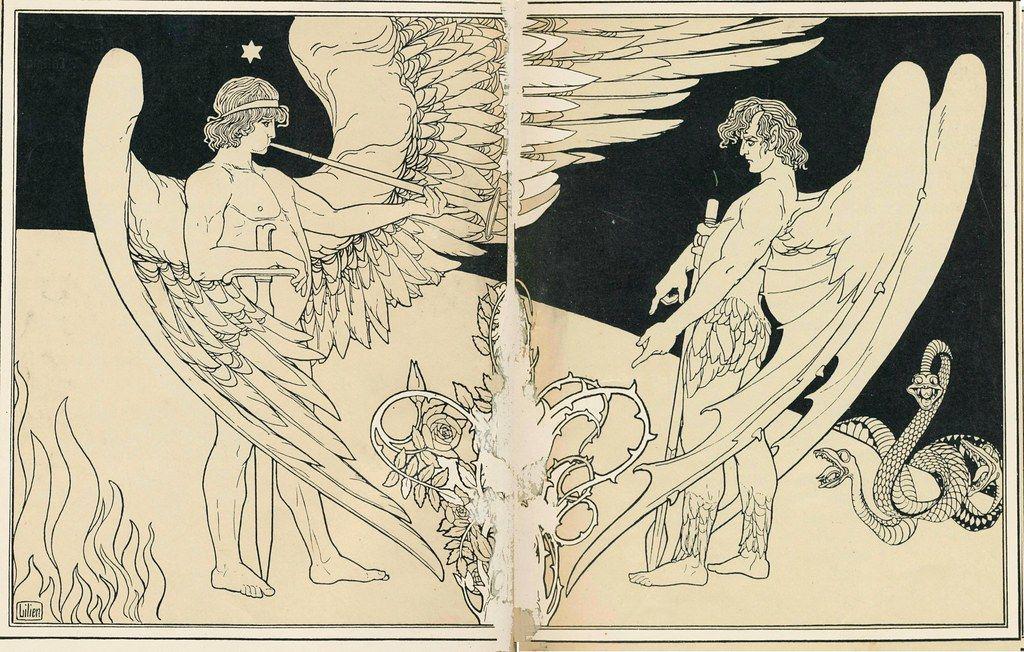
Above: Two Angels by E.M. Lilien. Satan is depicted on the right with a serpent at his heels.
אָמַר רַבִּי יְהוֹשֻׁעַ בֶּן לֵוִי: מַאי דִּכְתִיב: ״וַיַּרְא הָעָם כִּי בֹשֵׁשׁ מֹשֶׁה״ — אַל תִּקְרֵי ״בּוֹשֵׁשׁ״, אֶלָּא ״בָּאוּ שֵׁשׁ״. בְּשָׁעָה שֶׁעָלָה מֹשֶׁה לַמָּרוֹם אָמַר לָהֶן לְיִשְׂרָאֵל: לְסוֹף אַרְבָּעִים יוֹם בִּתְחִלַּת שֵׁשׁ אֲנִי בָּא. לְסוֹף אַרְבָּעִים יוֹם בָּא שָׂטָן וְעִירְבֵּב אֶת הָעוֹלָם. אָמַר לָהֶן: מֹשֶׁה רַבְּכֶם הֵיכָן הוּא? אָמְרוּ לוֹ: עָלָה לַמָּרוֹם. אָמַר לָהֶן: בָּאוּ שֵׁשׁ, וְלֹא הִשְׁגִּיחוּ עָלָיו. מֵת, וְלֹא הִשְׁגִּיחוּ עָלָיו. הֶרְאָה לָהֶן דְּמוּת מִטָּתוֹ, וְהַיְינוּ דְּקָאָמְרִי לֵיהּ לְאַהֲרֹן: ״כִּי זֶה מֹשֶׁה הָאִישׁ וְגוֹ׳״.
And Rabbi Yehoshua ben Levi said: What is the meaning of that which is written: “And the people saw that Moses delayed [boshesh] to come down from the mount” (Exodus 32:1)? Do not read the word in the verse as boshesh; rather, read it as ba’u shesh, six hours have arrived. When Moses ascended on High, he told the Jewish people: In forty days, at the beginning of six hours, I will come. After forty days, Satan came and brought confusion to the world by means of a storm, and it was impossible to ascertain the time. Satan said to the Jews: Where is your teacher Moses? They said to him: He ascended on High. He said to them: Six hours have arrived and he has not yet come. Surely he won’t. And they paid him no attention. Satan said to them: Moses died. And they paid him no attention. Ultimately, he showed them an image of his death-bed and an image of Moses’ corpse in a cloud. And that is what the Jewish people said to Aaron: “For this Moses, the man who brought us up out of the land of Egypt, we know not what has become of him” (Exodus 32:1).
״אֶת חוּקּוֹתַי תִּשְׁמְרוּ״ — דְּבָרִים שֶׁהַשָּׂטָן מֵשִׁיב עֲלֵיהֶן, וְאֵלּוּ הֵן: אֲכִילַת חֲזִיר, וּלְבִישַׁת שַׁעַטְנֵז, וַחֲלִיצַת יְבָמָה, וְטׇהֳרַת מְצוֹרָע, וְשָׂעִיר הַמִּשְׁתַּלֵּחַ. וְשֶׁמָּא תֹּאמַר מַעֲשֵׂה תוֹהוּ הֵם, תַּלְמוּד לוֹמַר: ״אֲנִי ה׳״, אֲנִי יהוה חֲקַקְתִּיו, וְאֵין לְךָ רְשׁוּת לְהַרְהֵר בָּהֶן.
The phrase: And you shall keep my statutes, is a reference to matters that Satan and the nations of the world challenge because the reason for these mitzvot are not known. They are: The prohibitions against eating pork; wearing garments that are made from diverse kinds of material, i.e., wool and linen; performing the ḥalitza ceremony with a yevama, a widow who must participate in a levirate marriage or ḥalitza; the purification ceremony of the leper; and the scapegoat. And lest you say these have no reason and are meaningless acts, therefore the verse states: “I am the Lord” (Leviticus 18:4), to indicate: I am the Lord, I decreed these statutes and you have no right to doubt them.
Satan's temptation was still a very real threat even in the time of the Rabbis of the Talmud.
רַבִּי מֵאִיר הֲוָה מִתְלוֹצֵץ בְּעוֹבְרֵי עֲבֵירָה. יוֹמָא חַד אִידְּמִי לֵיהּ שָׂטָן כְּאִיתְּתָא בְּהָךְ גִּיסָא דְנַהֲרָא, לָא הֲוָה מַבָּרָא – נְקַט מִצְרָא וְקָא עָבַר. כִּי מְטָא פַּלְגָא מִצְרָא שַׁבְקֵיהּ, אָמַר: אִי לָאו דְּקָא מַכְרְזִי בִּרְקִיעָא ״הִזָּהֲרוּ בְּרַבִּי מֵאִיר וְתוֹרָתוֹ״ שַׁוֵּיתֵיהּ לִדְמָךְ תַּרְתֵּי מָעֵי.
The Gemara relates: Rabbi Meir would ridicule transgressors by saying it is easy to avoid temptation. One day, Satan appeared to him as a woman standing on the other side of the river. Since there was no ferry to cross the river, he took hold of a rope bridge and crossed the river. When he reached halfway across the rope bridge, the evil inclination left him and said to him: Were it not for the fact that they proclaim about you in heaven: Be careful with regard to Rabbi Meir and his Torah, I would have made your blood like two ma’a, i.e., completely worthless, since you would have fallen completely from your spiritual level.
Furthermore, Satan's influence was even a concern for the entire Am Yisrael, especially on Yom Kippur when G-d's judgement is front of mind.
וְתוֹקְעִין וּמְרִיעִין כְּשֶׁהֵן עוֹמְדִין — כְּדֵי לְעַרְבֵּב הַשָּׂטָן.
and then sound again a tekia and a terua while they are standing in the Amida prayer? He answers: In order to confuse the Satan, for this double blowing of the shofar demonstrates Israel’s love for the mitzva, and this will confuse Satan when he brings his accusations against Israel before the heavenly court, and the Jewish people will receive a favorable judgment.
But even with all this fear of Satan's ministrations, some Rabbis saw past the negativity of Satan's job to its important purpose in the universe.
אָמַר רַבִּי לֵוִי: שָׂטָן וּפְנִינָה לְשֵׁם שָׁמַיִם נִתְכַּוְּונוּ. שָׂטָן – כֵּיוָן דְּחַזְיֵא לְהַקָּדוֹשׁ בָּרוּךְ הוּא דְּנָטְיָה דַּעְתֵּיהּ בָּתַר אִיּוֹב, אָמַר: חַס וְשָׁלוֹם מִינְּשֵׁי לֵיהּ לְרַחְמָנוּתֵיהּ דְּאַבְרָהָם. פְּנִינָה – דִּכְתִיב: ״וְכִעֲסַתָּה צָרָתָהּ גַּם כַּעַס, בַּעֲבוּר הַרְּעִימָהּ״. דַּרְשַׁהּ רַב אַחָא בַּר יַעֲקֹב בְּפַפּוֹנְיָא. אֲתָא שָׂטָן, נַשְּׁקֵיהּ לְכַרְעֵיהּ.
Rabbi Levi says: Both Satan, who brought accusations against Job, and Peninnah, who tormented Hannah, mother of Samuel the prophet, acted with intent that was for the sake of Heaven. As for Satan, when he saw that the Holy One, Blessed be He, inclined to favor Job and praised him, he said: Heaven forbid that He should forget the love of Abraham. With regard to Peninnah, as it is written: “And her rival wife also provoked her sore, to make her fret” (I Samuel 1:6), i.e., Peninnah upset Hannah in order to motivate her to pray. Rav Aḥa bar Ya’akov taught this in Paphunya, and Satan came and kissed his feet in gratitude for speaking positively about him.
Satan In Middle Ages Folk Practice
Joshua Trachtenberg sums up Satan's role in the Middle Ages eloquently in his thesis Jewish Magic and Superstition: "Satan himself, king of the underworld, though he made frequent appearances in the moralizing literature of the period, possessed none of the vividness, the immediacy of his Christian counterpart. He was little more than a word, a shade whose impression on life was real enough, but whom one could hardly hope to identify from the vague, colorless comments about his person and activity. Quite probably he stood out more clearly in the popular conception than in the literature (he was not a personage of theological import, as in medieval Christianity); but that conception did not impress itself so deeply on the folk-mind as to find its way into the literature as well. Satan in medieval Jewish thought was little more than an allegory, whose moral was the prevalence of sin."
This didn't stop the folk practice of avoiding him! As Jews interacted with other peoples and their folkloric beliefs, the concern over demon and evil spirits became a major concern. With that emphasis on avoiding demons, Satan's role became more like a malevolent figure and specific actions were believed to keep Satan from interfering in your life.
Studying Torah and other theological writings is the best prophylactic against Satan's influence: 'As soon as a man has ceased his preoccupation with the words of Torah Satan has permission to attack'. In fact, some sources claim that the reason we read the first verse of Genesis immediately upon reading the last verse of Deuteronomy is so "that the rehearsal of G-d's law may not be interrupted even for a moment, and Satan get his chance."
Tefillin were thought to be anti-demonic (the Sh'ma itself has anti-demonic properties), but this belief ultimately boiled down to the idea that one who is pious won't be harassed by the Accuser.
Psalm 91 was known to protect against demons, and specifically if riding across a bridge one should recite it to stop Satan from causing harm.
According to medieval authorities, salt must be set on a table before a meal is begun "to protect one against Satan's denunciations." In Kabbalistic thought, salt "is the mathematical equivalent of three [tetragrammatons]; therefore one should dip the piece of bread over which the benediction is recited, three times into salt."
The night before the circumcision a child must be constantly watched because "Satan strives to harm the child and to prevent it from experiencing the religious rite or circumcision, for he is very much provoked that Jews should keep the commandment by whose edict they are saved from Gehinnom."
Even the prayers developed refer to protection from Satan, as in the Hashkiveinu of Kriat Sh'ma below.
Joshua Trachtenberg sums up Satan's role in the Middle Ages eloquently in his thesis Jewish Magic and Superstition: "Satan himself, king of the underworld, though he made frequent appearances in the moralizing literature of the period, possessed none of the vividness, the immediacy of his Christian counterpart. He was little more than a word, a shade whose impression on life was real enough, but whom one could hardly hope to identify from the vague, colorless comments about his person and activity. Quite probably he stood out more clearly in the popular conception than in the literature (he was not a personage of theological import, as in medieval Christianity); but that conception did not impress itself so deeply on the folk-mind as to find its way into the literature as well. Satan in medieval Jewish thought was little more than an allegory, whose moral was the prevalence of sin."
This didn't stop the folk practice of avoiding him! As Jews interacted with other peoples and their folkloric beliefs, the concern over demon and evil spirits became a major concern. With that emphasis on avoiding demons, Satan's role became more like a malevolent figure and specific actions were believed to keep Satan from interfering in your life.
Studying Torah and other theological writings is the best prophylactic against Satan's influence: 'As soon as a man has ceased his preoccupation with the words of Torah Satan has permission to attack'. In fact, some sources claim that the reason we read the first verse of Genesis immediately upon reading the last verse of Deuteronomy is so "that the rehearsal of G-d's law may not be interrupted even for a moment, and Satan get his chance."
Tefillin were thought to be anti-demonic (the Sh'ma itself has anti-demonic properties), but this belief ultimately boiled down to the idea that one who is pious won't be harassed by the Accuser.
Psalm 91 was known to protect against demons, and specifically if riding across a bridge one should recite it to stop Satan from causing harm.
According to medieval authorities, salt must be set on a table before a meal is begun "to protect one against Satan's denunciations." In Kabbalistic thought, salt "is the mathematical equivalent of three [tetragrammatons]; therefore one should dip the piece of bread over which the benediction is recited, three times into salt."
The night before the circumcision a child must be constantly watched because "Satan strives to harm the child and to prevent it from experiencing the religious rite or circumcision, for he is very much provoked that Jews should keep the commandment by whose edict they are saved from Gehinnom."
Even the prayers developed refer to protection from Satan, as in the Hashkiveinu of Kriat Sh'ma below.
וְהָגֵן בַּעֲדֵֽנוּ וְהָסֵר מֵעָלֵֽינוּ אוֹיֵב דֶּֽבֶר וְחֶֽרֶב וְרָעָב וְיָגוֹן וְהָסֵר שָׂטָן מִלְּ֒פָנֵֽינוּ וּמֵאַחֲרֵֽינוּ וּבְצֵל כְּנָפֶֽיךָ תַּסְתִּירֵֽנוּ כִּי אֵל שׁוֹמְ֒רֵֽנוּ וּמַצִּילֵֽנוּ
Shield us, and remove from us enemies, pestilence, sword, famine and sorrow. Remove the adversary from before us and from behind us, and shelter us in the shadow of Your wings. For You are the Almighty Who is our protector and rescuer.
As folkloric belief faded in power, especially with the rabbinical edict to avoid any beliefs associated with antisemitism, the popular concern with Satan and demons declined, but ha-Satan has lived on in mystical thought as a moral teaching until today.
Ha-Satan in Mystical Belief
Ha-Satan in Mystical Belief
As Jewish mysticism began to be collated and fleshed out by the mystics of Safed in the 16th century, ha-Satan's role transitioned from an angelic creature to an abstract idea: the yetzer hara, or evil inclination. This belief lives on in Hasidism, which recognizes that every one has a yetzer hara which provides a very needed balance to the universe.
Chabad.org
"Another way the Talmud describes the satan is as one’s yetzer hara, the negative inclination—an internal counterbalance to one’s good inclination, both of which are under a person’s control. Rather than someone or something external to us, the satan, when understood this way, is part and parcel of our psycho-spiritual makeup. Similar to the stories and ideas explored above, our negative inclination is not an aberration but a necessary element of who we are. Without it, humanity would lose its free will, and, according to one teaching in the Midrash, even the desire to be creative and productive."
"Another way the Talmud describes the satan is as one’s yetzer hara, the negative inclination—an internal counterbalance to one’s good inclination, both of which are under a person’s control. Rather than someone or something external to us, the satan, when understood this way, is part and parcel of our psycho-spiritual makeup. Similar to the stories and ideas explored above, our negative inclination is not an aberration but a necessary element of who we are. Without it, humanity would lose its free will, and, according to one teaching in the Midrash, even the desire to be creative and productive."
Modern Kabbalists view Satan in this way, as related deeply to the tests of our modern ego.
Rav Berg, Satan: An Autobiography
"The entire world has been cast under a spell - one so powerful, it blinded you to the true reality. The spell is called ego. And the nature of ego is to receive. Every action throughout history, every single thought and flow of consciousness, was grounded in self-interest. And this is why you have not experienced a world of peace and unending miracles... when you switch your consciousness from receiving and self interest (me) into unconditional sharing and selfless behavior (God), you tap the real fulfillment of life."
"The entire world has been cast under a spell - one so powerful, it blinded you to the true reality. The spell is called ego. And the nature of ego is to receive. Every action throughout history, every single thought and flow of consciousness, was grounded in self-interest. And this is why you have not experienced a world of peace and unending miracles... when you switch your consciousness from receiving and self interest (me) into unconditional sharing and selfless behavior (God), you tap the real fulfillment of life."
Inviting Satan to the Table
So what's the point of all of this? Why do we have ha-Satan at all?
So what's the point of all of this? Why do we have ha-Satan at all?
As we work through this month of Elul and complete an accounting of our soul, we can account for the ways in which the adversary tests us day to day.
וכשישראל מניחים את צערם ועוסקים בכבודו וגילוי מלכותו, אומר הקב"ה למלאכים: ראו בני חביבי, שמניחים צערם ועוסקים בכבודי. ובכך מסתתמות טענותיו של השטן שרוצה לבטל את ישראל מהעולם, וישראל זוכים לשנה חדשה שבה יתקדמו עוד צעד לקראת התיקון והגאולה. וככל שנזכה לקבל עלינו בראש השנה את מלכותו, בענווה ויראה, בגיל ורעדה, כך נזכה יותר לשנה טובה ומבורכת.
When the Jewish people set aside their sorrows and work for God’s honor and the manifestation of His kingship, God says to the angels, “Look at My dear children, who leave their troubles aside and work for My honor.” This silences the accuser (satan), who wishes to rid the world of the Jews. Thus, Israel is granted a new year in which they will take another step toward repair and redemption. The more we humbly accept God’s rule with fear, joy, and trembling on Rosh Ha-shana, the better and more blessed a year we will experience.
Or we can reflect on how our actions may be construed as evidence against us in a higher court.
וְאִם מְדַבֵּר לָשׁוֹן הָרָע עַל חֲבֵרוֹ וּמְעוֹרֵר מְדָנִים עָלָיו, הוּא מְעוֹרֵר בָּזֶה לְמַעְלָה עִנְיַן קַטֵּגוֹרְיָא עַל יִשְׂרָאֵל וְנוֹתֵן בָּזֶה כֹּחַ לַשָּׂטָן שֶׁיְּקַטְרֵג עַל יִשְׂרָאֵל
And if one speaks lashon hara against his friend and arouses din against him, he arouses thereby, above, "prosecution" against Israel, and he thereby gives Satan power to prosecute Israel.
Each test from ha-Satan is a chance to exhibit faith, in ourselves and in the Divine, and to put our Jewish values of selflessness, charity, and loving our neighbors into practice. When we invite Satan to the conversation and stare the accuser down by uncovering where our ego is holding us back, we break its hold over us and free up space to restore ourselves and the world.
Rav Berg, Satan: An Autobiography
"Life is about your wickedness. Your so-called sins. It's about uncovering all your egocentric traits. In other words, the key to life is finding me inside you... The search for happiness begins with the search for me! Ferreting out Satan is the path to the Light."
"Life is about your wickedness. Your so-called sins. It's about uncovering all your egocentric traits. In other words, the key to life is finding me inside you... The search for happiness begins with the search for me! Ferreting out Satan is the path to the Light."