


As Moses recounts the events of the past 40 years or so, he recalls commenting on how numerous the people of Israel have become. He describes its growth as being both a blessing and a burden on his leadership.
(ט) וָאֹמַ֣ר אֲלֵכֶ֔ם בָּעֵ֥ת הַהִ֖וא לֵאמֹ֑ר לֹא־אוּכַ֥ל לְבַדִּ֖י שְׂאֵ֥ת אֶתְכֶֽם׃ (י) יהוה אֱלֹהֵיכֶ֖ם הִרְבָּ֣ה אֶתְכֶ֑ם וְהִנְּכֶ֣ם הַיּ֔וֹם כְּכוֹכְבֵ֥י הַשָּׁמַ֖יִם לָרֹֽב׃ (יא) יהוה אֱלֹהֵ֣י אֲבֽוֹתֵכֶ֗ם יֹסֵ֧ף עֲלֵיכֶ֛ם כָּכֶ֖ם אֶ֣לֶף פְּעָמִ֑ים וִיבָרֵ֣ךְ אֶתְכֶ֔ם כַּאֲשֶׁ֖ר דִּבֶּ֥ר לָכֶֽם׃ (יב) אֵיכָ֥ה אֶשָּׂ֖א לְבַדִּ֑י טׇרְחֲכֶ֥ם וּמַֽשַּׂאֲכֶ֖ם וְרִֽיבְכֶֽם׃
(9) Thereupon I said to you, “I cannot bear the burden of you by myself. (10) Your God יהוה has multiplied you until you are today as numerous as the stars in the sky.— (11) May יהוה, the God of your ancestors, increase your numbers a thousandfold, and bless you as promised.— (12) How can I bear unaided the trouble of you, and the burden, and the bickering!
(ג) בפסוק וייטב בעיני הדבר. והקשו למה אמרן בתוכחות. אבל נראה כי גם ע"ז הוכיחן שגרמו להיות הוטב גם בעיניו. דכתיב איכה אשא לבדי כו'. פרש"י הרים אתכם על דייניכם. ופי' מו"ז ז"ל כי הדיינים תלוין במעשיהן של ישראל. ולכן כשהי' מרע"ה בעצמו מנהיג הכל. הי' חטא שלהם נוגע גם בו. לכן העמיד שרים כנ"ל. ובכאן כתי' ותקרבון אלי כולכם פירש"י ז"ל בערבוביא כו'. ולכן שהיו כולם באים אליו נשלחה כו'. גרמו שהוטב בעיניו. וזה צריך כ"א לידע שמעשיו מגיעין גם למנהיגם הן למטה הן למעלה ועי"ז ישמור מעשיו כראוי:
(3) (Devarim 1:23) “And it was good in my eyes” (to send spies to Eretz Yisrael). The question is asked, why is this mentioned in the rebuke that Moshe is giving Bnei Yisrael? It seems that this too is a reason for rebuke, for Bnei Yisrael had actually caused it to appear a good idea in Moshe’s eyes! This is apparent from the pasuk (Devarim 1:12), when Moshe says: “How can I carry the burden of the nation on my own?” Rashi explains that Bnei Yisrael were elevated over and above their judges (their leaders were held accountable for the actions of Bnei Yisrael if they were able to prevent them). Therefore, when Moshe was the leader, the sin of the nation also affected him, which is why he appointed chiefs. Here it states that they all came together in a mixture (in an unorganized and disrespectful fashion). Therefore, when they all came asking to send spies, they actually caused Moshe to think it was a good idea. This is something each person needs to know: their actions reach the leaders above and below! This awareness should cause a person to guard their actions properly.
Moses explains to the people how he has delegated power to a hierarchy of judges. He emphasizes that he has charged them with ensuring their judgments are ethical and fair.
(טז) וָאֲצַוֶּה֙ אֶת־שֹׁ֣פְטֵיכֶ֔ם בָּעֵ֥ת הַהִ֖וא לֵאמֹ֑ר שָׁמֹ֤עַ בֵּין־אֲחֵיכֶם֙ וּשְׁפַטְתֶּ֣ם צֶ֔דֶק בֵּֽין־אִ֥ישׁ וּבֵין־אָחִ֖יו וּבֵ֥ין גֵּרֽוֹ׃ (יז) לֹֽא־תַכִּ֨ירוּ פָנִ֜ים בַּמִּשְׁפָּ֗ט כַּקָּטֹ֤ן כַּגָּדֹל֙ תִּשְׁמָע֔וּן לֹ֤א תָג֙וּרוּ֙ מִפְּנֵי־אִ֔ישׁ כִּ֥י הַמִּשְׁפָּ֖ט לֵאלֹהִ֣ים ה֑וּא וְהַדָּבָר֙ אֲשֶׁ֣ר יִקְשֶׁ֣ה מִכֶּ֔ם תַּקְרִב֥וּן אֵלַ֖י וּשְׁמַעְתִּֽיו׃
(16) I charged your magistrates at that time as follows, “Hear out your fellow Israelites, and decide justly between one party and the other—be it a fellow Israelite or a stranger. (17) You shall not be partial in judgment: hear out low and high alike. Fear neither party, for judgment is God’s. And any matter that is too difficult for you, you shall bring to me and I will hear it.”
And Moses recounts the story of the spies, or rather the "sin of the spies" in this case. Let's see this version of the story compared to how we might remember it from Numbers 13
(כב) וַתִּקְרְב֣וּן אֵלַי֮ כֻּלְּכֶם֒ וַתֹּאמְר֗וּ נִשְׁלְחָ֤ה אֲנָשִׁים֙ לְפָנֵ֔ינוּ וְיַחְפְּרוּ־לָ֖נוּ אֶת־הָאָ֑רֶץ וְיָשִׁ֤בוּ אֹתָ֙נוּ֙ דָּבָ֔ר אֶת־הַדֶּ֙רֶךְ֙ אֲשֶׁ֣ר נַעֲלֶה־בָּ֔הּ וְאֵת֙ הֶֽעָרִ֔ים אֲשֶׁ֥ר נָבֹ֖א אֲלֵיהֶֽן׃ (כג) וַיִּיטַ֥ב בְּעֵינַ֖י הַדָּבָ֑ר וָאֶקַּ֤ח מִכֶּם֙ שְׁנֵ֣ים עָשָׂ֣ר אֲנָשִׁ֔ים אִ֥ישׁ אֶחָ֖ד לַשָּֽׁבֶט׃ (כד) וַיִּפְנוּ֙ וַיַּעֲל֣וּ הָהָ֔רָה וַיָּבֹ֖אוּ עַד־נַ֣חַל אֶשְׁכֹּ֑ל וַֽיְרַגְּל֖וּ אֹתָֽהּ׃ (כה) וַיִּקְח֤וּ בְיָדָם֙ מִפְּרִ֣י הָאָ֔רֶץ וַיּוֹרִ֖דוּ אֵלֵ֑ינוּ וַיָּשִׁ֨בוּ אֹתָ֤נוּ דָבָר֙ וַיֹּ֣אמְר֔וּ טוֹבָ֣ה הָאָ֔רֶץ אֲשֶׁר־יהוה אֱלֹהֵ֖ינוּ נֹתֵ֥ן לָֽנוּ׃ (כו) וְלֹ֥א אֲבִיתֶ֖ם לַעֲלֹ֑ת וַתַּמְר֕וּ אֶת־פִּ֥י יהוה אֱלֹהֵיכֶֽם׃ (כז) וַתֵּרָגְנ֤וּ בְאׇהֳלֵיכֶם֙ וַתֹּ֣אמְר֔וּ בְּשִׂנְאַ֤ת יהוה אֹתָ֔נוּ הוֹצִיאָ֖נוּ מֵאֶ֣רֶץ מִצְרָ֑יִם לָתֵ֥ת אֹתָ֛נוּ בְּיַ֥ד הָאֱמֹרִ֖י לְהַשְׁמִידֵֽנוּ׃ (כח) אָנָ֣ה ׀ אֲנַ֣חְנוּ עֹלִ֗ים אַחֵ֩ינוּ֩ הֵמַ֨סּוּ אֶת־לְבָבֵ֜נוּ לֵאמֹ֗ר עַ֣ם גָּד֤וֹל וָרָם֙ מִמֶּ֔נּוּ עָרִ֛ים גְּדֹלֹ֥ת וּבְצוּרֹ֖ת בַּשָּׁמָ֑יִם וְגַם־בְּנֵ֥י עֲנָקִ֖ים רָאִ֥ינוּ שָֽׁם׃ (כט) וָאֹמַ֖ר אֲלֵכֶ֑ם לֹא־תַעַרְצ֥וּן וְלֹא־תִֽירְא֖וּן מֵהֶֽם׃ (ל) יהוה אֱלֹֽהֵיכֶם֙ הַהֹלֵ֣ךְ לִפְנֵיכֶ֔ם ה֖וּא יִלָּחֵ֣ם לָכֶ֑ם כְּ֠כֹ֠ל אֲשֶׁ֨ר עָשָׂ֧ה אִתְּכֶ֛ם בְּמִצְרַ֖יִם לְעֵינֵיכֶֽם׃ (לא) וּבַמִּדְבָּר֙ אֲשֶׁ֣ר רָאִ֔יתָ אֲשֶׁ֤ר נְשָׂאֲךָ֙ יהוה אֱלֹהֶ֔יךָ כַּאֲשֶׁ֥ר יִשָּׂא־אִ֖ישׁ אֶת־בְּנ֑וֹ בְּכׇל־הַדֶּ֙רֶךְ֙ אֲשֶׁ֣ר הֲלַכְתֶּ֔ם עַד־בֹּאֲכֶ֖ם עַד־הַמָּק֥וֹם הַזֶּֽה׃ (לב) וּבַדָּבָ֖ר הַזֶּ֑ה אֵֽינְכֶם֙ מַאֲמִינִ֔ם בַּיהוה אֱלֹהֵיכֶֽם׃ (לג) הַהֹלֵ֨ךְ לִפְנֵיכֶ֜ם בַּדֶּ֗רֶךְ לָת֥וּר לָכֶ֛ם מָק֖וֹם לַחֲנֹֽתְכֶ֑ם בָּאֵ֣שׁ ׀ לַ֗יְלָה לַרְאֹֽתְכֶם֙ בַּדֶּ֙רֶךְ֙ אֲשֶׁ֣ר תֵּֽלְכוּ־בָ֔הּ וּבֶעָנָ֖ן יוֹמָֽם׃ (לד) וַיִּשְׁמַ֥ע יהוה אֶת־ק֣וֹל דִּבְרֵיכֶ֑ם וַיִּקְצֹ֖ף וַיִּשָּׁבַ֥ע לֵאמֹֽר׃ (לה) אִם־יִרְאֶ֥ה אִישׁ֙ בָּאֲנָשִׁ֣ים הָאֵ֔לֶּה הַדּ֥וֹר הָרָ֖ע הַזֶּ֑ה אֵ֚ת הָאָ֣רֶץ הַטּוֹבָ֔ה אֲשֶׁ֣ר נִשְׁבַּ֔עְתִּי לָתֵ֖ת לַאֲבֹתֵיכֶֽם׃ (לו) זֽוּלָתִ֞י כָּלֵ֤ב בֶּן־יְפֻנֶּה֙ ה֣וּא יִרְאֶ֔נָּה וְלֽוֹ־אֶתֵּ֧ן אֶת־הָאָ֛רֶץ אֲשֶׁ֥ר דָּֽרַךְ־בָּ֖הּ וּלְבָנָ֑יו יַ֕עַן אֲשֶׁ֥ר מִלֵּ֖א אַחֲרֵ֥י יהוה׃ (לז) גַּם־בִּי֙ הִתְאַנַּ֣ף יהוה בִּגְלַלְכֶ֖ם לֵאמֹ֑ר גַּם־אַתָּ֖ה לֹא־תָבֹ֥א שָֽׁם׃
(22) Then all of you came to me and said, “Let us send agents ahead to reconnoiter the land for us and bring back word on the route we shall follow and the cities we shall come to.” (23) I approved of the plan, and so I selected from among you twelve participants, one representative from each tribe. (24) They made for the hill country, came to the wadi Eshcol, and spied it out. (25) They took some of the fruit of the land with them and brought it down to us. And they gave us this report: “It is a good land that our God יהוה is giving to us.” (26) Yet you refused to go up, and flouted the command of your God יהוה. (27) You sulked in your tents and said, “It is out of hatred for us that יהוה brought us out of the land of Egypt, to hand us over to the Amorites to wipe us out. (28) What kind of place are we going to? Our brothers have taken the heart out of us, saying, ‘We saw there a people stronger and taller than we, large cities with walls sky-high, and even Anakites.’” (29) I said to you, “Have no dread or fear of them. (30) None other than your God יהוה, who goes before you, will fight for you, just as [God] did for you in Egypt before your very eyes, (31) and in the wilderness, where you saw how your God יהוה carried you, as a householder carries his son, all the way that you traveled until you came to this place. (32) Yet for all that, you have no faith in your God יהוה, (33) who goes before you on your journeys—to scout the place where you are to encamp—in fire by night and in cloud by day, in order to guide you on the route you are to follow.” (34)יהוה heard your loud complaint and, becoming angry, vowed: (35) Not one of those involved, this evil generation, shall see the good land that I swore to give to your fathers— (36) none except Caleb son of Jephunneh; he shall see it, and to him and his descendants will I give the land on which he set foot, because he remained loyal to יהוה.— (37) Because of you יהוה was incensed with me too, saying: You shall not enter it either.
(א)גַּם בִּי הִתְאַנַּף יהוה בִּגְלַלְכֶם, יֹאמַר הִנֵּה חַטַּאתְכֶם אֲשֶׁר עֲשִׂיתֶם בָּעֵת הַהִיא בַּמְּרַגְּלִים מָנְעוּ מִכֶּם הָאָרֶץ הַטּוֹבָה, וְעוֹד הוֹסַפְתֶּם לַחֲטֹא בְּפַעַם אַחֶרֶת עַד שֶׁמְּנַעְתֶּם גַּם אוֹתִי מִלַּעֲבֹר, כִּי רָצָה לְהַזְכִּיר יַחַד עֹנֶשׁ כָּל הַנִּמְנָעִים מֵעֲבוֹר אֶל הָאָרֶץ, כִּי הַכֹּל בִּגְרָמַת עֲוֹנוֹתֵיהֶם, וּכְדֵי שֶׁיַּזְכִּיר כָּאן עִנְיַן יְהוֹשֻׁעַ כִּי הוּא יַעֲבֹר מִפְּנֵי שֶׁמִּלֵּא אַחֲרֵי יהוה כַּחֲבֵרוֹ, וְיִזְכֶּה עוֹד שֶׁיַּנְחִיל הָאָרֶץ לַדּוֹר הַשֵּׁנִי, בַּעֲבוּר שֶׁנֶּעֱנַשׁ מֹשֶׁה וְנִגְזַר עָלָיו שֶׁלֹּא יַעֲבֹר. וְהִנֵּה הִזְכִּיר כָּל הַמַּעֲשֶׂה הַהוּא זוּלָתִי מַגֵּפַת הַמְרַגְּלִים עַצְמָם, וְגַם לֹא הִזְכִּיר הַדִּבָּה, כִּי לֹא יְדַבֵּר בִּגְנַאי הַיְּחִידִים, אֲבָל יוֹכִיחַ אֶת הָרַבִּים שֶׁכֻּלָּם חָטְאוּ וְכֻלָּם נֶעֶנְשׁוּ. וְטַעַם בִּגְלַלְכֶם, כִּי רָבוּ בְנֵי יִשְׂרָאֵל אֶת יהוה וְגוֹ' (במדבר כ יג), וְאֵרַע כָּל זֶה בַּעֲבוּר מְרִיבַתְכֶם, אוֹ יִרְמֹז שֶׁהָיָה הַכַּעַס עַל מֹשֶׁה וְעַל אַהֲרֹן כַּאֲשֶׁר הִכּוּ הַסֶּלַע פַּעֲמַיִם לִפְנֵי הָעָם וְלֹא עָשׂוּ כַּאֲשֶׁר נִצְטַוּוּ, וְהָעָם הִרְהֲרוּ בַּדָּבָר. וְהוּא מָה שֶׁאָמַר (דברים לב נא), עַל אֲשֶׁר לֹא קִדַּשְׁתֶּם אוֹתִי בְּתוֹךְ בְּנֵי יִשְׂרָאֵל, שֶׁלֹּא הָיָה הָעֹנֶשׁ אֶלָּא מִפְּנֵי שֶׁהָיָה הַדָּבָר בְּתוֹךְ בְּנֵי יִשְׂרָאֵל שֶׁלֹּא נִתְקַדֵּשׁ הַכָּבוֹד לְעֵינֵיהֶם. וְכָךְ אָמַר בְּסִפְרֵי (האזינו נ), עַל אֲשֶׁר מְעַלְתֶּם בִּי (שם), אַתֶּם גְּרַמְתֶּם לִמְעוֹל, עַל אֲשֶׁר לֹא קִדַּשְׁתֶּם אוֹתִי, אַתֶּם גְּרַמְתֶּם שֶׁלֹּא לְקַדֵּשׁ אוֹתִי, כַּאֲשֶׁר מְרִיתֶם פִּי (במדבר כז יד), אַתֶּם גְּרַמְתֶּם לַמְרוֹת אֶת פִּי. עָשׂוּ כָּל הַלְּשׁוֹנוֹת יוֹצְאִים אֶל יִשְׂרָאֵל. וּכְבָר פֵּרַשְׁתִּי הָעִנְיָן (שם כ ח):
(1) ALSO THE ETERNAL WAS ANGRY WITH ME, FOR YOUR SAKES. He is stating: “Behold, the sin you committed then in the affair of the spies withheld from you the good Land, and yet you continued to sin another time [i.e., at the waters of Meribah] until you prevented me as well, from crossing [the Jordan].” For Moses wanted to mention simultaneously that the punishment of all who were prevented from passing into the Land, was caused by their sins. Also in order to mention here the matter of Joshua, that he would cross over because he followed G-d wholeheartedly as did his colleague [Caleb], and, therefore, he will yet deserve to cause the second generation to inherit the Land, because Moses was punished and it was decreed upon him that he was not to cross [the Jordan]. Thus Moses mentioned the whole affair [of the spies] except for the death by plague of the spies themselves. Nor did he mention the slander [of the spies that the Land eateth up the inhabitants thereof], for he would not speak of the shame of individuals. Instead he reproved the multitude all of whom sinned and all of whom were punished. The meaning of the expression for your sakes [Also the Eternal was angry with me, ‘for your sakes’] is that the children of Israel strove with the Eternal etc. [at the waters of Meribah], and all this happened because of your quarrel. Or [the expression for your sakes] may allude to the fact that the anger [of G-d] with Moses and Aaron was because — when they hit the rock twice in front of the people [instead of speaking to it] and did not do as they were commanded — the people were critical of it. This is the purport of His words, because ye sanctified Me not in the midst of the children of Israel, meaning that the punishment came [not because the sin itself was so grievous, but] because it happened in the midst of the children of Israel that the Glory was not sanctified before their eyes. Thus the Rabbis have also said in the Sifre: “Because ye trespassed against Me. — you caused [the people] to trespass. Because ye sanctified Me not — you caused that I not be sanctified. Because ye rebelled against My commandment — you caused [the people] to rebel against My commandment.” The Rabbis [in the Sifre] thus interpreted all these expressions as transitional to Israel, [meaning, Moses and Aaron had really not sinned in the affair of the rock, but since their action was misconstrued by the people causing the people to sin, Moses and Aaron were punished]. I have already explained the subject.
(א) וַיְדַבֵּ֥ר יהוה אֶל־מֹשֶׁ֥ה לֵּאמֹֽר׃ (ב) שְׁלַח־לְךָ֣ אֲנָשִׁ֗ים וְיָתֻ֙רוּ֙ אֶת־אֶ֣רֶץ כְּנַ֔עַן אֲשֶׁר־אֲנִ֥י נֹתֵ֖ן לִבְנֵ֣י יִשְׂרָאֵ֑ל אִ֣ישׁ אֶחָד֩ אִ֨ישׁ אֶחָ֜ד לְמַטֵּ֤ה אֲבֹתָיו֙ תִּשְׁלָ֔חוּ כֹּ֖ל נָשִׂ֥יא בָהֶֽם׃ (ג) וַיִּשְׁלַ֨ח אֹתָ֥ם מֹשֶׁ֛ה מִמִּדְבַּ֥ר פָּארָ֖ן עַל־פִּ֣י יהוה כֻּלָּ֣ם אֲנָשִׁ֔ים רָאשֵׁ֥י בְנֵֽי־יִשְׂרָאֵ֖ל הֵֽמָּה׃ (ד) וְאֵ֖לֶּה שְׁמוֹתָ֑ם לְמַטֵּ֣ה רְאוּבֵ֔ן שַׁמּ֖וּעַ בֶּן־זַכּֽוּר׃ (ה) לְמַטֵּ֣ה שִׁמְע֔וֹן שָׁפָ֖ט בֶּן־חוֹרִֽי׃ (ו) לְמַטֵּ֣ה יְהוּדָ֔ה כָּלֵ֖ב בֶּן־יְפֻנֶּֽה׃ (ז) לְמַטֵּ֣ה יִשָּׂשכָ֔ר יִגְאָ֖ל בֶּן־יוֹסֵֽף׃ (ח) לְמַטֵּ֥ה אֶפְרָ֖יִם הוֹשֵׁ֥עַ בִּן־נֽוּן׃ (ט) לְמַטֵּ֣ה בִנְיָמִ֔ן פַּלְטִ֖י בֶּן־רָפֽוּא׃ (י) לְמַטֵּ֣ה זְבוּלֻ֔ן גַּדִּיאֵ֖ל בֶּן־סוֹדִֽי׃ (יא) לְמַטֵּ֥ה יוֹסֵ֖ף לְמַטֵּ֣ה מְנַשֶּׁ֑ה גַּדִּ֖י בֶּן־סוּסִֽי׃ (יב) לְמַטֵּ֣ה דָ֔ן עַמִּיאֵ֖ל בֶּן־גְּמַלִּֽי׃ (יג) לְמַטֵּ֣ה אָשֵׁ֔ר סְת֖וּר בֶּן־מִיכָאֵֽל׃ (יד) לְמַטֵּ֣ה נַפְתָּלִ֔י נַחְבִּ֖י בֶּן־וׇפְסִֽי׃ (טו) לְמַטֵּ֣ה גָ֔ד גְּאוּאֵ֖ל בֶּן־מָכִֽי׃ (טז) אֵ֚לֶּה שְׁמ֣וֹת הָֽאֲנָשִׁ֔ים אֲשֶׁר־שָׁלַ֥ח מֹשֶׁ֖ה לָת֣וּר אֶת־הָאָ֑רֶץ וַיִּקְרָ֥א מֹשֶׁ֛ה לְהוֹשֵׁ֥עַ בִּן־נ֖וּן יְהוֹשֻֽׁעַ׃ (יז) וַיִּשְׁלַ֤ח אֹתָם֙ מֹשֶׁ֔ה לָת֖וּר אֶת־אֶ֣רֶץ כְּנָ֑עַן וַיֹּ֣אמֶר אֲלֵהֶ֗ם עֲל֥וּ זֶה֙ בַּנֶּ֔גֶב וַעֲלִיתֶ֖ם אֶת־הָהָֽר׃ (יח) וּרְאִיתֶ֥ם אֶת־הָאָ֖רֶץ מַה־הִ֑וא וְאֶת־הָעָם֙ הַיֹּשֵׁ֣ב עָלֶ֔יהָ הֶחָזָ֥ק הוּא֙ הֲרָפֶ֔ה הַמְעַ֥ט ה֖וּא אִם־רָֽב׃ (יט) וּמָ֣ה הָאָ֗רֶץ אֲשֶׁר־הוּא֙ יֹשֵׁ֣ב בָּ֔הּ הֲטוֹבָ֥ה הִ֖וא אִם־רָעָ֑ה וּמָ֣ה הֶֽעָרִ֗ים אֲשֶׁר־הוּא֙ יוֹשֵׁ֣ב בָּהֵ֔נָּה הַבְּמַֽחֲנִ֖ים אִ֥ם בְּמִבְצָרִֽים׃ (כ) וּמָ֣ה הָ֠אָ֠רֶץ הַשְּׁמֵנָ֨ה הִ֜וא אִם־רָזָ֗ה הֲיֵֽשׁ־בָּ֥הּ עֵץ֙ אִם־אַ֔יִן וְהִ֨תְחַזַּקְתֶּ֔ם וּלְקַחְתֶּ֖ם מִפְּרִ֣י הָאָ֑רֶץ וְהַ֨יָּמִ֔ים יְמֵ֖י בִּכּוּרֵ֥י עֲנָבִֽים׃ (כא) וַֽיַּעֲל֖וּ וַיָּתֻ֣רוּ אֶת־הָאָ֑רֶץ מִמִּדְבַּר־צִ֥ן עַד־רְחֹ֖ב לְבֹ֥א חֲמָֽת׃ (כב) וַיַּעֲל֣וּ בַנֶּ֘גֶב֮ וַיָּבֹ֣א עַד־חֶבְרוֹן֒ וְשָׁ֤ם אֲחִימַן֙ שֵׁשַׁ֣י וְתַלְמַ֔י יְלִידֵ֖י הָעֲנָ֑ק וְחֶבְר֗וֹן שֶׁ֤בַע שָׁנִים֙ נִבְנְתָ֔ה לִפְנֵ֖י צֹ֥עַן מִצְרָֽיִם׃ (כג) וַיָּבֹ֜אוּ עַד־נַ֣חַל אֶשְׁכֹּ֗ל וַיִּכְרְת֨וּ מִשָּׁ֤ם זְמוֹרָה֙ וְאֶשְׁכּ֤וֹל עֲנָבִים֙ אֶחָ֔ד וַיִּשָּׂאֻ֥הוּ בַמּ֖וֹט בִּשְׁנָ֑יִם וּמִן־הָרִמֹּנִ֖ים וּמִן־הַתְּאֵנִֽים׃ (כד) לַמָּק֣וֹם הַה֔וּא קָרָ֖א נַ֣חַל אֶשְׁכּ֑וֹל עַ֚ל אֹד֣וֹת הָֽאֶשְׁכּ֔וֹל אֲשֶׁר־כָּרְת֥וּ מִשָּׁ֖ם בְּנֵ֥י יִשְׂרָאֵֽל׃ (כה) וַיָּשֻׁ֖בוּ מִתּ֣וּר הָאָ֑רֶץ מִקֵּ֖ץ אַרְבָּעִ֥ים יֽוֹם׃ (כו) וַיֵּלְכ֡וּ וַיָּבֹ֩אוּ֩ אֶל־מֹשֶׁ֨ה וְאֶֽל־אַהֲרֹ֜ן וְאֶל־כׇּל־עֲדַ֧ת בְּנֵֽי־יִשְׂרָאֵ֛ל אֶל־מִדְבַּ֥ר פָּארָ֖ן קָדֵ֑שָׁה וַיָּשִׁ֨יבוּ אֹתָ֤ם דָּבָר֙ וְאֶת־כׇּל־הָ֣עֵדָ֔ה וַיַּרְא֖וּם אֶת־פְּרִ֥י הָאָֽרֶץ׃ (כז) וַיְסַפְּרוּ־לוֹ֙ וַיֹּ֣אמְר֔וּ בָּ֕אנוּ אֶל־הָאָ֖רֶץ אֲשֶׁ֣ר שְׁלַחְתָּ֑נוּ וְ֠גַ֠ם זָבַ֨ת חָלָ֥ב וּדְבַ֛שׁ הִ֖וא וְזֶה־פִּרְיָֽהּ׃ (כח) אֶ֚פֶס כִּֽי־עַ֣ז הָעָ֔ם הַיֹּשֵׁ֖ב בָּאָ֑רֶץ וְהֶֽעָרִ֗ים בְּצֻר֤וֹת גְּדֹלֹת֙ מְאֹ֔ד וְגַם־יְלִדֵ֥י הָֽעֲנָ֖ק רָאִ֥ינוּ שָֽׁם׃ (כט) עֲמָלֵ֥ק יוֹשֵׁ֖ב בְּאֶ֣רֶץ הַנֶּ֑גֶב וְ֠הַֽחִתִּ֠י וְהַיְבוּסִ֤י וְהָֽאֱמֹרִי֙ יוֹשֵׁ֣ב בָּהָ֔ר וְהַֽכְּנַעֲנִי֙ יוֹשֵׁ֣ב עַל־הַיָּ֔ם וְעַ֖ל יַ֥ד הַיַּרְדֵּֽן׃ (ל) וַיַּ֧הַס כָּלֵ֛ב אֶת־הָעָ֖ם אֶל־מֹשֶׁ֑ה וַיֹּ֗אמֶר עָלֹ֤ה נַעֲלֶה֙ וְיָרַ֣שְׁנוּ אֹתָ֔הּ כִּֽי־יָכ֥וֹל נוּכַ֖ל לָֽהּ׃ (לא) וְהָ֨אֲנָשִׁ֜ים אֲשֶׁר־עָל֤וּ עִמּוֹ֙ אָֽמְר֔וּ לֹ֥א נוּכַ֖ל לַעֲל֣וֹת אֶל־הָעָ֑ם כִּֽי־חָזָ֥ק ה֖וּא מִמֶּֽנּוּ׃ (לב) וַיֹּצִ֜יאוּ דִּבַּ֤ת הָאָ֙רֶץ֙ אֲשֶׁ֣ר תָּר֣וּ אֹתָ֔הּ אֶל־בְּנֵ֥י יִשְׂרָאֵ֖ל לֵאמֹ֑ר הָאָ֡רֶץ אֲשֶׁר֩ עָבַ֨רְנוּ בָ֜הּ לָת֣וּר אֹתָ֗הּ אֶ֣רֶץ אֹכֶ֤לֶת יוֹשְׁבֶ֙יהָ֙ הִ֔וא וְכׇל־הָעָ֛ם אֲשֶׁר־רָאִ֥ינוּ בְתוֹכָ֖הּ אַנְשֵׁ֥י מִדּֽוֹת׃ (לג) וְשָׁ֣ם רָאִ֗ינוּ אֶת־הַנְּפִילִ֛ים בְּנֵ֥י עֲנָ֖ק מִן־הַנְּפִלִ֑ים וַנְּהִ֤י בְעֵינֵ֙ינוּ֙ כַּֽחֲגָבִ֔ים וְכֵ֥ן הָיִ֖ינוּ בְּעֵינֵיהֶֽם׃ (א) וַתִּשָּׂא֙ כׇּל־הָ֣עֵדָ֔ה וַֽיִּתְּנ֖וּ אֶת־קוֹלָ֑ם וַיִּבְכּ֥וּ הָעָ֖ם בַּלַּ֥יְלָה הַהֽוּא׃ (ב) וַיִּלֹּ֙נוּ֙ עַל־מֹשֶׁ֣ה וְעַֽל־אַהֲרֹ֔ן כֹּ֖ל בְּנֵ֣י יִשְׂרָאֵ֑ל וַֽיֹּאמְר֨וּ אֲלֵהֶ֜ם כׇּל־הָעֵדָ֗ה לוּ־מַ֙תְנוּ֙ בְּאֶ֣רֶץ מִצְרַ֔יִם א֛וֹ בַּמִּדְבָּ֥ר הַזֶּ֖ה לוּ־מָֽתְנוּ׃ (ג) וְלָמָ֣ה יהוה מֵבִ֨יא אֹתָ֜נוּ אֶל־הָאָ֤רֶץ הַזֹּאת֙ לִנְפֹּ֣ל בַּחֶ֔רֶב נָשֵׁ֥ינוּ וְטַפֵּ֖נוּ יִהְי֣וּ לָבַ֑ז הֲל֧וֹא ט֦וֹב לָ֖נוּ שׁ֥וּב מִצְרָֽיְמָה׃ (ד) וַיֹּאמְר֖וּ אִ֣ישׁ אֶל־אָחִ֑יו נִתְּנָ֥ה רֹ֖אשׁ וְנָשׁ֥וּבָה מִצְרָֽיְמָה׃ (ה) וַיִּפֹּ֥ל מֹשֶׁ֛ה וְאַהֲרֹ֖ן עַל־פְּנֵיהֶ֑ם לִפְנֵ֕י כׇּל־קְהַ֥ל עֲדַ֖ת בְּנֵ֥י יִשְׂרָאֵֽל׃ (ו) וִיהוֹשֻׁ֣עַ בִּן־נ֗וּן וְכָלֵב֙ בֶּן־יְפֻנֶּ֔ה מִן־הַתָּרִ֖ים אֶת־הָאָ֑רֶץ קָרְע֖וּ בִּגְדֵיהֶֽם׃ (ז) וַיֹּ֣אמְר֔וּ אֶל־כׇּל־עֲדַ֥ת בְּנֵֽי־יִשְׂרָאֵ֖ל לֵאמֹ֑ר הָאָ֗רֶץ אֲשֶׁ֨ר עָבַ֤רְנוּ בָהּ֙ לָת֣וּר אֹתָ֔הּ טוֹבָ֥ה הָאָ֖רֶץ מְאֹ֥ד מְאֹֽד׃ (ח) אִם־חָפֵ֥ץ בָּ֙נוּ֙ יהוה וְהֵבִ֤יא אֹתָ֙נוּ֙ אֶל־הָאָ֣רֶץ הַזֹּ֔את וּנְתָנָ֖הּ לָ֑נוּ אֶ֕רֶץ אֲשֶׁר־הִ֛וא זָבַ֥ת חָלָ֖ב וּדְבָֽשׁ׃ (ט) אַ֣ךְ בַּיהוה אַל־תִּמְרֹ֒דוּ֒ וְאַתֶּ֗ם אַל־תִּֽירְאוּ֙ אֶת־עַ֣ם הָאָ֔רֶץ כִּ֥י לַחְמֵ֖נוּ הֵ֑ם סָ֣ר צִלָּ֧ם מֵעֲלֵיהֶ֛ם וַֽיהוה אִתָּ֖נוּ אַל־תִּירָאֻֽם׃ (י) וַיֹּֽאמְרוּ֙ כׇּל־הָ֣עֵדָ֔ה לִרְגּ֥וֹם אֹתָ֖ם בָּאֲבָנִ֑ים וּכְב֣וֹד יהוה נִרְאָה֙ בְּאֹ֣הֶל מוֹעֵ֔ד אֶֽל־כׇּל־בְּנֵ֖י יִשְׂרָאֵֽל׃ {פ}(יא) וַיֹּ֤אמֶר יהוה אֶל־מֹשֶׁ֔ה עַד־אָ֥נָה יְנַאֲצֻ֖נִי הָעָ֣ם הַזֶּ֑ה וְעַד־אָ֙נָה֙ לֹא־יַאֲמִ֣ינוּ בִ֔י בְּכֹל֙ הָֽאֹת֔וֹת אֲשֶׁ֥ר עָשִׂ֖יתִי בְּקִרְבּֽוֹ׃ (יב) אַכֶּ֥נּוּ בַדֶּ֖בֶר וְאוֹרִשֶׁ֑נּוּ וְאֶֽעֱשֶׂה֙ אֹֽתְךָ֔ לְגוֹי־גָּד֥וֹל וְעָצ֖וּם מִמֶּֽנּוּ׃ (יג) וַיֹּ֥אמֶר מֹשֶׁ֖ה אֶל־יהוה וְשָׁמְע֣וּ מִצְרַ֔יִם כִּֽי־הֶעֱלִ֧יתָ בְכֹחֲךָ֛ אֶת־הָעָ֥ם הַזֶּ֖ה מִקִּרְבּֽוֹ׃ (יד) וְאָמְר֗וּ אֶל־יוֹשֵׁב֮ הָאָ֣רֶץ הַזֹּאת֒ שָֽׁמְעוּ֙ כִּֽי־אַתָּ֣ה יהוה בְּקֶ֖רֶב הָעָ֣ם הַזֶּ֑ה אֲשֶׁר־עַ֨יִן בְּעַ֜יִן נִרְאָ֣ה ׀ אַתָּ֣ה יהוה וַעֲנָֽנְךָ֙ עֹמֵ֣ד עֲלֵהֶ֔ם וּבְעַמֻּ֣ד עָנָ֗ן אַתָּ֨ה הֹלֵ֤ךְ לִפְנֵיהֶם֙ יוֹמָ֔ם וּבְעַמּ֥וּד אֵ֖שׁ לָֽיְלָה׃ (טו) וְהֵמַתָּ֛ה אֶת־הָעָ֥ם הַזֶּ֖ה כְּאִ֣ישׁ אֶחָ֑ד וְאָֽמְרוּ֙ הַגּוֹיִ֔ם אֲשֶׁר־שָׁמְע֥וּ אֶֽת־שִׁמְעֲךָ֖ לֵאמֹֽר׃ (טז) מִבִּלְתִּ֞י יְכֹ֣לֶת יהוה לְהָבִיא֙ אֶת־הָעָ֣ם הַזֶּ֔ה אֶל־הָאָ֖רֶץ אֲשֶׁר־נִשְׁבַּ֣ע לָהֶ֑ם וַיִּשְׁחָטֵ֖ם בַּמִּדְבָּֽר׃ (יז) וְעַתָּ֕ה יִגְדַּל־נָ֖א כֹּ֣חַ אדני כַּאֲשֶׁ֥ר דִּבַּ֖רְתָּ לֵאמֹֽר׃ (יח) יהוה אֶ֤רֶךְ אַפַּ֙יִם֙ וְרַב־חֶ֔סֶד נֹשֵׂ֥א עָוֺ֖ן וָפָ֑שַׁע וְנַקֵּה֙ לֹ֣א יְנַקֶּ֔ה פֹּקֵ֞ד עֲוֺ֤ן אָבוֹת֙ עַל־בָּנִ֔ים עַל־שִׁלֵּשִׁ֖ים וְעַל־רִבֵּעִֽים׃ (יט) סְלַֽח־נָ֗א לַעֲוֺ֛ן הָעָ֥ם הַזֶּ֖ה כְּגֹ֣דֶל חַסְדֶּ֑ךָ וְכַאֲשֶׁ֤ר נָשָׂ֙אתָה֙ לָעָ֣ם הַזֶּ֔ה מִמִּצְרַ֖יִם וְעַד־הֵֽנָּה׃ (כ) וַיֹּ֣אמֶר יהוה סָלַ֖חְתִּי כִּדְבָרֶֽךָ׃ (כא) וְאוּלָ֖ם חַי־אָ֑נִי וְיִמָּלֵ֥א כְבוֹד־יהוה אֶת־כׇּל־הָאָֽרֶץ׃ (כב) כִּ֣י כׇל־הָאֲנָשִׁ֗ים הָרֹאִ֤ים אֶת־כְּבֹדִי֙ וְאֶת־אֹ֣תֹתַ֔י אֲשֶׁר־עָשִׂ֥יתִי בְמִצְרַ֖יִם וּבַמִּדְבָּ֑ר וַיְנַסּ֣וּ אֹתִ֗י זֶ֚ה עֶ֣שֶׂר פְּעָמִ֔ים וְלֹ֥א שָׁמְע֖וּ בְּקוֹלִֽי׃ (כג) אִם־יִרְאוּ֙ אֶת־הָאָ֔רֶץ אֲשֶׁ֥ר נִשְׁבַּ֖עְתִּי לַאֲבֹתָ֑ם וְכׇל־מְנַאֲצַ֖י לֹ֥א יִרְאֽוּהָ׃ (כד) וְעַבְדִּ֣י כָלֵ֗ב עֵ֣קֶב הָֽיְתָ֞ה ר֤וּחַ אַחֶ֙רֶת֙ עִמּ֔וֹ וַיְמַלֵּ֖א אַחֲרָ֑י וַהֲבִֽיאֹתִ֗יו אֶל־הָאָ֙רֶץ֙ אֲשֶׁר־בָּ֣א שָׁ֔מָּה וְזַרְע֖וֹ יוֹרִשֶֽׁנָּה׃ (כה) וְהָעֲמָלֵקִ֥י וְהַֽכְּנַעֲנִ֖י יוֹשֵׁ֣ב בָּעֵ֑מֶק מָחָ֗ר פְּנ֨וּ וּסְע֥וּ לָכֶ֛ם הַמִּדְבָּ֖ר דֶּ֥רֶךְ יַם־סֽוּף׃ {פ}(כו) וַיְדַבֵּ֣ר יהוה אֶל־מֹשֶׁ֥ה וְאֶֽל־אַהֲרֹ֖ן לֵאמֹֽר׃ (כז) עַד־מָתַ֗י לָעֵדָ֤ה הָֽרָעָה֙ הַזֹּ֔את אֲשֶׁ֛ר הֵ֥מָּה מַלִּינִ֖ים עָלָ֑י אֶת־תְּלֻנּ֞וֹת בְּנֵ֣י יִשְׂרָאֵ֗ל אֲשֶׁ֨ר הֵ֧מָּה מַלִּינִ֛ים עָלַ֖י שָׁמָֽעְתִּי׃ (כח) אֱמֹ֣ר אֲלֵהֶ֗ם חַי־אָ֙נִי֙ נְאֻם־יהוה אִם־לֹ֕א כַּאֲשֶׁ֥ר דִּבַּרְתֶּ֖ם בְּאׇזְנָ֑י כֵּ֖ן אֶֽעֱשֶׂ֥ה לָכֶֽם׃ (כט) בַּמִּדְבָּ֣ר הַ֠זֶּ֠ה יִפְּל֨וּ פִגְרֵיכֶ֜ם וְכׇל־פְּקֻדֵיכֶם֙ לְכׇל־מִסְפַּרְכֶ֔ם מִבֶּ֛ן עֶשְׂרִ֥ים שָׁנָ֖ה וָמָ֑עְלָה אֲשֶׁ֥ר הֲלִֽינֹתֶ֖ם עָלָֽי׃ (ל) אִם־אַתֶּם֙ תָּבֹ֣אוּ אֶל־הָאָ֔רֶץ אֲשֶׁ֤ר נָשָׂ֙אתִי֙ אֶת־יָדִ֔י לְשַׁכֵּ֥ן אֶתְכֶ֖ם בָּ֑הּ כִּ֚י אִם־כָּלֵ֣ב בֶּן־יְפֻנֶּ֔ה וִיהוֹשֻׁ֖עַ בִּן־נֽוּן׃ (לא) וְטַ֨פְּכֶ֔ם אֲשֶׁ֥ר אֲמַרְתֶּ֖ם לָבַ֣ז יִהְיֶ֑ה וְהֵבֵיאתִ֣י אֹתָ֔ם וְיָֽדְעוּ֙ אֶת־הָאָ֔רֶץ אֲשֶׁ֥ר מְאַסְתֶּ֖ם בָּֽהּ׃ (לב) וּפִגְרֵיכֶ֖ם אַתֶּ֑ם יִפְּל֖וּ בַּמִּדְבָּ֥ר הַזֶּֽה׃ (לג) וּ֠בְנֵיכֶ֠ם יִהְי֨וּ רֹעִ֤ים בַּמִּדְבָּר֙ אַרְבָּעִ֣ים שָׁנָ֔ה וְנָשְׂא֖וּ אֶת־זְנוּתֵיכֶ֑ם עַד־תֹּ֥ם פִּגְרֵיכֶ֖ם בַּמִּדְבָּֽר׃ (לד) בְּמִסְפַּ֨ר הַיָּמִ֜ים אֲשֶׁר־תַּרְתֶּ֣ם אֶת־הָאָ֘רֶץ֮ אַרְבָּעִ֣ים יוֹם֒ י֣וֹם לַשָּׁנָ֞ה י֣וֹם לַשָּׁנָ֗ה תִּשְׂאוּ֙ אֶת־עֲוֺנֹ֣תֵיכֶ֔ם אַרְבָּעִ֖ים שָׁנָ֑ה וִֽידַעְתֶּ֖ם אֶת־תְּנוּאָתִֽי׃ (לה) אֲנִ֣י יהוה דִּבַּ֒רְתִּי֒ אִם־לֹ֣א ׀ זֹ֣את אֶֽעֱשֶׂ֗ה לְכׇל־הָעֵדָ֤ה הָֽרָעָה֙ הַזֹּ֔את הַנּוֹעָדִ֖ים עָלָ֑י בַּמִּדְבָּ֥ר הַזֶּ֛ה יִתַּ֖מּוּ וְשָׁ֥ם יָמֻֽתוּ׃ (לו) וְהָ֣אֲנָשִׁ֔ים אֲשֶׁר־שָׁלַ֥ח מֹשֶׁ֖ה לָת֣וּר אֶת־הָאָ֑רֶץ וַיָּשֻׁ֗בוּ (וילונו)[וַיַּלִּ֤ינוּ] עָלָיו֙ אֶת־כׇּל־הָ֣עֵדָ֔ה לְהוֹצִ֥יא דִבָּ֖ה עַל־הָאָֽרֶץ׃ (לז) וַיָּמֻ֙תוּ֙ הָֽאֲנָשִׁ֔ים מוֹצִאֵ֥י דִבַּת־הָאָ֖רֶץ רָעָ֑ה בַּמַּגֵּפָ֖ה לִפְנֵ֥י יהוה׃ (לח) וִיהוֹשֻׁ֣עַ בִּן־נ֔וּן וְכָלֵ֖ב בֶּן־יְפֻנֶּ֑ה חָיוּ֙ מִן־הָאֲנָשִׁ֣ים הָהֵ֔ם הַהֹלְכִ֖ים לָת֥וּר אֶת־הָאָֽרֶץ׃ (לט) וַיְדַבֵּ֤ר מֹשֶׁה֙ אֶת־הַדְּבָרִ֣ים הָאֵ֔לֶּה אֶֽל־כׇּל־בְּנֵ֖י יִשְׂרָאֵ֑ל וַיִּֽתְאַבְּל֥וּ הָעָ֖ם מְאֹֽד׃ (מ) וַיַּשְׁכִּ֣מוּ בַבֹּ֔קֶר וַיַּֽעֲל֥וּ אֶל־רֹאשׁ־הָהָ֖ר לֵאמֹ֑ר הִנֶּ֗נּוּ וְעָלִ֛ינוּ אֶל־הַמָּק֛וֹם אֲשֶׁר־אָמַ֥ר יהוה כִּ֥י חָטָֽאנוּ׃ (מא) וַיֹּ֣אמֶר מֹשֶׁ֔ה לָ֥מָּה זֶּ֛ה אַתֶּ֥ם עֹבְרִ֖ים אֶת־פִּ֣י יהוה וְהִ֖וא לֹ֥א תִצְלָֽח׃ (מב) אַֽל־תַּעֲל֔וּ כִּ֛י אֵ֥ין יהוה בְּקִרְבְּכֶ֑ם וְלֹא֙ תִּנָּ֣גְפ֔וּ לִפְנֵ֖י אֹיְבֵיכֶֽם׃ (מג) כִּי֩ הָעֲמָלֵקִ֨י וְהַכְּנַעֲנִ֥י שָׁם֙ לִפְנֵיכֶ֔ם וּנְפַלְתֶּ֖ם בֶּחָ֑רֶב כִּֽי־עַל־כֵּ֤ן שַׁבְתֶּם֙ מֵאַחֲרֵ֣י יהוה וְלֹא־יִהְיֶ֥ה יהוה עִמָּכֶֽם׃ (מד) וַיַּעְפִּ֕לוּ לַעֲל֖וֹת אֶל־רֹ֣אשׁ הָהָ֑ר וַאֲר֤וֹן בְּרִית־יהוה וּמֹשֶׁ֔ה לֹא־מָ֖שׁוּ מִקֶּ֥רֶב הַֽמַּחֲנֶֽה׃ (מה) וַיֵּ֤רֶד הָעֲמָלֵקִי֙ וְהַֽכְּנַעֲנִ֔י הַיֹּשֵׁ֖ב בָּהָ֣ר הַה֑וּא וַיַּכּ֥וּם וַֽיַּכְּת֖וּם עַד־הַֽחׇרְמָֽה׃ {פ}
(1)יהוה spoke to Moses, saying, (2) “Send agents to scout the land of Canaan, which I am giving to the Israelite people; send one participant from each of their ancestral tribes, each one a chieftain among them.” (3) So Moses, by יהוה’s command, sent them out from the wilderness of Paran, all of them being men of consequence, leaders of the Israelites. (4) And these were their names: From the tribe of Reuben, Shammua son of Zaccur. (5) From the tribe of Simeon, Shaphat son of Hori. (6) From the tribe of Judah, Caleb son of Jephunneh. (7) From the tribe of Issachar, Igal son of Joseph. (8) From the tribe of Ephraim, Hosea son of Nun. (9) From the tribe of Benjamin, Palti son of Rafu. (10) From the tribe of Zebulun, Gaddiel son of Sodi. (11) From the tribe of Joseph, namely, the tribe of Manasseh, Gaddi son of Susi. (12) From the tribe of Dan, Ammiel son of Gemalli. (13) From the tribe of Asher, Sethur son of Michael. (14) From the tribe of Naphtali, Nahbi son of Vophsi. (15) From the tribe of Gad, Geuel son of Machi. (16) Those were the names of the participants whom Moses sent to scout the land; but Moses changed the name of Hosea son of Nun to Joshua. (17) When Moses sent them to scout the land of Canaan, he said to them, “Go up there into the Negeb and on into the hill country, (18) and see what kind of country it is. Are the people who dwell in it strong or weak, few or many? (19) Is the country in which they dwell good or bad? Are the towns they live in open or fortified? (20) Is the soil rich or poor? Is it wooded or not? And take pains to bring back some of the fruit of the land.”—Now it happened to be the season of the first ripe grapes. (21) They went up and scouted the land, from the wilderness of Zin to Rehob, at Lebo-hamath. (22) They went up into the Negeb and came to Hebron, where lived Ahiman, Sheshai, and Talmai, the Anakites.—Now Hebron was founded seven years before Zoan of Egypt.— (23) They reached the wadi Eshcol, and there they cut down a branch with a single cluster of grapes—it had to be borne on a carrying frame by two of them—and some pomegranates and figs. (24) That place was named the wadi Eshcol because of the cluster that the Israelites cut down there. (25) At the end of forty days they returned from scouting the land. (26) They went straight to Moses and Aaron and the whole Israelite community at Kadesh in the wilderness of Paran, and they made their report to them and to the whole community, as they showed them the fruit of the land. (27) This is what they told him: “We came to the land you sent us to; it does indeed flow with milk and honey, and this is its fruit. (28) However, the people who inhabit the country are powerful, and the cities are fortified and very large; moreover, we saw the Anakites there. (29) Amalekites dwell in the Negeb region; Hittites, Jebusites, and Amorites inhabit the hill country; and Canaanites dwell by the Sea and along the Jordan.” (30) Caleb hushed the people before Moses and said, “Let us by all means go up, and we shall gain possession of it, for we shall surely overcome it.” (31) But the other men who had gone up with him said, “We cannot attack that people, for it is stronger than we.” (32) Thus they spread calumnies among the Israelites about the land they had scouted, saying, “The country that we traversed and scouted is one that devours its settlers. All the people that we saw in it are of great size; (33) we saw the Nephilim there—the Anakites are part of the Nephilim—and we looked like grasshoppers to ourselves, and so we must have looked to them.” (1) The whole community broke into loud cries, and the people wept that night. (2) All the Israelites railed against Moses and Aaron. “If only we had died in the land of Egypt,” the whole community shouted at them, “or if only we might die in this wilderness!” (3) “Why is יהוה taking us to that land to fall by the sword?” “Our wives and children will be carried off!” “It would be better for us to go back to Egypt!” (4) And they said to one another, “Let us head back for Egypt.” (5) Then Moses and Aaron fell on their faces before all the assembled congregation of Israelites. (6) And Joshua son of Nun and Caleb son of Jephunneh, of those who had scouted the land, rent their clothes (7) and exhorted the whole Israelite community: “The land that we traversed and scouted is an exceedingly good land. (8) If pleased with us, יהוה will bring us into that land, a land that flows with milk and honey, and give it to us; (9) only you must not rebel against יהוה. Have no fear then of the people of the country, for they are our prey: their protection has departed from them, but יהוה is with us. Have no fear of them!” (10) As the whole community threatened to pelt them with stones, the Presence of יהוה appeared in the Tent of Meeting to all the Israelites. (11) And יהוה said to Moses, “How long will this people spurn Me, and how long will they have no faith in Me despite all the signs that I have performed in their midst? (12) I will strike them with pestilence and disown them, and I will make of you a nation far more numerous than they!” (13) But Moses said to יהוה, “When the Egyptians, from whose midst You brought up this people in Your might, hear the news, (14) they will tell it to the inhabitants of that land. Now they have heard that You, יהוה, are in the midst of this people; that You, יהוה, appear in plain sight when Your cloud rests over them and when You go before them in a pillar of cloud by day and in a pillar of fire by night. (15) If then You slay this people wholesale, the nations who have heard Your fame will say, (16) ‘It must be because יהוה was powerless to bring that people into the land promised them on oath that [that god] slaughtered them in the wilderness.’ (17) Therefore, I pray, let my Lord’s forbearance be great, as You have declared, saying, (18) ‘יהוה ! slow to anger and abounding in kindness; forgiving iniquity and transgression; yet not remitting all punishment, but visiting the iniquity of parents upon children, upon the third and fourth generations.’ (19) Pardon, I pray, the iniquity of this people according to Your great kindness, as You have forgiven this people ever since Egypt.” (20) And יהוה said, “I pardon, as you have asked. (21) Nevertheless, as I live and as יהוה’s Presence fills the whole world, (22) none of those involved—who have seen My Presence and the signs that I have performed in Egypt and in the wilderness, and who have tried Me these many times and have disobeyed Me— (23) shall see the land that I promised on oath to their fathers; none of those who spurn Me shall see it. (24) But My servant Caleb, because he was imbued with a different spirit and remained loyal to Me—him will I bring into the land that he entered, and his offspring shall hold it as a possession. (25) Now the Amalekites and the Canaanites occupy the valleys. Start out, then, tomorrow and march into the wilderness by way of the Sea of Reeds.” (26)יהוה spoke further to Moses and Aaron, (27) “How much longer shall that wicked community keep muttering against Me? Very well, I have heeded the incessant muttering of the Israelites against Me. (28) Say to them: ‘As I live,’ says יהוה, ‘I will do to you just as you have urged Me. (29) In this very wilderness shall your carcasses drop. Of all of you [men] who were recorded in your various lists from the age of twenty years up, you who have muttered against Me, (30) not one shall enter the land in which I swore to settle you—save Caleb son of Jephunneh and Joshua son of Nun. (31) Your children who, you said, would be carried off—these will I allow to enter; they shall know the land that you have rejected. (32) But your carcasses shall drop in this wilderness, (33) while your children roam the wilderness for forty years, suffering for your faithlessness, until the last of your carcasses is down in the wilderness. (34) You shall bear your punishment for forty years, corresponding to the number of days—forty days—that you scouted the land: a year for each day. Thus you shall know what it means to thwart Me. (35) I יהוה have spoken: Thus will I do to all that wicked band that has banded together against Me: in this very wilderness they shall die and so be finished off.’” (36) As for the agents whom Moses sent to scout the land, those who came back and caused the whole community to mutter against him by spreading calumnies about the land— (37) those who spread such calumnies about the land died of plague, by the will of יהוה. (38) Of those involved in going to scout the land, only Joshua son of Nun and Caleb son of Jephunneh survived. (39) When Moses repeated these words to all the Israelites, the people were overcome by grief. (40) Early next morning [their fighting force] set out toward the crest of the hill country, saying, “We are prepared to go up to the place that יהוה has spoken of, for we were wrong.” (41) But Moses said, “Why do you transgress יהוה’s command? This will not succeed. (42) Do not go up, lest you be routed by your enemies, for יהוה is not in your midst. (43) For the Amalekites and the Canaanites will be there to face you, and you will fall by the sword, inasmuch as you have turned from following יהוה and יהוה will not be with you.” (44) Yet defiantly they marched toward the crest of the hill country, though neither יהוה’s Ark of the Covenant nor Moses stirred from the camp. (45) And the Amalekites and the Canaanites who dwelt in that hill country came down and dealt them a shattering blow at Hormah.
Who wrote Deuteronomy and why does it exist? What function does it serve?
According to Mosaic Tradition...MOSES!
* These sermons were given during the 40-day period prior to Israel’s entering the Promised Land. The first sermon was delivered on the 1st day of the 11th month (1:3), and the Israelites crossed the Jordan 70 days later, on the 10th day of the 1st month (Joshua 4:19). Subtract 30 days of mourning after Moses’ death (Deuteronomy 34:8), and we’re left with 40 days. The year was 1406 B.C.E.
Let's look historically...
Deuteronomy was formed by a complex process that reached probably from the 7th century BCE to the early 5th. It consists of a historical prologue; an introduction; the Deuteronomic Code followed by blessings and curses; and a conclusion.
The book's core is the law code (chapters 12–26). 2 Kings 22–23 tells how a "Book of the Law," commonly identified with the law code, was found in the Temple in Jerusalem during the reign of Josiah. According to the story in 2 Kings, reading the book caused Josiah to embark on a series of religious reforms, and it has been suggested that it was written to validate this program. Notwithstanding, it is generally accepted that at least some of the laws are much earlier than Josiah.
The introduction to the code (chapters 4:44–11:32) was added during Josiah's time, thus creating the earliest version of Deuteronomy as a book, and the historical prologue (chapters 1–4:43) was added still later to turn Deuteronomy into an introduction to the entire Deuteronomistic history (Deuteronomy to Kings).
The Documentary Hypothesis
a scholarly theory suggesting that the first five books of the Torah (Genesis, Exodus, Leviticus, Numbers, and Deuteronomy were not written by a single author (traditionally Moses) but were instead compiled from multiple, independent written sources. These sources are often designated as J (Jahwist), E (Elohist), D (Deuteronomist), and P (Priestly).
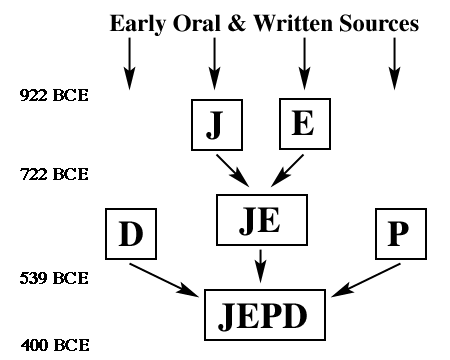
Key Aspects of the Documentary Hypothesis:
* Multiple Sources:
The DH posits that the Pentateuch is not a unified work but rather a composite text created by combining four distinct written sources.
* J Source:
The Jahwist source, characterized by its use of the divine name Yahweh (Jehovah in older translations), is believed to be the earliest source, dating back to the Solomonic period (around 950 BCE).
* E Source:
The Elohist source uses the generic term "God" (Elohim) for the divine name until Exodus 3-6, where God reveals the name Yahweh. It's dated slightly later than J, possibly to the 9th century BCE.
* D Source:
The Deuteronomist source is primarily associated with the book of Deuteronomy and is linked to reforms in the 7th or 8th century BCE.
* P Source:
The Priestly source is characterized by its emphasis on ritual, law, and genealogy, and is generally dated to the 5th century BCE during the time of Ezra.
* Redaction:
The DH proposes that these sources were not simply placed side-by-side but were edited and combined by a series of redactors over time.
So why Deuteronomy? Let's dig deeper spiritually to seek some answers.
In Kabbalah, the Book of Deuteronomy is seen as a crucial text for spiritual growth and renewal, particularly because it represents Moses' final teachings and a renewal of the covenant with God before the Israelites enter the Land of Israel. Kabbalists interpret it as a guide to understanding the Universal Law of Cause and Effect and a means of spiritually preparing the soul for deeper connection with the divine.
* Final Words and Revelation:
Deuteronomy is understood as Moses' final discourse, filled with profound insights and secrets revealed as he prepares to leave this world. It's seen as a culmination of his teachings and a guide for the Israelites to understand the consequences of their actions and the importance of maintaining their covenant with God.
* Covenant Renewal and Spiritual Preparation:
The book emphasizes the renewal of the covenant between God and the Israelites as they prepare to enter the Promised Land. Kabbalistically, this renewal is not just a legal or historical event but a spiritual one, requiring a change in consciousness and an understanding of the divine laws.
* Cause and Effect:
Deuteronomy's teachings are interpreted as providing a framework for understanding the Universal Law of Cause and Effect, helping individuals recognize how their actions have consequences in both the physical and spiritual realms.
* Relevance of Torah:
Kabbalah emphasizes that Deuteronomy teaches how to keep the Torah alive and relevant, allowing for a continuous deepening of one's relationship with God through fresh perspectives on the text.
* Malkhut and Reflection:
In Kabbalistic terms, Deuteronomy corresponds to the Sefirah of Malkhut (Kingdom), representing the culmination of the spiritual journey. The book's focus on Moses' final words and reflections on their past experiences is seen as a time for introspection and summing up the year's spiritual progress.
