


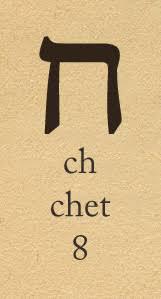
המליך אות ח בראיה
וקשר לו כתר
וצר בו סרטן בעולם
ותמוז בשנה
ויד ימין בנפש
זכר ונקבה
[God] caused the letter ח chet to reign over the domain of Seeing, attached to it a crown, and formed its correspondences, aligning it with
the Crab [Cancer] in the cosmos,
Tammuz in the year,
and the right hand [others: intestines] in the body,
Male and female.
Rabbi Jill Hammer: The Jewish Book of Days, Introduction
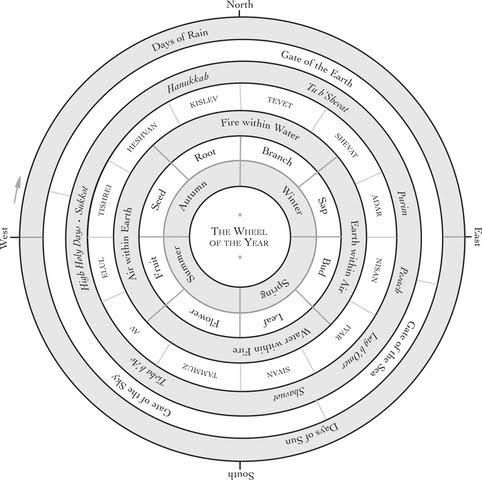
In the Zohar II:24a we learn: “Fire, air, earth and water are the sources and roots of all things above and below, and on them are all things grounded. In each of the four winds these elements are found: fire in the North, air in the East, water in the South, earth in the West.”
Because Judaism is a Northern Hemisphere tradition, we would expect winter to be associated with the north and summer with the south. Indeed, in some midrashic traditions the tribes associated with the south (Reuben, Simeon, Gad) are also associated with summer, and the tribes associated with north (Dan, Asher, Naphtali) are associated with winter (Otzar haMidrashim: Konen 13). This suggests winter is the fire season, spring is the air season, summer is the water season and autumn is the earth season.
Using the creative tension… we may imagine that each season has an inner and an outer element. Nature teaches us both about what is most present in the world at each season and bout what we lack and need to seek. This secret of the seasons allows us to discover our blessings, revealing our deepest desires at each moment of the year. …
Summer’s physical, external element is fire. The bright sun that warms us and even burns us at this time is a reflection of the season’s more obvious element. Summer’s inner element is water, the water we use to quench our thirst and the inner juices of the ripening fruits. The tears we shed during the fast days of Tammuz and Av are a sign of this secret element of summer.
Malidoma Some - The Healing Wisdom of Africa
Cosmology and the Five Elements
The most commonly seen elements at the level of cultures are fire and water. Indigenous cultures identify with water. They are mostly peace and harmony seekers. On the contrary, modern cultures identify with fire. …If a person or culture forgets its crucial relationship with other worlds, that is, with the ancestors, a fire is ignited that becomes a destructive force in society. When that happens, a person or a culture suddenly perceives almost everything in terms of fire. Fire becomes equated with power, speed, hierarchy, and value. All this is symptomatic of a culture in combustion. When one’s culture is burning, it is impossible to sit still and keep focused. Like a ball of fire moving at high speed, a culture on fire is fascinated with speed. … When a culture is caught in fire, its people’s perception of the world is red. As they rush ceaselessly forward with a consumer’s mentality, they pollute everything in their way, conquering and destroying anything that interferes. Fire culture promotes consumerism and cultivates scarcity in order to increase restlessness, then uses the restless, burning psyche as energy to increase production and consumption. Meanwhile the culture on fire is fascinated by violence. As a matter of fact, violence proves to be highly marketable and stimulates the fiery nature of the culture as a whole. Consequently, a fire culture is a war culture. It sees solutions in terms of fire and conflicts as fire that can be resolved with more fire. Such a culture will require a lot of water to heal.…
Rituals of Healing
Changing our intentions from consumption, as an out-of-control fire, to connection, like a fire that warms and soothes, will bring fire in Western culture under control to a very great extent. It is reconciling oneself with the past - or, as the Dagara would say, with the ancestors - that brings the inner fire into alignment. The work of grieving is an important part of reconciling with the past…
Water
The element water reconciles and quiets down that which is trapped in the crisis of combustion. In effect, water cools the burning psyche. It stills the restless consciousness and bestows serenity upon a person in turmoil, returning focus to a chaotic existence. … Water seeks to cleanse, reconcile, and balance that which is in agitation, emotional disorder, and self-danger. When water succeeds, it restores or enhances life where there was the threat of death. … The salted taste of tears of grief is the cleansing taste of reconciliation, of the desire to reconcile, because water cleanses and washes away the impurities of our failures. Grief is the enemy of denial.
Rituals of Healing
Water ritual is an attempt to unite things that must be united, to reconcile things that are meant to be together in the interest of community. Water rituals tie up loose ends. These loose ends are obstacles to our balance and reconciliation, our peace and serenity. … To the indigenous, challenge or crisis is cosmologically and spiritually symptomatic of a rise in fire. When someone is in crisis, regardless of the nature of the crisis, that person is said to be returning to fire. …When there is no water around, we are vulnerable to crisis. People, especially people in crisis, are naturally attracted to water. … Just the sight of a large body of water brings a feeling of quiet and peace, a feeling of home. Water resets a system gone dry, in which motion is accelerated beyond what we can bear ….
Many people in the Western world walk around like time bombs, loaded with contradictory emotions that are often so hard to articulate that the individual is dangerous to himself and to his surroundings. Perhaps first among these emotions is grief. …. Water rituals help to shed the massive accumulation of negative emotion due to loss, failure, and powerlessness… Loss and powerlessness are particularly humbling because they disrupt continuity and reveal our humanity.


Rabbi Dovber Pinson: Tamuz and Av: Embracing Brokenness, Transforming Darkness
Because the flow of the Divine Name is completely reversed during this month, Tamuz is a great opportunity to ‘turn our lives around’, to reverse our negative trends and transform them into positive trajectories.
Melinda Ribner: Kabbalah Month by Month: Tammuz
This is the month of reversals, as the Divine Name permutation is reversed this month. What we held as true may now be seen as false, and what is false may masquerade as the truth. We may think that one thing is happening, but in actuality it is the opposite. It is confusing, but all will become clear to us if we are open to see things as they are and not as we want them to be.
This month, open up to seeing things more clearly, as they are and not as you want them to be. Don’t be afraid to question your assumptions. Trust that what is, as painful as it may seem to you and as deceptive as it once was, will lead you to greater freedom. God is truth and what is true brings freedom.
(יד) וַיָּבֵ֣א אֹתִ֗י אֶל־פֶּ֙תַח֙ שַׁ֣עַר בֵּית־ה אֲשֶׁ֖ר אֶל־הַצָּפ֑וֹנָה וְהִנֵּה־שָׁם֙ הַנָּשִׁ֣ים יֹשְׁב֔וֹת מְבַכּ֖וֹת אֶת־הַתַּמּֽוּז׃
(14) Next [God] brought me to the entrance of the north gate of the House of GOD; and there sat the women weeping over Tammuz.
The Tale of Tammuz aka Dumuzi / Dumuzid
Tammuz, in Mesopotamian religion, was a god of fertility embodying the powers for new life in nature in the spring. The name Tammuz seems to have been derived from the Akkadian form Tammuzi, based on early Sumerian Damu-zid, The Flawless Young, which in later standard Sumerian became Dumu-zid, or Dumuzi. ….
As shown by his most common epithet, Sipad (Shepherd), Tammuz was essentially a pastoral deity. His father, Enki, is rarely mentioned, and his mother, the goddess Duttur, was a personification of the ewe. His own name, Dumu-zid, and two variant designations for him, Ama-ga (Mother Milk) and U-lu-lu (Multiplier of Pasture), suggest that he actually was the power for everything that a shepherd might wish for: grass to come up in the desert, healthy lambs to be born, and milk to be plentiful in the mother animals.
When the cult of Tammuz spread to Assyria in the 2nd and 1st millennia BCE, the character of the god seems to have changed from that of a pastoral to that of an agricultural deity. The texts suggest that in Assyria (and later among the Sabaeans), Tammuz was basically viewed as the power in the grain, dying when the grain was milled.
Inanna and Tammuz
In "Inanna's Descent," Inanna, Goddess of the Heavens, goes to the Underworld, which her sister Ereshkigal rules. Inanna travels there to attend the funeral of Ereshkigal’s husband. However, as Inanna passes through the gates of the Underworld, Ereshkigal strips Inanna of her power, kills her, and traps her there.
Inanna is eventually rescued by the other gods, but Ereshkigal asserts that someone must take her place if she is to leave. As Inanna and her rescuers search for a proper replacement, Inanna cannot choose one, as everyone is properly mourning her. However, when Inanna sees Dumuzi, he is wearing lavish clothing and is being entertained by slave girls. Because Dumuzi did not properly mourn Inanna, she calls on the demons to drag him down to the Underworld and take her place.
As time passes, Inanna regrets the decision, and she allows Dumuzi to spend six months out of the year with her. During those six months, Dumuzi’s sister Geshtinanna takes his place in the Underworld. This is how the ancient Sumerians explain the seasons, similarly to the Greeks with the Demeter/Hades/Persephone myth.
Rabbi Jill Hammer: The Jewish Book of Days
The Flower (1 Tammuz to 14 Av)
Job 14:1-2 “Man born of woman is short of days and fed with trouble. He blossoms like a flower and withers, and vanishes, like a shadow.”
The seventh movement of the year is falling. …The flower symbolizes all that is beautiful but ephemeral. In the Jewish calendar, this season of the year is a time of mourning for loss. From Revelation at the height of Sinai, we now come to the reality of human suffering. In Tammuz, first of the summer months, we remember exile. …
The sadness of this season mirrors a grief older than history. For human creatures to live, the harvest must be sacrificed. What grows must die. What lives must eat other living things to stay alive. This season asks an eternal question about the cycle of life: What suffering can we prevent? What must we struggle to accept?
Many other peoples have asked these questions at the height of summer. The Celts and the Sumerians, for example, mourned the death of the god of the grain at this time, imagining he had gone to the underworld to regenerate himself as the new seed. The Sun Dance celebrated by the Sioux and other Native American peoples, held at the summer solstice, symbolizes death and rebirth.
The Corn Mother / Corn Maiden
The Corn Mother is a mythological figure believed, among indigenous agricultural tribes in North America, to be responsible for the origin of corn (maize). The story of the Corn Mother is related in two main versions with many variations.
In the first version (the “immolation version”), the Corn Mother is depicted as an old woman who succors a hungry tribe, frequently adopting an orphan as a foster child. She secretly produces grains of corn by rubbing her body. When her secret is discovered, the people, disgusted by her means of producing the food, accuse her of witchcraft. Before being killed—by some accounts with her consent—she gives careful instructions on how to treat her corpse. Corn sprouts from the places over which her body is dragged or, by other accounts, from her corpse or burial site.
In the second version (the “flight version”), she is depicted as a young, beautiful woman who marries a man whose tribe is suffering from hunger. She secretly produces corn, also, in this version, by means that are considered to be disgusting; she is discovered and insulted by her in-laws. Fleeing the tribe, she returns to her divine home; her husband follows her, and she gives him seed corn and detailed instructions for its cultivation.
Melinda Ribner: Living in the Divine Flow - Tammuz
Your tears are a portable mikvah; they will purify you and open your heart. As the Kotzker Rebbe said, ‘There is nothing more whole than a broken heart.’
Book of Days: 1 Tammuz Joseph’s birthday
According to Midrash Yalkut Shmot 1, 1 Tammuz is also Joseph’s birthday. “Joseph, like the Tammuz of the myth, goes down into the underworld. His brothers throw him into a pit, and then he is sold into slavery. Yet each time he descends, Joseph rises again. In the end, he saves his family from famine, just as the grain harvest saves the people from hunger. Joseph reminds us the circle completes itself and growth comes again.”