This is a Shechitah knife:

Most of the following selections are taken from "Kosher Slaughtering: An Introduction," by Rabbi Gerson Appel, which can be found here: http://www.myjewishlearning.com/article/kosher-slaughtering-an-introduction/
4. Shehitah entails severing the trachea and the esophagus in accordance with the oral tradition, which requires that five improper procedures be avoided, lest they invalidate the shehitah and render the animal unfit to be eaten. They are (a) hesitation or delay while drawing the knife, (b) excessive pressure or chopping, (c) burrowing the knife between the trachea and the esophagus or under the skin, (d) making the incision outside the specified area, and (e) laceration or tearing of the trachea or esophagus, which would result from an imperfect blade. An animal or fowl that is improperly slaughtered (or, as already noted, that is not slaughtered, but dies of itself) is considered carrion (nevelah) and unfit for food.
Questions:
1. What two parts of the animal must be cut for a Kosher Shechitah?
2. What does "Nevelah" mean?
(ל) וְאַנְשֵׁי־קֹ֖דֶשׁ תִּהְי֣וּן לִ֑י וּבָשָׂ֨ר בַּשָּׂדֶ֤ה טְרֵפָה֙ לֹ֣א תֹאכֵ֔לוּ לַכֶּ֖לֶב תַּשְׁלִכ֥וּן אֹתֽוֹ׃ (ס)
2. Since most animals are free of the above diseases or disorders, no special examination is required unless some defect is detected. However, the lungs of the animal must be carefully examined, since this is the area where defects are most likely to be found. Inspection must be done by one who is reliable and qualified, as it requires extensive knowledge of the laws and considerable skill and experience.
Question:
3. What does "Terefah" mean?
(כה) וַיִּוָּתֵ֥ר יַעֲקֹ֖ב לְבַדּ֑וֹ וַיֵּאָבֵ֥ק אִישׁ֙ עִמּ֔וֹ עַ֖ד עֲל֥וֹת הַשָּֽׁחַר׃ (כו) וַיַּ֗רְא כִּ֣י לֹ֤א יָכֹל֙ ל֔וֹ וַיִּגַּ֖ע בְּכַף־יְרֵכ֑וֹ וַתֵּ֙קַע֙ כַּף־יֶ֣רֶךְ יַעֲקֹ֔ב בְּהֵֽאָבְק֖וֹ עִמּֽוֹ׃ ... (לב) וַיִּֽזְרַֽח־ל֣וֹ הַשֶּׁ֔מֶשׁ כַּאֲשֶׁ֥ר עָבַ֖ר אֶת־פְּנוּאֵ֑ל וְה֥וּא צֹלֵ֖עַ עַל־יְרֵכֽוֹ׃ (לג) עַל־כֵּ֡ן לֹֽא־יֹאכְל֨וּ בְנֵֽי־יִשְׂרָאֵ֜ל אֶת־גִּ֣יד הַנָּשֶׁ֗ה אֲשֶׁר֙ עַל־כַּ֣ף הַיָּרֵ֔ךְ עַ֖ד הַיּ֣וֹם הַזֶּ֑ה כִּ֤י נָגַע֙ בְּכַף־יֶ֣רֶךְ יַעֲקֹ֔ב בְּגִ֖יד הַנָּשֶֽׁה׃
(25) Jacob was left alone. And a man wrestled with him until the break of dawn. (26) When he saw that he had not prevailed against him, he wrenched Jacob’s hip at its socket, so that the socket of his hip was strained as he wrestled with him... (32) The sun rose upon him as he passed Penuel, limping on his hip. (33) That is why the children of Israel to this day do not eat the thigh muscle that is on the socket of the hip, since Jacob’s hip socket was wrenched at the thigh muscle.
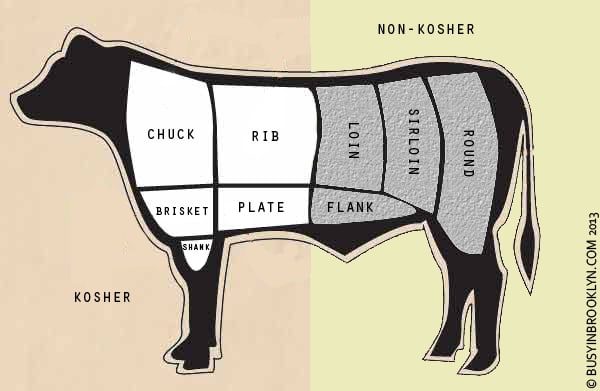
2. The “sinew of the thigh-vein that is upon the hollow of the thigh” (Gid Hanasheh) is likewise biblically prohibited in animals (Genesis 32:33). Both the inner sinew and the outer sinew, and their branches, must be excised. (Note: Most of the forbidden fat and the sinew of the thigh vein are found in the hindquarters of the animal. Since their removal is difficult and must be done by one who is highly qualified, the hindquarters are not used for kosher meat in most Jewish communities, except where meat is not readily obtainable, as in Israel and some European communities.)
3. Veins and blood vessels are prohibited because of the blood that they contain that cannot be extracted by salting. Hence these forbidden veins, such as those in the forelegs, shoulder, lower jaws, tongue, neck, heart, and in the fat of the entrails, and other blood vessels and tissues must be removed before the meat is made kosher and cooked. In fowl, the blood vessels in the throat should be removed or cut through together with the neck. It is also customary to cut between the knee joints in order to reach the blood vessels that are there.
Questions:
4. What is the Gid Hanasheh and why is it prohibited?
5. What other parts are removed from an animal before being sold as Kosher?
6. Why isn't the back half of a cow sold as Kosher in America?
The Gid HaNasheh (sciatic nerve) can be found in the image below as number 32:

The following picture illustrates which cuts of a cow can be found as Kosher in America and which cuts are sold as non-Kosher: