


(יט) וַיִּסַּ֞ע מַלְאַ֣ךְ הָאֱלֹהִ֗ים הַהֹלֵךְ֙ לִפְנֵי֙ מַחֲנֵ֣ה יִשְׂרָאֵ֔ל וַיֵּ֖לֶךְ מֵאַחֲרֵיהֶ֑ם וַיִּסַּ֞ע עַמּ֤וּד הֶֽעָנָן֙ מִפְּנֵיהֶ֔ם וַֽיַּעֲמֹ֖ד מֵאַחֲרֵיהֶֽם׃ (כ) וַיָּבֹ֞א בֵּ֣ין ׀ מַחֲנֵ֣ה מִצְרַ֗יִם וּבֵין֙ מַחֲנֵ֣ה יִשְׂרָאֵ֔ל וַיְהִ֤י הֶֽעָנָן֙ וְהַחֹ֔שֶׁךְ וַיָּ֖אֶר אֶת־הַלָּ֑יְלָה וְלֹא־קָרַ֥ב זֶ֛ה אֶל־זֶ֖ה כׇּל־הַלָּֽיְלָה׃ (כא) וַיֵּ֨ט מֹשֶׁ֣ה אֶת־יָדוֹ֮ עַל־הַיָּם֒ וַיּ֣וֹלֶךְ יהוה ׀ אֶת־הַ֠יָּ֠ם בְּר֨וּחַ קָדִ֤ים עַזָּה֙ כׇּל־הַלַּ֔יְלָה וַיָּ֥שֶׂם אֶת־הַיָּ֖ם לֶחָרָבָ֑ה וַיִּבָּקְע֖וּ הַמָּֽיִם׃ (כב) וַיָּבֹ֧אוּ בְנֵֽי־יִשְׂרָאֵ֛ל בְּת֥וֹךְ הַיָּ֖ם בַּיַּבָּשָׁ֑ה וְהַמַּ֤יִם לָהֶם֙ חוֹמָ֔ה מִֽימִינָ֖ם וּמִשְּׂמֹאלָֽם׃ (כג) וַיִּרְדְּפ֤וּ מִצְרַ֙יִם֙ וַיָּבֹ֣אוּ אַחֲרֵיהֶ֔ם כֹּ֚ל ס֣וּס פַּרְעֹ֔ה רִכְבּ֖וֹ וּפָרָשָׁ֑יו אֶל־תּ֖וֹךְ הַיָּֽם׃ (כד) וַֽיְהִי֙ בְּאַשְׁמֹ֣רֶת הַבֹּ֔קֶר וַיַּשְׁקֵ֤ף יהוה אֶל־מַחֲנֵ֣ה מִצְרַ֔יִם בְּעַמּ֥וּד אֵ֖שׁ וְעָנָ֑ן וַיָּ֕הׇם אֵ֖ת מַחֲנֵ֥ה מִצְרָֽיִם׃ (כה) וַיָּ֗סַר אֵ֚ת אֹפַ֣ן מַרְכְּבֹתָ֔יו וַֽיְנַהֲגֵ֖הוּ בִּכְבֵדֻ֑ת וַיֹּ֣אמֶר מִצְרַ֗יִם אָנ֙וּסָה֙ מִפְּנֵ֣י יִשְׂרָאֵ֔ל כִּ֣י יהוה נִלְחָ֥ם לָהֶ֖ם בְּמִצְרָֽיִם׃ {פ} (כו) וַיֹּ֤אמֶר יהוה אֶל־מֹשֶׁ֔ה נְטֵ֥ה אֶת־יָדְךָ֖ עַל־הַיָּ֑ם וְיָשֻׁ֤בוּ הַמַּ֙יִם֙ עַל־מִצְרַ֔יִם עַל־רִכְבּ֖וֹ וְעַל־פָּרָשָֽׁיו׃ (כז) וַיֵּט֩ מֹשֶׁ֨ה אֶת־יָד֜וֹ עַל־הַיָּ֗ם וַיָּ֨שׇׁב הַיָּ֜ם לִפְנ֥וֹת בֹּ֙קֶר֙ לְאֵ֣יתָנ֔וֹ וּמִצְרַ֖יִם נָסִ֣ים לִקְרָאת֑וֹ וַיְנַעֵ֧ר יהוה אֶת־מִצְרַ֖יִם בְּת֥וֹךְ הַיָּֽם׃ (כח) וַיָּשֻׁ֣בוּ הַמַּ֗יִם וַיְכַסּ֤וּ אֶת־הָרֶ֙כֶב֙ וְאֶת־הַפָּ֣רָשִׁ֔ים לְכֹל֙ חֵ֣יל פַּרְעֹ֔ה הַבָּאִ֥ים אַחֲרֵיהֶ֖ם בַּיָּ֑ם לֹֽא־נִשְׁאַ֥ר בָּהֶ֖ם עַד־אֶחָֽד׃ (כט) וּבְנֵ֧י יִשְׂרָאֵ֛ל הָלְכ֥וּ בַיַּבָּשָׁ֖ה בְּת֣וֹךְ הַיָּ֑ם וְהַמַּ֤יִם לָהֶם֙ חֹמָ֔ה מִֽימִינָ֖ם וּמִשְּׂמֹאלָֽם׃ (ל) וַיּ֨וֹשַׁע יהוה בַּיּ֥וֹם הַה֛וּא אֶת־יִשְׂרָאֵ֖ל מִיַּ֣ד מִצְרָ֑יִם וַיַּ֤רְא יִשְׂרָאֵל֙ אֶת־מִצְרַ֔יִם מֵ֖ת עַל־שְׂפַ֥ת הַיָּֽם׃ (לא) וַיַּ֨רְא יִשְׂרָאֵ֜ל אֶת־הַיָּ֣ד הַגְּדֹלָ֗ה אֲשֶׁ֨ר עָשָׂ֤ה יהוה בְּמִצְרַ֔יִם וַיִּֽירְא֥וּ הָעָ֖ם אֶת־יהוה וַֽיַּאֲמִ֙ינוּ֙ בַּֽיהוה וּבְמֹשֶׁ֖ה עַבְדּֽוֹ׃ {פ}
(19) The messenger of God, who had been going ahead of the Israelite army, now moved and followed behind them; and the pillar of cloud shifted from in front of them and took up a place behind them, (20) and it came between the army of the Egyptians and the army of Israel. Thus there was the cloud with the darkness, and it cast a spell upon the night, so that the one could not come near the other all through the night. (21) Then Moses held out his arm over the sea and יהוה drove back the sea with a strong east wind all that night, and turned the sea into dry ground. The waters were split, (22) and the Israelites went into the sea on dry ground, the waters forming a wall for them on their right and on their left. (23) The Egyptians came in pursuit after them into the sea, all of Pharaoh’s horses, chariots, and riders. (24) At the morning watch, יהוה looked down upon the Egyptian army from a pillar of fire and cloud, and threw the Egyptian army into panic. (25) [God] locked the wheels of their chariots so that they moved forward with difficulty. And the Egyptians said, “Let us flee from the Israelites, for יהוה is fighting for them against Egypt.” (26) Then יהוה said to Moses, “Hold out your arm over the sea, that the waters may come back upon the Egyptians and upon their chariots and upon their riders.” (27) Moses held out his arm over the sea, and at daybreak the sea returned to its normal state, and the Egyptians fled at its approach. But יהוה hurled the Egyptians into the sea. (28) The waters turned back and covered the chariots and the riders—Pharaoh’s entire army that followed them into the sea; not one of them remained. (29) But the Israelites had marched through the sea on dry ground, the waters forming a wall for them on their right and on their left. (30) Thus יהוה delivered Israel that day from the Egyptians. Israel saw the Egyptians dead on the shore of the sea. (31) And when Israel saw the wondrous power which יהוה had wielded against the Egyptians, the people feared יהוה; they had faith in יהוה and in God’s servant Moses.
רַבִּי אֱלִיעֶזֶר אוֹמֵר: בַּיּוֹם שֶׁאָמַר הַקָּדוֹשׁ בָּרוּךְ הוּא ״יִקָּווּ הַמַּיִם״, בּוֹ בַּיּוֹם נִקְפְּאוּ הַמַּיִם וְנַעֲשׂוּ שְׁנֵים עָשָׂר חֲלָקִים כְּנֶגֶד שְׁנֵים עָשָׂר שְׁבָטִים, וְעָשׂוּ חוֹמוֹת מַיִם בֵּין שְׁבִיל לִשְׁבִיל. וְהָיוּ רוֹאִין אֵלּוּ אֶת אֵלּוּ, וְרָאוּ הַקָּדוֹשׁ בָּרוּךְ הוּא מְהַלֵּךְ לִפְנֵיהֶם, וְעִקְּבוֹת רַגְלָיו לֹא רָאוּ, שֶׁנֶּאֱמַר: ״בַּיָּם דַּרְכֶּךָ וּשְׁבִילְךָ בְּמַיִם רַבִּים וְעִקְּבוֹתֶיךָ לֹא נוֹדָעוּ״.
Rabbi Eliezer said: || On the day when He said, "Let the waters be gathered together" (Gen. 1:9), on that very day were the waters congealed, and they were made into twelve valleys, corresponding to the twelve tribes, and they were made into walls of water between each path, and (the people) could see one another, and they saw the Holy One, blessed be He, walking before them, but the heels of His feet they did not see, as it is said, "Thy way was in the sea, and thy paths in the great waters, and thy footsteps were not known" (Ps. 77:20).
(ח) וּבְר֤וּחַ אַפֶּ֙יךָ֙ נֶ֣עֶרְמוּ מַ֔יִם נִצְּב֥וּ כְמוֹ־נֵ֖ד נֹזְלִ֑ים קָֽפְא֥וּ תְהֹמֹ֖ת בְּלֶב־יָֽם׃
(8) At the blast of Your nostrils the waters piled up, The floods stood straight like a wall; The deeps froze in the heart of the sea.
יְהוּדָה מַאי הִיא? דְּתַנְיָא, הָיָה רַבִּי מֵאִיר אוֹמֵר: כְּשֶׁעָמְדוּ יִשְׂרָאֵל עַל הַיָּם הָיוּ שְׁבָטִים מְנַצְּחִים זֶה עִם זֶה, זֶה אוֹמֵר: אֲנִי יוֹרֵד תְּחִלָּה לַיָּם, וְזֶה אוֹמֵר: אֲנִי יוֹרֵד תְּחִלָּה לַיָּם, קָפַץ שִׁבְטוֹ שֶׁל בִּנְיָמִין וְיָרַד לַיָּם תְּחִילָּה, שֶׁנֶּאֱמַר: ״שָׁם בִּנְיָמִין צָעִיר רֹדֵם״, אַל תִּקְרֵי ״רֹדֵם״ אֶלָּא ״רָד יָם״. וְהָיוּ שָׂרֵי יְהוּדָה רוֹגְמִים אוֹתָם, שֶׁנֶּאֱמַר: ״שָׂרֵי יְהוּדָה רִגְמָתָם״.
לְפִיכָךְ זָכָה בִּנְיָמִין הַצַּדִּיק וְנַעֲשָׂה אוּשְׁפִּיזְכָן לַגְּבוּרָה, שֶׁנֶּאֱמַר: ״וּבֵין כְּתֵפָיו שָׁכֵן״.
אָמַר לוֹ רַבִּי יְהוּדָה: לֹא כָּךְ הָיָה מַעֲשֶׂה, אֶלָּא זֶה אוֹמֵר: אֵין אֲנִי יוֹרֵד תְּחִילָּה לַיָּם, וְזֶה אוֹמֵר: אֵין אֲנִי יוֹרֵד תְּחִילָּה לַיָּם, קָפַץ נַחְשׁוֹן בֶּן עַמִּינָדָב וְיָרַד לַיָּם תְּחִילָּה, שֶׁנֶּאֱמַר: ״סְבָבֻנִי בְכַחַשׁ אֶפְרַיִם וּבְמִרְמָה בֵּית יִשְׂרָאֵל וִיהוּדָה עֹד רָד עִם אֵל״.
לְפִיכָךְ, זָכָה יְהוּדָה לַעֲשׂוֹת מֶמְשָׁלָה בְּיִשְׂרָאֵל, שֶׁנֶּאֱמַר: ״הָיְתָה יְהוּדָה לְקׇדְשׁוֹ יִשְׂרָאֵל מַמְשְׁלוֹתָיו״, מָה טַעַם ״הָיְתָה יְהוּדָה לְקׇדְשׁוֹ וְיִשְׂרָאֵל מַמְשְׁלוֹתָיו״ — מִשּׁוּם דְּ״הַיָּם רָאָה וַיָּנֹס״.
§ What was the incident where Judah sanctified God’s name in public? As it is taught in a baraita that Rabbi Meir would say: When the Jewish people stood at the Red Sea, the tribes were arguing with one other. This one was saying: I am going into the sea first, and that one was saying: I am going into the sea first. Then, in jumped the tribe of Benjamin and descended into the sea first, as it is stated: “There is Benjamin, the youngest, ruling them [rodem]” (Psalms 68:28). Do not read it as: “Ruling them [rodem]”; rather, read it as: Descending [red] into the sea [yam]. And the princes of the tribe of Judah were stoning them [rogmim otam] for plunging in first and not in the proper order, as it is stated in the continuation of the verse: “The princes of Judah, their council [rigmatam]” (Psalms 68:28).
Therefore, Benjamin the righteous was privileged to serve as host to the Divine Presence of the Almighty, as the Temple was built in the territory of Benjamin, as it is stated in Moses’ blessing for the tribe of Benjamin: “The beloved of the Lord shall dwell in safety by Him; He covers him all the day, and He rests between his shoulders” (Deuteronomy 33:12).
Rabbi Yehuda said to Rabbi Meir: That is not how the incident took place. Rather, this tribe said: I am not going into the sea first, and that tribe said: I am not going into the sea first. Then, in jumped the prince of Judah, Nahshon ben Amminadab, and descended into the sea first, accompanied by his entire tribe, as it is stated: “Ephraim surrounds Me with lies and the house of Israel with deceit, and Judah is yet wayward toward God [rad im El]” (Hosea 12:1), which is interpreted homiletically as: And Judah descended [rad] with God [im El].
For this reason, because Nahshon and the tribe of Judah went into the sea first, the tribe of Judah merited to govern Israel, as it is stated: “Judah became His sanctuary, Israel His dominion. The sea saw it and fled” (Psalms 114:2–3). The baraita interprets the verses in this manner: What is the reason that Judah became His sanctuary and Israel came under His dominion? It is because “the sea saw it and fled.”
אָמַר רַבִּי יְהוּדָה בְּרַבִּי אִלְעָאי, כְּשֶׁעָמְדוּ יִשְׂרָאֵל עַל הַיָּם הָיוּ הַשְּׁבָטִים מִדַּיְּנִים אֵלֶּה עִם אֵלֶּה, זֶה אוֹמֵר אֲנִי יוֹרֵד תְּחִלָּה וְזֶה אוֹמֵר אֲנִי יוֹרֵד תְּחִלָּה, קָפַץ נַחְשׁוֹן לְתוֹךְ גַּלֵּי הַיָּם וְיָרַד, וְעָלָיו אָמַר דָּוִד (תהלים סט, ב): הוֹשִׁיעֵנִי אֱלֹהִים כִּי בָאוּ מַיִם עַד נָפֶשׁ, אָמַר הַקָּדוֹשׁ בָּרוּךְ הוּא לְמשֶׁה: יְדִידִי שׁוֹקֵעַ בַּיָּם וְאַתָּה מִתְפַּלֵּל, (שמות יד, טו): דַּבֵּר אֶל בְּנֵי יִשְׂרָאֵל וְיִסָּעוּ, הֱוֵי: נוֹדָע בִּיהוּדָה אֱלֹהִים, וּלְפִיכָךְ הִגְדִּיל הַקָּדוֹשׁ בָּרוּךְ הוּא שְׁמוֹ שֶׁל נַחְשׁוֹן בְּיִשְׂרָאֵל שֶׁזָּכָה לְהַקְרִיב רִאשׁוֹן, שֶׁנֶּאֱמַר: וַיְהִי הַמַּקְרִיב בַּיּוֹם הָרִאשׁוֹן וגו', הֱוֵי: בְּיִשְׂרָאֵל גָּדוֹל שְׁמוֹ.
Rabbi Yehuda ben Rabbi Ilai said: When Israel stood at the sea, the tribes were deliberating with each other. This one says: ‘I will descend first,’ and this one says: ‘I will descend first.’ Naḥshon leapt into the waves of the sea and descended. In his regard, David said: “Rescue me, God, for the waters have come up to my soul” (Psalms 69:2). The Holy One blessed be He said to Moses: ‘My friend is sinking in the sea, and you are praying? “Speak to the children of Israel, and let them travel”’ (Exodus 14:15). That is, “God is known in Judah.” That is why the Holy One blessed be He exalted the name of Naḥshon in Israel, as he was privileged to present his offering first, as it is stated: “The one who presented his offering on the first day was [vayhi] [Naḥshon].” That is, “His name is great in Israel.”
(ח) וּבְר֤וּחַ אַפֶּ֙יךָ֙ נֶ֣עֶרְמוּ מַ֔יִם נִצְּב֥וּ כְמוֹ־נֵ֖ד נֹזְלִ֑ים קָֽפְא֥וּ תְהֹמֹ֖ת בְּלֶב־יָֽם׃
(8) At the blast of Your nostrils the waters piled up, The floods stood straight like a wall; The deeps froze in the heart of the sea.
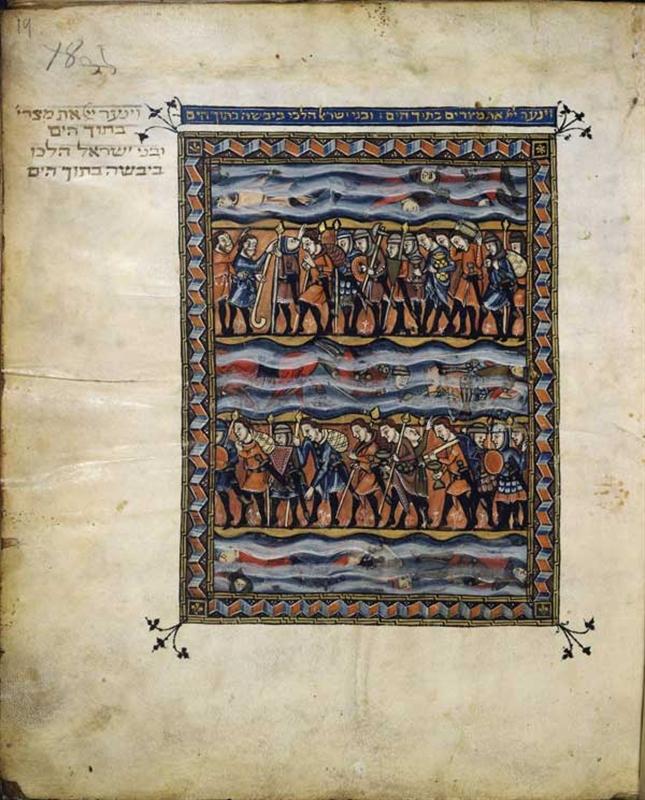
Rylands Haggadah (circa 1350 CE)
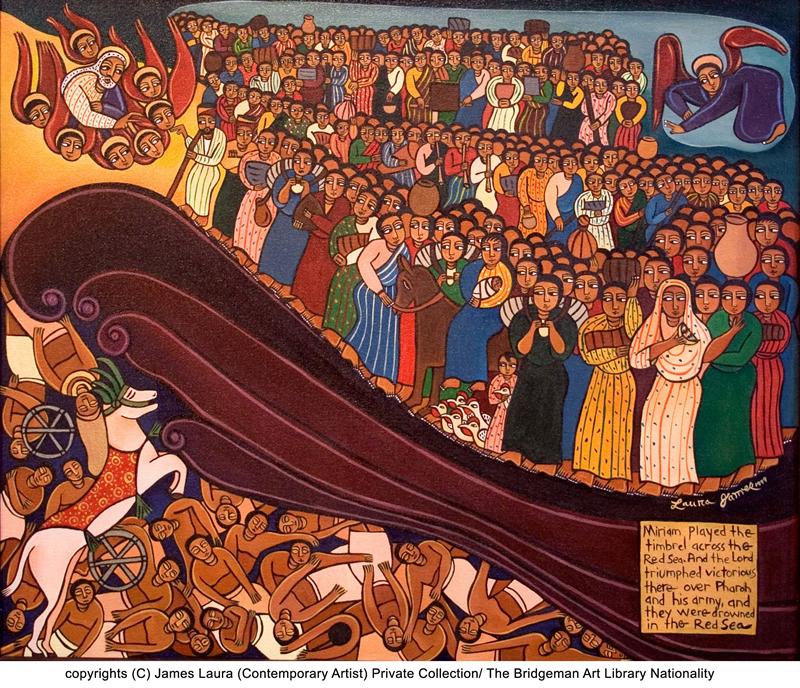
Laura James, 21st century
וּמִי חָדֵי הַקָּדוֹשׁ בָּרוּךְ הוּא בְּמַפַּלְתָּן שֶׁל רְשָׁעִים? וְהָא כְּתִיב: ״בְּצֵאת לִפְנֵי הֶחָלוּץ וְאוֹמְרִים הוֹדוּ לַיהוה כִּי לְעוֹלָם חַסְדּוֹ״, וְאָמַר רַבִּי יוֹחָנָן: מִפְּנֵי מָה לֹא נֶאֱמַר ״כִּי טוֹב״ בְּהוֹדָאָה זוֹ? לְפִי שֶׁאֵין הַקָּדוֹשׁ בָּרוּךְ הוּא שָׂמֵחַ בְּמַפַּלְתָּן שֶׁל רְשָׁעִים. וְאָמַר רַבִּי יוֹחָנָן, מַאי דִּכְתִיב: ״וְלֹא קָרַב זֶה אֶל זֶה כׇּל הַלָּיְלָה״ — בִּקְּשׁוּ מַלְאֲכֵי הַשָּׁרֵת לוֹמַר שִׁירָה, אָמַר הַקָּדוֹשׁ בָּרוּךְ הוּא: מַעֲשֵׂה יָדַי טוֹבְעִין בַּיָּם, וְאַתֶּם אוֹמְרִים שִׁירָה? אָמַר רַבִּי אֶלְעָזָר: הוּא אֵינוֹ שָׂשׂ, אֲבָל אֲחֵרִים מֵשִׂישׂ. וְדַיְקָא נָמֵי, דִּכְתִיב: ״כֵּן יָשִׂישׂ״, וְלָא כְּתִיב ״יָשׂוּשׂ״. שְׁמַע מִינַּהּ.
Rabbi Yehoshua ben Levi asked: Does the Holy Blessed One, rejoice over the downfall of the wicked? But it is written: “As they went out before the army, and say: Give thanks to the Eternal, for God's kindness endures forever” (II Chronicles 20:21), but Rabbi Yoḥanan said: For what reason were the words: “for He is good” (כִּי טוֹב ki tov) not stated in this statement of thanksgiving, as the classic formulation is: “Give thanks to the Eternal; for God is good; for God's kindness endures forever” (I Chronicles 16:34)? Because the Holy Blessed One does not rejoice over the downfall of the wicked. And Rabbi Yoḥanan said: What is the meaning of that which is written: “And the one came not near the other all the night” (Exodus 14:20)? The ministering angels wanted to sing their song, but the Holy Blessed One said: The work of My hands drowning at sea, and you wish to say songs? Rabbi Elazar said, God does not rejoice over the downfall of the wicked, but God causes others to rejoice. This we can learn from the language of the verse as well, as it is written: “So the Eternal will rejoice [כֵּן יָשִׂישׂ ken yasis]” (Deuteronomy 28:63). And it is not written יָשׂוּשׂ yasus, which would literally be "He will rejoice". Since the grammatical form of this verb is causative (that is, causing another to do something) this is interpreted as God not rejoicing, but allowing others to do so ... and so we should learn from it this.
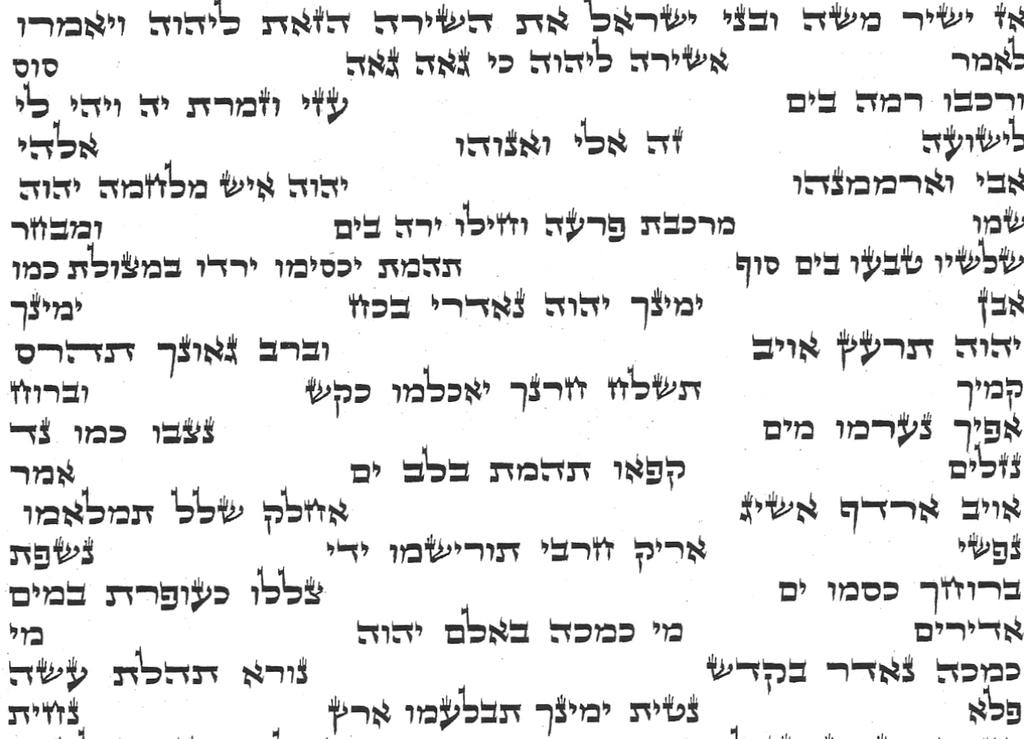
The most common version of the layout contains a visual pun at the end of the poem that represents the physical moment of redemption. The last line of the song is broken up into three sections of text: the “waters of the sea,” the dry land the Israelites walked on within, and “the sea” again. The layout of the text thus represents the Israelites walking on dry land with the sea on both sides.

(ג) בתפים ובמחלת. מֻבְטָחוֹת הָיוּ צַדְקָנִיּוֹת שֶׁבַּדּוֹר שֶׁהַקָּבָּ"ה עוֹשֶׂה לָהֶם נִסִּים וְהוֹצִיאוּ תֻפִּים מִמִּצְרַיִם (מכילתא):
(3) בתפים ובמחלת WITH TIMBRELS AND WITH DANCES — The righteous women in that generation were confident that God would perform miracles for them and they accordingly had brought timbrels with them from Egypt (Mekhilta).
אָמַר רַב יְהוּדָה אָמַר שְׁמוּאֵל: שִׁיר שֶׁבַּתּוֹרָה, מֹשֶׁה וְיִשְׂרָאֵל אֲמָרוּהוּ בְּשָׁעָה שֶׁעָלוּ מִן הַיָּם. וְהַלֵּל זֶה מִי אֲמָרוֹ? נְבִיאִים שֶׁבֵּינֵיהֶן תִּקְּנוּ לָהֶן לְיִשְׂרָאֵל שֶׁיְּהוּ אוֹמְרִין אוֹתוֹ עַל כׇּל פֶּרֶק וּפֶרֶק, וְעַל כׇּל צָרָה וְצָרָה שֶׁלֹּא תָּבֹא עֲלֵיהֶן. וְלִכְשֶׁנִּגְאָלִין, אוֹמְרִים אוֹתוֹ עַל גְּאוּלָּתָן.
Rav Yehuda said that Shmuel said: The song in the Torah, i.e., the Song at the Sea (Exodus 15:1–19), Moses and the Jewish people recited it when they ascended from the sea. The Gemara asks: And who said this hallel mentioned in the mishna, Psalms 113–118? The Gemara answers: The Prophets among them established this hallel for the Jewish people, that they should recite it on every appropriate occasion; and for every trouble, may it not come upon them, they recite the supplications included in hallel. When they are redeemed, they recite it over their redemption, as hallel includes expressions of gratitude for the redemption.
This movie from Dreamworks incorporates modern and ancient words singing God's praise as a sign of redemption, liberation, and hope. [note: begin abbreviated version at 2:00 minutes]
"Believe and Ashira: Mi Kamocha" from "Prince of Egypt" (1998)