


(intended text bolded and underlined)
To Ride or Be Ridden?
(כד) פַּתְשֶׁגֶן הַכְּתָב (אסתר ג, יד), אַנְטַגְרִיפוֹן דְּאִגַּרְתָּא, לְהִנָּתֵן דָּת בְּכָל מְדִינָה וּמְדִינָה לִהְיוֹת עֲתִידִים לַיּוֹם הַזֶּה, אָמַר רַבִּי לֵוִי אֻמּוֹת הָעוֹלָם נְבוּאָתָן סְתוּמָה וְאֵינָן יוֹדְעִין אִם לֵהָרֵג וְאִם לַהֲרֹג, מָשָׁל לְאָדָם שֶׁהָיָה מְהַלֵּךְ בַּדֶּרֶךְ, מִן דּוֹחֲקָא דְּאוֹרְחָא אִסְתְּבַע קַרְסוּלֵיהּ, אֲמַר הַלְּוַאי הֲוָה לִי חַד חֲמַר, עֲבַר עֲלוֹי חַד רוֹמִי דִּילֵדַת חֲמַרְתֵּיהּ חַד עוּלַאי, אֲמַר לֵיהּ סַב אַרְכֵּב הָדֵין עוּלַאי. אֲמַר הָא צְלוֹתִי אִישְׁתְּמַע בְּרַם אֲנָא לָא שְׁאֵלִית כַּהֹגֶן אִם לְמִרְכָּב אִם לְמַרְכִּיבָה. כָּךְ נְבוּאָתָן שֶׁל אֻמּוֹת הָעוֹלָם לִהְיוֹת עֲתִידִים לַיּוֹם הַזֶּה, וְאֵינָן יוֹדְעִים אִם לַהֲרֹג אִם לֵהָרֵג. אֲבָל יִשְׂרָאֵל נְבוּאָתָן מְפֹרֶשֶׁת לִהְיוֹת הַיְּהוּדִים עֲתִידִים לַיּוֹם הַזֶּה לְהִנָקֵם מֵאֹיְבֵיהֶם.
(24) “The text of the document was that an edict be issued in every province, to be publicly displayed to all the peoples: Be ready for that day” (Esther 3:14). “The text of the document” – an exact copy of the document. That an edict be issued in every province, to be publicly displayed to all the peoples: Be ready for that day.” Rabbi Levi said: The prophecy of the nations of the world is obscure, and they do not know whether it [the edict] is to be killed or to kill. This is analogous to a person who was walking along the way, and from the rigor of the way he sprained his ankle. He said: ‘If only I had a donkey.’ A Roman whose donkey had just given birth to a foal passed by him and said to him: ‘Take this foal and carry it on your shoulders.’ He said: ‘My prayer was answered, but I didn’t ask appropriately, whether it was to ride or to be ridden by.’ So is the prophecy of the nations of the world: “Be ready for that day,” but they do not know whether it is [for them] to kill or to be killed. For Israel, however, their prophecy is explicit: “For the Jews to be ready for that day, to take vengeance against their enemies” (Esther 8:13).
Sir Benjamin Disraeli replied, "Yes, I am a Jew, and while the ancestors of the right honorable gentleman were brutal savages in an unknown island, mine were priests in the temple of Solomon.”
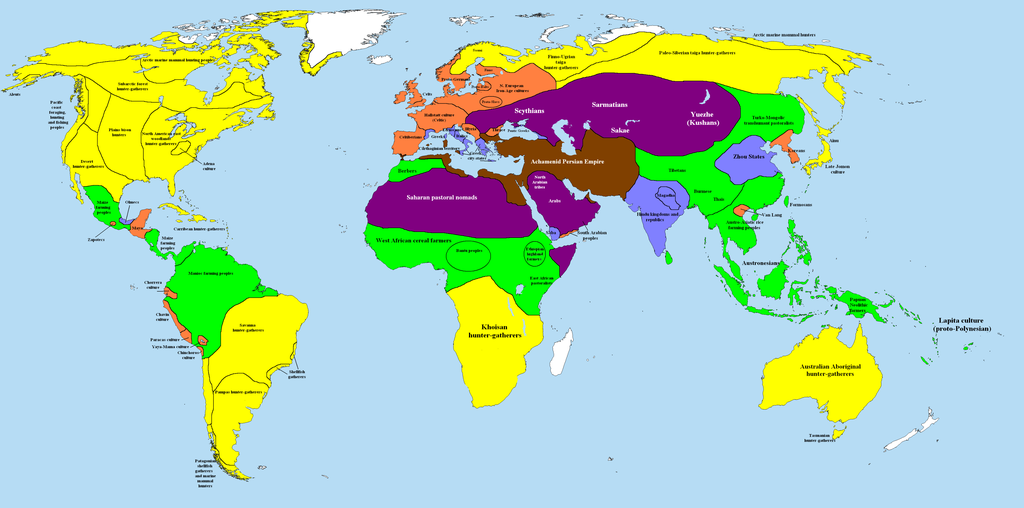
Map of the world in 500 BCE, about the time that the Book of Esther takes place. Persian Empire at the center with most places hunter gathers or subsistence farming.
"The whole enchilada (Megillah)."
From India to Nubia
(ט) וַיִּקָּרְא֣וּ סֹפְרֵֽי־הַמֶּ֣לֶךְ בָּֽעֵת־הַ֠הִ֠יא בַּחֹ֨דֶשׁ הַשְּׁלִישִׁ֜י הוּא־חֹ֣דֶשׁ סִיוָ֗ן בִּשְׁלוֹשָׁ֣ה וְעֶשְׂרִים֮ בּוֹ֒ וַיִּכָּתֵ֣ב כְּֽכׇל־אֲשֶׁר־צִוָּ֣ה מׇרְדֳּכַ֣י אֶל־הַיְּהוּדִ֡ים וְאֶ֣ל הָאֲחַשְׁדַּרְפְּנִֽים־וְהַפַּחוֹת֩ וְשָׂרֵ֨י הַמְּדִינ֜וֹת אֲשֶׁ֣ר ׀ מֵהֹ֣דּוּ וְעַד־כּ֗וּשׁ שֶׁ֣בַע וְעֶשְׂרִ֤ים וּמֵאָה֙ מְדִינָ֔ה מְדִינָ֤ה וּמְדִינָה֙ כִּכְתָבָ֔הּ וְעַ֥ם וָעָ֖ם כִּלְשֹׁנ֑וֹ וְאֶ֨ל־הַיְּהוּדִ֔ים כִּכְתָבָ֖ם וְכִלְשׁוֹנָֽם׃
(9) So the king’s scribes were summoned at that time, on the twenty-third day of the third month, that is, the month of Sivan; and letters were written, at Mordecai’s dictation, to the Jews and to the satraps, the governors and the officials of the one hundred and twenty-seven provinces from India to Nubia: to every province in its own script and to every people in its own language, and to the Jews in their own script and language.
According the Guinness World Book of Records, "By share of population, the largest empire was the Achaemenid Empire, better known as the Persian Empire, which accounted for approximately 49.4 million of the world’s 112.4 million people in around 480 BC – an astonishing 44%."
Unlike the Holocaust their was no large Jewish population across the ocean in America, the fate of almost the entire Jewish People rests upon King Ahasuerus (Xerxes) decrees.

"It's always darkest before the dawn." - Thomas Fuller
(יד) רַבִּי חִיָּא רַבָּה וְרַבִּי שִׁמְעוֹן בֶּן חֲלַפְתָּא הֲווֹן מְהַלְּכִין בַּהֲדָא בִּקְעָתָא דְּאַרְבֵּל, וַחֲזוֹן אֶת אַיֶּלֶת הַשַּׁחַר שֶׁבָּקְעָה אֶת הָאוֹרָה, אֲמַר לֵיהּ רַבִּי חִיָּא רַבָּה לְרַבִּי שִׁמְעוֹן בֶּן חֲלַפְתָּא כָּךְ הוּא גְּדֻלָּתָן שֶׁל יִשְׂרָאֵל בַּתְּחִלָּה קִימְעָא, כָּל מַה שֶּׁהוֹלֵךְ הוּא גָּדֵל וְרָבֶה וְהוֹלֵךְ, מַה טַּעַם (מיכה ז, ח): כִּי אֵשֵׁב בַּחשֶׁךְ יהוה אוֹר לִי. כָּךְ, בַּתְּחִלָּה וּמָרְדֳּכַי יוֹשֵׁב בְּשַׁעַר הַמֶּלֶךְ, וְאַחַר כָּךְ, וַיָּשָׁב מָרְדֳּכַי אֶל שַׁעַר הַמֶּלֶךְ וגו', וְאַחַר כָּךְ, וּמָרְדֳּכַי יָצָא מִלִּפְנֵי הַמֶּלֶךְ וגו', וְאַחַר כָּךְ, לַיְהוּדִים הָיְתָה אוֹרָה וְשִׂמְחָה וְשָׂשׂוֹן וִיקָר.
(14) Rabbi Ḥiya Raba and Rabbi Shimon ben Ḥalafta were walking in the valley of Arbel and they saw the breaking of the dawn’s light. Rabbi Ḥiya Raba said to Rabbi Shimon ben Ḥalafta: So is the greatness of Israel. First a little and then, as it proceeds, it continuously increases. What is the explanation? “Although I sit in darkness, the Lord is a light for me” (Micah 7:8). So initially “Mordekhai was sitting at the king’s gate…” (Esther 2:21) and afterwards, “And Mordekhai went forth from the presence of the king [in royal dress of blue and white wool, and with a great crown of gold]” (Esther 8:15), and afterwards, “For the Jews there was light and joy and jubilation and honor” (Esther 8:16).
Sound familiar?
(ז) וַיְהִי כְּאָמְרָם אֵלָיו יוֹם וָיוֹם (אסתר ג, ד), רַבִּי יוֹחָנָן בְּשֵׁם רַבִּי בִּנְיָמִין בַּר רַבִּי לֵוִי, בָּנֶיהָ שֶׁל רָחֵל נִסָּן שָׁוֶה וּגְדֻלָּתָן שָׁוָה. נִסָּן שָׁוֶה, הֲדָא הוּא דִכְתִיב (בראשית לט, י): וַיְהִי כְּדַבְּרָהּ אֶל יוֹסֵף יוֹם יוֹם, וְכָאן כְּתִיב: וַיְהִי כְּאָמְרָם אֵלָיו יוֹם וָיוֹם וְלֹא שָׁמַע אֲלֵיהֶם, וּלְהַלָּן כְּתִיב (בראשית לט, י): וְלֹא שָׁמַע אֵלֶיהָ לִשְׁכַּב אֶצְלָהּ. וּגְדֻלָּתָן שָׁוָה, הֲדָא הוּא דִכְתִיב (בראשית מא, מב): וַיָּסַר פַּרְעֹה אֶת טַבַּעְתּוֹ מֵעַל יָדוֹ וַיִּתֵּן אֹתָהּ עַל יַד יוֹסֵף וַיַּלְבֵּשׁ אֹתוֹ בִּגְדֵי שֵׁשׁ, וְכָאן כְּתִיב: וַיָּסַר הַמֶּלֶךְ אֶת טַבַּעְתּוֹ אֲשֶׁר הֶעֱבִיר מֵהָמָן וַיִּתְּנָהּ לְמָרְדֳּכָי. לְהַלָּן כְּתִיב (בראשית מא, מב): וַיַּרְכֵּב אֹתוֹ בְּמִרְכֶּבֶת הַמִּשְׁנֶה אֲשֶׁר לוֹ וַיִּקְרְאוּ לְפָנָיו אַבְרֵךְ, וְכָאן כְּתִיב: וְנָתוֹן הַלְּבוּשׁ וְהַסּוּס וְקָרְאוּ לְפָנָיו כָּכָה יֵעָשֶׂה לָאִישׁ אֲשֶׁר הַמֶּלֶךְ חָפֵץ בִּיקָרוֹ.
(7) “When they [the king’s servants] spoke to him [Mordekhai] daily and he did not heed them, they told Haman, to see whether Mordekhai’s words would prevail; for he had told to them that he was a Jew” (Esther 3:4). “When they spoke to him daily” – Rabbi Yoḥanan said in the name of Rabbi Binyamin bar Rabbi Levi: The children of Rachel, their miracles are equal and their ascent to greatness is equal. Their miracles are equal; that is what is written: “It was when she spoke to Joseph day after day” (Genesis 39:10). Here it written: “When they spoke to him daily and he did not heed them,” and there it is written: “And he did not heed her to lie with her, to be with her” (Genesis 39:10). And their ascent to greatness is equal; that is what is written: “Pharaoh removed his ring from his hand and he gave it to Joseph, and he garbed him in garments of linen” (Genesis 41:42). Here it is written: “The king removed the ring that he had taken from Haman, and he gave it to Mordekhai” (Esther 8:2). There it is written: “He had him ride in his second chariot, and they cried before him: ‘Avrekh’” (Genesis 41:43); here, it is written: “And let the garments and the horse be placed…and they will proclaim before him: So shall be done to the man whose honoring the king desires” (Esther 6:9).
As (44% of) the World Turns
(ט) וְהַמֶּלֶךְ קָם בַּחֲמָתוֹ מִמִּשְׁתֵּה הַיַּיִן אֶל גִּנַּת הַבִּיתָן (אסתר ז, ז), מֶה עָשָׂה מִיכָאֵל הַמַּלְאָךְ הִתְחִיל מְקַצֵּץ אֶת הַנְּטִיעוֹת לְפָנָיו, וְהוֹסִיף חֵמָה עַל חֲמָתוֹ, וְשָׁב אֶל מִשְׁתֵּה הַיַּיִן, וְהָמָן עָמַד לְבַקֵּשׁ עַל נַפְשׁוֹ, מֶה עָשָׂה מִיכָאֵל דְּחָפוֹ עַל אֶסְתֵּר, וְהָיְתָה מְצַעֶקֶת אֲדוֹנִי הַמֶּלֶךְ הֲרֵי הוּא כֹּבְשֵׁנִי לְפָנֶיךָ, וַיֹּאמֶר הַמֶּלֶךְ הֲגַם לִכְבּוֹשׁ אֶת הַמַּלְכָּה עִמִּי בַּבָּיִת. וְשָׁמַע הָמָן הַדָּבָר הַזֶּה וְנָפְלוּ פָנָיו. מֶה עָשָׂה אֵלִיָּהוּ זָכוּר לַטּוֹב, נִדְמָה לְחַרְבוֹנָה וְאָמַר לוֹ אֲדוֹנִי הַמֶּלֶךְ גַּם הִנֵּה הָעֵץ אֲשֶׁר עָשָׂה הָמָן לְמָרְדֳּכַי וגו'. דְּאָמַר רַבִּי פִּנְחָס צָרִיךְ לוֹמַר חַרְבוֹנָה זָכוּר לַטּוֹב. וְאָמַר רַב צָרִיךְ לוֹמַר אָרוּר הָמָן, אֲרוּרִים בָּנָיו, אֲרוּרָה זֶרֶשׁ אִשְׁתּוֹ, כְּדִכְתִיב (משלי י, ז): וְשֵׁם רְשָׁעִים יִרְקָב. מִיָּד צִוָּה הַמֶּלֶךְ לִתְלוֹתוֹ עַל הָעֵץ אֲשֶׁר הֵכִין לְמָרְדֳּכָי, וְעָלָיו אָמַר שְׁלֹמֹה בְּחָכְמָתוֹ (משלי י, ז יא, ח): צַדִּיק מִצָּרָה נֶחֱלָץ וַיָּבֹא רָשָׁע תַּחְתָּיו. שֶׁהִשְׁכִּים הָמָן לִתְלוֹת אֶת מָרְדֳּכַי וְנִתְלָה הוּא עַל הָעֵץ אֲשֶׁר הֵכִין לְמָרְדֳּכַי, וְנָתַן אֶת כָּל אֲשֶׁר לְהָמָן לְאֶסְתֵּר הַמַּלְכָּה, וְאֶסְתֵּר נָתְנָה לְמָרְדֳּכַי, הֲדָא הוּא דִכְתִיב: בַּיּוֹם הַהוּא נָתַן הַמֶּלֶךְ אֲחַשְׁוֵרוֹשׁ לְאֶסְתֵּר הַמַּלְכָּה אֶת בֵּית הָמָן צֹרֵר הַיְּהוּדִים וגו', וּכְתִיב (איוב ה, ה): אֲשֶׁר קְצִירוֹ רָעֵב יֹאכֵל וְאֶל מִצִּנִּים יִקָּחֵהוּ וְשָׁאַף צַמִּים חֵילָם. אֲשֶׁר קְצִירוֹ, זֶה הָמָן. רָעֵב יֹאכֵל, זֶה מָרְדֳּכַי וְאֶסְתֵּר. וְאֶל מִצִּנִּים יִקָּחֵהוּ, לֹא בְזַיִין וְלֹא בְצִנָּה אֶלָּא בִּתְפִלָּה וּבְתַחֲנוּנִים, כְּמָה דְאַתְּ אָמַר (תהלים צא, ד): צִנָּה וְסֹחֵרָה אֲמִתּוֹ, זוֹ הִיא הַתְּפִלָּה הַמְּגִנָּה עַל הַצָּרָה כַּצִּנָּה שֶׁמְּגִנָּה עַל הָאָדָם בַּמִּלְחָמָה, וּבִזְכוּת הַתְּפִלָּה שֶׁנִּתְכַּנָּה לַצִּנָּה יִקָּחֵהוּ לְהָמָן. וּמִנַּיִן שֶׁעָשׂוּ תְּפִלָּה, הֲדָא הוּא דִכְתִיב: שַׂק וָאֵפֶר יֻצַּע לָרַבִּים, וּמַה תַּקָּנָה לְשַׂק וָאֵפֶר בְּלֹא תְּפִלָּה. וְשָׁאַף צַמִּים חֵילָם, וּמִי דָחַק לְמָמוֹנוֹ שֶׁל הָמָן, מָרְדֳּכַי וְאֶסְתֵּר וְהַמְצֻמָּתִים לָהֶם.
(9) “The king rose in his fury from the wine banquet to the palace garden and Haman stood to plead for his life from Esther the queen, for he saw that the king has resolved to do him harm” (Esther 7:7). “The king rose in his fury from the wine banquet to the palace garden.” What did the angel Michael do? He began cutting the saplings before him, adding fury to his fury; he returned to the wine banquet and Haman stood up to plead for his life. What did Michael do? He pushed him [Haman] onto Esther, and she was crying ‘My lord, the king, here he is overpowering me before you!’ The king said: “Will he also overpower the queen with me in the house?” (Esther 7:8). Haman heard this statement and his face fell. What did Eliyahu, of blessed memory, do? He appeared as Ḥarvona and said to him [to the king]: ‘My lord the king, “indeed, here is the gibbet that Haman had made for Mordekhai…”’ (Esther 7:9). As Rabbi Pinḥas said: One must say ‘Ḥarvona, of blessed memory.’ And Rav said: One must say ‘cursed is Haman, cursed are his sons, cursed is Zeresh his wife, as it is written: “The name of the wicked will rot”’ (Proverbs 10:7). The king immediately commanded to hang him on the gibbet that he had prepared for Mordekhai, and about this, Solomon, in his wisdom, said: “A righteous person will be delivered from trouble and the wicked will come in his stead” (Proverbs 11:8). For Haman got up early to hang Mordekhai and was hanged himself on the gibbet that he prepared for Mordekhai, and [the king] gave everything that was Haman’s to Esther the queen, and Esther gave it to Mordekhai. This is what is written: “On that day King Aḥashverosh gave the house of Haman, adversary of the Jews, to Queen Esther…” (Esther 8:1), and it is written: “As for his harvest, the hungry will eat it and take it from shields [tzinim] and the bound [tzamim] will swallow their wealth” (Job 5:5). “As for his harvest,” that is Haman. “The hungry will eat it,” that is Mordekhai and Esther. “Take it from shields,” not with a weapon, and not with a shield, but with prayer and supplication, as you say: “His truth is a shield [tzina] and a buckler” (Psalms 91:4). That is prayer, which protects him from trouble like a shield protects a person in battle. By the merit of prayer, which is called a shield, he will take Haman. From where [is it known] that they engaged in prayer? That is what is written: “Sackcloth and ashes were worn by many” (Esther 4:3). What is the use of sackcloth and ashes without prayer? “And the bound will swallow their wealth.” Who overcame Haman’s wealth? Mordekhai and Esther and those bound to them.
From Sackcloth to Royal Robes
(א) וּמׇרְדֳּכַ֗י יָדַע֙ אֶת־כׇּל־אֲשֶׁ֣ר נַעֲשָׂ֔ה וַיִּקְרַ֤ע מׇרְדֳּכַי֙ אֶת־בְּגָדָ֔יו וַיִּלְבַּ֥שׁ שַׂ֖ק וָאֵ֑פֶר וַיֵּצֵא֙ בְּת֣וֹךְ הָעִ֔יר וַיִּזְעַ֛ק זְעָקָ֥ה גְדוֹלָ֖ה וּמָרָֽה׃
(1) When Mordecai learned all that had happened, Mordecai tore his clothes and put on sackcloth and ashes. He went through the city, crying out loudly and bitterly,
(טו) וּמׇרְדֳּכַ֞י יָצָ֣א ׀ מִלִּפְנֵ֣י הַמֶּ֗לֶךְ בִּלְב֤וּשׁ מַלְכוּת֙ תְּכֵ֣לֶת וָח֔וּר וַעֲטֶ֤רֶת זָהָב֙ גְּדוֹלָ֔ה וְתַכְרִ֥יךְ בּ֖וּץ וְאַרְגָּמָ֑ן וְהָעִ֣יר שׁוּשָׁ֔ן צָהֲלָ֖ה וְשָׂמֵֽחָה׃
(15) Mordecai left the king’s presence in royal robes of blue and white, with a magnificent crown of gold and a mantle of fine linen and purple wool. And the city of Shushan rang with joyous cries.
And they lived happy ever in honor.
(טז) לַיְּהוּדִ֕ים הָֽיְתָ֥ה אוֹרָ֖ה וְשִׂמְחָ֑ה וְשָׂשֹׂ֖ן וִיקָֽר׃
(16) The Jews enjoyed light and gladness, happiness and honor.
Because as the wise King Solomon said...
(ט) וְהַמֶּלֶךְ קָם בַּחֲמָתוֹ מִמִּשְׁתֵּה הַיַּיִן אֶל גִּנַּת הַבִּיתָן (אסתר ז, ז), מֶה עָשָׂה מִיכָאֵל הַמַּלְאָךְ הִתְחִיל מְקַצֵּץ אֶת הַנְּטִיעוֹת לְפָנָיו, וְהוֹסִיף חֵמָה עַל חֲמָתוֹ, וְשָׁב אֶל מִשְׁתֵּה הַיַּיִן, וְהָמָן עָמַד לְבַקֵּשׁ עַל נַפְשׁוֹ, מֶה עָשָׂה מִיכָאֵל דְּחָפוֹ עַל אֶסְתֵּר, וְהָיְתָה מְצַעֶקֶת אֲדוֹנִי הַמֶּלֶךְ הֲרֵי הוּא כֹּבְשֵׁנִי לְפָנֶיךָ, וַיֹּאמֶר הַמֶּלֶךְ הֲגַם לִכְבּוֹשׁ אֶת הַמַּלְכָּה עִמִּי בַּבָּיִת. וְשָׁמַע הָמָן הַדָּבָר הַזֶּה וְנָפְלוּ פָנָיו. מֶה עָשָׂה אֵלִיָּהוּ זָכוּר לַטּוֹב, נִדְמָה לְחַרְבוֹנָה וְאָמַר לוֹ אֲדוֹנִי הַמֶּלֶךְ גַּם הִנֵּה הָעֵץ אֲשֶׁר עָשָׂה הָמָן לְמָרְדֳּכַי וגו'. דְּאָמַר רַבִּי פִּנְחָס צָרִיךְ לוֹמַר חַרְבוֹנָה זָכוּר לַטּוֹב. וְאָמַר רַב צָרִיךְ לוֹמַר אָרוּר הָמָן, אֲרוּרִים בָּנָיו, אֲרוּרָה זֶרֶשׁ אִשְׁתּוֹ, כְּדִכְתִיב (משלי י, ז): וְשֵׁם רְשָׁעִים יִרְקָב. מִיָּד צִוָּה הַמֶּלֶךְ לִתְלוֹתוֹ עַל הָעֵץ אֲשֶׁר הֵכִין לְמָרְדֳּכָי, וְעָלָיו אָמַר שְׁלֹמֹה בְּחָכְמָתוֹ (משלי י, ז יא, ח): צַדִּיק מִצָּרָה נֶחֱלָץ וַיָּבֹא רָשָׁע תַּחְתָּיו. שֶׁהִשְׁכִּים הָמָן לִתְלוֹת אֶת מָרְדֳּכַי וְנִתְלָה הוּא עַל הָעֵץ אֲשֶׁר הֵכִין לְמָרְדֳּכַי, וְנָתַן אֶת כָּל אֲשֶׁר לְהָמָן לְאֶסְתֵּר הַמַּלְכָּה, וְאֶסְתֵּר נָתְנָה לְמָרְדֳּכַי, הֲדָא הוּא דִכְתִיב: בַּיּוֹם הַהוּא נָתַן הַמֶּלֶךְ אֲחַשְׁוֵרוֹשׁ לְאֶסְתֵּר הַמַּלְכָּה אֶת בֵּית הָמָן צֹרֵר הַיְּהוּדִים וגו', וּכְתִיב (איוב ה, ה): אֲשֶׁר קְצִירוֹ רָעֵב יֹאכֵל וְאֶל מִצִּנִּים יִקָּחֵהוּ וְשָׁאַף צַמִּים חֵילָם. אֲשֶׁר קְצִירוֹ, זֶה הָמָן. רָעֵב יֹאכֵל, זֶה מָרְדֳּכַי וְאֶסְתֵּר. וְאֶל מִצִּנִּים יִקָּחֵהוּ, לֹא בְזַיִין וְלֹא בְצִנָּה אֶלָּא בִּתְפִלָּה וּבְתַחֲנוּנִים, כְּמָה דְאַתְּ אָמַר (תהלים צא, ד): צִנָּה וְסֹחֵרָה אֲמִתּוֹ, זוֹ הִיא הַתְּפִלָּה הַמְּגִנָּה עַל הַצָּרָה כַּצִּנָּה שֶׁמְּגִנָּה עַל הָאָדָם בַּמִּלְחָמָה, וּבִזְכוּת הַתְּפִלָּה שֶׁנִּתְכַּנָּה לַצִּנָּה יִקָּחֵהוּ לְהָמָן. וּמִנַּיִן שֶׁעָשׂוּ תְּפִלָּה, הֲדָא הוּא דִכְתִיב: שַׂק וָאֵפֶר יֻצַּע לָרַבִּים, וּמַה תַּקָּנָה לְשַׂק וָאֵפֶר בְּלֹא תְּפִלָּה. וְשָׁאַף צַמִּים חֵילָם, וּמִי דָחַק לְמָמוֹנוֹ שֶׁל הָמָן, מָרְדֳּכַי וְאֶסְתֵּר וְהַמְצֻמָּתִים לָהֶם.
(9) “The king rose in his fury from the wine banquet to the palace garden and Haman stood to plead for his life from Esther the queen, for he saw that the king has resolved to do him harm” (Esther 7:7). “The king rose in his fury from the wine banquet to the palace garden.” What did the angel Michael do? He began cutting the saplings before him, adding fury to his fury; he returned to the wine banquet and Haman stood up to plead for his life. What did Michael do? He pushed him [Haman] onto Esther, and she was crying ‘My lord, the king, here he is overpowering me before you!’ The king said: “Will he also overpower the queen with me in the house?” (Esther 7:8). Haman heard this statement and his face fell. What did Eliyahu, of blessed memory, do? He appeared as Ḥarvona and said to him [to the king]: ‘My lord the king, “indeed, here is the gibbet that Haman had made for Mordekhai…”’ (Esther 7:9). As Rabbi Pinḥas said: One must say ‘Ḥarvona, of blessed memory.’ And Rav said: One must say ‘cursed is Haman, cursed are his sons, cursed is Zeresh his wife, as it is written: “The name of the wicked will rot”’ (Proverbs 10:7). The king immediately commanded to hang him on the gibbet that he had prepared for Mordekhai, and about this, Solomon, in his wisdom, said: “A righteous person will be delivered from trouble and the wicked will come in his stead” (Proverbs 11:8). For Haman got up early to hang Mordekhai and was hanged himself on the gibbet that he prepared for Mordekhai, and [the king] gave everything that was Haman’s to Esther the queen, and Esther gave it to Mordekhai. This is what is written: “On that day King Aḥashverosh gave the house of Haman, adversary of the Jews, to Queen Esther…” (Esther 8:1), and it is written: “As for his harvest, the hungry will eat it and take it from shields [tzinim] and the bound [tzamim] will swallow their wealth” (Job 5:5). “As for his harvest,” that is Haman. “The hungry will eat it,” that is Mordekhai and Esther. “Take it from shields,” not with a weapon, and not with a shield, but with prayer and supplication, as you say: “His truth is a shield [tzina] and a buckler” (Psalms 91:4). That is prayer, which protects him from trouble like a shield protects a person in battle. By the merit of prayer, which is called a shield, he will take Haman. From where [is it known] that they engaged in prayer? That is what is written: “Sackcloth and ashes were worn by many” (Esther 4:3). What is the use of sackcloth and ashes without prayer? “And the bound will swallow their wealth.” Who overcame Haman’s wealth? Mordekhai and Esther and those bound to them.