


Kabbala
Kabbala is Jewish mysticism: What is mysticism? Why Jewish?
How does esoteric wisdom differ from exoteric?
Tree of Life: the 10 Sefirot
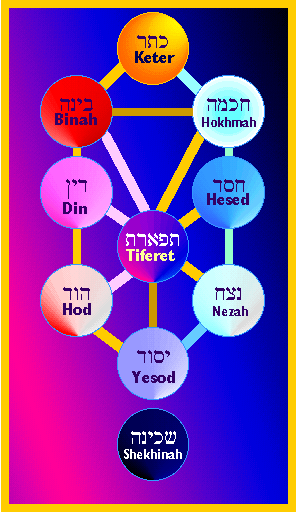
Chesed
(ג) כִּֽי־אָמַ֗רְתִּי
ע֭וֹלָם חֶ֣סֶד יִבָּנֶ֑ה
שָׁמַ֓יִם ׀ תָּכִ֖ן
אֱמוּנָתְךָ֣ בָהֶֽם׃
(3) I declare,
“Olam is built through chesed;
in the heavens You establish
Your faithfulness through them.”
(יד) לַמָּ֣ס מֵרֵעֵ֣הוּ חָ֑סֶד...׃
(14) A friend owes chesed to one who fails...
Hessed (literally kindness) refers to openness, generosity, kindness, and grace.
In other words, two approaches are contrasted here: that of gevura and that of hessed. The approach based on gevura, which sees the world as insignificant in relation to the divine, is too severe; it reveals only the basic parts and overlooks the fine points. With the approach of hessed, the view becomes more nuanced; the temporal is understood as part of eternity, and the meaning and value of the world, which now exists in harmony with, rather than in opposition to, the divine, is transformed.
היסוד הראשון, והוא האמצעי המיוחד לתקון המדות, היא החמלה. מדת החמלה הטבעה באדם מתחלת יצירתו והיא בו שרש האהבה והחסד והיושר והיא לבדה המביאה אותנו לעשות מעשים טובים שלא על מנת לקבל שכר, לא בדרך הטבע ולא למעלה מן הטבע, לא בעולם הזה ולא בעולם הבא. כי מדת החמלה היא שכר לעצמה, כי החומל כואב בכאב רעהו, ולא ישקוט עד אם יחבוש את שבר רעהו ומחץ מכתו ירפא.
The first foundation, the means specific for character improvement, is compassion. The trait of compassion was implanted in a man from the beginning of his creation, and it is the root of his love, his lovingkindness, and his uprightness. It is that alone which leads us to the doing of good not in order to receive reward, neither naturally or unnaturally, neither in this world or in the world to come. For the trait of compassion is reward in itself. For the compassionate one suffers in the suffering of his friend and is not at peace until his friend's break is bound and his wound is healed.
It’s where we belong and where, if we are lucky, we raise a family. Home is where we learn the poetry of everyday life, the choreography of ḥesed, the countless daily acts of reciprocity and kindness that constitute the language of love.