


(ו) אִ֥ישׁ אִישׁ֙ אֶל־כׇּל־שְׁאֵ֣ר בְּשָׂר֔וֹ לֹ֥א תִקְרְב֖וּ לְגַלּ֣וֹת עֶרְוָ֑ה אֲנִ֖י יהוה... (טז) עֶרְוַ֥ת אֵֽשֶׁת־אָחִ֖יךָ לֹ֣א תְגַלֵּ֑ה עֶרְוַ֥ת אָחִ֖יךָ הִֽוא׃ {ס}
(1)יהוה spoke to Moses, saying: (2) Speak to the Israelite people and say to them: I יהוה am your God. (3) You shall not copy the practices of the land of Egypt where you dwelt, or of the land of Canaan to which I am taking you; nor shall you follow their laws. (4) My rules alone shall you observe, and faithfully follow My laws: I יהוה am your God. (5) You shall keep My laws and My rules, by the pursuit of which human beings shall live: I am יהוה. (6) None of you men shall come near anyone of his own flesh to uncover nakedness: I am יהוה. (7) Your father’s nakedness, that is, the nakedness of your mother, you shall not uncover; she is your mother—you shall not uncover her nakedness. (8) Do not uncover the nakedness of your father’s wife; it is the nakedness of your father. (9) The nakedness of your sister—your father’s daughter or your mother’s, whether born into the household or outside—do not uncover their nakedness. (10) The nakedness of your son’s daughter, or of your daughter’s daughter—do not uncover their nakedness; for their nakedness is yours. (11) The nakedness of your father’s wife’s daughter, who was born into your father’s household—she is your sister; do not uncover her nakedness. (12) Do not uncover the nakedness of your father’s sister; she is your father’s flesh. (13) Do not uncover the nakedness of your mother’s sister; for she is your mother’s flesh. (14) Do not uncover the nakedness of your father’s brother: do not approach his wife; she is your aunt. (15) Do not uncover the nakedness of your daughter-in-law: she is your son’s wife; you shall not uncover her nakedness. (16) Do not uncover the nakedness of your brother’s wife; it is the nakedness of your brother. (17) Do not uncover the nakedness of a woman and her daughter; nor shall you take [into your household as a wife] her son’s daughter or her daughter’s daughter and uncover her nakedness: they are kindred; it is depravity. (18) Do not take [into your household as a wife] a woman as a rival to her sister and uncover her nakedness in the other’s lifetime. (19) Do not come near a woman during her menstrual period of impurity to uncover her nakedness. (20) Do not have carnal relations with your neighbor’s wife and defile yourself with her. (21) Do not allow any of your offspring to be offered up to Molech, and do not profane the name of your God: I am יהוה. (22) Do not lie with a male as one lies with a woman; it is an abhorrence. (23) Do not have carnal relations with any beast and defile yourself thereby. Likewise for a woman: she shall not lend herself to a beast to mate with it; it is perversion. (24) Do not defile yourselves in any of those ways, for it is by such that the nations that I am casting out before you defiled themselves. (25) Thus the land became defiled; and I called it to account for its iniquity, and the land spewed out its inhabitants. (26) But you must keep My laws and My rules, and you must not do any of those abhorrent things, neither the citizen nor the stranger who resides among you; (27) for all those abhorrent things were done by the people who were in the land before you, and the land became defiled. (28) So let not the land spew you out for defiling it, as it spewed out the nation that came before you. (29) All who do any of those abhorrent things—such persons shall be cut off from their people. (30) You shall keep My charge not to engage in any of the abhorrent practices that were carried on before you, and you shall not defile yourselves through them: I יהוה am your God.
ערות אשת אחיך. בפרשת כי ישבו אחים:
THOU SHALT NOT UNCOVER THE NAKEDNESS OF THY BROTHER’S WIFE. This is explained in the Torah portion If brethren dwell together (Deut. 25:5).
כִּֽי־יֵשְׁב֨וּ אַחִ֜ים יַחְדָּ֗ו וּמֵ֨ת אַחַ֤ד מֵהֶם֙ וּבֵ֣ן אֵֽין־ל֔וֹ לֹֽא־תִהְיֶ֧ה אֵֽשֶׁת־הַמֵּ֛ת הַח֖וּצָה לְאִ֣ישׁ זָ֑ר יְבָמָהּ֙ יָבֹ֣א עָלֶ֔יהָ וּלְקָחָ֥הּ ל֛וֹ לְאִשָּׁ֖ה וְיִבְּמָֽהּ׃
When brothers dwell together and one of them dies and leaves no offspring, the wife of the deceased shall not become that of another party, outside the family. Her husband’s brother shall unite with her: he shall take her as his wife and perform the levir’s duty.
ערות אשת אחיך. שיש לה[ם] בנים או שהוא [מ]עריות או מצרותיהן או מצרות צרותיהן:
עֶרְיַית אִתַּת אָחוּךְ לָא תִבְזֵי בְּחַיֵי אָחוּךְ וּבָתַר מוֹתֵיהּ אִין אִית לֵיהּ בְּנִין עִירְיְיתָא דְאָחוּךְ הוּא
The nakedness of thy brother's wife thou shalt not dishonour in the life-time of thy brother, or after his death, if he have children; for it is the nakedness of thy brother.
אֶלָּא, סָלְקָא דַּעְתָּךְ אָמֵינָא: תֵּיתֵי בְּ״מָה מָצִינוּ״ מֵאֵשֶׁת אָח. מָה אֵשֶׁת אָח מִיַּיבְּמָה — אַף אֲחוֹת אִשָּׁה תִּתְיַיבֵּם.
§ Rather, the suggestion that other women with whom relations are usually forbidden might be permitted for levirate marriage was based on a different argument: It might enter your mind to say: Let this claim be derived by the hermeneutical principle of: What do we find with regard to, which is a principle of inductive reasoning involving a comparison between cases that include similar details. In other words, the halakha of all other women with whom relations are forbidden can be derived from that of a brother’s wife: Just as a brother’s wife enters levirate marriage, so too, a wife’s sister should enter into levirate marriage.
(שמות כ,ז) ["זָכוֹר אֶת יוֹם הַשַּׁבָּת לְקַדְּשׁוֹ."] "זָכוֹר" (דברים ה,יא) וְ"שָׁמוֹר", שְׁנֵיהֶם בְּדִבּוּר אֶחָד נֶאֶמְרוּ. (שמות לא,יד) "מְחַלְלֶיהָ מוֹת יוּמָת", (במדבר כח,יט) "וּבְיוֹם הַשַּׁבָּת שְׁנֵי כְבָשִׂים בְּנֵי שָׁנָה תְּמִימִם", שְׁנֵיהֶם נֶאֶמְרוּ בְדִבּוּר אֶחָד. (ויקרא יח,טז) "עֶרְוַת אֵשֶׁת אָחִיךָ לֹא תְגַלֵּה", (דברים כה,ה) "יְבָמָהּ יָבֹא עָלֶיהָ", שְׁנֵיהֶם נֶאֶמְרוּ בְּדִבּוּר אֶחָד. (דברים כב,יא) "לֹא תִלְבַּשׁ שַׁעַטְנֵז", (דברים כב,יב) "גְּדִלִים תַּעֲשֶׂה לָּךְ", שְׁנֵיהֶם בְּדִבּוּר אֶחָד נֶאֶמְרוּ, מַה שֶּׁאֵי אֶפְשָׁר לְאָדָם לוֹמַר כֵּן, שֶׁנֶּאֱמַר: (תהלים סב,יב) "אַחַת דִּבֶּר אֱלֹהִים, שְׁתַּיִם זוּ שָׁמָעְתִּי, כִּי עֹז לֵאלֹהִים." וְאוֹמֵר: (ירמיה כג,כט) "הֲלוֹא כֹה דְבָרִי, כָּאֵשׁ! נְאֻם יהוה, וּכְפַטִּישׁ יְפֹצֵץ סָלַע."
(Ibid. 20:8) "Remember the Sabbath day to sanctify it": "Remember" and "Keep" (the Sabbath day to sanctify it [Devarim 5:12]) were both stated in one pronouncement. (Exodus 31:14) "Its profaners shall be put to death" and (Numbers 28:9) "And on the Sabbath day, (sacrifice) two yearling lambs" were both stated in one pronouncement (Leviticus 18:16) "the nakedness of your brother's wife" and (Devarim 25:5) "Her yavam (levir, i.e., her brother-in-law) shall come upon her" were both stated in the same pronouncement. (Ibid. 22:11) "You shall not wear sha'atnez, wool and linen together" and (Ibid. 12) "Fringes (involving sha'atnez) shall you make for yourself" were both stated in the same pronouncement — something beyond the powers of a human being to say. As it is written (Psalms 62:12) "One thing has G–d spoken, these two have I heard." (Jeremiah 23:29) "Is My word not like fire, says the L–rd (and like a hammer shattering rock!")
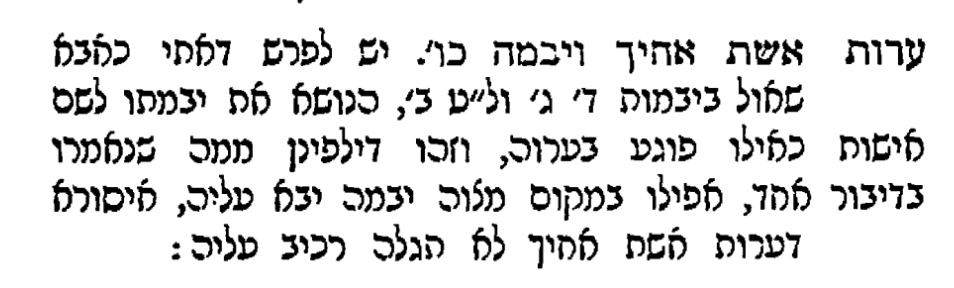
בָּרִאשׁוֹנָה, שֶׁהָיוּ מִתְכַּוְּונִין לְשֵׁם מִצְוָה — מִצְוַת יִבּוּם קוֹדֶמֶת לְמִצְוַת חֲלִיצָה. וְעַכְשָׁיו שֶׁאֵין מִתְכַּוְּונִין לְשֵׁם מִצְוָה, אָמְרוּ: מִצְוַת חֲלִיצָה קוֹדֶמֶת לְמִצְוַת יִבּוּם. אָמַר רָמֵי בַּר חָמָא אָמַר רַבִּי יִצְחָק: חָזְרוּ לוֹמַר מִצְוַת יִבּוּם קוֹדֶמֶת לְמִצְוַת חֲלִיצָה. אֲמַר לֵיהּ רַב נַחְמָן בַּר יִצְחָק: אִכַּשּׁוּר דָּרֵי? מֵעִיקָּרָא סָבְרִי לַהּ כְּאַבָּא שָׁאוּל, וּלְבַסּוֹף סָבְרִי לַהּ כְּרַבָּנַן. דְּתַנְיָא, אַבָּא שָׁאוּל אוֹמֵר: הַכּוֹנֵס אֶת יְבִמְתּוֹ לְשֵׁם נוֹי, וּלְשׁוּם אִישׁוּת, וּלְשׁוּם דָּבָר אַחֵר — כְּאִילּוּ פּוֹגֵעַ בְּעֶרְוָה. וְקָרוֹב אֲנִי בְּעֵינַי לִהְיוֹת הַוָּלָד מַמְזֵר. וַחֲכָמִים אוֹמְרִים: ״יְבָמָהּ יָבֹא עָלֶיהָ״, מִכׇּל מָקוֹם....
The Gemara paraphrases the mishna from tractate Bekhorot: Initially, whenyevaminwould have intent for the sake of fulfilling the mitzva of consummating the levirate marriage, the mitzva of consummating the levirate marriage took precedence over the mitzva of performing ḥalitza. And now that they do not have intent for the sake of fulfilling the mitzva, the Sages say: The mitzva of performing ḥalitza takes precedence over the mitzva of consummating the levirate marriage.Rami bar Ḥama said that Rabbi Yitzḥak said: In later generations they went back to once again saying that the mitzva of consummating the levirate marriage takes precedence over the mitzva of performing ḥalitza. Rav Naḥman bar Yitzḥak said to him in wonderment: Could it be that the later generations improved their spiritual level and now intend to consummate the levirate marriage solely for sake of fulfilling the mitzva? The Gemara explains that this does not mean that the later generations improved themselves; rather, initially they held in accordance with the opinion of Abba Shaul, and so the mitzva of performing ḥalitza took precedence, and in the end they held in accordance with the opinion of the Rabbis, and so the mitzva of consummating the levirate marriage took precedence. As it is taught in a baraita: Abba Shaul says that one who consummates a levirate marriage with his yevama for the sake of her beauty, or for the sake of marital relations, or for the sake of another matter, e.g., he wishes to inherit her husband’s estate, it is considered as though he encountered a forbidden relation, and I am inclined to view the offspring born from such a union as a mamzer. Since the prohibition against engaging in relations with one’s brother’s wife is overridden only for the sake of fulfilling the mitzva of consummating the levirate marriage, when one does not have the intention to fulfill that mitzva, the baseline prohibition applies, and so any offspring from the union will be mamzerim. The Rabbis say: The Torah states: “Her brother-in-law will have intercourse with her” (Deuteronomy 25:5), which indicates that he should do so in any case, even if his intentions are not solely for the sake of fulfilling the mitzva.
...כְּנָסָהּ — הֲרֵי הִיא כְּאִשְׁתּוֹ לְכׇל דָּבָר....
כְּנָסָהּ הֲרֵי הִיא כּוּ׳. לְמַאי הִלְכְתָא? אָמַר רַבִּי יוֹסֵי בַּר חֲנִינָא: לוֹמַר שֶׁמְּגָרְשָׁה בְּגֵט וּמַחְזִירָהּ. מְגָרְשָׁה בְּגֵט, פְּשִׁיטָא? סָלְקָא דַּעְתָּךְ אָמֵינָא, הוֹאִיל וּכְתִיב: ״וּלְקָחָהּ לוֹ לְאִשָּׁה וְיִבְּמָהּ״ — אָמַר רַחֲמָנָא: וַעֲדַיִין יִבּוּמֵי הָרִאשׁוֹן עָלֶיהָ, בַּחֲלִיצָה — אִין, בְּגֵט — לָא, קָא מַשְׁמַע לַן. מַחְזִירָהּ. פְּשִׁיטָא? סָלְקָא דַּעְתָּךְ אָמֵינָא, מִצְוָה דְּרַמְיָא רַחֲמָנָא עֲלֵיהּ — עַבְדַּהּ, הַשְׁתָּא תֵּיקוּם עֲלֵיהּ בְּאִיסּוּר אֵשֶׁת אָח, קָא מַשְׁמַע לַן. וְאֵימָא הָכִי נָמֵי? אָמַר קְרָא: ״וּלְקָחָהּ לוֹ לְאִשָּׁה״, כֵּיוָן שֶׁלְּקָחָהּ — הֲרֵי הִיא כְּאִשְׁתּוֹ לְכׇל דָּבָר....
If she died, what should be done with the money assured to her in her marriage contract by her deceased husband and with her property that enters and leaves the marriage with her, in which a husband only ever has a usufructuary interest? Beit Shammai say: The husband’s heirs, i.e., the yavam, who stands to inherit from the husband when he consummates the levirate marriage, should divide up the property together with her father’s heirs, i.e., the woman’s family. And Beit Hillel say: The property retains its previous ownership status. Therefore, money assured to her in her marriage contract remains in the possession of the husband’s heirs. Since it was to be paid from the husband’s own property, the money is retained by his estate and passes to his heirs. And her property that enters and leaves the marriage with her remains in the possession of the father’s heirs. Since those properties belonged to her, upon her death they are inherited by her father or his heirs. If the yavamconsummated the levirate marriage with her, then her legal status is that of his wife in every sense, and therefore the yavam has the same rights to her property as in a regular marriage. And the only exception to this is that her marriage contract will still be payable from the property of her first husband and not from the property of the yavam.
הַכּוֹנֵס אֶת יְבִמְתּוֹ וְגֵרְשָׁהּ אִם רָצָה לְהַחֲזִיר יַחֲזִיר מִפְּנֵי שֶׁהִיא אִשְׁתּוֹ לְכָל דָּבָר וְלֹא נִשְׁאַר עָלֶיהָ שֵׁם אִסּוּר מִפְּנֵי אָחִיו כְּלָל לֹא מִדִּבְרֵי תּוֹרָה וְלֹא מִדִּבְרֵי סוֹפְרִים:
When a man marries his yevamah and then divorces her, he may remarry her if he so desires. She is considered to be his wife with regard to all matters. There remains no trace of the prohibition [that existed when she was] his brother's [wife], neither from Scriptural law nor from Rabbinic law.
מלמד שמגרשה בגט ומחזירה - בפרק החולץ (לקמן יבמות דף לט.) אמרינן דאיצטריך דס"ד מצוה דרמא רחמנא עליה עבדה השתא תיקום עליה באיסור אשת אח ותימה דמשמע דלביאה שניה לא צריך קרא להתיר ואמאי והא מצוה דרמא רחמנא עליה עבדה מביאה ראשונה דהא ביאה שניה לא דחיא חייבי לאוין כדאמר בפרק שני (לקמן יבמות כ: ושם) וי"ל דביאה שניה לא צריכא קרא דסברא הוא דלא אמר רחמנא יבא עליה לגרשה אחר ביאה ראשונה ומ"מ ביאה שניה לא דחיא חייבי לאוין דרשות היא וליכא עשה אלא בביאה ראשונה:
אִיתְּמַר: הַחוֹלֵץ לִיבִמְתּוֹ וְחָזַר וְקִדְּשָׁהּ, אָמַר רֵישׁ לָקִישׁ: הוּא — אֵין חַיָּיב עַל הַחֲלוּצָה כָּרֵת, וְהָאַחִין — חַיָּיבִין עַל הַחֲלוּצָה כָּרֵת. עַל הַצָּרָה, בֵּין הוּא וּבֵין הָאַחִים — חַיָּיבִין עַל הַצָּרָה כָּרֵת. וְרַבִּי יוֹחָנָן אָמַר: בֵּין הוּא וּבֵין הָאַחִין אֵינָן חַיָּיבִין לֹא עַל הַחֲלוּצָה כָּרֵת, וְלֹא עַל הַצָּרָה כָּרֵת. מַאי טַעְמָא דְּרֵישׁ לָקִישׁ? אָמַר קְרָא: ״אֲשֶׁר לֹא יִבְנֶה״, כֵּיוָן שֶׁלֹּא בָּנָה — שׁוּב לֹא יִבְנֶה. אִיהוּ הוּא דְּקָאֵי בְּ״לֹא יִבְנֶה״, אֲבָל אֶחָיו — כִּדְקָיְימִי קָיְימִי. וַעֲלֵהּ דִּידַהּ, הוּא דְּקָאֵי בְּ״לֹא יִבְנֶה״, הָא צָרָה — כִּדְקָיְימָא קָיְימָא. וְרַבִּי יוֹחָנָן: מִי אִיכָּא מִידֵּי דְּמֵעִיקָּרָא אִי בָּעֵי הַאי — חָלֵיץ, וְאִי בָּעֵי הַאי — חָלֵיץ, וְאִי בָּעֵי — לְהַאי חָלֵיץ, וְאִי בָּעֵי — לְהַאי חָלֵיץ, וְהַשְׁתָּא קָאֵי עֲלַהּ בְּכָרֵת? אֶלָּא, אִיהוּ שְׁלִיחוּתָא דְאַחִים קָעָבֵיד, אִיהִי שְׁלִיחוּתָא דְצָרָה קָעָבְדָה....
The Gemara discusses the dispute alluded to in the previous paragraph. It was stated: With regard to one who performs ḥalitza with his yevama and went back and betrothed her, Reish Lakish said: The brother who earlier performed ḥalitzais not liable to receive karet for returning to the yevama who performed ḥalitza [ḥalutza]. She is no longer forbidden as a brother’s wife, although she is forbidden by a regular prohibition. And the brothers who did not actually perform the ḥalitzaare liable to receive karet for having relations with a ḥalutza. In their case, the woman retains her status as a forbidden brother’s wife even after the ḥalitza. With regard to the rival wife of the ḥalutza, although she too is released from the levirate bond, since the act of ḥalitza itself was not performed with her, both the brother who performed the ḥalitzaand the other brothers are liable to receive karet for having relations with the rival wife, as she retains her forbidden status as a brother’s wife. And Rabbi Yoḥanan said: Neither he nor the other brothers are liable to receive karet, neither for the ḥalutza nor for having relations with the rival wife. The Gemara explains: What is the rationale of Reish Lakish? The verse states with regard to one who performs ḥalitza with his yevama: “Who does not build up his brother’s house” (Deuteronomy 25:9), which teaches that since he did not build his brother’s house by entering into levirate marriage, opting instead for ḥalitza, he shall never build it again. This statement is understood not only as a negative description of events, but also as a prohibition against marrying this woman at any point in the future. However, it is the man who performed the act of ḥalitzawho stands liable to receive punishment for violating this prohibition of: Does not build up, i.e., the prohibition against marrying his ḥalutza. For him the prohibition involving karet has been replaced by the regular prohibition of: Who does not build up his brother’s house. However, with regard to his brothers, where they stood before, they stand now. In other words, just as before the mitzva of levirate marriage applied to them this woman was forbidden to them as a brother’s wife, once the obligation of levirate marriage has been removed they remain bound by the same prohibition. Consequently, she is forbidden to the brothers on pain of karet. And furthermore, only with regard to her, the ḥalutza, does he stand liable for: Does not build up, but as for the rival wife, who did not perform ḥalitza, where all the brothers stood before, they stand now. Just as before her rival wife performed ḥalitza she was forbidden on pain of karet, the same applies after the ḥalitza, both for the man who performed ḥalitza and his brothers. And Rabbi Yoḥanan claims: Is there anything of this kind in halakha? After all, at the outset, before the ḥalitza, if this brother wanted he could perform ḥalitza, and if that brother wanted he could perform ḥalitza, and if he wanted he could perform ḥalitza with this woman and if he wanted he could perform ḥalitza with that woman. All the deceased brother’s wives were included in the levirate obligation of marriage or ḥalitza, and therefore the prohibition proscribing a brother’s wife was negated for all of them at that time. And now, after the ḥalitza, they stand to incur karet for having relations with her? How can the prohibition proscribing a brother’s wife return after it was nullified by the death of the childless brother? Rather, he who performs ḥalitzaperforms the agency of the other brothers, and therefore he also releases her from the levirate bond of his brothers. Similarly, she who performs ḥalitzaperforms the agency of the rival wife, as the ḥalitza of one wife serves to release the other one as well. Consequently, it is as though all of the brothers released all of the wives, and there is no longer any prohibition that incurs karet.
איהו הוא דקאי בלא יבנה - אי לא הוה כתיב לא יבנה הוה אמינא דאפילו הוא על החלוצה בכרת והשתא אייתר לא יבנה לנתקה מכרת ללאו אבל אחין וצרה כדקיימי קיימי...
(א) שנמנע החולץ ליבמתו שלא יבא עליה ולא ישאנה אחרי הפרדה ממנו בחליצה, ואין הענין שיחזור עליה איסור אשת אח כיון שעברה מהם מצות היבום, שאם כן יהיה מחוייב עליה כרת כחיוב אשת אח שלא במקום יבום, אבל צוה יתעלה באשת אח שאין לו בנים מצות יבום או מצות חליצה וגזר בהם שאם יעשו החליצה לא יזדווגו עוד והוא מחייבי הלאוין, והוא אמר ככה יעשה לאיש אשר לא יבנה את בית אחיו, ובא הפירוש מבעלי הקבלה כיון שלא בנה שוב לא יבנה...
הַחוֹלֵץ לִיבִמְתּוֹ וְנִמְצֵאת מְעוּבֶּרֶת וְיָלְדָה, בִּזְמַן שֶׁהַוָּלָד שֶׁל קַיָּימָא — הוּא מוּתָּר בִּקְרוֹבוֹתֶיהָ, וְהִיא מוּתֶּרֶת בִּקְרוֹבָיו, וְלֹא פְּסָלָהּ מִן הַכְּהוּנָּה. אֵין הַוָּלָד שֶׁל קַיָּימָא — הוּא אָסוּר בִּקְרוֹבוֹתֶיהָ, וְהִיא אֲסוּרָה בִּקְרוֹבָיו, וּפְסָלָהּ מִן הַכְּהוּנָּה. הַכּוֹנֵס אֶת יְבִמְתּוֹ וְנִמְצֵאת מְעוּבֶּרֶת וְיָלְדָה, בִּזְמַן שֶׁהַוָּלָד שֶׁל קַיָּימָא — יוֹצִיא, וְחַיָּיבִין בְּקׇרְבָּן. וְאִם אֵין וָלָד שֶׁל קַיָּימָא — יְקַיֵּים...
גְּמָ׳ אִיתְּמַר: הַחוֹלֵץ לִמְעוּבֶּרֶת וְהִפִּילָה, רַבִּי יוֹחָנָן אָמַר: אֵינָהּ צְרִיכָה חֲלִיצָה מִן הָאַחִין. רֵישׁ לָקִישׁ אָמַר: צְרִיכָה חֲלִיצָה מִן הָאַחִין. רַבִּי יוֹחָנָן אָמַר: אֵינָהּ צְרִיכָה חֲלִיצָה מִן הָאַחִין, חֲלִיצַת מְעוּבֶּרֶת — שְׁמָהּ חֲלִיצָה, וּבִיאַת מְעוּבֶּרֶת — שְׁמָהּ בִּיאָה. וְרֵישׁ לָקִישׁ אָמַר: צְרִיכָה חֲלִיצָה מִן הָאַחִין, חֲלִיצַת מְעוּבֶּרֶת — לֹא שְׁמָהּ חֲלִיצָה, וּבִיאַת מְעוּבֶּרֶת — לֹא שְׁמָהּ בִּיאָה....
MISHNA: When a man who has a brother dies childless, his widow [yevama] and one of his brothers [yavam] may perform a ritual through which she is freed of her levirate bonds [ḥalitza]. It is then considered, with regard to forbidden relationships, as though they had been married and divorced. Therefore, he is forbidden to her relatives, and she to his. However, with regard to one who performs ḥalitza with his yevama and then she is found to have been pregnant at the time of the ḥalitzaand she gave birth, in the event that the offspring is viable, the deceased husband has been survived by offspring and so there was never any levirate bond; consequently, the ḥalitza that was performed was entirely unnecessary and a meaningless act. As such, he remains permitted to her relatives and she remains permitted to his relatives. Furthermore, since the ḥalitza was meaningless, she is not afforded the status of a ḥalutza, i.e., a yevama who performed ḥalitza, a status akin to that of a divorcée. Therefore, the ḥalitzadoes not disqualify her from marrying into the priesthood.
אלא לדידך אמאי פסלה מן הכהונה... וא"ת ולריש לקיש תקשי סיפא דמתניתין דקתני ואם אין הולד של קיימא יקיים ומשמע ופטורין מן הקרבן ואי ס"ד ביאת מעוברת לא שמה ביאה אמאי פטורין מן הקרבן אשת אח שלא במקום מצוה היא. לאו קושיא היא דאעפ"י שאין שמה ביאה לפטרה דרחמנא אמר עיין עליו מכל מקום כיון שהפילה והוזקקה לו משעה ראשונה לא הויא עליה כאשת אח שלא במקום מצוה דלא מצינו יבמה שאסורה בשעת נפילה באיסור אשת אח ולאחר כן תתיבם אלא עיין עליו בעיונא בעלמא אמר רחמנא לומר שלא תחלוץ ולא תתיבם ולא תנשא עד שנדע מה יהא בסופה...
כְּתִיב מַצּוֹת תֵּאָכֵל. לְפִי שֶׁהָֽיְתָה בִּכְלַל הֵיתֵר וְנֶאֶסְרָה וְחָֽזְרָה וְהוּתְּרָה. יָכוֹל תַּחֲזוֹר לְהֵיתֵירָהּ הָרִאשׁוֹן. תַּלמוּד לוֹמַר מַצּוֹת תֵּאָכֵל. מִצְוָה. כְּיוֹצֵא בוֹ יְבָמָהּ יָבוֹא עָלֶיהָ. מִצְוָה. לְפִי שֶׁהָֽיְתָה בִּכְלַל הֵיתֵר וְנֶאֶסְרָה וְחָֽזְרָה וְהוּתְּרָה. יָכוֹל תַּחֲזוֹר לְהֵיתֵירָהּ הָרִאשׁוֹן. תַּלְמוּד לוֹמַר יְבָמָהּ יָבוֹא עָלֶיהָ. מִצְוָה...
רִבִּי הוּנָא פָּתַר מַתְנִיתָא. מַצּוֹת תֵּאָכֵל. מִצְוָה. לְפִי שֶׁהָֽיְתָה בִּכְלַל הֵיתֵירָה עַד שֶׁלֹּא הִקְדִּישָׁהּ. רוֹצֶה לוֹכַל חָמֵץ אוֹכֵל. מַצָּה אוֹכֵל. תַּלְמוּד לוֹמַר מַצּוֹת יֵאָכֵל. מִצְוָה. כְּיוֹצֵא בוֹ יְבָמָהּ יָבוֹא עָלֶיהָ. מִצְוָה. לְפִי שֶׁהָֽיְתָה בִּכְלַל הֵיתֵר עַד שֶׁלֹּא נִישֵּׂאת לְאָחִיו. רָצָה לִכְנוֹס לְשֵׁם תּוֹאָר כּוֹנֵס. לְשֵׁם מָמוֹן כּוֹנֵס. נִישֵּׂאת לְאָחִיו וְנֶאֶסְרָה. מֵת אָחִיו בְּלֹא בָנִים חָֽזְרָה וְהוּתְּרָה. יָכוֹל תַּחֲזוֹר לְהֵיתֵירָהּ הָרִאשׁוֹן. רָצָה לִכְנוֹס לְשֵׁם תּוֹאָר כּוֹנֵס. לְשֵׁם מָמוֹן כּוֹנֵס. תַּלְמוּד לוֹמַר יְבָמָהּ יָבוֹא עָלֶיהָ. מִצְוָה
אַתְיָא דְרִבִּי חוּנָא כְּאַבָּא שָׁאוּל. דְּתַנָּא אַבָּא שָׁאוּל אוֹמֵר. הַכּוֹנֵס אֶת יְבִימְתּוֹ לְשׁוּם נוֹי אוֹ לְשׁוּם דְּבָרִים אֲחֵרִים הֲרֵי זֶה בְּעִילַת זְנוּת וְקָרוֹב לִהְיוֹת הַװְלָד מַמְזֵר. מַה אַבָּא שָׁאוּל כְּרִבִּי עֲקִיבָה. דְּרִבִּי עֲקִיבָה אָמַר. יֵשׁ מַמְזֵר בִיבָמָה. מַה דְאָמַר רִבִּי עֲקִיבָה בִּיבָמָה שֶׁזִּינָת. מַה דְאָמַר אַבָּא שָׁאוּל בִּיבִמְתּוֹ.
HALAKHAH: “Fifteen [categories of] women free their co-wives”, etc. It is written “unleavened it must be eaten”. Since it was permitted and then forbidden, when it became permitted again should one think it returned to its prior permission? The verse states “unleavened it should be eaten” as commandment. Similarly, “her levir shall come upon her” as a commandment. Since she was permitted and then forbidden, when she became permitted again should one think she returned to her prior permission? The verse states “her levir shall come upon her” as commandment. Rebbi Yose explains the baraita: “Unleavened it must be eaten”. Since it was permitted before it was dedicated, if one wants to eat it, he eats, not to eat, he does not eat. When he dedicated it became forbidden. When the fistful was brought it became permitted again; should one think it returned to its prior permission? If he wants to eat it, he eats, not to eat, he does not eat? The verse states “unleavened it must be eaten” as commandment. Similarly, “her levir shall come upon her” as a commandment. Since she was permitted before she was married to his brother, if he wanted to bring her into his house, he could bring her, not to bring her into his house, he would not bring her. When she was married to his brother she became forbidden. When his brother died childless she became permitted again. Should one think she returned to her prior permission, if he wanted to bring her into his house, he could bring her, not to bring her into his house, he would not bring her? The verse states “her levir shall come upon her” as commandment. Rebbi Huna explains the baraita: “Unleavened it must be eaten”. Since it was permitted before it was dedicated, if one wants to eat it leavened, he eats it, unleavened, he eats it. The verse states “unleavened it should be eaten” as commandment. Similarly, “her brother-in-law shall come upon her” as commandment. Since she was permitted before she was married to his brother, if he wanted to bring her into his house because of her shapeliness, he could bring her, because of her money, he could bring her. When she was married to his brother she became forbidden. When his brother died childless she became permitted again. Should one think she returned to her prior permission, if he wanted to bring her into his house because of her shapeliness, he could bring her, because of her money, he could bring her? The verse states “her levir shall come upon her” as commandment. It turns out that Rebbi Ḥuna follows Abba Shaul, as we have stated: “Abba Shaul says, one who brings his sister-in-law into his house because of beauty or another reason commits intercourse of prostitution and the child is close to be a bastard.”
(י) הבא על יבמתו לשם נוי לשם נכסים רואין אותו כאילו פגע בערוה וקרוב הולד להיות ממזר...
ובכי"ע: אבא שאול אומ' הבא על יבמתו לשום נוי ולשום נכסים הרי זו בעילת זנות וכו'. ובירושלמי פ"א ה"א, ב' רע"ב: דתנא אבא שאול אומר הכונס את יבמתו לשום נוי, או לשום דברים אחרים, הרי זה בעילת זנות וכו'. ובירושלמי "בעילת זנות" היא בדווקא, שהרי רצו לומר שם שאבא שאול כר' עקיבא, דאמר יש ממזר מיבמה, והירושלמי סבר מתחילה שלאבא שאול אם בא עליה שלא לשם מצוה הרי הוא כזר אצלה, וכאילו היא יבמה לשוק ביחס לביאה שלא לשם מצוה, והיא בעילת זנות. אבל לפי הגירסא שלנו וד ("פוגע בערוה"), הרי סתם ערוה היא מחייבי כריתות. ובבבלי ל"ט ב': דתניא אבא שאול אומר הכונס את יבמתו לשם נוי, ולשום אישות, ולשום דבר אחר, כאילו פוגע בערוה, וקרוב אני בעיני להיות הולד ממזר...