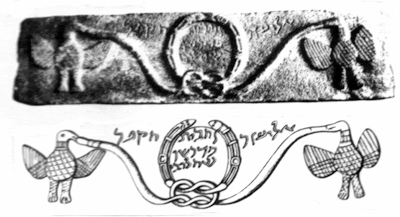
(כא) רַבִּי אֶלְעָזָר הַקַּפָּר אוֹמֵר, הַקִּנְאָה וְהַתַּאֲוָה וְהַכָּבוֹד, מוֹצִיאִין אֶת הָאָדָם מִן הָעוֹלָם:
(כב) הוּא הָיָה אוֹמֵר, הַיִּלּוֹדִים לָמוּת, וְהַמֵּתִים לְהֵחָיוֹת, וְהַחַיִּים לִדּוֹן. לֵידַע לְהוֹדִיעַ וּלְהִוָּדַע שֶׁהוּא אֵל, הוּא הַיּוֹצֵר, הוּא הַבּוֹרֵא, הוּא הַמֵּבִין, הוּא הַדַּיָּן, הוּא עֵד, הוּא בַעַל דִּין, וְהוּא עָתִיד לָדוּן. בָּרוּךְ הוּא, שֶׁאֵין לְפָנָיו לֹא עַוְלָה, וְלֹא שִׁכְחָה, וְלֹא מַשּׂוֹא פָנִים, וְלֹא מִקַּח שֹׁחַד, שֶׁהַכֹּל שֶׁלּוֹ. וְדַע שֶׁהַכֹּל לְפִי הַחֶשְׁבּוֹן. וְאַל יַבְטִיחֲךָ יִצְרְךָ שֶׁהַשְּׁאוֹל בֵּית מָנוֹס לְךָ, שֶׁעַל כָּרְחֲךָ אַתָּה נוֹצָר, וְעַל כָּרְחֲךָ אַתָּה נוֹלָד, וְעַל כָּרְחֲךָ אַתָּה חַי, וְעַל כָּרְחֲךָ אַתָּה מֵת, וְעַל כָּרְחֲךָ אַתָּה עָתִיד לִתֵּן דִּין וְחֶשְׁבּוֹן לִפְנֵי מֶלֶךְ מַלְכֵי הַמְּלָכִים הַקָּדוֹשׁ בָּרוּךְ הוּא:
(1) Ben Zoma said: Who is wise? He who learns from every man, as it is said: “From all who taught me have I gained understanding” (Psalms 119:99). Who is mighty? He who subdues his [evil] inclination, as it is said: “He that is slow to anger is better than the mighty; and he that rules his spirit than he that takes a city” (Proverbs 16:32). Who is rich? He who rejoices in his lot, as it is said: “You shall enjoy the fruit of your labors, you shall be happy and you shall prosper” (Psalms 128:2) “You shall be happy” in this world, “and you shall prosper” in the world to come. Who is he that is honored? He who honors his fellow human beings as it is said: “For I honor those that honor Me, but those who spurn Me shall be dishonored” (I Samuel 2:30).
(2) Ben Azzai said: Be quick in performing a minor commandment as in the case of a major one, and flee from transgression; For one commandment leads to another commandment, and transgression leads to another transgression; For the reward for performing a commandment is another commandment and the reward for committing a transgression is a transgression.
(3) He used to say: do not despise any man, and do not discriminate against anything, for there is no man that has not his hour, and there is no thing that has not its place.
(4) Rabbi Levitas a man of Yavneh said: be exceeding humble spirit, for the end of man is the worm. Rabbi Yohanan ben Berokah said: whoever profanes the name of heaven in secret, he shall be punished in the open. Unwittingly or wittingly, it is all one in profaning the name.
(5) Rabbi Ishmael his son said: He who learns in order to teach, it is granted to him to study and to teach; But he who learns in order to practice, it is granted to him to learn and to teach and to practice. Rabbi Zadok said: do not make them a crown for self-exaltation, nor a spade with which to dig. So too Hillel used to say, “And he that puts the crown to his own use shall perish.” Thus you have learned, anyone who derives worldly benefit from the words of the Torah, removes his life from the world.
(6) Rabbi Yose said: whoever honors the Torah is himself honored by others, and whoever dishonors the Torah is himself dishonored by others.
(7) Rabbi Ishmael his son said: he who refrains himself from judgment, rids himself of enmity, robbery and false swearing; But he whose heart is presumptuous in giving a judicial decision, is foolish, wicked and arrogant.
(8) He used to say: judge not alone, for none may judge alone save one. And say not “accept my view”, for they are free but not you.
(9) Rabbi Jonathan said: whoever fulfills the Torah out of a state of poverty, his end will be to fulfill it out of a state of wealth; And whoever discards the Torah out of a state of wealth, his end will be to discard it out of a state of poverty.
(10) Rabbi Meir said: Engage but little in business, and busy yourself with the Torah. Be of humble spirit before all men. If you have neglected the Torah, you shall have many who bring you to neglect it, but if you have labored at the study of Torah, there is much reward to give unto you
(11) Rabbi Eliezer ben Jacob said: he who performs one commandment acquires for himself one advocate, and he who commits one transgression acquires for himself one accuser. Repentance and good deeds are a shield against punishment. Rabbi Yochanan Hasandlar said: every assembly which is for the sake of heaven, will in the end endure; and every assembly which is not for the sake of heaven, will not endure in the end.
(12) Rabbi Elazar ben Shammua said: let the honor of your student be as dear to you as your own, and the honor of your colleague as the reverence for your teacher, and the reverence for your teacher as the reverence of heaven.
(13) Rabbi Judah said: be careful in study, for an error in study counts as deliberate sin. Rabbi Shimon said: There are three crowns: the crown of Torah, the crown of priesthood, and the crown of royalty, but the crown of a good name supersedes them all.
(14) Rabbi Nehorai said: go as a [voluntary] exile to a place of Torah and say not that it will come after you, for [it is] your fellow [student]s who will make it permanent in your hand and “and lean not upon your own understanding” (Proverbs 3:5).
(15) Rabbi Yannai said: it is not in our hands [to explain the reason] either of the security of the wicked, or even of the afflictions of the righteous. Rabbi Mathia ben Harash said: Upon meeting people, be the first to extend greetings; And be a tail unto lions, and not a head unto foxes.
(16) Rabbi Jacob said: this world is like a vestibule before the world to come; prepare yourself in the vestibule, so that you may enter the banqueting-hall.
(17) He used to say: more precious is one hour in repentance and good deeds in this world, than all the life of the world to come; And more precious is one hour of the tranquility of the world to come, than all the life of this world.
(18) Rabbi Shimon ben Elazar said: Do not try to appease your friend during his hour of anger; Nor comfort him at the hour while his dead still lies before him; Nor question him at the hour of his vow; Nor strive to see him in the hour of his disgrace.
(19) Shmuel Hakatan said: “If your enemy falls, do not exult; if he trips, let your heart not rejoice, lest the Lord see it and be displeased, and avert his wrath from him” (Proverbs 24:17).
(20) Elisha ben Abuyah said: He who learns when a child, to what is he compared? To ink written upon a new writing sheet. And he who learns when an old man, to what is he compared? To ink written on a rubbed writing sheet. Rabbi Yose ben Judah a man of Kfar Ha-babli said: He who learns from the young, to what is he compared? To one who eats unripe grapes, and drinks wine from his vat; And he who learns from the old, to what is he compared? To one who eats ripe grapes, and drinks old wine. Rabbi said: don’t look at the container but at that which is in it: there is a new container full of old wine, and an old [container] in which there is not even new [wine].
(21) Rabbi Elazar Ha-kappar said: envy, lust and [the desire for] honor put a man out of the world.
(22) He used to say: the ones who were born are to die, and the ones who have died are to be brought to life, and the ones brought to life are to be judged; So that one may know, make known and have the knowledge that He is God, He is the designer, He is the creator, He is the discerner, He is the judge, He the witness, He the complainant, and that He will summon to judgment. Blessed be He, before Whom there is no iniquity, nor forgetting, nor respect of persons, nor taking of bribes, for all is His. And know that all is according to the reckoning. And let not your impulse assure thee that the grave is a place of refuge for you; for against your will were you formed, against your will were you born, against your will you live, against your will you will die, and against your will you will give an account and reckoning before the King of the kings of kings, the Holy One, blessed be He.
Rabbi Eliezer HaKappar would say: Do not be like the upper part of the doorway, which no person’s hand can reach. And do not be like the upper beam, which [displays] engraved images, nor like the middle beam, which knocks into the legs. Rather, be like the threshold, which everyone steps on, and which will remain standing even when the rest of the building has been destroyed.