


בָּרוּךְ אַתָּה ה׳ אֱלקֵינוּ מֶלֶך–הָעולָם אֲשֶׁר קִדְּשָנוּ בְּמִצְותָיו וְצִוָּנוּ לַעֲסק בְּדִבְרֵי-תורָה.
Blessing Over the Study of Torah
Baruch atah, Adonai Eloheinu, Melech haolam, asher kid’shanu b’mitzvotav v’tzivanu laasok b’divrei Torah.
Blessed are You, Adonai our God, Sovereign of the universe, who sanctifies us with mitzvot, commanding us to engage with words of Torah.
QUESTION:
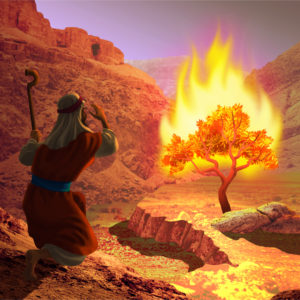
If you encountered a burning bush, what would be the one question you’d want to ask God?
Leadership in Transition
(א) וּמֹשֶׁ֗ה הָיָ֥ה רֹעֶ֛ה אֶת־צֹ֛אן יִתְר֥וֹ חֹתְנ֖וֹ כֹּהֵ֣ן מִדְיָ֑ן וַיִּנְהַ֤ג אֶת־הַצֹּאן֙ אַחַ֣ר הַמִּדְבָּ֔ר וַיָּבֹ֛א אֶל־הַ֥ר הָאֱלֹהִ֖ים חֹרֵֽבָה׃ (ב) וַ֠יֵּרָ֠א מַלְאַ֨ךְ יְהֹוָ֥ה אֵלָ֛יו בְּלַבַּת־אֵ֖שׁ מִתּ֣וֹךְ הַסְּנֶ֑ה וַיַּ֗רְא וְהִנֵּ֤ה הַסְּנֶה֙ בֹּעֵ֣ר בָּאֵ֔שׁ וְהַסְּנֶ֖ה אֵינֶ֥נּוּ אֻכָּֽל׃ (ג) וַיֹּ֣אמֶר מֹשֶׁ֔ה אָסֻֽרָה־נָּ֣א וְאֶרְאֶ֔ה אֶת־הַמַּרְאֶ֥ה הַגָּדֹ֖ל הַזֶּ֑ה מַדּ֖וּעַ לֹא־יִבְעַ֥ר הַסְּנֶֽה׃ (ד) וַיַּ֥רְא יְהֹוָ֖ה כִּ֣י סָ֣ר לִרְא֑וֹת וַיִּקְרָא֩ אֵלָ֨יו אֱלֹהִ֜ים מִתּ֣וֹךְ הַסְּנֶ֗ה וַיֹּ֛אמֶר מֹשֶׁ֥ה מֹשֶׁ֖ה וַיֹּ֥אמֶר הִנֵּֽנִי׃ (ה) וַיֹּ֖אמֶר אַל־תִּקְרַ֣ב הֲלֹ֑ם שַׁל־נְעָלֶ֙יךָ֙ מֵעַ֣ל רַגְלֶ֔יךָ כִּ֣י הַמָּק֗וֹם אֲשֶׁ֤ר אַתָּה֙ עוֹמֵ֣ד עָלָ֔יו אַדְמַת־קֹ֖דֶשׁ הֽוּא׃ (ו) וַיֹּ֗אמֶר אָנֹכִי֙ אֱלֹהֵ֣י אָבִ֔יךָ אֱלֹהֵ֧י אַבְרָהָ֛ם אֱלֹהֵ֥י יִצְחָ֖ק וֵאלֹהֵ֣י יַעֲקֹ֑ב וַיַּסְתֵּ֤ר מֹשֶׁה֙ פָּנָ֔יו כִּ֣י יָרֵ֔א מֵהַבִּ֖יט אֶל־הָאֱלֹהִֽים׃ (ז) וַיֹּ֣אמֶר יְהֹוָ֔ה רָאֹ֥ה רָאִ֛יתִי אֶת־עֳנִ֥י עַמִּ֖י אֲשֶׁ֣ר בְּמִצְרָ֑יִם וְאֶת־צַעֲקָתָ֤ם שָׁמַ֙עְתִּי֙ מִפְּנֵ֣י נֹֽגְשָׂ֔יו כִּ֥י יָדַ֖עְתִּי אֶת־מַכְאֹבָֽיו׃ (ח) וָאֵרֵ֞ד לְהַצִּיל֣וֹ ׀ מִיַּ֣ד מִצְרַ֗יִם וּֽלְהַעֲלֹתוֹ֮ מִן־הָאָ֣רֶץ הַהִוא֒ אֶל־אֶ֤רֶץ טוֹבָה֙ וּרְחָבָ֔ה אֶל־אֶ֛רֶץ זָבַ֥ת חָלָ֖ב וּדְבָ֑שׁ אֶל־מְק֤וֹם הַֽכְּנַעֲנִי֙ וְהַ֣חִתִּ֔י וְהָֽאֱמֹרִי֙ וְהַפְּרִזִּ֔י וְהַחִוִּ֖י וְהַיְבוּסִֽי׃ (ט) וְעַתָּ֕ה הִנֵּ֛ה צַעֲקַ֥ת בְּנֵי־יִשְׂרָאֵ֖ל בָּ֣אָה אֵלָ֑י וְגַם־רָאִ֙יתִי֙ אֶת־הַלַּ֔חַץ אֲשֶׁ֥ר מִצְרַ֖יִם לֹחֲצִ֥ים אֹתָֽם׃ (י) וְעַתָּ֣ה לְכָ֔ה וְאֶֽשְׁלָחֲךָ֖ אֶל־פַּרְעֹ֑ה וְהוֹצֵ֛א אֶת־עַמִּ֥י בְנֵֽי־יִשְׂרָאֵ֖ל מִמִּצְרָֽיִם׃ (יא) וַיֹּ֤אמֶר מֹשֶׁה֙ אֶל־הָ֣אֱלֹהִ֔ים מִ֣י אָנֹ֔כִי כִּ֥י אֵלֵ֖ךְ אֶל־פַּרְעֹ֑ה וְכִ֥י אוֹצִ֛יא אֶת־בְּנֵ֥י יִשְׂרָאֵ֖ל מִמִּצְרָֽיִם׃ (יב) וַיֹּ֙אמֶר֙ כִּֽי־אֶֽהְיֶ֣ה עִמָּ֔ךְ וְזֶה־לְּךָ֣ הָא֔וֹת כִּ֥י אָנֹכִ֖י שְׁלַחְתִּ֑יךָ בְּהוֹצִֽיאֲךָ֤ אֶת־הָעָם֙ מִמִּצְרַ֔יִם תַּֽעַבְדוּן֙ אֶת־הָ֣אֱלֹהִ֔ים עַ֖ל הָהָ֥ר הַזֶּֽה׃
(1) Now Moses, tending the flock of his father-in-law Jethro, the priest of Midian, drove the flock into the wilderness, and came to Horeb, the mountain of God. (2) A messenger of יהוה appeared to him in a blazing fire out of a bush. He gazed, and there was a bush all aflame, yet the bush was not consumed. (3) Moses said, “I must turn aside to look at this marvelous sight; why doesn’t the bush burn up?” (4) When יהוה saw that he had turned aside to look, God called to him out of the bush: “Moses! Moses!” He answered, “Here I am.” (5) And [God] said, “Do not come closer! Remove your sandals from your feet, for the place on which you stand is holy ground!” (6) and continued, “I am the God of your father’s [house]—the God of Abraham, the God of Isaac, and the God of Jacob.” And Moses hid his face, for he was afraid to look at God. (7) And יהוה continued, “I have marked well the plight of My people in Egypt and have heeded their outcry because of their taskmasters; yes, I am mindful of their sufferings. (8) I have come down to rescue them from the Egyptians and to bring them out of that land to a good and spacious land, a land flowing with milk and honey, the region of the Canaanites, the Hittites, the Amorites, the Perizzites, the Hivites, and the Jebusites. (9) Now the cry of the Israelites has reached Me; moreover, I have seen how the Egyptians oppress them. (10) Come, therefore, I will send you to Pharaoh, and you shall free My people, the Israelites, from Egypt.” (11) But Moses said to God, “Who am I that I should go to Pharaoh and free the Israelites from Egypt?” (12) And [God] said, “I will be with you; that shall be your sign that it was I who sent you. And when you have freed the people from Egypt, you shall worship God at this mountain.”
וּמשֶׁה הָיָה רֹעֶה... אַף הַקָּדוֹשׁ בָּרוּךְ הוּא אַף עַל פִּי שֶׁהוּא נִרְאֶה כִּמְסַלֵּק שְׁכִינָתוֹ מִבֵּית הַמִּקְדָּשׁ, עֵינָיו יֶחֱזוּ עַפְעַפָּיו יִבְחֲנוּ בְּנֵי אָדָם, וּלְמִי בּוֹחֵן, לַצַּדִּיק, שֶׁנֶּאֱמַר (תהלים יא, ה): ה' צַדִּיק יִבְחָן, [במה הוא בוחנו], בְּמִרְעֵה צֹאן.
וְאַף משֶׁה לֹא בְחָנוֹ הַקָּדוֹשׁ בָּרוּךְ הוּא אֶלָּא בַּצֹּאן, אָמְרוּ רַבּוֹתֵינוּ, כְּשֶׁהָיָה משֶׁה רַבֵּינוּ עָלָיו הַשָּׁלוֹם רוֹעֶה צֹאנוֹ שֶׁל יִתְרוֹ בַּמִּדְבָּר, בָּרַח מִמֶּנּוּ גְּדִי, וְרָץ אַחֲרָיו עַד שֶׁהִגִּיעַ לַחֲסִית, כֵּיוָן שֶׁהִגִּיעַ לַחֲסִית, נִזְדַּמְּנָה לוֹ בְּרֵכָה שֶׁל מַיִם, וְעָמַד הַגְּדִי לִשְׁתּוֹת, כֵּיוָן שֶׁהִגִּיעַ משֶׁה אֶצְלוֹ, אָמַר אֲנִי לֹא הָיִיתִי יוֹדֵעַ שֶׁרָץ הָיִיתָ מִפְּנֵי צָמָא, עָיֵף אַתָּה, הִרְכִּיבוֹ עַל כְּתֵפוֹ וְהָיָה מְהַלֵּךְ. אָמַר הַקָּדוֹשׁ בָּרוּךְ הוּא, יֵשׁ לְךָ רַחֲמִים לִנְהֹג צֹאנוֹ שֶׁל בָּשָׂר וָדָם כָּךְ חַיֶּיךָ אַתָּה תִרְעֶה צֹאנִי יִשְׂרָאֵל, הֱוֵי: וּמשֶׁה הָיָה רוֹעֶה.
“Moses was herding” – Indeed, the Holy One blessed be He, although He appears to be removing His divine presence from the Temple, “His eyes behold, His eyelids test the sons of man.” Whom does he test? He tests the righteous, as it is stated: “The Lord will test the righteous” (Psalms 11:5). It is with sheepherding...
Moses, too, the Holy One blessed be He tested him only with flocks. Our Rabbis say: When Moses, may he rest in peace, was herding Yitro’s flock in the wilderness, a kid fled from him. He pursued it until it reached cover. Once it reached cover, it happened upon a pool of water, and the kid stopped to drink. When Moses reached it, he said: ‘I didn’t know that you were running due to thirst. You are tired.’ He carried it on his shoulder and was walking. The Holy One blessed be He said: ‘You have the compassion to behave with the flocks belonging to flesh and blood in this manner; by your life, you will herd My flock, Israel.’ That is: “Moses was herding.”
QUESTIONS:
- What do Moses’ excuses teach us about humility and self-doubt in leadership?
- How does God address Moses’ fears? What might this suggest about divine support in human endeavors?
- How does caring for others, even in small ways, prepare someone for greater responsibilities?
Justice & Advocacy
(יא) וַיְהִ֣י ׀ בַּיָּמִ֣ים הָהֵ֗ם וַיִּגְדַּ֤ל מֹשֶׁה֙ וַיֵּצֵ֣א אֶל־אֶחָ֔יו וַיַּ֖רְא בְּסִבְלֹתָ֑ם וַיַּרְא֙ אִ֣ישׁ מִצְרִ֔י מַכֶּ֥ה אִישׁ־עִבְרִ֖י מֵאֶחָֽיו׃ (יב) וַיִּ֤פֶן כֹּה֙ וָכֹ֔ה וַיַּ֖רְא כִּ֣י אֵ֣ין אִ֑ישׁ וַיַּךְ֙ אֶת־הַמִּצְרִ֔י וַֽיִּטְמְנֵ֖הוּ בַּחֽוֹל׃ (יג) וַיֵּצֵא֙ בַּיּ֣וֹם הַשֵּׁנִ֔י וְהִנֵּ֛ה שְׁנֵֽי־אֲנָשִׁ֥ים עִבְרִ֖ים נִצִּ֑ים וַיֹּ֙אמֶר֙ לָֽרָשָׁ֔ע לָ֥מָּה תַכֶּ֖ה רֵעֶֽךָ׃ (יד) וַ֠יֹּ֠אמֶר מִ֣י שָֽׂמְךָ֞ לְאִ֨ישׁ שַׂ֤ר וְשֹׁפֵט֙ עָלֵ֔ינוּ הַלְהׇרְגֵ֙נִי֙ אַתָּ֣ה אֹמֵ֔ר כַּאֲשֶׁ֥ר הָרַ֖גְתָּ אֶת־הַמִּצְרִ֑י וַיִּירָ֤א מֹשֶׁה֙ וַיֹּאמַ֔ר אָכֵ֖ן נוֹדַ֥ע הַדָּבָֽר׃ (טו) וַיִּשְׁמַ֤ע פַּרְעֹה֙ אֶת־הַדָּבָ֣ר הַזֶּ֔ה וַיְבַקֵּ֖שׁ לַהֲרֹ֣ג אֶת־מֹשֶׁ֑ה וַיִּבְרַ֤ח מֹשֶׁה֙ מִפְּנֵ֣י פַרְעֹ֔ה וַיֵּ֥שֶׁב בְּאֶֽרֶץ־מִדְיָ֖ן וַיֵּ֥שֶׁב עַֽל־הַבְּאֵֽר׃
(11) Some time after that, when Moses had grown up, he went out to his kinsfolk and witnessed their labors. He saw an Egyptian beating a Hebrew, one of his kinsmen. (12) He turned this way and that and, seeing no one about, he struck down the Egyptian and hid him in the sand. (13) When he went out the next day, he found two Hebrews fighting; so he said to the offender, “Why do you strike your fellow?” (14) He retorted, “Who made you chief and ruler over us? Do you mean to kill me as you killed the Egyptian?” Moses was frightened, and thought: Then the matter is known! (15) When Pharaoh learned of the matter, he sought to kill Moses; but Moses fled from Pharaoh. He arrived*arrived Lit. “sat” or “settled.” in the land of Midian, and sat down beside a well.
"Prophets sought to convey: that morally speaking, there is no limit to the concern one must feel for the suffering of human beings, that indifference to evil is worse than evil itself, that in a free society, some are guilty, but all are responsible."
-Rabbi Abraham Joshua Heschel
אָמְרוּ רַבּוֹתֵינוּ זִכְרוֹנָם לִבְרָכָה נוֹגְשִׂים הָיוּ מִן הַמִּצְרִיִּים וְשׁוֹטְרִים מִיִּשְׂרָאֵל, נוֹגֵשׂ מְמֻנֶּה עַל עֲשָׂרָה שׁוֹטְרִים. שׁוֹטֵר מְמֻנֶּה עַל עֲשָׂרָה מִיִּשְׂרָאֵל. וְהָיוּ הַנּוֹגְשִׂים הוֹלְכִים לְבָתֵּי הַשּׁוֹטְרִים בָּהַשְׁכָּמָה לְהוֹצִיאָן לִמְלַאכְתָּן לִקְרִיאַת הַגֶּבֶר, פַּעַם אַחַת הָלַךְ נוֹגֵשׂ מִצְרִי אֵצֶל שׁוֹטֵר יִשְׂרָאֵל וְנָתַן עֵינָיו בְּאִשְׁתּוֹ שֶׁהָיְתָה יְפַת תֹּאַר בְּלִי מוּם, עָמַד לִשְׁעַת קְרִיאַת הַגֶּבֶר וְהוֹצִיאוֹ מִבֵּיתוֹ, וְחָזַר הַמִּצְרִי וּבָא עַל אִשְׁתּוֹ וְהָיְתָה סְבוּרָה שֶׁהוּא בַּעֲלָהּ וְנִתְעַבְּרָה מִמֶּנּוּ, חָזַר בַּעֲלָהּ וּמָצָא הַמִּצְרִי יוֹצֵא מִבֵּיתוֹ שָׁאַל אוֹתָהּ שֶׁמָּא נָגַע בָּךְ, אָמְרָה לוֹ הֵן, וּסְבוּרָה אֲנִי שֶׁאַתָּה הוּא, כֵּיוָן שֶׁיָּדַע הַנּוֹגֵשׂ שֶׁהִרְגִּישׁ בּוֹ הֶחֱזִירוֹ לַעֲבוֹדַת הַפֶּרֶךְ וְהָיָה מַכֶּה אוֹתוֹ וּמְבַקֵּשׁ לְהָרְגוֹ. וְהָיָה משֶׁה רוֹאֶה אוֹתוֹ וּמַבִּיט בּוֹ וְרָאָה בְּרוּחַ הַקֹּדֶשׁ מַה שֶּׁעָשָׂה בַּבַּיִת, וְרָאָה מַה שֶּׁעָתִיד לַעֲשׂוֹת לוֹ בַּשָֹּׂדֶה, אָמַר וַדַּאי זֶה חַיָּב מִיתָה, כְּמוֹ שֶׁכָּתוּב (ויקרא כד, כא): וּמַכֵּה אָדָם יוּמָת, וְלֹא עוֹד אֶלָּא שֶׁבָּא עַל אִשְׁתּוֹ שֶׁל דָּתָן, עַל כָּךְ חַיָּב הֲרִיגָה, שֶׁנֶּאֱמַר (ויקרא כ, י): מוֹת יוּמַת הַנֹּאֵף וְהַנֹּאָפֶת, וְהַיְנוּ דִּכְתִיב: וַיִּפֶן כֹּה וָכֹה וגו', רָאָה מֶה עָשָׂה לוֹ בַּבַּיִת וּמֶה עָשָׂה לוֹ בַּשָֹּׂדֶה.
Our Sages, of blessed memory, say: The taskmasters were Egyptian and the foremen were Israelite; one taskmaster was appointed over ten foremen, and one foreman was appointed over ten Israelites. The taskmasters would go to the homes of the foremen early in the morning to get them out to work with the crowing of the rooster. Once, an Egyptian taskmaster went to an Israelite foreman and directed his glance to his wife, who was beautiful and flawless. He arrived there at the time of the crowing of the rooster and got him out of the house. The Egyptian returned and consorted with his wife, as she thought it was her husband, and she was impregnated. Her husband returned and saw the Egyptian emerging from his home. He asked her: ‘Did he touch you?’ She said: ‘Yes, and I thought he was you.’Once the taskmaster realized that [the Israelite] had sensed what he had done, he returned him to hard labor, and was beating him, seeking to kill him. Moses was looking at him and watching him, and he saw by means of the Divine Spirit what he had done at his home and saw what he was going to do to him in the field. He said: ‘This one is certainly liable for execution, as it is written: “One who strikes a person shall be put to death” (Leviticus 24:21). Moreover, he consorted with Datan’s wife and for that he is liable for execution, as it is stated: “The adulterer and the adulteress shall be put to death”’ (Leviticus 20:10). That is what is written: “He turned this way and that [and saw that there was no man; he smote the Egyptian and concealed him in the sand]” (Exodus 2:12) – he saw what he had done to him in the house and what he had done to him in the field.
QUESTIONS:
- What does this moment teach us about standing up against injustice, even when it’s risky?
- In what ways do we “look this way and that way” in our lives before taking action?
Divine Encounters
(א) וּמֹשֶׁ֗ה הָיָ֥ה רֹעֶ֛ה אֶת־צֹ֛אן יִתְר֥וֹ חֹתְנ֖וֹ כֹּהֵ֣ן מִדְיָ֑ן וַיִּנְהַ֤ג אֶת־הַצֹּאן֙ אַחַ֣ר הַמִּדְבָּ֔ר וַיָּבֹ֛א אֶל־הַ֥ר הָאֱלֹהִ֖ים חֹרֵֽבָה׃ (ב) וַ֠יֵּרָ֠א מַלְאַ֨ךְ יְהֹוָ֥ה אֵלָ֛יו בְּלַבַּת־אֵ֖שׁ מִתּ֣וֹךְ הַסְּנֶ֑ה וַיַּ֗רְא וְהִנֵּ֤ה הַסְּנֶה֙ בֹּעֵ֣ר בָּאֵ֔שׁ וְהַסְּנֶ֖ה אֵינֶ֥נּוּ אֻכָּֽל׃ (ג) וַיֹּ֣אמֶר מֹשֶׁ֔ה אָסֻֽרָה־נָּ֣א וְאֶרְאֶ֔ה אֶת־הַמַּרְאֶ֥ה הַגָּדֹ֖ל הַזֶּ֑ה מַדּ֖וּעַ לֹא־יִבְעַ֥ר הַסְּנֶֽה׃ (ד) וַיַּ֥רְא יְהֹוָ֖ה כִּ֣י סָ֣ר לִרְא֑וֹת וַיִּקְרָא֩ אֵלָ֨יו אֱלֹהִ֜ים מִתּ֣וֹךְ הַסְּנֶ֗ה וַיֹּ֛אמֶר מֹשֶׁ֥ה מֹשֶׁ֖ה וַיֹּ֥אמֶר הִנֵּֽנִי׃ (ה) וַיֹּ֖אמֶר אַל־תִּקְרַ֣ב הֲלֹ֑ם שַׁל־נְעָלֶ֙יךָ֙ מֵעַ֣ל רַגְלֶ֔יךָ כִּ֣י הַמָּק֗וֹם אֲשֶׁ֤ר אַתָּה֙ עוֹמֵ֣ד עָלָ֔יו אַדְמַת־קֹ֖דֶשׁ הֽוּא׃
(1) Now Moses, tending the flock of his father-in-law Jethro, the priest of Midian, drove the flock into the wilderness, and came to Horeb, the mountain of God. (2) A messenger of יהוה appeared to him in a blazing fire out of a bush. He gazed, and there was a bush all aflame, yet the bush was not consumed. (3) Moses said, “I must turn aside to look at this marvelous sight; why doesn’t the bush burn up?” (4) When יהוה saw that he had turned aside to look, God called to him out of the bush: “Moses! Moses!” He answered, “Here I am.” (5) And [God] said, “Do not come closer! Remove your sandals from your feet, for the place on which you stand is holy ground!”
וַיֵּרָא מַלְאַךְ ה' אֵלָיו. ... אָמַר רַבִּי יַנַּאי, מַה הַתְּאוֹמִים הַלָּלוּ, אִם חָשַׁשׁ אֶחָד בְּרֹאשׁוֹ חֲבֵרוֹ מַרְגִּישׁ, כֵּן אָמַר הַקָּדוֹשׁ בָּרוּךְ הוּא כִּבְיָכוֹל (תהלים צא, טו): עִמּוֹ אָנֹכִי בְצָרָה.
דָּבָר אַחֵר, מַהוּ עִמּוֹ אָנֹכִי בְצָרָה, כְּשֶׁיֵּשׁ לָהֶם צָרָה אֵינָם קוֹרְאִים אֶלָּא לְהַקָּדוֹשׁ בָּרוּךְ הוּא, בְּמִצְרַיִם, (שמות ב, כג): וַתַּעַל שַׁוְעָתָם אֶל הָאֱלֹהִים. בַּיָּם, (שמות יד, י): וַיִּצְעֲקוּ בְנֵי יִשְׂרָאֵל אֶל ה', וְכָאֵלֶּה רַבִּים. וְאוֹמֵר (ישעיה סג, ט): בְּכָל צָרָתָם לוֹ צָר, אָמַר לוֹ הַקָּדוֹשׁ בָּרוּךְ הוּא לְמשֶׁה, אִי אַתָּה מַרְגִּישׁ שֶׁאֲנִי שָׁרוּי בְּצַעַר כְּשֵׁם שֶׁיִּשְׂרָאֵל שְׁרוּיִם בְּצַעַר, הֱוֵי יוֹדֵעַ מִמָּקוֹם שֶׁאֲנִי מְדַבֵּר עִמְּךָ מִתּוֹךְ הַקּוֹצִים כִּבְיָכוֹל אֲנִי שֻׁתָּף בְּצַעֲרָן.
בְּלַבַּת אֵשׁ, לְלַבְּבוֹ כְּשֶׁיָּבוֹא לְסִינַי וְיִרְאֶה אוֹתָן אִשּׁוֹת וְלֹא יִירָא מֵהֶם. דָּבָר אַחֵר, בְּלַבַּת אֵשׁ, מִשְּׁנֵי חֲלָקָיו שֶׁל סְנֶה וּלְמַעְלָה, כְּשֵׁם שֶׁהַלֵּב נָתוּן מִשְּׁנֵי חֲלָקָיו שֶׁל אָדָם וּלְמַעְלָה.
מִתּוֹךְ הַסְּנֶה, שָׁאַל גּוֹי אֶחָד אֶת רַבִּי יְהוֹשֻׁעַ בֶּן קָרְחָה, מָה רָאָה הַקָּדוֹשׁ בָּרוּךְ הוּא לְדַבֵּר עִם משֶׁה מִתּוֹךְ הַסְּנֶה. אָמַר לוֹ אִלּוּ מִתּוֹךְ חָרוּב אוֹ מִתּוֹךְ שִׁקְמָה כָּךְ הָיִיתָ שׁוֹאֲלֵנִי, אֶלָּא לְהוֹצִיאֲךָ חָלָק אִי אֶפְשָׁר, לָמָּה מִתּוֹךְ הַסְּנֶה, לְלַמֶּדְךָ שֶׁאֵין מָקוֹם פָּנוּי בְּלֹא שְׁכִינָה אֲפִלּוּ סְנֶה.
בְּלַבַּת אֵשׁ, בַּתְּחִלָּה לֹא יָרַד אֶלָּא מַלְאָךְ אֶחָד שֶׁהָיָה מְמֻצָּע וְעוֹמֵד בְּאֶמְצַע הָאֵשׁ, וְאַחַר כָּךְ יָרְדָה שְׁכִינָה וְדִבְּרָה עִמּוֹ מִתּוֹךְ הַסְּנֶה.
רַבִּי אֱלִיעֶזֶר אוֹמֵר, מָה הַסְּנֶה שָׁפָל מִכָּל הָאִילָנוֹת שֶׁבָּעוֹלָם, כָּךְ הָיוּ יִשְׂרָאֵל שְׁפָלִים וִיְרוּדִים לְמִצְרַיִם, לְפִיכָךְ נִגְלָה עֲלֵיהֶם הַקָּדוֹשׁ, בָּרוּךְ הוּא וּגְאָלָם, שֶׁנֶּאֱמַר (שמות ג, ח):
“An angel of the Lord appeared to him in a flame of fire from the midst of the bush. He looked, and behold, the bush burned with fire, but the bush was not consumed” (Exodus 3:2)...
Rabbi Yannai said: Just as it is with twins [teomim], if the head of one hurts, the other feels it, so too, the Holy One blessed be He said, as it were: “I will be with him in trouble” (Psalms 91:15).
“From the midst of the bush” – a gentile asked Rabbi Yehoshua ben Korḥa: ‘What did the Holy One blessed be He see that led Him to speak with Moses from the midst of the bush?’ He said to him: ‘Had he spoken to him from a carob tree or a sycamore tree, would you ask me the same? However, to dismiss you outright is impossible. Why from the midst of the bush? It is to teach you that there is no place that is vacant of the Divine Presence, even a bush.’
QUESTIONS:
- Why does God choose a bush that burns but is not consumed?
- What does this symbol teach about divine presence and human resilience?