


המליך אות ע' רוגז
וקשר לו כתר
וצר בו גדי בעולם
וטבת בשנה
והמסס בנפש
זכר ונקבה.
[God] caused the letter ע ayin to reign over the domain of Anger,
attached to it a crown, and formed its correspondences:
Aligned it with Capricorn [the Goat] in the cosmos,
Tevet in the year,
and the gullet in the living being,
male and female.
There are several variant readings found in the different versions and commentaries. The major ones are given in the table [below]. In this version, the kivah [stomach cavity] is associated with sleep, the liver with anger and the spleen with laughter. The same association is found in the Talmud (Brachot 61b).
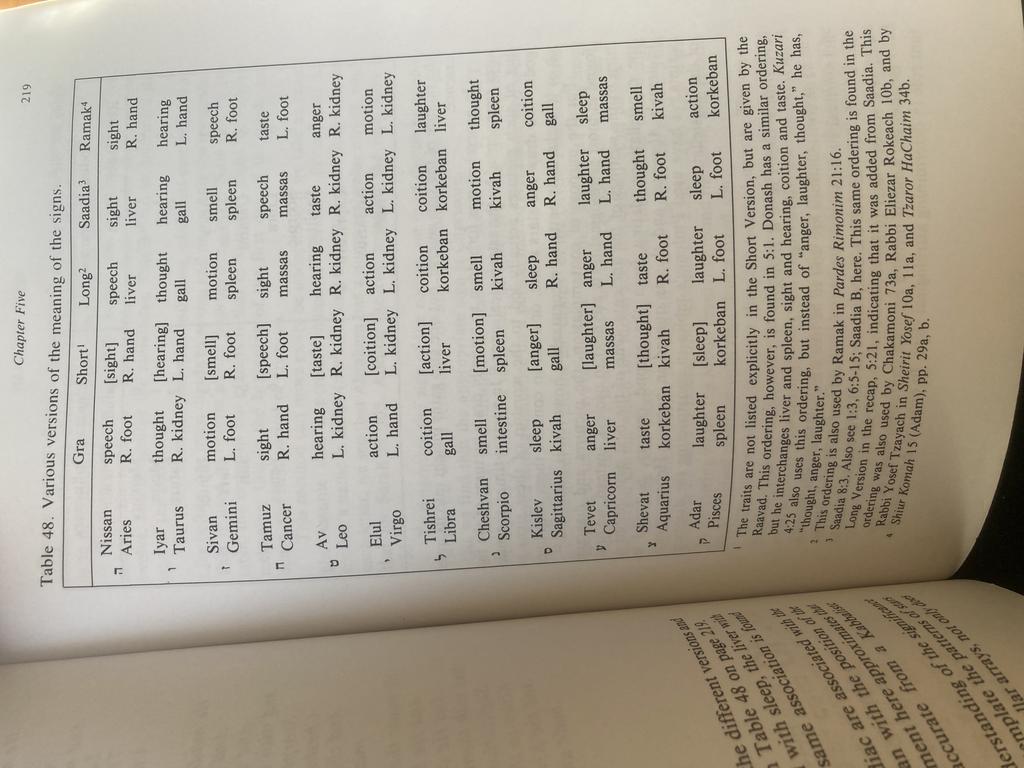
Tevet is associated in some texts (as in the version quoted above) with the Hamses - gullet (or first stomach of ruminants). In other versions it is associated with the left hand or the liver.
In traditional Chinese medicine (TCM), the liver is associated with anger, resentment, frustration, irritability, bitterness, and melancholy.
The liver is also associated with the wood element, which is related to growth and expansive movement. The liver directs this movement internally, both physically and emotionally.
Here are some ways that the liver and emotions are connected in TCM:
- Anger
Anger is a natural response to interruptions in the liver's mission to move and grow. However, too much anger or repressed anger can inhibit the liver's function and lead to emotional imbalance. - Liver imbalance
An imbalanced liver can manifest physically with headaches, dizziness, dry eyes, and other eye conditions. It can also cause emotional disorders like irritability.
This is where we often see forgiveness weaponized… It may be interesting to do a little power analysis when this happens: Who is being asked to forgive what? Pressurized focus on forgiveness can be a very convenient way to reinscribe existing power structures. The employee should forgive the donor who sexually harassed her because that would be convenient for the people whose job it is to raise money. The adult child should forgive the sibling who abused them for the sake of keeping the peace over the holidays. The Latino scholar should forgive the white university trustees who publicly dragged out his tenure process because they didn’t like his research on for-profit immigration detention centers. …
The request for forgiveness is, functionally, a request to not name an injustice as an injustice; it is a request that the families of victims not demand amends, recourse, or the kind of systemic change that might prevent the same kind of harm in the future.
Patience Is Divine
Embracing anger with the sunshine of mindfulness (pp.27-8; p.30)
Anger is like a howling baby, suffering and crying. The baby needs his mother to embrace him. You are the mother for your baby, your anger. The moment you begin to practice breathing mindfully in and out, you have the energy of a mother, to cradle and embrace the baby. Just embracing your anger, just breathing in and breathing out, that is good enough. The baby will feel relief right away. …
Embrace your anger with a lot of tenderness. Your anger is not your enemy. Your anger is your baby. It’s like your stomach or your lungs. Every time you have some trouble in your lungs or your stomach, you don’t think of throwing them away. The same is true with your anger. You accept your anger because you know you can take care of it; you can transform it into positive energy.
Patience is the mark of true love (pp.85-6)
Anger is a living thing. It comes up, and it needs time to go back down. …
Patience is the mark of true love. …
You must also be patient with yourself. The practice of embracing your anger takes time. … Just like when you cook potatoes, you need to keep the fire going for at least fifteen or twenty minutes. You cannot eat raw potatoes. You have to cook your anger on the fire of mindfulness. It may take ten or twenty minutes. It may take more. While cooking your potatoes, you have to cover the pot in order to prevent heat from escaping. That is concentration. So while you practice walking or breathing to take care of your anger, don’t do anything else. Don’t listen to the radio, don’t watch television, don’t read a book. Cover the pot and just do one thing. Just practice deep walking meditation, deep mindful breathing, and use one hundred percent of yourself in order to embrace your anger, exactly like you would take good care of a baby.
(ו) וַיַּעֲבֹ֨ר ה׳ ׀ עַל־פָּנָיו֮ וַיִּקְרָא֒ ה׳ ׀ ה׳ אֵ֥ל רַח֖וּם וְחַנּ֑וּן אֶ֥רֶךְ אַפַּ֖יִם וְרַב־חֶ֥סֶד וֶאֱמֶֽת׃ (ז) נֹצֵ֥ר*(בספרי תימן נֹצֵ֥ר בנו״ן רגילה) חֶ֙סֶד֙ לָאֲלָפִ֔ים נֹשֵׂ֥א עָוֺ֛ן וָפֶ֖שַׁע וְחַטָּאָ֑ה וְנַקֵּה֙
לֹ֣א יְנַקֶּ֔ה פֹּקֵ֣ד ׀ עֲוֺ֣ן אָב֗וֹת עַל־בָּנִים֙ וְעַל־בְּנֵ֣י בָנִ֔ים עַל־שִׁלֵּשִׁ֖ים וְעַל־רִבֵּעִֽים׃
(6) ה׳ passed before him and proclaimed: “!“ה! ה!… a God compassionate and gracious, slow to anger [literally: long of nose], abounding in kindness and faithfulness, (7) extending kindness to the thousandth generation, forgiving iniquity, transgression, and sin—
yet not remitting all punishment, but visiting the iniquity of parents upon children and children’s children, upon the third and fourth generations.”
Notzer chessed la'alaphim - Nosseh avon va'fesha v'chataa v'nakeh...
Contemporary (singable) English translation of the 13 Attributes of Divine Mercy:
Yud hey vav hey
Compassion and tenderness
Patience, forbearance, kindness, awareness
Bearing love from age to age
Lifting guilt and mistakes and making us free.
Arich Anpin — the Long-Faced or Patient One — is the name of the most ancient and undifferentiated of the divine faces. This face is also sometimes called Attiqa Qaddisha, the Holy Ancient One, or Attiq Yomin, the Ancient of Days. …
This is the Divine as the great wellspring of life, love, and forgiveness. This partsuf [aspect] radiates light, floods over its banks, abounds with vitality, and sustains all things that come into contact with it. In its luminescence, being itself becomes possible. Attiqa Qadisha is unique insofar as it doesn’t act, it simply is. That is to say, this is not a deity in the sense of performing acts or imposing order, but rather in the sense that it is Being or the Source of Being. In this partsuf, the most fundamental aspects of existence are emphasized: nourishment, love, mercy, forgiveness, wakefulness, and unending presence.
Whereas the term Attiqa alludes to the primordial and archaic quality of this Divinity, Arich Anpin refers to other attributes: on a theological level, the quality of this Divinity is patience, forgiveness, and absolute mercy and compassion, which is why it is called the Patient or Long-Suffering One (Erech Apayim) — one of the divine attributes mentioned in Exodus 34:6. In addition, the Idra Rabba appeals to the literal sense of the term anpin as “nose.” The term af (nose) may refer to anger in Biblical Hebrew — as in “flaring the nose,” kharon af — so that Erech Apayim comes to mean the Long-Nosed One or the Long-Breathed One: namely, the Patient One.
On the continuum between anger and long deep breathing and patience, the nose thus represents the locus of emotional sustenance in the breath.
(ב) ה׳ שָׁמַ֣עְתִּי שִׁמְעֲךָ֮ יָרֵ֒אתִי֒ ה׳ פׇּֽעׇלְךָ֙ בְּקֶ֤רֶב שָׁנִים֙ חַיֵּ֔יהוּ בְּקֶ֥רֶב שָׁנִ֖ים תּוֹדִ֑יעַ בְּרֹ֖גֶז רַחֵ֥ם תִּזְכּֽוֹר׃
(2) … In anger, remember compassion.

With the addition of self-responsibility…
