


יִנְעַם לְנַפְשִׁי הֲלֹךְ עָרֹם וְיָחֵף עֲלֵי חָרְבוֹת שְׁמָמָה אֲשֶׁר הָיוּ דְבִירָיִךְ,
בִּמְקוֹם אֲרוֹנֵךְ אֲשֶׁר נִגְנַז, וּבִמְקוֹם כְּרוּבַיִךְ אֲשֶׁר שָׁכְנוּ חַדְרֵי חֲדָרָיִךְ!
My soul would find joy, walking bare and unshod upon the desolate ruins that were once your sanctuaries,
Where your Ark was hidden, Where your cherubim once dwelt in secret chambers!
(R. Yehudah Halevi (1075 - 1141 Jerusalem).
[ד"ה שיטה]...אבל ירושלם ומקדש יודע היה עזרא שעתידין להשתנות ולהתקדש בכבוד עולמי והנכנס עכשיו לשם אין בו כרת והמנהג פשוט ליכנס שם לפי מה ששמענו...:
"But (regarding) Jerusalem and the Temple, Ezra knew that matters are destined for change, to be sanctified with eternal glory. And whoever enters there now does not incur karet (excision). The accepted custom is to enter there according to what 'we' have heard...." - Menachem b. Solomon HaMeiri (1249-1315, Catalonia).
[Meiri testifies that there was Jewish presence on Temple Mount around 1249-1315.]
פירוש הרמב"ם על מסכת ראש השנה:
וביום שלישי בשבת, ד' חשון, יצאנו מעכו לעלות לירושלים תחת סכנה, ונכנסתי לבית הגדול והקדוש והתפללתי בו.
The Rambam's (Maimonides') commentary on Tractate Rosh Hashanah. End of Folio.
"And on Tuesday, the fourth of Cheshvan [1165], we left Acre to ascend to Jerusalem under danger, and I entered the great and holy house and prayed there."
Notes: See end sheet for manuscript and citations. For the Rambam's prohibition in Mishna Torah, and Ravad's view, See M"T, The Chosen Temple, 6:15-16 & commentary.]
Part I
"T]he Romans, who destroyed the house during the days of the wicked Titus, although they desecrated its sanctity, they did not claim that they had a right to the pure House, or that it was suitable for them as a house of prayer.
But when Constantine the wicked came, he began to make such claims, and initially, when the Romans fought him, they did not prevent Israel from coming unto it [the Mountain] and praying within it. Similarly, the kings of Ishmael treated them well and allowed Israel to ascend to the house and build a house of prayer and study within it. All the exiles of Israel who were close to the house would ascend to it on festivals and holidays, and they would pray within it, directing their prayers toward the Holy of Holies. And all the kings of the kingdom of Ishmael followed this custom until...[T]he evil kingdom of Edom (Constantinople) spread over the house, and removed the kingdom of Ishmael from it. And from that time..." (emphasis added).
From the terminology the Nasi uses, it seems plausible that by 1165 and the Rambam’s visit, there remained a synagogue building on Temple Mount in a known permitted space (outside the dome radius) which the Rambam visited fleetingly.
Part II
- One, the law may be according to the Ravvad (Meiri above) that there is no Kareth today for entering at all, and that has been the accepted practice of Jews for millennia.
- Two, the Talmud is uncertain whether the airspace under or around the former House was ever sanctified to that level of stringency (Shevuot 17a) (According to R' Dovid, the House was at a higher elevation, and the mountain-top was crushed down. See Tamid 27b, that the tunnels (and space) underneath were not sanctified: "Gemara: Mishna supports the opinion of R' Yoḥanan: The tunnels beneath the Temple Mount were not sanctified, neither with the sanctity of the Temple courtyard, nor with the sanctity of the Temple Mount.").
- Three, adjoining roofs to the actual House were not sanctified. Additionally, debatable whether the surrounding structures are dated from the time of the Second Temple.
- Four, no one can know for certain where the Temple was, and therefore one is not liable without a possibility-of-knowing the Temples' location. Shevuot 14b—Tosafot (ונעלם); Rashba id.
- Therefore, with all these stacked Halachic doubts, one is to rule leniently when Jews desire to ascend with proper intentions, and that such has been the practice. In conclusion, R' David allows one to ascend parts of the actual Mount according to all opinions. See end for Radvaz for full hebrew-english Responsa.
Notes
- Modern Times. Chief Rabbi of Israel, Gen. Shlomo Goren—Redeemer of Jerusalem—concurs with the Radvaz: "[T]here are large areas of the Temple Mount which all Jews are permitted to enter, according to all halakhic opinions, after immersion in a mikveh..."(R. Goren's Sefer on Har Habayit p.15). (end-sheet, [7]. Book 'The Temple Mount.'"; Quoted Hebrew-Wiki 'כניסה להר הבית (הלכה)' (Trans.)]. See below [4] for Responsa of Rav Moshe Feinstein (Igros Moshe O.H., vol. 2, no. 113).
- R' Moshe Dovid Tendler ZT"L, Rosh Yeshiva of Yeshivah U., New York, can be seen on public video visiting the Temple Mount. See: https://www.youtube.com/watch?v=cw91yrKuQec&t=725s (R' also points to a Jewish home and rock door-post, with an outline of a Mezuzah, by the angle of the cut - @3:06).
(n2) Old Picture at FRANCIS BEDFORD (1815-94) The Mosque of Omar from the Governor's House [Mosque of the Dome of the Rock, Jerusalem] 6 Apr 1862 RCIN 2700932; At https://www.rct.uk/collection/exhibitions/cairo-to-constantinople/the-queens-gallery-buckingham-palace/the-mosque-of-omar-from-the-governors-house-mosque-of-the-dome-of-the-rock-jerusalem]

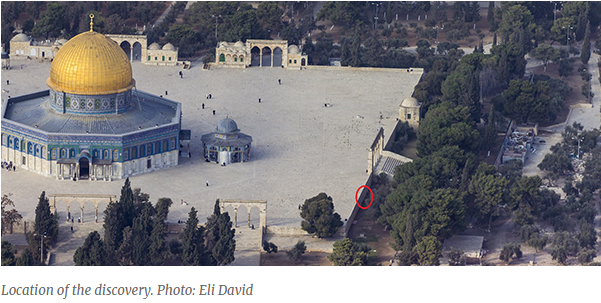
(n3) See picture of the stones the Radvaz is talking about regarding the platform walls. Ancient stone courses and offset at the north side of the NE corner of the raised Platform [Gate of Nicanor Found] At https://www.ritmeyer.com/2020/10/05/new-discovery-on-the-temple-mount-in-jerusalem-gate-in-the-eastern-wall-of-the-dome-of-the-rock-plaza/



See Also: "Additional doubts uncovered by R’ Goren are: 3) Even if there was a valid conversion, Borokovsky, when asked by the bet-din in Petaḥ Tikva, [if b.] could produce [any] witnesses to his wedding or even anyone who could establish the presumption that he and Ḥava were married. In addition, since they were originally married as Christians, even if witnesses could be found claiming that they were presumed to be married (that there was a ḥazakah), we would say that the presumption was based on the non-Jewish wedding and that they were never married as Jews (see Shulḥan Arukh, Even HaEzer 16:1). 4) Borokovsky was forced to convert under the threat of being reported to law officers that he [abducted] a 14-year-old girl. Forced conversions are not valid." (https://hakirah.org/Vol%2016%20Letters.pdf. There is a very strong Rabbinic interest in protecting minor Jewish children, even to uproot all of Biblical law.)

Print: hebrewbooks.org/pdfpager.aspx?req=37672&st&pgnum=63&hilite
תשובה דע שלא כל העליות שוות ולא כל הרוחות שוות וצריך אומד יפה לראות אי זו מותרות ואי זו אסורה וזה כי הדבר ברור שתחת הכיפה שם אבן השתיה בלי ספק הנקרא אצלם אלסכרא
וא"ת דהא תנן אבן היתה שם מימות נביאים הראשונים ושתיה שמה גבוהה מעל הארץ ג' אצבעות ועליה הארון נתון ועתה שאלנו את פיהם ואמרו שהיא גבוהה מקרקעית הכיפה ג' קומות ואנו רואין מבחוץ שעולים לכיפה במדרגות הרבה כבר כתבתי על זה בתשובה שקרקעית הבית חפרו אותו כמה פעמים לגלות היסודות ולכן הוא נמוך הרבה ממה שהיה מקודם תדע דהא תנן בכמה דוכתי שהר הבית היה גבוה מירושלם והשתא הדבר הוא להפך...גם שמעתי שהמלכים שעברו חפרו שם למצוא יסוד האבן הזאת ולא מצאו
מ"מ אין ספק כי האבן הזאת אשר תחת הכיפה היא אבן השתיה אשר עליה היה הארון בבית קדש הקדשים לצד מערב. הילכך מי שעולה בעליותאשר לרוח מערב ,או הנכנס לראות מהפתח אשר לצד מערב , צריך לשער שיהיה בינו לבין הכיפה יותר מאחד עשר אמה שכך היה בין כותל מערבי של העזרה לכותל ההיכל ועובי הכותל כי הכותלים נתקדשו שיערתי שאין בכל הפתחים יותר קרוב לכיפה מאותן הפתח הקטן אשר משמאל לבאבאל קטאנין ולכן צריך ליזהר מן העליות אשר על אותו פתח...וכבר שמעתי על קצת חכמים שלא היו רוצין ליכנס בשוק אל קטאנין וזו חומרא יתירה כי אני שיערתי שיש משם עד הכיפה יותר מי"א אמה ואפשר שהטעם הוא מפני שהיא משוכה קצת לצד צפון כאשר נבאר בע"ה....
ואם העליות הם בצד צפון צריך לשער מכותל מערבי לצד המזרח באורך קפ"ז אמות כל העליות הבנויות באורך זה הם בניות על אורך העזרה ממזרח למערב וכל העליות הבניות חוץ מאורך זה לצד מזרח או לצד מערב אינם בכלל האיסור...
ולענין הרוחב כבר ידעת כי רוחב העזרה מצפון לדרום הם קל"ה אמה וכבר הנראה לעין כותל הדרום במקומו הראשון הוא שהרי העומד בקרן דרומית מזרחית רואה כי משם לצד דרום הוא עמק יהושפט ולא היתה העזרה נמשכת לצד דרום אלא עד שם גם כי אבני היסוד ההוא הם אבנים גדולות מורה שהוא בנין קדמון וא"כ סוף בנין הנקרא מדרש שלימה לצד הדרום הוא סוף העזרה אלא שהוא חוץ מקפ"ז אמה אשר ממזרח למערב והוא מכלל הר הבית...ועד היום בנוי כיפין על גבי כיפין
מ"מ למדנו כי הכותל ההוא בעצמו היה כותל העזרה אשר לצד דרום וא"כ צריך לשער אם העליות אשר כנגד כותל זה לצד צפון רחוקים מכותל זה קל"ה אמה אינם בכלל העזרה ואני שיערתי שיש בין כותל זה של צד דרום עד הבתים והעליות אשר בניות לצד צפון יותר מקל"ה אמה ואינם בכלל הקדש ומותר ליכנס להם. עוד דרך אחרת רואין כאלו חוט מתוח מהכיפה לצד מזרח כל הבתים והעליות שהם בתוך מ' אמה לחוט זה הם בכלל הקדש וכל שהוא חוץ לזה השיעור הרי הוא חול וחשבון זה אינו מדוקדק לפי שההיכל היה צר מאחריו ורחב מלפניו כדכתיב הוי אריאל אריאל ומ"מ לצאת מידי ספק צריך להתרחק מהחוט המתוח מכותל הכיפה הצפונית ארבעים אמה ברוחב באורך קפ"ז אמות מן המערב למזרח.
ואם העליות בנויות לצד מזרח הנה נתבאר כי הכותל המזרחי אשר היא בנוי עתה הוא כותל הר הבית המזרחי לפי שמשם והלאה הוא הר הזיתים. ועוד כי שערי רחמים הם באותו כותל וכתב בעל כפתור ופרח שהם שערים שהיו נכנסים בהן והאבלים והחתנים וכל הבתים והעליות אשר בצד מזרח מותר להכנס לשם שהרי מכותל הר הבית המזרחי עד כותל העזרה המזרחי יש שי"ג אמה וטמא מת מותר להכנס בהר הבית...
ואם יש עליות בכותל דרומי באורך קפ"ז אמות מן המערב אל המזרח הרי הם בכלל הקדש ודרך כלל אני אומר כי הבתים או העליות אשר לצד צפון וצד מזרח אין בהם ספק אצלי ומותר ליכנס להם אם לא תהיה בולטת הרבה לתוך המקדש דאז צריך אומד וכן אותם של צד דרום ומערב צריכין אומד.
והוי יודע דאיבעיא לן בגמרא תלה עצמו באויר העזרה מהו וסלקא בתיקו והוי איסורא דאורייתא לדעת הרב דס"ל בקדושתו עומד ואזלינן לחומרא ואסור ולדעת התוספות פשיטא ליה דאויר עזרה נתקדש ואע"ג דתניא בידיעות הטומאה וטמא שנכנס להיכל דרך גגות פטור שנאמר ואל המקדש לא תבא דרך ביאה אסרה תורה מ"מ פטור אבל אסור הוא ומכין אותו מכת מרדות וכן כתב הרמב"ם פ"ג מהלכות ביאת מקדש וז"ל ואע"פ שהוא פטור מכרת מכין אותו מכת מרדות בין שנכנס למקדש דרך גגות בין שנכנס בו דרך פתחים בשידה תיבה ומגדל ע"כ. וא"ת כיון דגגין ועליות לא נתקדשו והתוספות מודה שכל העליות לא נתקדשו חוץ מהעלייה אשר על ההיכל למה לא יהיה מותר ליכנס עתה בכל העליות דע דלא אמרינן דלא נתקדשו אלא העליות והגגות אשר היו בנויות בזמן שהיה קיים אבל הגנין והעליות הבנויות עתה סביב למקדש שמא בתוך אויר העזרה הם בנויות או באויר הלשכות שהיו אז ומידי ספיקא לא נפיק. הילכך אם נתברר לפי החשבון אשר כתבתי שהם בנויות בקדש לא נחוש לגובה לומר שמא למעלה מגגות הלשכות אשר לא נתקדשו הן בנויות כיון דאויר העזרה כעזרה
ומ"מ יש לי לתת טעם למנהג שנהגו כל העולם לעלות באותם עליות לראות משם את הבית כלו ולא שמענו ולא ראינו מי שמיחה בידם. דע כי הראב"ד ז"ל סובר כי האידנא אין כרת למי שנכנס למקדש וכן תמצא בהשגה פרק ששי מהלכות בית הבחירה הרי שעיקר הדין הוא מחלוקת והדבר ספק ,שמא עליות אלו הם בניות בקדש או לא ,ואת"ל בנויות בקדש ,שמא אויר העזרה לא נתקדש דהא איכא דמפרש דהא דבעי רבא תלה עצמו באויר העזרה הכי קא מיבעיא ליה אם נתקדש אויר העזרה או לא לפי גרסת הספריםולא איפשיטה ,ואת"ל דאויר העזרה כעזרה ,שמא על אויר גגות הלשכות אשר לא נתקדשו הן בנויות הילכך כיון דאיכא כל הני ספוקי תלו הדבר להקל מרוב חשקתם לחזות בקדש , ואין לנו להקל מטעם דדרך ביאה אסרה תורה ודרך גגות אין בו איסור תורה דהא ניחא אם עולים ויורדים מיד ולא היו שוהין שם שיעור השתחויה אבל אם הם בנויות בקדש נהי דפטור משום ואל המקדש לא תבא מ"מ חייב משום טמא ששהה במקדש.
הנה כתבתי לך טעם המנהג , אבל אתה תהיה מן הנזהרים ולא תכנס לא לבית ולא לעלייה אם לא תהיה רחוקה מהכיפה הרבה. גם שמעתי שיש מחילה תחת הקרקע ופתחה לצד המערב שהולכת עד תחת הכיפה ויש מהיהודים שנכנס לשם ודבר זה אסור דקי"ל מחילות הפתוחות לעזרה נתקדשו ומאן לימא לן שאין זו מכלל המחילות שהיו פתוחות לעזרה ואפי' תימא שזאת מחדש נעשית קרקעית העזרה נתקדש עד התהום כדאיתא בזבחים. שוב ראיתי וכן אמרו לי בני אדם היודעים לשער שאין לך פתח ולא עלייה שלא תהיה רחוקה מהכיפה כפי השיעור אשר כתבתי הילכך מותר להתקרב אל הפתחים ולעלות אל העליות כ"ש בהצטרפות הספקות אשר כתבתי:
Answer: Know that not all lofts are the same and not all directions are the same. One needs a proper measurement to ascertain which are permitted and which are forbidden. It is clear that under the Dome is the Foundation Stone (“Even Shetiyah”) without a doubt—which they call Al-Sakhrah.
And if you ask: The Mishna states: “There was a stone there from the days of the prophets, called Shetiyah; it was three finger-breadths above the ground, and the Ark was placed upon it.” Yet recently we asked them and they said that it is three human-lengths above the floor of the Dome. Also, we see from outside that they ascend many steps up to the Dome. I have already written in a responsum (§639) that the floor of the Temple has been excavated several times in order to expose the foundations, and so it is [currently] much lower than it was. Consider: the Mishna states in several places that the Temple Mount was higher than Jerusalem, but now the opposite is the case...I also heard that past kings excavated there to find the foundation of that stone, and they did not find it.
Nevertheless, there is no doubt that this stone under the Dome is the Even Shetiyah, upon which was the Ark, in the Holy of Holies, toward the west side. Therefore, one who ascends into the lofts along the west side, or one who enters to peer through the opening on the west side, must measure that there are more than eleven cubits between himself and the Dome [17-20 ft.], for that was the distance from the western wall of the Courtyard (Azarah) to the wall of the Sanctuary, including the thickness of the wall, for the walls were themselves sanctified. I have measured that there is no opening closer to the Dome than the small opening to the left of the Bab al-Qattanin (Cotton Merchants’ Gate). Therefore, one must be careful regarding the lofts above that opening. I have already heard about some sages who did not wish to enter the market al-Qattanin (Cotton Merchants’ Market), but this is an excessive stringency, because I measured that from there to the Dome is more than eleven cubits. Perhaps their reasoning is that it extends to the north a bit, as we will explain, with God’s help...
[A]nd if the lofts are on the north side, one must measure, moving eastward from the western wall, a length of 187 cubits [around 95 Meters]. All lofts built along that length are built above the length of the Courtyard that runs from east to west, and all lofts outside of that length, toward theeast or the west, are not included in the prohibition.
Regarding the width, you already know that the width of the Temple Courtyard from north to south is 135 cubits [~70 Meters]. It is apparent that the southern wall remains in its original position, as one standing at the southeast corner can see that from there southward lies the Valley of Jehoshaphat. The Courtyard did not extend further south than this point. [See FN1 below, for a picture of the stones the Radvaz is talking about regarding the platform walls; R' Ovadia Yosef seems to have misunderstood the Radvaz and his ruling]Additionally, the foundational stones, which are large, indicate ancient construction. Therefore, the southern end of the structure known as the Midrash [Mikdash?] Shelomo aligns with the southern end of the Courtyard, but it is beyond the 187 cubits from east to west, and it is part of the Temple Mount....and until this day it is built as vaults upon vaults [chambers].
Nevertheless, we have ascertained that this wall itself was the wall of the Temple Courtyard on its southern side. If so, we must measure: if the lofts facing this wall on the north side are more than 135 cubits distant from this wall they are not part of the Temple Courtyard. I measured, from the southern wall to the homes and lofts built along the north side, more than 135 cubits. They are not part of the sanctified area, and one may enter them. Another way is to imagine that a string is extended from the Dome eastward: all the houses and lofts within forty cubits of this string are within the sanctified area, and anything outside of that measurement is not sanctified. This calculation is not precise, because the Sanctuary was narrow behind and wide in front, as Scripture states: “O, Ariel, Ariel!” However, to avoid uncertainty, one must avoid a thread stretched forty cubits from the [northern platform ]wall of the Dome to the north along a length of 187 cubits (324.9ft) from west-to-east.
If the lofts are built on the east side, it has been explained that the present eastern wall is the eastern [outer] wall of the Temple Mount, since from that point on is the Mount of Olives. Further, the Gates of Mercy (Golden Gate) are in that wall, and the author of Kaftor Va-ferah (R. Eshtori Ha-farhi) wrote that these are the gates through which mourners and grooms entered. It is permissible to enter all of the houses and lofts on the east side, because from the eastern wall of the Temple Mount to the eastern wall of the Courtyard there are 313 cubits, and one who has been defiled by a corpse may enter the Temple Mount...
If there are lofts in the southern wall, within the length of 187 cubits from west-to-east, they are also part of the sanctified area. In general, I say that the houses or lofts along the north and east sides are not the subject of uncertainty, and one may enter them as long as they do not protrude a great deal into the Temple, in which case it is necessary to estimate. Similarly, those on the south and west sides require estimation.
Know that the Talmud queries: “What is the law if he suspended himself in the air above the Temple Courtyard?” It is resolved in a stalemate, and this is a Torah prohibition according to a rabbi who maintains that [the Temple’s] sanctity remains, so we are stringent, and it is forbidden. According to Tosafot, it is clear that the air of the Temple Courtyard has been sanctified, and even though a beraita in the chapter “Yedi’ot Ha-tum’ah” (Shevu’ot 17b) teaches: “A defiled person who enters the Temple Courtyard via roofs is exempt, as Scripture states: ‘He shall not come into the Temple’—the Torah only forbids the normal way of coming in,” though he is exempt from punishment, it is nevertheless forbidden, and he is given the beatings of the rebellious. Maimonides writes likewise in chapter 3 of the Laws of Entering the Temple: “Although he is exempt from extirpation, he is given the beatings of the rebellious, whether he entered the Temple through roofs or through openings in a chest, crate, or large closet. One may ask: Since the roofs and lofts were not sanctified, and Tosafot concede that no lofts were sanctified except for the loft above the Sanctuary, why would it not be permissible to enter into the all of the lofts even now? In answer, you should know that we only say that the roofs and lofts that were built when the Temple stood were not sanctified, but the roofs and lofts that are now built around the Temple may be built into the air of the Temple Courtyard or the air of the chambers that existed them. Thus, we have not eliminated uncertainty. Therefore, if it is clear according to the calculations I wrote that they are built in the sanctified zone, we will not pay attention to the height and suggest that perhaps they are built above the roofs of the chambers that were not sanctified, since the air of the Temple Courtyard is like the Temple Courtyard.
Nevertheless, I must offer a reason for the widespread practice whereby people go up into those lofts to observe the entire Temple, and we have neither seen nor heard anyone objecting. Consider that Ra’avad maintains that nowadays there is no punishment of extirpation for one who enters the Temple. Thus, the black-letter law is disputed, and it is uncertain whether these lofts are built in the sanctified area or not. And even if they are built in the sanctified area, perhaps the air of the Temple Courtyard was not sanctified, for there is an interpretation that Rava’s query about one who suspended himself in the air above the Temple Courtyard is really asking whether the air of the Temple Courtyard was sanctified or not according to the text of our books, and it is not resolved. And even if the air of the Temple Courtyard is like the Temple Courtyard, perhaps they are built above the air of the roofs of the chambers, which were not sanctified. Therefore, since there are all these uncertainties, they inclined this matter toward leniency out of their great desire to gaze upon the sacred place.
The rationale that the Torah forbade the normal way of coming in, and so via roofs does not constitute a Torah prohibition, is not a basis for leniency. It would be fine if one were to ascend and descent immediately, without delaying for the amount of time in which one can prostrate himself. However, if they are built in the sanctified area, granted that one is exempt from “He shall not come into the Temple,” however he is still liable as a defiled person who remained in the Temple.
I have this written to you the reason for the practice, but you shall be one of the scrupulous and will enter neither house nor loft unless it is very far from the Dome. I have also heard that there is an underground tunnel whose opening is on the west side and which runs under the Dome, and that there are Jews who enter there. This is forbidden, as we maintain that tunnels that open into the Temple Courtyard were sanctified, and who says that this is not in the category of tunnels that open into the Temple Courtyard? And even if we accept that this [tunnel] was made recently, the floor of the Temple Courtyard was sanctified all the way down to the abyss, as stated in Zevahim. I have now seen, and I have been told by people who know how to measure, that there is no opening and no loft whose distance from the Dome is not greater than the measurement I wrote. Therefore, one may come close to the openings and ascend to the lofts, especially given the concatenation of uncertainties that I wrote.FN1: https://www.ritmeyer.com/2020/10/05/new-discovery-on-the-temple-mount-in-jerusalem-gate-in-the-eastern-wall-of-the-dome-of-the-rock-plaza/
הזורע כו'. לוקה כו'... ועיין במש"כ רבינו בהל' מעש"ש פ"ו הי"ו גבי נפל מחיצות דהיכא דליכא מחיצות לא שייך ביאה ויציאה ; וזהו כונת הראב"ד ז"ל בפ"ו מהל' בית הבחירה הט"ז דנקט שם הנכנס עתה אין בו כרת. ולמה לא נקט ג"כ לענין זר ומיתה ועיין תוס' שבועות דף י"ד ע"ב , ויומא דף מ"ד ע"א , ועיין במדרש שמואל פ' י"ט דמבואר שם דחייב אף כשהוא שמם. אך כך ,דהנה מבואר בזבחים דף פ"ב ובמנחות דף כ"ז ע"ב דבעי דוקא דרך ביאה ולא דרך משופש ע"ש בתוס', והיה כמו דרך גגין; ועיין תוס' ב"ב דף י"ד ע"א ד"ה שלא, דלתקן שרי לכנס ע"ש....וכן גבי טומאה אם נכנס שלא כדרך ביאה, מ"מ אם שהה שם כדי השתחויה חייב, דלא גרע מנטמא בפנים כמבואר בשבועות דף י"ז, משא"כ גבי זרות כיון דליכא מחיצות וא"כ לא שייך בו גדר ביאה ואינו חייב משום זרות.....:
“The Sower, etc.… And see what our teacher wrote in M"T, Second Tithes, ch.6, h.16, regarding fallen partitions in a sanctuary, where since there are no partitions the laws of entry and exit do not apply. And this is the intent of the Raavad (b"m) in chapter 6 of H. Beit HaBechira, h. 17, who ruled there that one who enters there now does not incur karet. Q: And why did he (Raavad?) not likewise rule concerning a stranger and death? And see Tosafot, Shavuot 14b; and Yoma 44a; and also see Midrash Shmuel, chapter 19:1, where it is explained that (the decree) applies even just being there. [“Mount Zion, My holy mountain” Psalms 2:6, just as one is held liable on account of its partition [it's built, so one is liable], and it's in ruins.’”] But thus [the answer]: since it is explained in Zevachim 82 and in Minchat 27b that one needs specifically a "proper route" and not the roundabout manner, as brought in Tosafot id, and it would be like the route of the roofs; & see Tosafot, B"B, 14a, that to fix it is permitted to enter… And similarly, concerning ritual impurity: If one enters not according to the proper route, nevertheless if he lingers there enough time for prostration, he is liable, for it is not different as having contracted impurity within, as is explained in Shavuot 17; in contrast, regarding strangers - since there are no partitions, and hence the “boundary” of entry does not apply, he is not liable because of stranger…”
הקלטה מפגישה בין הרב מרדכי אליהו זצ״ל לבין הרבי מליובאוויטש בשנת 5746 (1986) מסבירה את היוזמה להקמת בית כנסת על הר הבית.
הרב אליהו: אנחנו לא אמרנו גבולים. אנחנו אמרנו שהר הבית קדוש ומקודש לעם ישראל, ואסור לשום אדם, אפילו גוי, להיכנס שמה. מתוך קדושתו, מתוך חומרתו, אנחנו לא נכנסים. לא שאנחנו מסכימים עם זה" (-שאנשים נכנסים, ע"א). הרבי אומר שהוא שמע שהרבנות הראשית אמרה לבנות בית כנסת בהר הבית. הרב אליהו: "לא, לא. הרבנות הראשית לא אמרה. רק אני אמרתי, לא הרבנות הראשית. אני אמרתי. אני אמרתי לבנות בית כנסת מחוץ לגבולות של בית המקדש היום, מקום המקדש, כדי למנוע מיהודים לעבור לתוך הר הבית. יעמדו מצד שני, הצד המזרחי, מקום גבוה, ומשם יכולים להשקיף על הר הבית. למנוע מהם כניסה להר הבית. לא ממש להיכנס לתוך הר הבית, זה מצד מזרח. כבודו צריך פעם לבוא לראות את המקום שם, מצד מזרח, מקום גבוה, שמשם אפשר לראות את כל הר הבית. צד מזרח הוא לא בנוי, יש שם שדה. אפשר לעלות למקום גבוה, לראות הכל, ולמנוע כניסה להר הבית". הרבי שואל: "וזה רחוק מכל השטח, מכל מחלוקת?" הרב אליהו: "כן. כתוב בכפתור-ופרח שהיו מתפללים פעם, אז במקום שאנחנו מתפללים בכותל המערבי כיום, הם היו מתפללים בכותל המזרחי, יש שם מקום שנמצא שם שער הרחמים, שמה רחוק מכל מחלוקת ואין כלום, זה ממש מחוץ לגבול". הרבי שוב שואל אם זה רחוק מכל מחלוקת, והרב אליהו אומר שוב: "זה מחוץ לחומה, זה ודאי..." ההקלטה היא בקישור שלמעלה החל מ 1:23:10
A recording from a meeting between Rabbi Mordechai Eliyahu (of blessed memory) and the Lubavitcher Rebbe in 1986 (5746) explains the initiative to build a synagogue on the Temple Mount:Rabbi Eliyahu: "We did not say boundaries. We said that the Temple Mount is holy and sanctified to the people of Israel, and no one, not even a non-Jew, is allowed to enter it. Due to its sanctity and severity, we do not enter it. It’s not that we agree with it" (that people are entering).
The Rebbe says that he heard the Chief Rabbinate suggested building a synagogue on the Temple Mount.
Rabbi Eliyahu responds: “No, no. The Chief Rabbinate did not say that. Only I said it, not the Chief Rabbinate. I said it. I said to build a synagogue outside the boundaries of the current Temple House area, the location of the Temple, to prevent Jews from crossing into the Temple Mount. They would stand on the other side, the eastern side, at a higher location, from where they could look over the Temple Mount, preventing them from entering. Not to enter the Temple Mount itself, but from the eastern side. His honor should come and see the place once—it is on the eastern side, at a high point, from which the entire Temple Mount can be seen. The eastern side is undeveloped; there is a field there. One can go to a high place, see everything, and prevent entrance to the Temple Mount (area)."
The Rebbe asks: “And is it far from the entire area, from any controversy? ”
Rabbi Eliyahu answers: “Yes. It is written in Kaftor VaFerach that in earlier times, people used to pray there—instead of praying at the Western Wall, as we do today, they prayed at the Eastern Wall. There is a place near the Gate of Mercy, and it is far from any controversy, with nothing disputed—it is truly outside the boundary. ”
The Rebbe asks again if it is far from any dispute. Rabbi Eliyahu replies: “Yes, it is outside the wall, for sure...”
The recording of this conversation can be found in the link, starting from 1:23:10.
Audio: (1:23:21)(Rabonim Haroshim)26 Adar II 5746 - Yechidus (Rabonim Haroshim)04/06/1986)Jewish Educational MediaChabad [https://www.chabad.org/therebbe/article_cdo/aid/554285/jewish/26-Adar-II-5746-Yechidus-Rabonim-Haroshim.htm]
תשובה מטעם זה כתב בעל ספר כפתור ופרח שאם היה בירושלם דקל שלולבו פסול וכיוצא בזה והוה ליה מצוה הבאה בעבירה כענין שאמרו הרי שגזל סאה אין זה מברך אלא מנאץ ושמא יש חילוק בין נטעו ישראל לנטעו עכו"ם כענין שאמרו בשביעית ע"כ. והעלה שמאלה הקדושות מקצתם נוהגים שם היום ולא ראינו מימינו מי שנזהר באחת מהם ולפיכך צריך לתת טעם נכון לכל החומרות ואומר דנהי דירושלם קדושה ראשונ' קדשה לשעתה ולעתיד לבא לדברים הנוהגים בה מן התורה אבל מה שהוא מדרבנן לא אמרו אלא היכא דשייך טעמא דבשבילה החמירו ואם נסתלק הטעם נסתלקה הגזרה ולפיכך מה שאמרו אין מלינין בה את המת ואין מעבירין בתוכה עצמות אדם מפני הטומאה ועתה כלנו טמאי מת אנו ולא איכפת לן אם ירבה בטומאה. אין משכירין בתוכה בתים טעמא מפרש בתוספתא מפני שהיא של שבטים ע"כ דקי"ל ירושלים לא נתחלקה לשבטים ועתה כל הבתים של עכו"ם היו ומכח העכו"ם אתו א"נ טעמא הוי מפני שהאושפזינין היו נוטלין עורות הקדשים והאי טעמא לא שייך האידנא א"נ מפני עולי רגלים שלא ישכירו לעולי רגלים ביותר ונמצאו מעלים בשכירות והאי טעמא נמי לא שייך השתא ואין נותנין בתוכה מקום לגר תושב. האידנא אין מקבלין גר תושב. ואין מקיימין בית הקברות חוץ מקברי בית דוד וקבר חולדה שהיו מימים הראשונים טעמא הוי משום הטומאה והשתא לא שייך כדכתיבנא לעיל. אלא דקשיא לי דמשמע דציון הוי בכלל ירושלים לענין אלה הקדושות מדקאמר חוץ מקברי בית דוד והלא קברי בית דוד בציון הם. ותו דקבר חולדה חוץ לירושלם הוא ואיך שייך לומר חוץ וי"ל בדוחק דגזרו אלו החומרות בכל תחום ירושלם וקברי בית דוד וקבר חולדת בתוך התחום הם ולפי זה צריך לומר דקברי ירושלם היו חוץ לתחומה. והנכון בזה דציון וקבר חולדה בתוך חומת ירושלם היו ועדיין צריך ציון. ואין נוטעין בה גנות ופרדיסים ואינה נזרעת ואינה נחרשת הטעם הוא שמא מסרח ויקוצו עולי רגלים וכל הבאים אליה מכל קצוי ארץ מפני ריח רע והשתא דכולה ביד עכו"ם ליכא האי טעמא. ואין מקיימין בה אילנות לא שנא נטעו אותם עכו"ם דהא אין מקיימין קאמר. והטעם הוא מפני אהל הטומאה והיינו טעמא דאין מגדלין בה תרנגולים מפני הקדשים ואין מקיימין בה אשפה מפני השרצים ואין מוציאין ממנה זיזין וגזוזטראות מפני אהל הטומאה כל הני לא שייכי האידנא ואין עושין בה כבשונות מפני העשן שלא ישחירו כותלי הבית והחומות והא נמי לא שייך האידנא דישחירו וישחירו. ואין הבית נחלט בה ואינו מטמא בנגעים ואינה נעשית עיר הנדחת ואינה מביאה עגלה ערופה לפי שלא נתחלקה לשבטים כל הני לא נהיגי האידנא. וא"ת כל גזרות חכמים כך הם שאף על פי שבטלו הסבה שגזרו בשבילה עדיין הגזרה קיימת לא קשיא דגזרה לחוד וקדושה לחוד וכיון שנתבטלה הסבה נתבטלה הקדושה. ותו איכא טעם כללי שלא גזרו אלא בזמן שאפשר להתקיים אבל האידנא דרובה עכו"ם אי אפשר להתקיים גזרתם שאם לא יעשו ישראל יעשו העכו"ם ומה הועילו בתקנתם וזה טעם נכון על שאלתך ודוק. שוב ראיתי על מה שהקשיתי למעלה כענין בקבר חולדה דגרסינן פרק המוכר את הספינה אמר רבה אמר ר' יוחנן עתידה ירושלים שתגבה למעלה שלש פרסאות שנאמר וראתה וישבה תחתיה אל תקרי תחתיה אלא כתחתיה ומנא לן דירושלים תלתא פרסו הואי. א"ל ההוא סבא ירושלם קמייתא תלת פרסי הואי ושמא תאמר יש צער לעלות תלמוד לומר מי אלה כעב תעופינה ע"כ נמצא בו בירושלים קמייתא קבר חולדה בתוך ירושלם אף על פי שעתה היא בראש הר הזיתים. ודכוותה אפשר לתרץ כי בירושלם קמייתא היה ציון בתוך חומת ירושלם אף על פי שעתה היא חוץ לירושלם ובמה שכתבתי יש תקנה למעשר שני בזמן הזה על ידי פדיה שהרי לא קלטוהו מחיצות ירושלם לפי שבית הכנסת ושכונת היהודים היא בכלל ציון ולא בכלל ירושלם ואפשר שעל זה סמכו הראשונים לפדות מעשר שני אפילו לדעת הרמב"ם ז"ל שכתב פ"ב וז"ל כשם שאין אוכלין מעשר שני בירושלים בזמן הזה כך אין פודין אותו ואין מחללין אותו שם ואין מוכרין אותו שם ואם נכנס לירושלם אף בזמן הזה אין מוציאין אותו משם אלא מניחין אותו עד שירקב לפיכך אין מפרישין מעשר שני בירושלם אלא מוציאין את הפירות בטבלן חוץ לעיר ומפרישין אותו שם ופודהו ואם הפרישו שם בזמן הזה ירקב ע"כ. וכיון שהשכונה של ישראל היא חוץ לירושלם יכול לפדותו כל אחד בביתו ואין צריך להוציאו וכן העלה בעל ספר כפתור ופרח אלא שכתב וז"ל אבל מה נעשה היום שהרי דרכי ציון אבלות ומסלות ירושלם שוממות ולא ניכר גדריהם בבירור ע"כ וכבר אפשר לסמוך בזה על קבלת העכו"ם שקורין לכל שכונת הישראלים ציון ומפתח השוק והלאה קורין אל קודם. וקרוב הוא שעל זה סמכו הראשונים לפדות מעשר שני בבתיהם ולא היו מוציאין את הפירות לחוץ וכ"ש בהצטרפות שעיקר הדין הוא במחלוקת כדמשמע פשטא דסוגיין דפרק חלק דאמר רבא מחיצות לאכול מדאורייתא מחיצות לקלוט מדרבנן וכי גזור רבנן כי איתנהו למחיצות כי ליתנהו לא גזור ע"כ פירוש ויכול להוציאו ואף על גב דתניא בתוספתא בהדיא שאין יכול להוציאו בזמן הזה אפשר דלאו הלכתא כיון שלא קבעוה בתלמוד ואף על גב דמסקינן סוף פרק הזהב דלענין פדיה לא חלקו בין ישנם למחיצות בין אינם אפשר דלאו לענין להוציאו מסקינן הכי א"נ אף על גב דמסקינן הכי אדרבה סמכינן דאמר מותר להוציאו ולפדותו שם. גם משמע שהראב"ד ז"ל חולק בזה על רבינו ז"ל שהשיג עליו בפרק ששי מהלכות בית הבחירה על מה שכתב ובמה נתקדשה בקדושה ראשונה שקדשה שלמה שהוא קדש העזרה וירושלם לשעתן וקדשה לעתיד לבא ע"כ והגיה עליו וז"ל סברת עצמו היא זו ולא ידעתי מאין לו ובכמה מקומות במשנה אם אין מקדש ירקב ובגמרא אמרו דנפול מחיצות אלמא למאן דאמר קדושה ראשונה לא קדשה לעתיד לבא לא חלק בין מקדש לירושלם לשאר ארץ ישראל וכו' משמע דס"ל דכיון דלא קדשה לעתיד לבא אין כאן קדושת מחיצות לקלוט וכי היכי דפודין מעשר בכל ארץ ישראל כך פודין בירושלם וכיון דאיכא פלוגתא דרבוותא בעיקר דינא סמכינן אהך טעמא דכתיבנא דשכונת ישראל דציון הוא ולא בירושלם וכדכתיבנא לעיל: