
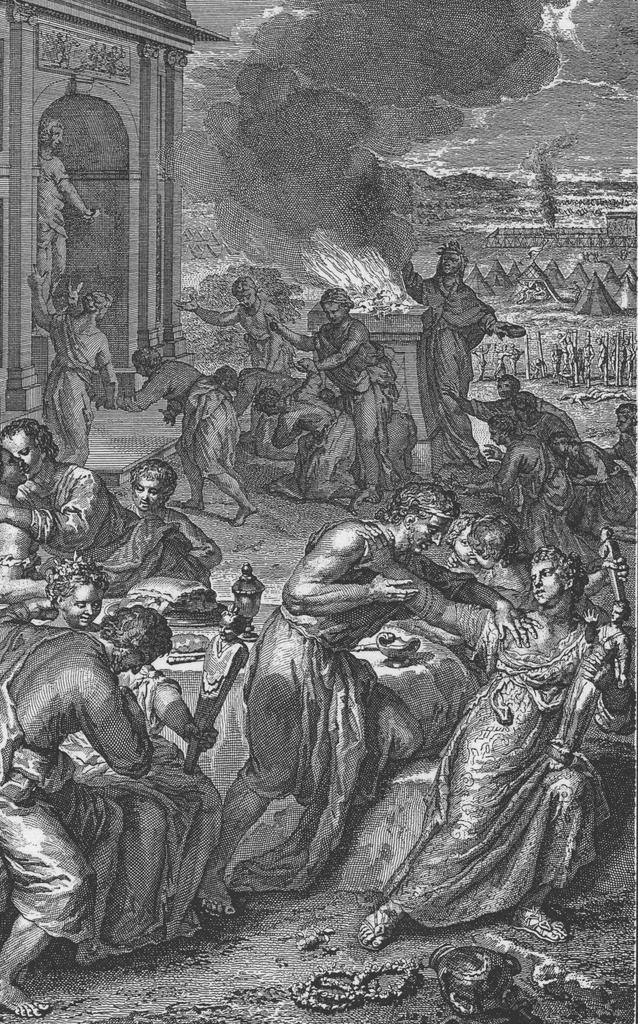
Save "בעל פעור
"
בעל פעור

Moab leads Israel into sin, as in Numbers 25:1-8, illustration from the 1728 Figures de la Bible; illustrated by Gerard Hoet (1648-1733) and others, and published by P. de Hondt in The Hague

(א) וַיֵּ֥שֶׁב יִשְׂרָאֵ֖ל בַּשִּׁטִּ֑ים וַיָּ֣חֶל הָעָ֔ם לִזְנ֖וֹת אֶל־בְּנ֥וֹת מוֹאָֽב׃ (ב) וַתִּקְרֶ֣אןָ לָעָ֔ם לְזִבְחֵ֖י אֱלֹהֵיהֶ֑ן וַיֹּ֣אכַל הָעָ֔ם וַיִּֽשְׁתַּחֲו֖וּ לֵאלֹֽהֵיהֶֽן׃ (ג) וַיִּצָּ֥מֶד יִשְׂרָאֵ֖ל לְבַ֣עַל פְּע֑וֹר וַיִּֽחַר־אַ֥ף ה׳ בְּיִשְׂרָאֵֽל׃ (ד) וַיֹּ֨אמֶר ה׳ אֶל־מֹשֶׁ֗ה קַ֚ח אֶת־כׇּל־רָאשֵׁ֣י הָעָ֔ם וְהוֹקַ֥ע אוֹתָ֛ם לַה׳ נֶ֣גֶד הַשָּׁ֑מֶשׁ וְיָשֹׁ֛ב חֲר֥וֹן אַף־ה׳ מִיִּשְׂרָאֵֽל׃ (ה) וַיֹּ֣אמֶר מֹשֶׁ֔ה אֶל־שֹׁפְטֵ֖י יִשְׂרָאֵ֑ל הִרְגוּ֙ אִ֣ישׁ אֲנָשָׁ֔יו הַנִּצְמָדִ֖ים לְבַ֥עַל פְּעֽוֹר׃ (ו) וְהִנֵּ֡ה אִישׁ֩ מִבְּנֵ֨י יִשְׂרָאֵ֜ל בָּ֗א וַיַּקְרֵ֤ב אֶל־אֶחָיו֙ אֶת־הַמִּדְיָנִ֔ית לְעֵינֵ֣י מֹשֶׁ֔ה וּלְעֵינֵ֖י כׇּל־עֲדַ֣ת בְּנֵי־יִשְׂרָאֵ֑ל וְהֵ֣מָּה בֹכִ֔ים פֶּ֖תַח אֹ֥הֶל מוֹעֵֽד׃ (ז) וַיַּ֗רְא פִּֽינְחָס֙ בֶּן־אֶלְעָזָ֔ר בֶּֽן־אַהֲרֹ֖ן הַכֹּהֵ֑ן וַיָּ֙קׇם֙ מִתּ֣וֹךְ הָֽעֵדָ֔ה וַיִּקַּ֥ח רֹ֖מַח בְּיָדֽוֹ׃ (ח) וַ֠יָּבֹ֠א אַחַ֨ר אִֽישׁ־יִשְׂרָאֵ֜ל אֶל־הַקֻּבָּ֗ה וַיִּדְקֹר֙ אֶת־שְׁנֵיהֶ֔ם אֵ֚ת אִ֣ישׁ יִשְׂרָאֵ֔ל וְאֶת־הָאִשָּׁ֖ה אֶל־קֳבָתָ֑הּ וַתֵּֽעָצַר֙ הַמַּגֵּפָ֔ה מֵעַ֖ל בְּנֵ֥י יִשְׂרָאֵֽל׃ (ט) וַיִּהְי֕וּ הַמֵּתִ֖ים בַּמַּגֵּפָ֑ה אַרְבָּעָ֥ה וְעֶשְׂרִ֖ים אָֽלֶף׃ {פ}
(י) וַיְדַבֵּ֥ר ה׳ אֶל־מֹשֶׁ֥ה לֵּאמֹֽר׃ (יא) פִּֽינְחָ֨ס*(בספרי ספרד ואשכנז נהוג לכתוב פִּֽינְחָ֨ס ביו״ד זעירא) בֶּן־אֶלְעָזָ֜ר בֶּן־אַהֲרֹ֣ן הַכֹּהֵ֗ן הֵשִׁ֤יב אֶת־חֲמָתִי֙ מֵעַ֣ל בְּנֵֽי־יִשְׂרָאֵ֔ל בְּקַנְא֥וֹ אֶת־קִנְאָתִ֖י בְּתוֹכָ֑ם וְלֹא־כִלִּ֥יתִי אֶת־בְּנֵֽי־יִשְׂרָאֵ֖ל בְּקִנְאָתִֽי׃ (יב) לָכֵ֖ן אֱמֹ֑ר הִנְנִ֨י נֹתֵ֥ן ל֛וֹ אֶת־בְּרִיתִ֖י שָׁלֽוֹם׃*(בספרי ספרד ואשכנז וי״ו קטיעא) (יג) וְהָ֤יְתָה לּוֹ֙ וּלְזַרְע֣וֹ אַחֲרָ֔יו בְּרִ֖ית כְּהֻנַּ֣ת עוֹלָ֑ם תַּ֗חַת אֲשֶׁ֤ר קִנֵּא֙ לֵֽאלֹקָ֔יו וַיְכַפֵּ֖ר עַל־בְּנֵ֥י יִשְׂרָאֵֽל׃ (יד) וְשֵׁם֩ אִ֨ישׁ יִשְׂרָאֵ֜ל הַמֻּכֶּ֗ה אֲשֶׁ֤ר הֻכָּה֙ אֶת־הַמִּדְיָנִ֔ית זִמְרִ֖י בֶּן־סָל֑וּא נְשִׂ֥יא בֵֽית־אָ֖ב לַשִּׁמְעֹנִֽי׃ (טו) וְשֵׁ֨ם הָֽאִשָּׁ֧ה הַמֻּכָּ֛ה הַמִּדְיָנִ֖ית כׇּזְבִּ֣י בַת־צ֑וּר רֹ֣אשׁ אֻמּ֥וֹת בֵּֽית־אָ֛ב בְּמִדְיָ֖ן הֽוּא׃ {פ}
(טז) וַיְדַבֵּ֥ר ה׳ אֶל־מֹשֶׁ֥ה לֵּאמֹֽר׃ (יז) צָר֖וֹר אֶת־הַמִּדְיָנִ֑ים וְהִכִּיתֶ֖ם אוֹתָֽם׃ (יח) כִּ֣י צֹרְרִ֥ים הֵם֙ לָכֶ֔ם בְּנִכְלֵיהֶ֛ם אֲשֶׁר־נִכְּל֥וּ לָכֶ֖ם עַל־דְּבַר־פְּע֑וֹר וְעַל־דְּבַ֞ר כׇּזְבִּ֨י בַת־נְשִׂ֤יא מִדְיָן֙ אֲחֹתָ֔ם הַמֻּכָּ֥ה בְיוֹם־הַמַּגֵּפָ֖ה עַל־דְּבַר־פְּעֽוֹר׃

(1) While Israel was staying at Shittim, the menfolk*menfolk NJPS “people”; cf. Exod. 14.6, Num. 21.33. See the Dictionary under ‘am. profaned themselves by whoring*profaned themselves by whoring Others “began to commit harlotry.” with the Moabite women, (2) who invited the menfolk to the sacrifices for their god. The menfolk partook of them and worshiped that god. (3) Thus Israel attached itself to Baal-peor, and ה׳ was incensed with Israel. (4) ה׳ said to Moses, “Take all the ringleaders*ringleaders Lit. “heads of the people.” and have them publicly*publicly Others “in face of the sun.” impaled before ה׳, so that יהוה’s wrath may turn away from Israel.” (5) So Moses said to Israel’s officials, “Each of you slay those of his men*his men I.e., those under each official’s command when the militia is mustered. Lit. “his [salient] participants.” See the Dictionary under ’ish. who attached themselves to Baal-peor.” (6) Just then a certain Israelite man*man Lit. “participant whose involvement defines the depicted situation.” came and brought a Midianite woman over to his companions, in the sight of Moses and of the whole Israelite community who were weeping at the entrance of the Tent of Meeting. (7) When Phinehas, son of Eleazar son of Aaron the priest, saw this, he left the assembly and, taking a spear in his hand, (8) he followed the Israelite man into the chamber and stabbed both of them, the Israelite man and the woman, through the belly. Then the plague against the Israelites was checked. (9) Those who died of the plague numbered twenty-four thousand. (10) ה׳ spoke to Moses, saying, (11) “Phinehas, son of Eleazar son of Aaron the priest, has turned back My wrath from the Israelites by displaying among them his passion for Me, so that I did not wipe out the Israelite people in My passion. (12) Say, therefore, ‘I grant him My pact of friendship. (13) It shall be for him and his descendants after him a pact of priesthood for all time, because he took impassioned action for his God, thus making expiation for the Israelites.’” (14) The name of the Israelite man who was killed, the one who was killed with the Midianite woman, was Zimri son of Salu, chieftain of a Simeonite ancestral house. (15) The name of the Midianite woman who was killed was Cozbi daughter of Zur; he was the tribal head of an ancestral house in Midian. (16) ה׳ spoke to Moses, saying, (17) “Assail the Midianites and defeat them— (18) for they assailed you by the trickery they practiced against you—because of the affair of Peor and because of the affair of their kinswoman Cozbi, daughter of the Midianite chieftain, who was killed at the time of the plague on account of Peor.”

(א) וַיַּ֣רְא הָעָ֔ם כִּֽי־בֹשֵׁ֥שׁ מֹשֶׁ֖ה לָרֶ֣דֶת מִן־הָהָ֑ר וַיִּקָּהֵ֨ל הָעָ֜ם עַֽל־אַהֲרֹ֗ן וַיֹּאמְר֤וּ אֵלָיו֙ ק֣וּם ׀ עֲשֵׂה־לָ֣נוּ אֱלֹקִ֗ים אֲשֶׁ֤ר יֵֽלְכוּ֙ לְפָנֵ֔ינוּ כִּי־זֶ֣ה ׀ מֹשֶׁ֣ה הָאִ֗ישׁ אֲשֶׁ֤ר הֶֽעֱלָ֙נוּ֙ מֵאֶ֣רֶץ מִצְרַ֔יִם לֹ֥א יָדַ֖עְנוּ מֶה־הָ֥יָה לֽוֹ׃ (ב) וַיֹּ֤אמֶר אֲלֵהֶם֙ אַהֲרֹ֔ן פָּֽרְקוּ֙ נִזְמֵ֣י הַזָּהָ֔ב אֲשֶׁר֙ בְּאׇזְנֵ֣י נְשֵׁיכֶ֔ם בְּנֵיכֶ֖ם וּבְנֹתֵיכֶ֑ם וְהָבִ֖יאוּ אֵלָֽי׃ (ג) וַיִּתְפָּֽרְקוּ֙ כׇּל־הָעָ֔ם אֶת־נִזְמֵ֥י הַזָּהָ֖ב אֲשֶׁ֣ר בְּאׇזְנֵיהֶ֑ם וַיָּבִ֖יאוּ אֶֽל־אַהֲרֹֽן׃ (ד) וַיִּקַּ֣ח מִיָּדָ֗ם וַיָּ֤צַר אֹתוֹ֙ בַּחֶ֔רֶט וַֽיַּעֲשֵׂ֖הוּ עֵ֣גֶל מַסֵּכָ֑ה וַיֹּ֣אמְר֔וּ אֵ֤לֶּה אֱלֹקֶ֙יךָ֙ יִשְׂרָאֵ֔ל אֲשֶׁ֥ר הֶעֱל֖וּךָ מֵאֶ֥רֶץ מִצְרָֽיִם׃ (ה) וַיַּ֣רְא אַהֲרֹ֔ן וַיִּ֥בֶן מִזְבֵּ֖חַ לְפָנָ֑יו וַיִּקְרָ֤א אַֽהֲרֹן֙ וַיֹּאמַ֔ר חַ֥ג לַה׳ מָחָֽר׃ (ו) וַיַּשְׁכִּ֙ימוּ֙ מִֽמׇּחֳרָ֔ת וַיַּעֲל֣וּ עֹלֹ֔ת וַיַּגִּ֖שׁוּ שְׁלָמִ֑ים וַיֵּ֤שֶׁב הָעָם֙ לֶֽאֱכֹ֣ל וְשָׁת֔וֹ וַיָּקֻ֖מוּ לְצַחֵֽק׃ {פ}
(ז) וַיְדַבֵּ֥ר ה׳ אֶל־מֹשֶׁ֑ה לֶךְ־רֵ֕ד כִּ֚י שִׁחֵ֣ת עַמְּךָ֔ אֲשֶׁ֥ר הֶעֱלֵ֖יתָ מֵאֶ֥רֶץ מִצְרָֽיִם׃ (ח) סָ֣רוּ מַהֵ֗ר מִן־הַדֶּ֙רֶךְ֙ אֲשֶׁ֣ר צִוִּיתִ֔ם עָשׂ֣וּ לָהֶ֔ם עֵ֖גֶל מַסֵּכָ֑ה וַיִּשְׁתַּֽחֲווּ־לוֹ֙ וַיִּזְבְּחוּ־ל֔וֹ וַיֹּ֣אמְר֔וּ אֵ֤לֶּה אֱלֹקֶ֙יךָ֙ יִשְׂרָאֵ֔ל אֲשֶׁ֥ר הֶֽעֱל֖וּךָ מֵאֶ֥רֶץ מִצְרָֽיִם׃ (ט) וַיֹּ֥אמֶר ה׳ אֶל־מֹשֶׁ֑ה רָאִ֙יתִי֙ אֶת־הָעָ֣ם הַזֶּ֔ה וְהִנֵּ֥ה עַם־קְשֵׁה־עֹ֖רֶף הֽוּא׃ (י) וְעַתָּה֙ הַנִּ֣יחָה לִּ֔י וְיִֽחַר־אַפִּ֥י בָהֶ֖ם וַאֲכַלֵּ֑ם וְאֶֽעֱשֶׂ֥ה אוֹתְךָ֖ לְג֥וֹי גָּדֽוֹל׃ (יא) וַיְחַ֣ל מֹשֶׁ֔ה אֶת־פְּנֵ֖י ה׳ אֱלֹקָ֑יו וַיֹּ֗אמֶר לָמָ֤ה ה׳ יֶחֱרֶ֤ה אַפְּךָ֙ בְּעַמֶּ֔ךָ אֲשֶׁ֤ר הוֹצֵ֙אתָ֙ מֵאֶ֣רֶץ מִצְרַ֔יִם בְּכֹ֥חַ גָּד֖וֹל וּבְיָ֥ד חֲזָקָֽה׃ (יב) לָ֩מָּה֩ יֹאמְר֨וּ מִצְרַ֜יִם לֵאמֹ֗ר בְּרָעָ֤ה הֽוֹצִיאָם֙ לַהֲרֹ֤ג אֹתָם֙ בֶּֽהָרִ֔ים וּ֨לְכַלֹּתָ֔ם מֵעַ֖ל פְּנֵ֣י הָֽאֲדָמָ֑ה שׁ֚וּב מֵחֲר֣וֹן אַפֶּ֔ךָ וְהִנָּחֵ֥ם עַל־הָרָעָ֖ה לְעַמֶּֽךָ׃ (יג) זְכֹ֡ר לְאַבְרָהָם֩ לְיִצְחָ֨ק וּלְיִשְׂרָאֵ֜ל עֲבָדֶ֗יךָ אֲשֶׁ֨ר נִשְׁבַּ֣עְתָּ לָהֶם֮ בָּךְ֒ וַתְּדַבֵּ֣ר אֲלֵהֶ֔ם אַרְבֶּה֙ אֶֽת־זַרְעֲכֶ֔ם כְּכוֹכְבֵ֖י הַשָּׁמָ֑יִם וְכׇל־הָאָ֨רֶץ הַזֹּ֜את אֲשֶׁ֣ר אָמַ֗רְתִּי אֶתֵּן֙ לְזַרְעֲכֶ֔ם וְנָחֲל֖וּ לְעֹלָֽם׃ (יד) וַיִּנָּ֖חֶם ה׳ עַל־הָ֣רָעָ֔ה אֲשֶׁ֥ר דִּבֶּ֖ר לַעֲשׂ֥וֹת לְעַמּֽוֹ׃ {פ}
(טו) וַיִּ֜פֶן וַיֵּ֤רֶד מֹשֶׁה֙ מִן־הָהָ֔ר וּשְׁנֵ֛י לֻחֹ֥ת הָעֵדֻ֖ת בְּיָד֑וֹ לֻחֹ֗ת כְּתֻבִים֙ מִשְּׁנֵ֣י עֶבְרֵיהֶ֔ם מִזֶּ֥ה וּמִזֶּ֖ה הֵ֥ם כְּתֻבִֽים׃ (טז) וְהַ֨לֻּחֹ֔ת מַעֲשֵׂ֥ה אֱלֹקִ֖ים הֵ֑מָּה וְהַמִּכְתָּ֗ב מִכְתַּ֤ב אֱלֹקִים֙ ה֔וּא חָר֖וּת עַל־הַלֻּחֹֽת׃ (יז) וַיִּשְׁמַ֧ע יְהוֹשֻׁ֛עַ אֶת־ק֥וֹל הָעָ֖ם בְּרֵעֹ֑ה וַיֹּ֙אמֶר֙ אֶל־מֹשֶׁ֔ה ק֥וֹל מִלְחָמָ֖ה בַּֽמַּחֲנֶֽה׃ (יח) וַיֹּ֗אמֶר אֵ֥ין קוֹל֙ עֲנ֣וֹת גְּבוּרָ֔ה וְאֵ֥ין ק֖וֹל עֲנ֣וֹת חֲלוּשָׁ֑ה ק֣וֹל עַנּ֔וֹת אָנֹכִ֖י שֹׁמֵֽעַ׃ (יט) וַֽיְהִ֗י כַּאֲשֶׁ֤ר קָרַב֙ אֶל־הַֽמַּחֲנֶ֔ה וַיַּ֥רְא אֶת־הָעֵ֖גֶל וּמְחֹלֹ֑ת וַיִּֽחַר־אַ֣ף מֹשֶׁ֗ה וַיַּשְׁלֵ֤ךְ מִיָּדָו֙ אֶת־הַלֻּחֹ֔ת וַיְשַׁבֵּ֥ר אֹתָ֖ם תַּ֥חַת הָהָֽר׃ (כ) וַיִּקַּ֞ח אֶת־הָעֵ֨גֶל אֲשֶׁ֤ר עָשׂוּ֙ וַיִּשְׂרֹ֣ף בָּאֵ֔שׁ וַיִּטְחַ֖ן עַ֣ד אֲשֶׁר־דָּ֑ק וַיִּ֙זֶר֙ עַל־פְּנֵ֣י הַמַּ֔יִם וַיַּ֖שְׁקְ אֶת־בְּנֵ֥י יִשְׂרָאֵֽל׃ (כא) וַיֹּ֤אמֶר מֹשֶׁה֙ אֶֽל־אַהֲרֹ֔ן מֶֽה־עָשָׂ֥ה לְךָ֖ הָעָ֣ם הַזֶּ֑ה כִּֽי־הֵבֵ֥אתָ עָלָ֖יו חֲטָאָ֥ה גְדֹלָֽה׃ (כב) וַיֹּ֣אמֶר אַהֲרֹ֔ן אַל־יִ֥חַר אַ֖ף אֲדֹנִ֑י אַתָּה֙ יָדַ֣עְתָּ אֶת־הָעָ֔ם כִּ֥י בְרָ֖ע הֽוּא׃ (כג) וַיֹּ֣אמְרוּ לִ֔י עֲשֵׂה־לָ֣נוּ אֱלֹקִ֔ים אֲשֶׁ֥ר יֵלְכ֖וּ לְפָנֵ֑ינוּ כִּי־זֶ֣ה ׀ מֹשֶׁ֣ה הָאִ֗ישׁ אֲשֶׁ֤ר הֶֽעֱלָ֙נוּ֙ מֵאֶ֣רֶץ מִצְרַ֔יִם לֹ֥א יָדַ֖עְנוּ מֶה־הָ֥יָה לֽוֹ׃ (כד) וָאֹמַ֤ר לָהֶם֙ לְמִ֣י זָהָ֔ב הִתְפָּרָ֖קוּ וַיִּתְּנוּ־לִ֑י וָאַשְׁלִכֵ֣הוּ בָאֵ֔שׁ וַיֵּצֵ֖א הָעֵ֥גֶל הַזֶּֽה׃ (כה) וַיַּ֤רְא מֹשֶׁה֙ אֶת־הָעָ֔ם כִּ֥י פָרֻ֖עַ ה֑וּא כִּֽי־פְרָעֹ֣ה אַהֲרֹ֔ן לְשִׁמְצָ֖ה בְּקָמֵיהֶֽם׃ (כו) וַיַּעֲמֹ֤ד מֹשֶׁה֙ בְּשַׁ֣עַר הַֽמַּחֲנֶ֔ה וַיֹּ֕אמֶר מִ֥י לַה׳ אֵלָ֑י וַיֵּאָסְפ֥וּ אֵלָ֖יו כׇּל־בְּנֵ֥י לֵוִֽי׃ (כז) וַיֹּ֣אמֶר לָהֶ֗ם כֹּֽה־אָמַ֤ר ה׳ אֱלֹקֵ֣י יִשְׂרָאֵ֔ל שִׂ֥ימוּ אִישׁ־חַרְבּ֖וֹ עַל־יְרֵכ֑וֹ עִבְר֨וּ וָשׁ֜וּבוּ מִשַּׁ֤עַר לָשַׁ֙עַר֙ בַּֽמַּחֲנֶ֔ה וְהִרְג֧וּ אִֽישׁ־אֶת־אָחִ֛יו וְאִ֥ישׁ אֶת־רֵעֵ֖הוּ וְאִ֥ישׁ אֶת־קְרֹבֽוֹ׃ (כח) וַיַּֽעֲשׂ֥וּ בְנֵֽי־לֵוִ֖י כִּדְבַ֣ר מֹשֶׁ֑ה וַיִּפֹּ֤ל מִן־הָעָם֙ בַּיּ֣וֹם הַה֔וּא כִּשְׁלֹ֥שֶׁת אַלְפֵ֖י אִֽישׁ׃ (כט) וַיֹּ֣אמֶר מֹשֶׁ֗ה מִלְא֨וּ יֶדְכֶ֤ם הַיּוֹם֙ לַֽה׳ כִּ֛י אִ֥ישׁ בִּבְנ֖וֹ וּבְאָחִ֑יו וְלָתֵ֧ת עֲלֵיכֶ֛ם הַיּ֖וֹם בְּרָכָֽה׃ (ל) וַיְהִי֙ מִֽמׇּחֳרָ֔ת וַיֹּ֤אמֶר מֹשֶׁה֙ אֶל־הָעָ֔ם אַתֶּ֥ם חֲטָאתֶ֖ם חֲטָאָ֣ה גְדֹלָ֑ה וְעַתָּה֙ אֶֽעֱלֶ֣ה אֶל־ה׳ אוּלַ֥י אֲכַפְּרָ֖ה בְּעַ֥ד חַטַּאתְכֶֽם׃ (לא) וַיָּ֧שׇׁב מֹשֶׁ֛ה אֶל־ה׳ וַיֹּאמַ֑ר אָ֣נָּ֗א חָטָ֞א הָעָ֤ם הַזֶּה֙ חֲטָאָ֣ה גְדֹלָ֔ה וַיַּֽעֲשׂ֥וּ לָהֶ֖ם אֱלֹקֵ֥י זָהָֽב׃ (לב) וְעַתָּ֖ה אִם־תִּשָּׂ֣א חַטָּאתָ֑ם וְאִם־אַ֕יִן מְחֵ֣נִי נָ֔א מִֽסִּפְרְךָ֖ אֲשֶׁ֥ר כָּתָֽבְתָּ׃ (לג) וַיֹּ֥אמֶר ה׳ אֶל־מֹשֶׁ֑ה מִ֚י אֲשֶׁ֣ר חָֽטָא־לִ֔י אֶמְחֶ֖נּוּ מִסִּפְרִֽי׃ (לד) וְעַתָּ֞ה לֵ֣ךְ ׀ נְחֵ֣ה אֶת־הָעָ֗ם אֶ֤ל אֲשֶׁר־דִּבַּ֙רְתִּי֙ לָ֔ךְ הִנֵּ֥ה מַלְאָכִ֖י יֵלֵ֣ךְ לְפָנֶ֑יךָ וּבְי֣וֹם פׇּקְדִ֔י וּפָקַדְתִּ֥י עֲלֵהֶ֖ם חַטָּאתָֽם׃ (לה) וַיִּגֹּ֥ף ה׳ אֶת־הָעָ֑ם עַ֚ל אֲשֶׁ֣ר עָשׂ֣וּ אֶת־הָעֵ֔גֶל אֲשֶׁ֥ר עָשָׂ֖ה אַהֲרֹֽן׃ {ס}

(1) When the people saw that Moses was so long in coming down from the mountain, the people gathered against Aaron and said to him, “Come, make us a god who shall go before us, for that fellow Moses—the man who brought us from the land of Egypt—we do not know what has happened to him.” (2) Aaron said to them, “[You men,] take off the gold rings that are on the ears of your wives, your sons, and your daughters, and bring them to me.” (3) And all the people took off the gold rings that were in their ears and brought them to Aaron. (4) This he took from them and cast in a mold,*cast in a mold Cf. Zech. 11.13 (beth hayyoṣer, “foundry”); others “fashioned it with a graving tool.” and made it into a molten calf. And they exclaimed, “This is your god,*This is your god Others “These are your gods.” O Israel, who brought you out of the land of Egypt!” (5) When Aaron saw this, he built an altar before it; and Aaron announced: “Tomorrow shall be a festival of יהוה!” (6) Early next day, the people offered up burnt offerings and brought sacrifices of well-being; they sat down to eat and drink, and then rose to dance. (7) ה׳ spoke to Moses, “Hurry down, for your people, whom you brought out of the land of Egypt, have acted basely. (8) They have been quick to turn aside from the way that I enjoined upon them. They have made themselves a molten calf and bowed low to it and sacrificed to it, saying: ‘This is your god, O Israel, who brought you out of the land of Egypt!’” (9) ה׳ further said to Moses, “I see that this is a stiffnecked people. (10) Now, let Me be, that My anger may blaze forth against them and that I may destroy them, and make of you a great nation.” (11) But Moses implored his God ה׳, saying, “Let not Your anger, ה׳, blaze forth against Your people, whom You delivered from the land of Egypt with great power and with a mighty hand. (12) Let not the Egyptians say, ‘It was with evil intent that he delivered them, only to kill them off in the mountains and annihilate them from the face of the earth.’ Turn from Your blazing anger, and renounce the plan to punish Your people. (13) Remember Your servants, Abraham, Isaac, and Israel, how You swore to them by Your Self and said to them: I will make your offspring as numerous as the stars of heaven, and I will give to your offspring this whole land of which I spoke, to possess forever.” (14) And ה׳ renounced the punishment planned for God’s people. (15) Thereupon Moses turned and went down from the mountain bearing the two tablets of the Pact, tablets inscribed on both their surfaces: they were inscribed on the one side and on the other. (16) The tablets were God’s work, and the writing was God’s writing, incised upon the tablets. (17) When Joshua heard the sound of the people in its boisterousness, he said to Moses, “There is a cry of war in the camp.” (18) But he answered,
“It is not the sound of the tune of triumph,
Or the sound of the tune of defeat;
It is the sound of song that I hear!”
(19) As soon as Moses came near the camp and saw the calf and the dancing, he became enraged; and he hurled the tablets from his hands and shattered them at the foot of the mountain. (20) He took the calf that they had made and burned it; he ground it to powder and strewed it upon the water and so made the Israelites drink it. (21) Moses said to Aaron, “What did this people do to you that you have brought such great sin upon them?” (22) Aaron said, “Let not my lord be enraged. You know that this people is bent on evil. (23) They said to me, ‘Make us a god to lead us; for that fellow Moses—the man who brought us from the land of Egypt—we do not know what has happened to him.’ (24) So I said to them, ‘Whoever has gold, take it off!’ They gave it to me and I hurled it into the fire and out came this calf!” (25) Moses saw that the people were out of control—since Aaron had let them get out of control—so that they were a menace*a menace Others “an object of derision.” to any who might oppose them. (26) Moses stood up in the gate of the camp and said, “Whoever is for ה׳, come here!” And all the men of Levi rallied to him. (27) He said to them, “Thus says ה׳, the God of Israel: Each of you put sword on thigh, go back and forth from gate to gate throughout the camp, and slay sibling, neighbor, and kin.” (28) The men of Levi did as Moses had bidden; and some three thousand of the people fell that day. (29) And Moses said, “Dedicate yourselves*Dedicate yourselves Lit. “fill your hands.” to ה׳ this day—for each of you has been against blood relations—that [God] may bestow a blessing upon you today.” (30) The next day Moses said to the people, “You have been guilty of a great sin. Yet I will now go up to ה׳; perhaps I may win forgiveness for your sin.” (31) Moses went back to ה׳ and said, “Alas, this people is guilty of a great sin in making for themselves a god of gold. (32) Now, if You will forgive their sin [well and good]; but if not, erase me from the record which You have written!” (33) But ה׳ said to Moses, “Only one who has sinned against Me will I erase from My record. (34) Go now, lead the people where I told you. See, My messenger shall go before you. But when I make an accounting, I will bring them to account for their sins.” (35) Then ה׳ sent a plague upon the people, for what they did with the calf that Aaron made.*for what they did with the calf that Aaron made Meaning of Heb. uncertain.
לעניין ההשוואה בין שתי הפרשיות ראה גם פרופ' יונתן גרוסמן: קנאות משה, קנאות נדב ואביהוא וקנאות פינחס
www.hatanakh.com/articles/קנאות-משה-קנאות-נדב-ואביהוא-וקנאת-פנחס
פרופ' גרוסמן מגלה במאמר שקיים דמיון בין המבנה הכולל של שני הסיפורים הללו (חטא העגל ובעל פעור) ועומד על הקשרים הלשוניים והרעיוניים.
"קיים קשר ענייני בולט בין חטא בעל פעור לבין חטא העגל. בשני המקרים, החטא (הכרוך בעבודה זרה ובגילוי עריות) נעשה אחרי גילוי שכינה המוני, בשניהם מתחוללת מגפה בעם ובשניהם אחד ממנהיגי העם - משה או פינחס - עוצר את חרון ה׳ בפעולה קנאית. כך, נוצר ניגוד בין פעולתו של פינחס בבעל פעור לבין אי-פעולתו של משה באותו אירוע. "
וַיַּעֲמֹ֤ד מֹשֶׁה֙ בְּשַׁ֣עַר הַֽמַּחֲנֶ֔ה וַיֹּ֕אמֶר מִ֥י לַה׳ אֵלָ֑י וַיֵּאָסְפ֥וּ אֵלָ֖יו כׇּל־בְּנֵ֥י לֵוִֽי׃ (כז) וַיֹּ֣אמֶר לָהֶ֗ם כֹּֽה־אָמַ֤ר ה׳ אֱלֹקֵ֣י יִשְׂרָאֵ֔ל שִׂ֥ימוּ אִישׁ־חַרְבּ֖וֹ עַל־יְרֵכ֑וֹ עִבְר֨וּ וָשׁ֜וּבוּ מִשַּׁ֤עַר לָשַׁ֙עַר֙ בַּֽמַּחֲנֶ֔ה וְהִרְג֧וּ אִֽישׁ־אֶת־אָחִ֛יו וְאִ֥ישׁ אֶת־רֵעֵ֖הוּ וְאִ֥ישׁ אֶת־קְרֹבֽוֹ׃ (כח) וַיַּֽעֲשׂ֥וּ בְנֵֽי־לֵוִ֖י כִּדְבַ֣ר מֹשֶׁ֑ה
וַיֹּ֨אמֶר ה׳ אֶל־מֹשֶׁ֗ה קַ֚ח אֶת־כׇּל־רָאשֵׁ֣י הָעָ֔ם וְהוֹקַ֥ע אוֹתָ֛ם לַה׳ נֶ֣גֶד הַשָּׁ֑מֶשׁ וְיָשֹׁ֛ב חֲר֥וֹן אַף־ה׳ מִיִּשְׂרָאֵֽל׃ (ה) וַיֹּ֣אמֶר מֹשֶׁ֔ה אֶל־שֹׁפְטֵ֖י יִשְׂרָאֵ֑ל הִרְגוּ֙ אִ֣ישׁ אֲנָשָׁ֔יו הַנִּצְמָדִ֖ים לְבַ֥עַל פְּעֽוֹר׃
למי משה פונה ומי נענה לקריאתו?
בחטא העגל בני שבטו של משה, בני לוי, הם אלו שנענים לקריאתו מי לה׳ אלי, ואילו בבעל פעור משה לא פונה אליהם אלא אל שפטי ישראל וקריאתו גם לא נענית.

(א) וַיִּקַּ֣ח קֹ֔רַח בֶּן־יִצְהָ֥ר בֶּן־קְהָ֖ת בֶּן־לֵוִ֑י וְדָתָ֨ן וַאֲבִירָ֜ם בְּנֵ֧י אֱלִיאָ֛ב וְא֥וֹן בֶּן־פֶּ֖לֶת בְּנֵ֥י רְאוּבֵֽן׃ (ב) וַיָּקֻ֙מוּ֙ לִפְנֵ֣י מֹשֶׁ֔ה וַאֲנָשִׁ֥ים מִבְּנֵֽי־יִשְׂרָאֵ֖ל חֲמִשִּׁ֣ים וּמָאתָ֑יִם נְשִׂיאֵ֥י עֵדָ֛ה קְרִאֵ֥י מוֹעֵ֖ד אַנְשֵׁי־שֵֽׁם׃ (ג) וַיִּֽקָּהֲל֞וּ עַל־מֹשֶׁ֣ה וְעַֽל־אַהֲרֹ֗ן וַיֹּאמְר֣וּ אֲלֵהֶם֮ רַב־לָכֶם֒ כִּ֤י כׇל־הָֽעֵדָה֙ כֻּלָּ֣ם קְדֹשִׁ֔ים וּבְתוֹכָ֖ם ה׳ וּמַדּ֥וּעַ תִּֽתְנַשְּׂא֖וּ עַל־קְהַ֥ל ה׳׃ (ד) וַיִּשְׁמַ֣ע מֹשֶׁ֔ה וַיִּפֹּ֖ל עַל־פָּנָֽיו׃ (ה) וַיְדַבֵּ֨ר אֶל־קֹ֜רַח וְאֶֽל־כׇּל־עֲדָתוֹ֮ לֵאמֹר֒ בֹּ֠קֶר וְיֹדַ֨ע ה׳ אֶת־אֲשֶׁר־ל֛וֹ וְאֶת־הַקָּד֖וֹשׁ וְהִקְרִ֣יב אֵלָ֑יו וְאֵ֛ת אֲשֶׁ֥ר יִבְחַר־בּ֖וֹ יַקְרִ֥יב אֵלָֽיו׃ (ו) זֹ֖את עֲשׂ֑וּ קְחוּ־לָכֶ֣ם מַחְתּ֔וֹת קֹ֖רַח וְכׇל־עֲדָתֽוֹ׃ (ז) וּתְנ֣וּ בָהֵ֣ן ׀ אֵ֡שׁ וְשִׂ֩ימוּ֩ עֲלֵיהֶ֨ן ׀ קְטֹ֜רֶת לִפְנֵ֤י ה׳ מָחָ֔ר וְהָיָ֗ה הָאִ֛ישׁ אֲשֶׁר־יִבְחַ֥ר ה׳ ה֣וּא הַקָּד֑וֹשׁ רַב־לָכֶ֖ם בְּנֵ֥י לֵוִֽי׃ (ח) וַיֹּ֥אמֶר מֹשֶׁ֖ה אֶל־קֹ֑רַח שִׁמְעוּ־נָ֖א בְּנֵ֥י לֵוִֽי׃ (ט) הַמְעַ֣ט מִכֶּ֗ם כִּֽי־הִבְדִּיל֩ אֱלֹקֵ֨י יִשְׂרָאֵ֤ל אֶתְכֶם֙ מֵעֲדַ֣ת יִשְׂרָאֵ֔ל לְהַקְרִ֥יב אֶתְכֶ֖ם אֵלָ֑יו לַעֲבֹ֗ד אֶת־עֲבֹדַת֙ מִשְׁכַּ֣ן ה׳ וְלַעֲמֹ֛ד לִפְנֵ֥י הָעֵדָ֖ה לְשָׁרְתָֽם׃ (י) וַיַּקְרֵב֙ אֹֽתְךָ֔ וְאֶת־כׇּל־אַחֶ֥יךָ בְנֵי־לֵוִ֖י אִתָּ֑ךְ וּבִקַּשְׁתֶּ֖ם גַּם־כְּהֻנָּֽה׃

(1) Now Korah, son of Izhar son of Kohath son of Levi, betook himself,*betook himself Lit. “took”; nuance of Heb. uncertain. along with Dathan and Abiram sons of Eliab, and On son of Peleth—descendants of Reuben*descendants of Reuben According to Num. 26.5, 8–9, Eliab was son of Pallu, son of Reuben. (2) to rise up against Moses, together with two hundred and fifty Israelites, chieftains of the community, chosen in the assembly, men of repute. (3) They combined against Moses and Aaron and said to them, “You have gone too far! For all the community are holy, all of them, and ה׳ is in their midst. Why then do you raise yourselves above יהוה’s congregation?” (4) When Moses heard this, he fell on his face.*he fell on his face Perhaps in the sense of “his face fell.” (5) Then he spoke to Korah and all his company, saying, “Come morning, ה׳ will make known who is [God’s] and who is holy by granting direct access; the one whom [God] has chosen will be granted access. (6) Do this: You, Korah and all your*your Lit. “his.” band, take fire pans, (7) and tomorrow put fire in them and lay incense on them before ה׳. Then the candidate*candidate Lit. “participant whose involvement defines the depicted situation”; trad. “man.” See the Dictionary under ’ish. whom ה׳ chooses, he shall be the holy one. You have gone too far, sons of Levi!” (8) Moses said further to Korah, “Hear me, sons of Levi. (9) Is it not enough for you that the God of Israel has set you apart from the community of Israel and given you direct access, to perform the duties of יהוה’s Tabernacle and to minister to the community and serve them? (10) Now that [God] has advanced you and all your fellow Levites with you, do you seek the priesthood too?

(ה) זִכָּר֞וֹן לִבְנֵ֣י יִשְׂרָאֵ֗ל לְ֠מַ֠עַן אֲשֶׁ֨ר לֹֽא־יִקְרַ֜ב אִ֣ישׁ זָ֗ר אֲ֠שֶׁ֠ר לֹ֣א מִזֶּ֤רַע אַהֲרֹן֙ ה֔וּא לְהַקְטִ֥יר קְטֹ֖רֶת לִפְנֵ֣י ה׳ וְלֹֽא־יִהְיֶ֤ה כְקֹ֙רַח֙ וְכַ֣עֲדָת֔וֹ כַּאֲשֶׁ֨ר דִּבֶּ֧ר ה׳ בְּיַד־מֹשֶׁ֖ה לֽוֹ׃ {פ} (ו) וַיִּלֹּ֜נוּ כׇּל־עֲדַ֤ת בְּנֵֽי־יִשְׂרָאֵל֙ מִֽמׇּחֳרָ֔ת עַל־מֹשֶׁ֥ה וְעַֽל־אַהֲרֹ֖ן לֵאמֹ֑ר אַתֶּ֥ם הֲמִתֶּ֖ם אֶת־עַ֥ם ה׳׃

(5) as ה׳ had ordered him through Moses. It was to be a reminder to the Israelites, so that no outsider—one not of Aaron’s offspring—should presume to offer incense before ה׳ and suffer the fate of Korah and his band. (6) Next day the whole Israelite community railed against Moses and Aaron, saying, “You two have brought death upon יהוה’s people!” (7) But as the community gathered against them, Moses and Aaron turned toward the Tent of Meeting; the cloud had covered it and the Presence of ה׳ appeared.

(א) והנה איש מבני ישראל בא. נִתְקַבְּצוּ שִׁבְטוֹ שֶׁל שִׁמְעוֹן אֵצֶל זִמְרִי שֶׁהָיָה נָשִׂיא שֶׁלָּהֶם, אָמְרוּ לוֹ, אָנוּ נִדּוֹנִין בְּמִיתָה וְאַתָּה יוֹשֵׁב וְכוּ' כִּדְאִיתָא בְּאֵלּוּ הֵן הַנִּשְׂרָפִין (סנהדרין פ"ב): (ב) את המדינית. כָּזְבִּי בַת צוּר: (ג) לעיני משה. אָמְרוּ לוֹ, מֹשֶׁה, זוֹ אֲסוּרָה אוֹ מֻתֶּרֶת? אִם תֹּאמַר אֲסוּרָה, בַּת יִתְרוֹ מִי הִתִּירָהּ לְךָ, וְכוּ', כִּדְאִיתָא הָתָם: (ד) והמה בכים. נִתְעַלְּמָה מִמֶּנּוּ הֲלָכָה, גָּעוּ כֻלָּם בִּבְכִיָּה; בָּעֵגֶל עָמַד מֹשֶׁה כְּנֶגֶד שִׁשִּׁים רִבּוֹא, שֶׁנֶּאֱמַר "וַיִּטְחַן עַד אֲשֶׁר דָּק" וְגוֹ' (שמות ל"ב), וְכָאן רָפוּ יָדָיו? אֶלָּא כְּדֵי שֶׁיָּבֹא פִינְחָס וְיִטֹּל אֶת הָרָאוּי לוֹ (תנחומא):

(1) והנה איש וגו׳ AND BEHOLD, ONE [OF THE CHILDREN OF ISRAEL CAME] The tribe of Simeon gathered to Zimri who was their prince, saying to him. “We are sentenced to death and you remain quiet!?”, — as it is related in the chapter beginning אלו הן הנשרפין (Sanhedrin 82a). (2) את המדינית THE MIDIANITISH WOMAN — Kozbi the daughter of Zur. (3) לעיני משה BEFORE THE EYES OF MOSES — They said to him: “Moses, is this Midianite woman forbidden or permissible as a wife. If you say she is forbidden, then who made Jethro’s daughter, a Midianite woman, permissible to you, etc.” as is related there (Sanhedrin 82a). (4) והמה בכים AND THEY WERE WEEPING — the law (decision on this matter) escaped him and therefore they all burst out into weeping (Sanhedrin 82a). — In the case of the golden calf Moses successfully resisted six hundred thousand men, as it is said, (Exodus 32:20) “And he ground it to powder [and he made the children of Israel drink of it]”, and here his hands were weak (he did not know what to do)?! But this was intentionally caused by God in order that Phineas might come and receive that which was meant for him (Midrash Tanchuma, Balak 20).
(כה) וְאֶלְעָזָ֨ר בֶּֽן־אַהֲרֹ֜ן לָקַֽח־ל֨וֹ מִבְּנ֤וֹת פּֽוּטִיאֵל֙ ל֣וֹ לְאִשָּׁ֔ה וַתֵּ֥לֶד ל֖וֹ אֶת־פִּֽינְחָ֑ס אֵ֗לֶּה רָאשֵׁ֛י אֲב֥וֹת הַלְוִיִּ֖ם לְמִשְׁפְּחֹתָֽם׃
(25) And Aaron’s son Eleazar took into his [household] as wife one of Putiel’s daughters, and she bore him Phinehas. Those are the heads of the ancestral houses of the Levites by their families.

(כה) וְאֶלְעָזָר בַּר אַהֲרן נְסִיב לֵיהּ מִבְּרַתּוֹי דְיִתְרוֹ הוּא פּוּטִיאֵל לֵיהּ לְאִנְתּוּ וִילֵידַת לֵיהּ יַת פִּינְחָס אִלֵין רֵישֵׁי אַבְהַת לֵיוָאֵי ְיִיחוּסֵיהוֹן

(25) And Elasar bar Aharon took unto him a wife from the daughters of Jethro who is Putiel, and she bare him Phinehas. These are the heads of the fathers of the Levites, according to their generations.
(כה) וְאֶלְעָזָ֨ר בֶּֽן־אַהֲרֹ֜ן לָקַֽח־ל֨וֹ מִבְּנ֤וֹת פּֽוּטִיאֵל֙ ל֣וֹ לְאִשָּׁ֔ה וַתֵּ֥לֶד ל֖וֹ אֶת־פִּֽינְחָ֑ס אֵ֗לֶּה רָאשֵׁ֛י אֲב֥וֹת הַלְוִיִּ֖ם לְמִשְׁפְּחֹתָֽם׃
(25) And Aaron’s son Eleazar took into his [household] as wife one of Putiel’s daughters, and she bore him Phinehas. Those are the heads of the ancestral houses of the Levites by their families.
ראה גם ד"ר קרן פייט בבלוג הַנְשָׁמָה מִילּוּלִית, שעמדה על הקשרים המורכבים
בין עם ישראל לבין מדיין ובפרט על כך שמשה התחתן עם אישה מדיינית, ופנחס היה בנה של אישה מדיינית.
כזבי בת צור: אלימות ומאבקי כח

(במדבר כה, ה) ויאמר משה אל שופטי ישראל וגו' הלך שבטו של שמעון אצל זמרי בן סלוא אמרו לו הן דנין דיני נפשות ואתה יושב ושותק מה עשה עמד וקיבץ כ"ד אלף מישראל והלך אצל כזבי אמר לה השמיעי לי אמרה לו בת מלך אני וכן צוה לי אבי לא תשמעי אלא לגדול שבהם אמר לה אף הוא נשיא שבט הוא ולא עוד אלא שהוא גדול ממנו שהוא שני לבטן והוא שלישי לבטן תפשה בבלוריתה והביאה אצל משה אמר לו בן עמרם זו אסורה או מותרת ואם תאמר אסורה בת יתרו מי התירה לך נתעלמה ממנו הלכה געו כולם בבכיה והיינו דכתיב (במדבר כה, ו) והמה בוכים פתח אהל מועד וכתיב (במדבר כה, ז) וירא פנחס בן אלעזר מה ראה אמר רב ראה מעשה ונזכר הלכה אמר לו אחי אבי אבא לא כך לימדתני ברדתך מהר סיני הבועל את כותית קנאין פוגעין בו אמר לו קריינא דאיגרתא איהו ליהוי פרוונקא ושמואל אמר ראה שאין (משלי כא, ל) חכמה ואין תבונה ואין עצה נגד ה׳ כל מקום שיש חילול השם אין חולקין כבוד לרב ר' יצחק אמר ר"א ראה שבא מלאך והשחית בעם ויקם מתוך העדה ויקח רומח בידו מיכן שאין נכנסין בכלי זיין לבית המדרש שלף שננה והניחה באונקלו והיה נשען והולך על מקלו וכיון שהגיע אצל שבטו של שמעון אמר היכן מצינו ששבטו של לוי גדול משל שמעון אמרו הניחו לו אף הוא לעשות צרכיו נכנס התירו פרושין את הדבר א"ר יוחנן ששה נסים נעשו לו לפנחס אחד שהיה לו לזמרי לפרוש ולא פירש ואחד שהיה לו לדבר ולא דבר ואחד שכוון בזכרותו של איש ובנקבותה של אשה ואחד שלא נשמטו מן הרומח ואחד שבא מלאך והגביה את המשקוף ואחד שבא מלאך והשחית בעם בא וחבטן לפני המקום אמר לפניו רבש"ע על אלו יפלו כ"ד אלף מישראל שנאמר (במדבר כה, ט) ויהיו המתים במגפה ארבעה ועשרים אלף והיינו דכתיב (תהלים קו, ל) ויעמד פנחס ויפלל אמר רבי אלעזר ויתפלל לא נאמר אלא ויפלל מלמד כביכול שעשה פלילות עם קונו בקשו מלאכי השרת לדחפו אמר להן הניחו לו קנאי בן קנאי הוא משיב חימה בן משיב חימה הוא התחילו שבטים מבזין אותו ראיתם בן פוטי זה שפיטם אבי אמו עגלים לעבודת כוכבים והרג נשיא שבט מישראל בא הכתוב ויחסו פנחס בן אלעזר בן אהרן הכהן א"ל הקב"ה למשה הקדם לו שלום שנאמר (במדבר כה, יב) לכן אמור הנני נותן לו את בריתי שלום וראויה כפרה זו שתהא מכפרת והולכת לעולם

If zealots did not strike him, what is the halakha? Rav forgot that which he learned through tradition concerning this matter. They read this verse to Rav Kahana in his dream: “Judah has dealt treacherously and an abomination is committed in Israel and in Jerusalem, as Judah has profaned the sacred of the Lord, which he loves, and has engaged in intercourse with the daughter of a strange god” (Malachi 2:11). Rav Kahana came and said to Rav: This is what they read to me in my dream. Rav then remembered that which he learned through tradition and said: “Judah has dealt treacherously,” this is a reference to the sin of idol worship. And likewise it says: But as a wife who treacherously departs her husband, you have dealt treacherously with Me, house of Israel, says the Lord (Jeremiah 3:20). “And an abomination is committed in Israel and in Jerusalem,” this is a reference to male homosexual intercourse, and likewise it says: “You shall not lie with a man as one lies with a woman; it is an abomination” (Leviticus 18:22). “As Judah has profaned the sacred [kodesh] of the Lord,” this is a reference to a prostitute, and likewise it says: “There shall be no harlot [kedesha] of the daughters of Israel” (Deuteronomy 23:18). “And has engaged in intercourse with the daughter of a strange god,” this is a reference to one who engages in intercourse with a gentile woman. And it is written thereafter with regard to those enumerated in the verse: “May the Lord excise the man who does this, who calls and who answers from the tents of Jacob, and he who sacrifices a meal-offering to the Lord of hosts” (Malachi 2:12). The Gemara interprets the verse: If he is a Torah scholar, he will have neither one among his descendants who calls and initiates discourse among the Sages, nor one who answers among the students, i.e., one who is capable of answering questions posed by the Sages. If he is a priest, he will not have among his descendants a son who sacrifices a meal-offering to the Lord of hosts. Rabbi Ḥiyya bar Avuya says: With regard to anyone who engages in intercourse with a gentile woman it is as though he married the object of idol worship itself, as it is written: “And has engaged in intercourse with the daughter of a strange god.” Does a strange god have a daughter? Rather, this is a reference to one who engages in intercourse with a gentile woman who is an adherent of a strange god. § The Gemara cites another of Rav Ḥiyya bar Avuya’s statements. Rabbi Ḥiyya bar Avuya says: It was written on the skull of Jehoiakim king of Judea: This and yet another, indicating that he will suffer a punishment in addition to the punishment that he already received. The Gemara relates: The grandfather of Rabbi Perida, Rabbi Ḥiyya bar Avuya, found a skull that was cast at the gates of Jerusalem, and upon it was written: This and yet another. He buried it, and it then emerged [navug] from beneath the soil. He buried it and it then emerged from beneath the soil again. He said: This is the skull of Jehoiakim, as it is written in his regard: “With the burial of a donkey he shall be buried, drawn and cast beyond the gates of Jerusalem” (Jeremiah 22:19). He will find no rest in a grave. Rabbi Ḥiyya bar Avuya said: He is a king and it is not proper conduct to treat him contemptuously. He took the skull, wrapped it in silk [beshira’ei] and placed it in a chest [besifta]. His wife came and saw the skull, went out and told her neighbors and asked them what it was. The neighbors said to her: This is the skull of the first wife to whom he was married, as he has not forgotten her and he keeps her skull in her memory. That angered his wife, and she kindled the oven and burned the skull. When Rabbi Ḥiyya son of Avuya came and learned what she had done, he said: That is the fulfillment of that which is written about him: This and yet another. Having his remains cast beyond the gates of Jerusalem did not complete the punishment of Jehoiakim. He suffered the additional indignity of having his remains burned. § When Rav Dimi came from Eretz Yisrael to Babylonia, he said: The court of the Hasmoneans issued a decree that one who engages in intercourse with a gentile woman is liable due to his violation of prohibitions represented by the letters: Nun, shin, gimmel, alef. He is liable for engaging in intercourse with a menstruating woman [nidda] who did not immerse in a ritual bath and remains impure. Although by Torah law there is no impurity of menstruation with regard to gentiles, it has been decreed that one must distance himself from them as he does from a menstruating woman. He is liable for engaging in intercourse with a Canaanite maidservant [shifḥa], as relative to a Jewish woman, the status of a gentile woman is that of a maidservant. He is liable for engaging in intercourse with a gentile woman [goya] and with a married woman [eshet ish]. When Ravin came from Eretz Yisrael to Babylonia, he said: He is liable due to his violation of prohibitions represented by the letters: Nun, shin, gimmel, zayin. Ravin agreed with Rav Dimi that the Hasmoneans decreed that one who engages in intercourse with a gentile woman is liable for engaging in intercourse with a menstruating woman, a maidservant, and a gentile woman. He adds that the individual is liable for engaging in intercourse with a zona. But he disagrees with Rav Dimi and holds that one is not liable due to the violation of the prohibition involving matrimony, i.e., of engaging in intercourse with a married woman, because the halakhic framework of matrimony does not exist among gentiles. Their relationships are fundamentally temporary. And the other amora, Rav Dimi, holds that gentiles certainly do not forsake their wives; therefore, the status of the wife of a gentile is that of a married woman. Rav Ḥisda says: Concerning one who comes to consult with the court when he sees a Jewish man engaging in intercourse with a gentile woman, the court does not instruct him that it is permitted to kill the transgressor. It was also stated that Rabba bar bar Ḥana says that Rabbi Yoḥanan says: Concerning one who comes to consult with the court, the court does not instruct him that it is permitted to kill the Jewish man engaging in intercourse with a gentile woman. Moreover, if Zimri son of Salu (see Numbers 25:1–9) had separated himself from the woman and only then Pinehas killed him, Pinehas would have been executed for killing him, because it is permitted for zealots to kill only while the transgressor is engaged in the act of intercourse. Furthermore, if Zimri would have turned and killed Pinehas in self-defense, he would not have been executed for killing him, as Pinehas was a pursuer. One is allowed to kill a pursuer in self-defense, provided that the pursued is not liable to be executed by the court. It is stated: “And Moses said to the judges of Israel: Each of you shall slay his men who have adhered unto Ba’al-Peor” (Numbers 25:5). The tribe of Simeon went to Zimri, son of Salu, their leader, and said to him: They are judging cases of capital law and executing us and you are sitting and are silent? What did Zimri do? He arose and gathered twenty-four thousand people from the children of Israel, and went to Cozbi, daughter of Zur, princess of Midian, and said to her: Submit to me and engage in intercourse with me. She said to him: I am the daughter of a king, and this is what my father commanded me: Submit only to the greatest of them. Zimri said to her: He, too, referring to himself, is the head of a tribe; moreover, he is greater than Moses, as he is the second of the womb, as he descends from Simeon, the second son of Jacob, and Moses is the third of the womb, as he descends from Levi, the third son of Jacob. He seized her by her forelock and brought her before Moses. Zimri said to Moses: Son of Amram, is this woman forbidden or permitted? And if you say that she is forbidden, as for the daughter of Yitro to whom you are married, who permitted her to you? The halakha with regard to the proper course of action when encountering a Jewish man engaging in intercourse with a gentile woman eluded Moses. All of the members of the Sanhedrin bawled in their weeping, and that is the meaning of that which is written: “And they are crying at the entrance of the Tent of Meeting” (Numbers 25:6). And it is written thereafter: “And Pinehas, son of Elazar, son of Aaron the priest, saw and arose from the midst of the congregation and took a spear in his hand” (Numbers 25:7). The Gemara asks: What did Pinehas see that led him to arise and take action? Rav says: He saw the incident taking place before him and he remembered the halakha. He said to Moses: Brother of the father of my father, as Moses was the brother of his grandfather Aaron, did you not teach me this during your descent from Mount Sinai: One who engages in intercourse with a gentile woman, zealots strike him? Moses said to him: Let the one who reads the letter be the agent [parvanka] to fulfill its contents. And Shmuel says: Pinehas saw and considered the meaning of the verse: “There is neither wisdom nor understanding nor counsel against the Lord” (Proverbs 21:30), which the Sages interpreted to mean: Anywhere that there is desecration of the Lord’s name, one does not show respect to the teacher. In those situations, one need not consult his teacher, but must immediately proceed to right the wrong that is transpiring. Therefore, he took the spear and took immediate action. Rabbi Yitzḥak says that Rabbi Eliezer says: He saw that an angel came and destroyed among the people in punishment for the sin of Zimri, and he realized that he must take immediate action to ameliorate the situation. It is written with regard to Pinehas: “He arose from amidst the assembly and he took a spear in his hand” (Numbers 25:7). From here, where it is written that he took the spear only after he arose from the assembly, it is derived that one does not enter the study hall with a weapon. The assembly in this context is referring to the seat of the Sanhedrin. Pinehas removed the blade of the spear and placed it in his garment [be’unkalo] and held the shaft of the spear like a walking stick, and he was walking, leaning on his walking stick, the shaft of the spear. And once he reached the tribe of Simeon he said: Where did we find that the tribe of Levi is greater than that of Simeon? If all the members of your tribe submit to the temptation of the women of Moab, I may do so as well. After hearing that statement, the members of the tribe of Simeon said: Allow him to enter; like us, he too is entering to attend to his needs and engage in intercourse with the Moabite women. They rejoiced and said: Apparently, the pious and God-fearing have permitted this matter, as Pinehas is one of them. Rabbi Yoḥanan says: Six miracles were performed for Pinehas when he killed Zimri. One is that Zimri should have separated himself from Cozbi, and he did not separate himself. Had he done so, it would have been prohibited for Pinehas to kill him. And one is that Zimri should have spoken and alerted the members of his tribe to come to his assistance, and he did not speak. And one is that Pinehas directed the spear precisely to the male genitals of Zimri and to the female genitals of Cozbi so that the reason that he killed them would be evident. And one is that Zimri and Cozbi did not fall from the spear. And one is that an angel came and raised the lintel of that chamber so that Pinehas could emerge holding them aloft on the spear. And one is that an angel came and caused destruction among the people, distracting them from interfering with the actions of Pinehas. Pinehas came and slammed them on the ground before the Omnipresent and said before Him: Master of the Universe, will twenty-four thousand of the children of Israel fall due to these sinners? As it is stated: “And those that died in the plague were twenty-four thousand” (Numbers 25:9). And that is the meaning of that which is written: “And Pinehas stood and wrought judgment and the plague was stayed” (Psalms 106:30). Rabbi Elazar says: It is not stated in the verse: And prayed [vayitpallel]; rather, it is stated vayefalel. This teaches that Pinehas, as it were, wrought judgment [pelilut] with his Creator. The ministering angels sought to push him away because he spoke harshly to God. The Holy One, Blessed be He, said to them: Leave him be; he is a zealot, son of a zealot, from the tribe of Levi, who was zealous in avenging the violation of his sister Dinah; he is an alleviator of wrath, son of an alleviator of wrath, a descendant of Aaron, who alleviated the wrath of God during the plague that followed the assembly of Korah. The tribes began to demean Pinehas: Did you see this son of Puti, so-called because his mother was one of the daughters of Putiel (see Exodus 6:25), and they interpreted homiletically: As Yitro, the father of his mother, according to one rabbinic tradition, fattened [shepittem] calves for idol worship, and he impudently killed the prince of a tribe of Israel without a trial. In response, the verse comes and provides his lineage as “Pinehas, son of Elazar, son of Aaron the priest” (Numbers 25:11). It is due to that lineage that he zealously executed Zimri. The Holy One, Blessed be He, said to Moses: Be the first to greet Pinehas with a blessing of peace, to honor him before the people, as it is stated: “Therefore say: I hereby give to him My covenant of peace” (Numbers 25:12), and it is stated: “And it shall be unto him and to his descendants after him a covenant of eternal priesthood, because he was zealous for his God and he atoned for the children of Israel” (Numbers 25:13), and this atonement that he facilitated is worthy of continuing to atone forever. § With regard to the same matter, Rav Naḥman says that Rav says: What is the meaning of that which is written: “The thigh-belted greyhound [zarzir], or the he-goat, and the king against whom none can rise” (Proverbs 30:31)? That wicked Zimri engaged in four hundred and twenty-four, the numerical value of the word zarzir, acts of intercourse with Cozbi that day. And Pinehas waited until his strength waned from all that activity. And Pinehas did not know that it was not necessary to wait that long because the king against whom none can rise, a reference to the Holy One, Blessed be He, was with him. It was taught in a baraita: Zimri engaged in intercourse sixty times until he became like an addled egg whose contents are a muddled and non-differentiated fluid, and Cozbi was like a garden bed full of water. Rav Kahana said to underscore her disgrace resulting from her extensive sexual activity: And her seat was as wide as the area required for sowing one se’a of seed [beit se’a]. Rav Yosef taught: The opening of her womb was a cubit. Rav Sheshet says: Cozbi was not her given name; rather, Shevilnai, daughter of Zur, was her real name. And why was she called Cozbi? Because through her actions, she distorted [shekizzeva] the instructions of her father. He told her to submit only to the greatest of the children of Israel, and she submitted to the leader of a tribe. Alternatively: She was called Cozbi because she said to her father: Slaughter [kos] this people through me [bi], as I will seduce them to engage in licentiousness. Her name was Shevilnai; and this is as people say in reference to a famous prostitute: Between reeds and willows, what does Shevilnai seek? Clearly, she seeks licentiousness. There is another adage: Among the peels of the reeds, what does Shevilnai seek? Clearly, she seeks licentiousness. She prostituted her mother. Apparently, Shevilnai became a name popularly used to connote a prostitute. Since everyone refers to her as prostitute, daughter of prostitute, she has implicated her mother with her licentiousness. Rabbi Yoḥanan says: Zimri has five names: Zimri; and son of Salu; and Saul; and son of the Canaanite woman; and Shelumiel, son of Zuri Shaddai. He was called Zimri because of the fact that he became like an addled [hamuzeret] egg as a result of engaging in multiple acts of intercourse. He was called son of Salu because of the fact that he evoked [shehisli] the sins of his family. He was called Saul [Shaul] because of the fact that he lent [shehishil] himself to sinful matters. He was called son of the Canaanite woman because of the fact that he performed an act of Canaan, as the Canaanites are renowned for their licentiousness. And what is his given name? Shelumiel, son of Zuri Shaddai, is his name, the leader of the tribe of Simeon (Numbers 1:6). § The mishna teaches: In the case of a priest who performed the Temple service in a state of ritual impurity, the young of the priesthood kill him. Rav Aḥa bar Huna raised a dilemma before Rav Sheshet: In the case of a priest who performed the Temple service in a state of ritual impurity, is he liable to receive death at the hand of Heaven or is he not liable to receive death at the hand of Heaven? Rav Sheshet said to him: You learned the resolution of that dilemma from the mishna itself, as we learned: In the case of a priest who performed the Temple service in a state of ritual impurity, his priestly brethren do not bring him to court for judgment; rather, the young of the priesthood remove him from the Temple courtyard and pierce his skull with pieces of wood. And if it enters your mind to say that he is liable to receive death at the hand of Heaven, let the young of the priesthood leave him, so that he will be killed at the hand of Heaven. Rather, what must one say? He is not liable to receive death at the hand of Heaven. Rav Aḥa bar Huna rejects that proof: Is there any act for which the Torah absolves him of the death penalty and we shall arise and execute him? Rav Sheshet said to him: And are there not cases where one is executed even though the Torah absolves him? But didn’t we learn in a mishna: One who was flogged for violating a prohibition and then repeated the violation, the court places him into the vaulted chamber? There too, the Merciful One absolves him of the death penalty and we execute him. Rav Aḥa bar Huna rejects that proof: Doesn’t Rabbi Yirmeya say that Reish Lakish says: We are dealing with lashes administered for violations of prohibitions punishable by karet? As in that case, the man is essentially liable to be punished with death at the hand of Heaven. Rav Sheshet said to him: But isn’t there the case of one who steals a kasva, who is exempt from punishment by Torah law, and the mishna says that zealots strike him? Rav Aḥa bar Huna rejects that proof: But doesn’t Rav Yehuda say: We are dealing with a service vessel utilized in the Temple, and the fact that one who steals a service vessel is liable to be killed by zealots is intimated in the verse: “But they shall not come to see the sacred items as they are being covered, lest they die” (Numbers 4:20). Rav Sheshet said to him: But isn’t there the case of one who curses the sorcerer, who is exempt from punishment by Torah law, and the mishna says that zealots strike him? Rav Aḥa bar Huna rejects that proof: But didn’t Rav Yosef teach that the reference is to a case where one says: Let the sorcerer strike his sorcerer, which appears to be like one who is blessing, a euphemism for cursing, the name of God, and he is liable to be executed for desecration of the name of God. Rav Sheshet said to him: But isn’t there the case of one who engages in intercourse with an Aramean woman, who is exempt from punishment by Torah law, and the mishna says that zealots strike him? Rav Aḥa bar Huna rejects that proof: Didn’t they read a verse to Rav Kahana in his dream and when he related his dream to Rav, Rav remembered that which he learned through tradition that God will excise the soul of one who engages in intercourse with a gentile woman? Rav Aḥa bar Huna raises an objection to the opinion of Rav Sheshet that a priest who performs the Temple service in a state of ritual impurity is not liable to receive death at the hand of Heaven. A baraita teaches: With regard to a priest who pours oil onto a meal-offering, and one who mixes the oil into the meal-offering, and one who breaks a baked meal-offering into pieces, and one who salts the meal-offering, and one who waves it toward the altar, and one who brings the meal-offering to the altar, and one who arranges the Table of the shewbread, and one who removes the ashes from the lamps of the Candelabrum, and one who removes the handful from the meal-offering, and one who collects the blood after the slaughter of one of the offerings; if the priest performs any of these sacrificial rites outside the Temple, although there are severe prohibitions with regard to performing the Temple service outside the Temple, he is exempt from karet. And one is not liable for their performance,

(ל) וַיָּבֹא֙ גַּ֣ם אֶל־רָחֵ֔ל וַיֶּאֱהַ֥ב גַּֽם־אֶת־רָחֵ֖ל מִלֵּאָ֑ה וַיַּעֲבֹ֣ד עִמּ֔וֹ ע֖וֹד שֶֽׁבַע־שָׁנִ֥ים אֲחֵרֽוֹת׃ (לא) וַיַּ֤רְא ה׳ כִּֽי־שְׂנוּאָ֣ה לֵאָ֔ה וַיִּפְתַּ֖ח אֶת־רַחְמָ֑הּ וְרָחֵ֖ל עֲקָרָֽה׃ (לב) וַתַּ֤הַר לֵאָה֙ וַתֵּ֣לֶד בֵּ֔ן וַתִּקְרָ֥א שְׁמ֖וֹ רְאוּבֵ֑ן כִּ֣י אָֽמְרָ֗ה כִּֽי־רָאָ֤ה ה׳ בְּעׇנְיִ֔י כִּ֥י עַתָּ֖ה יֶאֱהָבַ֥נִי אִישִֽׁי׃ (לג) וַתַּ֣הַר עוֹד֮ וַתֵּ֣לֶד בֵּן֒ וַתֹּ֗אמֶר כִּֽי־שָׁמַ֤ע ה׳ כִּֽי־שְׂנוּאָ֣ה אָנֹ֔כִי וַיִּתֶּן־לִ֖י גַּם־אֶת־זֶ֑ה וַתִּקְרָ֥א שְׁמ֖וֹ שִׁמְעֽוֹן׃ (לד) וַתַּ֣הַר עוֹד֮ וַתֵּ֣לֶד בֵּן֒ וַתֹּ֗אמֶר עַתָּ֤ה הַפַּ֙עַם֙ יִלָּוֶ֤ה אִישִׁי֙ אֵלַ֔י כִּֽי־יָלַ֥דְתִּי ל֖וֹ שְׁלֹשָׁ֣ה בָנִ֑ים עַל־כֵּ֥ן קָרָֽא־שְׁמ֖וֹ לֵוִֽי׃ (לה) וַתַּ֨הַר ע֜וֹד וַתֵּ֣לֶד בֵּ֗ן וַתֹּ֙אמֶר֙ הַפַּ֙עַם֙ אוֹדֶ֣ה אֶת־ה׳ עַל־כֵּ֛ן קָרְאָ֥ה שְׁמ֖וֹ יְהוּדָ֑ה וַֽתַּעֲמֹ֖ד מִלֶּֽדֶת׃

(30) And Jacob cohabited with Rachel also; indeed, he loved Rachel more than Leah. And he served him another seven years. (31) Seeing that Leah was unloved, ה׳ opened her womb; but Rachel was barren. (32) Leah conceived and bore a son, and named him Reuben;*Reuben Understood as “See a son.” for she declared, “It means: ‘יהוה has seen*has seen Heb. ra’ah, connected with the first part of “Reuben.” my affliction’; it also means: ‘Now my husband will love me.’”*will love me Heb. ye’ehabani, connected with the end of “Reuben.” (33) She conceived again and bore a son, and declared, “This is because ה׳ heard*heard Heb. shama‘, connected with “Simeon.” that I was unloved and has given me this one also”; so she named him Simeon. (34) Again she conceived and bore a son and declared, “This time my husband will become attached*will become attached Heb. yillaweh, connected with “Levi.” to me, for I have borne him three sons.” Therefore he was named Levi. (35) She conceived again and bore a son, and declared, “This time I will praise*I will praise Heb. ’odeh, connected with “Judah.” ה׳.” Therefore she named him Judah. Then she stopped bearing.

(כה) וַיְהִי֩ בַיּ֨וֹם הַשְּׁלִישִׁ֜י בִּֽהְיוֹתָ֣ם כֹּֽאֲבִ֗ים וַיִּקְח֣וּ שְׁנֵֽי־בְנֵי־יַ֠עֲקֹ֠ב שִׁמְע֨וֹן וְלֵוִ֜י אֲחֵ֤י דִינָה֙ אִ֣ישׁ חַרְבּ֔וֹ וַיָּבֹ֥אוּ עַל־הָעִ֖יר בֶּ֑טַח וַיַּֽהַרְג֖וּ כׇּל־זָכָֽר׃

(25) On the third day, when they were in pain, Simeon and Levi, two of Jacob’s sons, brothers of Dinah, took each his sword, came upon the city unmolested, and slew all the males.

(ז) וַיַּ֗רְא פִּֽינְחָס֙ בֶּן־אֶלְעָזָ֔ר בֶּֽן־אַהֲרֹ֖ן הַכֹּהֵ֑ן וַיָּ֙קׇם֙ מִתּ֣וֹךְ הָֽעֵדָ֔ה וַיִּקַּ֥ח רֹ֖מַח בְּיָדֽוֹ׃ (ח) וַ֠יָּבֹ֠א אַחַ֨ר אִֽישׁ־יִשְׂרָאֵ֜ל אֶל־הַקֻּבָּ֗ה וַיִּדְקֹר֙ אֶת־שְׁנֵיהֶ֔ם אֵ֚ת אִ֣ישׁ יִשְׂרָאֵ֔ל וְאֶת־הָאִשָּׁ֖ה אֶל־קֳבָתָ֑הּ וַתֵּֽעָצַר֙ הַמַּגֵּפָ֔ה מֵעַ֖ל בְּנֵ֥י יִשְׂרָאֵֽל׃

(7) When Phinehas, son of Eleazar son of Aaron the priest, saw this, he left the assembly and, taking a spear in his hand, (8) he followed the Israelite man into the chamber and stabbed both of them, the Israelite man and the woman, through the belly. Then the plague against the Israelites was checked.
(ל) וַיֹּ֨אמֶר יַעֲקֹ֜ב אֶל־שִׁמְע֣וֹן וְאֶל־לֵוִי֮ עֲכַרְתֶּ֣ם אֹתִי֒ לְהַבְאִישֵׁ֙נִי֙ בְּיֹשֵׁ֣ב הָאָ֔רֶץ בַּֽכְּנַעֲנִ֖י וּבַפְּרִזִּ֑י וַאֲנִי֙ מְתֵ֣י מִסְפָּ֔ר וְנֶאֶסְפ֤וּ עָלַי֙ וְהִכּ֔וּנִי וְנִשְׁמַדְתִּ֖י אֲנִ֥י וּבֵיתִֽי׃
(30) Jacob said to Simeon and Levi, “You have brought trouble on me, making me odious among the inhabitants of the land, the Canaanites and the Perizzites; my fighters*fighters Heb. metim (in construct form); cf. Deut. 2.34; 3.6; Isa. 3.25. NJPS “men.” are few in number, so that if they unite against me and attack me, I and my house will be destroyed.”
(ה) שִׁמְע֥וֹן וְלֵוִ֖י אַחִ֑ים כְּלֵ֥י חָמָ֖ס מְכֵרֹתֵיהֶֽם׃ (ו) בְּסֹדָם֙ אַל־תָּבֹ֣א נַפְשִׁ֔י בִּקְהָלָ֖ם אַל־תֵּחַ֣ד כְּבֹדִ֑י כִּ֤י בְאַפָּם֙ הָ֣רְגוּ אִ֔ישׁ וּבִרְצֹנָ֖ם עִקְּרוּ־שֽׁוֹר׃ (ז) אָר֤וּר אַפָּם֙ כִּ֣י עָ֔ז וְעֶבְרָתָ֖ם כִּ֣י קָשָׁ֑תָה אֲחַלְּקֵ֣ם בְּיַעֲקֹ֔ב וַאֲפִיצֵ֖ם בְּיִשְׂרָאֵֽל׃ {פ}
(5) Simeon and Levi are a pair;
Their weapons are tools of lawlessness.
(6) Let not my person be included in their council,
Let not my being be counted in their assembly.
For when angry they slay a man,*slay a man (So trad.) Or “slayed any [opposing] party”; cf. Gen. 4.23. Or, with NJPS, taking ’ish as a collective: “slay men.” See next note and Dictionary under ’ish.
And when pleased they maim an ox.*maim an ox Or, with Canaanite literary usage and taking this verse as referring to the events of chapter 34: “overthrew a dignitary.” Or, with NJPS, taking shor as a collective: “maimed oxen.”
(7) Cursed be their anger so fierce,
And their wrath so relentless.
I will divide them in Jacob,
Scatter them in Israel.

(א)בְּסֹדָם אַל תָּבֹא נַפְשִׁי. כְּשֶׁיַּעֲמֹד זִמְרִי וְיִזְנֶה עִם כָּזְבִּי, אַל יִזָּכֵר נַפְשִׁי בָהֶם. וְכֵן הוּא אוֹמֵר, וְשֵׁם אִישׁ יִשְׂרָאֵל הַמֻּכֶּה זִמְרִי בֶּן סָלוּא (במדבר כה, יד). כִּנָּה שְׁמוֹ וְשֵׁם אָבִיו, וּבְכָל יִשְׂרָאֵל לֹא הָיוּ שֵׁמוֹת אֵלּוּ.

(ב) בִּקְהָלָם אַל תֵּחַד כְּבֹדִי, כְּשֶׁיַּקְהֵל קֹרַח אֶת כָּל הָעֵדָה לַחֲלֹק עַל מֹשֶׁה, אַל תֵּחַד כְּבֹדִי, אַל תִּתְיַחֵד כְּבוֹדִי עִמָּהֶן, אֶלָּא וַיִּקַּח קֹרַח בֶּן יִצְהָר בֶּן קְהָת בֶּן לֵוִי (במדבר טז, א), וְלֹא אָמַר בֶּן יַעֲקֹב. וְהֵיכָן יִזָּכֵר שְׁמִי, עַל הַדּוּכָן, דִּכְתִיב: וְאֵלֶּה הָעֹמְדִים וּבְנֵיהֶם הֵימָן, בֶּן יִצְהָר בֶּן קְהָת בֶּן לֵוִי בֶּן יִשְׂרָאֵל (דה״‎א ו, יח-כג).

(ג) כִּי בְאַפָּם הָרְגוּ אִישׁ. וְכִי אִישׁ אֶחָד הָרְגוּ. וַהֲלֹא כְתִיב, וַיָּבֹאוּ עַל הָעִיר בֶּטַח וַיַּהַרְגוּ כָּל זָכָר (בראשית לד, כו). אֶלָּא שֶׁנֶּחְשְׁבוּ לִפְנֵי הַקָּדוֹשׁ בָּרוּךְ הוּא וְלִפְנֵיהֶם כְּאִישׁ אֶחָד. וְכֵן הוּא אוֹמֵר, וְהִכִּיתָ אֶת מִדְיָן כְּאִישׁ אֶחָד (שופטים ו, טז). כַּיּוֹצֵא בוֹ, סוּס וְרֹכְבוֹ רָמָה בַיָּם (שמות טו, א).

(ד) אָרוּר אַפָּם, לֹא קִלֵּל אֶלָּא לְאַפָּם. הוּא שֶׁאָמַר בִּלְעָם, מָה אֶקֹּב לֹא קַבֹּה אֵל (במדבר כג, ח), וּבְעֵת הַכַּעַס לֹא קִלֵּל אֶלָּא אַפָּם, וְהֵיאַךְ אֲנִי אוּכַל לְקַלְּלָם.

(ה) אֲחַלְּקֵם בְּיַעֲקֹב, עֶשְׂרִים וְאַרְבָּעָה אֶלֶף נָפְלוּ מִשֵּׁבֶט שִׁמְעוֹן עַל מַעֲשֵׂה זִמְרִי, וְאַלְמְנוֹתֵיהֶם עֶשְׂרִים וְאַרְבָּעָה אֶלֶף, וְחִלְּקָם שְׁנֵי אֲלָפִים לְכָל שֵׁבֶט וָשֵׁבֶט, שֶׁנֶּאֱמַר: אֲחַלְּקֵם בְּיַעֲקֹב. וְכָל מִי שֶׁמְּסַבֵּב עַל הַפְּתָחִים, הוּא מִשֵּׁבֶט שִׁמְעוֹן. אָמַר הַקָּדוֹשׁ בָּרוּךְ הוּא, אַף לֵוִי יְהֵא מְסַבֵּב. מֶה עָשָׂה. הֶאֱכִילוֹ פְרוּסָתוֹ בִּנְקִיּוּת. וְנִתְקַיְּמָה נְבוּאַת יַעֲקֹב, שֶׁנָּתַן לוֹ אֶחָד מֵעֲשָׂרָה, וְהוּא מְסַבֵּב עַל הַגְּרָנוֹת וְאוֹמֵר תְּנוּ חֶלְקִי. לְפִיכָךְ אָמַר, אֲחַלְּקֵם בְּיַעֲקֹב. הֲרֵי שִׁמְעוֹן וְלֵוִי יָצְאוּ פְּנֵיהֶם מְכֻרְכָּמוֹת.

(ו) הִתְחִיל קוֹרֵא, יְהוּדָה אַתָּה יוֹדוּךָ אַחֶיךָ. אָמַר לוֹ: אַתָּה הוֹדֵיתָ בְּמַעֲשֵׂה תָמָר, יוֹדוּךָ אַחֶיךָ לִהְיוֹת עֲלֵיהֶם מֶלֶךְ.

(ז) יָדְךָ בְּעֹרֶף אֹיְבֶיךָ, זֶה דָוִד שֶׁעָמַד מִמֶּנּוּ, וְאֹיְבַי תַּתָּה לִי עֹרֶף (ש״‎ב כב, מא).

(ח) יִשְׁתַּחֲווּ לְךָ בְּנֵי אָבִיךָ. וְיִצְחָק אָמַר לְיַעֲקֹב, בְּנֵי אִמֶּךָ, שֶׁלֹּא הָיְתָה לוֹ אִשָּׁה אַחֶרֶת אֶלָּא רִבְקָה. יַעֲקֹב שֶׁהָיוּ לוֹ נָשִׁים הַרְבֵּה, אָמַר לִיהוּדָה, בְּנֵי אָבִיךָ.

(ט) גּוּר אַרְיֵה יְהוּדָה מִטֶּרֶף בְּנִי עָלִיתָ, מִטֶּרֶף בְּנִי עָלִיתָ, שֶׁאָמַרְתָּ מַה בֶּצַע כִּי נַהֲרֹג (בראשית לו, כו).

(י) מִטֶּרֶף בְּנִי עָלִיתָ, מִטֶּרֶף תָּמָר הִצַּלְתָּ נְפָשׁוֹת אַרְבַּע מִן הַמִּיתָה, תָּמָר וּשְׁנֵי בָנֶיהָ וְעַצְמֶךָ.

(יא) אָמַר לוֹ הַקָּדוֹשׁ בָּרוּךְ הוּא, אַתָּה הִצַּלְתָּ אַרְבַּע נְפָשׁוֹת מִן הַשְּׂרֵפָה וּמִן הַמִּיתָה, שֶׁכָּךְ פָּסַקְתָּ הוֹצִיאוּהָ וְתִשָּׂרֵף, אֲנִי אַצִּיל מִבָּנֶיךָ אַרְבָּעָה, דָּנִיּאֵל חֲנַנְיָה מִישָׁאֵל וַעֲזַרְיָה מִן הַכִּבְשָׁן וּמִגֹּב הָאֲרָיוֹת. קָרָא לִיהוּדָה אַרְבָּעָה שֵׁמוֹת, גּוּר, אַרְיֵה, כָּרַע שָׁכַב כַּאֲרִי, וּכְלָבִיא.

(יב) לֹא יָסוּר שֵׁבֶט, זֶה כִּסֵּא מַלְכוּת, שֶׁנֶּאֱמַר: כִּסְאֲךָ אֱלֹקִים עוֹלָם וָעֶד שֵׁבֶט מִישֹׁר שֵׁבֶט מַלְכוּתֶךָ (תהלים מה, ז).

(יג) וּמְחֹקֵק מִבֵּין רַגְלָיו, כְּשֶׁיָּבֹא אוֹתוֹ מֶלֶךְ שֶׁהַמַּלְכוּת שֶׁלּוֹ, שֶׁכָּתוּב בּוֹ, בְּרַגְלַיִם תֵּרָמַסְנָה עֲטֶרֶת גֵּאוּת שִׁכּוֹרֵי אֶפְרָיִם (ישעיה כח, ג).

(יד) עַד כִּי יָבֹא שִׁילֹה, שֶׁהַמַּלְכוּת שֶׁלּוֹ.

(טו) וְלוֹ יִקְּהַת עַמִּים, יַקְהֶה שִׁנֵּי עַמִּים, שֶׁנֶּאֱמַר: יָשִׂימוּ יָד עַל פֶּה וְאָזְנֵיהֶם תֶּחֱרַשְׁנָה (מיכה ז, טז).

(טז) דָּבָר אַחֵר, וְלוֹ יִקְּהַת, יִקְּהַת מִי שֶׁעָתִיד מִתְקַהֲלִין עָלָיו, שֶׁנֶּאֱמַר: שֹׁרֶשׁ יִשַׁי אֲשֶׁר עֹמֵד לְנֵס עַמִּים אֵלָיו גּוֹיִם יִדְרֹשׁוּ (ישעיה יא, י).

(יז) אֹסְרִי לַגֶּפֶן עִירֹה, גֶּפֶן אֵלּוּ יִשְׂרָאֵל, שֶׁנֶּאֱמַר: גֶּפֶן מִמִּצְרַיִם תַּסִּיעַ (תהלים פ, ח), יֶאְסֹר לְעִירֹה עִיר הַקֹּדֶשׁ. וְלַשּׂרֵקָה אֵלּוּ יִשְׂרָאֵל, שֶׁנֶּאֱמַר: וְאָנֹכִי נְטַעְתִּיךְ שׂוֹרֵק (ירמיה ב, כא). בְּנִי אֲתֹנוֹ, יִבְנוּ שַׁעַר הָאִיתוֹן (יחזקאל מ, ט).

(יח) דָּבָר אַחֵר, בְּנִי אֲתֹנוֹ, עַל עַיִר בֶּן אֲתֹנוֹת.

(יט) כִּבֵּס בַּיַּיִן לְבֻשׁוֹ, מֵרֹב יָיִן.

(כ) וּבְדַם עֲנָבִים סוּתֹה, אֵין סוּתֹה אֶלָּא טָעוּת, שֶׁנֶּאֱמַר: כִּי יְסִיתְךָ אָחִיךָ (דברים יג, ז), אִם יִטְעוּ בַּהֲלָכָה, תְּהֵא מִתְכַּבֶּסֶת בִּתְחוּמוֹ.

(כא) אֵין יַיִן אֶלָּא תוֹרָה, שֶׁנֶּאֱמַר: כִּי טוֹבִים דֹּדֶיךָ מִיָּיִן (שה״‎ש א, ב), הֱבִיאַנִי אֶל בֵּית הַיָּיִן (שה״‎ש ב, ד).

(כב) חַכְלִילִי עֵינַיִם מִיָּיִן, מִכָּאן אַתָּה לָמֵד שֶׁהַתּוֹרָה הַרְבֵּה אֶצְלוֹ, חֵיךְ לִי לִי מִיֵּינָהּ שֶׁל תּוֹרָה. וּלְבֶן שִׁנַּיִם, בִּזְכוּת הַתּוֹרָה, אִם יִהְיוּ חֲטָאֵיכֶם כַּשָּׁנִים כַּשֶּׁלֶג יַלְבִּינוּ (ישעיה א, יח).

(1) Let my soul not come into their council (Gen. 49:6). This relates to when Zimri came and had intercourse with Cozbi. Let my soul not be mentioned in reference to them. And that is why it is said: Now the name of the man of Israel that was slain … was Zimri the son of Salu, a prince of a father’s house among the Simeonites (Num. 25:14). His name and the name of his father were henceforth circumscribed, and were not employed again in Israel.

(2) Unto their assembly let my glory not be invited (Gen. 49:6). When Korah assembled the people to oppose Moses, Let my glory not be invited. That is to say, let my glory not be associated with them. Hence the verse stated: The sons of Korah, the son of Kohath, the son of Levi (Num. 16:1),16Korah’s lineage is traced as far back as Levi but not Jacob. but the text does not say “son of Jacob.” When shall my name be mentioned? By the priests at the altar, as it is written: The son of Izhar, the son of Kohath, the son of Levi, the son of Israel (I Chron. 6:22–23).

(3) For in their anger they slew a man (Gen. 49:6). Did they slay only one man? Is it not written: And they came upon the city unawares, and they slew all the males (ibid. 34:25)? The fact is that they were all considered by the Holy One, blessed be He, and by them as one man, as Scripture states: And thou shalt smite the Midianites as one man (Judg. 6:16). Similarly, it states: The horse and its rider hath He thrown into the sea (Exod. 15:1).

(4) Cursed be their anger, for it was fierce (Gen. 49:7). Since He cursed only their anger, Balaam said: How shall I curse whom God hath not cursed? (Num. 23:8). That is to say, inasmuch as He cursed their anger alone, at a time when He was sorely displeased with them, how am I able to curse them?

(5) I will divide them in Jacob (Gen. 49:7). Twenty-four thousand men of the tribe of Simeon perished because of the act of Zimri. He apportioned their twenty-four thousand widows, two thousand to each tribe, as it is said: I will divide them in Jacob. Every one who is forced to go from door to door will be of the tribe of Simeon.17It would be the poorest tribe and would have to go about begging. The Holy One, blessed be He, said: But surely the descendants of Levi will also go about begging?18Since it would not own land and would therefore have no visible means of support. What did He do about it? He caused them to obtain their food honorably. He thus fulfilled Jacob’s prophecy by permitting him (the priest) to receive one of the tithes. He would go about at threshing time, saying: “Give me my portion.” Therefore he said: I will divide them in Jacob. Thus Simeon and Levi went out with blanched faces.

(6) Next he began to call out: Judah, thee shall thy brothers praise (Gen. 49:8). Because you acknowledged your guilt concerning what happened to Tamar, your brothers will acknowledge you as king over them.19Judah had sentenced Tamar to die, but reversed his decision when he realized that he was responsible for her behavior because he had not married her to his son Shelah as the law required (see Gen. 38.).

(7) Thy hand shall be upon the neck of thine enemies (ibid.). This refers to David, who would descend from him: Thou hast made mine enemies turn their backs unto me (II Sam. 22:41).

(8) Thy father’s sons shall bow down before thee (Gen. 49:8). Isaac had said to Jacob: Thy mother’s son shall bow down (ibid. 27:29) because he had only one wife. However, since Jacob had many wives, he said to Judah: Thy father’s sons shall bow before thee.

(9) Judah is a lion’s whelp; from the prey, my son, thou art gone up (ibid. 49:9). That is, you escaped being struck down by the sons of Joseph because you did say: What profit is it if we slay our brother? (ibid. 37:26).

(10) Another comment on From the prey, my son, thou art gone up. That is, as a consequence of the episode of Tamar, you have saved four souls from death: Tamar, her two sons, and yourself.

(11) The Holy One, blessed be He, said: You saved four lives from fire and death when you ignored the command: Bring her forth, and let her be burned (ibid. 38:24). Therefore, I will rescue four of your descendants, Daniel, Hananiah, Mishael, and Azariah form the furnace and the lion’s den. He called Judah by four different names: a lion, a whelp, and he lay down as a lion, and as a lioness (Num. 24:9).

(12) The scepter shall not depart from Judah (Gen. 49:10). This alludes to the scepter of kingship, as it is said: The throne given of God is forever and ever; a scepter of equity is the scepter of Thy kingdom (Ps. 45:7).

(13) Nor the ruler’s staff from between his feet (Gen. 49:10). When the king will come to whom kingship belongs (i.e., the Messiah), and concerning whom it is written: The crown of pride of the drunkards of Ephraim shall be trodden underfoot (Isa. 28:3).

(14) Until Shiloh come (Gen. 49:10), for the kingdom is his.20Word-play reading the place-name Shiloh as the possessive yesh lo (lit. “there is to him”), i.e., “the kingdom is his [the Messiah’s].”

(15) And unto him shall the obedience of the peoples be (ibid.). This refers to the one who will shatter the teeth (break the power) of the nations (i.e. the Messiah), as it is said: The nations shall see and be put to shame for all their might; they shall lay their hands upon their mouth, their ears shall be deaf (Micah 7:16).

(16) Another comment on And unto him shall be obedience of the peoples be (Gen. 49:10): He is the one for whom the peoples will assemble,21The word yikkhat (“obedience”) is taken as if it were related to Hebrew mitkahalim (“assemble”). as is said: The root of Jesse, that standeth for an ensign of the peoples, unto him shall the nations seek (Isa. 11:10).

(17) Binding his foal unto the vine, and his ass’s colt unto the choice vine (Gen. 49:11). Vine refers to Israel, as is said: Thou didst pluck up a vine out of Egypt (Ps. 80:9). Binding his foal (‘iroh) alludes to the Holy City (‘ir ha-kodesh). Unto the choice vine refers to Israel, as is said: Yes, I have planted thee a choice vine (Jer. 2:11). And his ass’s colt implies that they will build a gate for the temple.22A play on words: benei atono (asses colt) with yivnu (will build) and atun (the fireplace of the Temple).

(18) Another explanation of ass’s colt. Even upon a colt, the foal of asses (Zech. 9:9).

(19) He washes his garments in wine (Gen. 49:11) because of the abundance of wine.

(20) His vesture in the blood of grapes (ibid.). Sutah (“vesture”) means “to err”, as it is said: If thy brother … cause thee to err (Deut. 13:7). When they err in the law, it shall be cleansed (atoned for) in his territory.

(21) Wine alludes only to Torah, as it is said: For thy love is better than wine (Song 1:2), and He hath brought me to the banqueting-house, and his hammer over me is love (Song 2:4).

(22) His eyes shall be red with wine (Gen. 49:12). You learn from this verse that he devoted himself to the study of the Torah. The word hakhlili (red) should be read as hekh li li (“it is tasty to me”), that is, the wine of the Torah is sweet to me. And His teeth white with milk (ibid.). That is, if they should sin, they shall be made as white as snow, because of the Torah (they study).

(א) לֹֽא־יִ֠הְיֶ֠ה לַכֹּהֲנִ֨ים הַלְוִיִּ֜ם כׇּל־שֵׁ֧בֶט לֵוִ֛י חֵ֥לֶק וְנַחֲלָ֖ה עִם־יִשְׂרָאֵ֑ל אִשֵּׁ֧י ה׳ וְנַחֲלָת֖וֹ יֹאכֵלֽוּן׃ (ב) וְנַחֲלָ֥ה לֹא־יִֽהְיֶה־לּ֖וֹ בְּקֶ֣רֶב אֶחָ֑יו ה׳ ה֣וּא נַחֲלָת֔וֹ כַּאֲשֶׁ֖ר דִּבֶּר־לֽוֹ׃ {ס}
(1) The levitical priests, the whole tribe of Levi, shall have no territorial portion with Israel. They shall live only off יהוה’s offerings by fire as their*their Lit. “its,” i.e., the tribe’s. portion, (2) and shall have no portion among their brother tribes: ה׳ is their portion, as promised.